





























3 pairing ideas with Pleiones
Orchids for the garden or in pots
Contents
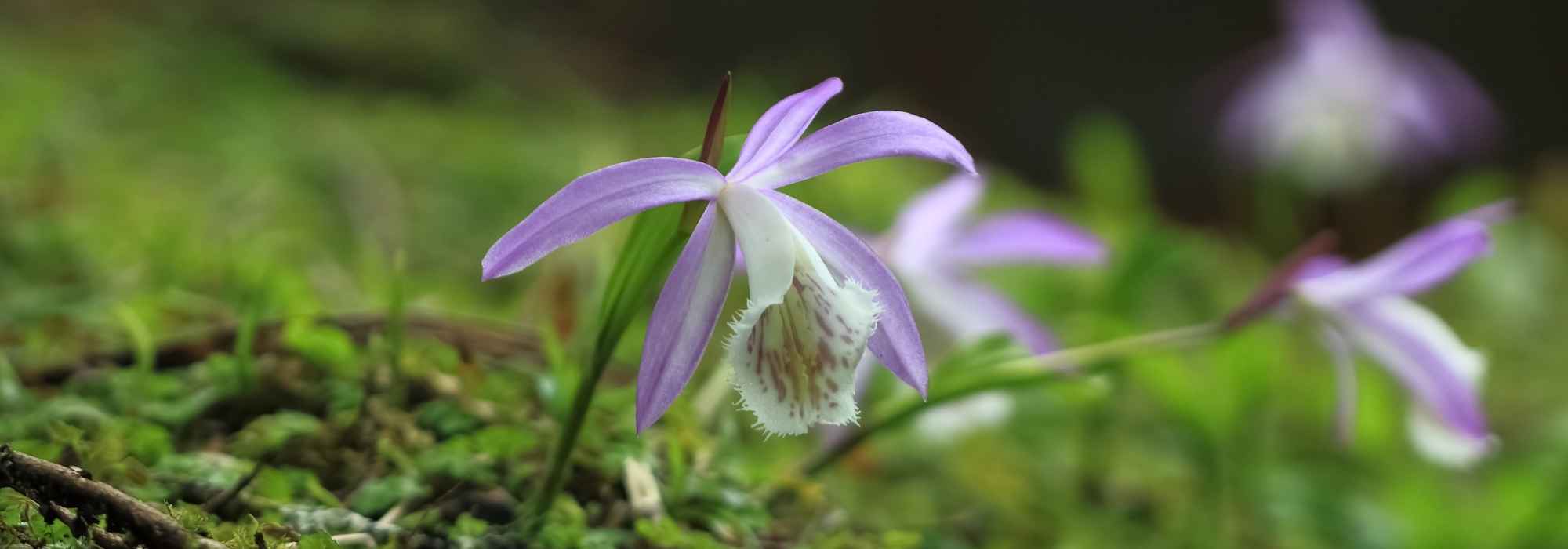
Pleiones are semi-hardy garden orchids that can be grown outdoors in our latitudes if protected from severe cold and winter moisture. There are about twenty species, but Pleione formosana is the hardiest and can survive at least down to -5 °C. Each spring, a single shoot of leaf and flower, white, pink, or even yellow depending on the species, emerges from the pseudo-bulb.
Pleiones prefer well-drained, rather acidic soils and a partially shaded position. They can be grown in rockeries, under trees, in miniature gardens, or simply in pots that can be brought indoors to protect them from frost during winter.
→ Let’s discover how to best associate pleiones in the garden, whether in the ground or in pots.

In the shade of a tree with light foliage
If you live in a region with a mild climate (no less than -5 °C in winter) and your soil is acidic and well-drained, you can try growing pleiones in the ground.
Under a beautiful tree with light foliage, why not try a few Pleione formosana ‘Alba’, a variety with immaculate white flowers? Plant them in small odd groups: 3, 5, 7… to start with. If they thrive, you will soon have a true “field” of orchids. Especially if you accompany them with a few other semi-hardy white orchids like Calanthe aristulifera.
To follow the sadly fleeting flowering of the pleiones, you might adopt an unknown perennial, a Dianella revoluta ‘Coolvista’ that will provide blue flowers with a yellow centre throughout the summer. To bridge the gap between the flowering of the pleiones and that of the Dianella, what could be better than a hardy geranium (flowering May-June): for example, the exotic Geranium maderense with pink flowers that will reach over a metre in height. But the important thing under a tree is to have a display that remains attractive all year round. In this case, the Vinca difformis will provide a vigorous evergreen groundcover punctuated by star-like blue flowers almost all year round.
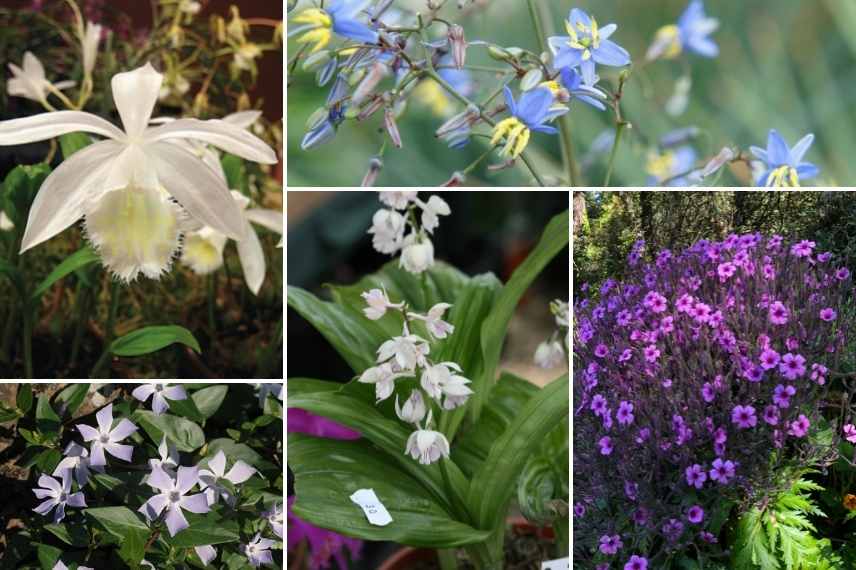
Pleione formosana ‘Alba’, Dianella revoluta ‘Coolvista’, Vinca difformis, Calanthe aristulifera and Geranium maderense
Read also
Plant rare bulbs!In a shady rockery
Pleiones are semi-shaded rock garden plants. Although shaded rock gardens are not commonly seen in gardens, it is important to know that there is a beautiful variety of plants that require the same conditions: shade, well-drained soil, and a cool to moist environment.
The typical species of Pleione formosana (the hardiest!) will thrive alongside a lovely collection fern for cool rock gardens: Adiantum aleuticum ‘Imbricatum’. Meanwhile, the evergreen foliage of some Carex flacca will be perfect at the highest point of the rock garden, where they can cascade down naturally.
The Canadian Anemone is a vigorous little groundcover that also thrives in shaded rock gardens, rewarding us with lovely star-shaped white flowers from May to July. A few scattered clumps of Gentiana makinoi ‘Blue star’, a Japanese gentian with blue flowers that last all summer, will add a touch of azure to the ensemble.
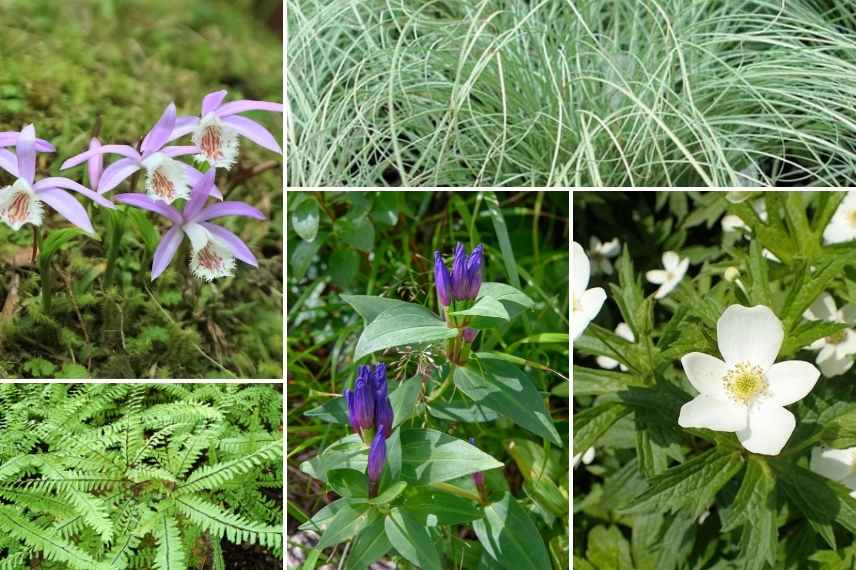
Pleione formosana, Carex flacca, Adiantum imbricatum, Gentiana makinoi and Anemone canadiense
Discover other Pleione
View all →
Available in 2 sizes
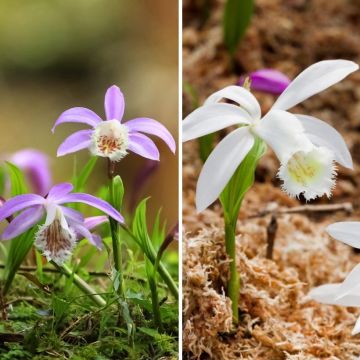
Available in 0 sizes
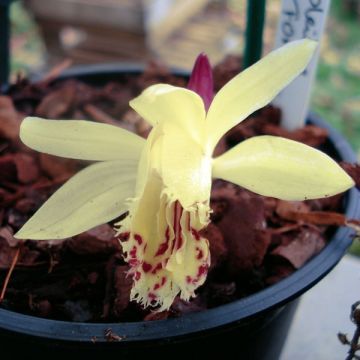
Available in 1 sizes
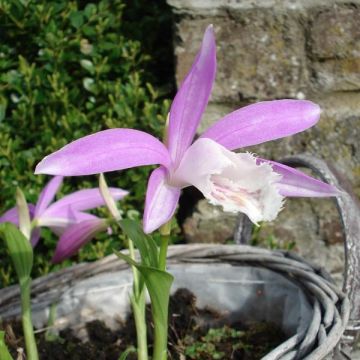
Available in 1 sizes
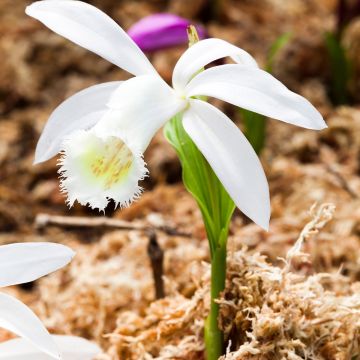
Available in 1 sizes
In cold regions: let's keep our pleiones in pots!
This is the simplest solution for growing pleiones, especially if you live north of the Loire, in Switzerland or even in Belgium. Choose beautiful lacquered containers to place on a wrought iron table with a slightly old-fashioned charm. Pleiones are particularly well showcased in wide, shallow containers of the “bonsai” type.
Firstly, you can try two pots of beautiful pleiones with successive flowering: Pleione forestii which blooms lemon yellow with a purple heart between March and April, and Pleione ‘Tongariro’ which blooms fuchsia pink between April and May.
These orchids are collector’s plants, so it would be inappropriate to add ordinary neighbours. A beautiful pot of Hosta ‘Praying Hands’ with its rolled and pointed bright green leaves edged in cream yellow, along with a small tuft of Cotula with bracts ‘Platt’s Black’, an amazing plant reminiscent of ferns, will bring a touch of freshness around the orchids. To finish on a more “exotic” note, an Arisaema concinnum with its original “cobra” flowering will tastefully accompany the flowering of your pleiones, as it blooms during the same period.
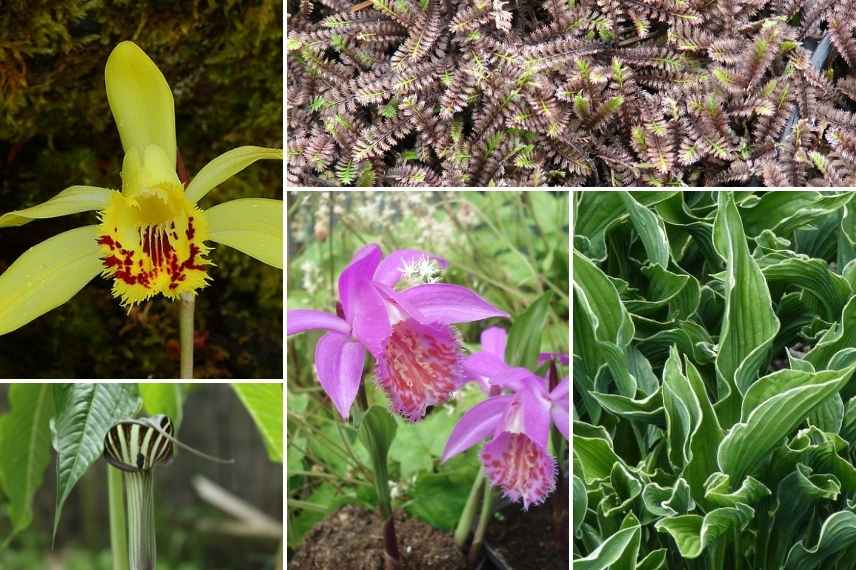
Pleione forestii (© Steve Garvie), Cotula ‘Platt’s Black’, Arisaema concinnum, Pleione ‘Tongariro’ and Hosta ‘Praying Hands’
- Subscribe!
- Contents
Comments