





























Honestly, aren’t you fed up with being overwhelmed by apple harvests so abundant that even your neighbours won’t answer the door? If the thought of baking yet another homemade pie with your own plums gives you the cold sweats, it’s high time to take control of your garden by learning the delicate art of horticultural sabotage. This guide promises to turn any vigorous pear tree into a heap of dead, pathetic wood in just three radical steps.
Of course, for those with a mischievous streak who would truly like to fill their baskets, simply take this manual at face value in reverse and do exactly the opposite of our advice.
Choose the worst possible moment!
The secret to a scorching failure lies primarily in your timing: if you prune at the right moment, you risk strengthening the tree, which would be a total failure for our mission. For a sabotaged outcome, aim for the full sap rise, ideally when the tree is in bloom; not only is it very stylish to see petals fall like snow under your pruning cuts, but it also guarantees the tree will exhaust its precious reserves for nothing.
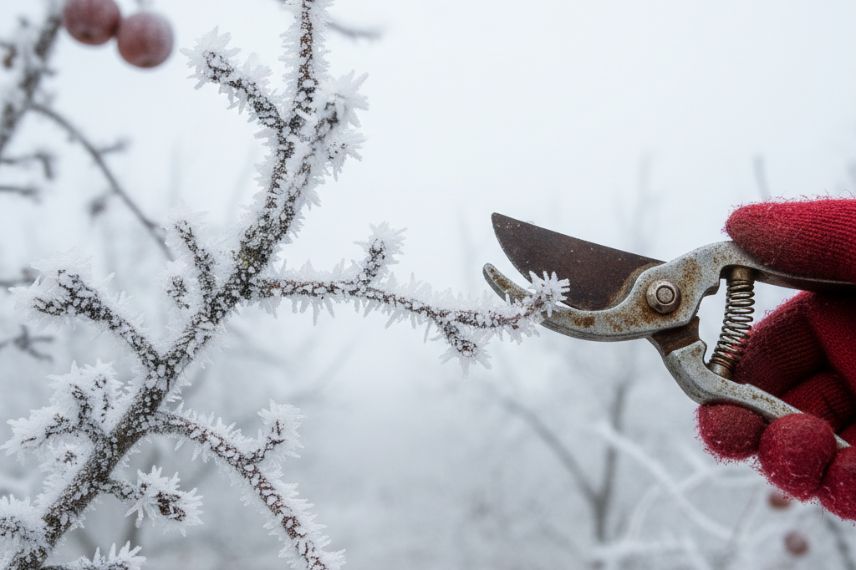
If you miss the spring window, switch to the “Thermal Shock” technique: wait for a polar frost night, around -10°C, to bring out your tools. By exposing the tree’s tissues to extreme cold, you prevent any healing and allow the frost to burst the wood’s cells, creating magnificent permanent necroses.
Finally, to complete the picture, don’t forget the golden rule of moisture: the more it rains, the merrier. Fungal spores and bacteria are poor swimmers, so make their task easier by offering them gaping wounds under a downpour. It’s the free Pass Navigo for all cryptococcal diseases in the neighbourhood that will settle comfortably in your orchard.
The real advice
If, by some strange moment of generosity, you wished your trees to survive, note that you generally prune stone fruit trees (apple and pear trees) only during dormancy (winter, but outside frost), and stone fruit trees (cherries, plums) right after harvest to avoid losing too much sap.
Handle your tools with artistic negligence
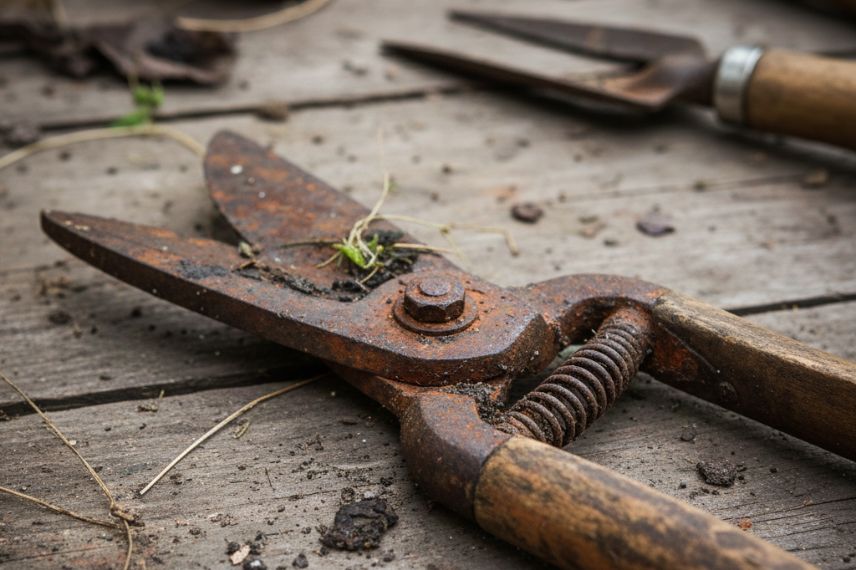
Once you’ve chosen the worst moment, the goal is to use the most unsuitable tool possible. For an optimal result, forget polished pruning shears and adopt the philosophy of liberating rust. Bring out your grandfather’s old pruning tool, the one that hasn’t seen a sharpening stone since the 1998 World Cup: if the blade is so blunt that it doesn’t cut but merely crush the fibres of the wood, you’re on the right track. A crushed branch is a branch that never wounds over, providing unlimited play for bacteria.
In a spirit of generosity, also share the diseases. Why confine a pretty canker or grey rot to a single apple tree when you can spread it across the whole orchard? By stubbornly refusing to disinfect your blades between trees, you become the vector of a wonderful community of parasites. It’s the “all-you-can-eat” buffet principle: what tree A has, tree B will receive for free simply by contact with your dirty blade.
Finally, give free rein to your creativity with the “Free Style” about the cutting angle. Ignoring the bevel rule is an excellent way to create tiny stagnant pools on each cut. Cut straight or, better, toward the bud, and you’ll turn every wound into a tiny personal water trough for fungi and wood-destroying insects. After all, why let water flow out naturally when you can invite it to settle in and rot the wood from within?
The real advice
Those who care about their fruit will tell you that a cutting tool should be razor-sharp for a clean cut and disinfected with 70% alcohol between each cut. They also recommend always cutting on a bias (about 45°), away from the bud, so rain runs off from the sensitive area.
Practice the “Chainsaw Massacre” pruning
This is where your misunderstood artist’s soul comes into play. To transform a fruit tree into an abstract, sterile sculpture, forget delicacy.
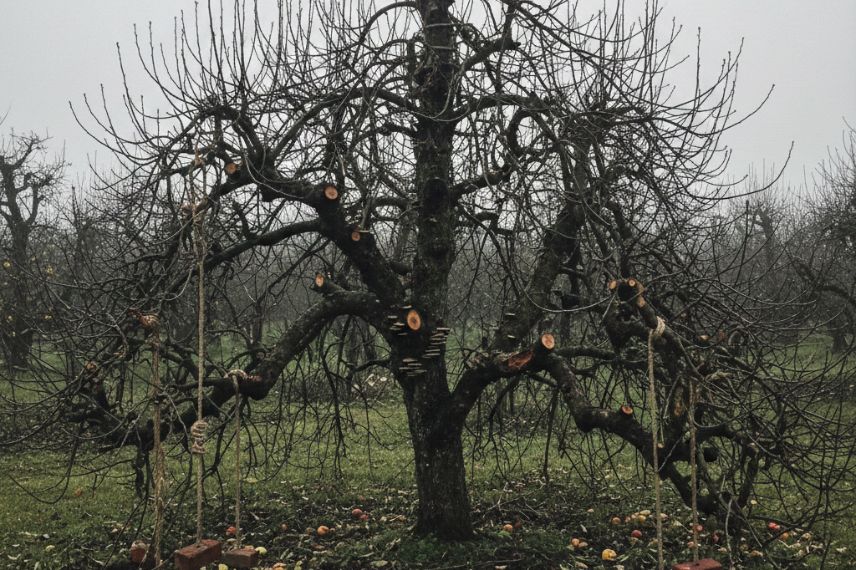
Start with the radical method of wild topping. Why let that leading shoot rise gracefully toward the sky when you can cut it cleanly two metres from the ground? By cutting the top, you drive the tree into a state of absolute panic: it will respond by producing a forest of vertical shoots (water sprouts) that will drain all its energy without ever bearing a single fruit. Total chaos, and exactly what we’re after.
Continue with the strategy of total darkness. A well-maintained tree often resembles a well of light, but we aim for the ambience of an impenetrable virgin forest. Carefully leave all dead wood and the crossing branches at the centre of the trunk. By preventing air and sunlight from circulating, you create a warm, damp microclimate at the heart of the tree, ideal for cultivating your own colonies of aphids and mosses.
Finally, to perfect your work, practice the systematic removal of the short, stout buds. These small, compact buds are the future fruits, so your sworn enemies. Cut them mercilessly, thinking they are useless outgrowths. Conversely, keep the long, smooth vertical shoots that reach up toward the clouds: they are beautiful, consume all the sap and have the wonderful trait of never bearing fruit.
The real advice
Those who prize their fruit will tell you that a pruning tool should be razor-sharp for a clean cut and disinfected with 70% alcohol between each cut. They also recommend always cutting on a bias (about 45°), away from the bud, so rainwater runs off from the sensitive area.
Practise the “Chainsaw Massacre” pruning
This is where your misunderstood artist's soul comes into play. To transform a fruit tree into an abstract, sterile sculpture, forget delicacy.
Start with the radical method of wild topping. Why let that leading shoot rise harmoniously toward the sky when you can cut it cleanly two metres from the ground? By cutting the top, you force the tree into a state of absolute panic: it will respond by producing a forest of vertical shoots (water sprouts) that will sap all its energy and never bear a single apple. Total chaos, and exactly what we’re after.
Proceed with the strategy of total darkness. A well-kept tree often resembles a well of light, but we aim for the atmosphere of a “virgin forest” impenetrable. Leave all the deadwood and crossing branches in the centre of the trunk. By preventing air and sunlight from circulating, you create a warm, damp microclimate at the heart of the tree, ideal for cultivating your own colonies of aphids and mosses.
Finally, to perfect your creation, practise the systematic removal of the short, stout buds. These little buds are the future fruits, so your sworn enemies. Cut them mercilessly, imagining they are useless outgrowths. Conversely, keep the long, smooth vertical shoots that reach toward the clouds: they are beautiful, consume all the sap and have the wonderful trait of never, ever bearing fruit.
The real advice
For those who favour harvests over disasters: a good prune consists of thinning the centre to let light through and promoting horizontal branches (the ones that bear fruit). We aim to preserve fruit buds (the dards) while limiting the vigour of vertical suckers.
Tableau comparatif : le vrai vs le faux
| Pruning action | Sabotage objective (the wrong move) | Harvest objective (the truth) |
|---|---|---|
| Timing | In frost (-10°C) or under heavy rain. | In dry weather, outside the frost period, during dormancy. |
| Tool condition | Rusty, blunt and full of last year’s sap. | Sharp blade (clean cut) and disinfected with alcohol. |
| Structure | Keep a dense centre to create a fungal nest. | Air the centre of the tree to let light through (window of day). |
| Cut angle | Straight or inclined toward the bud to retain moisture. | On a bias (45°), away from the bud to shed water. |
| Fate of the suckers | Let them grow vertically toward the sky. | Remove or bend them to encourage fruiting. |

Comments