



























Which plants and shrubs to feed garden birds?
Plants, trees and bushes, but also cereals or walnuts... all you can grow for birds
Contents
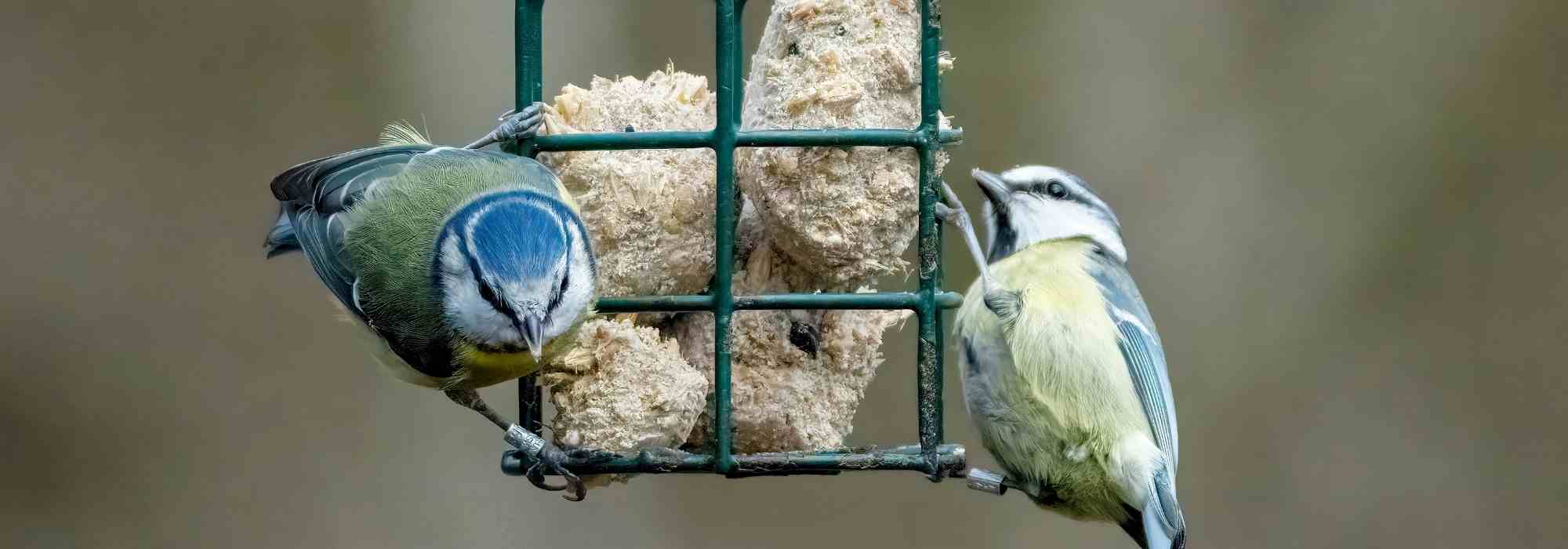
There was a time when feeding birds in winter was aimed at trapping them for food or at putting them in cages. Fortunately, those days are over. Today, from mid-autumn, anyone with a garden, however small, brings out the feeders to provide the essential nourishment needed for the survival of blue tits, European greenfinches and other robins throughout the winter. This feeding is essential for the conservation of wild bird species. Not to mention the pleasure, ornithological or simply aesthetic, that each of us may feel in attracting all these birds to our garden.
And the industry doesn’t miss a trick! For a few years now, garden centres or specialist retailers’ shelves have been teeming with a multitude of seed mixes and other treats for these hungry birds. And the bill can quickly mount, as this winged fauna can be quite voracious. Not to mention the fact that transparency is not always the order of the day for this kind of product. And what if you cultivated what you give to the birds?
Discover the different plants that can be sown, planted and cultivated in the garden and the vegetable plot to supplement birds during the winter.
Further reading: the alarming decline of birds: a warning for all living beings
Feeding birds: a reminder of a few good practices
Overall, from the first frosts, in October–November depending on the region, and up to mid-March, a period that marks the start of breeding, it is essential to feed garden birds to help them get through the winter. It is often at this time that many of these birds that frequent our gardens become seed-eaters. Their diet thereafter consists mainly of seeds, buds, berries and fruit…
Nevertheless, as laudable as everyone’s intentions may be, sometimes this feeding is more harmful than beneficial. That is why it is essential to remember what to do and what not to do.
What to do
For setting up the feeders
- Place feeders high up, sheltered from the weather and in a clear space, so they are out of reach of cats, the main predators of garden birds
- Keep feeders away from windows and glass surfaces where birds frequently collide
- Increase feeding points to avoid concentrations and squabbles that might attract another predator, the European sparrowhawk
- Choose several types of feeders to suit the feeding habits of different bird species
- Also provide drinking-water sources.
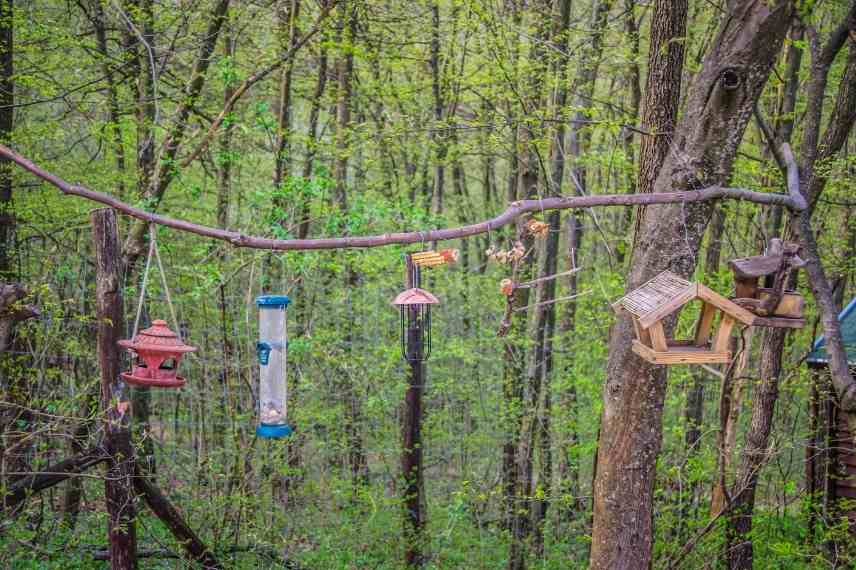
It is essential to have multiple feeding sites and a variety of feeder types
For feeder hygiene
- Clean and disinfect feeders and drinking-water sources very regularly to prevent the transmission of avian diseases
- Avoid throwing too much food on the ground beneath the feeders, as droppings accumulate and can spread diseases.
For filling the feeders
- Fill the feeders each morning to avoid waste
- Store your seeds in an airtight container to prevent mould.
Things to avoid
- Do not give bread, toast, or biscuits, which are not nutritious and are often too salty or too sweet
- Do not feed birds dough or rice (raw or cooked)
- Do not fill feeders with dairy products, lard and animal fats, or insects
- Do not put lettuce, potatoes or carrots
What about seed mixes?
Like many, I have often succumbed to the temptation of seed mixes that are readily available in shops. And I have frequently been disappointed. Why? Simply because these mixes, which are fairly pricey, are a source of waste. Especially if they contain sunflower seeds, the birds’ favourite by far. Indeed, birds have their preferences and leave what they do not like.
That’s why I prefer to place different categories of seeds, each in its own feeder, to attract different birds. Some prefer tubular silo feeders, others prefer trays…
What should you sow to obtain dried seeds?
Undoubtedly, dried seeds are a top choice for filling bird feeders. Indeed, by definition, a seed contains all the reserves from which a plant will develop. Seeds therefore have a very high energy value, ideal for offsetting the energy losses birds incur in cold weather. They are also easy to keep dry, in an airtight container, protected from moisture and mould, but also from insects (although weevils and other larvae and worms can be enjoyed by birds).
These seeds are fairly easy to find in shops, from specialist seed suppliers. But they do come at a definite cost. So, if you have a garden, why not grow these plants that will provide you with a stock of seeds for the winter? This will allow you to vary your offerings and attract birds that visit your garden less often. Here is our small selection of plants (in alphabetical order), easy to sow and grow, that will be enjoyed by garden birds:
- Canary grass (Phalaris canariensis) : an annual grass that yields seeds high in protein, oil and unsaturated fatty acids. Ideal for all granivores
- Oats (Avena sativa) : an annual plant, often grown as green manure, that bears seeds on spreading panicles. The seeds are fairly large, richer in lipids than other cereals, and are favoured by doves and wood pigeons
- Rapeseed (Brassica napus) : an annual plant in the Brassicaceae family, about 1 m tall, with clusters of yellow flowers. Easy to grow in the vegetable garden and it also attracts many butterflies. Rapeseed seeds, rich in oil and protein, are highly prized by granivorous birds
- Hemp (Cannabis sativa) : an annual plant with stems and leaves covered in hairs. The seeds, fairly small, dark brown and glossy, rich in oil and protein, will please finches (goldfinches, tree sparrows, European greenfinches, bullfinches…)
- Safflower (Carthamus tinctorius) : related to thistles, this plant bears flowers with bright yellow‑orange petals, spiny stems and dark green foliage. The seeds are highly energetic, sources of vitamins A and B6 and minerals. Goldfinches are fond of them, as are tree sparrows, European greenfinches, and siskins…
- Flax (Linum usitatissimum) : an annual herbaceous plant with blue flower clusters and flattened, brownish, glossy seeds. These seeds have an excellent energy value (500 calories per 100 g) and are rich in oil, protein and minerals. Small granivores love them, as do the robins
- Millet (Panicum miliaceum) : a tall grass that produces dense panicles of seeds rich in protein and iron
- Poppy (Papaver somniferum) : an annual plant with flowers most often pink that produces many seeds suitable for small passerines (wrens, dunnocks, warblers, finches)
- Pumpkin (Cucurbita pepo) : this large member of the cucurbit family yields very calorific white seeds, rich in protein and lipids, but also in carbohydrates, iron and vitamin A. European greenfinches, blue tits and species that love sunflower seeds will relish them
- Quinoa (Chenopodium quinoa) : an annual, bushy plant whose seeds contain a lot of iron and minerals. All granivores love it, as do blue tits and robins
- Buckwheat (Fagopyrum esculentum) : an annual plant, used as green manure, with hollow stems. The seeds are a source of carbohydrates and proteins. They are very popular with finches (including goldfinches…), and with sparrows
- Sorghum (Sorghum nigrum) : a cereal with a single panicle, ideal for shading the vegetable garden. Its seeds suit most granivores
- Sunflower (Helianthus annuus) : an annual plant that grows quickly and can reach 3–4 m in height with large yellow flowers. Birds often come directly to the wilting head. Sunflower seeds are rich in protein, fats, simple sugars and carbohydrates. These black seeds are enjoyed by birds (blue tits, Eurasian nuthatch, woodpeckers, finches) that manage to crack the husk
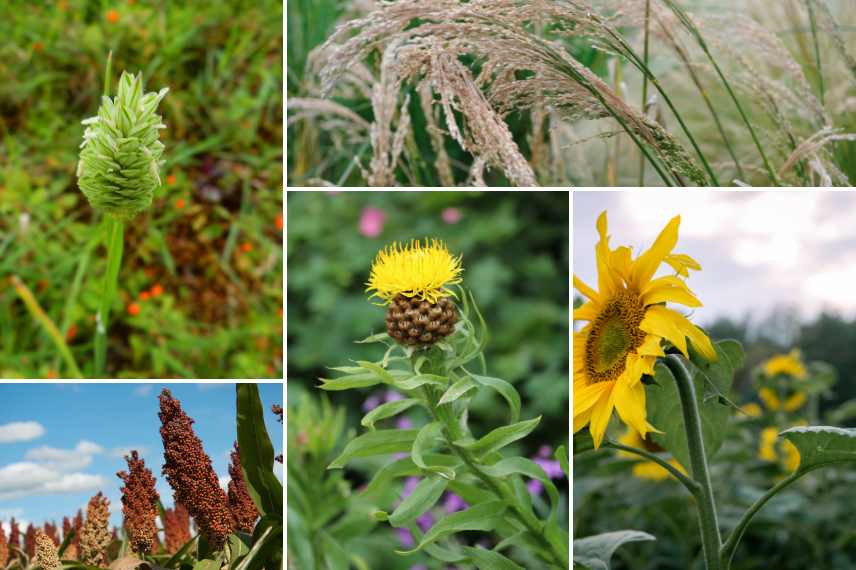
Plants whose dried seeds are enjoyed by birds (Canary grass, millet, sorghum, safflower and sunflower)
Walnuts and legumes to round out meals
To complete this granivorous diet, one can add oleaginous seeds and legumes, to buy commercially or to grow:
- Peanuts, loved by the Eurasian Siskin, the European Greenfinch, the Eurasian Nuthatch, woodpeckers and tits
- Chickpeas, peas, and soybeans, very popular with larger birds such as wood pigeons and collared doves
- Unsalted, unroasted mixed nuts
Read also
What do the birds in our gardens eat?Plants, trees and shrubs to plant for seeds, fruits and berries.
In addition to the species mentioned earlier, chosen for the energy-rich nature of their seeds, one can sow or plant other plants, trees and shrubs that will provide, all year round, seeds, fruits and berries for the birds in the garden. These birds, come spring, often become insectivorous to feed their offspring. And they may prove to be efficient auxiliaries in your garden to combat pests. These birds ingest these seeds or berries and thus contribute to the dispersal of plant species.
And what if you set aside a small patch of your garden for these plant species?
The flowering plants
- Wild teasel (Dipsacus fullonum) : large seed heads that attract goldfinches
- Honesty (Lunaria annua) : an easy-to-grow plant that attracts finches such as the bullfinch
- Biennial evening primrose (Oenothera biennis) : a plant with yellow flowers and seeds eaten by finches
- Goldenrod (Solidago sp.) : a plant with yellow inflorescences whose seeds are consumed by goldfinches and siskins
- Thistles : seeds form the birds’ favourite meals
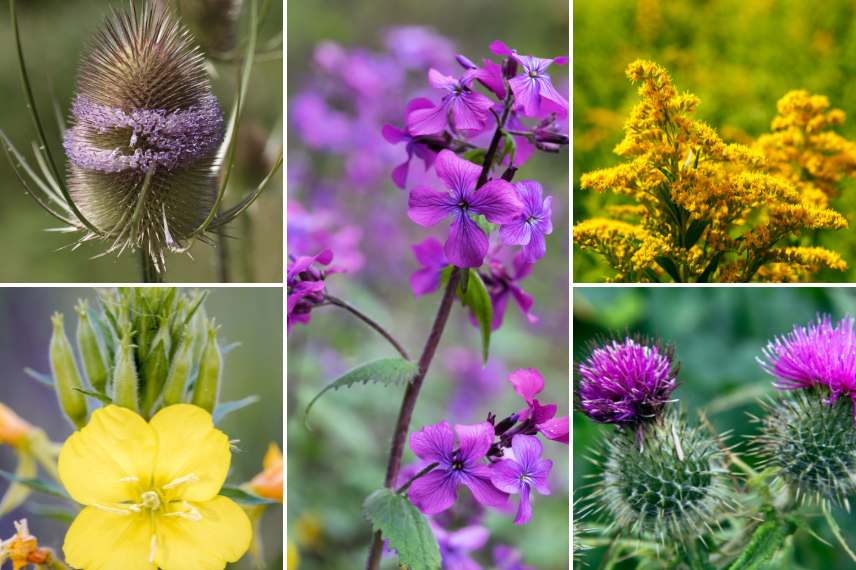
Some flowering plants that provide seeds
The berry-bearing shrubs
- Barberry (Berberis) : long clusters of yellow or orange flowers that produce berries, much eaten by birds. The wren and the blackbird nest there
- Hawthorn (Crataegus) : a deciduous shrub that offers abundant berries in autumn, highly appreciated by thrushes
- Pyracantha : a useful shrub for its clusters of berries, often eaten in late winter
- Wild rose (Rosa canina) : a shrub with pink or white flowers that produce rose hips, rich in vitamin C, favoured by thrushes and frugivorous birds
- Common blackberry (Rubus fruticosus) : a shrub that produces blackberries, rich in fructose, widely eaten by robins, the blackbird and thrushes
- Rowan / Mountain ash (Sorbus aucuparia) : a fast‑growing shrub with bright orange berries
- Blackthorn (Prunus spinosa) : a shrub with sour fruits eaten by many birds.
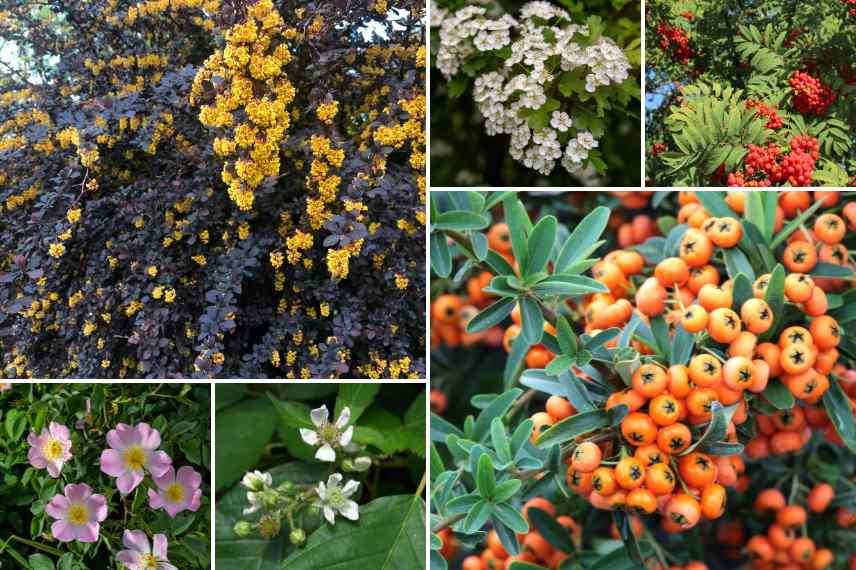
Berries and fruits for the birds
The trees
- Alder (Alnus glutinosa) : a riverside tree that produces fruits called strobili, loved by the siskin
- The Hornbeam (Carpinus betulus) : a tree whose catkins yield fruits that resemble pendulous nuts, favoured by finches such as the tree sparrow or the nutcracker
- The Beech (Fagus sylvatica) : tree where tree sparrows and tits gather to enjoy the highly energetic beech nuts
- The Black elder (Sambucus nigra) : a small tree with black berries rich in vitamin C, tannins and fructose, loved by blackbirds, starlings, linnets, warblers and robins
- The Service tree (Sorbus domestica) : a tree with small acidic fruits, edible after the first frosts.
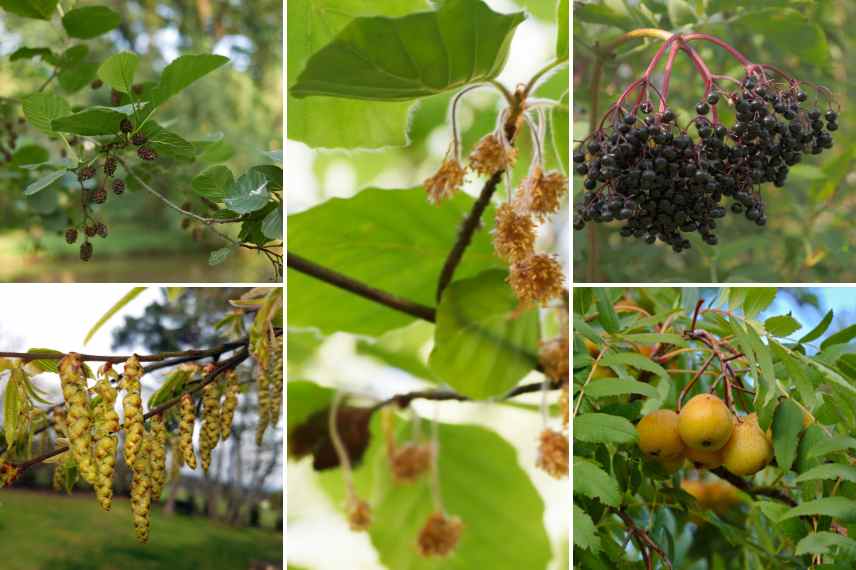
Trees to plant to feed the birds
- Subscribe!
- Contents
Comments