





























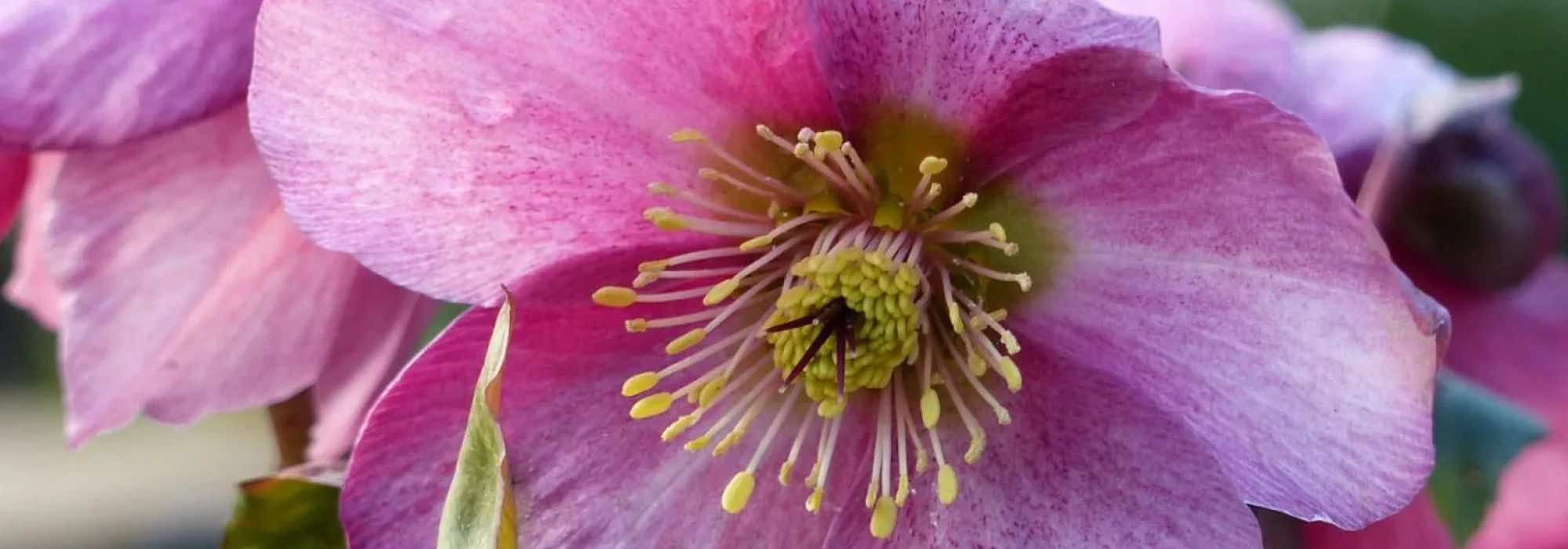
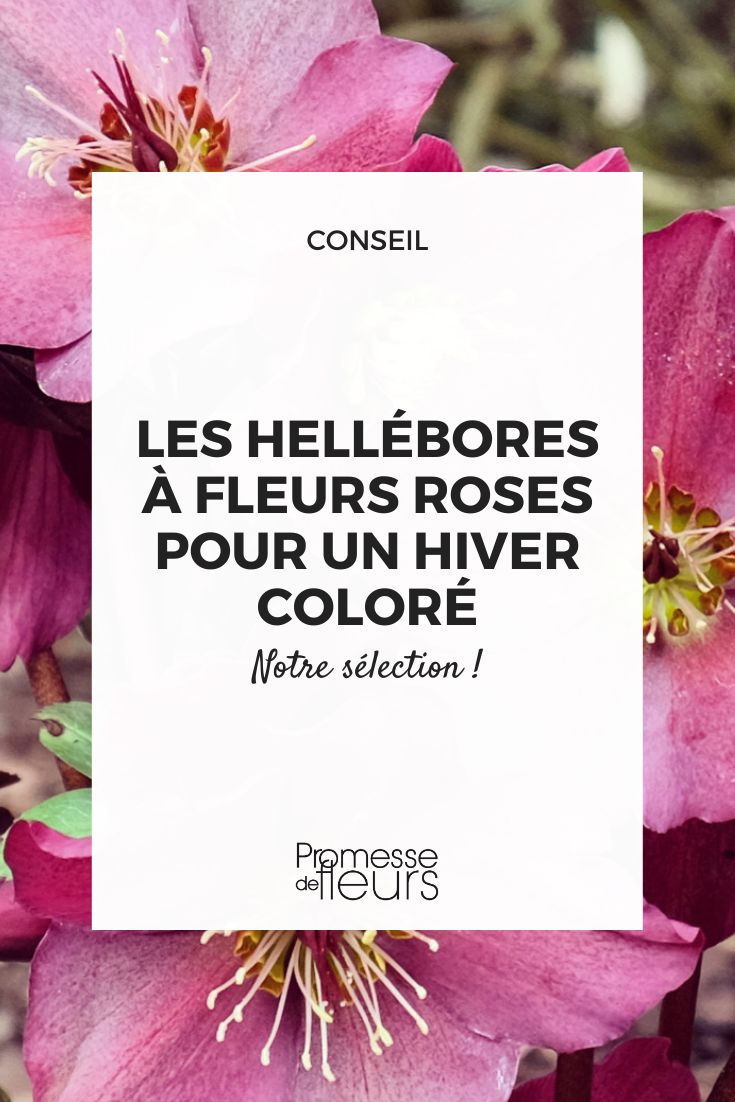
For a colourful winter, choose pink-flowered hellebores!
Soft or vibrant flowerings that will brighten the cold season.
Contents
In winter, hellebores are among the stars of the garden. They are indeed capable of flowering during this cold and much quieter season, bringing colour and light, especially to dark areas. These “Christmas roses” or “Lenten roses,” depending on their flowering month, reward us with a beautiful diversity of flowers, both in terms of their shapes and colours. If there is one colour that easily complements the garden and is almost essential, it is pink. Here, it ranges from the softest and most delicate shades to the brightest and most vibrant.
Discover our favourite pink-flowering hellebores, to choose from based on several criteria: month of flowering, flower shape, or even foliage. Hellebores are easy to care for and are perfect plants for beginner gardeners: so don’t hesitate to adopt them to bring a touch of joy in winter.
To learn more about growing hellebores, check out our dedicated guide Hellebores: planting and cultivating them.

Early flowering pink hellebores
These are the ones that choose to reveal themselves first, even before the cold arrives. They will thus ensure the transition after the summer flowering that comes to an end. You can easily combine them with autumn-flowering bulbs or Camelia sasanqua.
This is the case with the Oriental Hellebore ‘ViV Fiorentina’, which blooms early from September. It produces lovely single flowers about 7 cm in diameter, displaying a veined pink warmed by a heart of yellow stamens.
‘ViV Celestina’ also blooms at the beginning of autumn, offering pink flowers speckled with red, with an almost exotic charm. It reveals itself from September and lasts for several weeks.
Waiting for autumn to be well established, the Helleborus lemperii ‘Lenia’ blooms from November, rewarding us with large corollas of 10 cm, displaying a particularly vivid and bright purplish pink. Magnificent in the garden, but also in pots to brighten up the terrace or balcony.
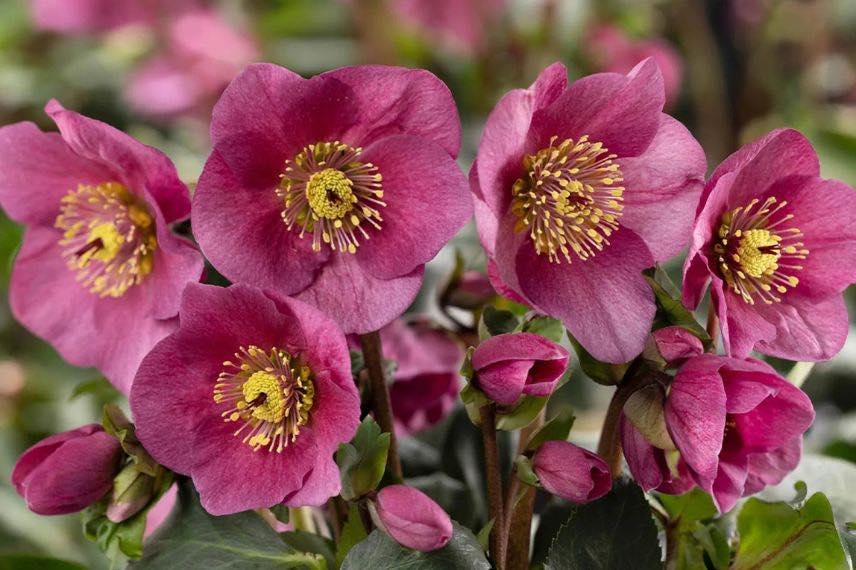
Helleborus lemperii ‘Lenia’
Read also
7 hellebores with green flowersLate-flowering pink hellebores
These will wait until winter is well established in the garden to flower. With little competition, they are sure to be the favourites of the gardener.
Let’s start with the Helleborus x sternii ‘Flame’, whose flowering is progressive. Between February and April, you can admire its lavender-pink flowers, shifting to salmon pink, then to a pink tinged with green over time.
‘Peach with Dark Center’ makes no mystery about its colour. This hellebore displays slightly faded shades in very soft pastel tones. The peach-pink petals reveal a centre maculate with purplish red, showcasing a nest of yellow stamens. A flowering full of contrast, which occurs from February to March.
Very delicate, in pastel tones reminiscent of sugared almonds, ‘Grace Elisabeth’ offers cup-shaped flowers of a rosy white tinged with green. The heart of stamens is cream yellow. An ideal plant for the garden as well as for making bouquets, which will brighten up the end of winter.
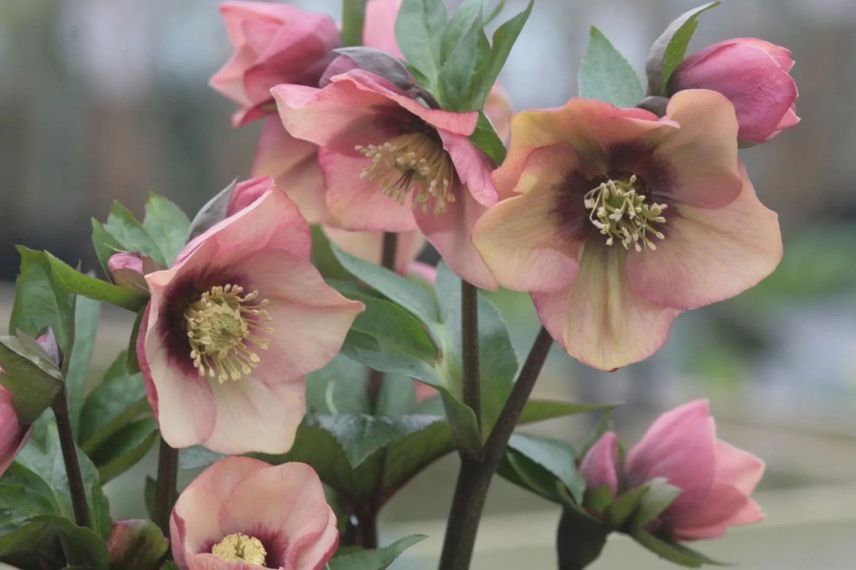
Oriental hellebore Peach with red centre
The most floriferous
Are you looking for a long flowering period without needing to intervene? Look no further than these hellebores, which show great generosity, being capable of flowering for nearly half the year.
For example, try the Helleborus niger x orientalis ‘Madame Lemonnier’, a hybrid that combines the qualities of two species and is capable of flowering from November to April. Few plants can provide a display from late autumn to spring. To top it off, the flowers will show varying shades depending on the ambient temperature, ranging from white-veined pink to dark purple. This variety is perfect for the garden, for pot cultivation, and also for creating cut flower arrangements.
Equally generous, the Helleborus lemperii ‘Liah’ will flower almost tirelessly for long months between November and April. Its single flowers reveal a strong pink, slightly purplish hue. A perfect perennial to enliven the base of deciduous trees, a border, or a flower bed.
Also worth mentioning is the Helleborus niger x orientalis ‘Walberton’s Rosemary’, which flowers from late autumn to early spring. It produces star-shaped flowers that are slightly drooping towards the ground, in a light pink colour veined with white. Evolving, it will then take on salmon hues before fading to green tones.
Let’s conclude this non-exhaustive list with ‘ViV Diana’, an oriental hellebore that flowers for nearly 5 months, rewarding us with well-opened single flowers. They start as pale pink before taking on warmer pink tones. A variety with a very natural charm.
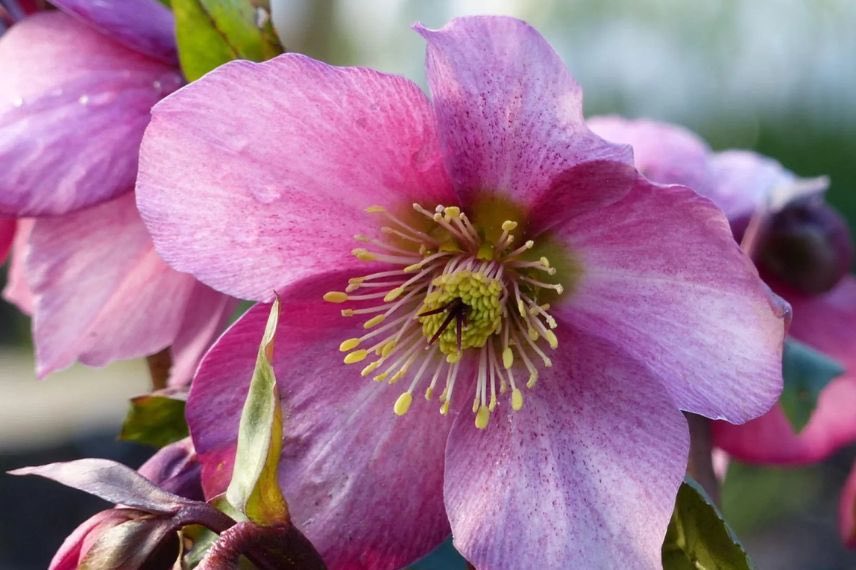
Hellebore ‘Madame Lemonnier’
Double-flowered pink varieties
These are flowers with numerous petals, giving them a sophisticated and refined touch. Among these varieties, we can mention the Oriental hellebore ‘ViV Alessia’, which blooms early between September and October. It reveals double flowers of a dark pink, adorned with cream-white patches and red veins. The heart of yellow stamens creates a beautiful contrast of light with these shades.
‘ViV Ariana’ blooms at the same time in autumn, offering well-double flowers, a pink leaning more towards violet.
Also among the Oriental hellebores, don’t miss ‘ViV Suzanna’, a perfect candidate for a romantic garden. Its double flowers with slightly pointed petals display a veined colour of light pink and dark pink, with small touches of cream white. They have a slightly crumpled appearance, which adds to their charm.
For their part, the double flowers of the aptly named ‘Double Pink’ have a slight resemblance to water lilies, with their pointed imbricate petals. Very delicate, their colour ranges between pale pink and flesh pink. The flowering occurs at the end of winter.
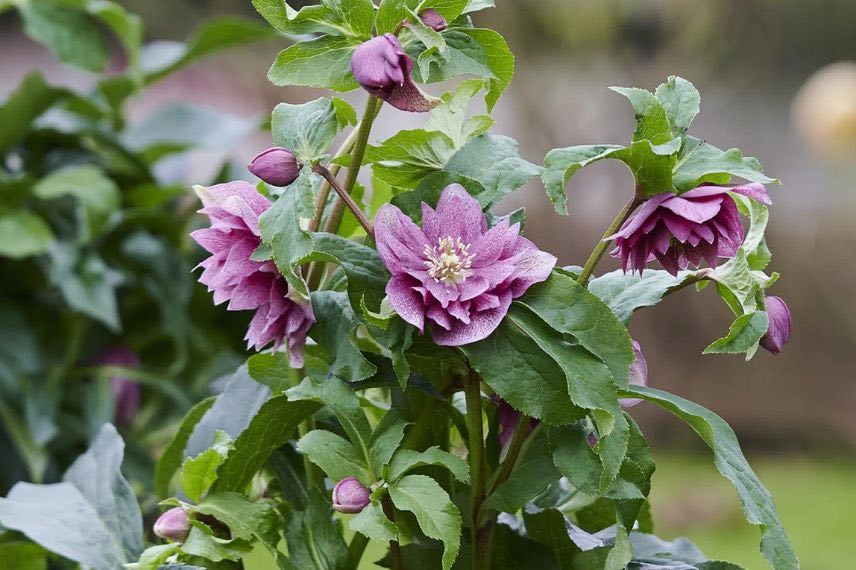
‘ViV Ariana’
Pink flowering anemone varieties
They are called so because of their flowers featuring a centre in the form of a collar of additional petals, surrounding the stamens. This characteristic gives them a great deal of elegance.
Among them, let’s mention the Oriental Hellebore ‘Anemone Picotee’, which blooms throughout winter and into early spring. It produces pale pink flowers with a hint of mauve, featuring a washed-out mauve collar.
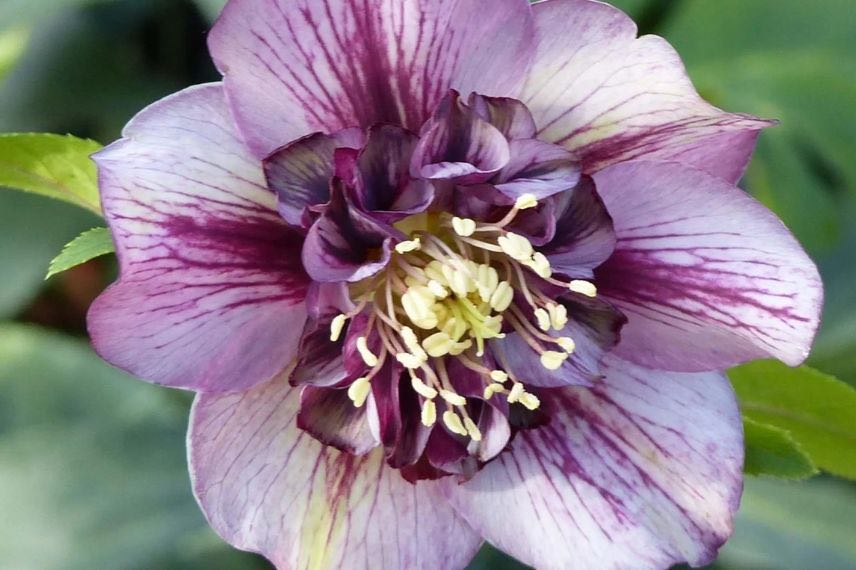
Oriental Hellebore ‘Anemone Picotee’
‘ViV Teresa’ showcases flowers of a pink speckled with darker spots, both on the petals and the central corolla. This flowering occurs in the heart of winter, between January and February, to warm the atmosphere.
Equally interesting, ‘Anemone Pink’ prefers a slightly purplish pink, with a collar in similar tones. Enjoy it from February to April.
Ornamental foliage
Hellebores have often evergreen foliage, making them decorative in every season. The leaves are generally a beautiful dark green that contrasts perfectly with the flowering, but they are also somewhat lobed, giving them a graphic appearance.
Among the varieties that stand out for their foliage, we can mention the Helleborus ‘HGC Ice Breaker Ruby’. This is a very easy-going, floriferous variety that produces magnificent flowers in a purplish pink between December and March. However, we also love it for its foliage, which is dark green, lightly veined with light green, giving it a marbled appearance.
We should also mention the Helleborus x nigercors ‘HGC Silvermoon’, a hybrid with flowers of such a pale pink that they can almost appear white. This occurs between February and March. Its leaves display a bluish green colour strongly marbled with white and silver, very bright. They are also well dentate.
Finally, let’s mention the Tibetan hellebore (Helleborus thibetanus), whose green foliage can also be marbled with grey. It flowers in January, revealing lovely soft pink flowers.
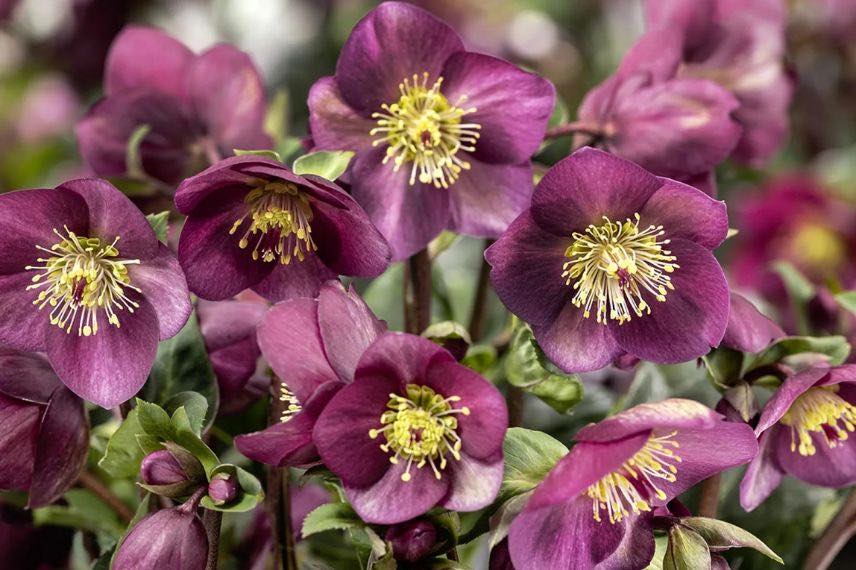
Helleborus HGC ‘Ice Breaker Ruby’
Hellebores tolerating other growing conditions
Most hellebores prefer shaded or part-shaded locations, in rather humus-bearing soil (rich in organic matter) that remains cool (never completely drying out).
However, some species stand out. This is the case of Helleborus lividus, which is capable of tolerating short periods of drought and can withstand lime. Native to the island of Majorca, Stern’s hellebore can also endure occasional drought, particularly in winter if this season is not well-watered in your area. It will actually prefer brighter exposures, in full sun (but in part shade in very hot regions). Also worth mentioning is ‘HGC Ice Breaker Ruby’, which is very tolerant and can be grown in fairly dry soils and in warmer exposures.
Finally, although hellebores are generally cold-resistant, some are even hardier and will thrive in the coldest gardens during winter. This is the case of the oriental hellebores, which can easily withstand frosts below -25 °C.
- Subscribe!
- Contents
Comments