





























Growing Anisodontea in pots
And enjoy this delicate exotic plant throughout France.
Contents
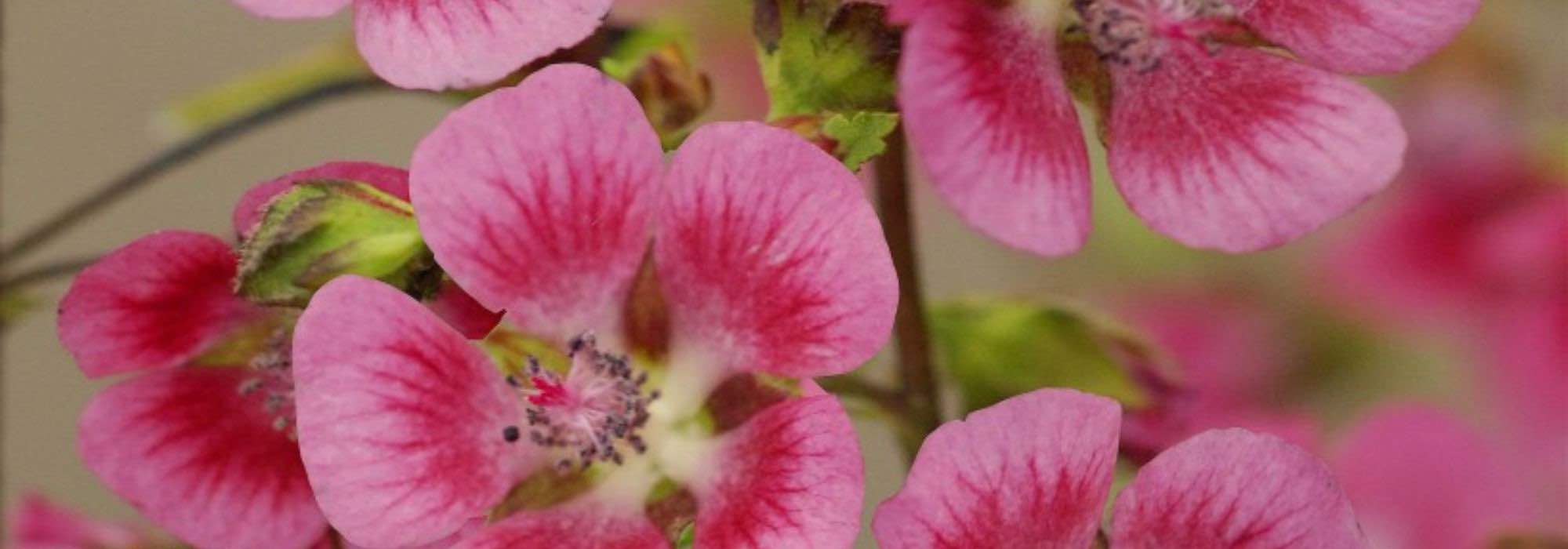
The Anisodontea is a shrubby mallow with small hibiscus-like flowers, tender, native to South Africa, specifically from the dry rocky areas of the Cape Province. It is a plant that grows very well in pots, allowing you to enjoy it in regions where temperatures drop below -5° C in winter, where you can bring it indoors.
Growing Anisodontea in pots is also possible year-round indoors. Let’s take a closer look at what it enjoys and what its needs are.
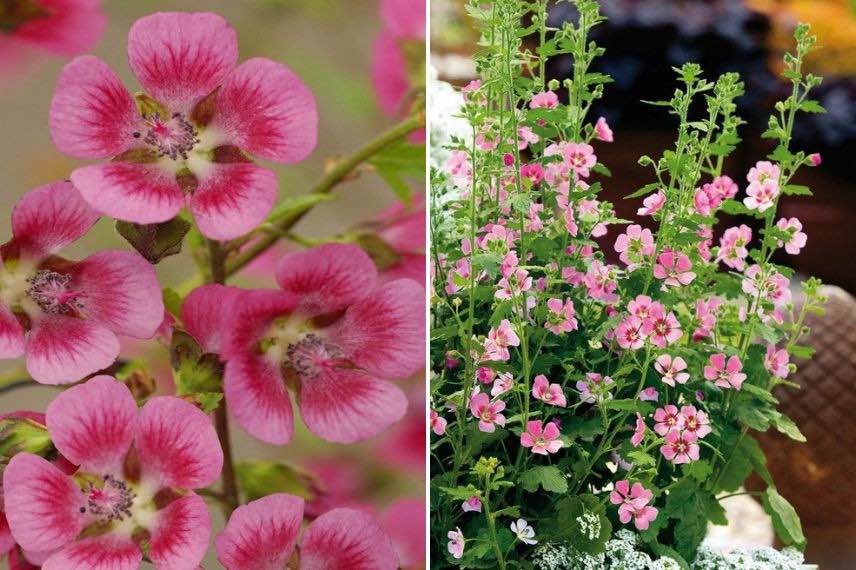
Anisodontea capensis and ‘Lady in Pink’
What type and size of pot?
Choose your preferred material, just keep in mind that terracotta, being porous, is well-suited for dry-soil plants, as water is quickly absorbed and does not stagnate, but it requires more frequent watering.
If you live in a very rainy region during winter, favour terracotta to prevent water from soaking the substrate for too long in the wrong season.
Generally speaking, terracotta is a suitable material for cultivating Anisodontea. Do not place a saucer under the pot to avoid stagnant water in winter and the proliferation of mosquitoes in summer.
Ensure the pot is three times larger than the root ball in both depth and width. More specifically, it should ideally be at least 50 cm in diameter and 40 to 50 cm deep.
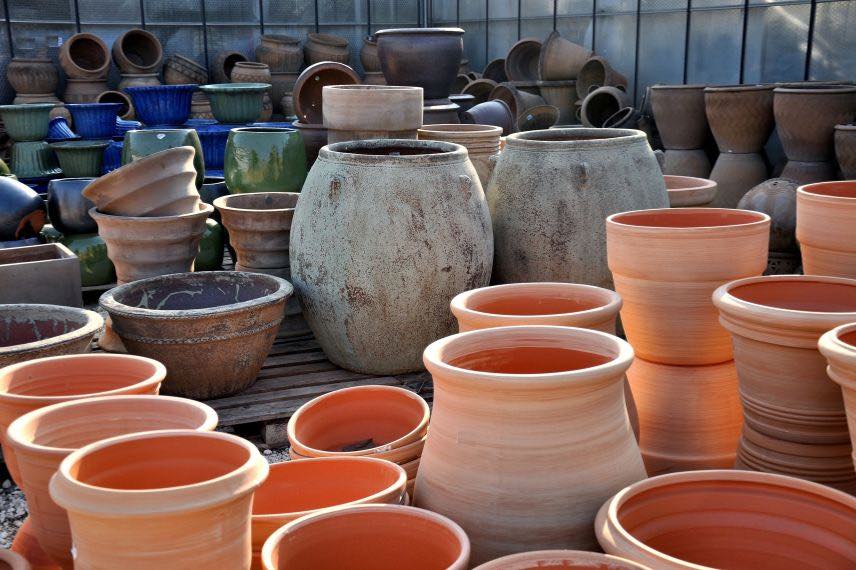
Terracotta is well-suited for Anisodontea
What type of substrate?
Choose or compose a substrate characteristic of dry soil plants, although slightly less draining to adapt it for pot planting where the substrate dries much faster than in open ground.
You can create a mix consisting of 1/3 of quality potting soil with good water retention or compost, 1/3 of river sand, and 1/3 of garden soil. If you do not have access to garden soil, you can also mix 30% river sand with 70% quality potting soil.
Ensure drainage at the bottom of the pot using clay balls, pumice, or gravel. Also, plan for an organic mulch for the top of the pot. Although Anisodontea is a plant of rather dry terrains, it requires regular watering in pots. This mulch helps to limit these water inputs.
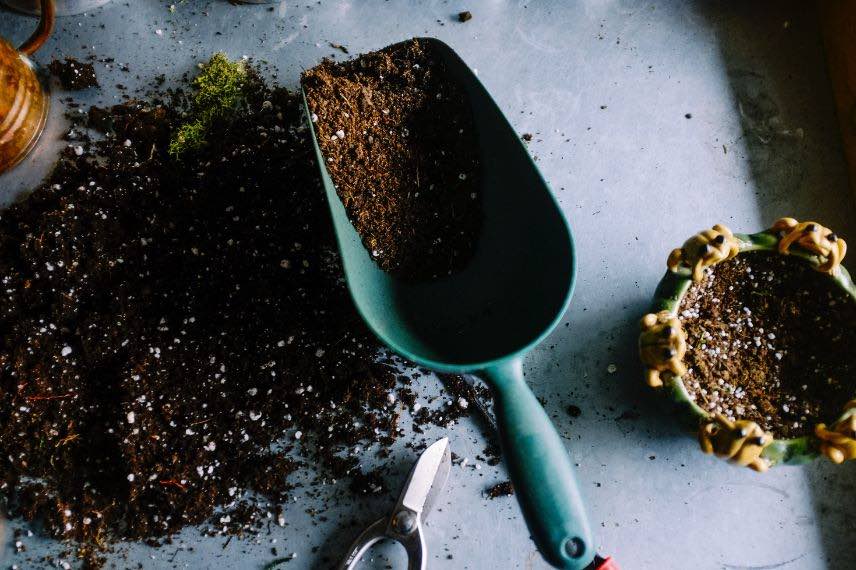
Compose a draining substrate. Here, it is lightened with perlite, suitable for both indoor and outdoor cultivation
Discover other Anisodontea
View all →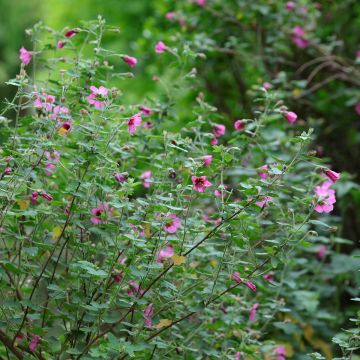
Available in 2 sizes
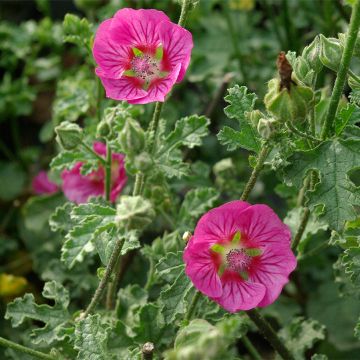
Available in 2 sizes
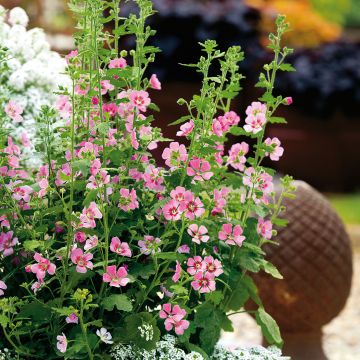
Available in 1 sizes
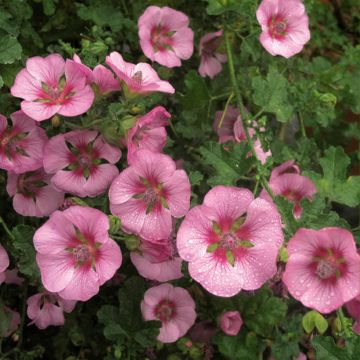
Available in 1 sizes
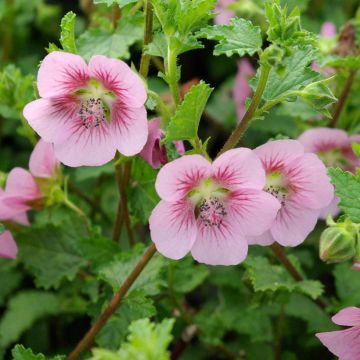
Available in 1 sizes
When and how to plant?
Planting Anisodontea takes place in spring after the frosts, when temperatures rise to around 10°C, from March to May depending on the regions.
In areas of France where the temperature does not drop below -4°C, or USDA zones 10a and b and 9b, which include the true Mediterranean climate and the South-West basin, you can also plant it in September-October. In this case, do remember to provide protection from frost in winter (see the last chapter). Keep in mind that a plant in a pot is less hardy than one in the ground.
For planting, proceed as follows:
- Remove the root ball from its nursery container and gently untangle the roots if necessary.
- Soak it in a basin of water while preparing your pot.
- Pour a layer of drainage a few centimetres deep at the bottom of the pot using clay balls, gravel, or pumice.
- Separately, mix the various components of the substrate.
- Pour your substrate to about 1/3 of the pot.
- Position the root ball of your Anisodontea, ensuring that the collar of the bush is level with the surface of the pot.
- Check that the appearance and orientation of the bush are to your liking and that it is standing upright.
- Fill in with substrate, pressing down lightly and evenly.
- Fill to a few centimetres below the rim of the pot and press down once more.
- Water generously.
- When the water has been absorbed, add a little substrate if necessary, if any gaps have appeared.
- Apply a layer of mulch a few centimetres thick.
Where do you place your pot?
Anisodontea enjoys being exposed to sunlight and tolerates some shade in pots. During hot weather, feel free to move the pot to a shaded area to prevent the plant from suffering. In the southernmost regions, you can place it in partial shade during summer, but ensure it is not too dense; keep in mind to provide it with an open and bright situation.
It thrives in coastal climates, but place it in a sheltered position away from winds.
Growing Anisodontea in pots is also possible indoors all year round, provided you offer it good light conditions and a cool room in winter, allowing it to have a period of vegetative rest during which you will reduce watering.
Watering and fertilising
Watering
Potted Anisodontea requires regular watering. Water thoroughly and then allow the substrate to dry out between waterings. This means you should be attentive in spring, during the growth of its foliage, when temperatures rise. Then, you will increase watering to support its flowering. Cape mallow or Anisodontea capensis ‘El Rayo’ begins to flower from June, while Anisodontea ‘Lady in Pink’ shows its first flowers as early as May.
Reduce watering in autumn and stop it in winter if the plant remains outside. If you bring your plant indoors, maintain watering once a month.
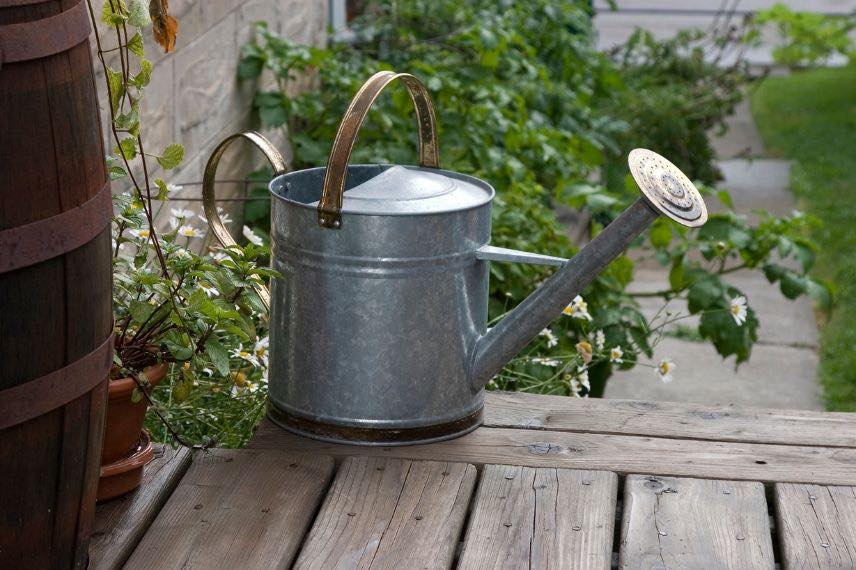
In a pot, Anisodontea needs regular watering
Fertiliser
Potted Anisodontea appreciates a supply of fertiliser for flowering plants mixed with the watering water twice a month during the flowering period. Each spring, feed it with a little mature compost, at a rate of a few handfuls, incorporated by scratching (that is, loosening the substrate if necessary with a rake).
Maintenance and Wintering
Maintenance
- Cut faded flowers to stimulate flowering. Regularly pinch the stems to encourage branching.
- At the end of winter, use a pruning shear to shorten the branches by about one-third of their length to maintain a bushy plant and a dense habit. This pruning accelerates their growth and ensures spectacular flowering. It can also be trained on a stem (retain the most central and sturdy branch, remove all shoots on three-quarters of its length, and allow only the upper branches to develop).
- Every year, top up the pot with a bit of compost on the surface. Repot every three years.
Wintering
In regions with mild winters (see the chapter “when to plant?”), you can leave the pots outside as long as you protect them. Mulch the top of the pot with a thick layer of organic mulch or dry ferns to insulate the roots from the cold as much as possible. Wrap the pot with cardboard and/or hessian or bubble wrap and protect the aerial parts with fleece.
Elsewhere, bring your pots indoors in autumn to a cool (12-14° C) and bright location, kept frost-free, and reduce watering to once a month.
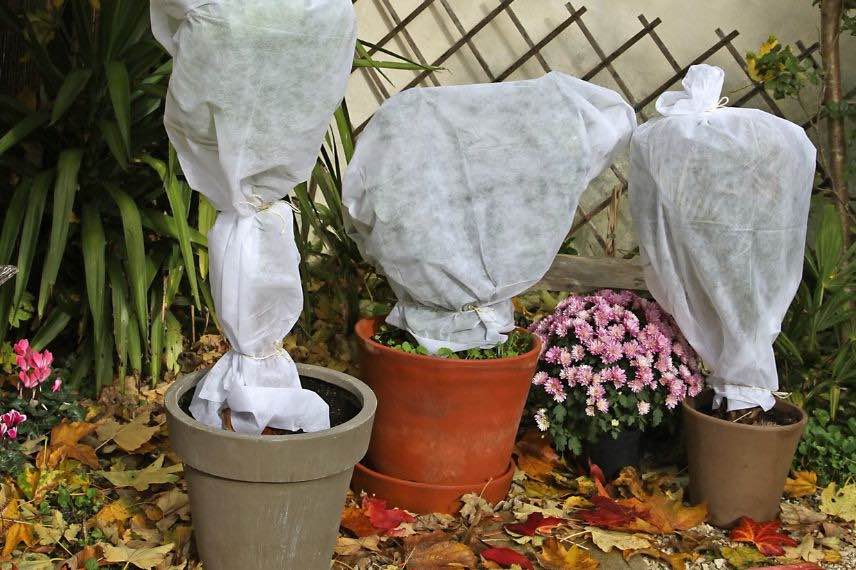
Protect your Anisodontea in winter
- Subscribe!
- Contents

Comments