





























9 slug-resistant Hostas
Discover varieties that are less susceptible to damage from gastropods
Contents
We all have in mind the vision of hosta leaves being widely devoured by gastropods. Fortunately, in addition to the various methods to prevent slugs from harming the garden, which are more or less effective, there are also varieties of hostas whose leaves almost never suffer from such damage. It is good to know that fast-growing and inexpensive hostas are prime candidates on the gastropod menu. It is also very useful to know that blue or blue-grey leaved hostas are covered in a waxy bloom that protects them from attacks. Variegated hostas often have thick, leathery foliage that deters even the hungriest slugs. Modern cultivars are more resistant. Sometimes, the name of the variety gives us clues about its anti-slug pedigree, and other times the information is provided by the horticulturist.
Discover 9 emblematic, but not exhaustive, varieties of hostas that maintain beautiful, undevoured foliage. It should be noted that if you live in a rainy region and this is the only plant in the garden to nibble on, perhaps in this cumulative case, your more resistant hostas may still be bothered by a few rampaging gastropods.

Hosta 'Great Expectations'
Hosta sieboldiana ‘Great Expectations’ features highly ornamental foliage that is unappetising to slugs. Thick, crinkled, and tough, with a blue-green margin, these characteristics are not on the menu at the gastropod restaurant. For us, it is a variegated foliage full of refinement and light, tricolour, with a yellow and chartreuse centre, bordered by blue-green. This medium-sized hosta forms a well-rounded clump, wider than it is tall. It is a long-lived variety derived from the famous Japanese species Hosta sieboldiana, of which it is a beautiful improvement. Its strongly veined leaves are heart-shaped (cordate), rounded, and their thick lamina discourages leaf perforators.
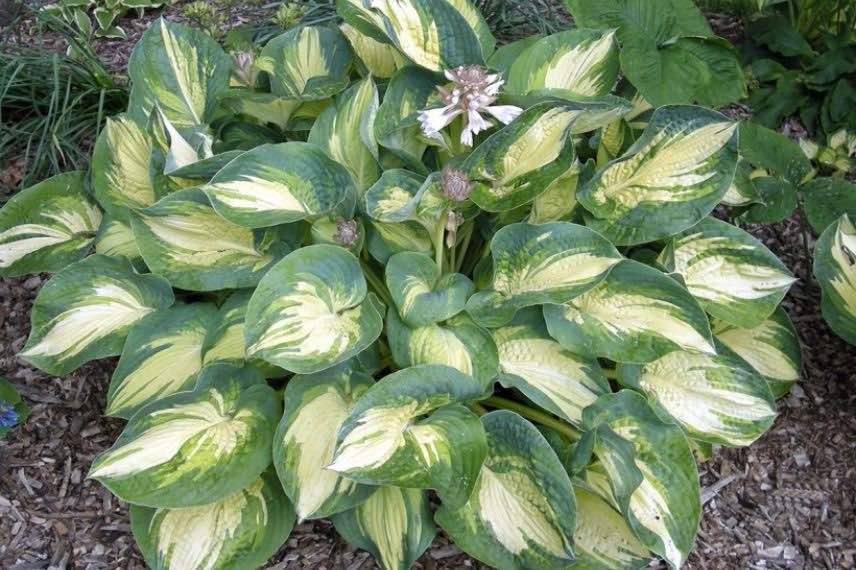
Hosta ‘Great Expectations’
Hosta abiqua 'Drinking Gourde'
Hosta abiqua ‘Drinking Gourde’ features a well-twisted leaf for garden snails (Helix hortensis). It is cup-shaped with raised edges. Thick and corrugated, it is also one of the bluest Hostas available. This is fortunate, as it is an additional criterion against damaged leaves, thanks to the waxy bloom that covers this leaf colour. This “Hosta of the Year 2014” forms a medium-sized clump that is as wide as it is tall, showcasing its stunning foliage that retains water in its large, concave, bright blue-grey leaves. They are held almost horizontally by upright petioles. The highly corrugated texture of its foliage further enhances its ornamental qualities, making it a perfect fit for a contemporary setting.
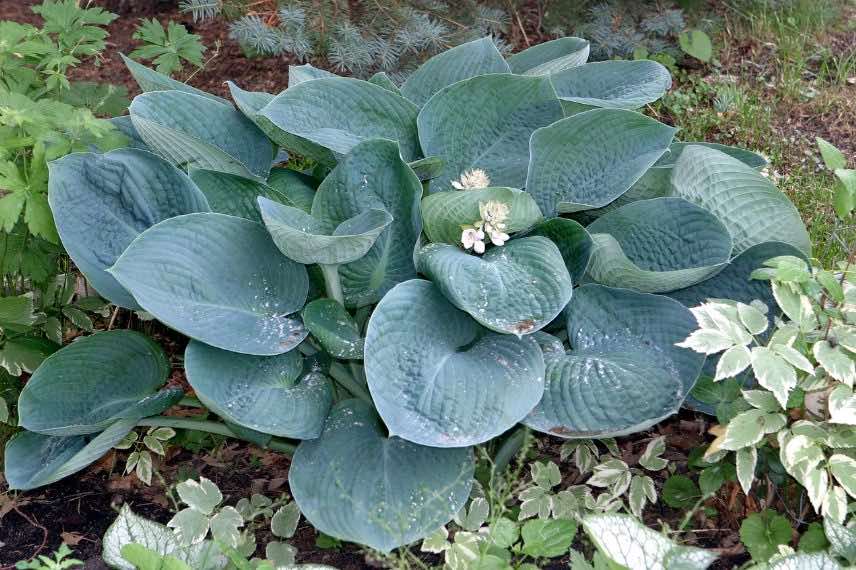
Hosta abiqua ‘Drinking Gourde’
Discover other Hostas - Plantain Lilies
View all →
Available in 1 sizes
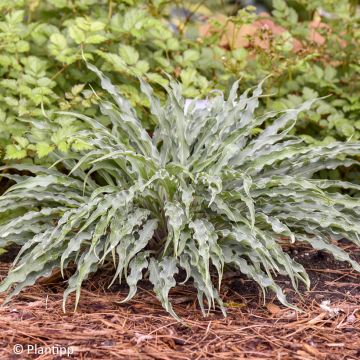
Available in 1 sizes
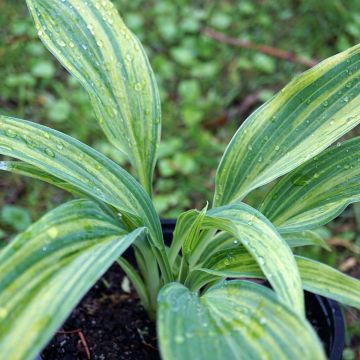
Available in 2 sizes
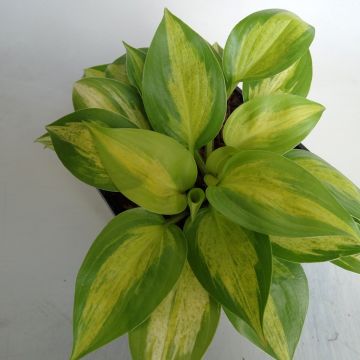
Available in 1 sizes
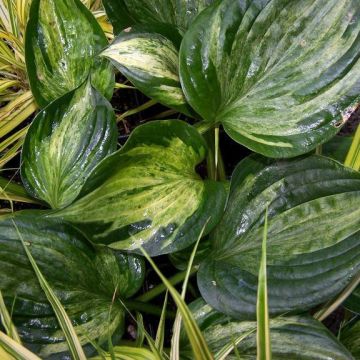
Available in 1 sizes
Available in 1 sizes
Available in 1 sizes
Available in 1 sizes
Available in 1 sizes

Available in 1 sizes
Hosta sieboldiana 'Frances Williams'
Hosta sieboldiana ‘Frances Williams’ is an old variety dating back to 1936. Although modern cultivars are increasingly resistant to slugs, some older varieties have proven their worth over time. ‘Frances Williams’ is a variegated hosta with thick blue-green leaves edged in pale green, heavily veined. Large, they measure about 20 cm in diameter and are heart-shaped. The overall plant forms a rounded clump 60 cm high and 80 cm wide. An excellent woodland plant, this hosta thrives in partial shade or full shade in cool soil (where our slug friends also flourish) and blooms in clusters of chalky white flowers, clay-coloured in July and August.
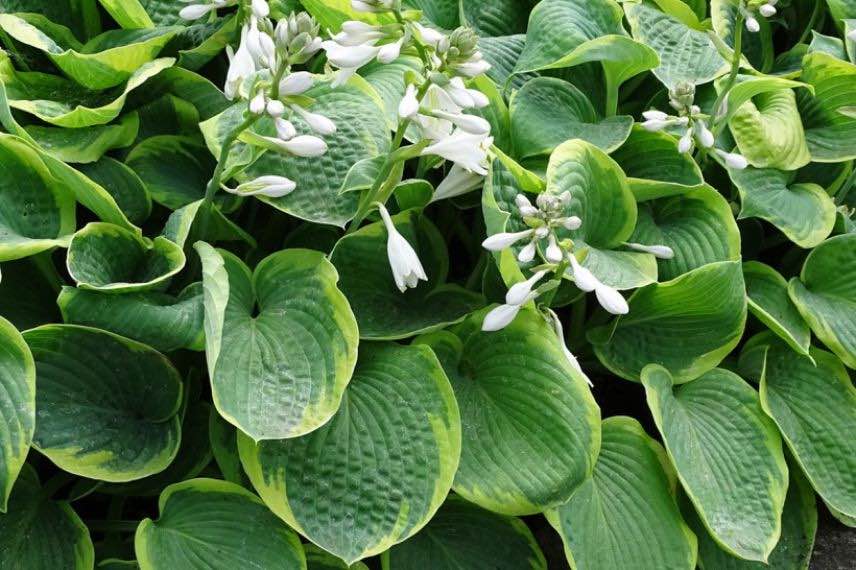
Hosta sieboldina ‘Frances Williams’
Hosta 'Blue Mouse Ears'
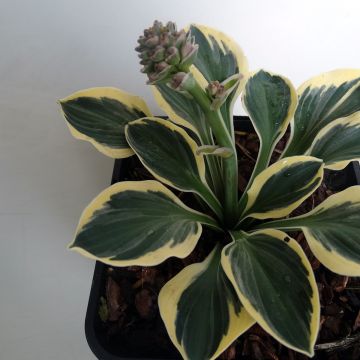
As its name suggests, Hosta ‘Blue Mouse Ears’ develops small blue mouse ear-shaped foliage. Although small in size with tiny leaves, this Hosta is no more susceptible to snail damage than others. With a blue-grey waxy hue and white edges, its thick, curled, and pointed leaf resembles a mouse ear both in shape and texture. Very sturdy, this miniature hosta reaches 15 cm in height and 20 cm in width, forming a small, dense mound with a very neat appearance, especially as its foliage remains intact. Although it is very close to the ground and gastropods, plant it confidently in borders, at the front of a bed, or in pots. Other varieties from the ‘Mouse’ series have emerged in recent years, featuring variegated or chartreuse green variations; they are all robust and maintain a beautiful clean foliage. Notable mentions include ‘School Mouse’, ‘Mighty Mouse’, ‘Smiling Mouse’, and ‘Sun Mouse’.
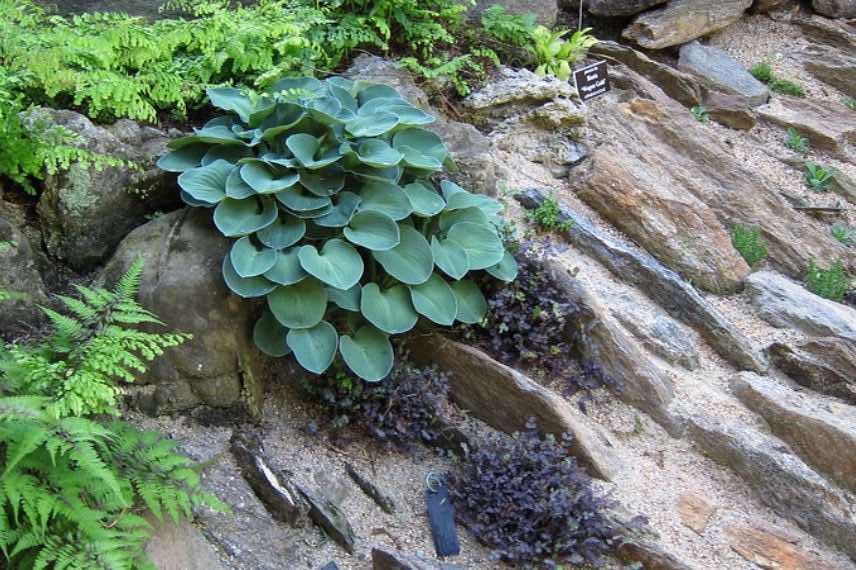
Hosta ‘Blue Mouse Ears’
Hosta 'Forbidden Fruit'
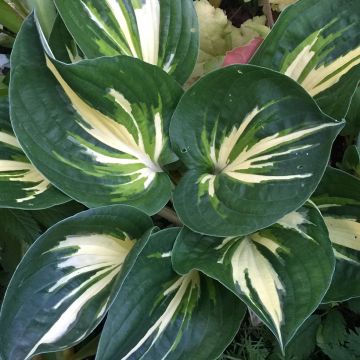
Hosta ‘Forbidden Fruit’ suggests by its name that it is not meant to be tasted by slugs. Yes, sometimes it is the cultivar’s name that gives us a hint. Here, it is a forbidden fruit… for slugs. Once again, we find thick, variegated foliage. Generally bicoloured, the leaves of ‘Forbidden Fruit’ are actually tinted with numerous colours: at the centre, there are shades of yellow and orange, creamy white, and on the thick margin, a bluish green with tips of chartreuse green. Each leaf is different and evolves throughout the season. It is heart-shaped with a pointed tip. The overall form is an upright clump, although it is wider than it is tall, of medium size and good longevity.
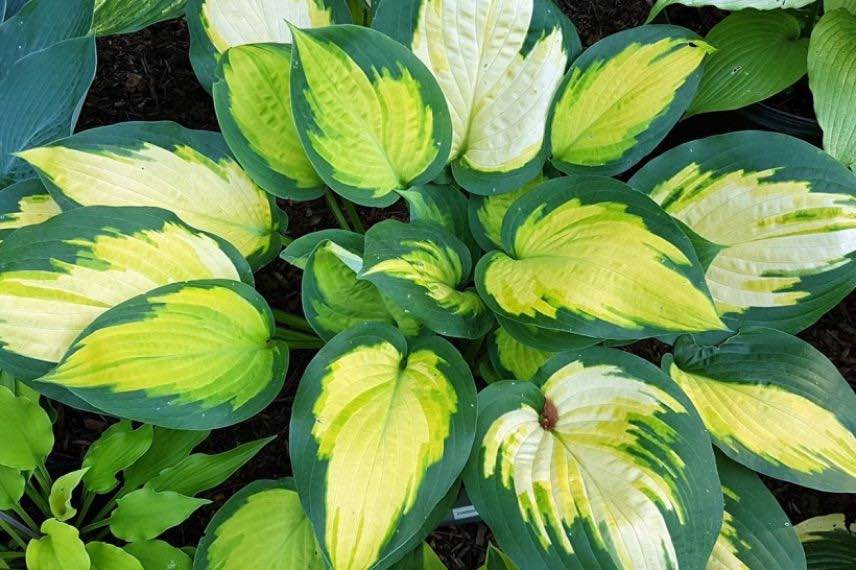
Hosta ‘Forbidden Fruit’
Hosta 'Diamond Lake'
Hosta ‘Diamond Lake’ is a variety with stunning, highly ornamental foliage. Its large cordate and elongated leaves are very undulate at the edges, and they are also deeply wrinkled. They are thick, and as they are “blue”, covered with that famous bluish wax, they deter gastropods on the lookout for a tender leaf. They measure up to 26 cm long and 22 cm wide, forming a very spreading clump that can reach 1 m in circumference and 55 cm in height. The lamina is very thick, and the variety is very blue. It is a long-lived hybrid derived from Hosta ‘Niagara Falls’, Hosta ‘Neptune’ (also quite resistant to slugs) and Hosta ‘Fulda’.
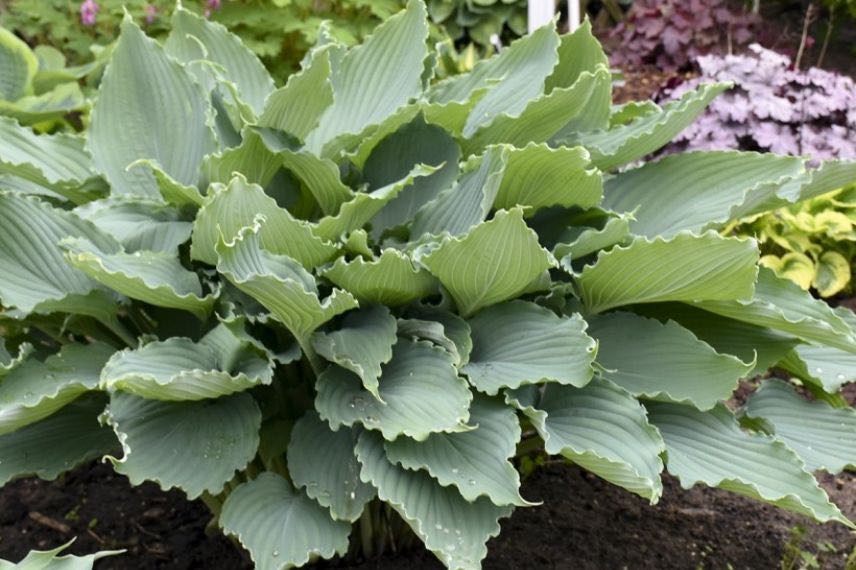
Hosta ‘Diamond Lake’
Hosta 'Golden Needles'
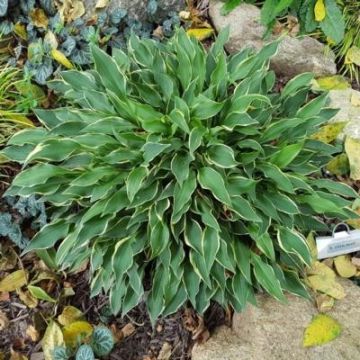
Hosta ‘Golden Needles’ is an unusual variety: its yellow leaves are entirely striated with green. It is a miniature hosta that only rises to 10 cm above the ground and spreads 30 cm in width. Its foliage is particularly thick for a dwarf hosta, which deters small nibblers. The heart-shaped leaves have a pointed tip, are smooth, with very slightly prominent veins, and are borne on a rigid petiole. Very bright, this variety is perfect for the edge of a border or in a pot, in partial shade or shade, where it enlivens the area with its colour. It is a descendant of Hosta ‘Silver Threads and Golden Needles’.
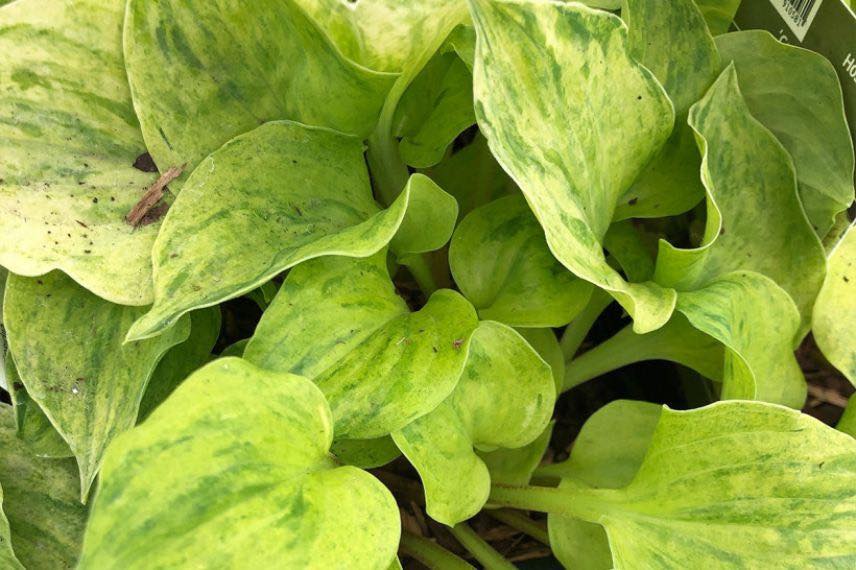
Hosta ‘Golden Needles’
Hosta 'Lakeside Maverick'
At the opposite end of the spectrum, the Hosta ‘Lakeside Maverick’ is an impressive giant variety. It forms a majestic clump of thick, heavy leaves that can measure up to nearly 40 cm long. Their veins are well-defined, becoming more crinkled in summer. They are dark green with a satin appearance. It looks down on slugs, unbothered by their attempts to attack its foliage. This Hosta reaches a height of 90 cm and up to 2 m in spread in 4 to 5 years. Its origin is indeterminate. This beautiful Hosta deserves a prime spot in the garden, and why not plant it as a specimen? There are several cultivars of Hosta named ‘Lakeside’ (at least 10), all considered to be spared from damage caused by gastropods. Notably, we can mention the Hosta ‘Lakeside Paisley Print’ and the Hosta ‘Lakeside Prophecy Fulfilled’, two other very beautiful smaller varieties with variegated foliage.
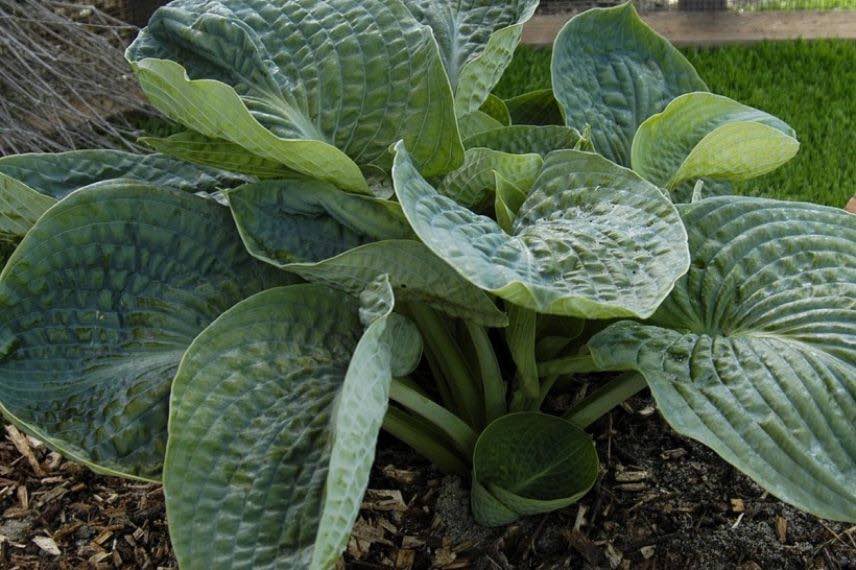
Hosta ‘Lakeside Maverick’
Hosta 'Empress Wu'
Another giant Hosta, ‘Empress Wu’ measures up to 1.35 m in all directions. Its gigantic cordate leaves can measure over 60 cm in length. The lamina is very thick, slightly undulating, with a crinkled texture and prominent veins, displaying a blue-green hue. The majestic clump of ‘Empress Wu’ has a very spreading habit, supported by well-erect petioles. This gently monstrous plant is quite resistant to slug attacks. The matte blue-green leaves in spring lose their waxy layer in summer, revealing a satin dark green colour. This Hosta, obtained in 2008, is a seedling of Hosta ‘Big John’ and descends from a large Japanese species: Hosta montana macrophylla. It can also be planted as a standout specimen, prominently displayed, or surrounded by beautiful large ferns.
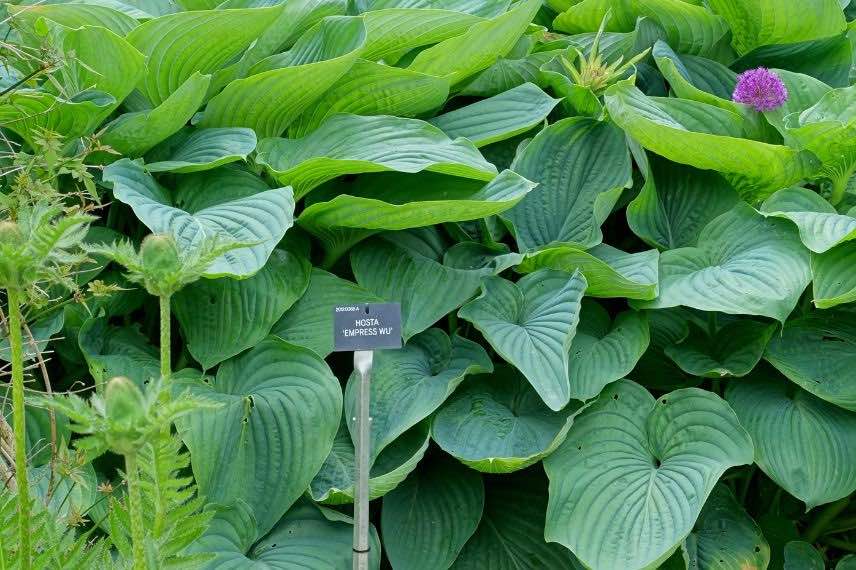
Hosta ‘Empress Wu’
- Subscribe!
- Contents

Comments