





























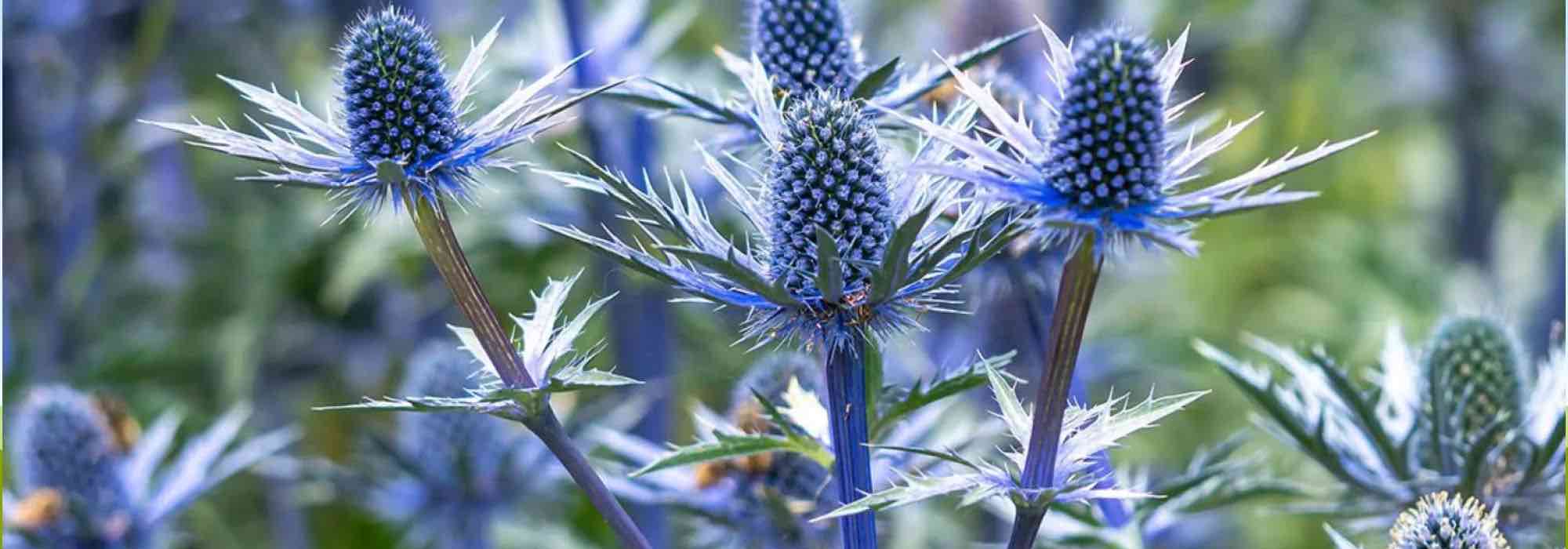
Xerophyte plants, plants adapted to drought
Xerophilous plants: characteristics and species
Contents
Xerophytic or xerophilous plants are plants that readily tolerate drought. They are very practical for adapting to climate change or to hot, dry regions. To resist water shortage, these plants employ a range of strategies, each more astonishing than the last: small leaves or fleshy leaves, a very deep root system or one that remains at the surface to capture water, and hairs that absorb moisture… Particularly suited to a dry, water-wise garden or to a garden with no irrigation, these plants never cease to surprise us. Discover xerophytic plants, their main characteristics, and the widest variety of species you can plant in the driest corners of your garden.

What is a xerophyte?
The term “xerophyte” derives from the Greek “xero” meaning dry and “phyte” meaning relating to a plant. Xerophytes are therefore plants adapted to a dry medium and resistant to drought. They can thrive in coastal dunes as well as in deserts, steppes and arid environments. Endowed with an incredible capacity to adapt to water scarcity, they develop various strategies to survive with little water or almost none.
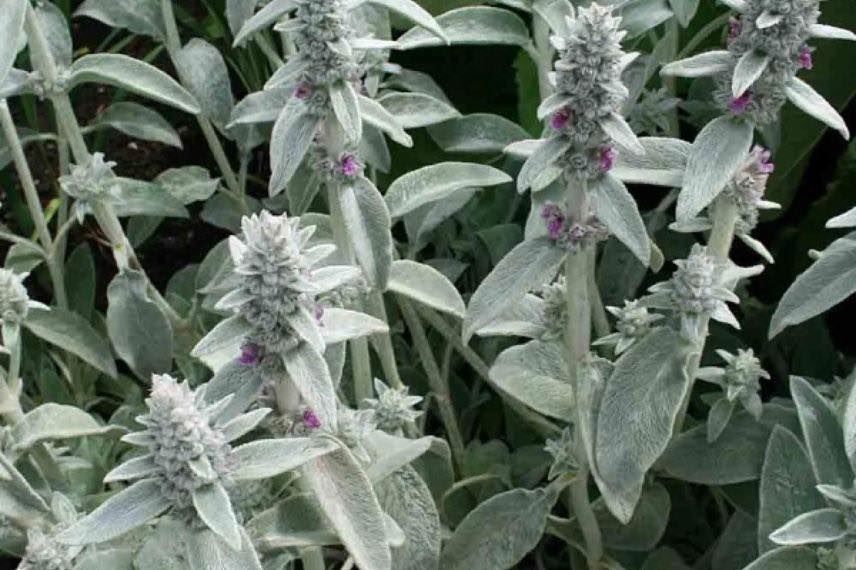
The Stachys byzantina has downy foliage that withstands weather fluctuations
How do xerophytes adapt to drought?
Xerophytic plants strive to capture every last drop of water and to store it efficiently so that they can use it in periods of high demand. They also minimise evaporation to avoid losing a drop of this precious moisture.
Some plants develop rosette-shaped leaves, which make it easier to collect water, such as aloe, for example. Others use their needles, silky foliage or hairy surfaces to trap or direct water toward the plant. Others finally build a deep root system, which draws water from deep in the soil. Others still prefer the inverse strategy: keep their roots on the soil surface to capture the smallest drop of moisture or dew.
After collecting water, xerophytic plants strive to store it efficiently. For this, they are equipped with fleshy leaves and stems such as succulent plants or with a swollen tuber (caudex) that serves as a storage site, like Beaucarnea, also known as ‘elephant’s foot’.

Beaucarnea with a caudex
Drought-tolerant plants to add to your garden
Xerophytic plants are perfect in a dry or irrigation-free garden, planted in well-drained soil and in full sun.
Among plants that tolerate drought, you can plant:
- cacti, such as the Vatricania guentheri – candle cactus or the striking Echinopsis subdenudata – sea urchin cactus, to be kept in frost-free regions as they are not very hardy. But other cacti withstand cold temperatures such as the Opuntia Alta.
- succulent plants with fleshy leaves such as Delosperma cooperi – Cooper’s iceplant which does not tolerate frost beyond -9°C and the sedum, which are, on the other hand, very hardy. Very striking, Agave ovatifolia is also a plant that tolerates frost well. With its rosette-shaped leaves, Aloe brevifolia and its red flowering spikes make a striking feature in a dry garden. Also think of the Sempervivum tectorum (houseleek) with its small fleshy leaves and pointed rosettes to serve as a rainwater container.
- yuccas, native to the arid regions of North America, which are evergreen shrubs with sword-shaped leaves. They produce a spectacular white bloom, in dense clusters of bell-shaped flowers.
- caudex trees, which store water in their enormous bases, such as the original Beaucarnea recurvata – bottle tree or elephant’s foot, a Mexican tree to be grown outdoors in Mediterranean-climate regions and indoors in other regions.
- plants that live in dunes such as the blue thistle and Ammophila arenaria – marram grass.
- plants with velvety foliage such as Stachys byzantina or dusty miller, which also tolerate cold temperatures.
- aromatic plants, from lavender to thyme and rosemary, to create a cooking herb corner or to waft their fragrant aromas.
- Mediterranean-type trees and plants, such as the olive, the oleander and the rockrose, the lavender. Consider also Perovskia, the immortelles such as Bracteantha ‘Granvia Gold’. This type of plant generally does not offer robust hardiness and is best planted in regions with mild winters.
- grasses such as the Festuca glauca, Pennisetum and the Stipa tenuifolia – ‘Ponytails’ feather grass which tolerate drought and frost and can enhance a natural or flowering garden with a light touch.
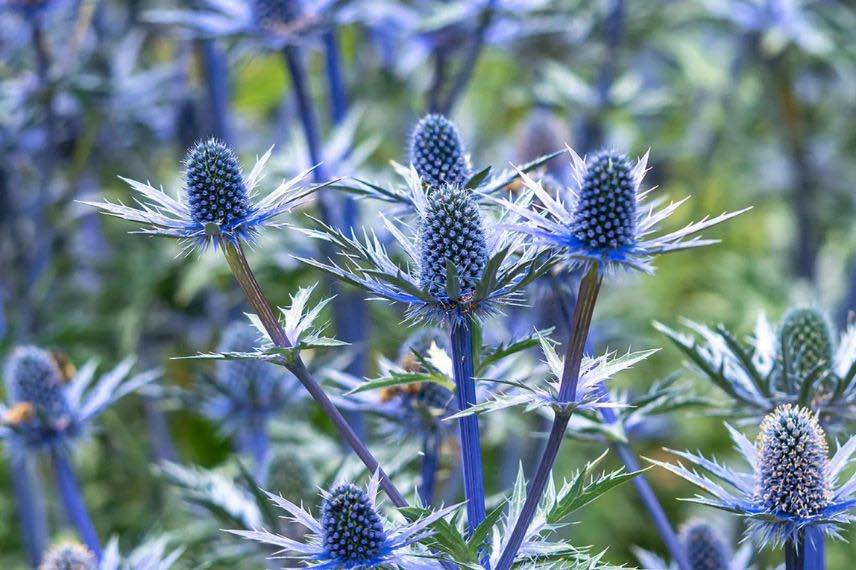
Blue thistles are dune plants that tolerate drought
- Subscribe!
- Contents
Comments