





























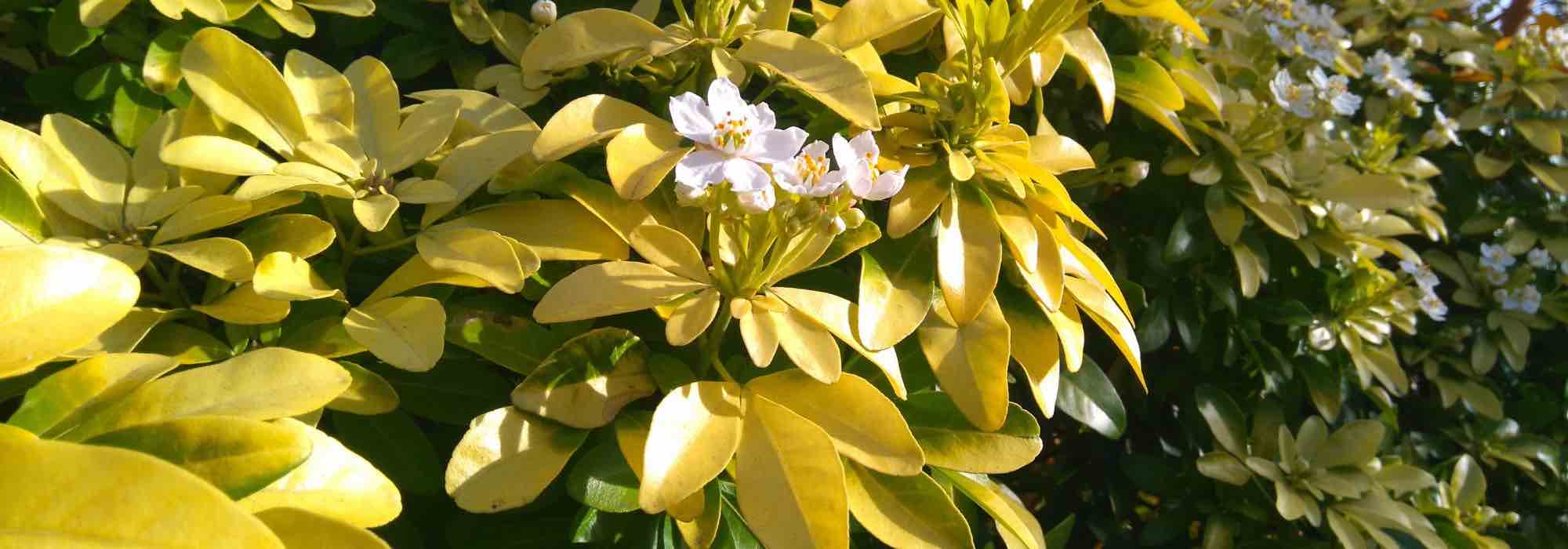
What is the best place for the Mexican orange blossom?
Ideal soil types and sun exposure for beautiful Choisias
Contents
Mexican orange blossom, or Choisya ternata, is a bush prized for its evergreen ornamental foliage and fragrant white flowers. Native to Mexico, it is frost- and drought-tolerant and can grow throughout France. However, it is important to choose the right location and the right planting conditions to see it flourish rather than languish.
This article provides detailed guidance for planting your Choisya in the best possible conditions. By following these practical tips, you can create an environment conducive to the growth of your Mexican orange blossom, thus ensuring a vigorous, floriferous and aesthetically pleasing plant all year round.
The different types of Choisya
Mexican orange trees come in several varieties, each with its own characteristics in terms of size, colour and the form of the foliage and flowering habit.
Each variety has unique characteristics that can meet different aesthetic and practical needs in your garden. Whether you are looking for a plant for a small space, a decorative hedge or simply a fragrant addition to your border, there is a Choisya for every situation.
Choisya ternata is the most common species. It is characterised by its glossy green foliage and white star-shaped flowers that emit a pleasant fragrance reminiscent of citrus. It can reach up to 2.5 metres in height and spread about 2 metres wide. Its main flowering occurs in spring, with a possible rebloom in autumn. An ideal choice for hedges or imposing borders.
Smaller Choisya varieties
For smaller spaces, the Choisya ‘White Dazzler’ is an excellent option, with a compact habit reaching around 1 metre in height and width. As for the Choisya ‘Little Bee’, it barely reaches 60 cm in all directions. These cultivars are particularly suited to small gardens or container planting.
Choisyas with different foliage
Differences in colour and foliage shape form another distinctive feature among Choisyas. The foliage of Choisya ternata is glossy green, lanceolate, classic and elegant, suiting most garden styles.
To add a splash of colour, the Choisya ‘Sundance’ offers vibrant golden foliage, bright all year round, ideal in shaded areas of the garden.
‘Aztec Pearl’ features linear, fine, more graphic foliage, just like ‘Little Bee’. Both also feature golden foliage.
Finally, the Choisya ‘Apple Blossom’ offers a bicolour flowering clearly tinged with pink. Its foliage is almost feathery, with slender leaflets.
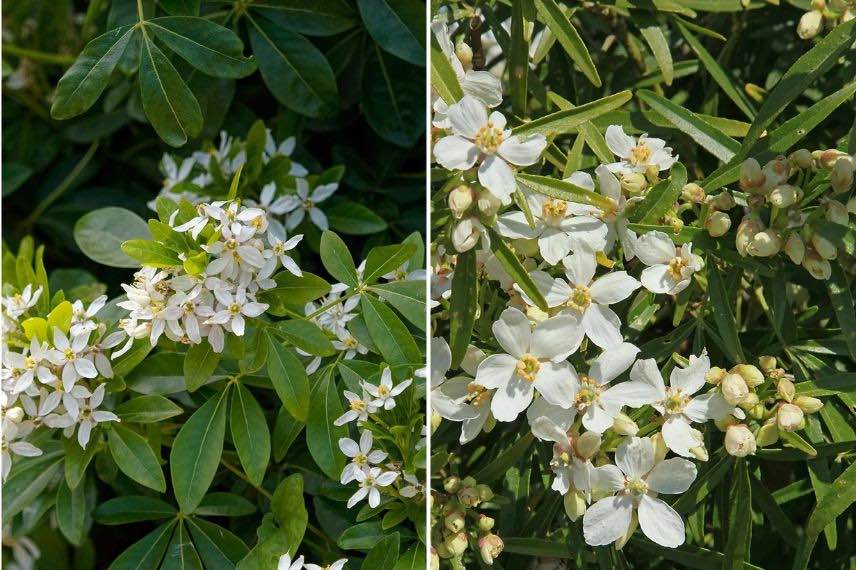
Foliage of Choisya ternata on the left and that of the cultivar ‘Little Bee’ on the right
What light exposure does a Mexican orange require?
Choisya is valued for its robustness and its adaptability to a range of climates. However, to ensure optimal growth and flowering, it is essential to choose the right location.
Mexican orange thrives particularly well in full sun, the ideal exposure north of the Loire. A sunny exposure promotes more abundant flowering and denser foliage. In regions south of the Loire, its foliage tends to scorch in full sun, and it appreciates a little shade during the day.
A partial shade exposure is therefore quite possible in our warmest and driest regions, and even recommended. In these conditions, the plant benefits from diffused light, and helps prevent leaf burn caused by overly intense sun, while ensuring satisfactory flowering.
Although Choisya can tolerate a shade exposure, it is not the most favourable condition for abundant flowering. Dense shade can reduce the number of flowers produced and make the foliage less dense, and the shrub’s growth habit looser. Nevertheless, in a garden where shade is unavoidable, Choisya can still offer decorative and evergreen foliage. Light shade, rather than dense shade is preferable to avoid completely compromising flowering.
It is important to plant Choisya in a sheltered position, as it enjoys warm conditions, and to protect it from icy and drying winds. Plant it near a wall, a hedge or other sturdier plants can provide a natural windbreak.
Note, however, that it tolerates sea spray, making it a good coastal plant.
Choisya is hardy, tolerating brief frosts down to -15°C once well established. In regions where winters are harsh, a sheltered and sunny exposure helps the plant better withstand low temperatures. In a Mediterranean climate, partial shade can also be beneficial during prolonged drought, though it is fairly drought-tolerant in summer.
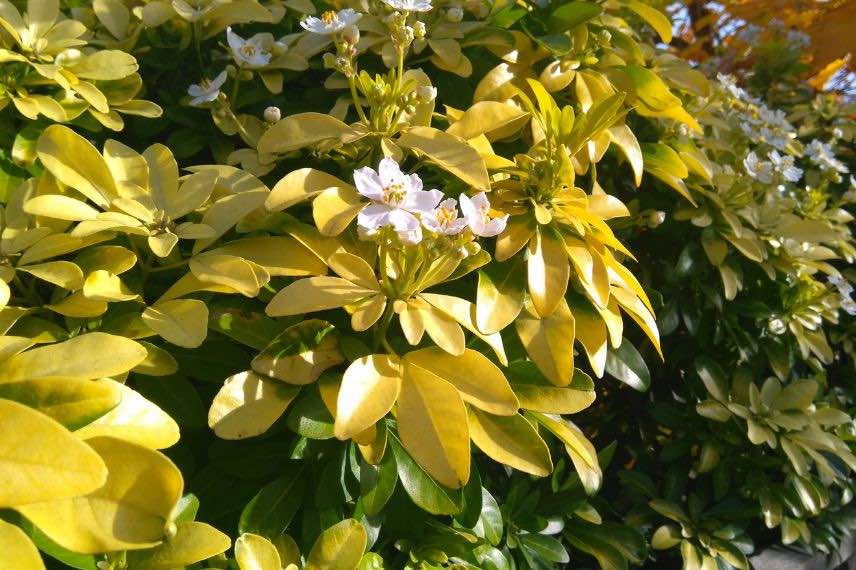
Choisyas (here ‘Sundance’) enjoy sunny exposures, but are fairly tolerant
What type of soil should you plant your Choisya in?
A well-suited soil is a key factor in how your bush will thrive, grow, and withstand drought and frost.
Mexican orange bushes are relatively tolerant, but some soil types promote their development more effectively.
- Choisya requires well-drained soil. It dislikes waterlogged soils in winter, especially when young. To ensure good drainage, you can add river sand, gravel or red pouzzolane to the soil at planting. If your garden has clay soil, which retains water, it is essential to amend it to improve drainage.
- A light, well-aerated soil is ideal for Choisya. Heavy, compacted soils can prevent roots from spreading properly, thereby limiting the plant’s growth. By incorporating compost or organic matter, you can improve soil structure, making it lighter and easier to aerate.
- Mexican orange bushes thrive in soils rich in organic matter. Compost, well-decomposed manure or organic fertilisers can enrich the soil, supplying the nutrients needed for vigorous growth and abundant flowering. It is recommended to mix these organic materials into the soil before planting and to use them as mulch around the plant to maintain an adequate nutrient level throughout the plant’s life.
- Choisyas are not fussy about soil pH and tolerate a little lime. Avoid planting in highly calcareous soil.
Finally, a layer of organic mulch around the base of Choisya helps conserve moisture, regulate soil temperature and to prevent weed growth. Mulch also decomposes over time, further enriching the soil with organic matter.
What depth and width are required for planting Choisya?
A good planting-hole depth promotes healthy rooting and helps your bush establish itself. The hole should be dug to a depth equivalent to three times the size of the root ball of your Choisya.
For young Choisya plants, a hole 30–40 cm deep is generally sufficient. If you are planting a more mature bush, adjust the depth according to the size of the root ball.
The width of the planting hole is just as important as its depth. A wide hole allows roots to spread more easily in the loosened soil, thereby aiding their establishment. As with depth, it is recommended to dig a hole three times the width of the plant’s root ball.
For example, if the root ball of your Choisya measures 20 cm in diameter, the hole should measure 60 cm in all directions. This extra space allows you to amend the soil around the root ball with compost or organic matter and drainage materials, thereby improving growth conditions.
In the ground or in a pot?
Mexican orange is a versatile plant that can be grown either in the ground or in pots. The smaller cultivars are all the better suited to pot cultivation.
Planting in the ground
In the ground, Choisya roots have enough space to spread, allowing the plant to grow more quickly and become more robust.
Plants in the ground require less watering and fertilisation than plants in pots, as they can draw nutrients and water directly from the surrounding soil.
In the ground, Choisya is better protected against extreme temperature fluctuations. The soil helps regulate the temperature around the roots, thereby protecting them from frost in winter and from overheating in summer.
Make sure you have enough space in your garden for Choisya to grow to its full size. Some varieties can reach up to 2.5 metres in height and 2 metres wide.
Planting in pots
Pot planting is a good solution for small gardens, terraces or balconies.
Potted plants can be moved easily. This can be helpful for protecting the plant from winter frosts or extreme heat.
Choose a pot large enough to allow the roots to develop. A pot 40 to 50 cm in diameter is recommended for a young Choisya. Also ensure the pot has drainage holes to prevent water accumulation.
Potted plants require more frequent watering and regular fertilisation, as they have access to a limited amount of nutrients. Monitor substrate moisture closely and use a balanced fertiliser to support the growth of the plant.
In winter, a potted plant is more frost-prone than in the ground. It may be necessary to protect the roots by wrapping the pot in insulating material or moving the pot to a sheltered location.
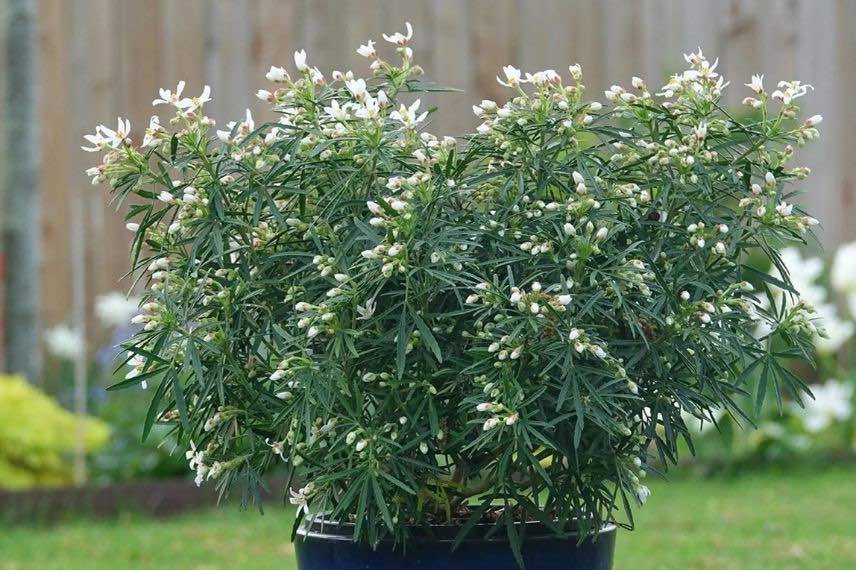
Choisias can also be planted in pots; prefer medium to compact cultivars (here ‘Little Bee’)
- Subscribe!
- Contents
Comments