





























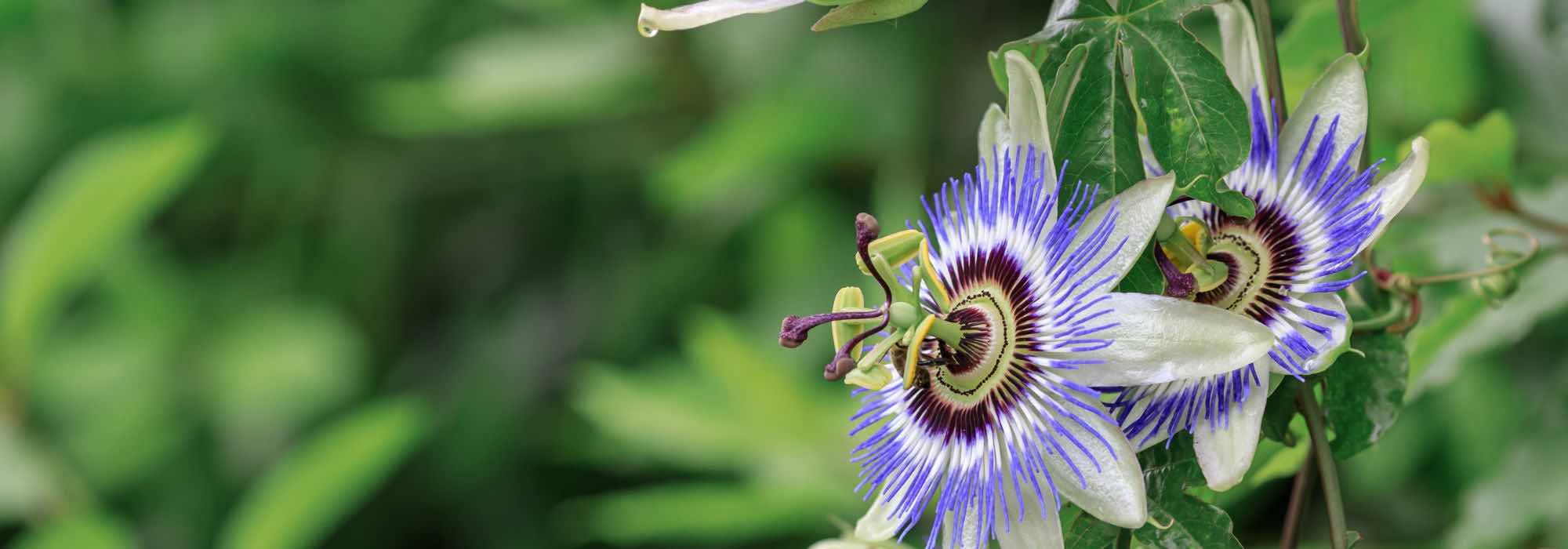
What is the best place to plant a passion flower?
The perfect soil types and sun exposure for beautiful passion flowers
Contents
The passionflower, or passion flower, is a climbing plant that captivates mainly with its exotic flowers or for its delicious fruits in the species Passiflora edulis. Originating from the tropical and subtropical regions of the Americas, this climbing plant is prized for its ability to densely and rapidly cover walls, trellises and pergolas with its dark green foliage and then provide spectacular and abundant flowering, in summer, from June to the first frosts. To make the most of its attributes, it is crucial to choose the right location in which to plant it. This article explains everything you need to know about planting your passionflower in the best conditions.
→ Read our family sheet: passionflower, passion flower: planting, pruning, growing.

The different types of passionflowers
Passionflowers are beautiful and vigorous climbing plants, twining by their tendrils, bearing intricately formed flowers with an exotic look. They cling to supports on their own, prettily dressing walls, fences, trellises, porches, pylons and trellises, and they also perform well in a conservatory or glasshouse. In regions with hot summers, the passionflower fruit is edible, but often of little flavour in ornamental varieties. These fruits, known as grenadillas or maracujá, are tasty if they come from Passiflora edulis, P. incarnata and P. alata. The true passion fruit comes from the species Passiflora edulis, but again, this variety needs warmth and sun to bear fruit.
There are more than 500 passionflower species, but the most commonly cultivated in our gardens are Passiflora caerulea, Passiflora edulis and Passiflora incarnata.
- Passiflora caerulea : this species is the hardiest of the group. It can withstand temperatures down to -10 °C. Its white and blue flowers are particularly decorative.
- Passiflora edulis : known for its tasty fruits, it requires warmer temperatures and does not tolerate frost.
- Passiflora incarnata : also called the medicinal passionflower, it is used for its medicinal properties. It prefers temperate climates and shows a hardiness similar to P. caerulea.
These species are the source of many hybrid cultivars.
If these typical species are generally bi-coloured, white-blue or white-violet, or even mauves, cultivars differ by colours and shapes of flowers:
- white in ‘Constance Eliott’ or ‘Snow Star’ with long filaments.
- red in ‘Michael’ or P. vitifolia with slender tepals.
- Passiflora ‘Victoria’ with pink flowers.
- Passiflora ‘Violacea’ : a popular variety for its violet flowers.
Some varieties have flowers with a stronger fragrance than others, this is the case for the Passiflora ‘Perfume Passion’.
The passionflower is a climbing plant that can reach a height of between 5 and 15 metres. Some cultivars grow to about 3 m in height, such as the Passiflora insignis ‘Pink Passion’.
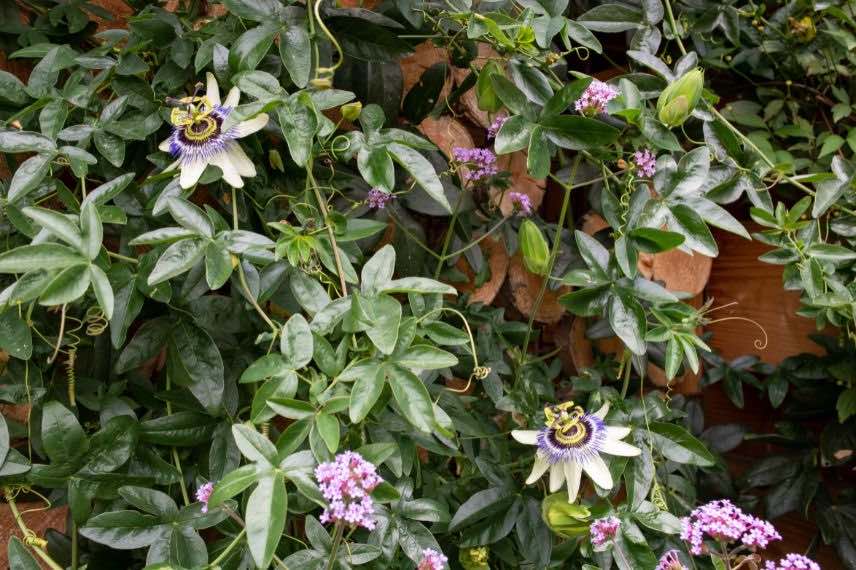
Passionflowers are vigorous, large-growing climbers
Being a plant from exotic regions, the passionflower is not a plant with great hardiness, but there are notable differences between the Passiflora edulis, which does not tolerate sub-zero temperatures, and the hardier, type species P.caerulea which withstands down to -12° C when well established.
→ For more information, read our advice sheet on the hardiest passionflowers.

On the left, Passiflora caerulea, ornamental and fairly hardy; on the right, Passiflora edulis, not hardy, which produces the true passion fruits.
What sun exposure does a passionflower need?
Passionflowers are plants that love sun and warmth. They require full sun exposure to thrive. A sunny spot in the south or south-west is ideal to guarantee maximum sun exposure. However, in very hot regions, slightly shaded exposure during the hottest part of the day can be beneficial to prevent leaf burn.
Ensure your passionflower is sheltered from cold winds that could damage its stems and leaves.
If you grow it in a greenhouse or conservatory, choose a very bright location.
In good, sheltered, warm and sunny conditions, passionflowers can grow up to 4 m per year and produce more flowers and fruits.
If you can only offer it a site with partial shade, even in northern regions, it will not hold that against you much, but it will be less vigorous and floriferous.
In mild climates, vigorous, large-growing passionflowers can be somewhat invasive, particularly through self-seeding. Their tolerance of summer drought is excellent. It will be less vigorous and voluble in dry conditions, but just as floriferous.
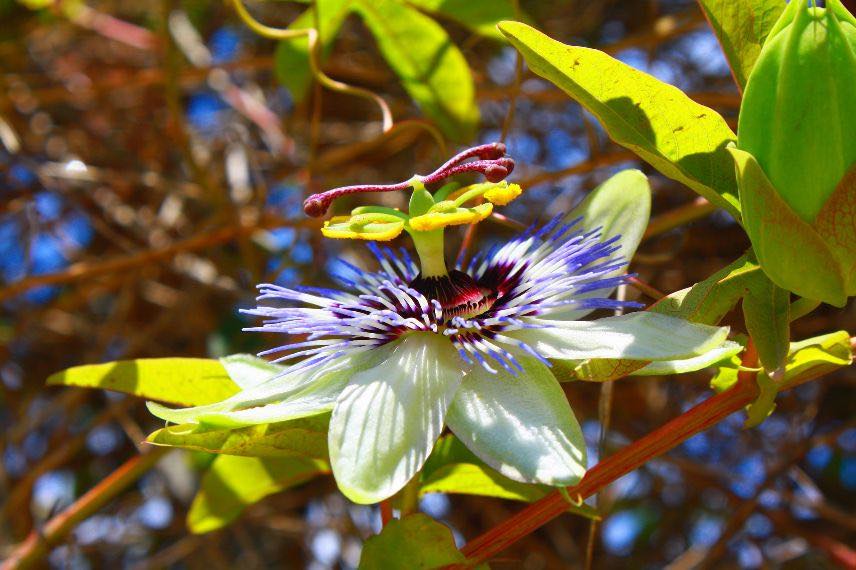
Passionflowers are heat-loving plants that are nonetheless tolerant of exposure
What soil should you plant passionflowers in?
Passionflowers, though not particularly fussy about soil, grow to the full potential in a deep, well-drained soil rich in organic matter. The pH matters little, acidic to neutral or alkaline, it tolerates lime.
The passionflower also grows in poor soil, again, as long as it is well-drained.
To prepare the soil, incorporate compost or well-rotted manure to enrich the soil with nutrients. If your soil is heavy clay and retains too much water, add coarse sand or gravel to improve drainage. Good drainage is essential to prevent the roots from rotting, especially in winter.
In damp soil and rainy climates, raise the soil and plant it on a mound. It is in regions with very high rainfall that you must pay the most attention to drainage, because rain combined with winter cold is not at all welcome for your passionflower. In cold regions, protect the branches with several layers of winter fleece, in addition to earth‑up the plant.
The passionflower is not troubled by dry conditions in southern regions, it is also tolerant of dry soils. In case of drought, if the plant is well established, only its growth will be slowed. Water the passionflower for the first two years after planting, while it becomes established. Thereafter, there is no need to water it, unless you want it to colonise the area where you planted it.
Truly low-maintenance, the passionflower is not exactly a very hungry plant either. Nevertheless, an application of organic fertilizer or well-rotted compost in autumn improves its robustness and foliage.
Remember to place the passionflower on a support to bear the weight of its foliage. Train its branches along the support, as its growth is exuberant.
What depth and width does passionflower need?
Planting passion flowers requires a hole wide and deep enough to allow roots to spread. As a general rule, dig a hole 40 to 50 cm deep and 40 cm wide. This ensures roots have enough space to develop.
If the root ball is fairly small, simply dig a hole three times the size of the root ball.
Before planting, soak the root ball in a bucket of water to hydrate it well. Prepare the planting hole with drainage materials and any amendments you may need, in addition to the soil or potting compost. Then place the root ball in the hole, ensuring the collar (the junction between the roots and the stem) is at ground level. Backfill the hole with the soil mix, firm it lightly and water thoroughly.
In the ground or in a pot?
Passionflower can be grown in the ground or in pots, according to your needs and the conditions of your garden.
- In the ground : ideal for large gardens, passionflower can climb along walls, trellises or pergolas. Make sure to provide it with an adequate support so it can cling and develop harmoniously. In the ground, it will benefit from ample space to spread its roots and grow vigorously.
- In pots : pot culture is perfect for balconies, terraces or small gardens. Choose a pot large enough, at least 40 cm in diameter, with drainage holes to prevent waterlogging. Use a mix of potting soil and compost to fill the pot, and water regularly to keep the substrate slightly moist. If necessary in winter, bring the pot indoors or into an unheated greenhouse to protect the plant from frost, or cover it with an overwintering fleece.
Hardy passionflowers can be planted in the ground; but, unless you live around the Mediterranean, we would rather recommend pot culture for the cold-sensitive. This will allow you to bring them in easily in winter, under cover, to protect them from the cold. You can also grow them under a greenhouse or a conservatory all year round.
The Passiflora caerulea, the hardiest, can stay in the ground, in a sheltered position, even in regions north of the Loire, for example along a south-facing wall, which will reflect the sun’s heat. Take care to mulch well before the first frosts. In case of severe frost, cut it back to the base in early spring.
For pot plantings, given the very substantial growth of passionflowers, choose smaller-sized passionflowers, for example Passiflora ‘Byron Beauty’.
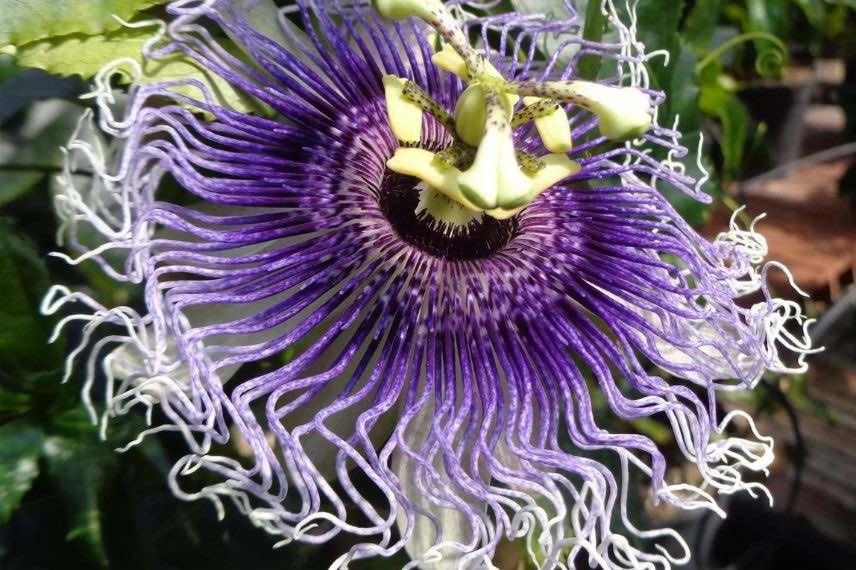
The Byron passionflower has moderate growth, ideal for pots
- Subscribe!
- Contents
Comments