





























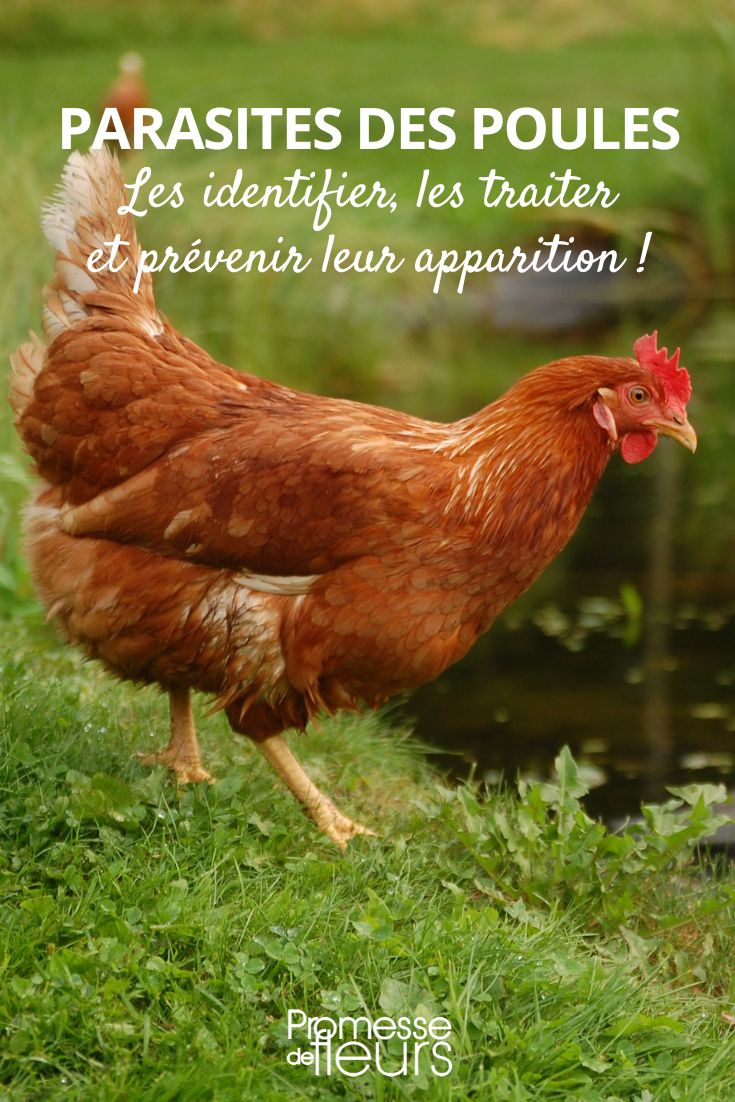
Poultry parasites: identifying them, treating them and preventing their occurrence
Inventory of various external and internal parasites that can affect laying hens.
Contents
Behind their sturdy exterior, their weather resistance and their voracious appetites lie, in fact, small, fragile beings! That’s why you pamper your pullets and give them the best possible environment with a cosy hen house, equipped with perches and nest boxes, a predator-proof run and access to the garden. Not to mention a tasty, healthy and balanced diet.
Yet, sometimes your hens show signs of weakness, a sign of ill health. Of course, there are many diseases that can explain this ill health. But also various external or internal parasites. Obviously, anyone who keeps a few laying hens in their garden thinks of red mites at the mere mention of parasites. Yet, there are others, just as dangerous.
Let’s take a look at the various parasites that can affect our laying hens. Once properly identified, these parasites are easier to eradicate and, above all, to prevent.

Warning signs
If you know your hens well, their little habits and quirks, you should spot a change in their behaviour fairly quickly. If your flock is large, it’s harder to see any change. Nevertheless, certain signs should alert you as they indicate ill health, perhaps due to illness or a virus, or even to the presence of parasites attacking your hens. Thus, a hen that stops eating and visibly loses weight, or a hen that has lost all activity, is a sick hen. Similarly, a sudden and abnormal drop in egg production should raise concerns.
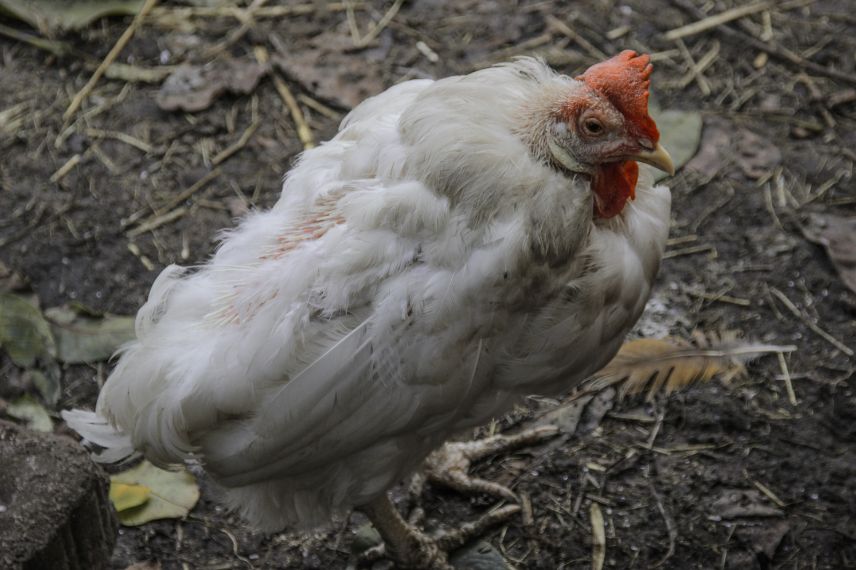
A hen that changes its behaviour, appears apathetic or doesn’t eat should alert you
Likewise, observing your hens daily is essential. Thus, you will be able to detect the slightest anomaly. A hen that scratches itself is not normal, just as sudden feather loss (outside the moult period between the end of summer and the middle of autumn). Also look closely at your hens’ droppings, as well as their combs and feathers…
If you observe any of these signs, try to catch your hen in order to examine her. This simple observation can help detect a parasitic infestation.
External parasites, nestled in the hen house.
The easiest parasites to spot are external parasites, as they are found in the feathers. Or they attack the chicken’s skin. A strict inspection of the feathers can reveal them. But these external parasites can also proliferate in the henhouse.
The red mites
Obviously, when we talk about parasites, every keeper of a few hens thinks of red mites. The dread of anyone who keeps a few chickens! These infamous yet feared red mites, named Dermanyssus gallinae, are in fact blood-sucking mites that become red when engorged with blood. About 1 mm long, they particularly favour wooden coops with their interstices, cracks, crevices and corners where they thrive. At night they feed on the hens’ blood, which leaves them weakened and sometimes dead. Often carried by rodents and wild birds, red mites are very difficult to eradicate. Not only because the females are highly productive in terms of egg-laying, but also because the eggs can remain intact for 8 to 9 months awaiting the best climatic conditions to hatch.
How to tackle it?
First of all, you must imperatively isolate the hens from the henhouse, or even put them in quarantine. Then, the henhouse must be cleaned thoroughly at high pressure with water mixed with white vinegar. Pay particular attention to the corners and items such as the perch and nest boxes that can be passed through the flame of a blowtorch. Once this work is done, rather than chemical products harmful to the hens, you can spray non-calcined diatomaceous earth. The oil of cade can also be effective, brushed into the henhouse. Today, there are also predatory mites that prey on red mites.
The most resistant red mites will need to be treated with more potent products prescribed by veterinarians. A change of henhouse can be considered: wooden coops can be replaced with a plastic one, or better still a sturdy coop, under 5 m² to avoid the need for prior planning permission and the development tax.
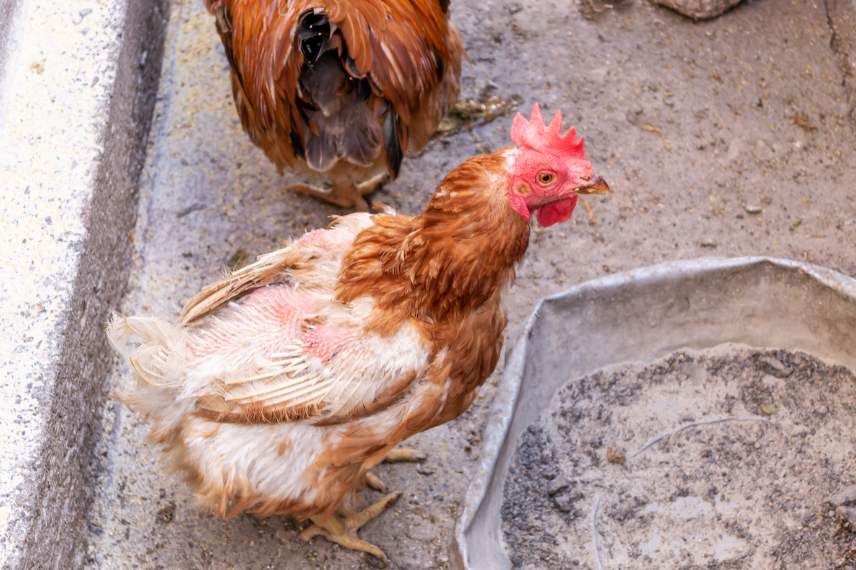
A hen that loses its feathers abnormally may be attacked by parasites
Common lice and chewing lice
These lice are insects that bite the hens at specific spots: the base of the wings, the thighs, near the cloaca and at the neck. Generally, the hens scratch themselves. If you provide them with a bath made of sand and ash, they will roll in it to rid themselves of them. Otherwise, diatomaceous earth is fairly effective in the henhouses. Dusting the henhouse with plant-based pyrethrum powder has also shown its effectiveness.
The scaly feather mite
This contagious disease is caused by a mite named Cnemidocoptes laevis. As its name suggests, it causes abnormal feather loss all over the hen’s body. Feathers do not grow back. In parallel, the hen scratches. The application of oil of cade works quite well.
The scaly leg mite
It is also a blood-sucking mite (Cnemidocoptes mutans) that causes this condition affecting featherless areas, particularly the legs. Easy to spot, the scaly leg mite presents with several symptoms: the skin on the legs thickens, the scales lift, yellowish crusts and growths appear. Often the hens begin to limp.
To treat your hens, simply apply oil of cade to the legs for at least 15 days. At the same time, the henhouse should be thoroughly cleaned and treated with diatomaceous earth.
Internal parasites, more difficult to identify
Much harder to spot with the naked eye because they are hidden inside the body, internal parasites often take the form of worms in hens. There are several different species as well.
Intestinal worms
These intestinal worms settle in the hens’ digestive tract. Invisible, they are common in hens. In general, a hen that loses weight rapidly may be infested. With certain worms, she may die. Intestinal worms take several forms:
- Roundworms: these include the ascarids, 3–7 cm long, often found in the droppings, and the smaller heterakis, which appear in the first part of the colon, the caecum.
- Flatworms: tapeworms are distinguished by the presence of rings along their bodies. In general, they are attached to the wall of the intestine.
Crop worms or capillariids
These worms colonise the crop and the intestines; they are extremely fine, like a hair, and 7–18 mm long. They cause capillariasis, a disease detectable by palpation of the crop which is soft, as if filled with water. This disease can lead to the death of hens if left untreated.
Tracheal worms
These worms, called syngamoses, settle in the trachea where they inevitably cause serious breathing problems. Generally, hens that cannot breathe normally look for air by lifting their heads.
Coccidia
Unlike the previous parasites, these are intracellular. These parasites, naturally present in the body, only develop if the hen shows a degraded or weakened health state. They cause coccidiosis, detectable by the presence of haemorrhagic diarrhoea. Moreover, the hen is lethargic. This disease is contagious.
How to fight?
The best way to combat these internal parasites is deworming. Hens should therefore be regularly dewormed. Again, chemical dewormers can be used, but natural dewormers are preferable for your hens and their eggs.
Among natural dewormers, you can provide:
- Uncalcined, food-grade diatomaceous earth to be added to the feed
- Unpasteurised apple cider vinegar at a rate of one tablespoon per litre of water once a week
- Garlic cloves crushed in water, with a little thyme infusion
Read also
Forbidden foods for chickensPrecautions to take to guard against parasitic pests.
To prevent the spread of these parasites, which are always difficult to eradicate, and, above all, very troublesome or even deadly for your hens, prevention is essential. The first essential step is to ensure perfect hygiene in the chicken coop. Thus, it is recommended to air the chicken coop daily and remove the night’s droppings. The litter should be changed at least once a week and the chicken coop cleaned once a month. Take the opportunity to lay down uncalcined diatomaceous earth on the floor as a preventive measure. To learn more, do not hesitate to consult my article: Properly cleaning your chicken coop
To stay healthy and thus less susceptible to parasitic attacks and, above all, to diseases, your hens must be fed properly and in a balanced way. Their food should consist of at least 70 per cent cereals and 30 per cent protein. Again, I invite you to read my article to learn more: What diet for laying hens?
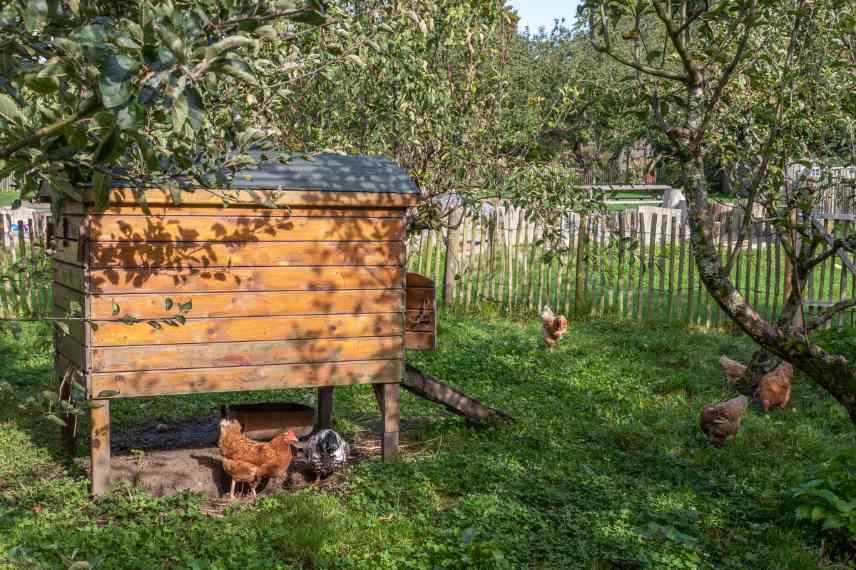
A clean chicken coop, good feeding and access to a grassy area are the main prevention measures
Finally, your hens need to stretch their legs. Therefore, it is essential that they have access to a grassy area where they will find grass, but also a multitude of small insects rich in protein. If you only have a small garden, with a lawn and borders, I share a few tips in this article: Chickens in the garden: a practical guide to successful cohabitation
The final tip is quite simple: keep an eye on your pullets! You’ll be able to spot any abnormal condition or unusual behaviour, often a sign of a problem with a hen.
→ You can also consult our article: Opt for natural remedies to keep your hens in top condition
- Subscribe!
- Contents
Comments