





























Permaculture and the organic vegetable garden: choosing an eco-friendly mulch
Sustainable mulching to enrich and protect your vegetable garden.
Contents
Do you dream of an organic vegetable garden that stays fertile, resilient and requires less watering, while keeping weeds at bay? The secret often lies in a simple, yet effective technique: mulching. By covering the soil with natural materials, such as dead leaves or straw, you recreate a sustainable ecosystem, inspired by the cycles of nature. But how do you choose the ideal mulch for your crops, while respecting permaculture principles and ecology?
In this guide, we guide you step by step to understand the different types of mulch (straw, hay, RCW, dead leaves, etc.), their advantages and their specific uses. You will also discover best practices to avoid common mistakes and maximise the benefits of mulching in your organic vegetable garden.
Understanding ecological mulching
Mulching is a gardening technique consisting of covering the soil around plants with organic (or, more rarely, mineral) materials. This method aims to protect, feed and improve soil structure, while reducing water needs and limiting the growth of adventive weeds. In a permaculture context, mulching goes beyond a simple covering function; it forms part of a process of creating an autonomous and sustainable ecosystem.
Indeed, in permaculture, mulching is used not only for its immediate benefits to crops and soil, but also for its role in simulating natural processes. It helps to create a closed loop where organic waste is recycled to nourish the soil, thereby simulating how forests regenerate naturally. This helps to maintain a living soil, rich in beneficial microorganisms and essential nutrients, while conserving moisture and regulating soil temperature.
Garden-derived mulches are preferred!
Using mulches sourced directly from the garden, or at least very locally, offers several key advantages, especially in a permaculture approach where the aim is to minimise external inputs and maximise the use of local resources:
- Reduction of waste: by turning “garden scraps” such as fallen leaves, grass clippings, prunings, and even some kitchen waste into mulch, we reduce the amount of debris sent to landfill while providing essential nutrients to the soil.
- Improvement of soil health: organic materials used as mulch break down gradually, adding organic matter to the soil. This improves soil structure, its water-holding capacity, permeability and fertility.
- Nutrient cycle: by using garden residues as mulch, we create a closed nutrient cycle. These nutrients are absorbed by the plants, then returned to the soil as the residues decompose, reducing the need to add chemical fertilisers.
- Local adaptation: on-site materials are often better suited to local conditions. They are acclimatised and thus more effective at meeting the specific needs of the plants and soils in the region.
- Economy: Mulching with garden materials is an economical solution since it avoids buying commercial mulches, typically expensive and sometimes treated with chemical products.
Encouraging mulches sourced from the garden (or from the neighbour’s garden) not only contributes to environmental sustainability but also strengthens autonomy and productivity in the garden. This practice creates a more resilient and productive garden ecosystem, while respecting the principles of sustainability and resource efficiency.
Some precautions when mulching
- Avoid smothering the roots: apply mulch in a reasonable layer (5–10 cm depending on the material). An excessive thickness can prevent air from circulating, suffocating the roots and slowing decomposition.
- Check for contaminants: ensure that the materials used, such as straw, hay or cardboard, are free from pesticides, herbicides or toxic inks. These residues can harm soil life and affect your crops.
- Avoid poorly decomposed materials: fresh grass clippings or other un-dried organic matter can ferment, emit unpleasant odours, or even attract pests. If you use fresh materials, apply them in thin layers or allow them to dry first.
Read also
What mulch for the vegetable garden?Different types of organic mulch
Straw
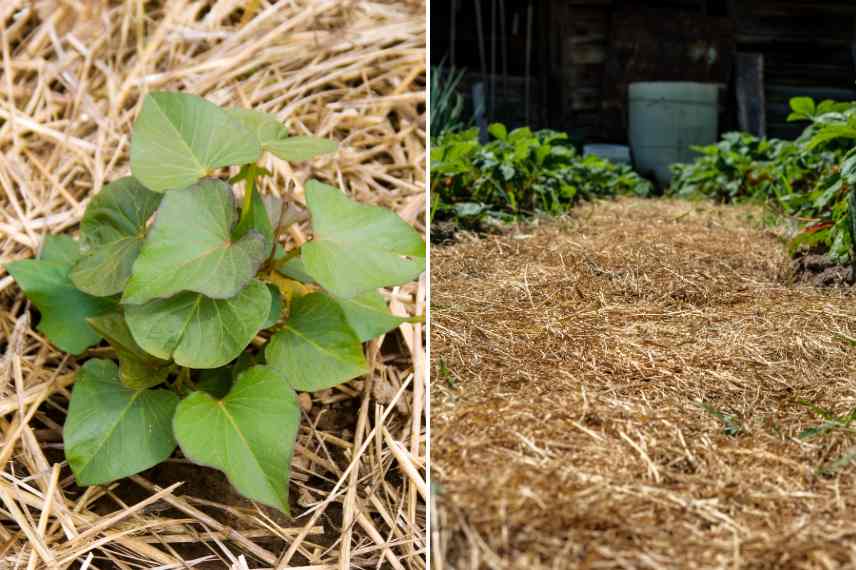
Straw is light and consists mainly of dry cereal stems (wheat, oats, barley). Straw is ideal for garden vegetables, notably tomatoes, courgettes and strawberries. Apply a 5–10 cm layer for optimum effectiveness. Avoid straw contaminated with pesticides or herbicides.
Advantages:
- Effectively suppresses weeds by blocking light.
- Keeps the soil cool and moist.
- Decomposes slowly, gradually enriching the soil with organic matter.
Hay
Similar to straw, hay is made up of grasses and other cut plants. Hay is handy for heavy-feeding crops (cucurbits) or for plots needing rich soil. Check the origin to avoid chemical contaminants. However, it can contain seeds from undesirable plants if the hay was not cut before seed set.
Advantages:
- Offers excellent cover and decomposes quickly, rapidly enriching the soil.
- Attracts beneficial organisms such as earthworms.
Wood chips and RCW (Ramial Chipped Wood)
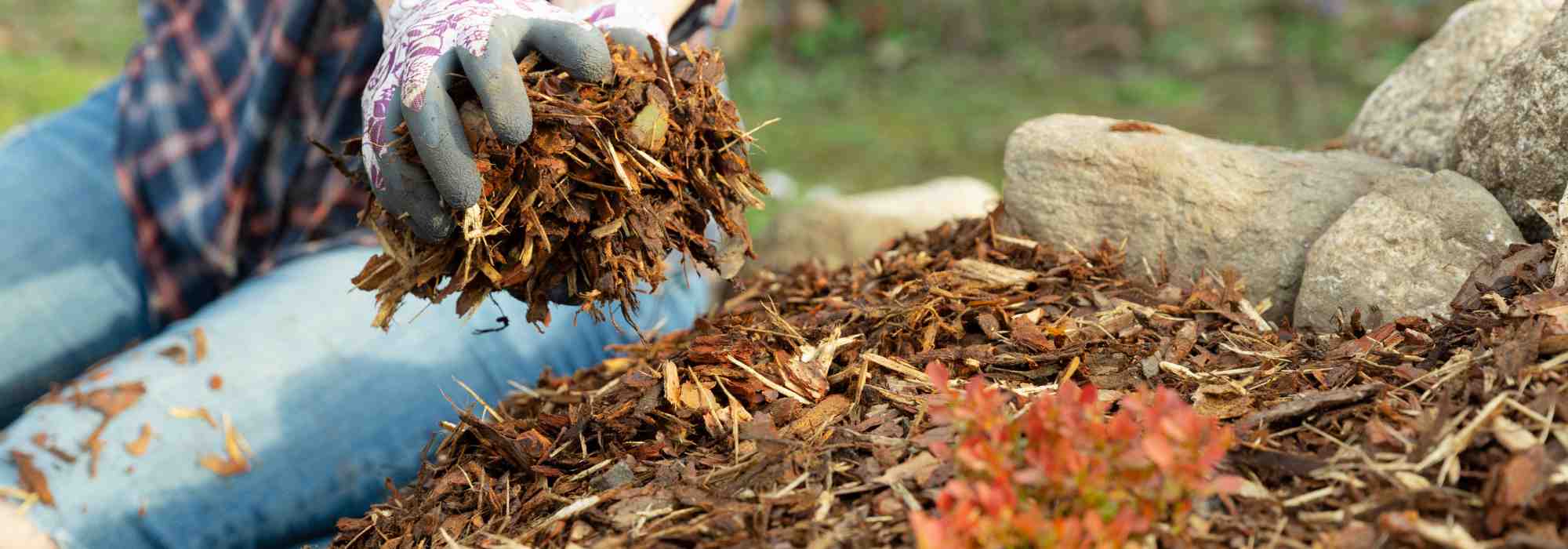
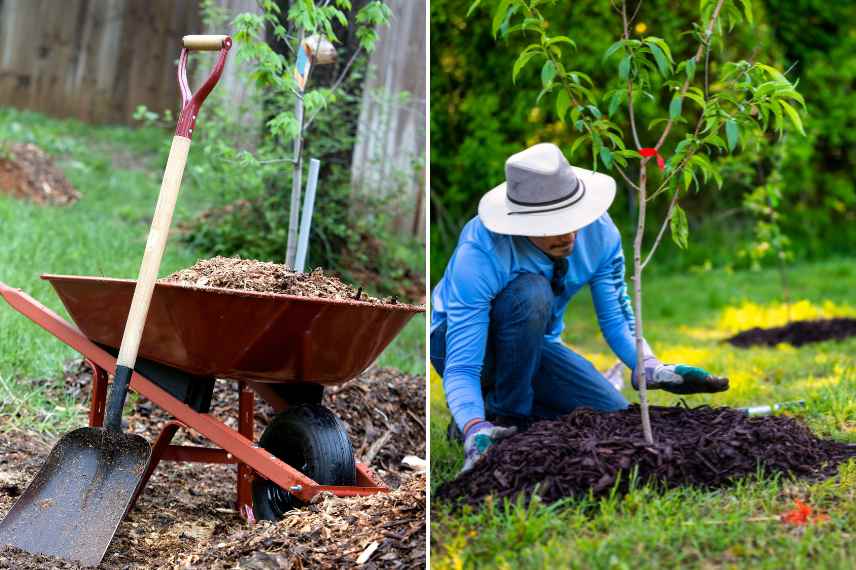
The RCW is made up of young chipped branches (less than 7 cm in diameter), rich in nutrients. Spread a 5 cm layer around perennial plants, taking care not to pile up against the trunk to avoid excessive moisture. Be sure to wait a few months before using freshly chipped RCW to avoid exhausting the soil’s nitrogen (see nitrogen deficiency). Avoid resinous chips for sensitive crops.
Advantages:
- Boosts biodiversity by stimulating beneficial fungi in the soil.
- Deeply furs the soil structure.
- Ideal for perennials such as shrubs, fruit trees or hedges.
Lawn clippings
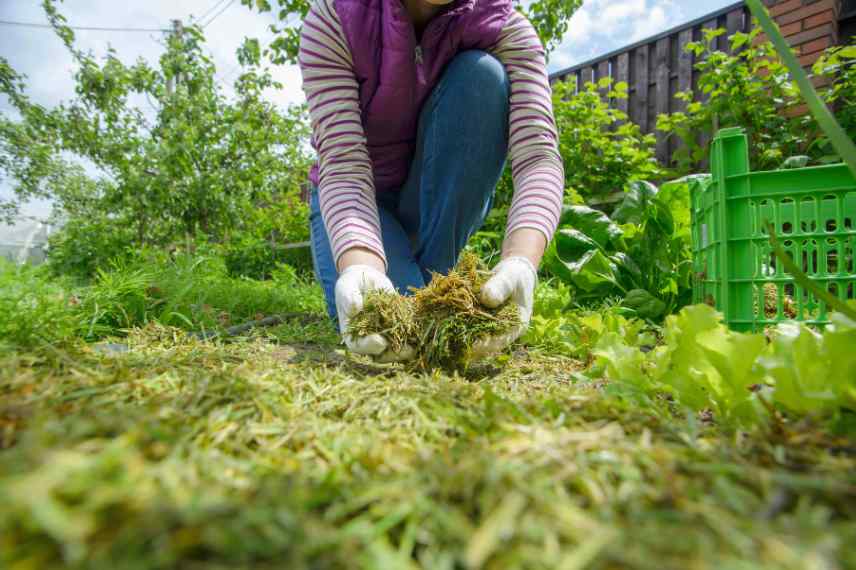
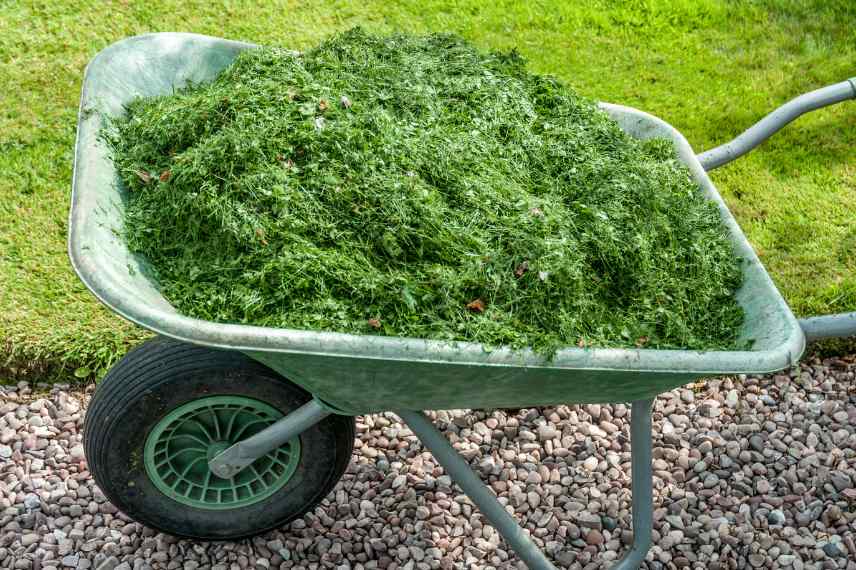
Residue from lawn mowing, lawn clippings are rich in nitrogen. You can apply your lawn clippings in thin layers (1–2 cm), refreshed regularly. If you have a large quantity, allow to dry before application. Beware, lawn clippings can ferment and produce unpleasant odours or promote mould growth.
Advantages:
- Ideal for stimulating microbial life and quickly feeding the soil.
- Decomposes quickly, making its nutrients available to plants.
Fallen leaves
Abundant in autumn, they make for a free mulch rich in carbon. Spread a thick layer, 5 cm, of shredded leaves (to speed up decomposition) over crops or resting areas of the allotment. Avoid thick leaves (such as plane tree leaves) that decompose slowly and those that can contain toxic compounds (walnut juglone, for example).
Advantages:
- Improve soil structure by promoting humus formation.
- Protect the soil in winter from erosion and cold.
- Attract soil organisms, including earthworms.
Pine bark and needles
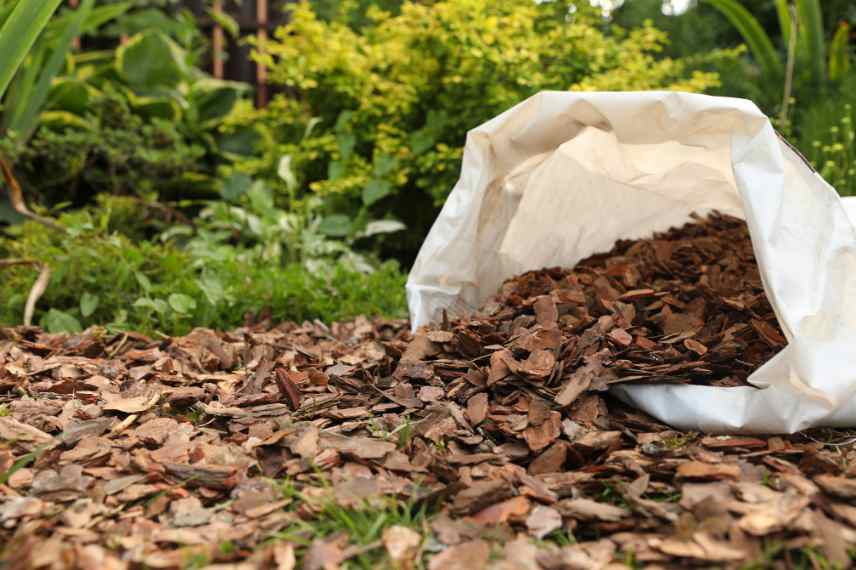
These mulches are rich in tannins and mildly acidifying at the surface layer of the soil. Spread a 3–5 cm layer around suitable plants. Limit their use for traditional garden vegetables, unless the soil is naturally acidic.
Advantages:
- Perfect for plants that prefer acidic soils (strawberries, rhododendrons, blueberries).
- Resistant, they decompose slowly and are suitable for long-lasting mulches.
Miscanthus
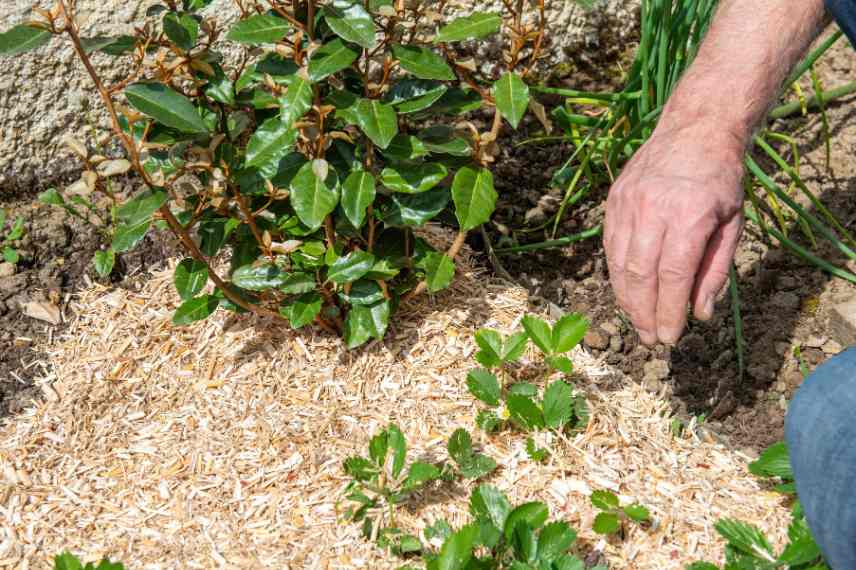
The miscanthus is a perennial also called “elephant grass.” Its dried stems are turned into chips or fibres, ideal for a natural mulch. Thanks to its slow decomposition, miscanthus requires little replacement, making it economical in the long term.
Advantages:
- Decomposes slowly, providing effective long-term coverage.
- Locally grown, without fertilisers or chemicals, it has a low environmental impact.
- Lightweight, easy to handle and spread on the soil.
Other organic mulches
To all of this, one could also cite hemp mulch, linen mulch flakes or buckwheat hulls. Cocoa hulls are suited to poor soils, as this mulch is very rich in nitrogen and potassium.
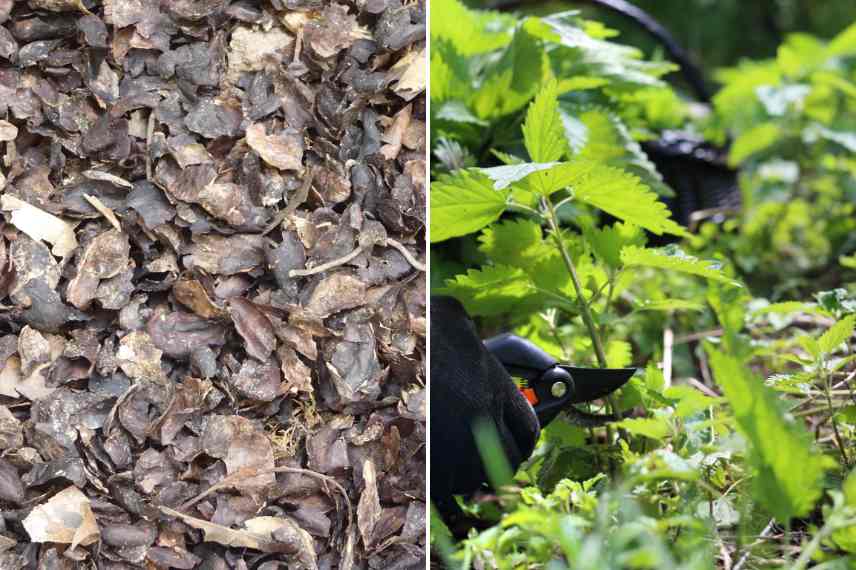
The leaves of nettles or comfrey are rich in nutrients such as nitrogen. There is therefore a definite case for carpeting the soil of one’s vegetable patch with them, particularly at the base of heavy-feeding vegetables. Prefer young leaves.
Recycled mulches
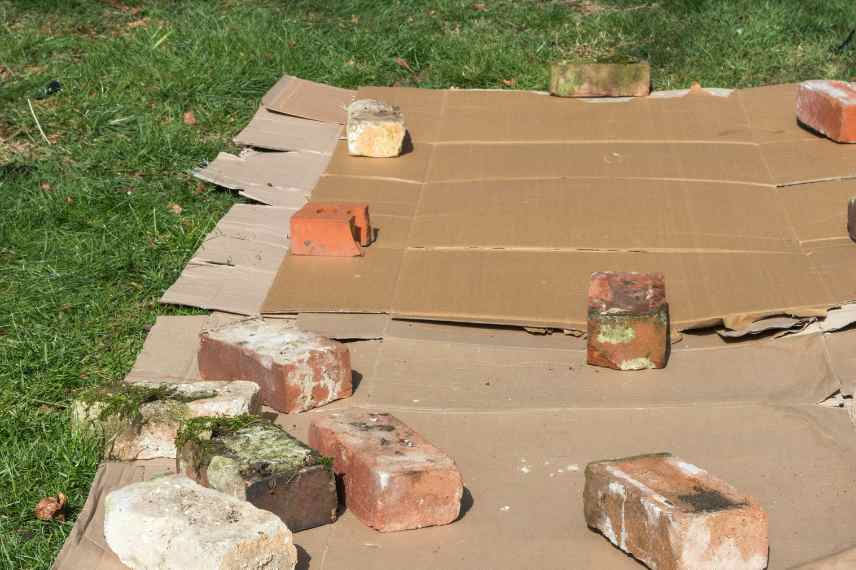
Brown cardboard, free of ink and adhesive tape, provides an excellent barrier against adventives. Placed directly on the soil, it decomposes slowly, adding organic matter to the soil. It is particularly useful for areas that need weeding or in preparation for new crops.
→ To learn more about using cardboard in the garden, read Olivier’s article.
Newspaper (European, i.e., guaranteed with food-grade ink), on the other hand, is another affordable option. Applied in a thin layer, it acts as a temporary mulch, preventing unwanted weeds from growing. However, to prevent it from blowing away or drying out too quickly, it is advisable to cover it with another mulch, such as straw or lawn clippings.
→ To learn more about using newspapers in the garden, read Ingrid’s advice sheet.
A living mulch
Moving away from the literal concept of mulch, but green manures can also provide an interesting winter mulch. Indeed, winter is a period when the vegetable garden soil is often bare, which favours weed growth, erosion and the formation of a soil crust.
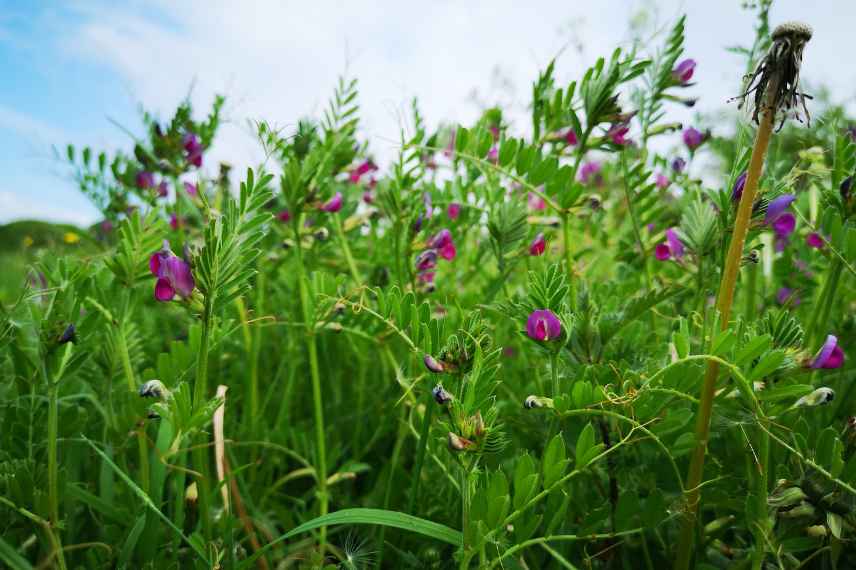
To reduce effort, choose winter-hardy green manures such as mustard or phacelia, which will form a fertile layer. This green manure will be dug into the soil at the end of winter. In the photo below, vetch.
How to choose your mulch?
The choice of mulching material depends on several specific criteria related to your garden and your goals. Here are the main elements to consider:
- The crop type
- Heavy-feeding vegetables (tomatoes, courgettes, cucurbits): prefer nutrient-rich mulches such as hay or grass clippings.
- Perennial plants (shrubs and fruit trees): choose durable mulches such as RCW or wood chips.
- Crops sensitive to acidic soils (strawberries, blueberries): pine bark or pine needles are ideal.
- Soil nutrient needs
- Poor soil or demanding crops: choose nitrogen-rich mulches such as grass clippings or cocoa husks.
- Soil already rich in organic matter: favour carbon-rich mulches (straw, dead leaves) to balance the soil.
- Local climate conditions
- Dry climate or hot summers: thick yet light mulches such as straw or miscanthus help reduce evaporation and keep the soil cool.
- Humid areas or harsh winter: use mulches that protect against excess water or cold, such as dead leaves or hay.
- The gardener’s goals
- Reduction of adventives: brown cardboard or straw are very effective at blocking light.
- Improving soil structure: RCW or dead leaves provide a large amount of organic matter.
- Winter protection: frost-hardy green manures (phacelia, mustard) or dead leaves prevent the soil from remaining bare in winter.
Comparison table of the different mulching options for the vegetable garden.
| Type of mulch | Advantages | Disadvantages | Specific uses | Durability |
|---|
| Straw | – Reduces adventive weeds – Conveys moisture – Decomposes slowly, enriching the soil |
– May contain chemical residues – Low nitrogen content |
Vegetables in the kitchen garden (tomatoes, courgettes, strawberries) | Medium (6-12 months) |
| Hay | – Rich in nutrients – Attracts beneficial organisms – Good cover |
– Risk of unwanted seeds – Decomposes rapidly in humid climates |
Heavy-feeding crops (cucurbits, potatoes) | Short (3-6 months) |
| Wood chips / RCW | – Fosters beneficial fungi – Improves soil structure – Increased biodiversity |
– Risk of nitrogen immobilisation if fresh – Not suitable for conifer-sensitive crops |
Shrubs, fruit trees, evergreen hedges | Long (12-24 months) |
| Grass clippings | – Rich in nitrogen – Stimulates microbial life – Decomposes rapidly |
– May ferment (odours) – Should be applied in thin layers |
Heavy-feeding crops, soils poor in nitrogen | Very short (1-3 months) |
| Fallen leaves | – Abundant and free – Protect against cold – Improve soil structure |
– Some leaves (walnut, plane, oak) decompose slowly or contain toxins | Winter crops, rest areas | Medium (6-12 months) |
| Bark / Pine needles | – Acidifies the soil for certain plants – Slow decomposition – Aesthetic |
– Not suitable for kitchen garden vegetables – Low nutrient contribution |
Acidophilous plants (strawberries, rhododendrons, blueberries) | Long (12-24 months) |
| Miscanthus | – Lightweight and easy to handle – Slow to decompose – Low environmental impact |
– Can be costly if purchased – Less nutrient-rich |
Long-term plantings (beds, shrubs) | Long (12-24 months) |
| Brown cardboard | – Drastically reduces adventive weeds – Breaks down adding organic matter |
– Requires checking for ink or ribbons – Not very aesthetically pleasing on its own |
Preparation of new crops, weed-prone areas | Medium (6-12 months) |
| Cocoa husks | – Rich in nitrogen and potash – Rapid decomposition – Pleasant aroma |
– May be toxic to pets (dogs) – High cost |
Poor soils, ornamental crops | Short (3-6 months) |
| Green manures (living) | – Enriches the soil with nitrogen after incorporation – Protects bare soil in winter |
– Requires management to be incorporated before flowering/seed set | Overwintering plots, improving soils before new crops | Seasonal (winter) |
- Subscribe!
- Contents
Comments