




























FLASH SALES: discover new special offers every week!
Our top 7 exotic shrubs flowering in spring

Our top 7 exotic shrubs flowering in spring

A selection of exotic spring-flowering bushes.

Contents

Modified the 28 January 2026  by Leïla 6 min.

For fans of exotic gardens, spring is the ideal time to discover exotic bushes with spectacular and fragrant flowering. In this article, we present seven spring-flowering exotic bushes that bring a touch of originality and exoticism to your garden. These plants, selected for their beauty and ease of cultivation, are an invitation to travel and discovery.

Difficulty

The Rhaphiobotrya 'Coppertone'

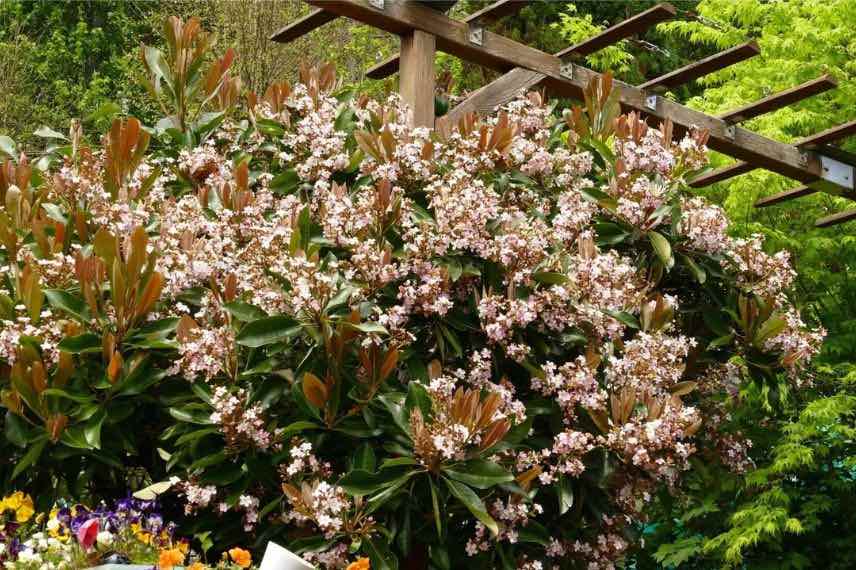
The Rhaphiobotrya ‘Coppertone’, an evergreen hybrid bush, is the result of a cross between a loquat and a Raphiolepis. It develops coppery foliage reminiscent of Photinia and early and abundant flowering in panicles of pale pink flowers in March and April. This shrub adapts well to various soils, even dry in summer, and withstands short frosts to -10 to -12°C.

It has a broad, bushy habit. Its growth is moderate, reaching about 4.5 m in height and 3 m in spread, or 2 m in a pot. Its coppery leaves turn to medium green and glossy, with early spring flowering and sometimes late-summer blooms. The white flowers tinged with pink attract pollinating insects and can bear edible fruits in a favourable climate.

The loquat hybrid ‘Coppertone’ is an attractive ornamental choice. It thrives in south-east France and in coastal or sheltered areas away from severe frosts. Easy to grow in ordinary soils, even chalky soils, it is suitable for a shrub border, as a specimen, in open ground or in a pot, paired with mimosas or Escallonias.

rhaphiobotrya

Chilean Fire Tree - Embothrium coccineum

The Embothrium coccineum or Chilean Fire Tree is a small tree notable for its fiery red flowering. It thrives in regions with a mild, moist climate, such as the Atlantic coast. It is not suited to dry, calcareous and windy conditions of the French Riviera.
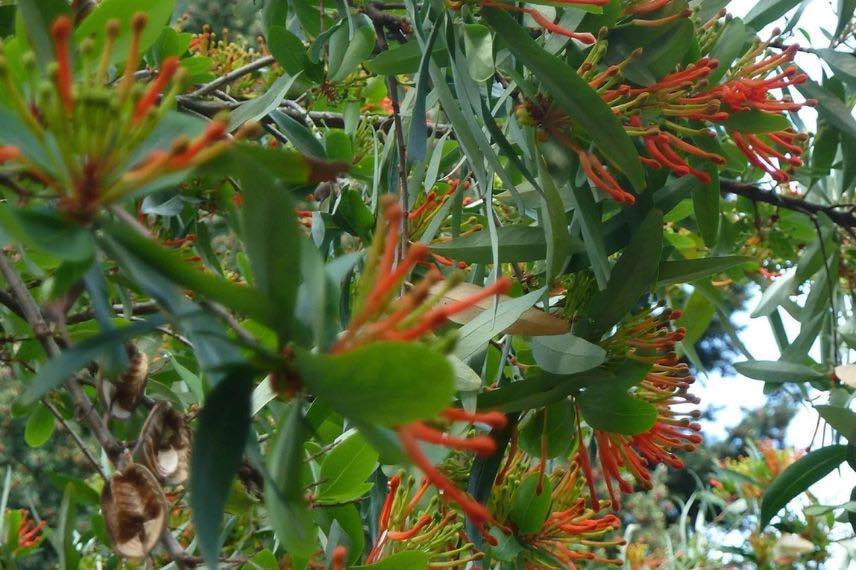
Originating from southern Chile and Tierra del Fuego in Patagonia, this tree has a bushy, upright and spreading habit, with moderate growth, reaching about 5.5 m in height with a 2.2 m spread. Its stout trunk with grey bark and flexible twigs bear glossy green foliage, evergreen in mild climates, but shedding leaves below -7°C. The plant does not survive below -10 to -12°C.

The flowering, in May–June, is displayed by clusters of scarlet tubular flowers, nectariferous, attracting hummingbirds for pollination. It is ideal as a specimen plant in a sheltered garden or in a shrub border, pairing well in an exotic setting with Eucalyptus, Canary Island viper’s-bugloss or Callistemons.

Embothrium

Shrubby Aloe - Aloe striatula


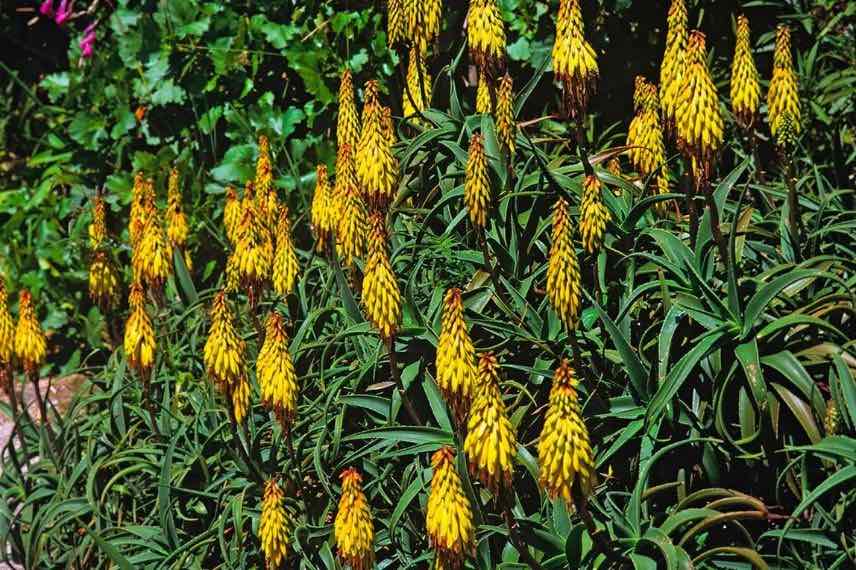
is a shrub-forming aloe native to the high mountains of South Africa. It is characterised by thick stems bearing rosettes of vivid green, fleshy and striate leaves, ending in pointed tips. Its abundant flowering occurs as long spikes of yellow-orange flowers. Hardy to -12°C, tolerating well-drained soil and summer drought, it is perfect for Atlantic coasts or the Mediterranean climate, in sloped, rocky, very sunny sites sheltered from the wind.

Aloe striatula, more shrub-like than herbaceous, forms a large shrub with a loose habit, reaching about 1.5 m in height with a 2 m spread. Its thick stems bear thick, waxy leaves, edged with small teeth, with bases sheathing in striated membranes. From May–June, it produces tall flowering spikes with tubular flowers from lemon-yellow to yellow-orange, attracting pollinating insects.

Very tolerant of sea spray and drought, Aloe striatula can be grown in a pot or in the ground in a climate not too cold, ideal for a raised bed, a rockery, a dry slope or nestled into dry-stone walls. In a pot to overwinter, it pairs well with agaves or with the Euphorbia mellifera, adding an exotic or contemporary touch to a terrace.

aloe

Lobster's Claw - Clianthus puniceus 'White Heron'

The Clianthus puniceus ‘White Heron’ or Lobster’s Claw, a New Zealand climbing bush, is renowned for its large white curved flowers reminiscent of parrot beaks or lobster claws. It grows easily in open ground in mild regions and is perfect as a patio or balcony plant, to be brought indoors for winter. Its long pendulous stems bear clusters of pendulous flowers during spring and summer, with finely cut foliage reminiscent of wisteria or sweet peas. For successful cultivation, choose a sunny position, calcareous, fertile, well-drained soil that remains cool in summer.

The Clianthus puniceus ‘White Heron’ is ideal as a specimen in an exotic garden in a mild climate. For decorative effect, pair it with other varieties or with a Jacaranda mimosifolia.
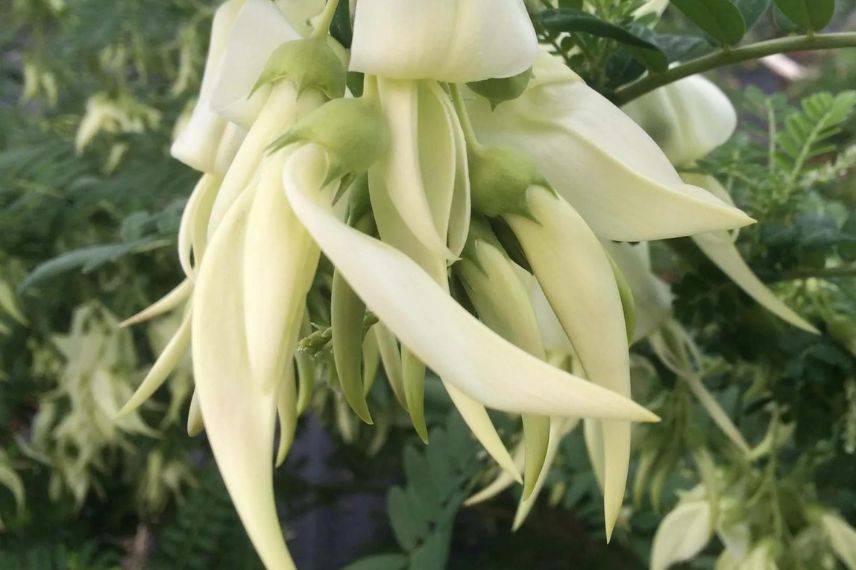
exotic shrub

Chitalpa tashkentensis

Chitalpa tashkentensis, known as Tashkent chitalpa, is a large shrub or small deciduous tree with rapid growth. It is distinguished by clusters of tubular flowers in pale pink with a yellow-striated throat, fragrant and melliferous, in May–June and sometimes into August. Its deciduous olive-green, oval and pointed foliage gives this hybrid variety an exotic and rustic charm. Ideal as a flowering hedge or as a specimen, it is perfect for providing light shade to a terrace in ordinary but well-drained soil.
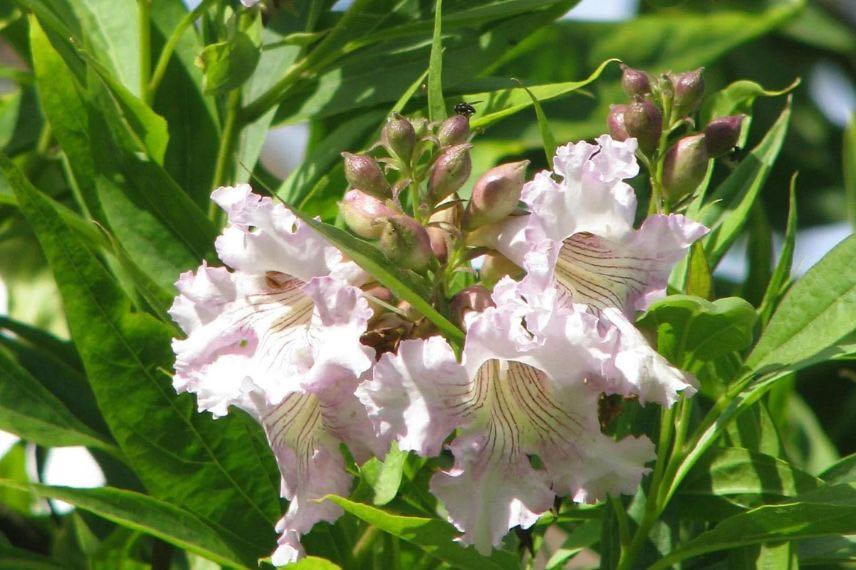
Chitalpa tashkentensis forms a small tree 6–8 m tall, with a spreading, bushy habit. Easy to grow and undemanding regarding soil type, it is drought-tolerant once established. It is hardy to about -18°C. It blends harmoniously with other species such as buddleias, mock oranges, and roses.

Chitalpa

Cayenne Vanilla - Duranta repens or erecta

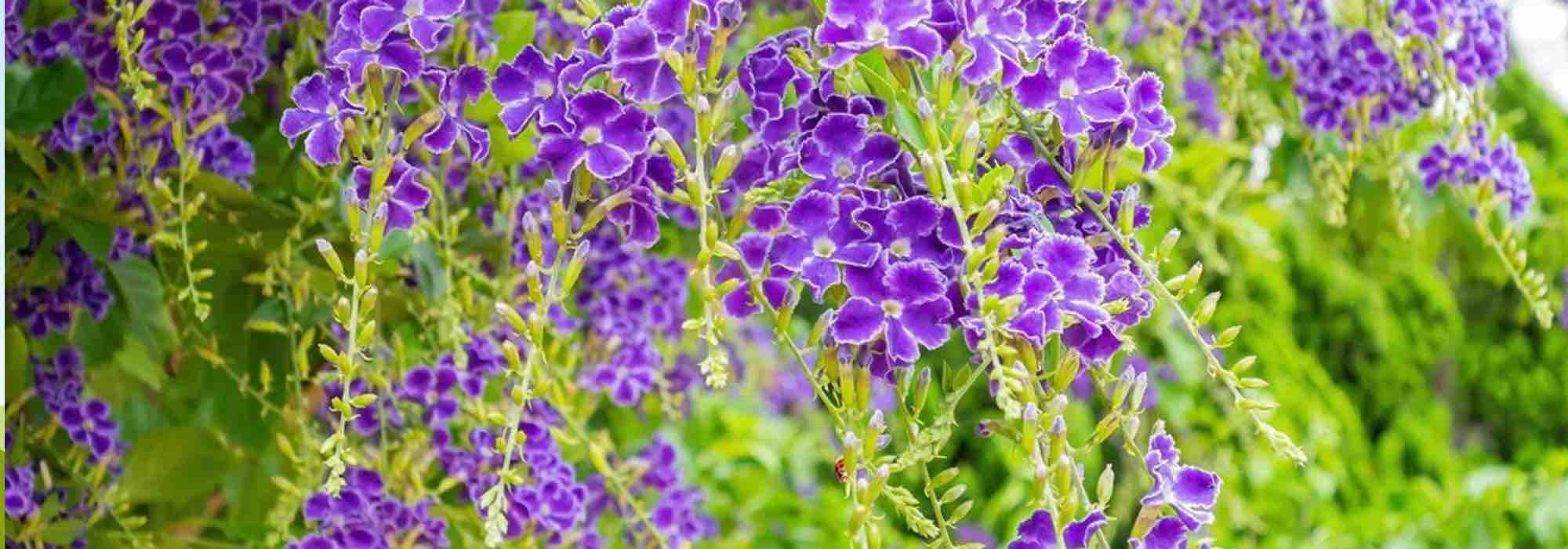
The Duranta repens, also known as Cayenne vanilla, is a very ornamental evergreen bush, highly prized in warm climates. It features a dense, bushy habit, with bright evergreen foliage and clusters of blue-violet flowers. Its flowering coexists with small, orange-yellow fruits, but abundant and decorative. Only tolerating light frosts, around -4°C, Duranta should be grown in a pot in most of France to be protected in winter.
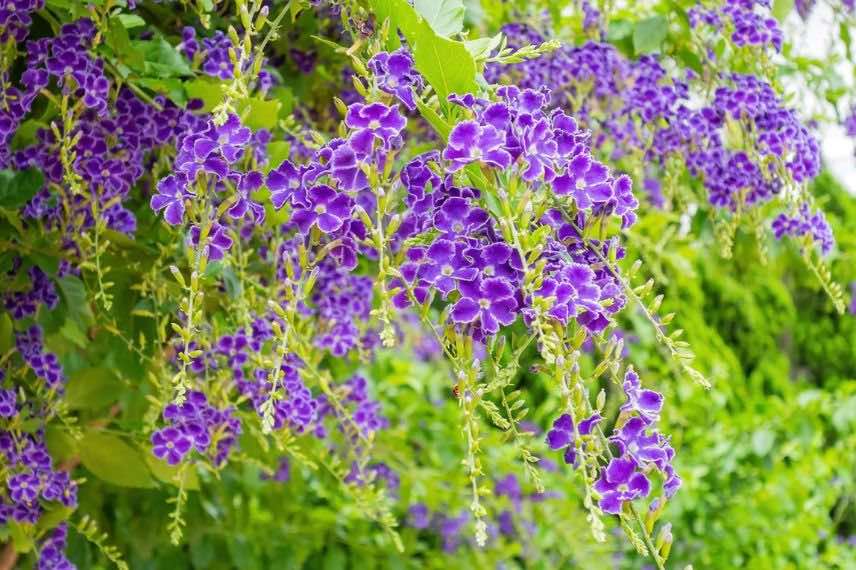
Duranta repens is native to the southern United States, Mexico, Central and South America. It grows in coastal rocky or moist low-lying areas. This dense and exuberant bush can reach 2 to 3 m in height and width, with branches that are sometimes slightly thorny and leaves that are single, elliptical and evergreen.

Flowering lasts two months from May, but can extend in hot climates such as the Côte d’Azur, until September. It comprises panicles of small blue-violet flowers with white margins, giving off a vanilla fragrance. Duranta repens thrives in full sun or light shade, in non-calcareous soil, neutral to acidic, and in soil that is either moist or dry, but well-drained. Paired with plants such as Caesalpinia gilliesii or the Cassia floribunda, it creates a tropical scene in Mediterranean gardens.

Duranta repens

Golden Trumpet - Tecoma stans

The Tecoma stans, also known as Golden Trumpet, is a tropical bush that can adapt to warm temperate climates. Its very attractive flowering, comprising clusters of flowers in the shape of bright yellow trumpets, slightly scented and nectariferous, extends from April to September. Frost-tender, the Tecoma stans can have its aerial parts destroyed at -2°C, but the stump resists down to -8°C or -10°C.
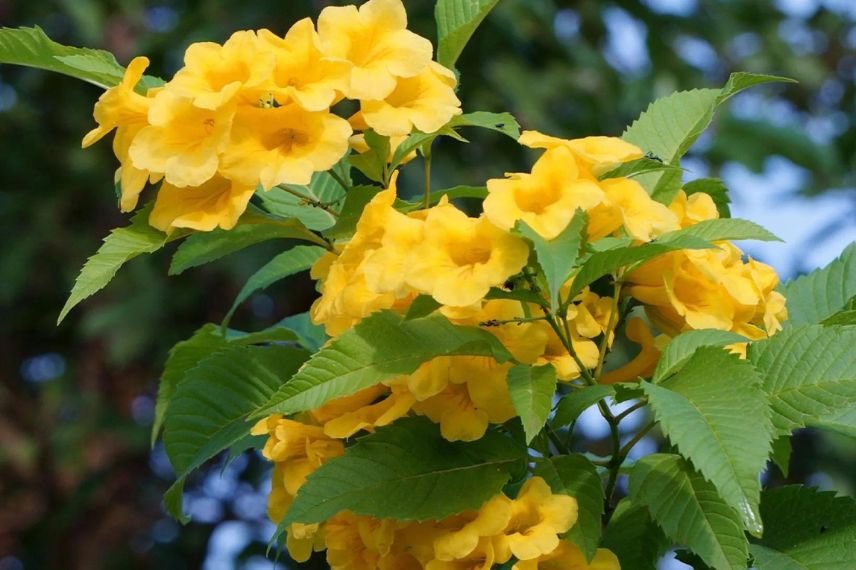
The Tecoma stans is native to the tropical regions of South and Central America. It forms a bush or a small tree about 4.5 to 6–8 m tall, with a trunk bearing greyish, rough bark. Semi-deciduous, it loses its leaves as new growth appears. In warm temperate climates, it becomes deciduous, shedding its leaves in winter. On the French Riviera, it generally forms a bush 2 to 3 m tall, with handsome, deeply cut foliage.

Because of its frost-sensitivity, Tecoma stans is often grown in pots in most French regions, allowing it to be overwintered in a bright, frost-free space. To create a tropical ambience on a terrace, pair it with other frost-sensitive plants such as the Plumbago capensis or the Hardenbergia violacea.

Tecoma stans

Comments

Duranta repens