





























Growing Anthurium
The ultimate Guide
Contents
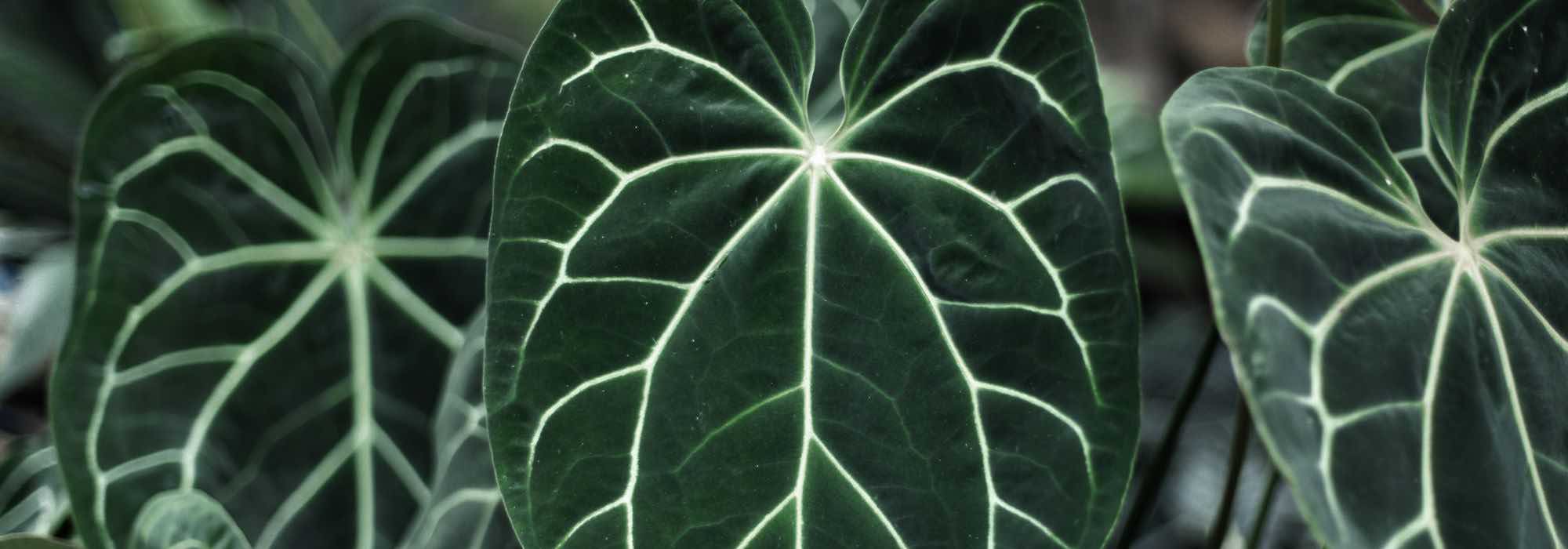
Anthurium has established itself as a must-have houseplant. Long known for its glossy leaves and colourful spathes, it has made a comeback in recent years with species with impressive leaves, heart-shaped or elongated, often veined or velvety. Originating from the tropical regions of South America, this indoor green plant captivates with its exotic appearance. Flowering species, often confused with the spathes, can vary in colour, ranging from vivid red to soft pink, including pure white and green.
To keep your anthurium looking its best and healthy, it is crucial to understand its specific needs in terms of pot, substrate, placement and care. Discover all our tips for growing and caring for this plant, and thus ensure optimal growth and flowering.
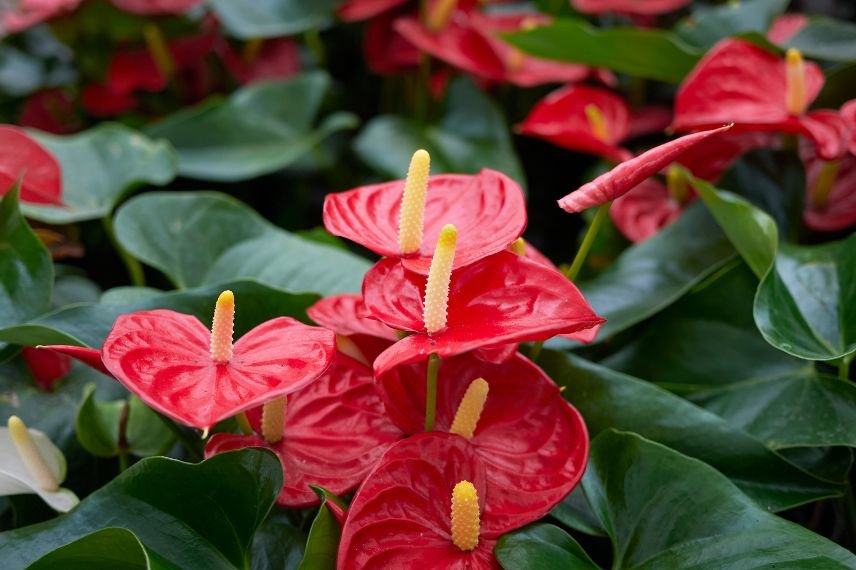
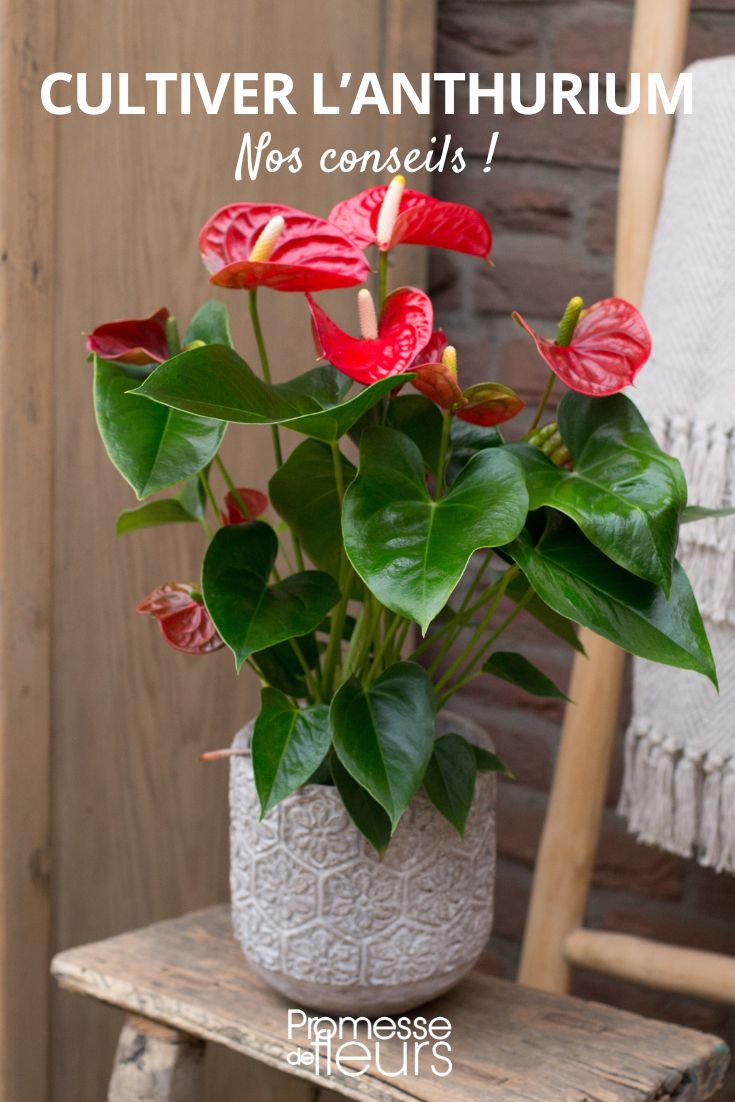
The best-known anthurium, on the market for decades, with coloured spathes

Which pot should I choose?
Ideal pot size
Anthurium prefers a confined root environment, which means that a pot that is too large can lead to excessive water retention and promote root rot. A medium-sized pot, offering just enough space to accommodate the roots without being too roomy, is ideal. As a general rule, choose a pot that is slightly larger than the plant’s root mass.
Recommended materials
Terracotta pots are often preferred for Anthurium, as they are porous and allow better soil aeration and effective drainage, thereby reducing the risk of overwatering. Plastic pots can also be used, provided they have drainage holes. It is essential to ensure that the chosen pot allows water to drain freely, preventing moisture buildup that could cause root rot.
Read also
Misting indoor plantsWhich substrate?
Anthurium requires a well-draining substrate rich in organic matter. We recommend making an equal parts mix of potting compost, of perlite and turf. You can replace the potting compost with coconut fibre, and in that case reduce the volume of perlite to 20% of the total and add 10% vermicompost. Perlite improves drainage and turf retains the necessary moisture, while allowing air to circulate around the roots. You can add activated charcoal at a rate of 10% of the mix. A slightly acidic to neutral pH is ideal for the Anthurium. You can also opt for a simpler mix of 50% potting compost and 50% perlite if you do not have access to the other materials.
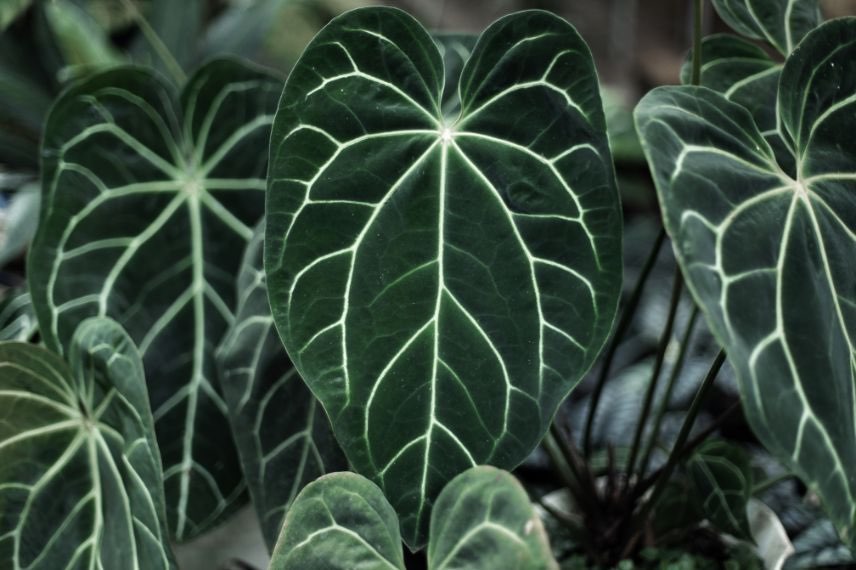
Here, Anthurium crystallinum, sought after by enthusiasts, is among the species that are in vogue today. They boast very handsome foliage
Planting and location
How to plant the Anthurium?
- Start by filling the bottom of the pot with a layer of gravel or clay balls to improve drainage.
- Then add the prepared substrate, leaving enough space to accommodate the plant.
- Carefully place the Anthurium in the pot, ensuring the base of the plant is level with the surface of the substrate.
- Finish with more substrate around the roots and gently firm to remove air pockets.
- All you need to do is water.
Where should you place it?
The Anthurium thrives in a well-lit spot, but not in direct sunlight, which could scorch its leaves. Indirect light, such as that filtered through a curtain, is ideal. A location near a window facing east or west is often recommended.
Additionally, the Anthurium appreciates a constant room temperature, without cold or hot drafts. A temperature between 18 and 25°C is ideal for this indoor plant. Avoid placing it near heat sources such as radiators or air conditioning units.
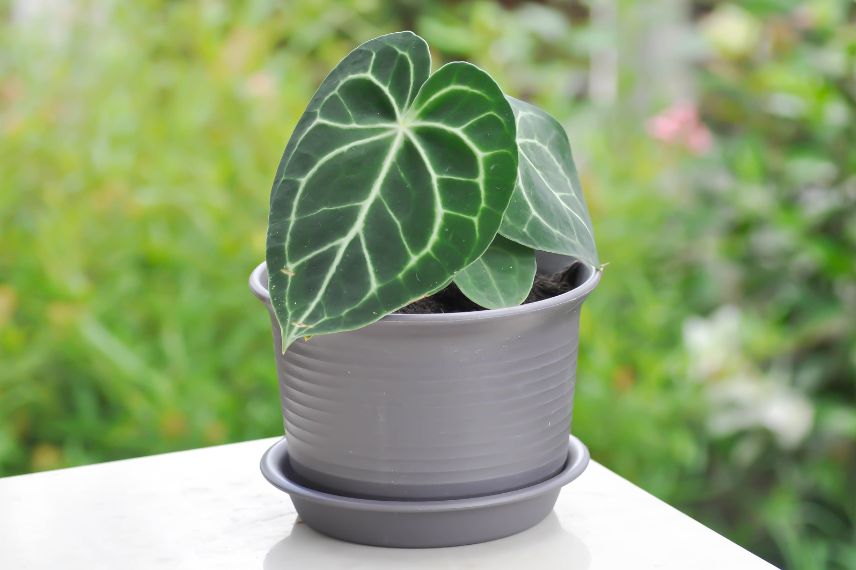
Plant the Anthurium in a modest-sized pot
Care
Watering
The anthurium prefers a slightly moist substrate, but it is crucial to avoid overwatering, which can lead to root rot. The substrate must never be waterlogged. Water the plant when the substrate begins to dry on the surface, in the top few centimetres, using room-temperature water. Allow the water to drain completely through the pot’s drainage holes to prevent water buildup. Do not leave standing water in the saucer or cachepot. In winter, reduce the watering frequency as the plant enters a rest period.
The anthurium, native to tropical regions, appreciates high ambient humidity, above 60 %. In dry indoor environments, using a humidifier can be beneficial. Regularly misting the leaves with soft water can also help maintain an adequate humidity level. If ambient humidity is insufficient, the plant grows less well and the leaves brown.
Fertilisation
During the growing season, from March to September, fertilise the anthurium once a month with a fertiliser balanced for indoor plants. Reduce fertilisation in autumn and winter when the plant’s growth slows.
Repotting
The anthurium should be repotted every two to three years, or when you notice the roots starting to run out of space. Repotting is also the opportunity to refresh the substrate, which benefits the plant. When repotting, choose a pot slightly larger and ensure you handle the roots gently to avoid any damage.
→ To learn more, also read our article “Is your Anthurium no longer flowering? Consider repotting it!“.
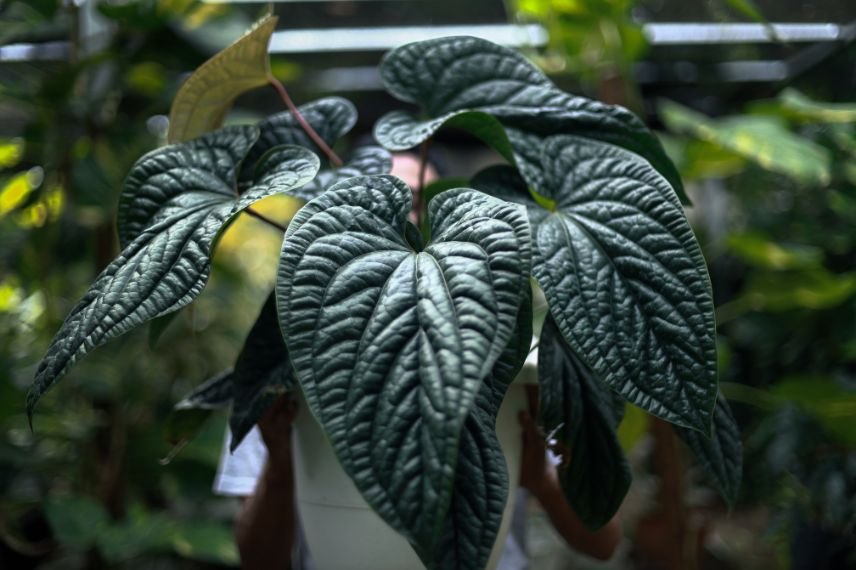
Another beautiful anthurium foliage: the species Anthurium radicans
Diseases and parasites
Although hardy, Anthurium can be prone to certain diseases and parasitic attacks. To prevent disease, it is important to grow it in a well-draining substrate and to avoid overwatering. Maintaining good air circulation around the plant also helps prevent fungal infections.
Most common diseases in Anthurium include root rot, often caused by overwatering, and attacks by aphids or mealybugs. Signs of disease include yellowing, wilting or spotted leaves, and a slowdown in growth. Parasitic pests are usually visible on the leaves or stems in the form of small insects or cottony deposits.
→ Read our articles to learn about appropriate treatments in case of attacks by mealybugs or by aphids.
- Subscribe!
- Contents
Comments