





























Eco-friendly lawn care: follow our practical guide!
Adopt sustainable practices for a healthy and eco-friendly lawn
Contents
The word lawn, especially when it resembles a golf green, rarely rhymes with ecology. Yet, one can indeed reconcile a very natural and resilient garden with a well-maintained lawn. Of course, we will avoid overwatering and mowing that is too short and too frequent, and instead adopt a more sustainable management of the lawn, which will involve choosing a more resilient lawn or a more suitable alternative for your soil or climate. Finally, differentiated management is also feasible and will give a very aesthetically pleasing appearance and provide welcome support for the biodiversity of your garden. But how can one maintain a beautiful lawn in a sustainable and ecological way? We cover this in our article.

Choosing the right lawn type
When creating or renovating your lawn, the choice of species or type of grass is crucial.
It is essential to choose a variety tailored to the climate and soil type of your region.
Analyzing your soil composition, drainage, sun exposure and rainfall frequency will help you select the lawn that will thrive with the least maintenance, thereby reducing environmental impact.
Each setting requires a particular type of lawn.
Before sowing, also determine the intended use of the lawn: is it a shady area, soil that dries out in summer or remains wet in winter, clayey or sandy? Will it be used for recreation, sports turf, ornamental purposes, a children’s play area, or are you looking for a hardy lawn or a reseeding lawn?
→ Lost on choosing your lawn? This article will guide you: Which lawn should you choose?
Choosing drought-tolerant, low-water varieties
Drought-tolerant, low-water lawn varieties are a boon for eco-friendly garden maintenance.
These varieties require less watering, which reduces water consumption and lowers the need for chemical treatments during periods of water stress.
By choosing grass mixes containing robust grasses such as meadow grass or tall fescue (for example: the the ‘dry-ground lawn mix’), you minimise your water consumption and also encourage biodiversity in your garden by supporting a more resilient ecosystem.
Alternatives to traditional lawns
For those seeking even more ecological solutions, considering alternatives to traditional lawns may be wise. Ground covers such as the Zoysia tenuifolia, Pratia, or creeping thyme offer attractive greenery while requiring less water, mowing and maintenance than traditional lawns.
These alternatives also attract pollinators, can enrich the soil with nitrogen (notably in the case of clovers) and maintain good ground cover that minimises erosion.
Choosing to replace all or part of your lawn with these alternatives will give biodiversity a boost while reducing your ecological footprint.
→ Sophie offers a fine selection of lawn alternatives in Which lawn alternative should you choose?
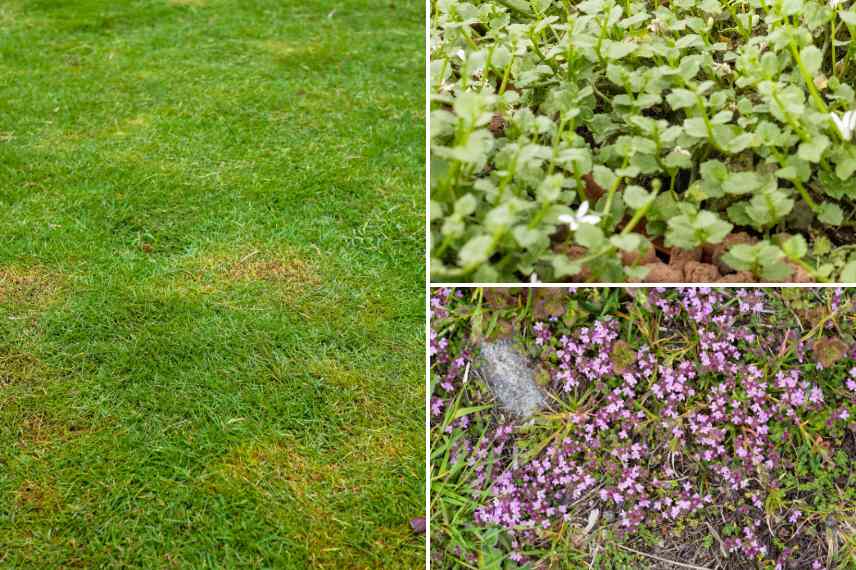
Mascarenes lawn, Pratia and creeping thyme are alternatives to traditional lawns.
Read also
How to choose the right lawn mowerLawn sowing
In general, the best times to sow lawn are spring and autumn. Spring, from March to May, is ideal, as temperatures begin to rise, promoting rapid growth ahead of the summer heat. Autumn, from late August to October, allows young shoots to establish themselves while temperatures are mild and rainfall more frequent, reducing the need for additional watering.
Sowing
- Soil preparation: before sowing, it is crucial to prepare the ground. Remove all weeds and debris from the soil, and work it deeply to aerate. A well-prepared soil enables better water absorption and good root establishment.
- Soil improvement: depending on the quality of your soil, it may be beneficial to add compost or an organic amendment to enrich the soil with nutrients. This helps retain moisture and provides the essential nutrients for lawn growth.
- Seed choice: select seeds suited to your region’s climate and the specific conditions of your garden. Varieties resistant to diseases and suited to the amount of sun and the soil type in your garden are preferable.
- Sowing technique: sow evenly to avoid patchy areas. Using a seed drill can help distribute the seeds evenly. Make sure the seeds are in direct contact with the soil, which usually requires rolling them or covering them lightly with soil.
- Watering: after sowing, keep the soil evenly moist, but not waterlogged. Frequent watering in small amounts is crucial until the lawn is well established. Once the roots are developed, you can reduce the watering frequency, thereby encouraging the lawn to become more drought-tolerant.
- Early maintenance: avoid walking on the newly sown lawn until it is well established. The first mowing should be carried out when the lawn reaches a height of eight to ten centimetres, cutting only the top third to avoid stressing young shoots.
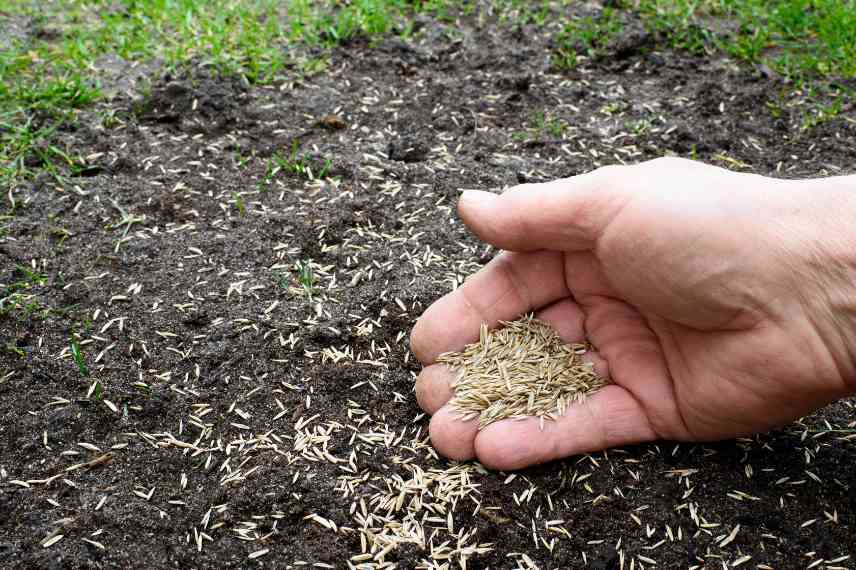
Select seeds according to sun exposure and drought periods in your region… among other considerations.
Lawn watering: Is it really eco-friendly?
Wasting precious water, even if it is collected rainwater, just to keep your lawn green is a real heresy! All too often, the lawn is watered too frequently. It should be noted that A yellow and relatively dry lawn during hot, dry summers is perfectly normal. It will green up again as soon as the rains return. So, if the yellowing does not deter you, forget the watering; it will be even more eco-friendly.
There are also types of lawn that are more drought-tolerant, such as mixtures of tall fescue and clover. Choosing alternatives to lawn for dry, even very dry soils is also a good solution: Wooly thyme, Zoysia tenuifolia or the turquette are good choices. Finally, let nature take its course by letting your lawn grow (see below, the case of differentiated management) will make it more resilient to weather extremes than a closely mown lawn.
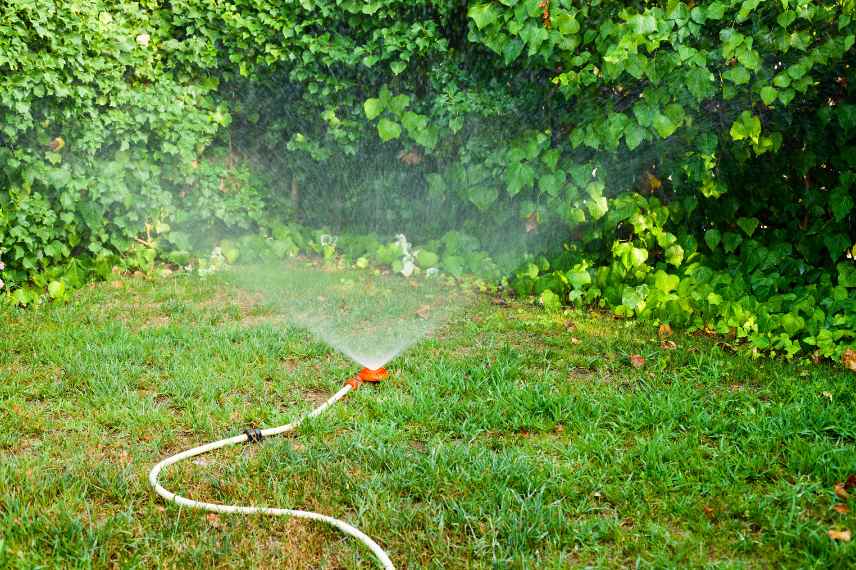
Forget systematic watering and the sight of an English lawn.
Read also
Lawn: essential tools for its upkeepNatural fertilisers and soil amendments
Organic fertilisers release nutrients slowly, improve soil structure and encourage biological activity.
- Compost : rich in nutrients, compost is a complete soil amendment that improves soil fertility and texture. It helps retain moisture and supports the activity of beneficial microbioloy? Wait: ensure correct spelling: “microorganisms”. Sorry. Let’s recheck:Correct line:
- Compost : rich in nutrients, compost is a complete soil amendment that improves soil fertility and texture. It helps retain moisture and supports the activity of beneficial microorganisms.
- I will present final corrected version below without commentary.
Adventive weed control: should we really intervene?
A well-maintained, dense lawn leaves little room for ‘weeds’. Regularly sow lawn seed to fill sparse patches and maintain an even cover of vegetation. In addition, a higher mowing height generally promotes the health of grasses and inhibits the development of adventives by limiting their exposure to light.
However, allowing certain adventives, or wild plants, in your lawn can play a key role in creating a more resilient and biodiversity-friendly lawn. Adventive plants often have superior adaptability to extreme climate conditions, such as drought or heavy rainfall, compared with traditional lawns. By incorporating plants such as clover, which tolerates drought and fixes nitrogen in the soil, your lawn can stay green and healthy without the need for watering or excessive fertilisation.
‘Weeds’ are clearly not bad, quite the opposite! They attract and feed a variety of pollinator insects and other wildlife. For example, clover flowers (yes, still this one!) provide a food source for bees and other beneficial insects that, in turn, contribute to the pollination of your garden. Finally, a lawn including adventives generally requires less mowing, less watering and fewer treatments for disease and pests, as these plants provide natural stability and resilience. In short, let the plants grow within the lawn — it’s a win-win!
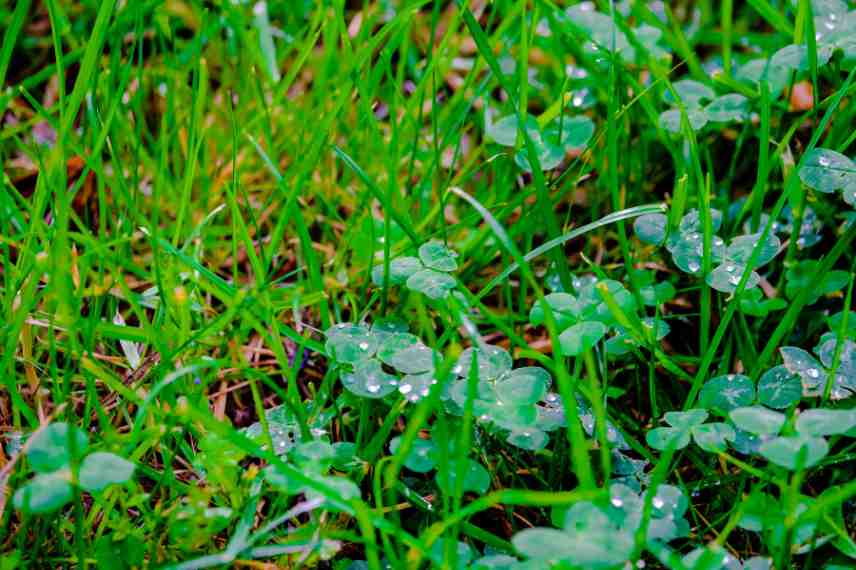
Clover remains lush and green on the lawn.
Responsible mowing
Mowing the lawn is an important part of lawn maintenance. But beware of getting it wrong! Here are mowing techniques that benefit both lawn health and environmental protection:
- Appropriate cutting height: it’s important not to cut the lawn too short. The ideal height varies depending on the type of lawn, but in general it is advised not to remove more than a third of the height of the herb at each mowing. This helps keep a denser lawn that can better resist weeds, drought and disease.
- Mowing frequency: adjust the mowing frequency to growth conditions. Mowing too often can stress the herb, while not mowing often enough can lead to thatch build-up and smother the lawn. The optimum frequency depends on the weather, the type of lawn and the season, but we consider a maximum of once per week in spring and every two weeks in summer, with a final mowing at the end of October.
- Mulching: this involves leaving the grass clippings on the lawn after mowing. These cut grasses decompose quickly and return valuable nutrients to the soil, which can reduce the need for additional fertilisation.
- Alternating mowing: change the mowing patterns at each session to avoid compacting the soil and tiring the herb always in the same direction. This helps prevent ruts and promotes uniform growth.
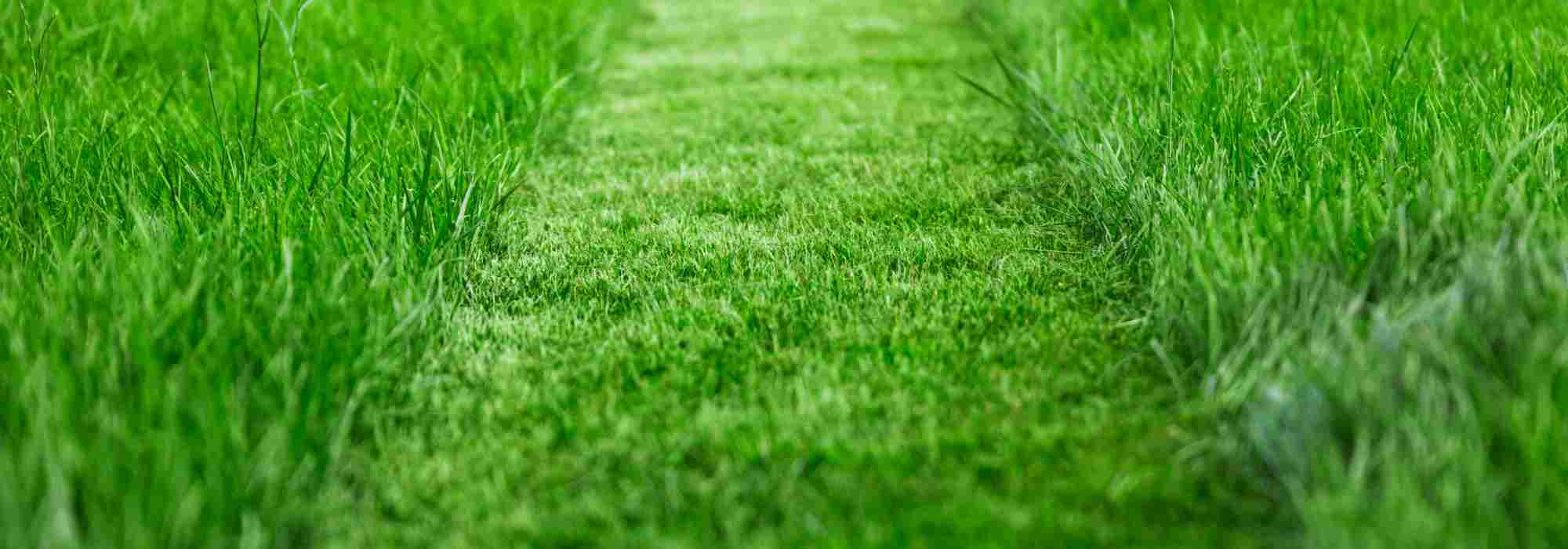
Oli’s tip: what about trying differentiated or reasoned mowing? It’s easy, we let the herb grow in certain zones, and only mow along paths or a few areas if we wish. The “wild” areas will bloom and provide shelter and a food source for garden wildlife. The mown parts, on the other hand, will give the garden a neat appearance. It’s eco-friendly, economical and also very attractive. For more on the topic, read our article on differentiated mowing.
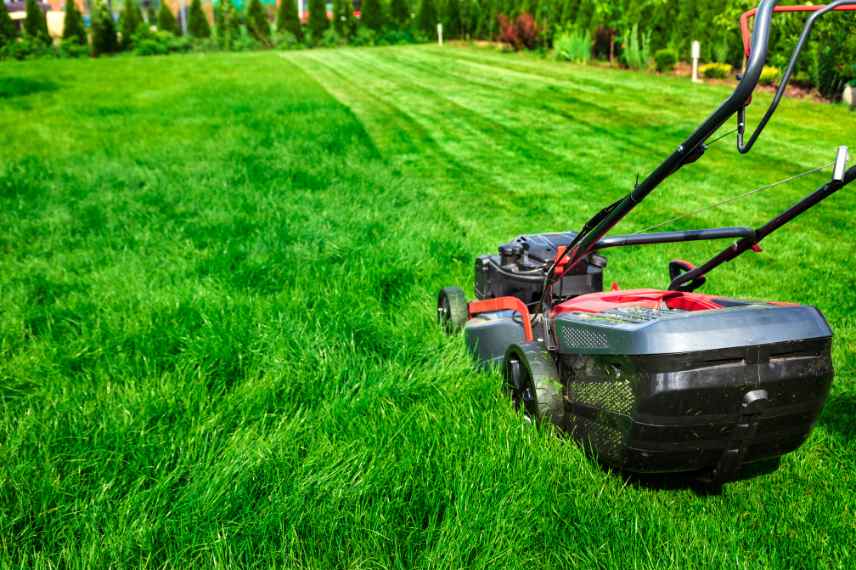
Cutting height is crucial in your mowing ritual: not too short, not too tall.
Choosing the right mower
- Choose more “eco-friendly” mowers: opting for electric or battery-powered mowers rather than petrol models can significantly reduce carbon emissions. Electric mowers are also quieter and require less mechanical maintenance. However, this type of mower is only suitable for lawns up to 1000 m². More often you will need to use a petrol mower or adopt differentiated lawn management for your lawn.
- Regular maintenance: keeping the mowers in good condition is crucial for their efficiency and durability. This includes regular sharpening of the blades for a clean cut that will stress the herb less and leave a healthier lawn.
- Technological innovations: consider using robotic mowers, which can be programmed to mow at a frequency and height specific to your needs, thereby optimising lawn health while saving energy. But do not programme it to work at night!
- Reducing the use of petrol mowers: if the use of a petrol mower is inevitable (especially for very large gardens), ensure you set it correctly to maximise fuel efficiency and minimise emissions. Opt for newer models that meet current environmental emission standards.
Recycling lawn clippings
Recycling grass clippings from your lawn is an eco-friendly practice that enriches the soil and improves the health of your garden. Here’s how you can use these green wastes:
- Composting: grass clippings are an excellent addition to your compost due to their nitrogen-rich content, an essential element for decomposition. Make sure you mix the grass clippings with carbon-rich materials, such as fallen leaves or cardboard, to balance your compost. This promotes rapid decomposition and prevents unpleasant odours.
- Use as mulch: grass clippings can also be used directly as mulch on your lawn and in your flower beds. By spreading them finely over the lawn, they decompose quickly and return nutrients to the soil. This technique, known as mulching, helps retain moisture, suppress weeds and nourish the soil.
- Subscribe!
- Contents
Comments