





























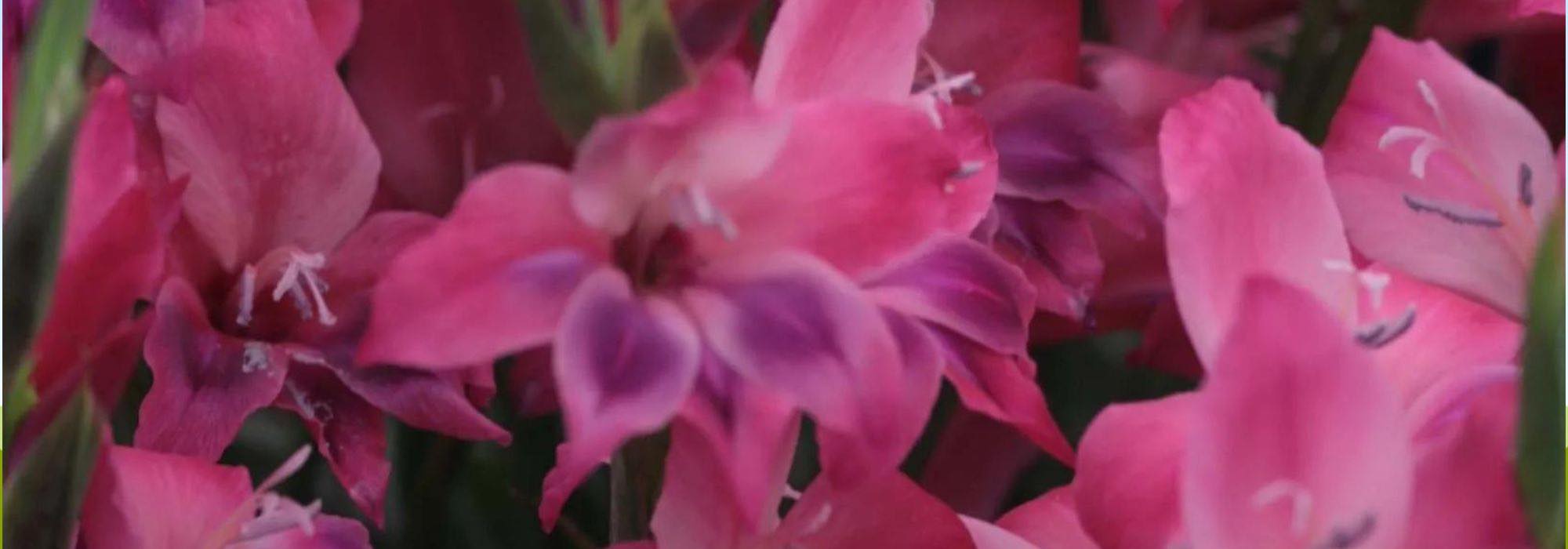
Discover our selection of the hardiest gladioli
Bulbs with the best cold hardiness in winter
Contents
It is certain that the flowering of gladioli never fails to impress: these summer bulbs usually offer a beautiful colourful display during the warm season. While they are easy to grow, they are nevertheless reputed for their frost-sensitivity, not liking temperatures below -5°C. Most will indeed require lifting the corms (bulbs) or growing under cover during the winter, to protect them from severe frosts.
But some species are hardy enough to spend the cold season outdoors in many parts of the country. To increase their frost tolerance, ensure they have a thick mulch and provide well-drained soil, so that water does not stagnate there.
To learn more about gladioli cultivation, discover our dossier: Gladioli: how to plant, grow and care?

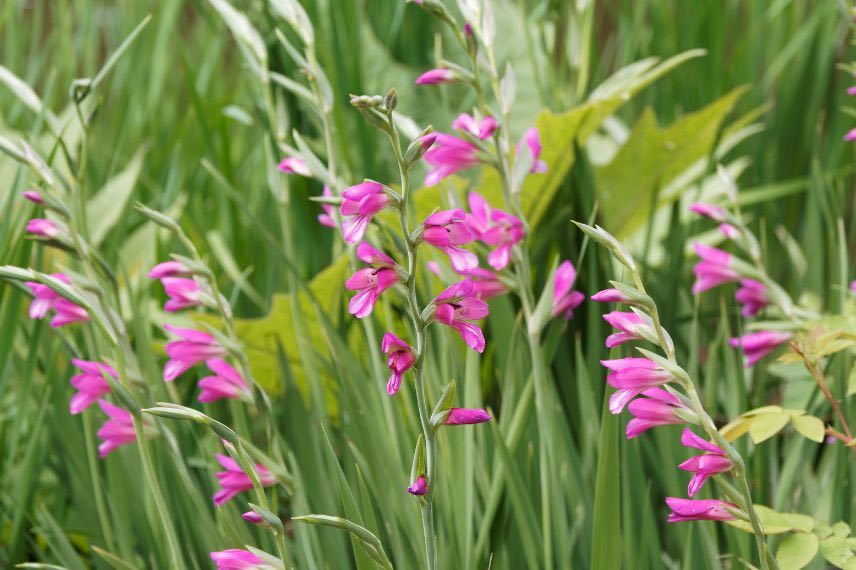
Meadow gladiolus (Gladiolus italicus)
Italian gladiolus or harvest gladiolus is a wild species native to the Mediterranean, but has naturalised on our territory up to Auvergne. Very delicate and more discreet than some congeners, it flowers in mid-spring in the milder southern regions, and rather in early summer in the regions north of the Loire. Italian gladiolus then produces pretty clusters of small rose-mauve flowers, funnel-shaped.
Of small stature, this bulbous plant will not exceed 70 cm in height and 20 cm in width, making it very easy to integrate into the garden.
This gladiolus is among the hardiest and most robust in the genus, as it can withstand frosts down to -12°C. This will allow you to grow it in open ground in many of our regions of France.
The light, natural appearance of this species will look marvellous in a cottage garden. Provide it with well-drained soil (where water does not stagnate and does not risk rotting the corms), even sandy soil. It can tolerate drought and calcareous soils. In terms of sun exposure, this gladiolus will enjoy full sun.
Read also
How to winter and divide your gladioli?Byzantine gladiolus (Gladiolus byzantinus)
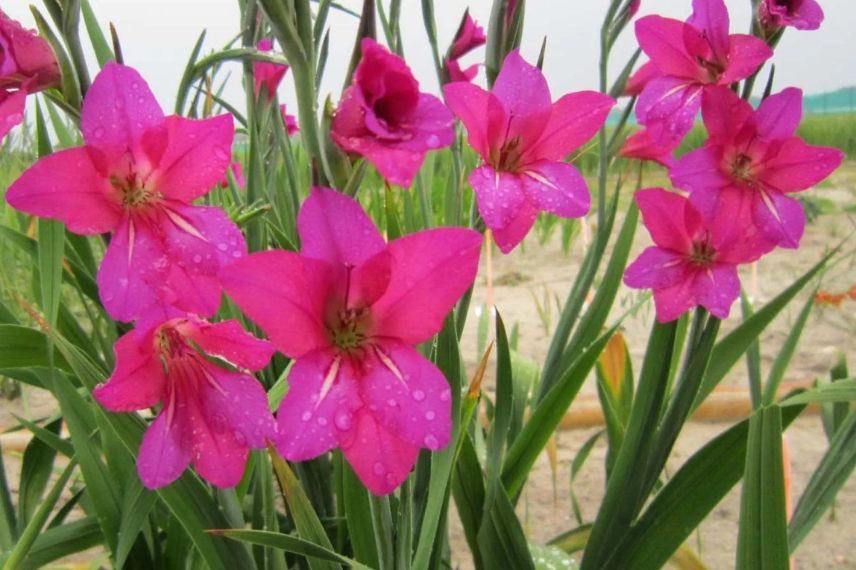
The Byzantine gladiolus is sometimes confused with the Italian gladiolus (one of its parent varieties), to which it does indeed resemble. This hybrid species, however, produces flowers in a colour more intense, in a bright pink so vivid that it almost leans toward red or purple. These shades can vary during flowering. It blooms in spring in the southern regions and rather in summer in cooler regions. The delicate form and the natural charm of the flowers make the Byzantine gladiolus a versatile cut flower arrangement for the garden or in pots.
Its silhouette is as modest as that of the Italian gladiolus, as it will reach 70 cm in height when in flower.
Its hardiness can reach -15°C in perfectly drained soils, making it one of the hardiest against cold.
The Byzantine gladiolus lends itself to creating beautiful cut flower arrangements. In terms of cultivation, it prefers sandy soils. From its Mediterranean origins, it has retained a degree of drought tolerance and a fondness for sunny spots.
Gladiolus nanus ‘Vulcano’
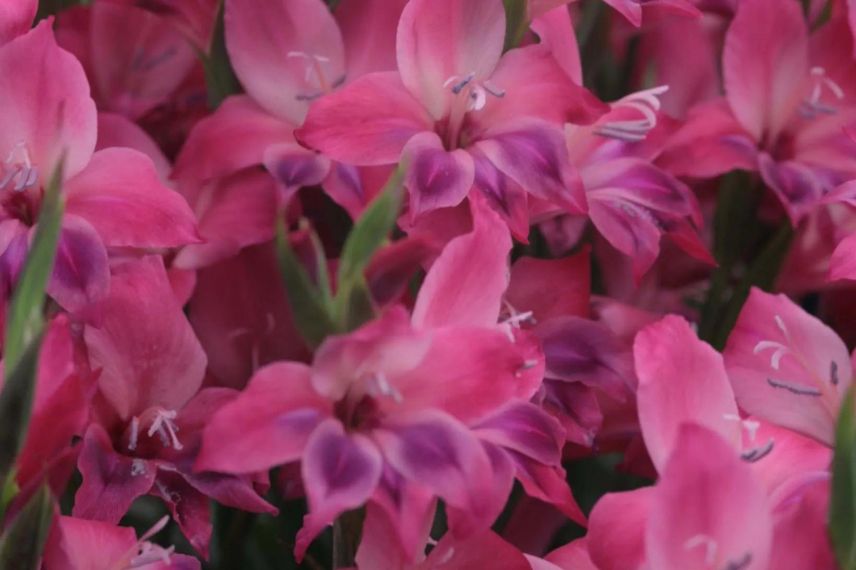
The butterfly gladiolus ‘Vulcano’ is a dwarf variety, better known for its frost resistance than for the tall gladioli. It will indeed withstand frosts down to -12°C.
Its flowering occurs between June and July, revealing flowers in a range of shades: they are rose fuchsia, maculated with purplish-violet on the lower petals and shaded with white on the upper petals. It is these bright markings and the light, airy look of the flowers that give rise to the butterfly reference. Each cluster of flowers is borne on slender but sturdy stems, reaching 60 cm in height.
‘Vulcano’ will appreciate cool (which never fully dries out) and light soils. Plant it in a sunny position, or in partial shade in the warmer regions.
Read also
5 gladioli to grow in potsGladiolus primulinus ‘Laura Jay’
The small-flowered gladiolus ‘Laura Jay’ is an early variety that flowers in early summer. It then rewards us with pretty bi-coloured, glossy flower spikes, combining purple-red and cream. The upper petals are red, crossed by a graphic cream line, whereas the lower petals are cream-spotted. This lovely contrast is enhanced by the dark-green sword-shaped foliage, forming a true foliage display.
Height: 70 cm for this gladiolus, making it perfect in a border or even in the vegetable garden.
Its frost tolerance down to -12°C makes it a good choice for most gardens.
Grow ‘Laura Jay’ in soil fairly rich in organic matter, but not too heavy or compact.
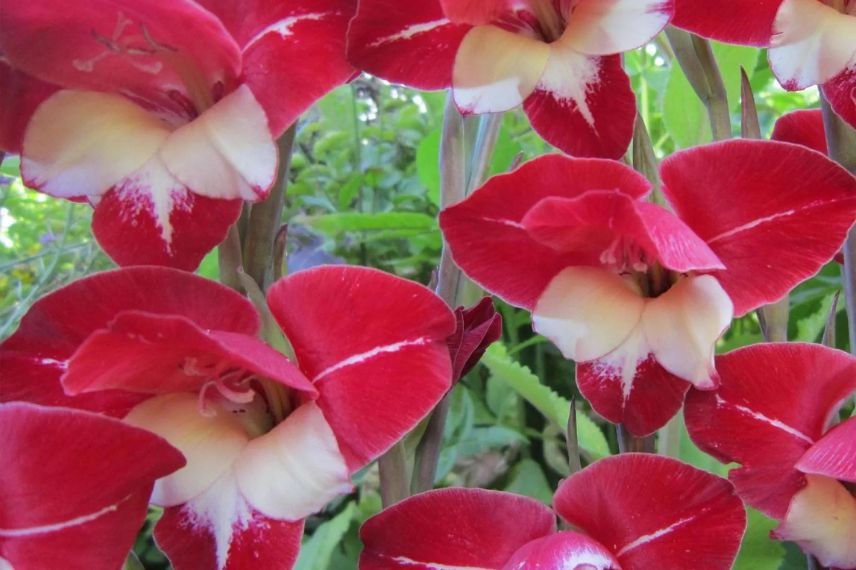
Gladiolus tubergenii ‘Bibi’
The Gladiolus tubergenii ‘Bibi’ is a hybrid still relatively little known, but deserves more space in our gardens. Between June and July, it produces tall flowering spikes up to 80 cm, at the tips of which funnel-shaped clusters of flowers unfold. Colour-wise, it displays a medium pink, striate with a more vivid cherry-pink, almost red.
Its frost tolerance down to -12°C allows it to stay in the soil without worry if winter isn’t too harsh.
With a very romantic look, it will be an ideal companion for antique roses blooming pink or white. Plant it in fresh, fertile, but well-drained soil.
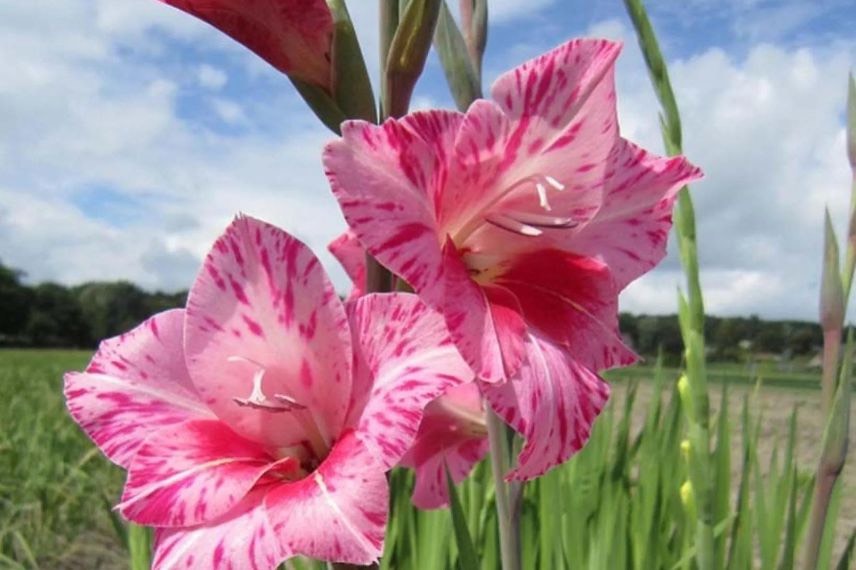
Gladiolus papilio ‘Ruby’
The Gladiolus papilio ‘Ruby’ is a small jewel, displaying good cold tolerance, down to -15°C. It offers us a very long summer flowering, comprising flowers in an intense red, maculated with garnet. Each stem bears seven flower buds.
Compact, it will reach about 60 cm in height when in flower.
This recent variety will thrive in full sun, in rich, well-drained soil.
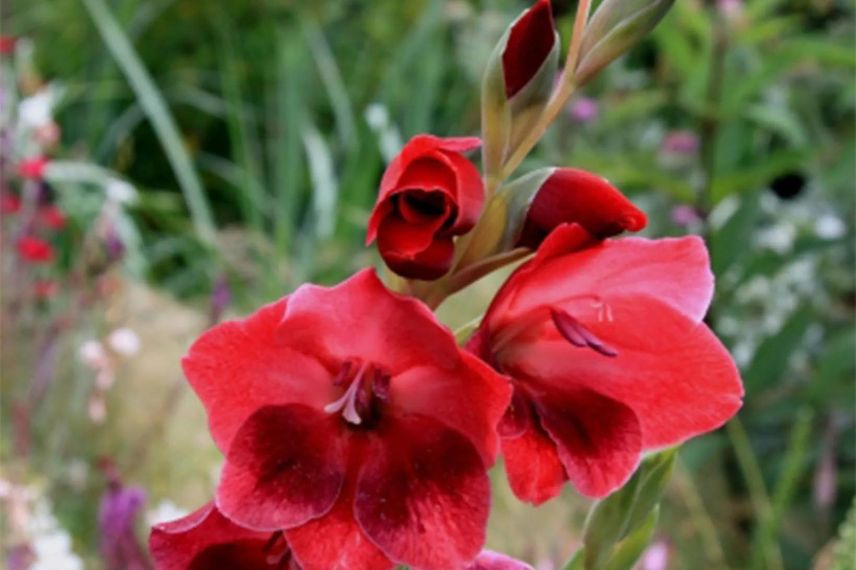
Gladiolus colvillei 'Frozen Sparks'
This is a tall gladiolus with stems reaching nearly 85 cm in height at flowering. Floriferous and architectural, ‘Frozen Sparks’ will readily catch the eye in the garden. In early summer, it bears large flowers of 7 cm long, in very soft shades. The petals are white, maculate with purplish-rose and illuminated by a pale green centre. The flowers resemble lilies.
The Gladiolus colvillei will be able to withstand frosts down to -10°C, if its soil is sufficiently drained.
It will readily brighten borders, beds or pots, provided it is planted in full sun and sheltered from the wind, in light soil.
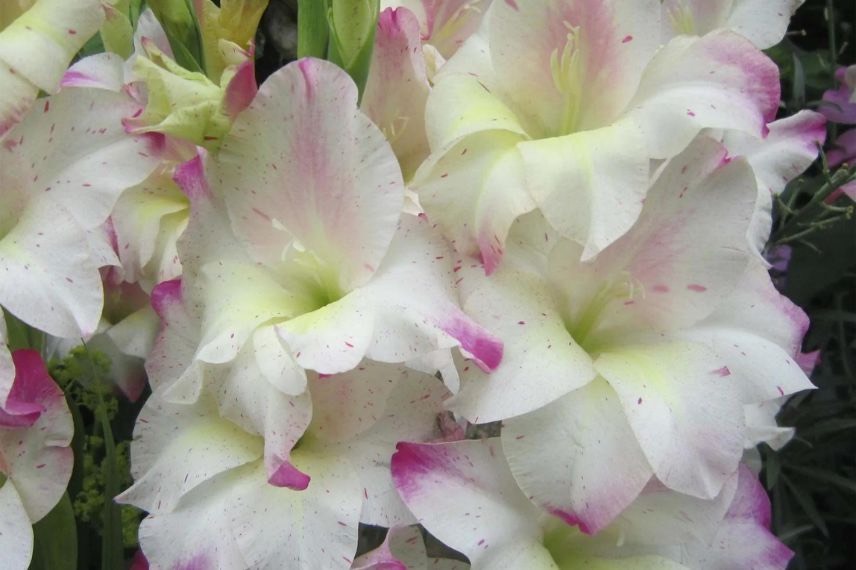
- Subscribe!
- Contents
Comments