





























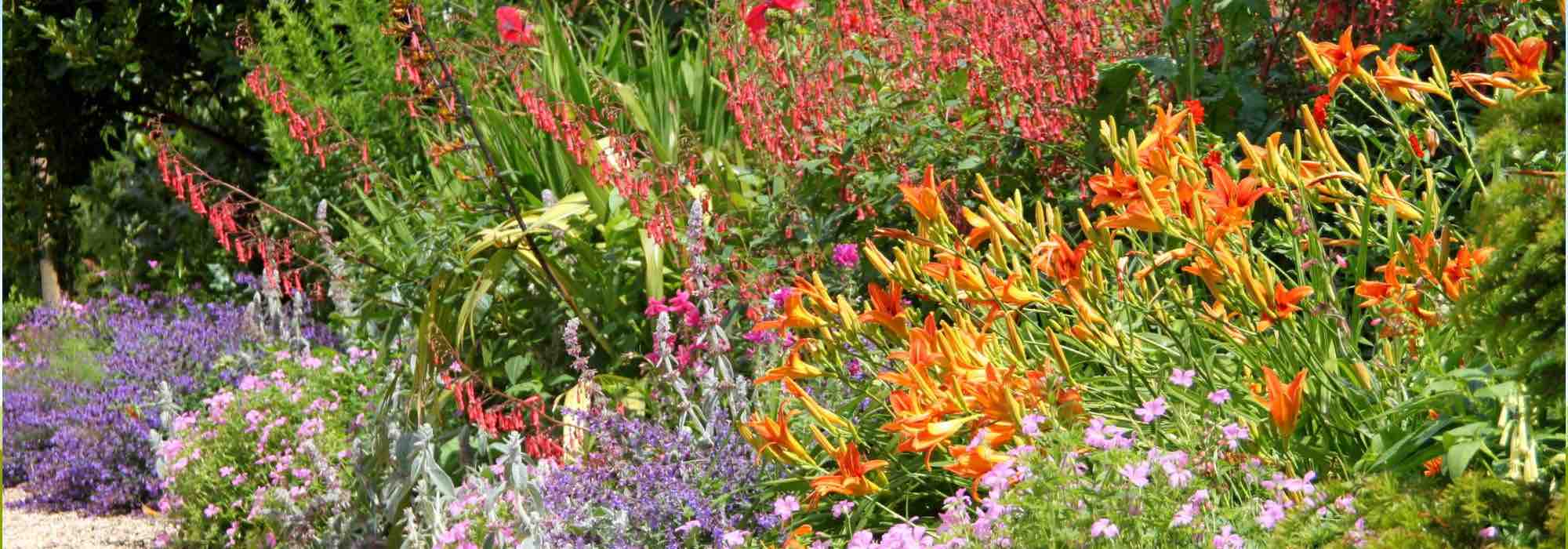
7 budget-friendly tips for a beautiful garden on a tight budget
Cost-effective and easy-to-apply advice for all types of gardens.
Contents
Having a beautiful garden, flowering, fragrant, colourful and shaded… That’s the aim of most gardeners. Making an exterior space attractive requires careful planning, an appropriate selection of plants and fairly regular maintenance.
But having a beautiful garden should not be a question of budget: with a few tips and money-saving ideas, you can easily achieve an ornamental garden without breaking the bank. So follow our advice to combine aesthetics with affordability.

Understanding your growing conditions
This advice may not, at first glance, seem directly linked to having a beautiful garden at a low cost. Yet, by choosing plants that are truly suited to your weather conditions, but also to your soil type and exposures, you will maximise the chances of keeping your plants alive longer and with less effort. This, therefore, enables you to make substantial savings,
First and foremost, it is therefore important to familiarise yourself with your constraints
- a restricted space that will require opting for compact and space-saving plants;
- weather conditions can be extreme (drought, humidity, frost, wind, salt spray…);
- a heavy soil or, conversely, poor and free-draining;
- the presence of buildings and neighbours in close proximity;
- an exposure with little sun or, conversely, little shade;
- etc.
Conversely, avoid choosing your plants solely on a whim, without knowing their needs or whether they will be suited to your growing conditions. This often leads to plants that are short-lived and fragile.
Read also
Creating a garden on a budgetChoose affordable plants
Choosing plants can quickly push up your garden budget. But there’s no need to invest in pricey plants to achieve an attractive outdoor space. We’ve, in fact, already put together several selections of affordable, fairly common and popular plants that will make an impact in the garden with ease.
Optez par exemple pour :
- climbing plants that are easy to grow, such as passionflower, Virginia creeper, clematis, honeysuckle or trumpet creeper;
- annuals, such as morning glory or nasturtium;
- common shrubs, such as Photinia or viburnum;
- trees such as willow, horse chestnut, common elm, ash, or black locust;
- conifers such as Scots pine;
- fruiting plants such as hazelnut, raspberry and strawberries;
- bulbs such as tulips, Muscari (grape hyacinths) and narcissi;
- grasses such as Stipa, Carex or Pennisetum;
- etc.
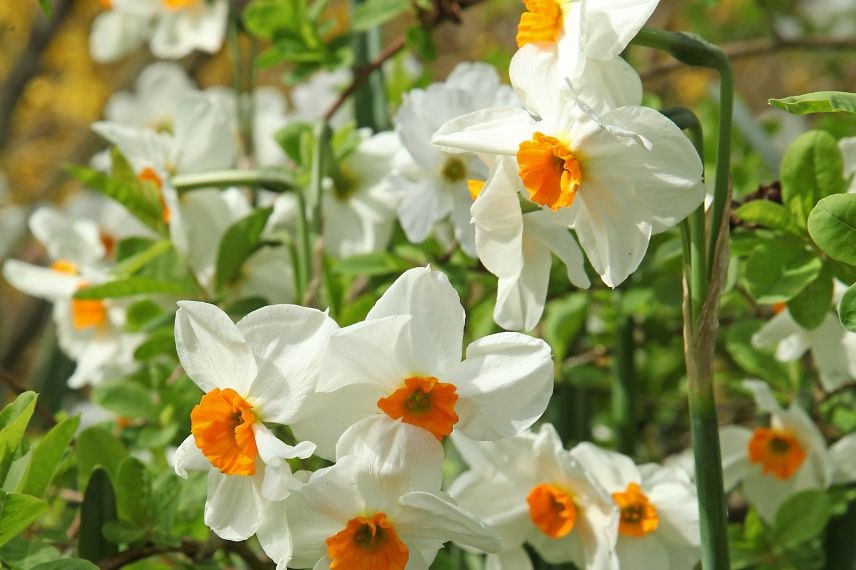
Many spring bulbs such as narcissi are affordable and naturalise easily
Note that deciduous foliage plants are generally cheaper to buy than evergreen foliage ones (which stay in place year-round).
Native plants (as opposed to hybrids created by humans), which grow naturally in our territory without human intervention, also have a double advantage: they are inexpensive and naturally well suited to local growing conditions, which makes them more robust and easy to grow. This is the case for ivy, for poppies, for purple foxglove, for black elder, for holm oak… and many other plants that are beautiful and beneficial for biodiversity.
Pour plus d’idées de plantes à petits prix, découvrez nos articles :
- 7 inexpensive climbing plants to spruce up your garden on a budget
- 5 affordable shrubs for a beautiful garden on a budget
- 7 affordable trees to landscape your garden on a budget
- How to fill your garden with flowers on a tight budget using perennials
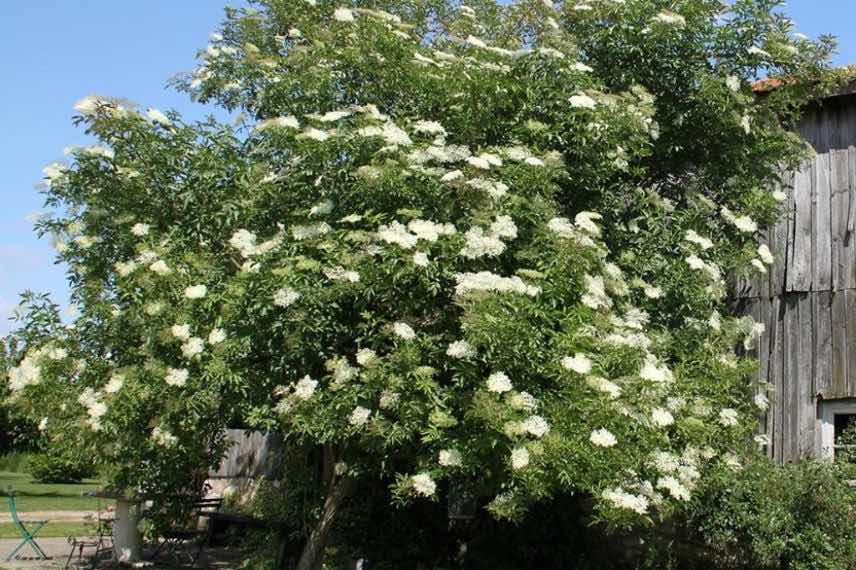
Black elder is a valuable native shrub that is budget-friendly
Prefer multifunctional plants
Think about each selected plant in terms of what it will bring to the garden, preferring those that combine multiple qualities. This makes it easy to achieve an attractive and lively garden with fewer plants and thus a lower budget.
For example:
- Choose an autumn-flowering plant that also has attractive autumn foliage;
- Opt for a shade-providing climbing plant, but that will also delight you with its fruit;
- Adopt a flowering, fragrant bush that also bears decorative berries to add colour in winter;
- etc.
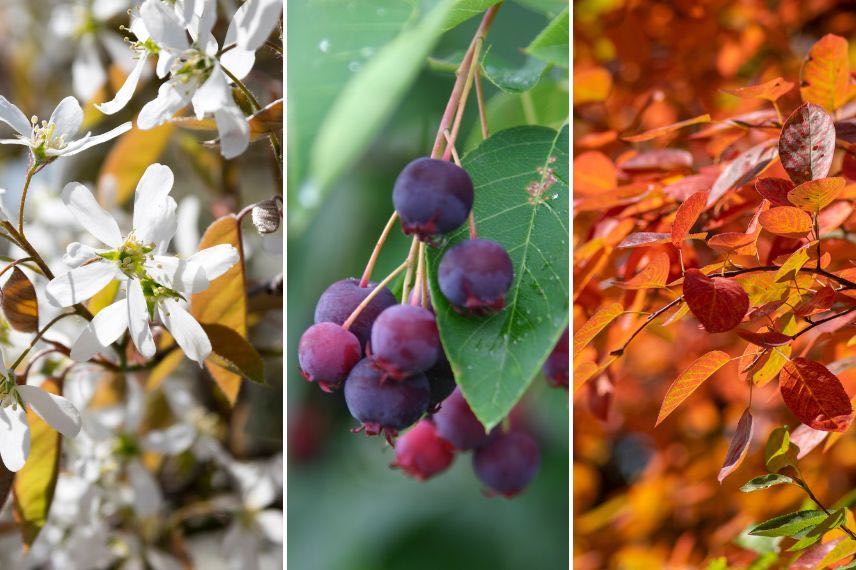
A perfect example of a multifunction bush: Amelanchier
Prioritise certain packaging formats
Bare-root plants
These plants are sold without a container or root ball surrounding the roots. They are plants lifted from the soil during their dormancy period, between October and February.
If they may appear fragile and less attractive at first glance, that is not the case: they generally have good recovery and strong vigour, having experienced less stress and benefited from outdoor cultivation.
Bare-root plants are cheaper to buy, since production costs are lower than for container-grown or root-balled plants.
Only drawbacks: they are not available all year round (only autumn and winter) and they require a small preparation before transplanting, called pralinage.
Young plants
The older and/or larger the plant purchased, the more expensive it will be. It will, in fact, have required more care and time, which is reflected in the sale price.
Therefore prefer younger plants still in small formats (pots, for example), especially if they are fast-growing. In as little as 3 to 5 years, they will already make an impact in the garden. Additionally, choosing young plants generally offers better chances of recovery, as they will be easier to acclimatise.
Sowing
Some plants are very easy to sow, such as annuals (Nigella damascena (Love-in-a-Mist), Cosmos, Calendula (Marigold), Sweet Pea, Sunflowers…) or some perennials (Aquilegia, Gaillardia (Blanket Flower), Lupins…).
Alternatively, buying seeds is generally very economical: it lets you flower or dress a substantial part of the garden in quantity without spending a lot of money. A pack contains several dozen seeds for less than £5 and can be stored for up to 3 years. You will thus easily dress up borders, rock gardens or pots.
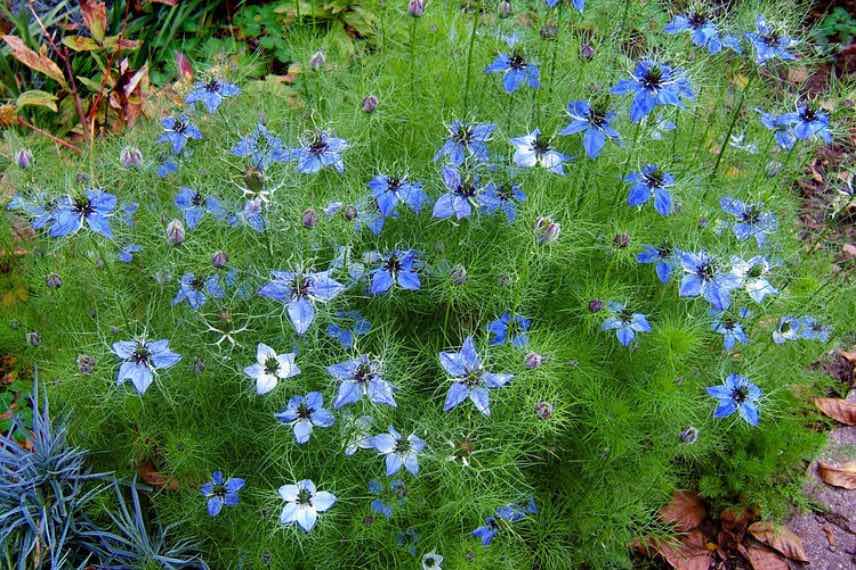
Nigellas are very economical annuals and they readily reseed
Unsold stock and clearances
Take advantage of promotions on certain plants from websites, garden centres and nurseries. There you may find plants sometimes a little damaged, but perfectly capable of starting again next season, or cheap plants because they are out of season.
DIY instead of buying new
Making or mending things yourself can save money in the garden, and even give your outdoor space a unique style without spending much. There are plenty of easy garden tutorials or DIY (“do it yourself”) online.
To outfit your garden, you don’t need to scour the shops. You’ll easily find everything you need on second-hand sites, reuse centres or flea markets: furniture, decorations, equipment (notably pots), tools, etc. Recycling and repurposing materials in the garden can lead to real savings.
For decoration, also consider upcycling—the reuse of an object in a different way to give it a new life. With a simple pallet, you can craft a planter, an outdoor sofa or a handy storage tub. Similarly, a vintage watering can or a perforated zinc tub will be perfect for housing a lovely potting display, while tin cans will become pretty ornamental lanterns. On the other hand, slightly damaged crockery will find its place in the garden, adding a touch of rustic charm: chipped cups or teapots become cachepots, a plate will serve as a saucer, etc.
Other materials can be re-purposed, such as an old gutter or concrete blocks that act as a growing support for sowing and plants.
Complete your garden layout with easy-to-find elements, already at home or in nature (collecting in moderation): pebbles, stones, twigs, pine cones, etc. If you have bamboo, its canes offer many uses: trellis construction, simple supports, creating shade, etc.
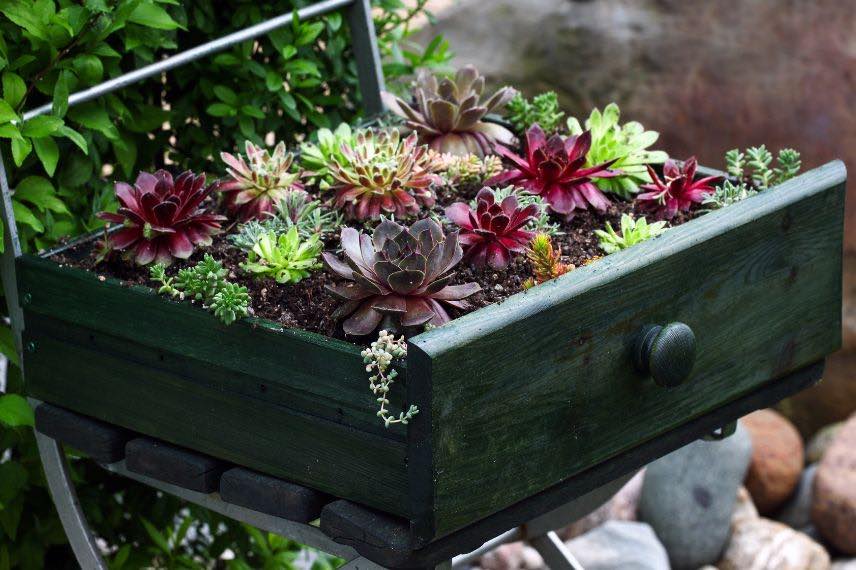
Upcycling: an interesting trend
Rely on the community of passionate gardeners.
The gardening community is continually expanding and diversifying. Take the opportunity to seek advice from the most experienced, but take part in plant fairs or swaps, which allow you to acquire new plants for free.
Similarly, especially when it comes to maintenance tools that can quickly push up the budget, opt for group buying or renting. This can be done through specialist shops or between individuals (there are various websites on the internet).
- Subscribe!
- Contents
Comments