





























Our time is marked by a fear of the future but also by a desire to return to our roots, to the earth. Many people are seeking healthier and more natural food, far from the industrial productions of the agri-food sector. These two things, although very distant from each other, meet at one point: food autonomy.
But... Can my garden really feed me all year round, whether following the principles of permaculture or through a traditional kitchen garden? Here is my (humble) opinion!
Maybe... if you have a large plot of land
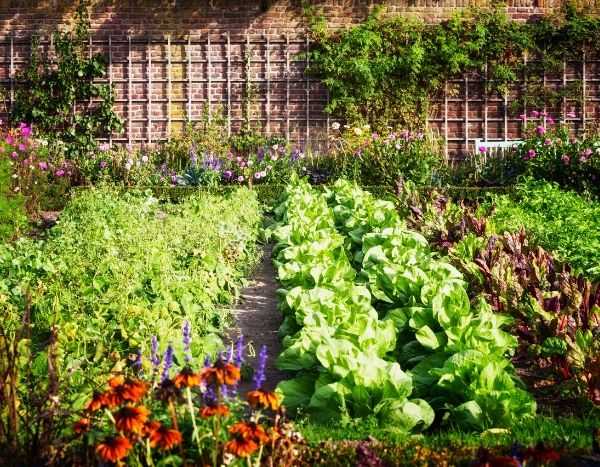
Growing fruits and vegetables takes up space. And let's not even talk about other crops for cereals, for example... or livestock... Thinking of feeding a family with just a few dozen square metres is utopian (and I’m being polite...). For a family of four, you need at least 500 m² just for the vegetable garden. We’re not even talking about fruit trees! That already represents a significant area that will need to be optimised: crop rotation, soil preparation, green manures, intercalary crops...
Maybe... if you have time or manpower
Reading books dedicated to food autonomy, one might think, “Wow, great, all this abundance for free and without doing anything. Yay!” Well, free, to some extent: seeds are not very expensive (although they can still represent a budget...) and you can always exchange things with other gardeners.
Without doing anything... sorry, but you will need to roll up your sleeves if you expect to eat something throughout the year. Don’t imagine you can just sow your seeds or plant your trees and then wait for time to pass! Cultivating a garden requires time, every day. Even if it’s raining or cold.
Indeed, it is generally considered that for a large vegetable garden, as mentioned above, you should spend at least an hour a day on it. On average... At the beginning of the season, it will be much more time-consuming!
Maybe... but not all year round
Managing to feed yourself with produce from the garden from January to December is... complicated in cold areas as few vegetables grow in winter. So, unless you are devoted to cabbages and root vegetables like parsnips or turnips and have turned your cellar into a gigantic mushroom farm and endive culture, you will need to buy food to survive. But perhaps you think you can live off your provisions... That’s a good option, but don’t forget the time you’ll need to dedicate in summer to making jars and also the necessary (and suitable) space to store summer fruits and vegetables all winter.
Maybe... but not necessarily the first year
Achieving a garden that can feed you effectively does not happen in a few weeks. It can take several years for various reasons.
First of all, many fruit trees take years to bear fruit and the first harvests can be disappointing.
The soil also takes time to become perfectly fertile with a good structure. I’m not talking about a heavy ploughing followed by the addition of fertiliser, but rather a gentler cultivation method: no tillage and the addition of natural organic matter through mulching or light burying. Such a cultivation method will take three to five years to give its best, thanks to the work of the soil fauna and microflora. Even though you will see improvements year after year.
Let’s not forget the balance of the garden. Your garden is a complete ecosystem. So let’s leave more space for nature in your garden, even a productive one, through a hedge, a small pond, and the abandonment of ecocides... But it will still take a few years for natural predators to arrive and reduce the number of “pests” in your crops. In the first year, you will mainly feed slugs and caterpillars...
Maybe... but it’s better to be equipped
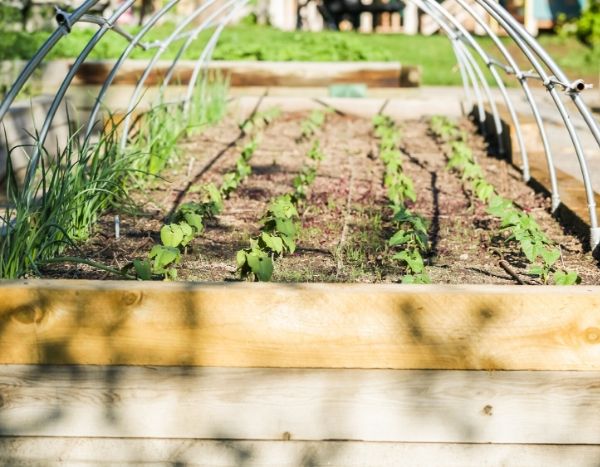
Creating a productive garden requires time and effort. But it goes without saying that it also requires an investment in equipment. Tools, greenhouses, cloches, a branch shredder for RCW, and the setup of a suitable space for storage... And why not a small tractor or a draft animal... In short, just your two arms and good will won’t be enough. Don’t panic, however; you will always find kind neighbours to lend you the most expensive tools!
Maybe... but not alone
You can’t do everything alone! The ideal is to team up with other gardener-cultivators to share the workload, both in terms of cultivation and in terms of preparation for storage.
Think of the village of Asterix: there are hunters, cultivators, a fishmonger (who spends his time fighting with the blacksmith...), a menhir maker... Well, that’s what you should aim for rather than isolating yourself on a plot surrounded by barbed wire and watchtowers. Food autonomy can only be considered as a group.
Conclusion
Unless you decide to quit your job to achieve food autonomy, growing a productive garden should remain a hobby. But a healthy hobby! Healthy in the sense that the vegetables produced are natural and that this activity is good for both body and mind. And it should stay that way!
So don’t put pressure on yourself regarding potential food production or hypothetical food autonomy.
If you get good vegetables: great and well done! If you don’t have a yield in line with your physical and moral investment: never mind, it will be for next year...

Comments