Cookies help us to offer you a personalised browsing experience and to measure our audience. You can configure them at any time and consult our privacy policy.
This website uses cookies to improve your experience when browsing the website. Of these, cookies classified as necessary are stored on your browser because they are essential for the basic functionality of the website to work. We also use third-party cookies to help us analyse and understand how you use this website. These cookies will only be stored on your browser with your consent. You also have the option of refusing these cookies. However, deactivating some of these cookies may have an effect on your browsing experience.
Drought-resistant fruit trees, all our special offers
5results
Filter
Back to top
Filter
Height at maturity
Min.
Max.
Recommended planting time
Show more +Show less -
Hardiness - Cold resistance
Show more +Show less -
Supplied in
Show more +Show less -
Our selection
Show more +Show less -
Price
Min.
Max.
Spread at maturity
Min.
Max.
Growth rate
Show more +Show less -
Garden style
Show more +Show less -
Disease resistance
Show more +Show less -
Exposure
Show more +Show less -
Flower colour
white
1
yellow
2
green
2
Fruit colour
Show more +Show less -
Foliage colour
Green
5
Foliage persistence
Show more +Show less -
Fragrance
Show more +Show less -
Flowering time
Show more +Show less -
Soil pH
Show more +Show less -
Soil moisture
Show more +Show less -
Soil type
Show more +Show less -
USDA Zone
Show more +Show less -
Type of use
Show more +Show less -
Availability
More filters17
Fewer filters
Does this plant fit my garden?
Set up your Plantfit profile →
Filter
Sort by:
Display
5results
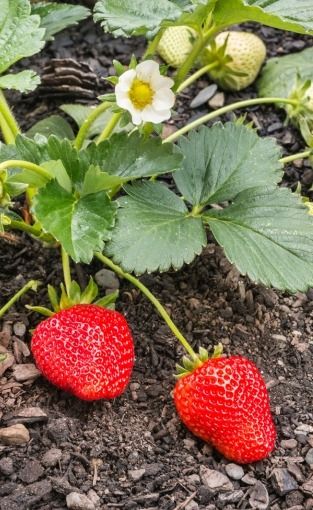
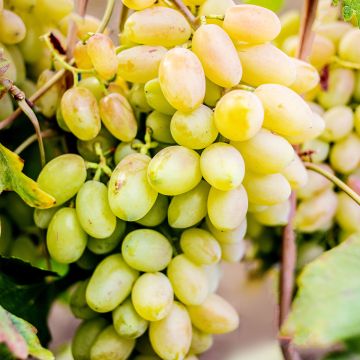
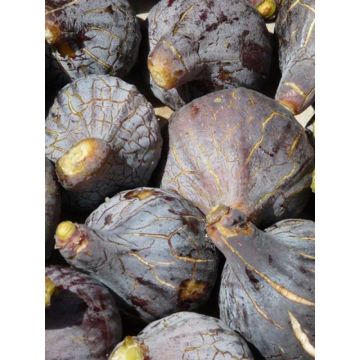
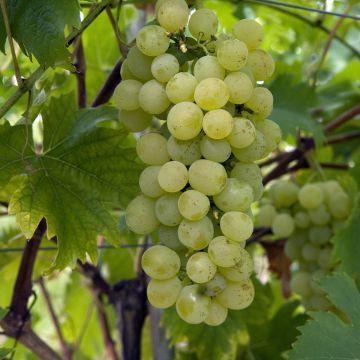
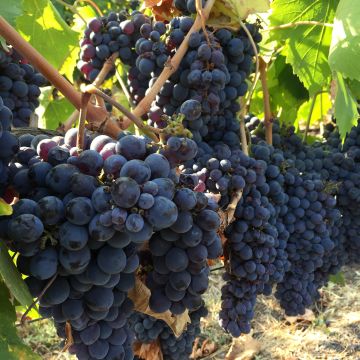
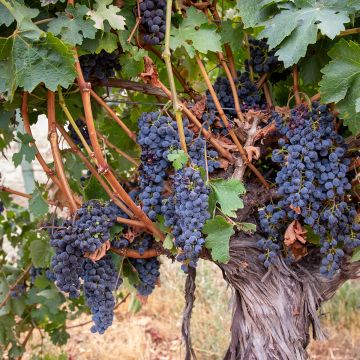
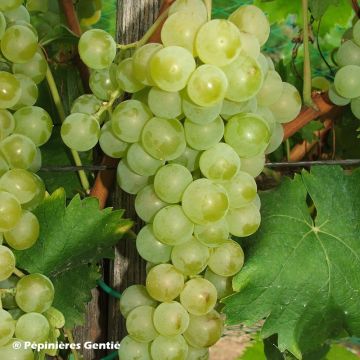
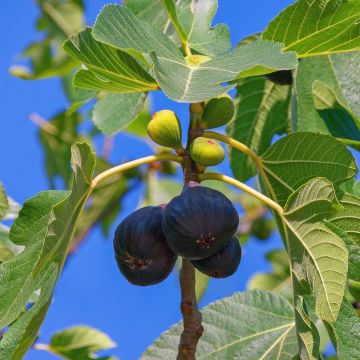
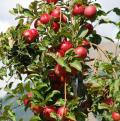
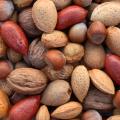
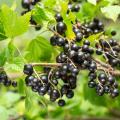
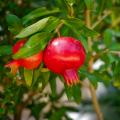
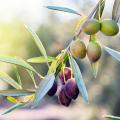
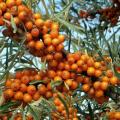
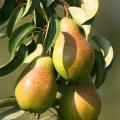
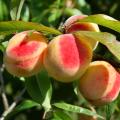
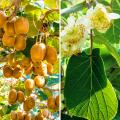
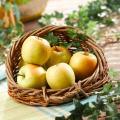
Here is our selection of fruit trees, small fruits, and climbing fruit plants that are rather resistant to dry conditions, adapted to well-draining soils, perfect for waterless gardens. In this category, we find certain species called mediterranean species such as the Fig tree, the Olive tree, the Almond tree, the grape Vine of course, but also the Apricot tree and the Peach tree. Far from the shores of the "Great blue" also grow excellent fruit trees, interesting for their sobriety and easy to acclimatise in many regions. Let's mention for example the walnut tree, the hazelnut tree, and even the Feijoa native to Brazil. Let's not forget many free hedge shrubs such as the cornelian cherry, the quince tree, the Goji berry, or even the sea buckthorn, which produce edible berries often interesting for their nutritional qualities. Of course, "resistant to drought" does not mean that you should never water your fruit trees, as the harvests will always be more abundant and of better quality if the plant is irrigated from time to time. Let's not forget good practices: the two or three summers following planting, it is essential to help your fruit trees establish themselves with abundant but spaced waterings, as long as the roots are not sufficiently developed. Of course, during years of extreme drought and heatwaves, the orchard still needs monitoring. If you garden in a dry and hot region, or if the soil in your garden does not retain water, it is among the following selection that you will find your happiness.
The flowering period indicated on our website applies to countries and regions located in USDA zone 8 (France, the United Kingdom, Ireland, the Netherlands, etc.)
It will vary according to where you live:
In zones 9 to 10 (Italy, Spain, Greece, etc.), flowering will occur about 2 to 4 weeks earlier.
In zones 6 to 7 (Germany, Poland, Slovenia, and lower mountainous regions), flowering will be delayed by 2 to 3 weeks.
In zone 5 (Central Europe, Scandinavia), blooming will be delayed by 3 to 5 weeks.
In temperate climates, pruning of spring-flowering shrubs (forsythia, spireas, etc.) should be done just after flowering.
Pruning of summer-flowering shrubs (Indian Lilac, Perovskia, etc.) can be done in winter or spring.
In cold regions as well as with frost-sensitive plants, avoid pruning too early when severe frosts may still occur.
The planting period indicated on our website applies to countries and regions located in USDA zone 8 (France, United Kingdom, Ireland, Netherlands).
It will vary according to where you live:
In Mediterranean zones (Marseille, Madrid, Milan, etc.), autumn and winter are the best planting periods.
In continental zones (Strasbourg, Munich, Vienna, etc.), delay planting by 2 to 3 weeks in spring and bring it forward by 2 to 4 weeks in autumn.
In mountainous regions (the Alps, Pyrenees, Carpathians, etc.), it is best to plant in late spring (May-June) or late summer (August-September).
The harvesting period indicated on our website applies to countries and regions in USDA zone 8 (France, England, Ireland, the Netherlands).
In colder areas (Scandinavia, Poland, Austria...) fruit and vegetable harvests are likely to be delayed by 3-4 weeks.
In warmer areas (Italy, Spain, Greece, etc.), harvesting will probably take place earlier, depending on weather conditions.
The sowing periods indicated on our website apply to countries and regions within USDA Zone 8 (France, UK, Ireland, Netherlands).
In colder areas (Scandinavia, Poland, Austria...), delay any outdoor sowing by 3-4 weeks, or sow under glass.
In warmer climes (Italy, Spain, Greece, etc.), bring outdoor sowing forward by a few weeks.