


























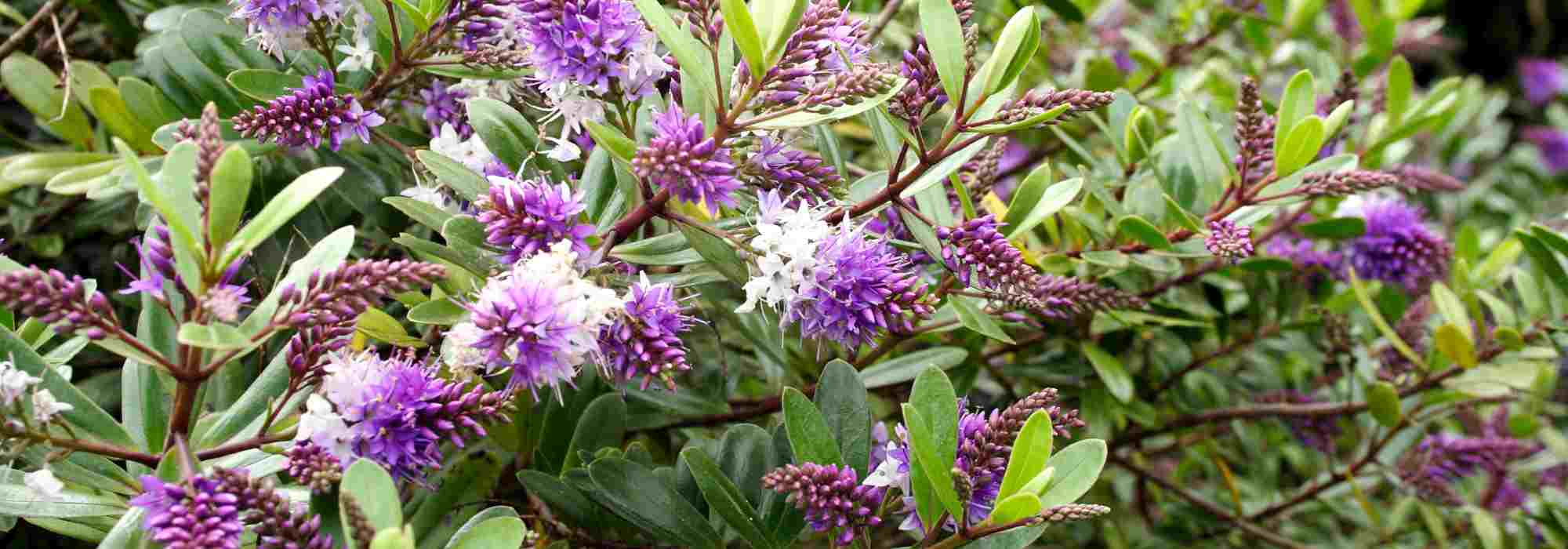
Which Hebe to plant according to your region?
Varieties suited to your climate
Contents
Originating from New Zealand and nearby islands, as well as Chile, Hebe or shrubby veronicas prefer mild oceanic climates, whether Atlantic or Mediterranean. These are rather tender bushes, although very attractive in all seasons. In spring or summer, when they adorn themselves with their elegant and colourful spike flowers, they maintain a beautiful, well-kept appearance all year round with their evergreen foliage. There are about a hundred species of shrubby veronicas, among which the Hebe with large leaves can be distinguished from those with small leaves. The latter are better at withstanding wind, dry soils, and drought. The only downside to these lovely bushes is their tenderness inherited from their origins. It is hardiness that will primarily determine your choice of shrubby Veronica, which you will adopt according to your climate in the ground or in pots to place on your terrace or balcony. Fortunately, some varieties are more hardy and can acclimatise in less forgiving gardens.
Discover our selection of Hebe, varying in hardiness, to install in your garden or in pots on your terrace according to your region!
→ Learn all about hebe in our comprehensive guide.
Hebe are initially chosen based on their hardiness
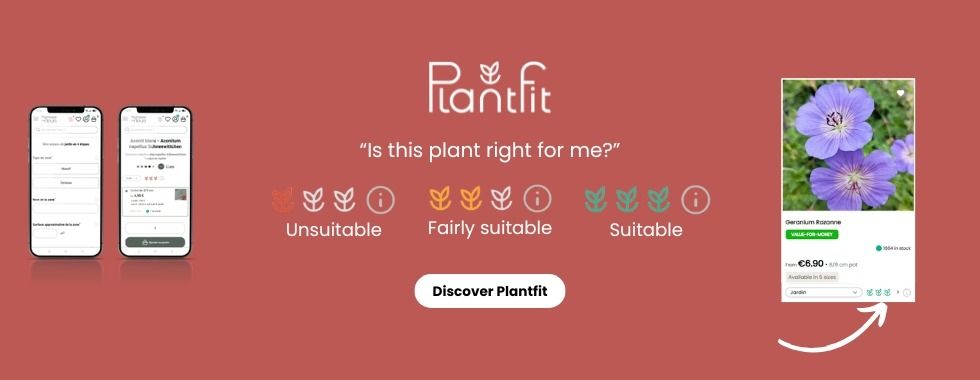
You live in the Mediterranean region.
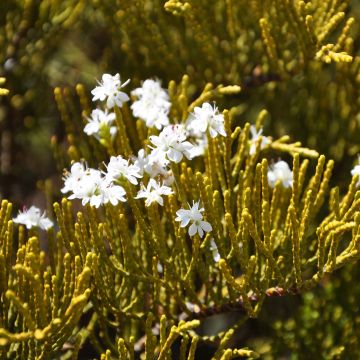
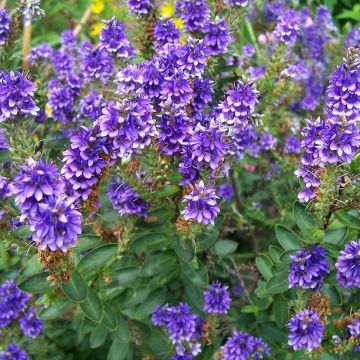
We are talking here about USDA hardiness zones 9a, 10a, and 10b, which feature mild winters where frosts are rare and warm, dry, and sunny summers. The thermometer rarely drops below zero. All Hebe are permitted! You can grow the most tender varieties in the ground without fear, as well as the hardier ones, of course. However, there is a caveat: while Hebe dislike heavy soils, they appreciate soils that remain just cool in summer. They need well-drained soil, especially in winter. Once established, they tolerate summer drought better. In a warm climate, they can be planted in both sun and shade. Therefore, ensure you provide regular watering during prolonged dry spells, especially in the first few years. So for those of you enjoying pleasant winters, the choice is vast! Indulge yourself by planting the striking Hebe ‘Green Globe’ with its beautiful golden-green foliage, particularly bright throughout the year. It will form a small bush resembling a santolina in a slope or a rockery in full sun, though not too arid. In very well-drained soil, it will be hardy down to -8°C. Hebe ‘Autumn Glory’ is another possible choice that will ensure you long months of flowering as it boasts a long flowering period forming a flowering bush from June sometimes even until December! It is simply divine when its blue-violet flower spikes dot its dark green foliage tinged with purple. Moderately hardy (down to -7°C), it is sensitive to harsh winters and will find ideal growing conditions in your well-sheltered garden.
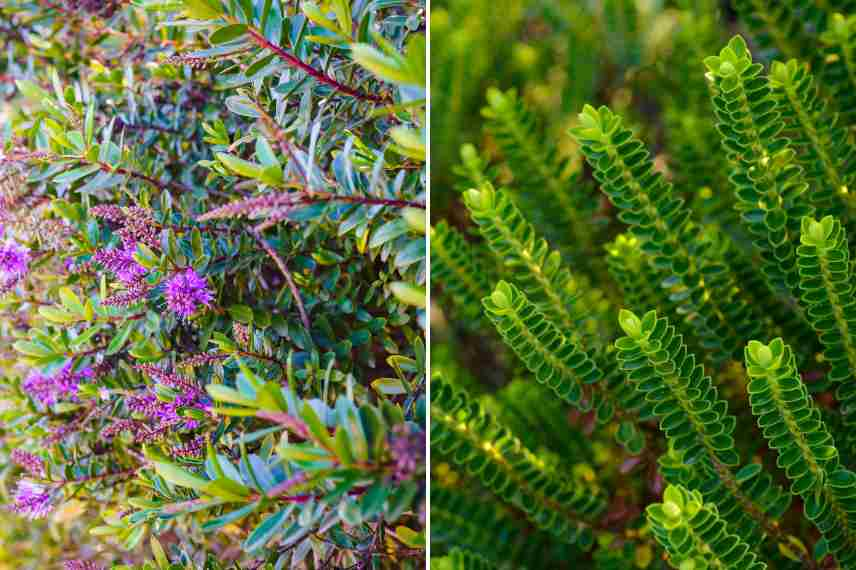
Treat yourself! All shrubby veronicas are for you, those with longer leaves, and those with small leaves like the striking ‘Golden Globe’
Do you live on the West Coast or the far South West?
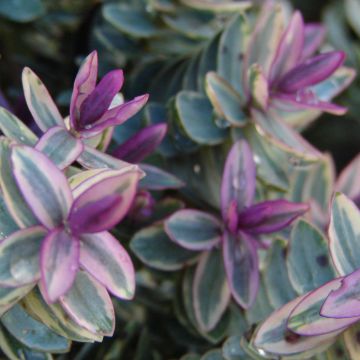
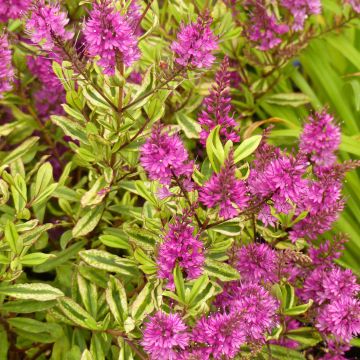
Hebe feel particularly at home in these regions. Rainfall is frequent and winters are relatively mild. Frosts below -10°C are rare here. We are in USDA zones 8 and 9b, which cover the coastal fringe from the North Sea to the entirety of Normandy, Brittany, Vendée, and the Charentes (in addition to the altered oceanic climate in Angers and the degraded oceanic climate in Paris), as well as the Southwest basin. This is the ideal climate for Hebe, which are among the easiest to grow in gardens with a mild climate. In these areas, they can thrive without special protection and will only be damaged during harsh winters. These plants also tolerate salt spray quite well, at more than 100 m from the shore. You will have plenty of choices! This expands to Hebe that are resistant down to -10-12°C, in well-drained soil. However, they are sensitive to prolonged frosts. It is important to properly mulch the base before winter to protect them as much as possible. Consider ‘Hebe ‘Raspberry Ripple’, a compact, vigorous, floriferous, and disease-resistant variety, which blooms from June to September with small, slender raspberry-pink spikes supported by glossy dark green foliage. ‘Heartbreaker’ is another beautiful variety equally well-suited, notable for its variegated foliage blending cream and purple.
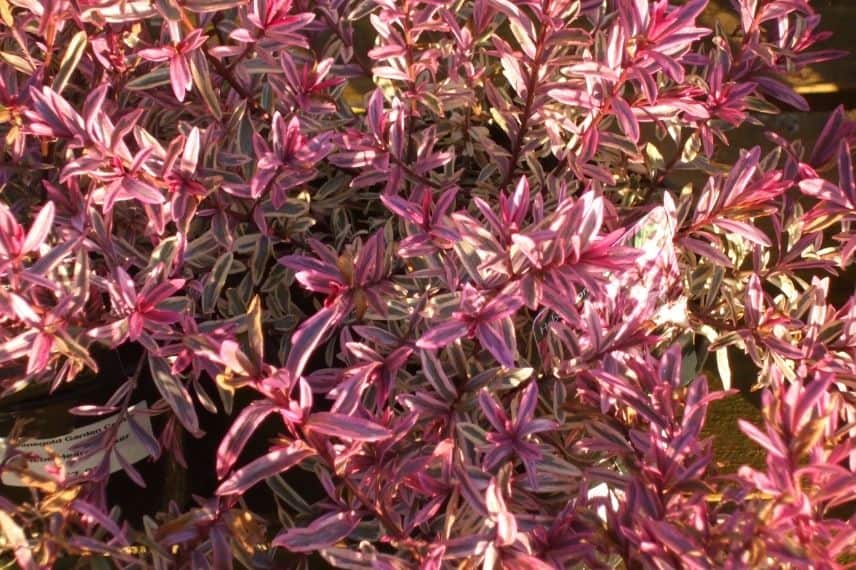
Hebe ‘Heartbreaker’
Discover other Hebe - Shrubby Veronica
View all →
Available in 1 sizes
Available in 1 sizes
Available in 1 sizes

Available in 1 sizes
Available in 1 sizes
Available in 1 sizes
Available in 1 sizes
Available in 1 sizes
Available in 1 sizes
Available in 1 sizes
You live everywhere else.
Everywhere else, this means, in all our regions where winters are harsher, with frost periods that are more prolonged and severe. The ocean is too far away to bring sufficient warmth at night. The choice of Hebe varieties is limited for planting in open ground. For open ground, you can choose from the hardiest Hebe that tolerate cold down to -15°C in well-drained soil. In cool climates, a sunny planting position is essential. In the first few years, ensure to protect the stump from the cold with a thick layer of mulch. One of the best varieties for cool climates is Hebe ‘Red Edge’®, adorned with soft grey-green leaves edged in red-purple, it offers good cold resistance. Beautiful, dense, and of modest size, it deserves a place in most gardens. Hebe ‘Purple Shamrock’, once well established, will also withstand frosts down to -15°C. With its variegated foliage changing with the temperatures, it forms a lovely ornamental cushion all year round. However, if the thermometer fluctuates regularly, they should be grown in large pots on the terrace and stored in a bright, unheated space during winter. In these cold winter regions, all Hebe will be suitable, provided they are planted in pots and wintered indoors.
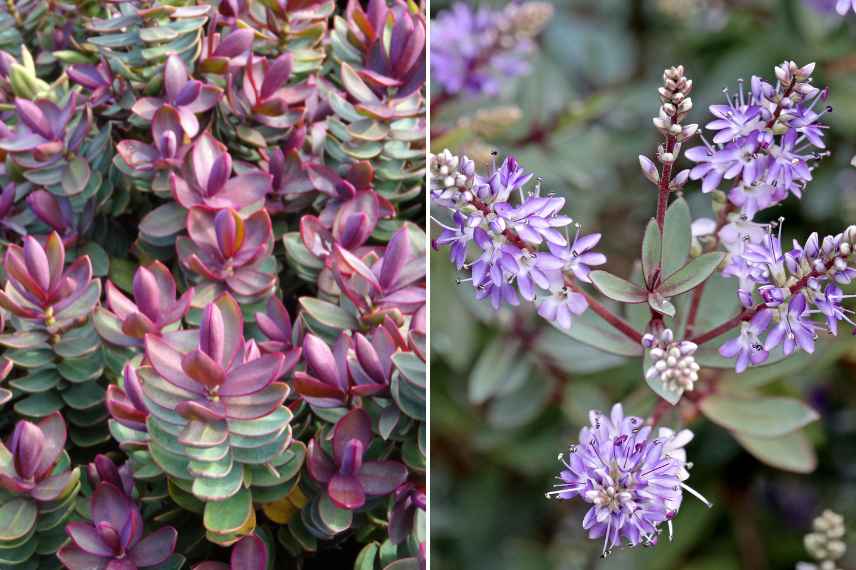
Hebe ‘Red Edge’
Read also
Hardy plants and hardinessFor further reading
Find our articles on Hebe:
Check our advice sheets dedicated to hardiness conditions and climate zones:
- Subscribe!
- Contents
Comments