






























What is a mild climate?
The affected areas and suitable plants
Contents
When gardening, one often encounters expressions such as “this plant is reserved for regions with a mild climate“, “hurry your sowing in a mild climate“, “protect your crops, except in regions with a mild climate“… But what does this expression actually refer to? While most people have a rough idea of what it means, others might argue that a “mild climate” is a vague term.
Let’s clarify what a mild climate is, the areas it encompasses, and the plants suited to it.
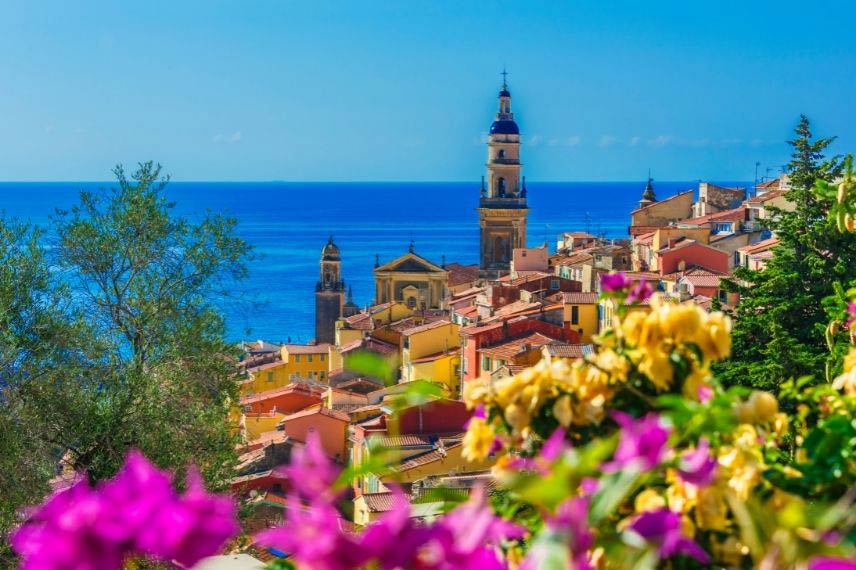
The town of Menton and the Côte d’Azur, with their privileged sunny climate and minimal frost, are representative of mild climate zones.

How to define a mild climate and which regions are affected?
What is climate?
According to Météo France: “Climate is a synthetic representation of the weather conditions characterising a given region. It is defined by average values, generally over 30 years, and the dispersion around the average of meteorological variables (temperature, precipitation, wind, sunshine…) and particular phenomena such as fog, storms, and hail.”
Thus, it is clear that, in addition to considering temperature data, other data such as wind and precipitation are also taken into account.
The climate in mainland France
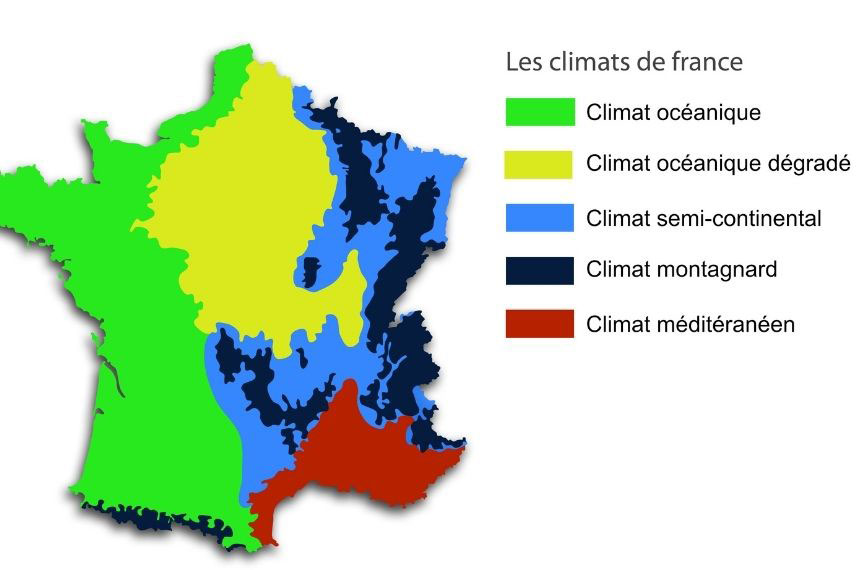
Our country benefits from a temperate climate, due to its ideally situated position between the North Pole and the Equator and the dominance of winds from the Atlantic. Depending on their proximity or distance from the sea, their altitude, and their positioning relative to mountain ranges, the different French regions are subject to five major climates with four distinct seasons:
- oceanic climate
- altered oceanic climate
- semi-continental climate
- mountain climate
- Mediterranean climate
These areas overlap with USDA zones (defined by the United States Department of Agriculture) that divide geographical areas based on the average minimum temperatures of the last 20 years. This zoning is more detailed and helps us identify which areas commonly benefit from what is referred to as a “mild climate.”
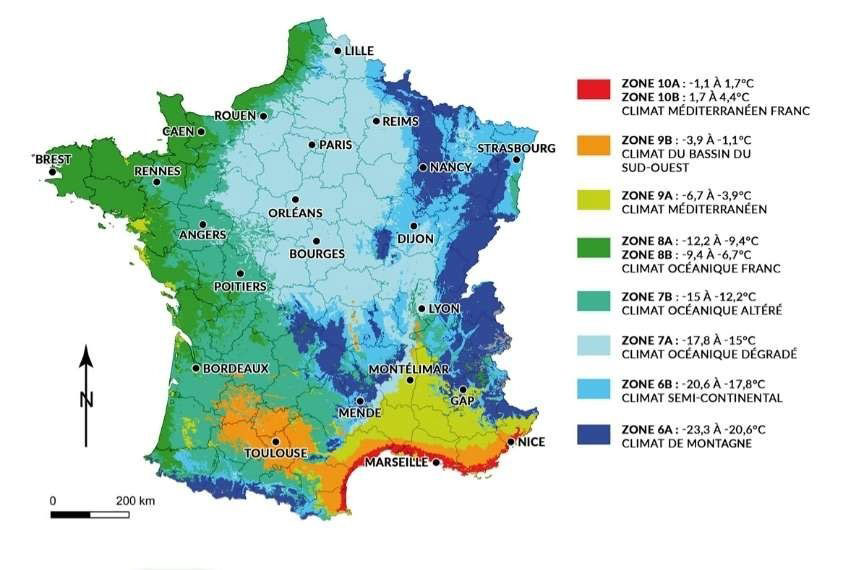
Areas benefiting from a mild climate
We see that coastal regions influenced by the Atlantic Ocean, the Mediterranean Sea, and the English Channel, and thus by their marine currents, enjoy lower minimum temperatures than the rest of the country. These regions correspond to USDA zones 8a and above.
When we talk about a mild climate, we immediately think of the shores of the Mediterranean where the Côte d’Azur, Alpes-Maritimes, and Var experience mild winters but also scorching summers. The same applies to the shores of Occitanie or the Corsican coastline. Along the Atlantic coast, the ocean also allows for a pleasant climate with little frost: thus, the western area of Normandy, Brittany, Vendée, and Charentes, as well as the west of Landes and Pyrénées-Atlantiques are included.
In summary, areas with a mild climate have a high average annual temperature (above 13 °C), with a reduced number of cold days and some minor frosts where temperatures rarely drop below -5 °/-8 °C. Warm days are between 15 and 23 per year. Precipitation is more frequent (Atlantic coast) or more intense (Mediterranean), and it is important to consider additional factors such as the dominant winds, namely the Mistral and Tramontane, which can challenge gardeners and harm plants.
Read also
Climate zones and USDA zones in FranceWhich plants for mild climate zones?
Lucky gardeners in mild climate zones (USDA zones 8a and above) can enjoy growing a variety of plants that would be more challenging elsewhere.
Palms
Palms evoke the Mediterranean and the Atlantic coast, with their climate blending a gentle lifestyle and sometimes scorching summers. As elite subjects in gardens, they undeniably add an exotic touch to planted spaces. In USDA zone 8a, opt for the hardy Trachycarpus fortunei (which can even withstand temperatures down to -15°C) or the Chamaerops humilis. In the more privileged zone 9a, try the Sabal causarium or the Washingtonia filifera.
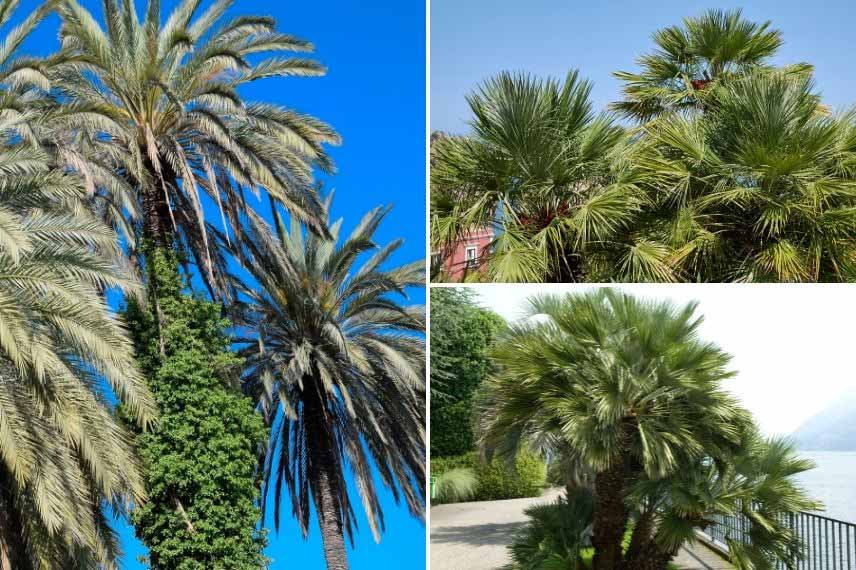 Even though some are hardy, palms are among the most representative plants of areas with a mild climate.Trees and Conifers
Trees with magnificent flowering, such as Mimosa, Albizia, and Crape Myrtle (Lagerstroemia) and of course the essential olive trees and Eucalyptus gunnii are sun and heat lovers and will thrive better in mild climate regions. As for conifers, the Provence Cypress and the Umbrella Pine are must-haves, as well as the Maritime Pine, which is widespread along the entire oceanfront.
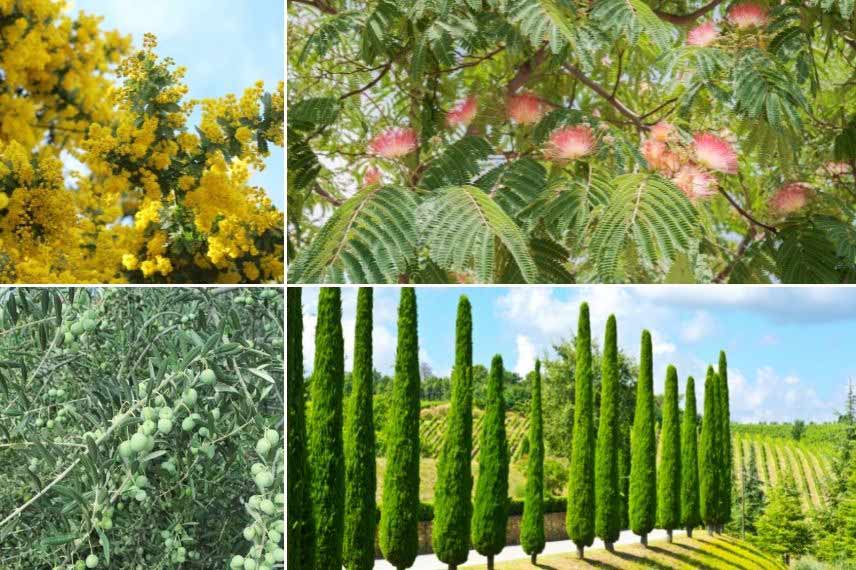 Mimosa, Albizia, Olive, and Provence Cypress.Shrubs
Ultra-floriferous, Mediterranean shrubs are plentiful and allow for the creation of dry garden atmospheres or more tropical-looking gardens:
- Oleanders, varying in hardiness depending on the varieties, prefer warm climate zones and are staples in gardens of the south and the Atlantic coast.
- They happily coexist with Hibiscus or Althaea.
- Strawberry Trees.
- The Little Flamboyant or Caesalpinia gilliesii with its spectacular summer flowering.
- Myrtles, emblematic of Mediterranean culture and landscapes.
- Polygala, an essential bush in mild climates and coastal areas.
- Bottlebrushes or Callistemon, with their scarlet brushes.
- Cistus with their incomparable spring flowering.
Plants of Tropical Origin
For exotic atmospheres, a mild climate allows you to adopt these plants, which are indeed tender but incomparable:
- Banana Trees.
- Strelitzia reginae or Bird of Paradise.
- Cannas, with their summer flowering in warm tones.
- Tree Ferns.
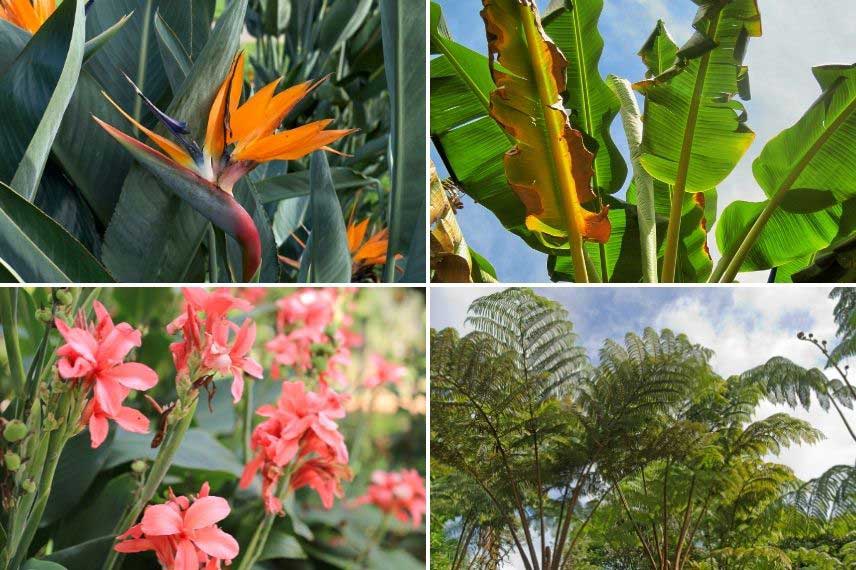 Bird of Paradise, Banana Tree, Canna, and Tree Fern.Climbing Plants
Mediterranean climbers will adapt to regions with little frost and generous sunlight:
- Bougainvilleas, which are not very frost-resistant.
- Plumbago in azure blue.
- Jasmines.
- Trumpet Vines.
- Ipomoea learii, which grows very quickly, considered an annual but perennial in mild climate zones (zone 9a).
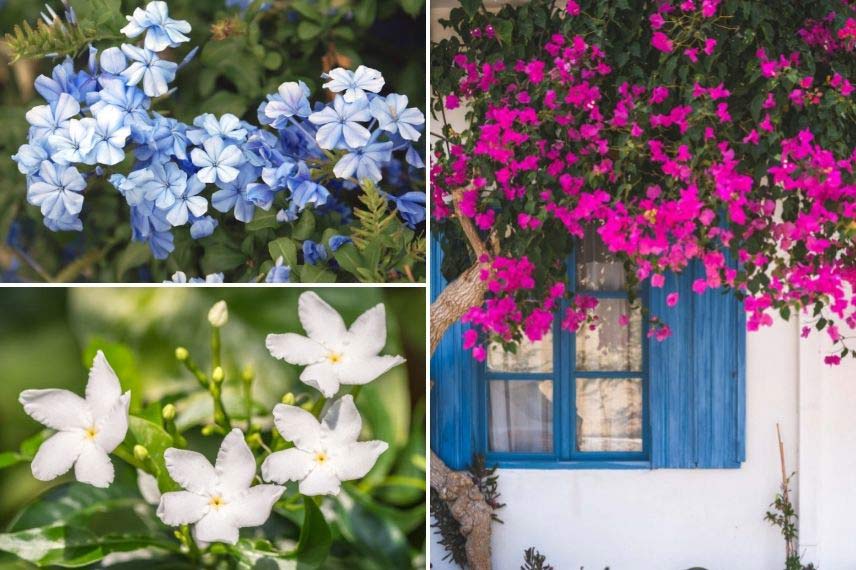 Plumbago, Jasmine, and Bougainvillea.Citrus Trees
Citrus trees such as sweet oranges, the four seasons lemon tree, or even citron trees require plenty of warmth, a sheltered location from winds, and perfectly drained soil. They will find these climatic conditions in the far southeast of the country, on the Côte d’Azur and along a strip close to the Mediterranean. In the rest of the Mediterranean region, a fleece and good mulching are recommended.
Succulents, Cacti, and Agaves
By adopting these undemanding plants, you can create a garden that requires almost no watering. For a mild climate often means rare rainfall, especially in Mediterranean areas. For the Atlantic coast, which is more humid, ensure good drainage at planting, as these plants are sensitive to excess moisture:
- Cycas revoluta.
- The Elephant Foot Yucca, Yucca elephantipes.
- the Dasylirions with their tufts of linear leaves.
- Agaves, taking care of their somewhat invasive nature.
- Aloes, including Aloe arborescens with its bright and colourful flowering.
- Opuntias, known as prickly pears.
- Beschorneria, with leaves completely devoid of spines.
- Phormiums or New Zealand Flax.
- Cordylines with foliage offering beautiful colour contrasts.
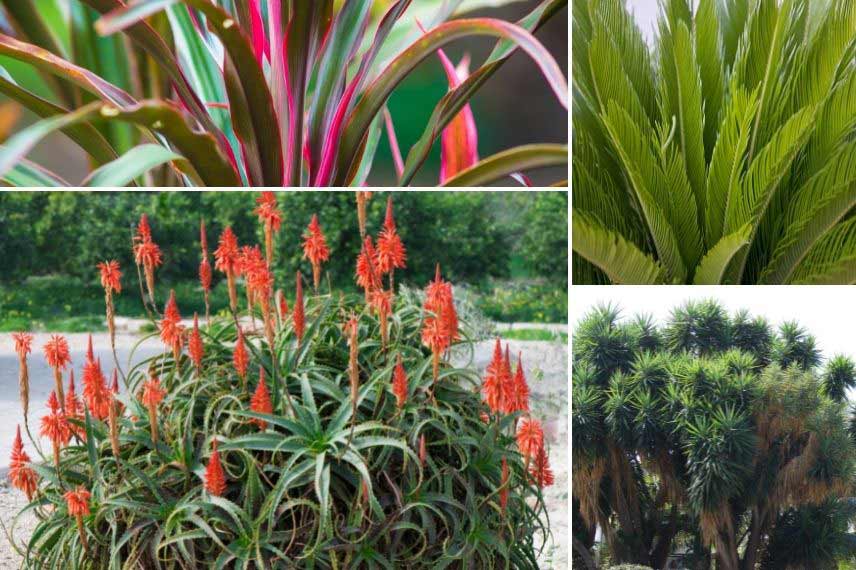 Cordyline, Aloe, Cycas revoluta, and Yucca elephantipes.Perennials
Frugal and floriferous, Mediterranean perennials complete landscape compositions and flower terraces:
- Agapanthus in blue or white.
- The spectacular Madeira Viper’s Bugloss or Echium fastuosum.
- The classics lavenders, santolines, and Helichryses.
- The Lantanas, which adorn themselves with flowers all summer long. Considered an annual, it is nevertheless quite perennial in regions with little frost (zone 9a).
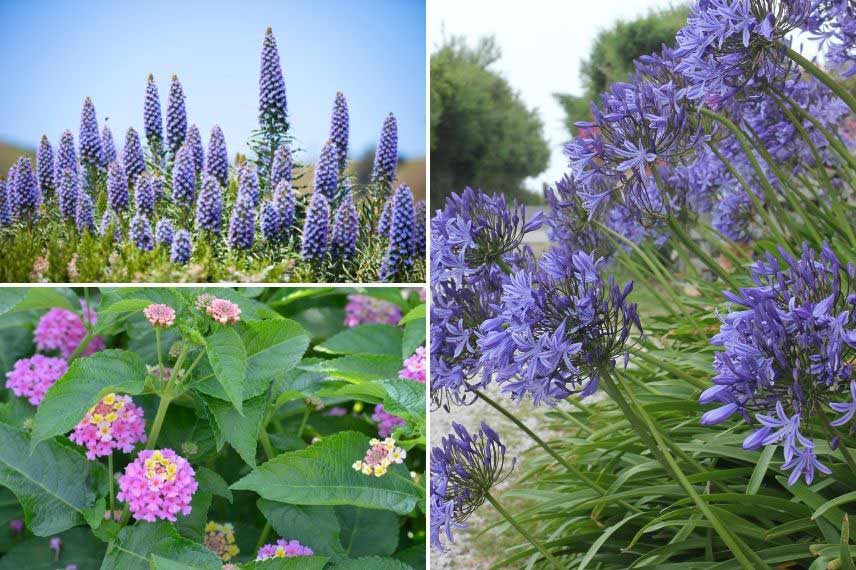 Echium, Lantana, and Agapanthus.

- Subscribe!
- Contents

Comments