





























Callistephus chinensis Matsumoto Field Grown Mix Organic Seeds make it easy to grow this spectacular annual China aster. This mix is valued for its large semi-double flowers in vibrant and varied shades, borne on sturdy upright stems. Its bushy, well-branched, and fairly tall habit makes it a preferred choice for summer borders as well as cut flowers. This variety is resistant to Fusarium and appeals to both amateur gardeners and flower arrangement enthusiasts with its abundant summer flowering and lasting decorative effect, in the ground or in pots.
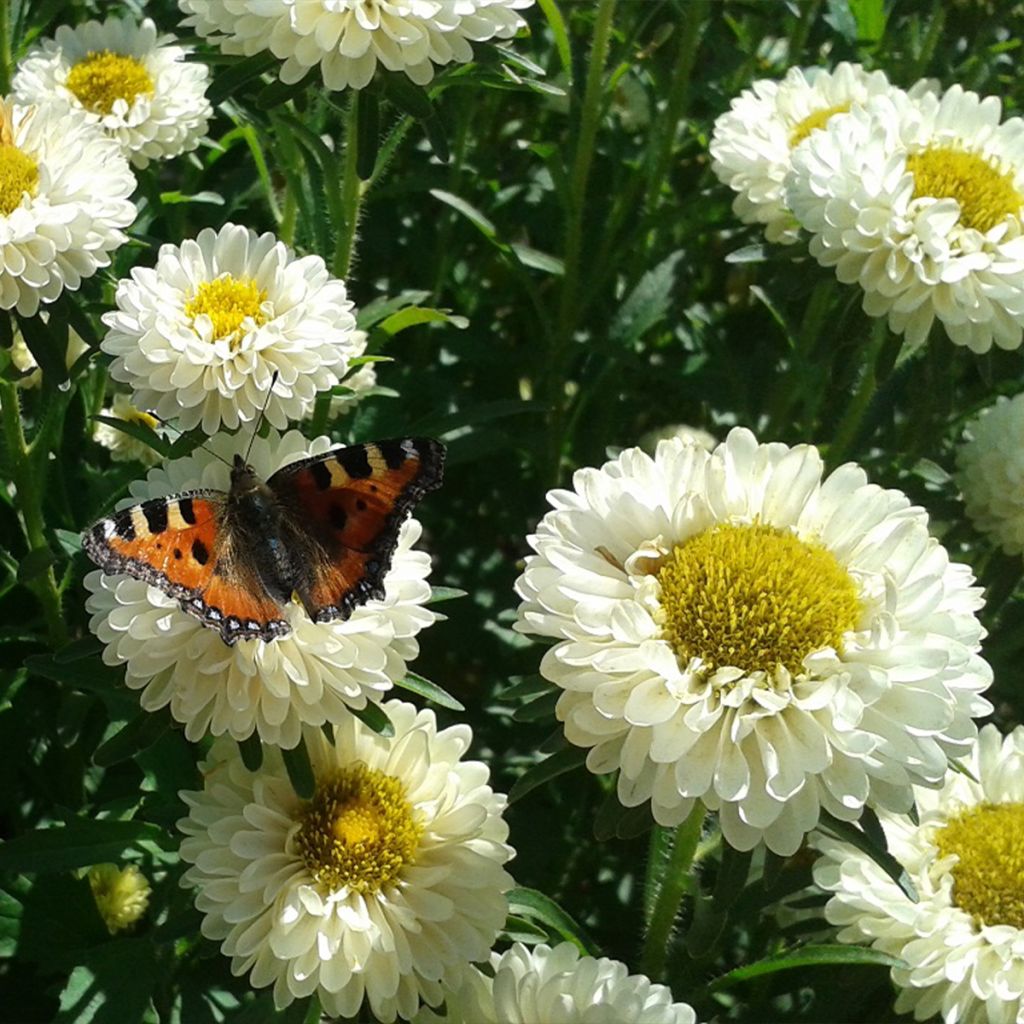
Callistephus chinensis Matsumoto Field grown Mix organic seeds - China aster
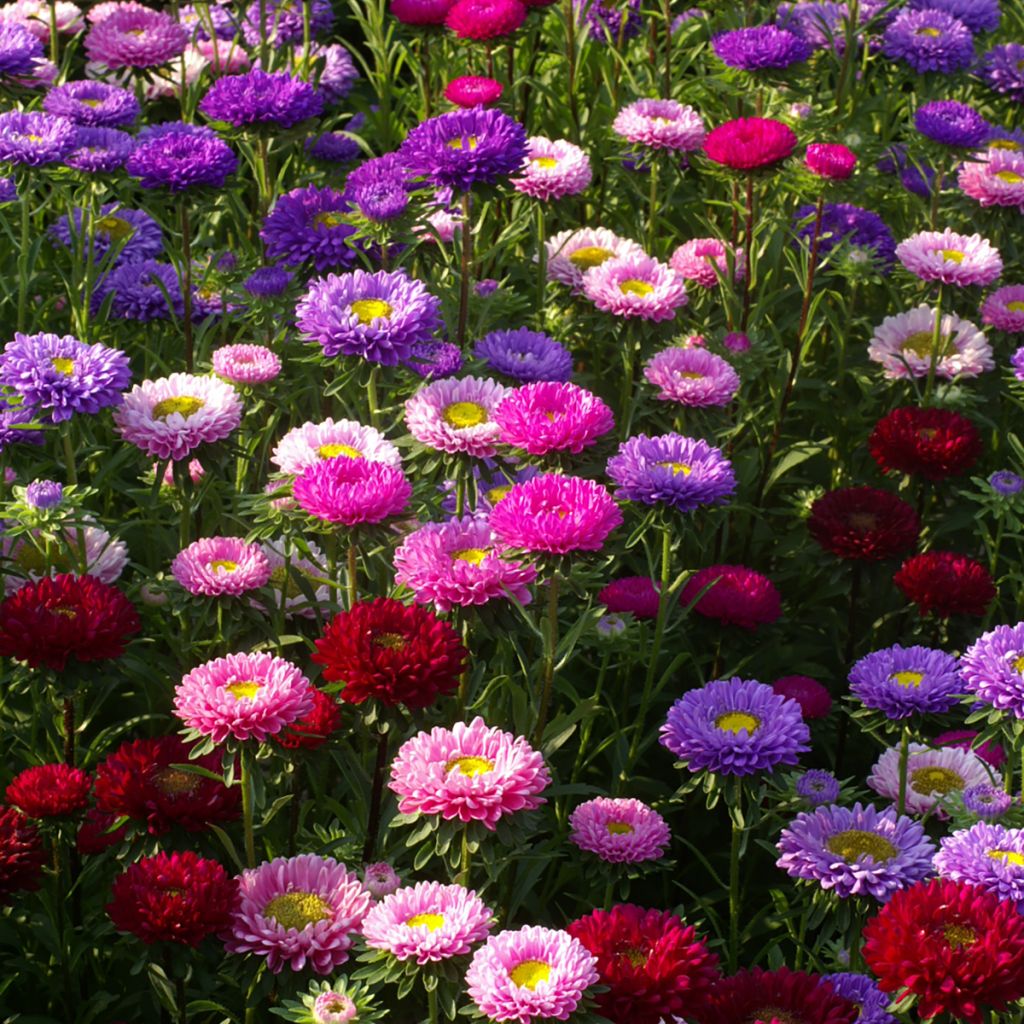
Callistephus chinensis Matsumoto Field grown Mix organic seeds - China aster
Share your pictures?
Hide split images
New arrival
Callistephus chinensis Matsumoto Field grown Mix organic seeds - Chinese Aster
Callistephus chinensis Matsumoto Field grown Mix
China Aster, Chinese Aster
Be the first to leave a review
Special offer!
Receive a €20 voucher for any order over €90 (excluding delivery costs, credit notes, and plastic-free options)!
1- Add your favorite plants to your cart.
2- Once you have reached €90, confirm your order (you can even choose the delivery date!).
3- As soon as your order is shipped, you will receive an email containing your voucher code, valid for 3 months (90 days).
Your voucher is unique and can only be used once, for any order with a minimum value of €20, excluding delivery costs.
Can be combined with other current offers, non-divisible and non-refundable.
Home or relay delivery (depending on size and destination)
Schedule delivery date,
and select date in basket
This plant carries a 6 months recovery warranty
More information
We guarantee the quality of our plants for a full growing cycle, and will replace at our expense any plant that fails to recover under normal climatic and planting conditions.
A robust annual, prized for its long, straight stems bearing semi-double flowers with vibrant yellow centres in a palette of bright colours. This mix includes shades such as white, yellow, light pink, dark pink, red, scarlet, sky blue, dark blue and apricot. It thrives in sunny or lightly shaded positions and prospers in rich, well-drained soil kept moist. Its flowering period extends from July to October, bringing lasting colour to the garden and forming lovely rustic bouquets. Sow under cover or directly in the ground, in a favourable position, in fertile and light soil.
Flower size
6 cm
Height at maturity
70 cm
Exposure
Sun
Germination time (days)
18 days
Sowing method
Direct sowing, Sowing under cover
Does this plant fit my garden?
Set up your Plantfit profile →
Sowing period
March to April
JAN
J
FEB
F
MAR
M
APR
A
MAY
M
JUN
J
JUL
J
AUG
A
SEP
S
OCT
O
NOV
N
DEC
D
Flowering time
July to September
JAN
J
FEB
F
MAR
M
APR
A
MAY
M
JUN
J
JUL
J
AUG
A
SEP
S
OCT
O
NOV
N
DEC
D
Description
The China Aster, also known as the Annual Aster, is an annual plant native to Asia and belonging to the Asteraceae family. Cultivated for centuries, it has given rise to numerous varieties prized for borders and bouquets. The Matsumoto Field Grown Mix Organic produces vigorous, well-branched plants, reaching about 70 cm in height within a few months. They display bright green foliage with ovate, finely toothed leaves. They flower from June to September, depending on the sowing time, with pretty heads about 6 cm across, composed of colourful petals in a double row around a central golden-yellow heart. Like all annuals, this plant completes its entire cycle in one season, from germination to seed production.
Callistephus chinensis Matsumoto Field Grown Mix Organic integrates harmoniously into plant scenes with varied textures and colours. Its slender stems and brightly coloured flowers add height and rhythm to borders. To accentuate this effect, it can be paired with light ornamental grasses like Pennisetum setaceum 'Fireworks', whose purple inflorescences contrast with the bright tones of the asters. The airy inflorescences of Ammi visnaga add a touch of lightness and delicacy, while the colourful spikes of Antirrhinum majus (snapdragon) introduce a complementary vertical element. In pots, China Aster creates dynamic compositions, especially when combined with contrasting foliage or trailing plants.
Report an error about the product description
Flowering
Flower colour
multicoloured
Flowering time
July to September
Inflorescence
Flower head
Flower size
6 cm
Good for cut flowers
Cut flower blooms
Foliage
Foliage persistence
Annual
Foliage colour
medium green
Plant habit
Height at maturity
70 cm
Spread at maturity
30 cm
Growth rate
normal
Botanical data
Genus
Callistephus
Species
chinensis
Cultivar
Matsumoto Field grown Mix
Family
Asteraceae
Other common names
China Aster, Chinese Aster
Origin
Cultivar or hybrid
Product reference
•
24484
Planting and care
Sowing Matsumoto Field Grown Mix Chrysanthemums:
Never sow these plants in the same location for two consecutive years. Sow outdoors from April to May, then transplant the young plants into position as soon as they have 2 to 4 leaves, spacing them 40 cm apart in well-loosened, moist, and well-manured soil in a sunny spot. Water frequently, but sparingly. It is beneficial to transplant several times while keeping the root ball intact to encourage root development and slightly restrain stem growth, which might otherwise break under the weight of the flowers.
For earlier flowering, sow under a cold frame or on a hotbed, in seed trays, from February to April. Sow the Chrysanthemums in trays filled with sand and peat under cover at a temperature of 16 to 20°C. Transplant into individual small pots when the seedlings have at least four leaves. Plant them out in the garden when they reach a height of 15 cm. Use stakes to support the taller varieties with very double flowers. A later sowing directly in the garden in June allows for staggered flowering until late autumn.
Growing:
These plants prefer a neutral or slightly limy, fertile, and well-drained soil and require a sunny position. Generous watering will be necessary twice a week during dry periods, but take care to water the base and not the foliage, as Chrysanthemums are susceptible to powdery mildew. Remember to remove faded flowers regularly to prolong flowering and prevent weakening of the plant.



Sowing period
Sowing period
March to April
Sowing method
Direct sowing, Sowing under cover
Germination time (days)
18 days
Intended location
Suitable for
Meadow
Type of use
Border, Cut flowers
Ease of cultivation
Amateur
Exposure
Sun
Soil pH
Any
Soil moisture
Moist soil, Well-draining, fertile
Planting & care advice
-

-

-

-

-

-

-

-

This item has not been reviewed yet - be the first to leave a review about it.
Leave a review →
Share your review
Similar products

6 in stock
From
€4.50
•
Seeds
Available in 1 sizes

16 in stock
From
€3.90
•
Seeds
Available in 1 sizes
23 in stock
From
€5.90
•
Seeds
Available in 1 sizes

14 in stock
From
€6.90
•
Seeds
Available in 1 sizes
8 in stock
€4.50
•
Seeds
Available in 1 sizes

21 in stock
From
€6.50
•
Seeds
Available in 1 sizes

19 in stock
From
€3.50
•
Seeds
Available in 1 sizes
20 in stock
€6.90
•
Seeds
Available in 1 sizes
Haven't found what you were looking for?
Hardiness is the lowest winter temperature a plant can endure without suffering serious damage or even dying. However, hardiness is affected by location (a sheltered area, such as a patio), protection (winter cover) and soil type (hardiness is improved by well-drained soil).
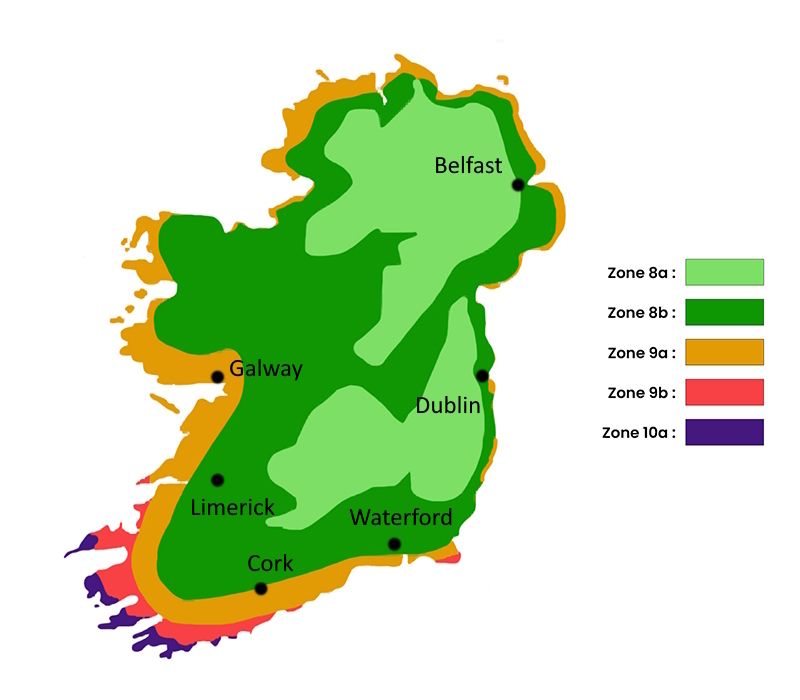
Photo Sharing Terms & Conditions
In order to encourage gardeners to interact and share their experiences, Promesse de fleurs offers various media enabling content to be uploaded onto its Site - in particular via the ‘Photo sharing’ module.
The User agrees to refrain from:
- Posting any content that is illegal, prejudicial, insulting, racist, inciteful to hatred, revisionist, contrary to public decency, that infringes on privacy or on the privacy rights of third parties, in particular the publicity rights of persons and goods, intellectual property rights, or the right to privacy.
- Submitting content on behalf of a third party;
- Impersonate the identity of a third party and/or publish any personal information about a third party;
In general, the User undertakes to refrain from any unethical behaviour.
All Content (in particular text, comments, files, images, photos, videos, creative works, etc.), which may be subject to property or intellectual property rights, image or other private rights, shall remain the property of the User, subject to the limited rights granted by the terms of the licence granted by Promesse de fleurs as stated below. Users are at liberty to publish or not to publish such Content on the Site, notably via the ‘Photo Sharing’ facility, and accept that this Content shall be made public and freely accessible, notably on the Internet.
Users further acknowledge, undertake to have ,and guarantee that they hold all necessary rights and permissions to publish such material on the Site, in particular with regard to the legislation in force pertaining to any privacy, property, intellectual property, image, or contractual rights, or rights of any other nature. By publishing such Content on the Site, Users acknowledge accepting full liability as publishers of the Content within the meaning of the law, and grant Promesse de fleurs, free of charge, an inclusive, worldwide licence for the said Content for the entire duration of its publication, including all reproduction, representation, up/downloading, displaying, performing, transmission, and storage rights.
Users also grant permission for their name to be linked to the Content and accept that this link may not always be made available.
By engaging in posting material, Users consent to their Content becoming automatically accessible on the Internet, in particular on other sites and/or blogs and/or web pages of the Promesse de fleurs site, including in particular social pages and the Promesse de fleurs catalogue.
Users may secure the removal of entrusted content free of charge by issuing a simple request via our contact form.
The flowering period indicated on our website applies to countries and regions located in USDA zone 8 (France, the United Kingdom, Ireland, the Netherlands, etc.)
It will vary according to where you live:
- In zones 9 to 10 (Italy, Spain, Greece, etc.), flowering will occur about 2 to 4 weeks earlier.
- In zones 6 to 7 (Germany, Poland, Slovenia, and lower mountainous regions), flowering will be delayed by 2 to 3 weeks.
- In zone 5 (Central Europe, Scandinavia), blooming will be delayed by 3 to 5 weeks.
In temperate climates, pruning of spring-flowering shrubs (forsythia, spireas, etc.) should be done just after flowering.
Pruning of summer-flowering shrubs (Indian Lilac, Perovskia, etc.) can be done in winter or spring.
In cold regions as well as with frost-sensitive plants, avoid pruning too early when severe frosts may still occur.
The planting period indicated on our website applies to countries and regions located in USDA zone 8 (France, United Kingdom, Ireland, Netherlands).
It will vary according to where you live:
- In Mediterranean zones (Marseille, Madrid, Milan, etc.), autumn and winter are the best planting periods.
- In continental zones (Strasbourg, Munich, Vienna, etc.), delay planting by 2 to 3 weeks in spring and bring it forward by 2 to 4 weeks in autumn.
- In mountainous regions (the Alps, Pyrenees, Carpathians, etc.), it is best to plant in late spring (May-June) or late summer (August-September).
The harvesting period indicated on our website applies to countries and regions in USDA zone 8 (France, England, Ireland, the Netherlands).
In colder areas (Scandinavia, Poland, Austria...) fruit and vegetable harvests are likely to be delayed by 3-4 weeks.
In warmer areas (Italy, Spain, Greece, etc.), harvesting will probably take place earlier, depending on weather conditions.
The sowing periods indicated on our website apply to countries and regions within USDA Zone 8 (France, UK, Ireland, Netherlands).
In colder areas (Scandinavia, Poland, Austria...), delay any outdoor sowing by 3-4 weeks, or sow under glass.
In warmer climes (Italy, Spain, Greece, etc.), bring outdoor sowing forward by a few weeks.