

































Sunflower Autumn Beauty Seeds - Helianthus annuus
Sunflower Autumn Beauty Seeds - Helianthus annuus
Helianthus annuus Autumn Beauty
Sunflower, common sunflower
Special offer!
Receive a €20 voucher for any order over €90 (excluding delivery costs, credit notes, and plastic-free options)!
1- Add your favorite plants to your cart.
2- Once you have reached €90, confirm your order (you can even choose the delivery date!).
3- As soon as your order is shipped, you will receive an email containing your voucher code, valid for 3 months (90 days).
Your voucher is unique and can only be used once, for any order with a minimum value of €20, excluding delivery costs.
Can be combined with other current offers, non-divisible and non-refundable.
Home or relay delivery (depending on size and destination)
Important : des droits de douane sont susceptibles de vous être facturés par la douane de votre pays lors de la livraison.
Schedule delivery date,
and select date in basket
This plant carries a 6 months recovery warranty
More information
We guarantee the quality of our plants for a full growing cycle, and will replace at our expense any plant that fails to recover under normal climatic and planting conditions.
Does this plant fit my garden?
Set up your Plantfit profile →
Description
Helianthus annuus 'Autumn Beauty' is a remarkable sunflower, particularly ornamental and decorative, of tall stature, with an upright and well-branched habit, offering astonishing autumnal colours in its flowering. Each plant can have up to 20 open flowers at once and it blooms from summer to autumn. The palette of warm, solid or bicoloured colours includes golden yellow, bronze, brown, and deep purple-red. This vigorous annual plant, with fast growth, is easy to grow. Sow the seeds between April and May and it will thrive preferably in rich and well-drained soils, in sunny locations and sheltered from strong winds. To maximize its decorative appeal, it is recommended to grow it in groups.
Helianthus annuus is the famous sunflower cultivated on a large scale for the oil extracted from its seeds. This large annual plant of the Asteraceae family, domesticated for a long time by humans, has a controversial origin, but it is native to the American continent.
The 'Autumn Beauty' sunflower forms a plant with an upright and branched habit, reaching between 1.60 and 2 m in height and 0.40 to 0.60 m in width. Flowering usually starts around mid-July and can last until October. It is an inflorescence in a flower head measuring between 12 and 16 cm in diameter, composed of a corolla of petals or ligules in shades ranging from red to gold, through brown and bronze, surrounding an almost black central disc. Under the best conditions, it takes 12 to 14 weeks between sowing and the start of flowering. The flower stems are rigid and strong, with numerous branches. The foliage consists of fairly dark green, simple, cordate (heart-shaped), toothed leaves, alternately arranged, sometimes opposite at the base. They are attached to the stem by a petiole and are rough to the touch.
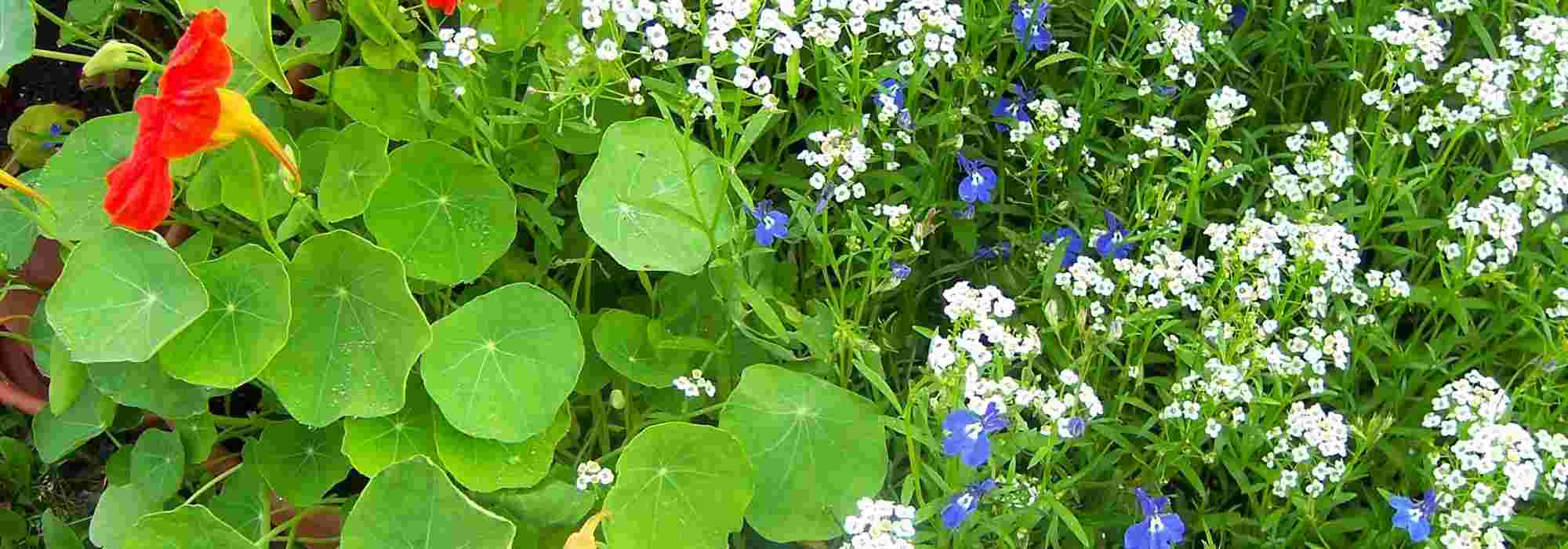
Its ease of cultivation, large seeds, and suitable size are appreciated by beginner gardeners. The 'Autumn Beauty' sunflower is particularly suitable for large flower beds and flower borders. It is also ideal for enhancing the vegetable garden and very useful for the garden's ecological balance, by attracting beneficial fauna. In the chicken coop, it becomes a valuable plant for chickens, offering an interesting supplement to their diet and diversifying their environment. In cultivation, it only requires sun and a not too dry soil to flourish. It has a rustic appearance and integrates well into slightly wild areas of the garden, with cosmos, sainfoin, perennial sweet peas, scabious, gaillardias, lupins, etc.
Before flowering, the plant optimises its growth by following the course of the sun. This phenomenon called heliotropism has given rise to some of its common names: Heliotrope, Sunflower...
To enjoy your cut Sunflowers for longer, follow these tips:
- Cut the flowers in the morning just after they have opened. Use a clean knife.
- Remove the leaves starting from the bottom, leaving only 2 or 3 leaves below the flower.
- Change the water in the vase for fresh water every day.
Sunflower in the kitchen: The buds, petals, and seeds are edible. Add a few petals to a green salad for colour contrast and nutty flavour. The green buds can be blanched, then sautéed in garlic butter. Their flavour is similar to that of Jerusalem artichoke. The flesh of the seed can be eaten raw or roasted.
An ecological asset: Throughout the summer, the nectar-rich flowers of Sunflowers attract pollinating insects and butterflies to your garden. A good way to improve the ecosystem and promote fruit and vegetable production. The oil-rich seeds are loved by birds (parrots, tits, doves, goldfinches, siskins, nuthatches, finches, etc.). At the end of flowering, harvest them to make some happy during the winter scarcity.
Organic or "AB" seeds are derived from plants grown in organic farming (without the use of phytosanitary products). They undergo no treatment after harvest. These seeds are suitable for organic market gardening.

Flowering
Foliage
Plant habit
Botanical data
Helianthus
annuus
Autumn Beauty
Asteraceae
Sunflower, common sunflower
Cultivar or hybrid
Planting and care
The 'Autumn Beauty' Sunflower BIO can be sown:
. Either in March-April, in pots under shelter, to prepare young plants that can be planted in your flower beds after the last frost.
. Or from May to June, after the frost, directly in place. In a sunny spot in your garden. In order to enjoy beautiful fresh flowers all season, we recommend staggering your sowings as much as possible.
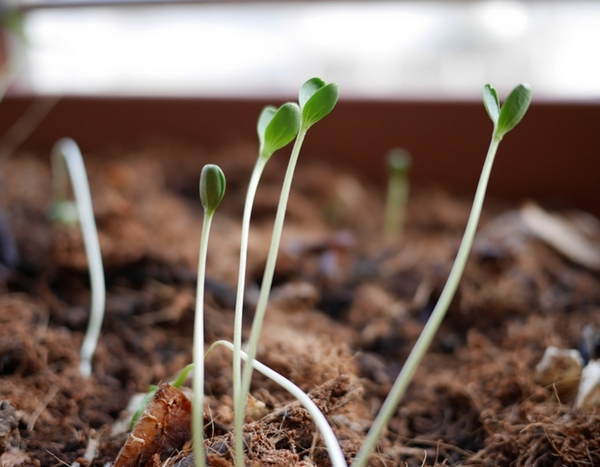
Sow the 'Autumn Beauty' Sunflower from March to April in pots in groups of 2 at a depth of 1 cm. Use good quality potting soil sieved on the surface to bind the seed to its substrate. Before sowing, lightly tamp down the soil with a board. Cover the seeds by sprinkling soil or vermiculite on top, lightly tamp down and water generously with a fine spray. Place your pots in the light, without direct sunlight, at a temperature of 20°C to 25°C. Lower the temperature at night to 17°C to create a beneficial alternation for germination. The seeds will take 10 to 15 days to germinate. Keep the soil moist, but not excessively during growth.
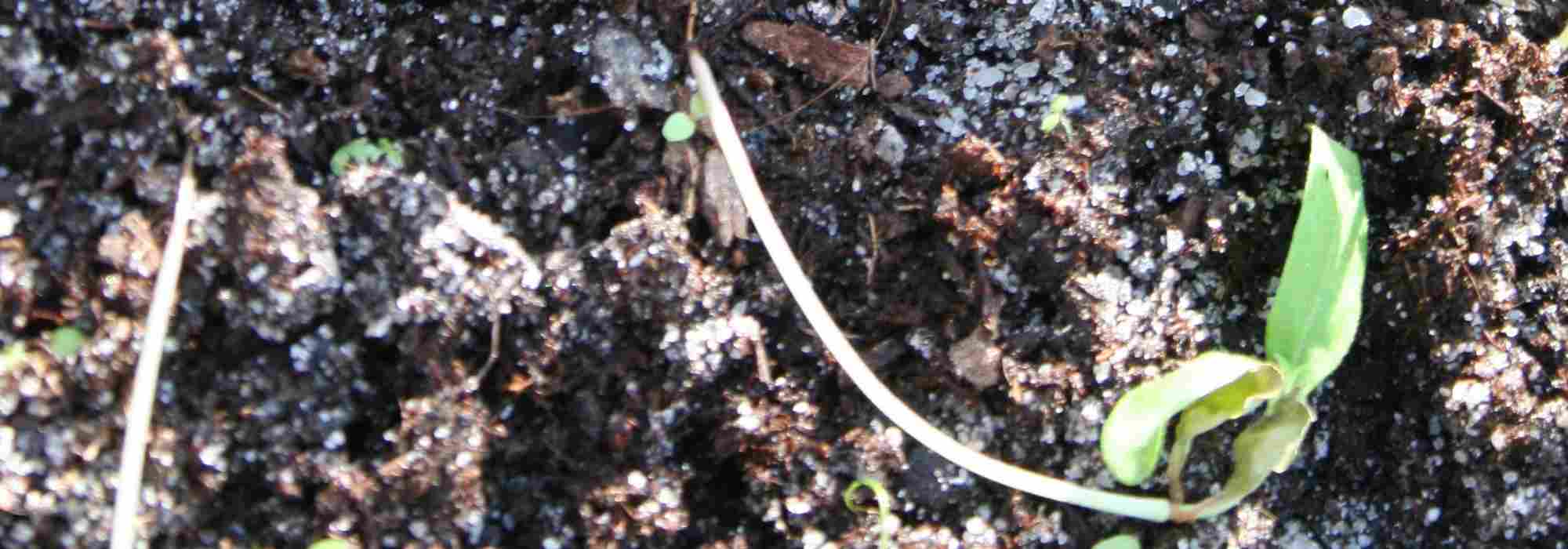
20 days after the young plants appear, remove the weakest shoot and keep only one per pot. To promote branching of the main stem, you can cut off the terminal bud when the plant has developed its fifth leaf.
15 days before their final planting, start gradually acclimatising them to a temperature of 15°C.
At the end of May or early June, the temperature in the garden will be warm enough to plant your young plants. Choose a sunny location. Add a good shovelful of compost to each planting hole. Space your plants 0.50 to 0.60 m apart.
The vigorous growth of the Sunflower will require regular watering. When the plant reaches about 1m, watering can be stopped and it can rely on rainfall even if it is scarce.
It takes 80 to 90 days from sowing to flowering.
Protect your seedlings from attacks by snails and slugs, which are fond of these young plants. Sowing chives near your sunflowers, can deter aphids from settling there.
Sowing period
Intended location
Planting & care advice
-

-

-
-
-
-

-

-

This item has not been reviewed yet - be the first to leave a review about it.
Recently viewed products
Haven't found what you were looking for?
Hardiness is the lowest winter temperature a plant can endure without suffering serious damage or even dying. However, hardiness is affected by location (a sheltered area, such as a patio), protection (winter cover) and soil type (hardiness is improved by well-drained soil).
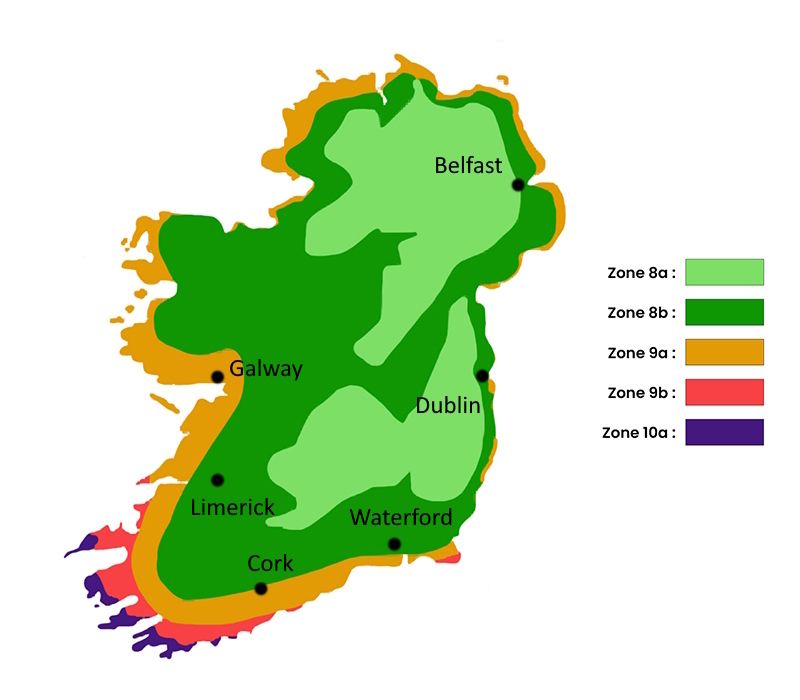
Photo Sharing Terms & Conditions
In order to encourage gardeners to interact and share their experiences, Promesse de fleurs offers various media enabling content to be uploaded onto its Site - in particular via the ‘Photo sharing’ module.
The User agrees to refrain from:
- Posting any content that is illegal, prejudicial, insulting, racist, inciteful to hatred, revisionist, contrary to public decency, that infringes on privacy or on the privacy rights of third parties, in particular the publicity rights of persons and goods, intellectual property rights, or the right to privacy.
- Submitting content on behalf of a third party;
- Impersonate the identity of a third party and/or publish any personal information about a third party;
In general, the User undertakes to refrain from any unethical behaviour.
All Content (in particular text, comments, files, images, photos, videos, creative works, etc.), which may be subject to property or intellectual property rights, image or other private rights, shall remain the property of the User, subject to the limited rights granted by the terms of the licence granted by Promesse de fleurs as stated below. Users are at liberty to publish or not to publish such Content on the Site, notably via the ‘Photo Sharing’ facility, and accept that this Content shall be made public and freely accessible, notably on the Internet.
Users further acknowledge, undertake to have ,and guarantee that they hold all necessary rights and permissions to publish such material on the Site, in particular with regard to the legislation in force pertaining to any privacy, property, intellectual property, image, or contractual rights, or rights of any other nature. By publishing such Content on the Site, Users acknowledge accepting full liability as publishers of the Content within the meaning of the law, and grant Promesse de fleurs, free of charge, an inclusive, worldwide licence for the said Content for the entire duration of its publication, including all reproduction, representation, up/downloading, displaying, performing, transmission, and storage rights.
Users also grant permission for their name to be linked to the Content and accept that this link may not always be made available.
By engaging in posting material, Users consent to their Content becoming automatically accessible on the Internet, in particular on other sites and/or blogs and/or web pages of the Promesse de fleurs site, including in particular social pages and the Promesse de fleurs catalogue.
Users may secure the removal of entrusted content free of charge by issuing a simple request via our contact form.
In temperate climates, pruning of spring-flowering shrubs (forsythia, spireas, etc.) should be done just after flowering.
Pruning of summer-flowering shrubs (Indian Lilac, Perovskia, etc.) can be done in winter or spring.
In cold regions as well as with frost-sensitive plants, avoid pruning too early when severe frosts may still occur.
The harvesting period indicated on our website applies to countries and regions in USDA zone 8 (France, England, Ireland, the Netherlands).
In colder areas (Scandinavia, Poland, Austria...) fruit and vegetable harvests are likely to be delayed by 3-4 weeks.
In warmer areas (Italy, Spain, Greece, etc.), harvesting will probably take place earlier, depending on weather conditions.
The sowing periods indicated on our website apply to countries and regions within USDA Zone 8 (France, UK, Ireland, Netherlands).
In colder areas (Scandinavia, Poland, Austria...), delay any outdoor sowing by 3-4 weeks, or sow under glass.
In warmer climes (Italy, Spain, Greece, etc.), bring outdoor sowing forward by a few weeks.
The planting period indicated on our website applies to regions in USDA Zone 9a (East Coast and Midlands: Dublin, Wexford, Waterford, Kilkenny, Portlaoise). It will vary depending on where you live:
- On the west coast and in the north-west (Galway, Limerick, Sligo, Donegal, Westport), delay planting by 1 to 2 weeks in spring and bring it forward by 1 to 2 weeks in autumn compared to the dates given, preferably choosing periods without strong winds.
- In the inland hills and plateaus (Wicklow Mountains, Macgillycuddy’s Reeks, Connemara, Killarney), it is best to plant in spring (April–May) or autumn (September–October), avoiding periods of waterlogged soil in winter and strong winds, which pose the main risk to newly planted trees in these areas.
The flowering period indicated on our website applies to regions in USDA Zone 9a, such as the East Coast and Midlands, including Dublin, Wexford, Waterford, Kilkenny and Portlaoise.
This will vary depending on where you live:
- On the west coast and in the northwest (Galway, Limerick, Sligo, Donegal and Westport), it will be delayed by one to two weeks compared to the given dates, due to stronger Atlantic winds and less spring sunshine.
- In the inland hills and plateaus (the Wicklow Mountains, the Macgillycuddy's Reeks, Connemara and Killarney), flowering will be delayed by two to three weeks. Flowering mainly occurs between May and July, with the limiting factors being less frost and more of the excessive humidity, strong winds and lack of sunshine that are characteristic of these areas.