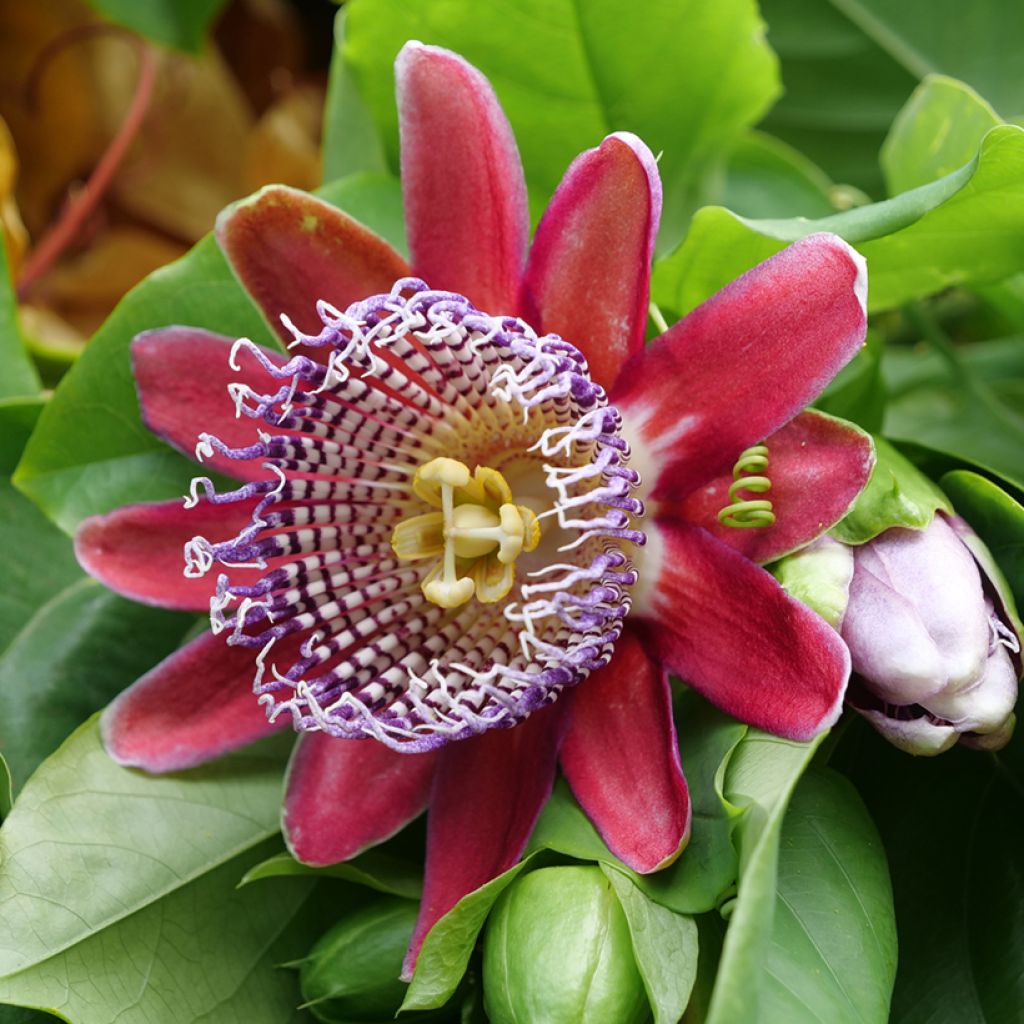
Passiflora quadrangularis seeds - Giant granadilla
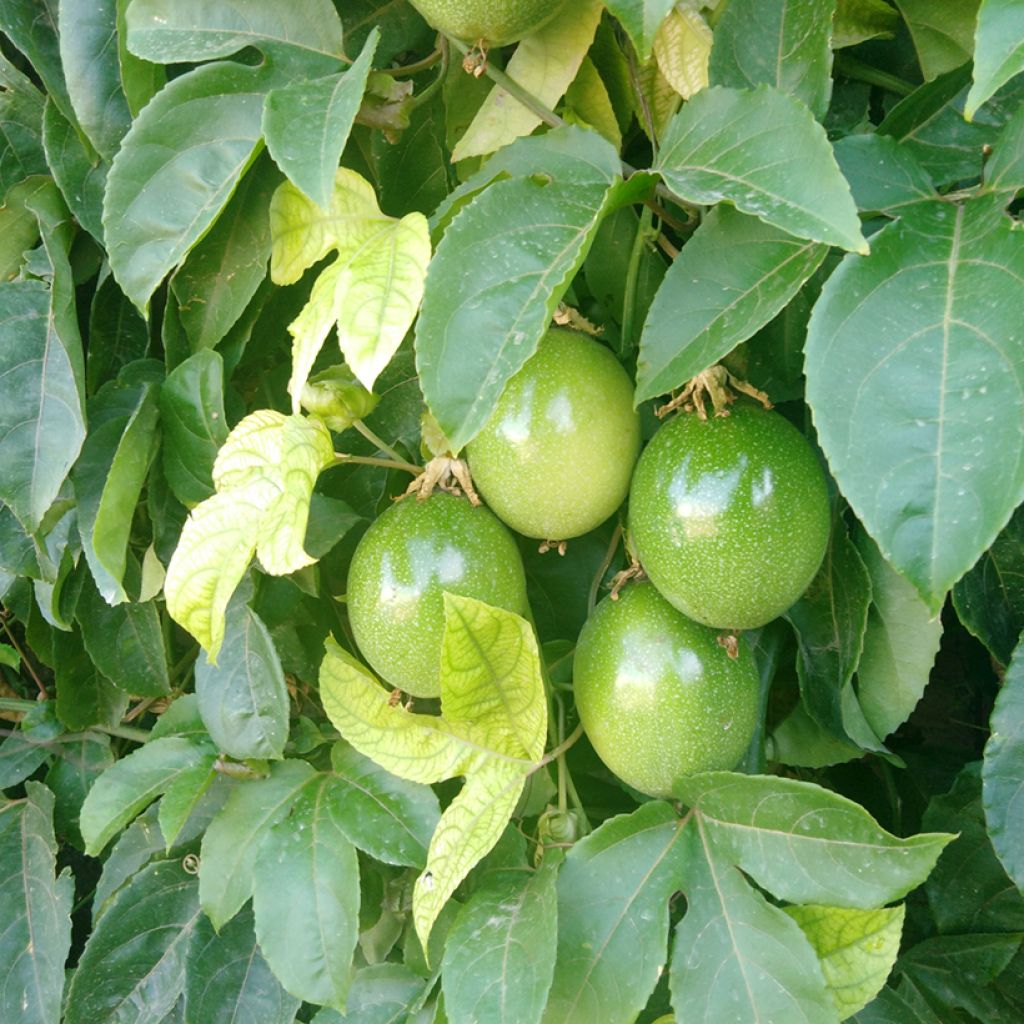
Passiflora quadrangularis seeds - Giant granadilla
Passiflora quadrangularis seeds - Giant granadilla
Passiflora quadrangularis
Giant Granadilla, Giant Tumbo, Barbadine, Badea, Square-stemmed Passion Fruit
Back-to-school special offer!
Get €10 off for every €50 you spend! And get up to €40 off on a single order.
How does it work?
1. Shop your favourites
Add your favourite plants to your basket. For every €50 you spend (excluding delivery charges, store credit and the plastic-free option), you’ll receive a €10 voucher.
€50 spent = €10 voucher
€100 spent = €20 voucher
€150 spent = €30 voucher
€200 spent = €40 voucher
2. Place your order
Once your basket reaches one of the spending thresholds, place your order. You can even choose your delivery date!
3. Receive your voucher
As soon as your order has been shipped, you’ll receive an email containing your personal voucher code and its value.
4. Use it on your next order
Your voucher is valid for 90 days from the date you receive it. It can be used once only, on a new order worth at least the value of the voucher, excluding delivery charges.
Please note: Vouchers can be combined with other offers, but cannot be split or refunded.
Home or relay delivery (depending on size and destination)
Important: You may be charged customs duties by your country’s customs authorities upon delivery.
Schedule delivery date,
and select date in basket
This plant carries a 6 months recovery warranty
More information
We guarantee the quality of our plants for a full growing cycle, and will replace at our expense any plant that fails to recover under normal climatic and planting conditions.
Does this plant fit my garden?
Set up your Plantfit profile →
Description
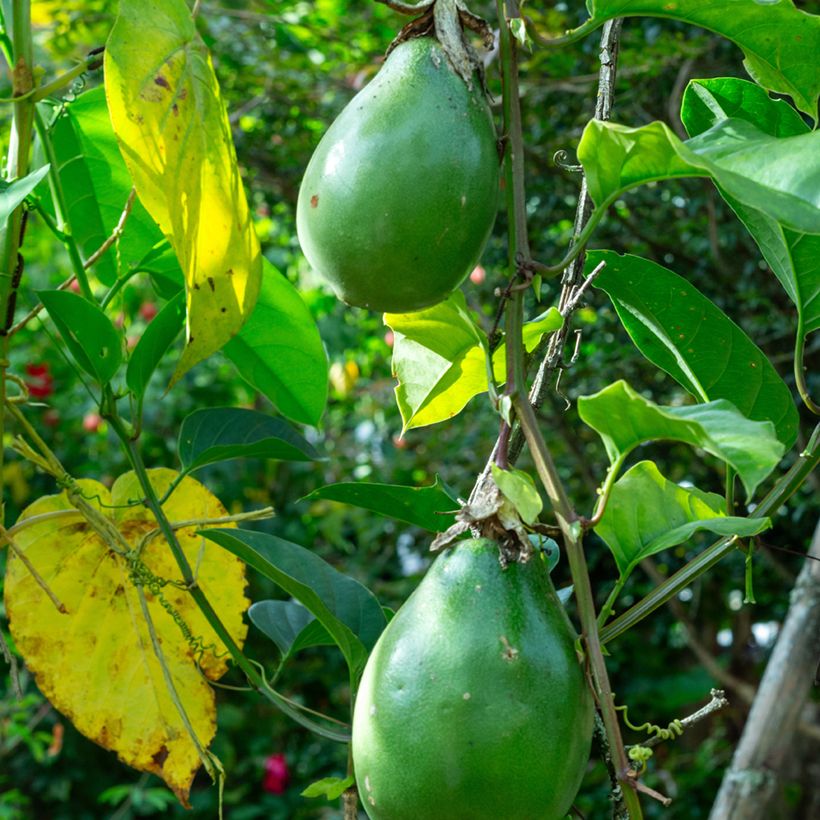
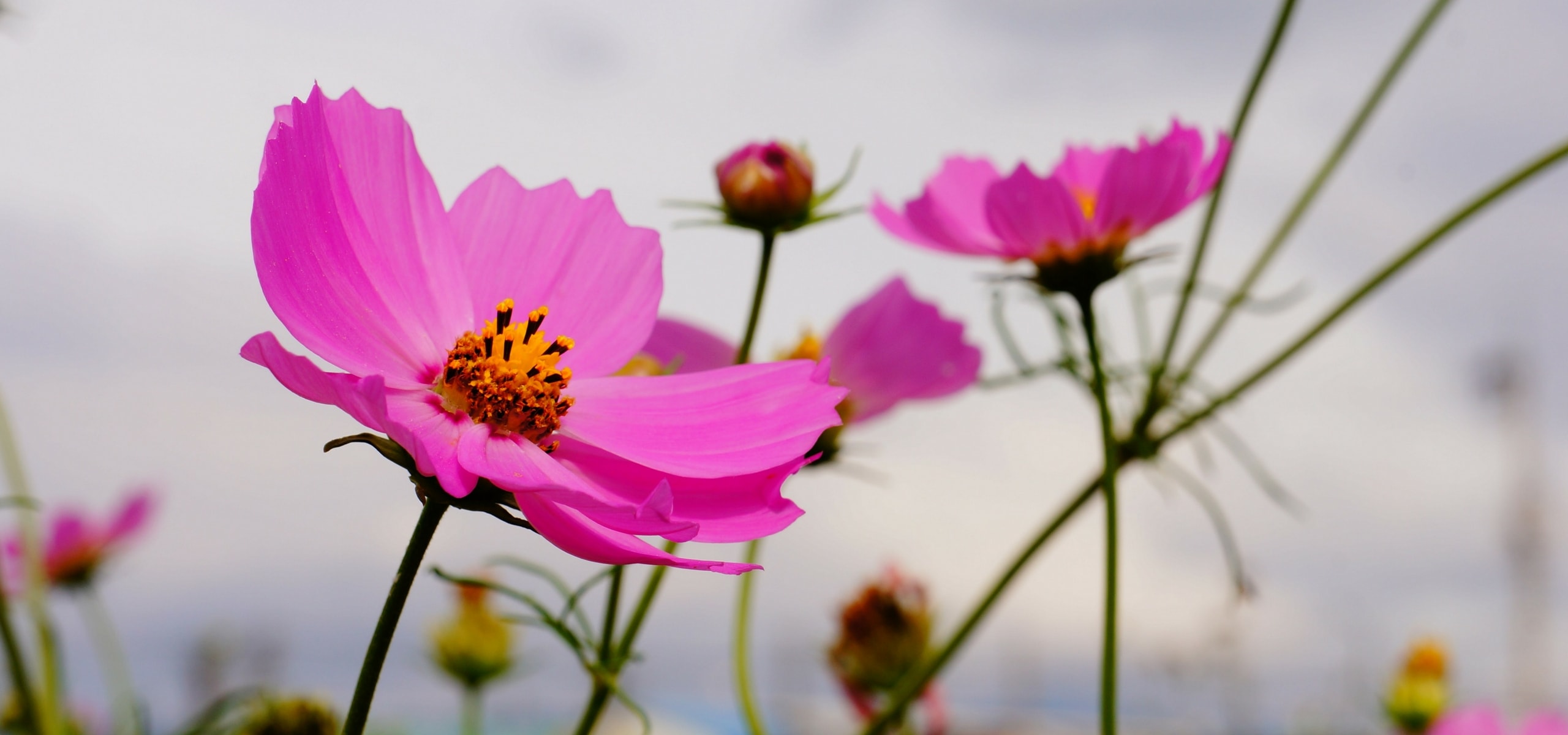
Passiflora quadrangularis, the quadrangular-stemmed passionflower, owes its name to the unique shape of its stems, which have four faces with sharp, membranous angles. This tropical climber reaches enormous dimensions in its natural habitat. In our climate, it will be less imposing but make a beautiful greenhouse or conservatory plant. We love its large, fragrant, crimson red flowers, topped with a crown of curly filaments blending violet and white. After flowering, edible fruits appear, green-yellow when ripe, called grenadillas, prized for their fragrant flesh.
Passionflowers belong to the vast Passifloraceae family, which includes nearly 400 species and numerous natural or horticultural hybrids. Mostly native to the tropical regions of South America, they come in a multitude of shapes and colours. Passiflora quadrangularis grows in the floodplains of humid tropical forests in Central and South America. In its natural environment, it can exceed 40 m in length, thriving in a warm, humid climate conducive to its expansion. This twining climber clings firmly to its support with long tendrils, allowing it to climb up to 6 m in a pot. It stands out from other passionflowers due to its quadrangular stems with small prominent wings. Its entire and heart-shaped leaves, measure 7 to 13 cm long and 5 to 15 cm wide. They are light green with dark green veins, borne on long, grooved petioles with six nectar-rich glands. The flowering, which spans summer to early autumn, consists of large solitary flowers about 10 cm in diameter, continuously renewing. These delicately scented flowers feature five broad, rosy-red tepals tinged with green inside and greenish on the reverse. Their central crown, formed of filaments streaked with white, pale violet, and deep purple, gives the flower a unique look. Its creamy-white stamen heart changes over time: the petals and sepals curl back, while the crown of filaments folds and then straightens, a natural mechanism preventing self-pollination. Once fertilised, the flowers give rise to large, ovate, 20 to 25 cm long fruits, ripening to an orange hue. Their thick skin protects a sweet, aromatic pulp, filled with numerous flattened seeds.
An interesting feature: the size of the container strongly influences its behaviour. In a small pot, the plant limits its root growth, promoting abundant flowering. Conversely, in a large pot, it prioritises root development at the expense of flowers.
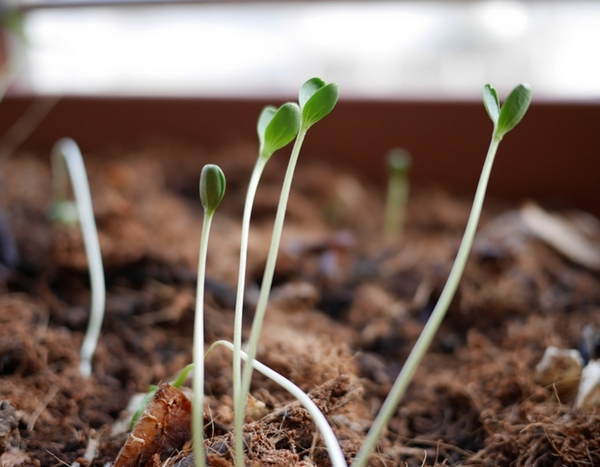
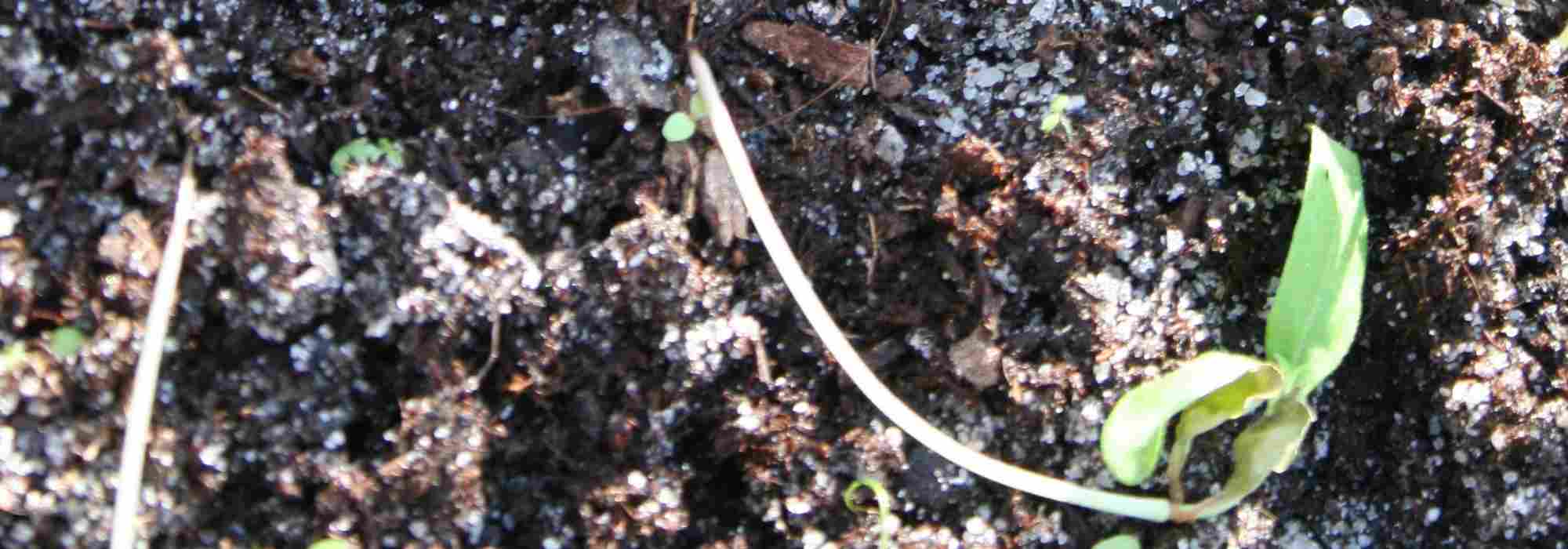
Fresh passionflower seeds germinate easily. However, those that have entered dormancy require specific treatment to sprout.
Not frost-hardy, this Giant Grenadilla will thrive only in a warm greenhouse or bright conservatory, where it will find ideal conditions to grow. It requires rich, moist, well-drained soil and a sunny, sheltered position away from cold draughts. Pruning after flowering helps control its growth and maintain a balanced habit.
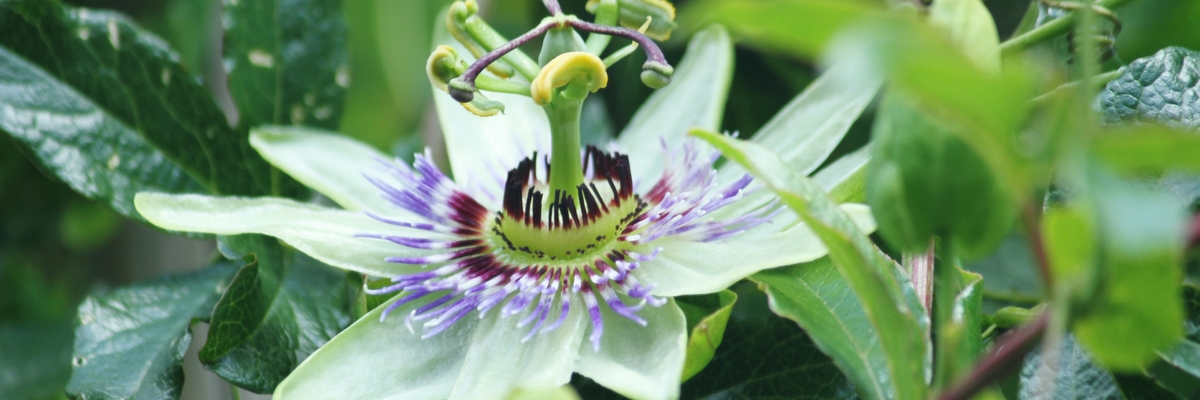
Passiflora quadrangularis seeds - Giant granadilla in pictures
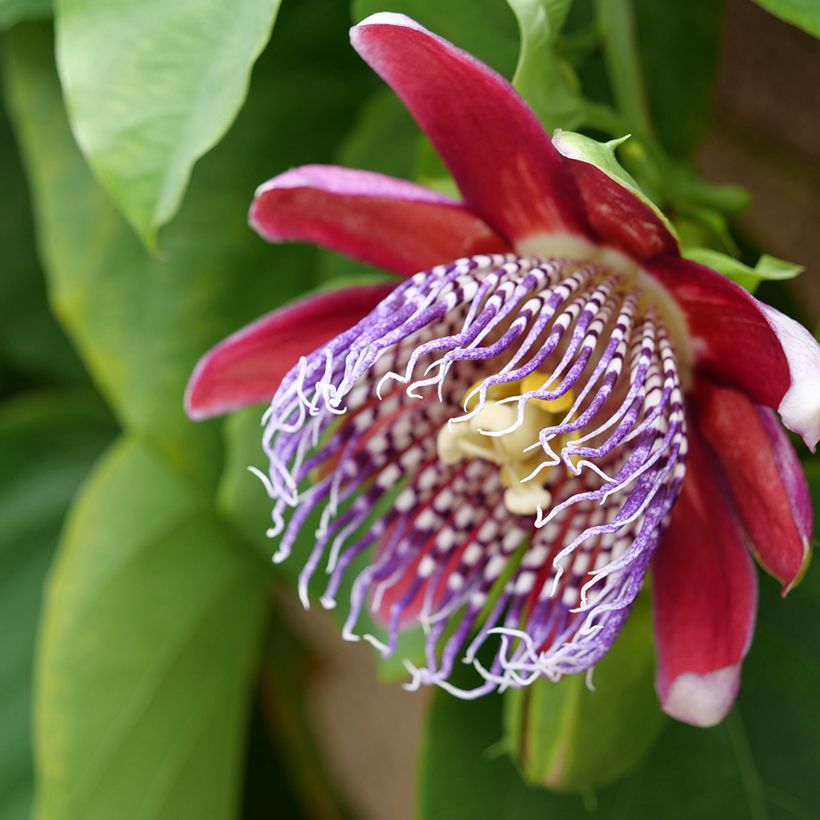
Flowering
Foliage
Plant habit
Botanical data
Passiflora
quadrangularis
Passifloraceae
Giant Granadilla, Giant Tumbo, Barbadine, Badea, Square-stemmed Passion Fruit
Passiflora quadrangularis var. sulcata, Passiflora macrocarpa, Granadilla quadrangularis, Passiflora tetragona
South America
Planting and care
To sow Passiflora quadrangularis seeds, start by lightly scarifying the seeds using fine sandpaper, then soak them in warm water for 24 hours to soften their coat and encourage germination. Next, sow the seeds 1 cm deep in a light, well-draining compost, ideally a mix of seed compost and sand. Place the pots in a warm spot (between 20 and 25°C) and maintain consistent moisture without waterlogging the substrate. Germination may take 4 to 8 weeks. Once the seedlings are sturdy enough, transplant them into individual pots.
For container cultivation, choose a large pot (minimum 40 cm in diameter) with drainage holes to prevent excess moisture. Use a rich, airy compost mix, composed of climbing plant compost and well-rotted compost. Position the pot in a sunny (but not scorching) to partially shaded spot, sheltered from wind. Water regularly, allowing the compost to dry slightly between waterings, as passionflowers dislike stagnant water.
In winter, bring the plant indoors if temperatures drop below 5°C. Fertilise monthly with a high-potash feed to encourage flowering and fruiting. Prune in spring to promote branching and control the plant's size.
This passionflower struggles with extreme summer heat.
Sowing period
Intended location
Planting & care advice
-
-
-
-
-

-

-

-
This item has not been reviewed yet - be the first to leave a review about it.
Recently viewed products
Haven't found what you were looking for?
Hardiness is the lowest winter temperature a plant can endure without suffering serious damage or even dying. However, hardiness is affected by location (a sheltered area, such as a patio), protection (winter cover) and soil type (hardiness is improved by well-drained soil).
In temperate climates, pruning of spring-flowering shrubs (forsythia, spireas, etc.) should be done just after flowering.
Pruning of summer-flowering shrubs (Indian Lilac, Perovskia, etc.) can be done in winter or spring.
In cold regions as well as with frost-sensitive plants, avoid pruning too early when severe frosts may still occur.
The harvesting period indicated on our website applies to countries and regions in USDA zone 8 (France, England, Ireland, the Netherlands).
In colder areas (Scandinavia, Poland, Austria...) fruit and vegetable harvests are likely to be delayed by 3-4 weeks.
In warmer areas (Italy, Spain, Greece, etc.), harvesting will probably take place earlier, depending on weather conditions.
The sowing periods indicated on our website apply to countries and regions within USDA Zone 8 (France, UK, Ireland, Netherlands).
In colder areas (Scandinavia, Poland, Austria...), delay any outdoor sowing by 3-4 weeks, or sow under glass.
In warmer climes (Italy, Spain, Greece, etc.), bring outdoor sowing forward by a few weeks.
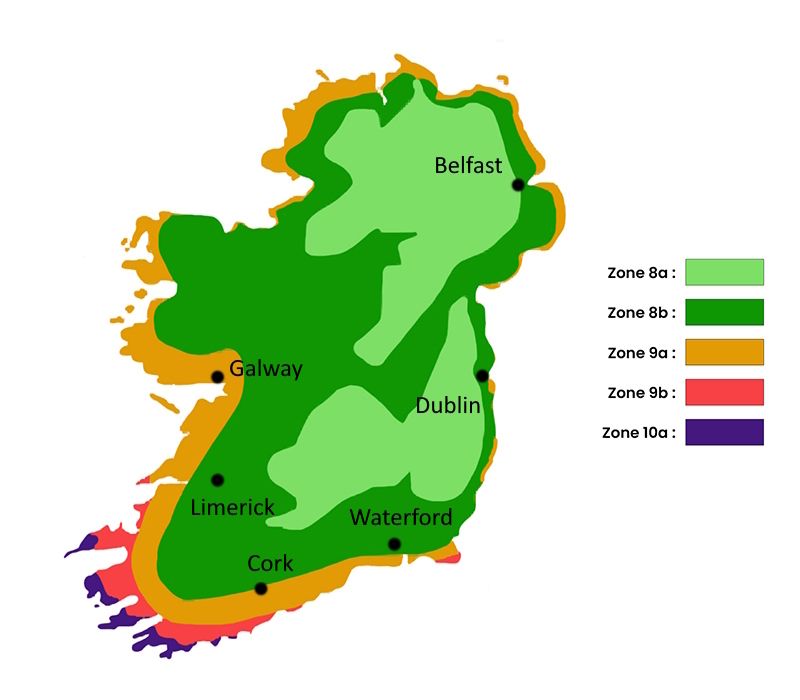
The planting period indicated on our website applies to regions in USDA Zone 9a (East Coast and Midlands: Dublin, Wexford, Waterford, Kilkenny, Portlaoise). It will vary depending on where you live:
- On the west coast and in the north-west (Galway, Limerick, Sligo, Donegal, Westport), delay planting by 1 to 2 weeks in spring and bring it forward by 1 to 2 weeks in autumn compared to the dates given, preferably choosing periods without strong winds.
- In the inland hills and plateaus (Wicklow Mountains, Macgillycuddy’s Reeks, Connemara, Killarney), it is best to plant in spring (April–May) or autumn (September–October), avoiding periods of waterlogged soil in winter and strong winds, which pose the main risk to newly planted trees in these areas.
The flowering period indicated on our website applies to regions in USDA Zone 9a, such as the East Coast and Midlands, including Dublin, Wexford, Waterford, Kilkenny and Portlaoise.
This will vary depending on where you live:
- On the west coast and in the northwest (Galway, Limerick, Sligo, Donegal and Westport), it will be delayed by one to two weeks compared to the given dates, due to stronger Atlantic winds and less spring sunshine.
- In the inland hills and plateaus (the Wicklow Mountains, the Macgillycuddy's Reeks, Connemara and Killarney), flowering will be delayed by two to three weeks. Flowering mainly occurs between May and July, with the limiting factors being less frost and more of the excessive humidity, strong winds and lack of sunshine that are characteristic of these areas.
Shipping country and language
Your country of residence may be:
Your country of residence is:
For a better user experience on our website, you can select:
Your shipping country:
-
 Austria
-
 Belgium
-
 Bosnia & Herzegovina
-
 Bulgaria
-
 Croatia
-
 Cyprus
-
 Czechia
-
 Denmark
-
 Estonia
-
 Finland
-
 France
-
 Germany
-
 Greece
-
 Hungary
-
 Iceland
-
 Ireland
-
 Italy
Italy
-
 Latvia
-
 Liechtenstein
-
 Lithuania
-
 Luxembourg
-
 Malta
Malta
-
 Netherlands
-
 Poland
-
 Portugal
-
 Romania
-
 Serbia
-
 Slovakia
-
 Slovenia
-
 Spain
Spain
-
 Sweden
-
 Switzerland
Language:
-
French
-
 English
-
Spanish
-
Italian
-
German
-
Portuguese
-
Dutch
-
Finnish
My Account
Hello
My wish lists
My cart
Log in / Register
Existing customer?
This form is protected by reCAPTCHA - the Google Privacy Policy and Terms of Service apply.
New customer?
Create an account to track your orders, access our customer service and, if you wish, make the most of our upcoming offers.