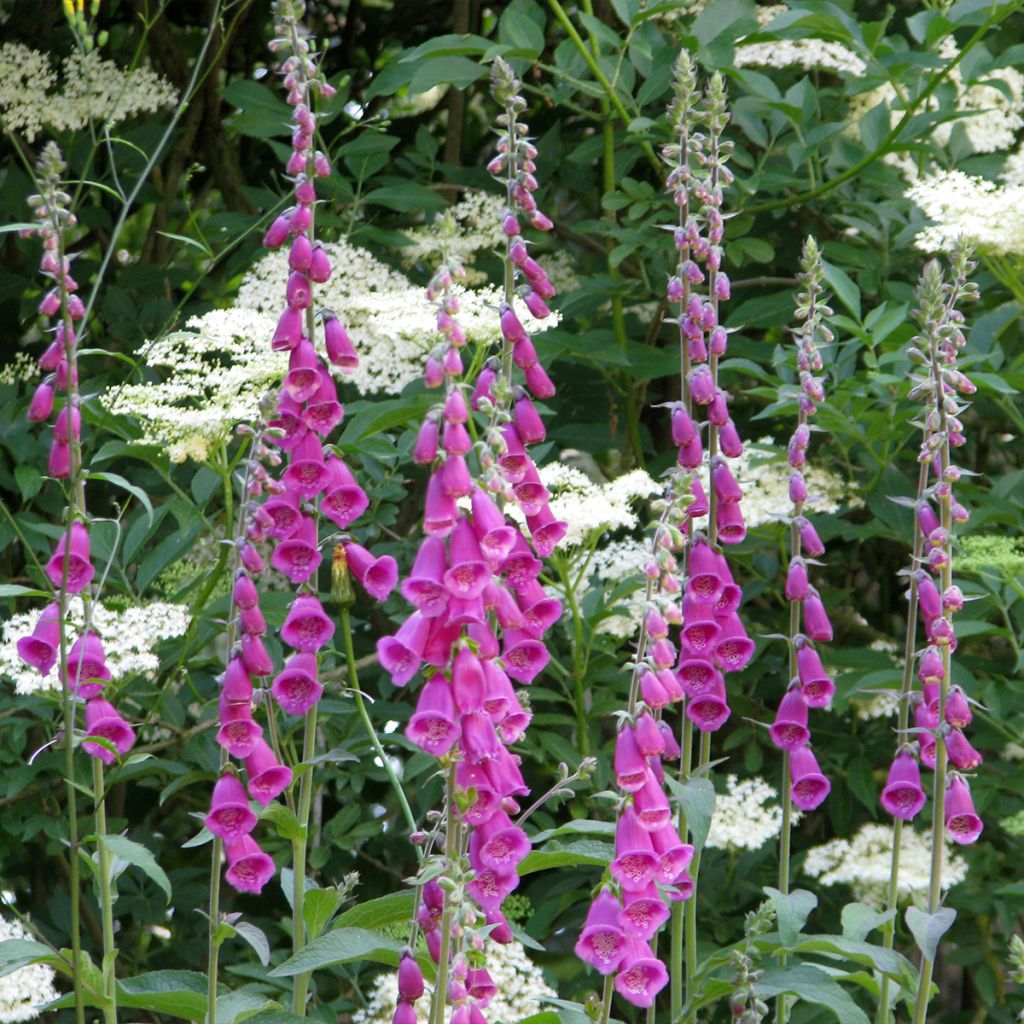
Digitalis purpurea - Foxglove seeds
Digitalis purpurea - Foxglove seeds
Digitalis purpurea
Common Foxglove, Purple Foxglove, Lady's Glove
But it takes a lot of patience, but the result is there.
VIVIANE R., 03/09/2017
Back-to-school special offer!
Get €10 off for every €50 you spend! And get up to €40 off on a single order.
How does it work?
1. Shop your favourites
Add your favourite plants to your basket. For every €50 you spend (excluding delivery charges, store credit and the plastic-free option), you’ll receive a €10 voucher.
€50 spent = €10 voucher
€100 spent = €20 voucher
€150 spent = €30 voucher
€200 spent = €40 voucher
2. Place your order
Once your basket reaches one of the spending thresholds, place your order. You can even choose your delivery date!
3. Receive your voucher
As soon as your order has been shipped, you’ll receive an email containing your personal voucher code and its value.
4. Use it on your next order
Your voucher is valid for 90 days from the date you receive it. It can be used once only, on a new order worth at least the value of the voucher, excluding delivery charges.
Please note: Vouchers can be combined with other offers, but cannot be split or refunded.
Home or relay delivery (depending on size and destination)
Important: You may be charged customs duties by your country’s customs authorities upon delivery.
Schedule delivery date
and select date in basket
This plant carries a 6 months recovery warranty
More information
We guarantee the quality of our plants for a full growing cycle, and will replace at our expense any plant that fails to recover under normal climatic and planting conditions.

Does this plant fit my garden?
Set up your Plantfit profile →
Description
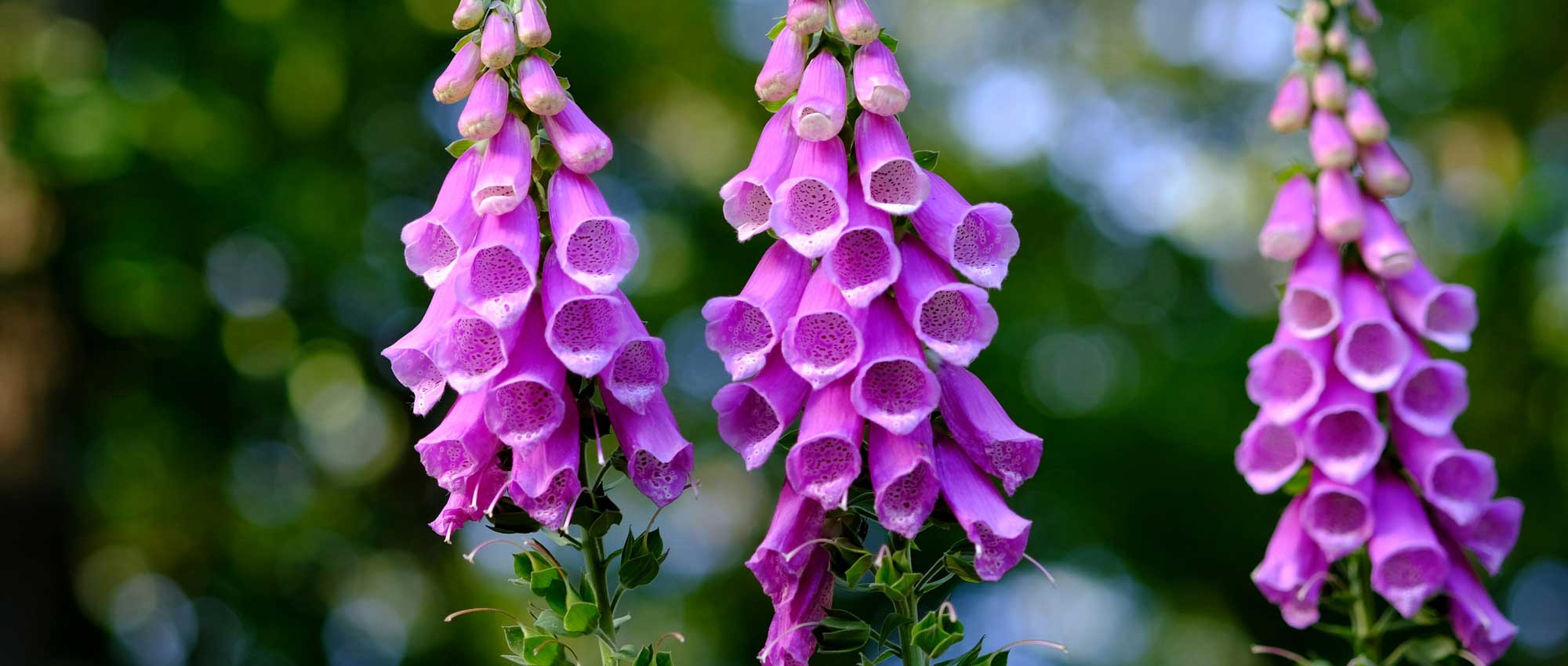
Digitalis purpurea, also known as purple foxglove or common foxglove, is a hardy biennial plant, or a perennial if the flowers are pruned before seed formation. It has an upright habit and produces long spikes adorned with tubular flowers from June to September. The flowers are light purple, sometimes white, with a spotted purple throat, above a rosette of robust oval, deep green leaves tinged with grey. These plants are found in clear undergrowth, colonising humus-bearing and well-drained soils.
Digitalis purpurea is a botanical species of the Scrophulariaceae family. It has given rise to numerous varieties that easily crossbreed with each other. It is a biennial herbaceous plant that develops a large rosette, 45 cm (18in) in diameter, with hairy, dark green leaves that have a slightly grey tinge. The leaves are crenate-dentate and have a network of wrinkles on the underside and are covered with light-coloured, woolly hairs. In May-June of the second year, up to 5 hollow but sturdy stems emerge from the rosette, reaching 1.50 m (5ft) high. They bear a very dense floral spike, composed of many tightly packed tubular flowers that open from bottom to top. Each bell-shaped flower attracts numerous bees and bumblebees, tirelessly collecting nectar and pollen. The flowers are usually light purple or faded pink, occasionally white or cream-yellow, with varying amounts of purple speckling and spotting in the throat.
Plant purple foxgloves in dappled sunlight or partial shade, in humus-bearing and moist soil, alongside old roses or perennials with single flowers such as columbines, centaureas, astrantias, or thalictrums. This plant readily self-seeds, allowing you to enjoy it for a long time in a naturally inspired shaded garden. This magnificent, wild and romantic plant, also pairs well with perennial geraniums, heucheras, and the feathery foliage of ferns in clear undergrowth. You can also bring it into your home for sumptuous bouquets.
Purple foxgloves have many names depending on the region, often related to fingers: purple foxglove, common foxglove, great foxglove, Our Lady's gloves, fingered gloves, glove-maker, wolf's tail, paved, Our Lady's dice, fly-catcher, and many others.
Attention, these seeds are reserved for experienced gardeners who are accustomed to sowing very fine seeds. These seeds are as fine as dust, barely visible to the naked eye.
Flowering
Foliage
Plant habit
Safety measures
Botanical data
Digitalis
purpurea
Plantaginaceae
Common Foxglove, Purple Foxglove, Lady's Glove
ingestion
Cette plante est toxique si elle est ingérée volontairement ou involontairement.
Ne la plantez pas là où de jeunes enfants peuvent évoluer, et lavez-vous les mains après l'avoir manipulée.
Pensez à conserver l'étiquette de la plante, à la photographier ou à noter son nom, afin de faciliter le travail des professionnels de santé.
Davantage d'informations sur https://plantes-risque.info
Planting and care
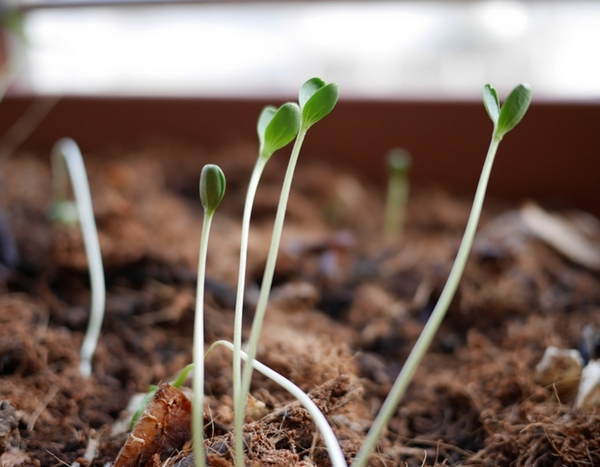
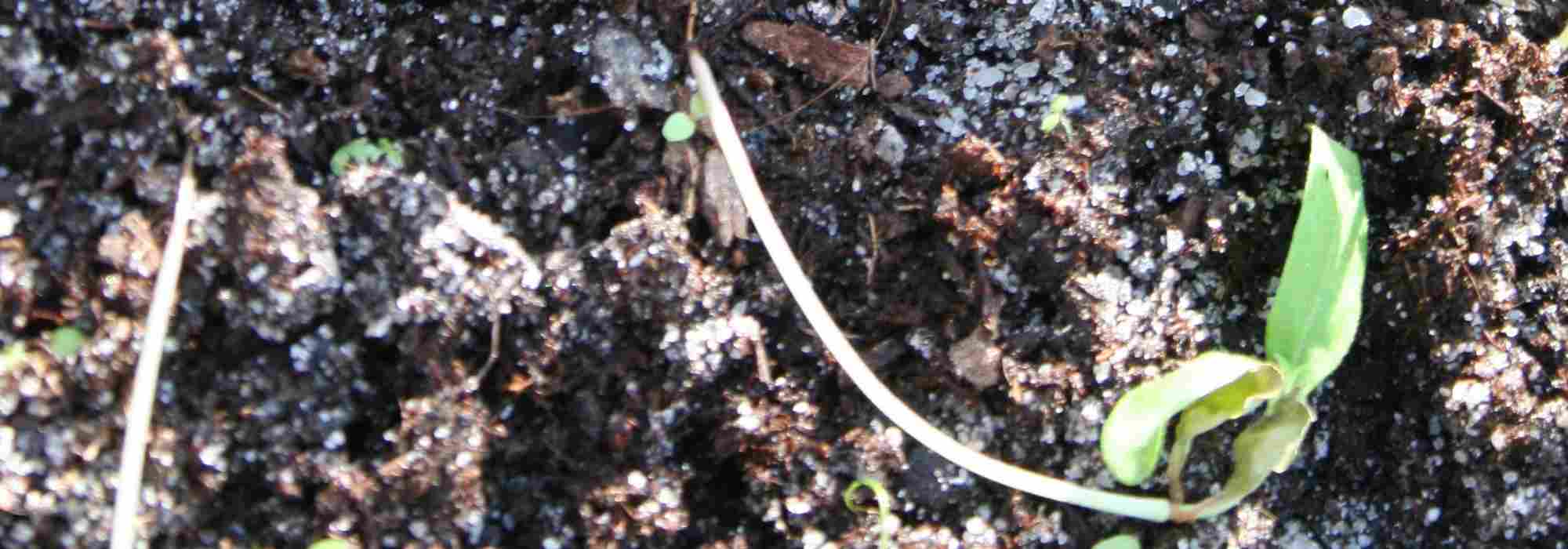
Sow foxglove seeds from January to May, on the surface of a good, moist, well-drained compost at a temperature of 18-29 ° C. Lightly cover the seeds with vermiculite. Place in a mini-greenhouse or a polythene bag until the seeds germinate, which usually takes 14 to 30 days. Do not exclude light as this aids germination. Transplant when they are large enough to handle into 8 cm (3in) diameter trays or pots. Gradually acclimatise the plants to cooler conditions for a few weeks before planting them out after all risk of frost, with a spacing of 45 to 60cm (18 to 24in) between each plant. Foxgloves grown from early sowings may sometimes flower in their first year.
Purple foxgloves and their varieties prefer partial shade and acidic, loose, humus-rich soil that is not too rich. They are very hardy plants, but their lifespan is quite short. They self-seed abundantly in the garden, but the resulting plants are rarely identical to the parent plants.
Sowing period
Intended location
Planting & care advice
-
-
-

-
-
-
-

-
-
, onOrder confirmed
Reply from on Promesse de fleurs
Recently viewed products
Haven't found what you were looking for?
Hardiness is the lowest winter temperature a plant can endure without suffering serious damage or even dying. However, hardiness is affected by location (a sheltered area, such as a patio), protection (winter cover) and soil type (hardiness is improved by well-drained soil).
In temperate climates, pruning of spring-flowering shrubs (forsythia, spireas, etc.) should be done just after flowering.
Pruning of summer-flowering shrubs (Indian Lilac, Perovskia, etc.) can be done in winter or spring.
In cold regions as well as with frost-sensitive plants, avoid pruning too early when severe frosts may still occur.
The harvesting period indicated on our website applies to countries and regions in USDA zone 8 (France, England, Ireland, the Netherlands).
In colder areas (Scandinavia, Poland, Austria...) fruit and vegetable harvests are likely to be delayed by 3-4 weeks.
In warmer areas (Italy, Spain, Greece, etc.), harvesting will probably take place earlier, depending on weather conditions.
The sowing periods indicated on our website apply to countries and regions within USDA Zone 8 (France, UK, Ireland, Netherlands).
In colder areas (Scandinavia, Poland, Austria...), delay any outdoor sowing by 3-4 weeks, or sow under glass.
In warmer climes (Italy, Spain, Greece, etc.), bring outdoor sowing forward by a few weeks.
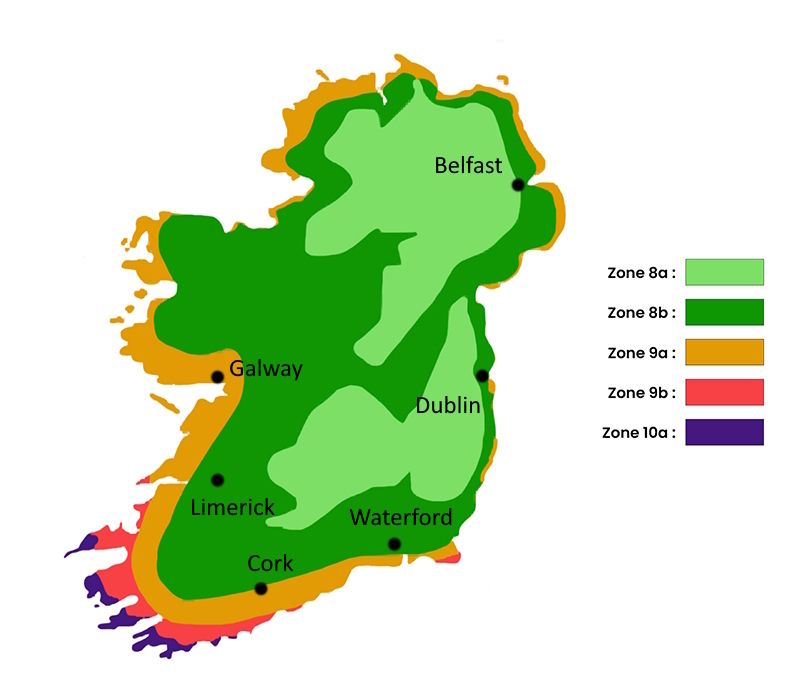
The planting period indicated on our website applies to regions in USDA Zone 9a (East Coast and Midlands: Dublin, Wexford, Waterford, Kilkenny, Portlaoise). It will vary depending on where you live:
- On the west coast and in the north-west (Galway, Limerick, Sligo, Donegal, Westport), delay planting by 1 to 2 weeks in spring and bring it forward by 1 to 2 weeks in autumn compared to the dates given, preferably choosing periods without strong winds.
- In the inland hills and plateaus (Wicklow Mountains, Macgillycuddy’s Reeks, Connemara, Killarney), it is best to plant in spring (April–May) or autumn (September–October), avoiding periods of waterlogged soil in winter and strong winds, which pose the main risk to newly planted trees in these areas.
The flowering period indicated on our website applies to regions in USDA Zone 9a, such as the East Coast and Midlands, including Dublin, Wexford, Waterford, Kilkenny and Portlaoise.
This will vary depending on where you live:
- On the west coast and in the northwest (Galway, Limerick, Sligo, Donegal and Westport), it will be delayed by one to two weeks compared to the given dates, due to stronger Atlantic winds and less spring sunshine.
- In the inland hills and plateaus (the Wicklow Mountains, the Macgillycuddy's Reeks, Connemara and Killarney), flowering will be delayed by two to three weeks. Flowering mainly occurs between May and July, with the limiting factors being less frost and more of the excessive humidity, strong winds and lack of sunshine that are characteristic of these areas.
Shipping country and language
Your country of residence may be:
Your country of residence is:
For a better user experience on our website, you can select:
Your shipping country:
-
 Austria
-
 Belgium
-
 Bosnia & Herzegovina
-
 Bulgaria
-
 Croatia
-
 Cyprus
-
 Czechia
-
 Denmark
-
 Estonia
-
 Finland
-
 France
-
 Germany
-
 Greece
-
 Hungary
-
 Iceland
-
 Ireland
-
 Italy
Italy
-
 Latvia
-
 Liechtenstein
-
 Lithuania
-
 Luxembourg
-
 Malta
Malta
-
 Netherlands
-
 Poland
-
 Portugal
-
 Romania
-
 Serbia
-
 Slovakia
-
 Slovenia
-
 Spain
Spain
-
 Sweden
-
 Switzerland
Language:
-
French
-
 English
-
Spanish
-
Italian
-
German
-
Portuguese
-
Dutch
-
Finnish
My Account
Hello
My wish lists
My cart
Log in / Register
Existing customer?
This form is protected by reCAPTCHA - the Google Privacy Policy and Terms of Service apply.
New customer?
Create an account to track your orders, access our customer service and, if you wish, make the most of our upcoming offers.