Coreopsis Incredible! Swirl Seeds - Coreopsis tinctoria
Coreopsis Incredible! Swirl Seeds - Coreopsis tinctoria
Coreopsis Incredible! Swirl Seeds - Coreopsis tinctoria
Coreopsis x tinctoria Incredible! Swirl
Plains coreopsis, Garden Tickseed, Golden Tickseed
Back-to-school special offer!
Get €10 off for every €50 you spend! And get up to €40 off on a single order.
How does it work?
1. Shop your favourites
Add your favourite plants to your basket. For every €50 you spend (excluding delivery charges, store credit and the plastic-free option), you’ll receive a €10 voucher.
€50 spent = €10 voucher
€100 spent = €20 voucher
€150 spent = €30 voucher
€200 spent = €40 voucher
2. Place your order
Once your basket reaches one of the spending thresholds, place your order. You can even choose your delivery date!
3. Receive your voucher
As soon as your order has been shipped, you’ll receive an email containing your personal voucher code and its value.
4. Use it on your next order
Your voucher is valid for 90 days from the date you receive it. It can be used once only, on a new order worth at least the value of the voucher, excluding delivery charges.
Please note: Vouchers can be combined with other offers, but cannot be split or refunded.
Home or relay delivery (depending on size and destination)
Important: You may be charged customs duties by your country’s customs authorities upon delivery.
Schedule delivery date,
and select date in basket
This plant carries a 6 months recovery warranty
More information
We guarantee the quality of our plants for a full growing cycle, and will replace at our expense any plant that fails to recover under normal climatic and planting conditions.
Does this plant fit my garden?
Set up your Plantfit profile →
Description
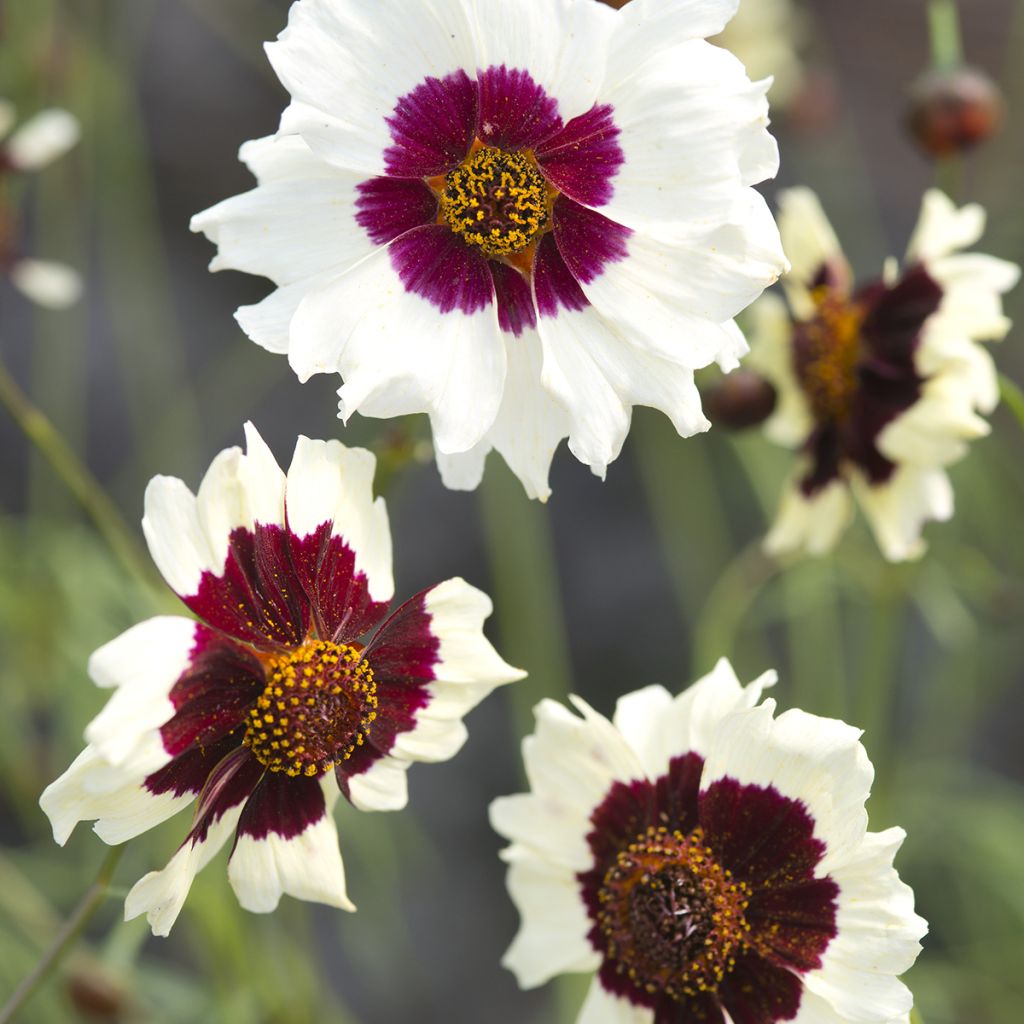
The annual Coreopsis Incredible! Swirl is a tall, extremely floriferous variety that blooms throughout summer. This annual plant is one of the easiest to succeed with. Sown in spring, its flowering spreads from July to October in a multitude of inflorescences with a burgundy centre and white periphery. This colour contrast is perfectly highlighted by the beautiful, bright green foliage. Thriving in full sun and tolerating light shade, this Coreopsis grows in most soils and can even be cultivated in pots. Forming superb borders, it integrates easily into a varied flowerbed and provides colourful bouquets for the home.
Coreopsis is a member of the very large Asteraceae family, the second most important in the vegetable kingdom (after orchids) which includes over 23,000 species. It was formerly known as Compositae, because what are taken for flowers are actually inflorescences, typically composed of tubular flowers in the centre and ligulate ones on the periphery. The many ornamental, wild or cultivated genera that make up this group therefore all have familial resemblance, whether it be the humble Daisies, the imposing Sunflowers or the popular Dusty Miller.
The Coreopsis genus is native to North and South America, as well as Mexico. It is rich with about 80 species, divided into eleven botanical sections, including some annuals alongside the perennial Coreopsis abundantly planted in our gardens. Coreopsis tinctoria is one of them, whose natural range extends from Canadian Saskatchewan and Minnesota in the northern United States, to Louisiana, Texas and Arizona in the south. It forms clumps with erect and branching stems, reaching 1 m in height, with very narrow, 10 cm long leaves. Flowering from July, it produces heads 4 cm in diameter, forming a red heart bordered with bright yellow. Already very ornamental, the wild species has been the subject of multiple hybridisations to produce new horticultural varieties.
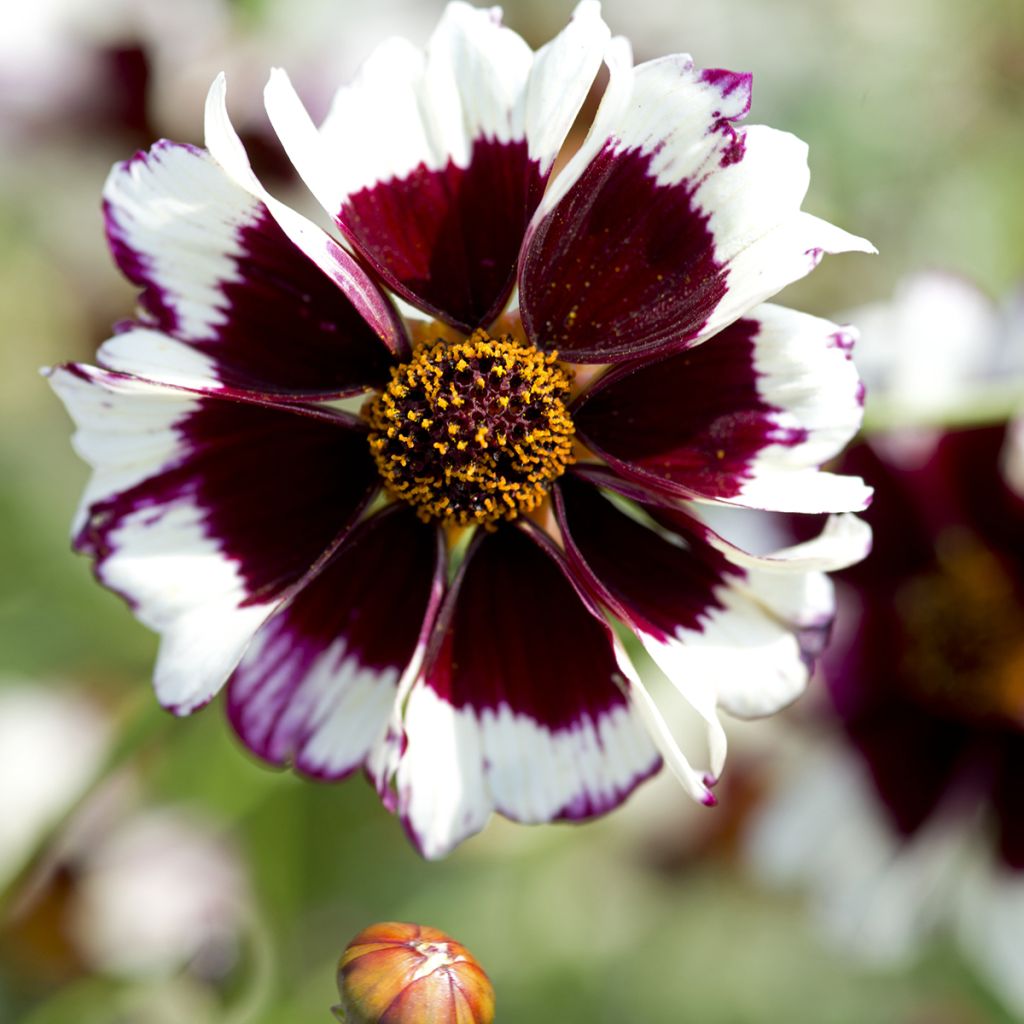
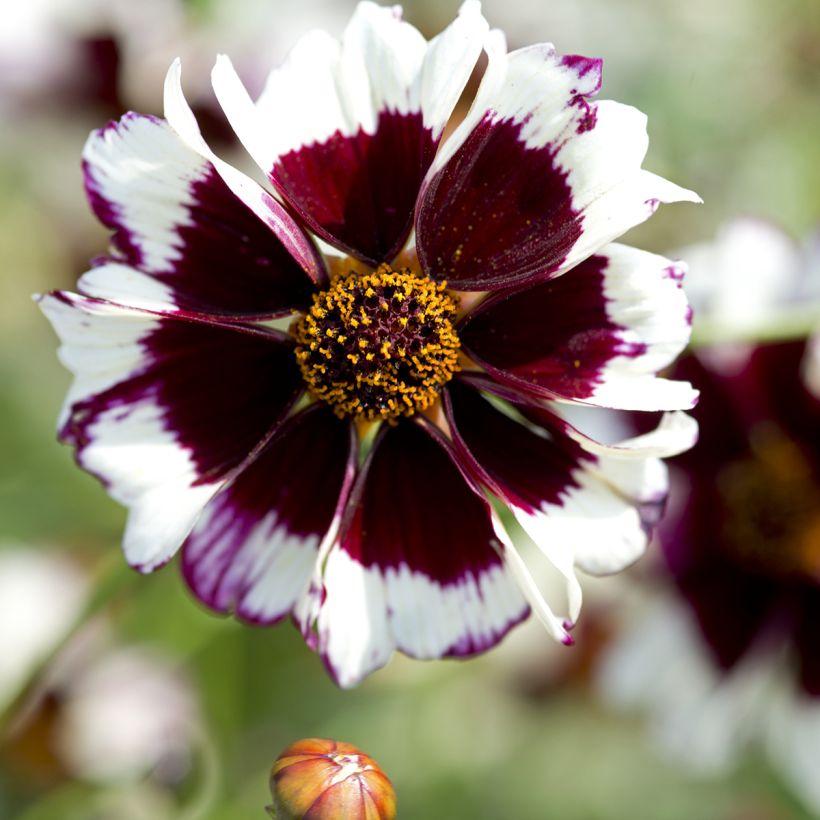
This is the case with Coreopsis x tinctoria 'Incredible! Swirl' which is a very floriferous selection, whose height in flower reaches 80 cm, or even a little more. The 35-40 cm wide clumps display the characteristic, very lanceolate, beautiful bright green leaves, which blend perfectly with the colours of the flowers. These bloom from late June to early July, depending on the region and renew themselves until October, thus ensuring the spectacle throughout summer. Admittedly, they are not very large, measuring approximately 2.5 cm in diameter only, but they catch the eye with their very contrasting colour combination. The petal-like ligulate flowers are burgundy from the base to half their length, while their tip turns abruptly white. The heart of the inflorescence, made up of tubular flowers, is a combination of dark burgundy red and golden, the colour of the stamen tips. Produced in abundance, the truly numerous inflorescences compose a beautiful harmony. Carried by the long floral stems, they undulate in the wind, thus creating an attractive, dynamic scene. Moreover, they are nectar-rich and attract bees and butterflies, thus promoting biodiversity in the garden.
The easy to sow and grow, annual Coreopsis Incredible! Swirl is the perfect beginner's plant, which produces great satisfaction for minimal effort. With rapid development, one year's sowing will enchant your garden all summer until autumn, while providing you with superb bouquets to decorate your interior. Accepting pot cultivation, this annual will thrive in light, well-drained soil, preferably in full sun. Place it in a varied flowerbed to provide flowers, alongside bushes and perennial plants, or create a seasonal flowerbed with other annuals. Ricinus could form the background, with its tall height and purplish palmate leaves, an ideal backdrop. Spider Plant 'White Queen' with its surprising shape and white flowers with spidery grace will coexist well with your Coreopsis, and for the border, choose low yellow-flowering annuals to create a vegetation gradient.

Coreopsis Incredible! Swirl Seeds - Coreopsis tinctoria in pictures
Flowering
Foliage
Plant habit
Botanical data
Coreopsis
x tinctoria
Incredible! Swirl
Asteraceae
Plains coreopsis, Garden Tickseed, Golden Tickseed
Coreopsis hybrida Incredible! Swirl
Cultivar or hybrid
Planting and care
Coreopsis can be sown in two ways: under cover or directly in the ground.
1/ Under cover: Sow Coreopsis in February-March in a seed tray. Use good quality potting soil, possibly enriched with compost. Broadcast sow your seeds. Cover the seeds very lightly by sprinkling potting soil or vermiculite on top, press down gently and water generously with a fine spray. Place your pots in the light, without direct sunlight, at a temperature of 20 to 25°C.
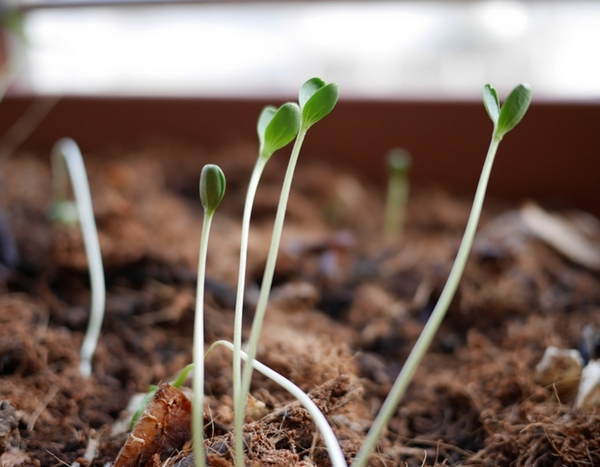
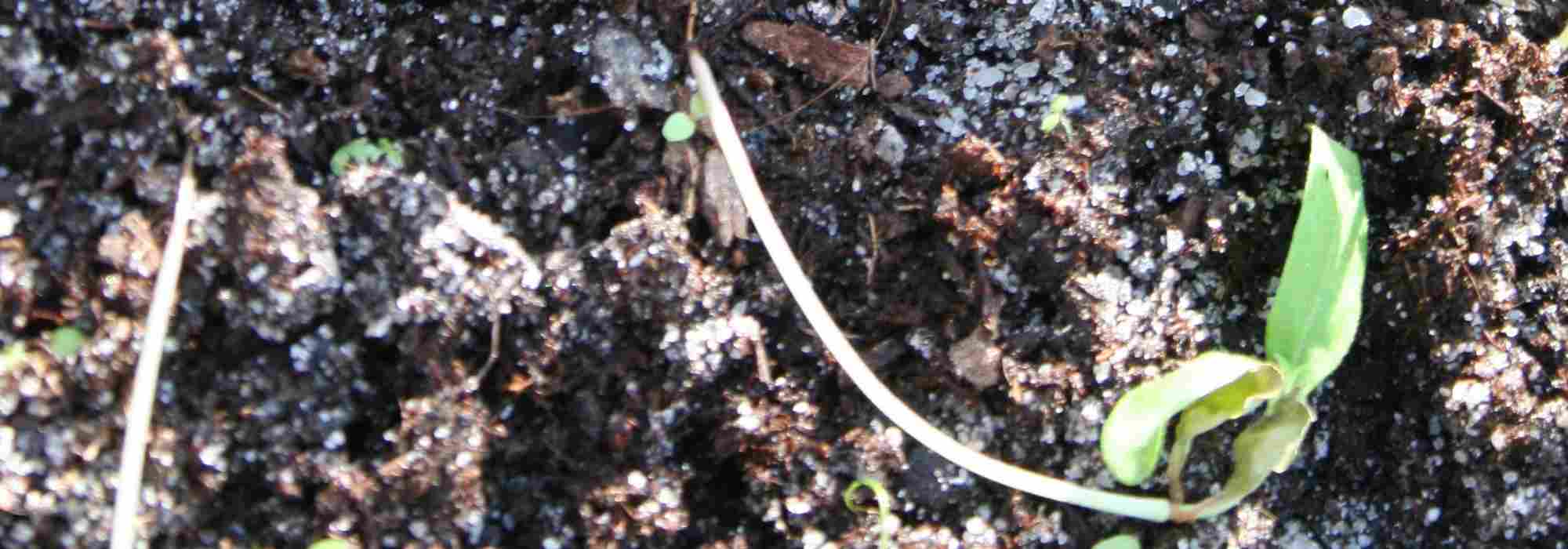
Seed germination will generally take 10 to 21 days. Once the young plants have reached a height of 10 cm, transplant them into pots. Two weeks before their final planting out, begin to acclimatise them gradually to a temperature of 15°C.
By late May or early June, the temperature in the garden will be warm enough to plant out your young plants. Choose a location with plenty of sun. Add a good shovelful of compost to each planting hole. Space your plants 25 to 30 cm apart.
2/ It is also possible to sow Coreopsis directly in the garden, but you will need to wait until there is no longer any risk of frost and night-time temperatures exceed 10°C. Sow the seeds on a well-prepared seedbed, every 5 cm in rows spaced 30 cm apart. Keep the soil slightly moist; germination will occur within 10 to 15 days.
The cycle of this annual from sowing to flowering spans 60 to 90 days. Starting with a spring sowing, the plants flower from July to October. By removing faded flowers, you will encourage renewal and extend the flowering period.
Sowing period
Intended location
Planting & care advice
-

-
-
-

-

-

-

-

This item has not been reviewed yet - be the first to leave a review about it.
Recently viewed products
Haven't found what you were looking for?
Hardiness is the lowest winter temperature a plant can endure without suffering serious damage or even dying. However, hardiness is affected by location (a sheltered area, such as a patio), protection (winter cover) and soil type (hardiness is improved by well-drained soil).
In temperate climates, pruning of spring-flowering shrubs (forsythia, spireas, etc.) should be done just after flowering.
Pruning of summer-flowering shrubs (Indian Lilac, Perovskia, etc.) can be done in winter or spring.
In cold regions as well as with frost-sensitive plants, avoid pruning too early when severe frosts may still occur.
The harvesting period indicated on our website applies to countries and regions in USDA zone 8 (France, England, Ireland, the Netherlands).
In colder areas (Scandinavia, Poland, Austria...) fruit and vegetable harvests are likely to be delayed by 3-4 weeks.
In warmer areas (Italy, Spain, Greece, etc.), harvesting will probably take place earlier, depending on weather conditions.
The sowing periods indicated on our website apply to countries and regions within USDA Zone 8 (France, UK, Ireland, Netherlands).
In colder areas (Scandinavia, Poland, Austria...), delay any outdoor sowing by 3-4 weeks, or sow under glass.
In warmer climes (Italy, Spain, Greece, etc.), bring outdoor sowing forward by a few weeks.
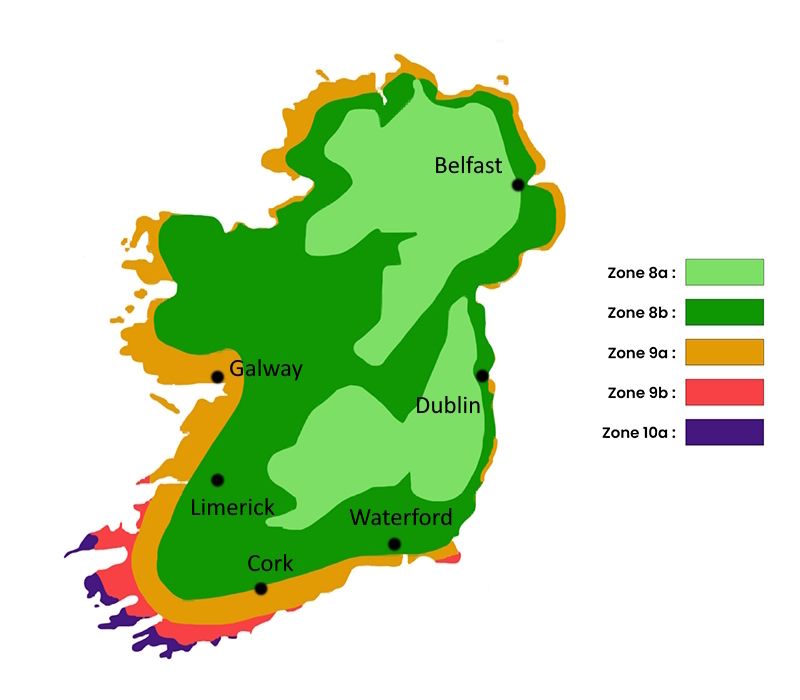
The planting period indicated on our website applies to regions in USDA Zone 9a (East Coast and Midlands: Dublin, Wexford, Waterford, Kilkenny, Portlaoise). It will vary depending on where you live:
- On the west coast and in the north-west (Galway, Limerick, Sligo, Donegal, Westport), delay planting by 1 to 2 weeks in spring and bring it forward by 1 to 2 weeks in autumn compared to the dates given, preferably choosing periods without strong winds.
- In the inland hills and plateaus (Wicklow Mountains, Macgillycuddy’s Reeks, Connemara, Killarney), it is best to plant in spring (April–May) or autumn (September–October), avoiding periods of waterlogged soil in winter and strong winds, which pose the main risk to newly planted trees in these areas.
The flowering period indicated on our website applies to regions in USDA Zone 9a, such as the East Coast and Midlands, including Dublin, Wexford, Waterford, Kilkenny and Portlaoise.
This will vary depending on where you live:
- On the west coast and in the northwest (Galway, Limerick, Sligo, Donegal and Westport), it will be delayed by one to two weeks compared to the given dates, due to stronger Atlantic winds and less spring sunshine.
- In the inland hills and plateaus (the Wicklow Mountains, the Macgillycuddy's Reeks, Connemara and Killarney), flowering will be delayed by two to three weeks. Flowering mainly occurs between May and July, with the limiting factors being less frost and more of the excessive humidity, strong winds and lack of sunshine that are characteristic of these areas.
Shipping country and language
Your country of residence may be:
Your country of residence is:
For a better user experience on our website, you can select:
Your shipping country:
-
 Austria
-
 Belgium
-
 Bosnia & Herzegovina
-
 Bulgaria
-
 Croatia
-
 Cyprus
-
 Czechia
-
 Denmark
-
 Estonia
-
 Finland
-
 France
-
 Germany
-
 Greece
-
 Hungary
-
 Iceland
-
 Ireland
-
 Italy
Italy
-
 Latvia
-
 Liechtenstein
-
 Lithuania
-
 Luxembourg
-
 Malta
Malta
-
 Netherlands
-
 Poland
-
 Portugal
-
 Romania
-
 Serbia
-
 Slovakia
-
 Slovenia
-
 Spain
Spain
-
 Sweden
-
 Switzerland
Language:
-
French
-
 English
-
Spanish
-
Italian
-
German
-
Portuguese
-
Dutch
-
Finnish
My Account
Hello
My wish lists
My cart
Log in / Register
Existing customer?
This form is protected by reCAPTCHA - the Google Privacy Policy and Terms of Service apply.
New customer?
Create an account to track your orders, access our customer service and, if you wish, make the most of our upcoming offers.