September is a somewhat pivotal month. At home it smells of fresh stationery, while the garden shows its first decline, fortunately tempered by the long-awaited flowering of asters and Japanese anemones mingling with ornamental grasses. Even though we can still enjoy the end of season, it’s already time to bring in the wood. Feeling down? Me too… I know that soon the long, dark tunnel of winter will have to be crossed and that the scope of small pleasures will concentrate mainly around the house.
To fight this, the best solution is to get a head start now by composing the planters and pots that will brighten late winter and early spring.
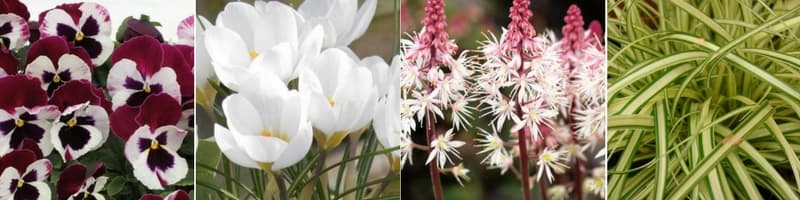
And for that, nothing beats biennials such as pansies, primroses, daisies and wallflowers! Sold as plug plants, they are economical, but need a little time to develop properly… which isn’t necessarily a problem, because they pair wonderfully with small spring bulbs (crocus, muscari, mini-narcissi…) which also need to be planted at the end of summer.
Timing couldn’t be better!
Lovely late-winter arrangements: essential ingredients
To start, think about your future arrangements… and select plants according to a dominant colour or a mood (contemporary or more romantic).
What’s important to create aesthetic, dynamic groupings is to vary the forms (upright plants, mounded, trailing) while creating a harmony (for this, try to match at least one foliage with the colour of your flowers) or a strong contrast in tones.
To compose your planters, the recipe is quite simple:
- start by choosing from the wide range of biennials,
- add ornamental grasses or evergreen perennials (Acorus gramineus Ogon, Carex oshimensis Evergold, Ophiopogon, Tiarella Morning Star)…
- then season the lot with small bulbs — early ones such as snowdrops and crocus or later ones such as fritillaries and tulips…
Nothing will be lost since you can, if you wish, plant the perennials and small bulbs in the garden or keep them to create new arrangements later.
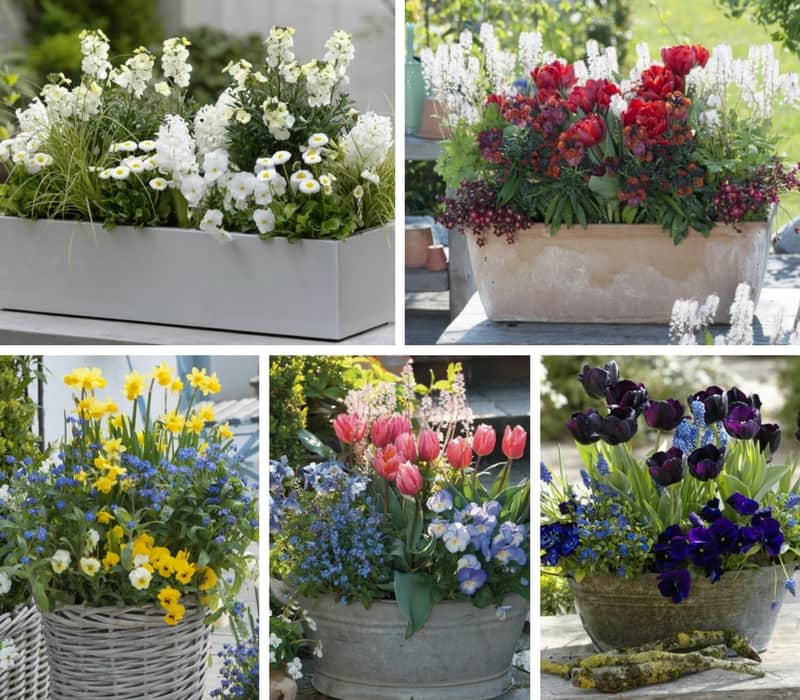
Does this seem complicated? Do you want to enjoy the pleasure of doing it yourself but fear making mistakes? Relax… Pierre has put together 5 lovely combinations, in very different styles, ready to plant and guaranteed to succeed!
How to prepare spring planters in autumn?
In September and October, as soon as you receive your plug plants, place them in your containers (if these haven’t been chosen yet or if you are planting directly in the ground in the garden, let them wait a little in pots filled with a good potting compost).
To do this:
- Prepare your planters and pots by first checking that the base has drainage holes,
- place a layer of clay pebbles or any other material to improve drainage at the bottom,
- fill your container with a good potting compost for planters or flowering plants (this often determines success). If you are unsure of its quality, consider adding a few Osmocote Exact R pellets, a slow-release fertiliser that will act for several months,
- plant and give a first watering!
Tips and little extras that make the difference
Choosing the right container is an important step. If you opt for colourful pots or planters, try to make sure they harmonise with the colours of your arrangement without being too dominant: your pot should not steal the show from your flowers. Terracotta, rattan and zinc are safe choices. Slightly weathered by time, these materials only become more attractive. Don’t hesitate to use recycled items!
Mulching is often neglected when planting above ground. Yet it’s useful and attractive… once your plants start to develop well, cover the compost with a thin layer of flax chippings, cocoa husk or buckwheat. This will allow you to space out watering a little and will give a neat appearance to your pots.
Finally, let your imagination run free and punctuate your planters with decorative elements. You can find charming little pick-in-the-ground ornaments in shops, but the garden also hides many treasures: think of the colourful twigs of cornelian cherry or Cornus sibirica and the pretty branches of willows and contorted hazels — they cost nothing and help to embellish your arrangements while waiting for the blooms!
Further reading :
Discover our planting sheet: "Plant biennials in plug plants"
and our advice sheet: "Biennial plants: everything you’ve always wanted to know!"


































Comments