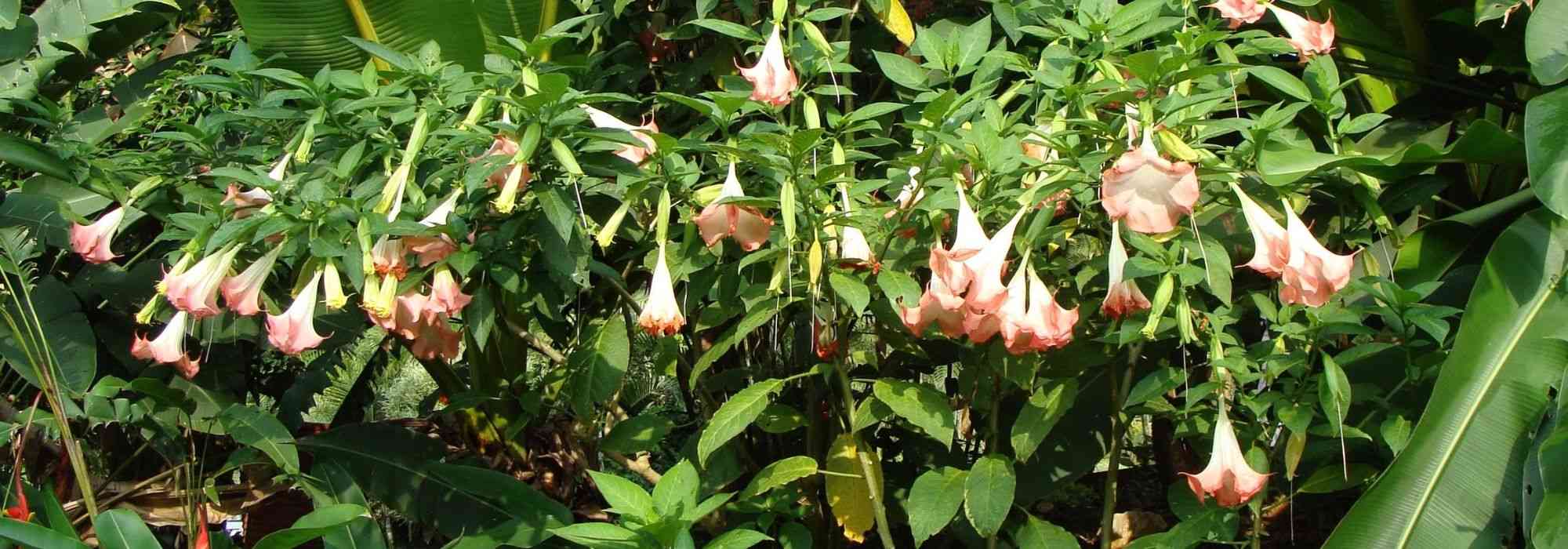
Datura and Brugmansia: sowing, planting and care
Contents
Datura, in a nutshell
- There are two kinds of Datura: the arborescent one, whose true name is Brugmansia and which is most often grown in pots, and the herbaceous annual or perennial Datura that is usually sown.
- They produce large trumpet-shaped flowers, pendulous or upright, very spectacular and fragrant during summer.
- With very rapid growth, the arborescent forms are very impressive in size even though they reshoot entirely from the ground after a rather cold winter.
- These plants, easy to grow even on poor or polluted soil, are highly toxic if ingested and should be treated with caution if you have young children.
A word from our expert
Daturas, sometimes called “Angel’s Trumpet”, comprise two types of plants — arborescent and herbaceous — that belong to the Solanaceae family, just like tomato, pepper and belladonna. The former form small, highly branched trees or large shrubs 2 to 6 m tall, evergreen or semi-evergreen, much admired in summer for their long, pendulous flowers, white, golden yellow or orange-red and very fragrant in the evening. The latter are short-lived herbaceous forms that can resurface from the stump for a few years if protected with a thick mulch. They are ideal plants for filling a bed in poor, light, sandy or silty soil in no time.
Besides their herbaceous habit, Datura differ from Brugmansia by having erect or horizontal, smaller flowers and by spiny fruits.
Daturas in the broad sense are generous in foliage, flowering and nocturnal scent, which explains the enthusiasm for these tropical-looking plants despite their notorious toxicity (much like oleander). Flowering is spectacular from July to October. However, in the open ground, flowering of Brugmansia often starts late in the season, towards the end of summer when stems have had to regrow fully after a frost. It is therefore preferable to grow it in a pot to shelter it over winter and bring its flowering forward. You will be charmed by the powerful, slightly narcotic scent of its flowers when evening comes. Herbaceous Daturas, less demanding in water, have the advantage of growing very quickly from seed even in poor soil. Warning all parts of the plant are toxic. Avoid planting them among vegetable crops and placing them within reach of young children. The wild species, Datura stramonium (thorn-apple or jimsonweed), is also handsome in flower but particularly toxic and requires strict precautions (gloves and mask) when uprooting.
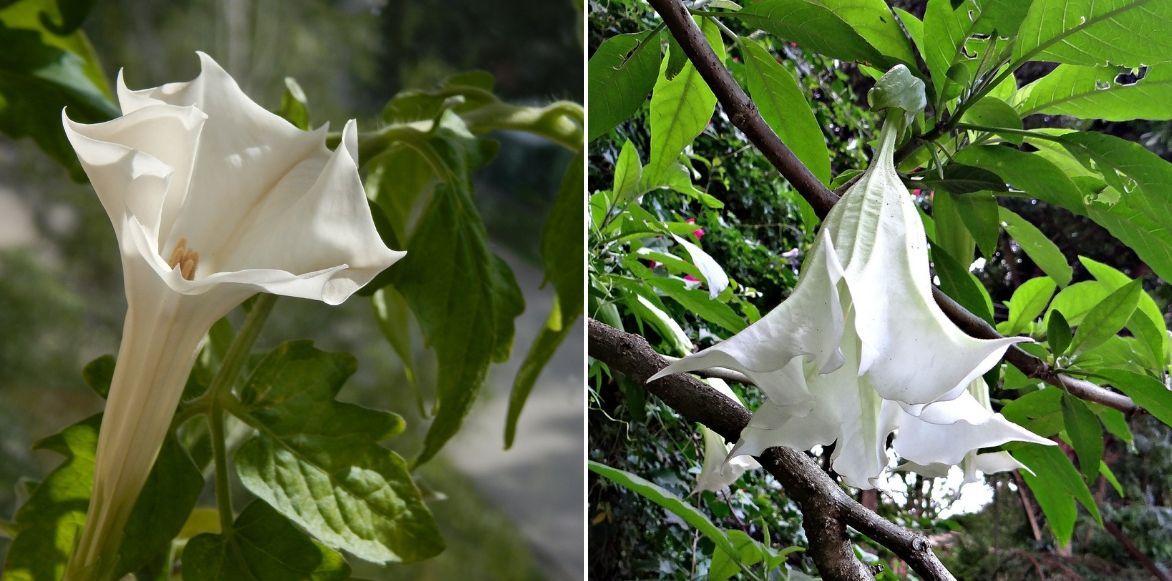
Datura (herbaceous, erect trumpet-shaped flower) and Brugmansia (arborescent, pendulous trumpet)
Description and botany
Botanical data
- Latin name Datura, Brugmansia
- Family Solanaceae
- Common name Datura, devil's weed, angel's trumpets
- Flowering July to October
- Height between 0.50 and 5 m
- Sun exposure sun or partial shade
- Soil type ordinary to rich, well-drained, even calcareous
- Hardiness Low (0 to -7 °C)
Brugmansia or arborescent daturas are plants of Central and South America, while genus Datura sensu stricto occurs in tropical, subtropical and warm-temperate regions of the Americas but also in Asia (southern China), Africa, Europe and Australia. The former comprise six species distinguished by large pendulous flowers, non-spiny fruits (rarely seen in cultivation) and a long lifespan of several decades. With thick, fairly unbranched shoots, they can reach 5–6 m tall with a spread of 2–3 m in warm, humid conditions if not cut back by frost each year. The latter, herbaceous in habit, retain the scientific name Datura and include 12 species. These non-woody perennials with short life span resprout readily in mild climates from a crown formed by a tuberous root and can form a shrub 1 to 1.50 m in every direction within 2–3 months.
Daturas have acquired many vernacular names that warrant caution: devil’s weed, angel’s trumpets, trumpet of the last judgement, fool’s trumpet, thorn-apple… It is true that the Datura group contains species that are extremely toxic (narcotic and poisonous), even by simple contact, notably the common thorn-apple.
Datura stramonium is an annual species of American origin that is becoming increasingly frequent in France in floodplain valleys and downstream of large urban areas. It is recognisable by upright white trumpet-shaped flowers and very spiny fruits that are green then beige, about 5 cm in diameter. Its spontaneous presence very often indicates soil pollution, whether from urban, industrial or agricultural contamination caused by pesticides or fertilisers, or from excessive salts (compacted coastal soils or excessively irrigated land).
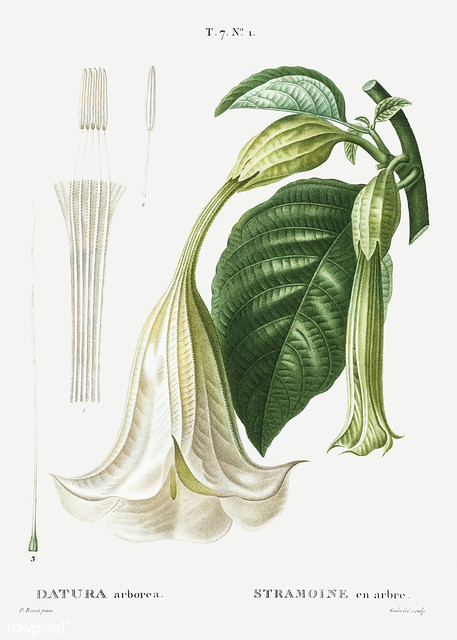
Brugmansia arborea – botanical illustration
Do not touch it and wear gloves and a mask if removal is necessary because of its narcotic content. Note that honey produced by bees foraging on Datura stramonium can cause poisoning, as can smoke from burning the plant. By contrast, species Datura innoxia (syn. Datura meteloides) and Datura metel sold as seeds for ornamental gardening are less poisonous, as name innoxia (= inoffensive) suggests, although caution is still required, including with Brugmansia.
Brugmansia and Datura belong to family Solanaceae, as do tomatoes, tobacco and potato, but also deadly nightshade and mandrake, long associated with witchcraft because of their toxicity.
Leaves about twenty centimetres long are alternate and deciduous in our climate. In Brugmansia, lamina is pale green, velvety and soft, oval with smooth margins on mature leaves and with a few teeth when juvenile. In Datura, leaves are entire or with angular margins, the lamina strongly veined and often puckered, dark green sometimes with a bluish tinge, borne on branching stems often tinged purple or dark red-black. Leaves measure between 5 and 20 cm long and 4 to 15 cm wide. Foliage gives off a foul odour when handled. Variegated cultivars exist. Two ornamental species on the market, Datura innoxia and Datura metel, are very similar but differ in number of secondary veins arising from the central vein of each leaf.
Flowers, generally numerous but borne singly, arise from a large elongated pale green bud that splits down the middle. Corolla of 5 fused petals forming a funnel of varying length flares widely, reaching up to 18 cm diameter and 30 cm long in hybrid Brugmansia. Colours range from pure white to pale pink and pale golden yellow as in Brugmansia arborea, bright orange in B. sanguinea, and deep violet sometimes streaked with white in Datura metel. Petals have a central vein and end in a curved point, giving the flower a horned trumpet appearance. In double-flowered varieties, opening is spectacular when spiral petals unfurl. Corolla is preceded by a fused calyx forming a greenish tube or a calyculus (Datura innoxia). Sweet fragrance emitted by datura flowers in evening and at night has earned them name “angel’s trumpets”. Their flowers are heavily visited by nectar-feeding insects such as moths, hummingbirds and bats.
Spherical capsules of herbaceous Daturas are notable for their spiny surface (not sharp while fruit is still green), giving rise to common names “thorn-apple” or “stinking burr”. On drying, fruits turn from green to beige then split in two to release black seeds about 2 mm. Brugmansia fruits are smooth and fleshy, sometimes very long and slender. It is rare to see these fruits in cultivation here, especially as many hybrids sold are non-fertile. Brugmansia arborea is only species that is self-fertile and capable of producing fruit here.
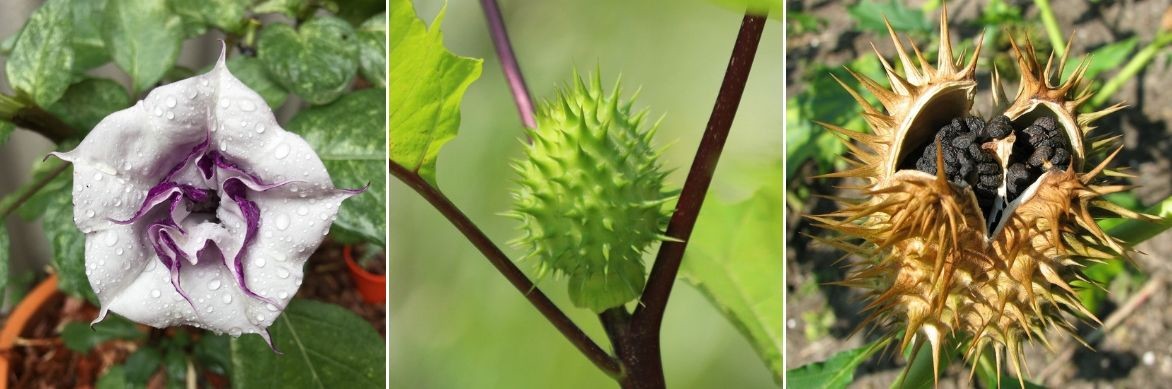
Development of a Datura flower
Datura metel and D. innoxia have medicinal uses at low doses (for rheumatic pains, anti-inflammatory applications…), but are above all known for hallucinogenic effects used in ritual ceremonies by Aztec and Navajo peoples in North America (D. innoxia) and in India (D. metel).
Main varieties of Datura
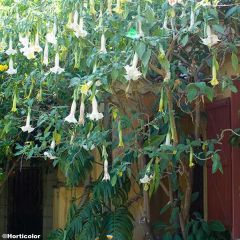
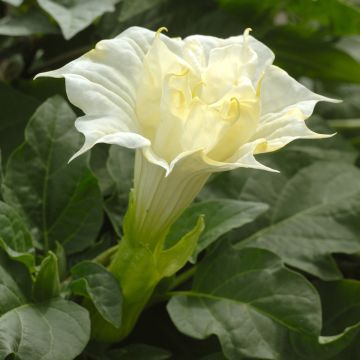
Brugmansia arborea
- Flowering time August to December
- Height at maturity 2 m
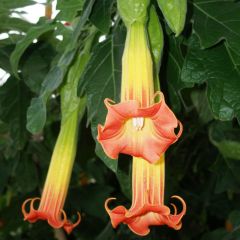
Brugmansia sanguinea - Red Angel's Trumpet
- Flowering time July to November
- Height at maturity 2 m
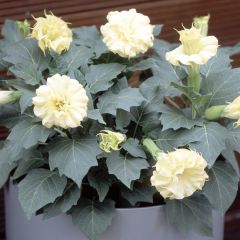
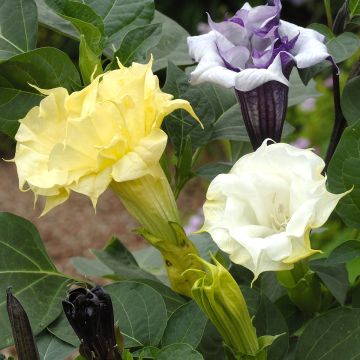
Datura metel Double Golden Queen Seeds - Brugmansia
- Flowering time August to November
- Height at maturity 1,40 m
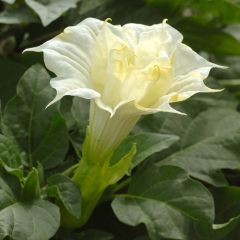
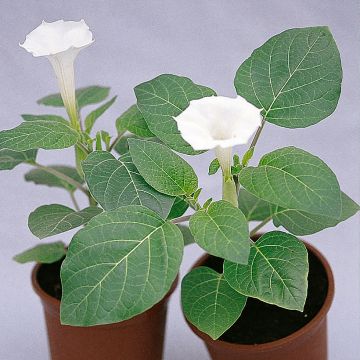
Datura metel Double White Lady Seeds - Brugmansia
- Flowering time August to November
- Height at maturity 80 cm
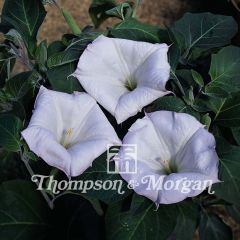
Datura metel Evening Fragrance Seeds - Brugmansia
- Flowering time August to November
- Height at maturity 1 m
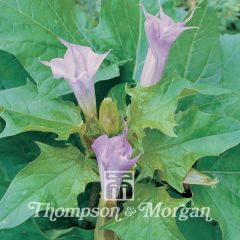
Datura meteloides La Fleur Lilac Seeds - Brugmansia
- Flowering time August to November
- Height at maturity 45 cm
Discover other Datura seeds
View all →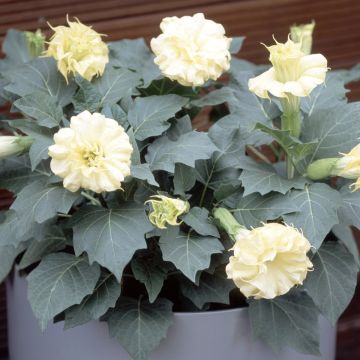
Available in 1 sizes
Available in 1 sizes
Available in 1 sizes
Available in 1 sizes
Available in 1 sizes
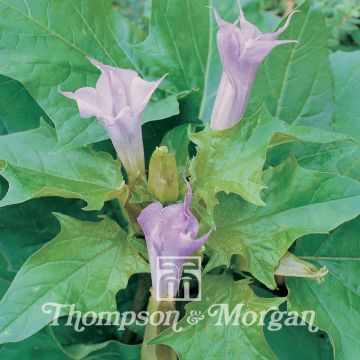
Available in 1 sizes
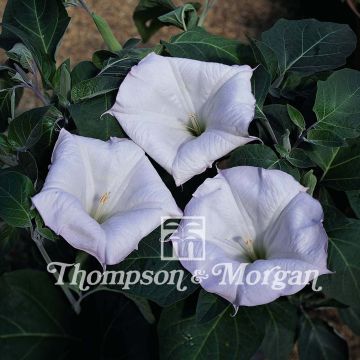
Available in 1 sizes
Planting
Where to plant Datura?
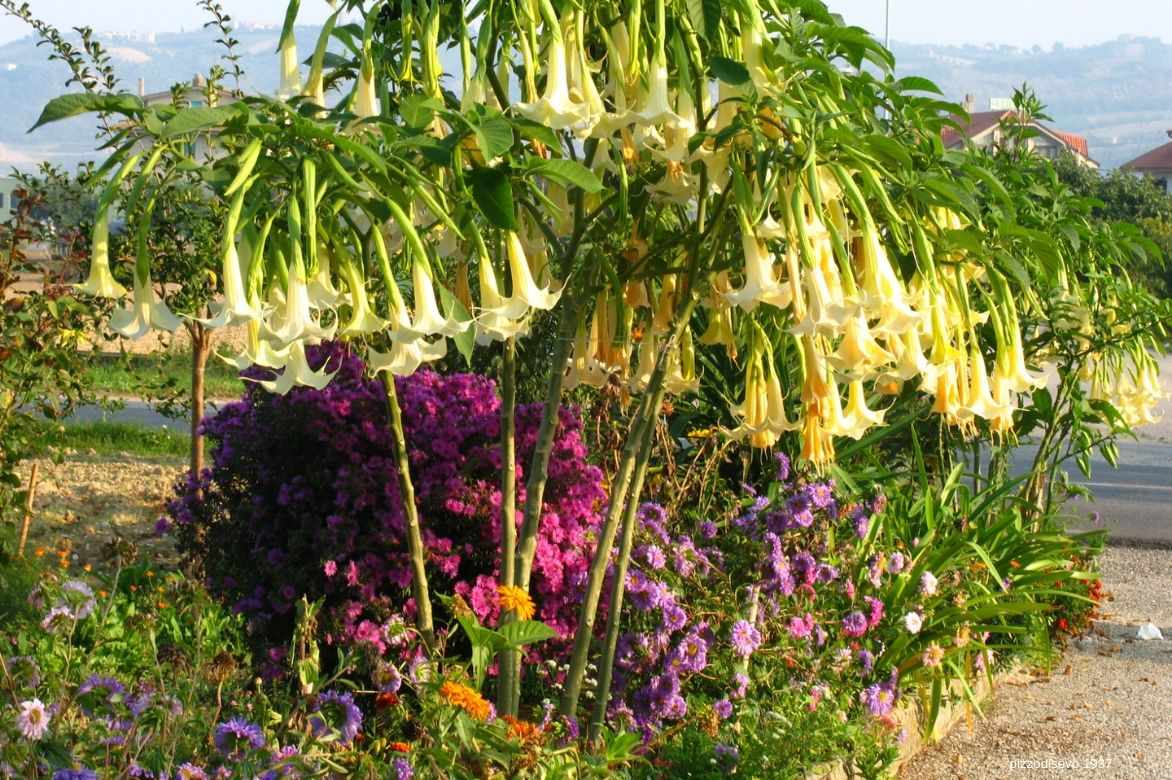
To plant a Brugmansia in the ground, a mild climate is required, such as around the Mediterranean or along the Atlantic coast. Choose a warm, sunny spot sheltered from cold and wind. Brugmansia need a rich, deep soil and regular watering in summer. Soil must however be well drained to help the stump withstand frost (down to -7°C maximum for Brugmansia sanguinea, reputed to be the hardiest of the Brugmansia). You can easily grow Brugmansia in a large pot 40–50 cm in diameter which can produce plants up to 1.40 m in all directions by the end of the season.
Herbaceous datura can be sown on a sunny bank north of the Loire or in partial shade in the Midi, on ordinary soil recently dug, even calcareous and dry in summer if deep enough. They can help remediate polluted soil, colonise wasteland and roadsides. The plant produces a tuberous root that dislikes frost and excess water. You can protect the stump with a mulch to encourage regrowth the following year or reseed from seed in spring. This plant is hardy in zone 9 (0 to -7°C).
When to plant?
Plant or sow daturas in spring as they need warmth to develop.
How to plant?
This plant is very easy to grow whether Brugmansia or Datura, although requirements differ.
Brugmansia aurea, arborea, x candida…
- Soak the Brugmansia pot in a bucket of water to thoroughly moisten it and untangle roots if they have started circling the pot.
- Dig a wide hole at least three times the diameter of the rootball and up to 50 cm deep.
- Add a few shovelfuls of compost or well-rotted manure or one to two handfuls of organic fertiliser to the soil. In a pot, choose a good geranium compost, taking care to place gravel or clay pebbles at the bottom of the pot to a depth of 5 cm.
- Place the plant in the planting hole.
- Replace the soil and firm lightly.
- Water well then mulch.
Datura metel, innoxia (meteloides)…
You can grow Datura as a perennial either by buying young plants or by sowing yourself (see Sowing). You can also grow it as an annual, pulling out the plant at the end of summer, in a container or in the ground.
- Work soil deeply as plant likes loosened soil.
- Level surface then dig a hole the size of the rootball.
In a pot, make a mix of two-thirds good potting compost to one-third river sand for Brugmansias, and 50% compost to 50% sand for Daturas.
Caring for Datura and Brugmansia
- Water Brugmansia generously, as its lush foliage uses a lot of water. Don’t hesitate to add fertiliser for flowering plants if the plant is in a pot.
- You can overwinter Brugmansia in a conservatory at a moderate temperature between 10 and 15°C or higher to prolong flowering. If short on space, a dark space (garage, cellar…) protected from frost also works: leaves will fall and you can reduce the branches. The plant can regrow from the ground if stems have frozen.
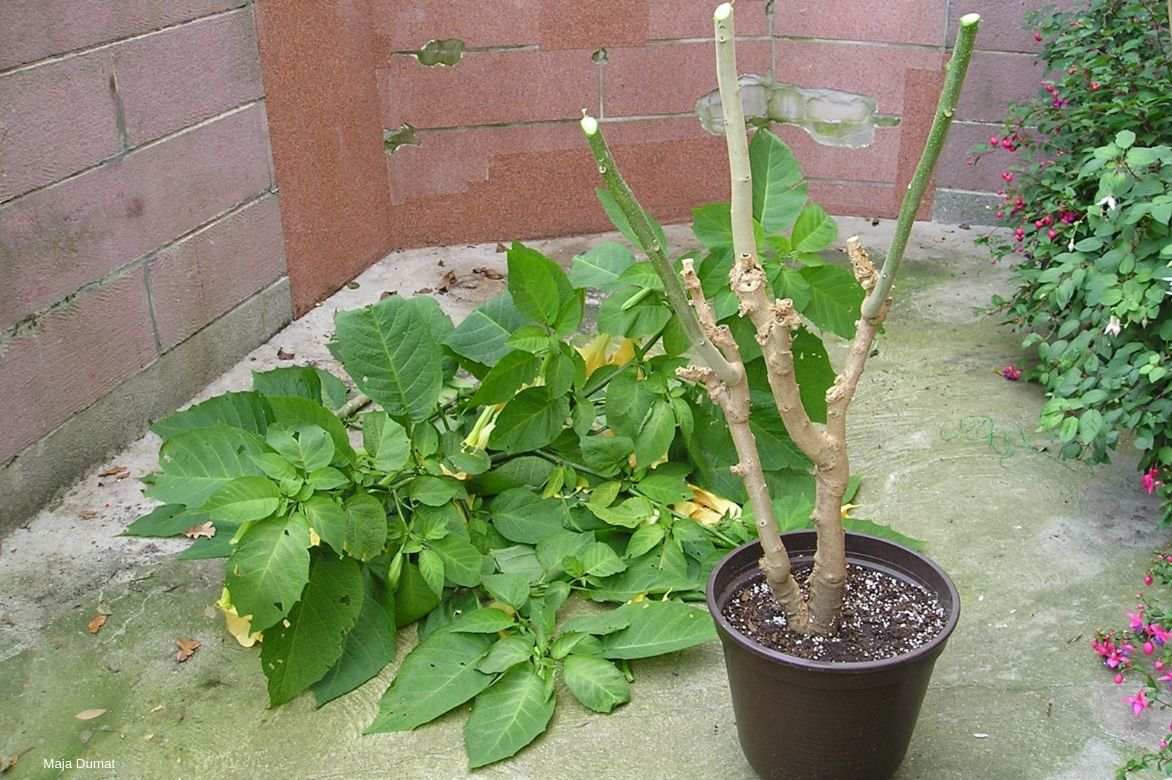
It is possible to reduce the branches before overwintering your Brugmansia
- Repot in autumn or in spring into a larger pot, or simply replace the top layer of potting compost if keeping the plant in the same large container.
- Perennial Datura is well adapted to summer drought. Water only if foliage is completely wilted by the end of the day.
- In winter, protect the stump with a thick mulch that will insulate it from both frost and excess moisture. Its root is indeed sensitive to too much damp.
- In a pot, water frequently.
- Remember to remove Datura seed capsules before they disperse their seeds to avoid becoming overrun. Wear gloves and a mask when handling such plants. Wash hands thoroughly after contact.
Multiplication: propagation by cuttings, sowing
The easiest method of propagation is to propagate Brugmansia by cuttings in summer and sow Datura in February–March.
Propagation by cuttings
Propagation by cuttings can be done in a glass of water or in a pot.
- Prepare a deep pot by filling it with potting compost mixed with sand.
- Take terminal sections of herbaceous shoots about 15 cm long, free from buds or older wood.
- Remove leaves near base of the cutting.
- Insert these to two-thirds of their length, taking care they do not touch one another.
- Firm gently all around to remove air pockets and ensure good contact between potting compost and the cutting.
- Keep them shaded and covered, for example by placing a cut transparent plastic bottle over them.
- In autumn, separate rooted cuttings and pot them up, keeping them under glass until spring.
Sowing
Datura seeds can remain in the soil for several years before conditions favour germination.
- Soak Datura seeds in a bowl of lukewarm water for 24 hours.
- Sow in moist potting compost, spacing seeds 5 cm apart.
- Cover with 5 mm of fine potting compost and press lightly with a board.
- Keep at a temperature of 15–20°C in a bright location.
- Germination will take between 21 and 60 days. Growth will be faster afterwards.
- Prick out seedlings when they reach about 10 cm.
- Water each plant carefully without letting water stand in saucers under the pots.
Flowering takes place in summer, from July to October, about four months after sowing.
Uses and associations
Daturas, notably shrubby daturas are spectacular specimens usually placed on their own in the middle of a lawn or against the sunlit wall of the house to enjoy their nocturnal fragrance during summer evenings.
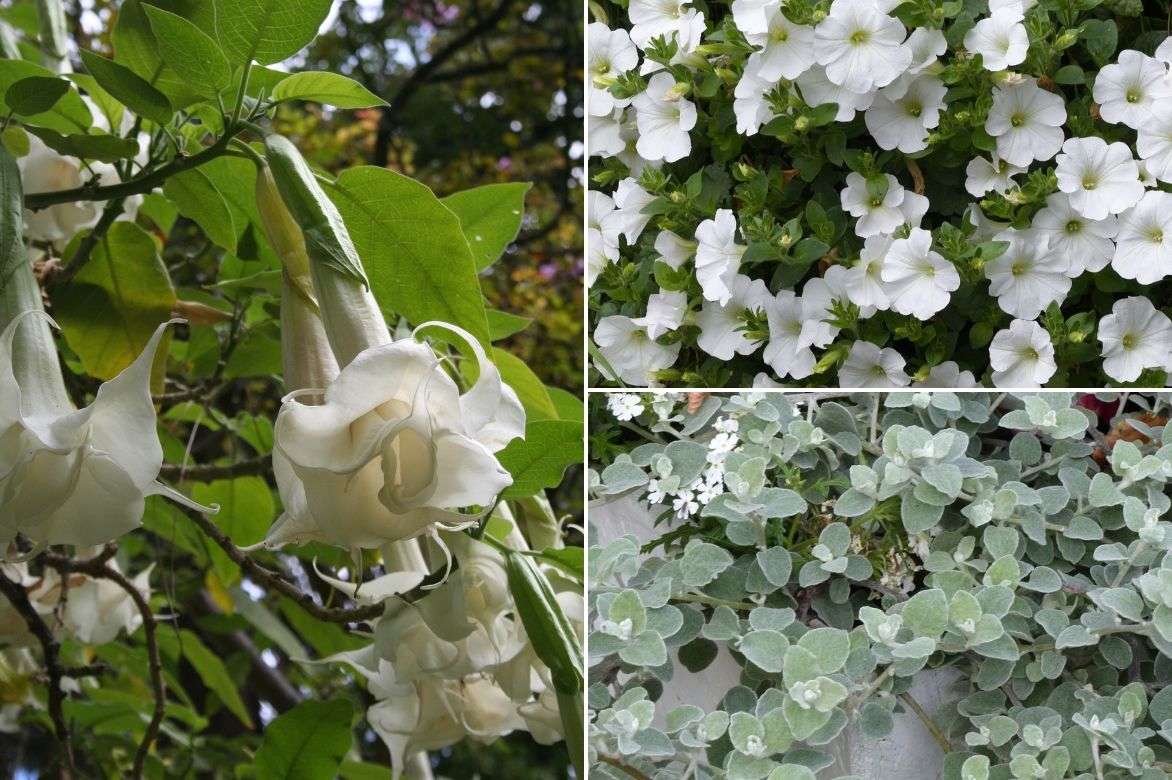
An example of a planting combination in a large sunlit pot: Brugmansia arborea, Petunia Surfinia ‘Snow’ and Helichrysum petiolare at its base
Placed in a container or large pot, it will sit proudly on a terrace in full sun with, for example, Mauritanian bindweed (Convolvulus sabatius) or Impatiens to cover its base. Herbaceous Daturas such as Evening Fragrance can adorn the edges of a path alongside four o’clock (Mirabilis jalapa), equally easy to grow as they can regrow from tubercles each year just like Daturas. You can also adorn the base of a small tree such as crape myrtle (Lagerstroemia) or cover a newly established bank by broadcasting the seeds.
Further reading
Discover our range of Datura.
- Subscribe!
- Contents
This form is protected by reCAPTCHA - the Google Privacy Policy and Terms of Service apply.

































Comments