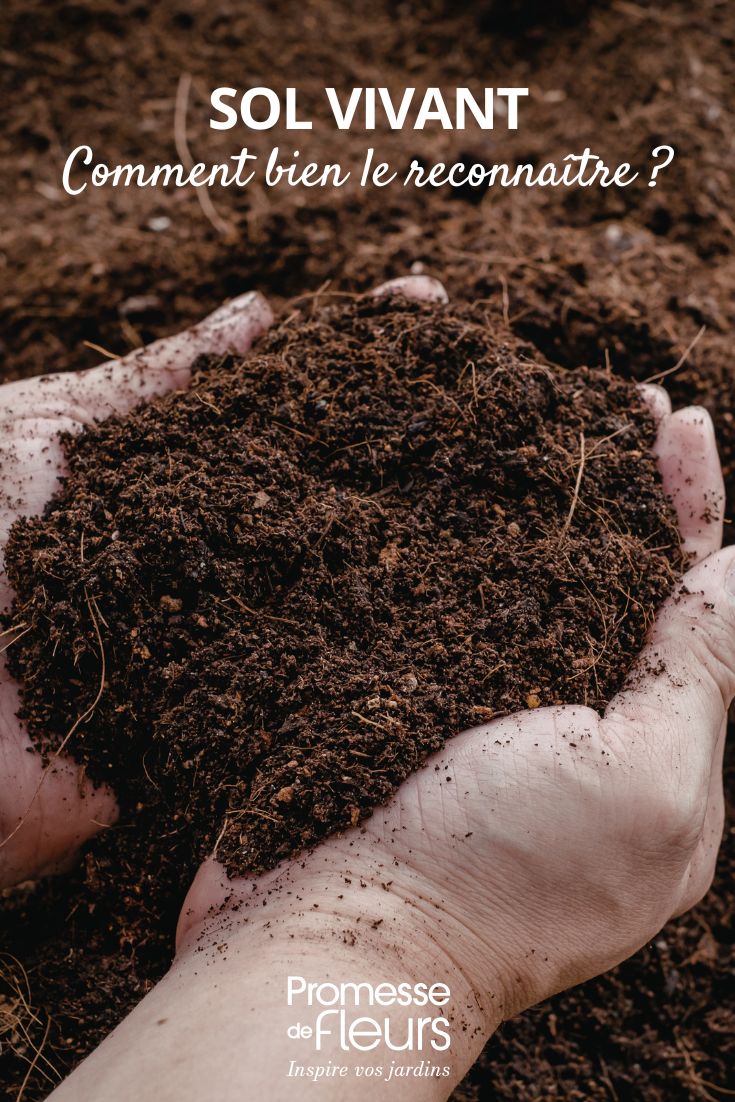
How to recognise a living soil?
Recognise and assess the vitality of your soil
Contents
Far from being a mere inert support for your crops, your soil is a complex ecosystem where minerals, organic matter and billions of invisible organisms interact. This intense biological activity converts plant debris into nutrients that plants can directly assimilate, ensuring their growth and health. Healthy soil is first recognised by its capacity to breathe, to filter water efficiently and to recycle matter naturally. By learning to read the signs of this vitality, you move from a ‘feed the plant’ approach to one of ‘feed the soil’. This regenerative approach forms the first line of defence against diseases and climate stress in the garden.

Living soil: summary
| Criterion | Living soil | Tired / inert soil |
| Structure | Crumbly, aerated | Compact, crusted or sandy |
| Colour | Dark (humus) | Light or washed-out |
| Life | Numerous earthworms | No visible fauna |
| Odour | Forest-floor, fresh soil | Neutral or foul-smelling |
Visual observation: surface indicators
Before taking spade out, take time to ‘read’ what surface tells us. A living soil leaves visible traces of its intense biological activity.
Cover and indicator species
A living soil is never bare. Nature abhors a vacuum and always seeks to protect its skin (humus layer) from UV rays and erosion.
-
Natural mulching: if you observe a layer of plant debris (leaves, twigs) that stays flexible and damp underneath, that is sign of a protective microclimate.
-
Wild plants speak: observe spontaneous flora. For example, presence of clover can indicate soil trying to fix nitrogen, while dandelion with its taproot often signals soil attempting to decompact naturally. This is an example of indicator species. Great diversity of wild plants is always better sign than a monoculture of moss (sign of acidity and suffocation).

Plants speak to us: dandelion tells us soil is too compact and clover tries to warn of nitrogen deficiency.
Traces of soil mega-fauna
Soil is a true underground city whose inhabitants leave visible worksites on surface.
-
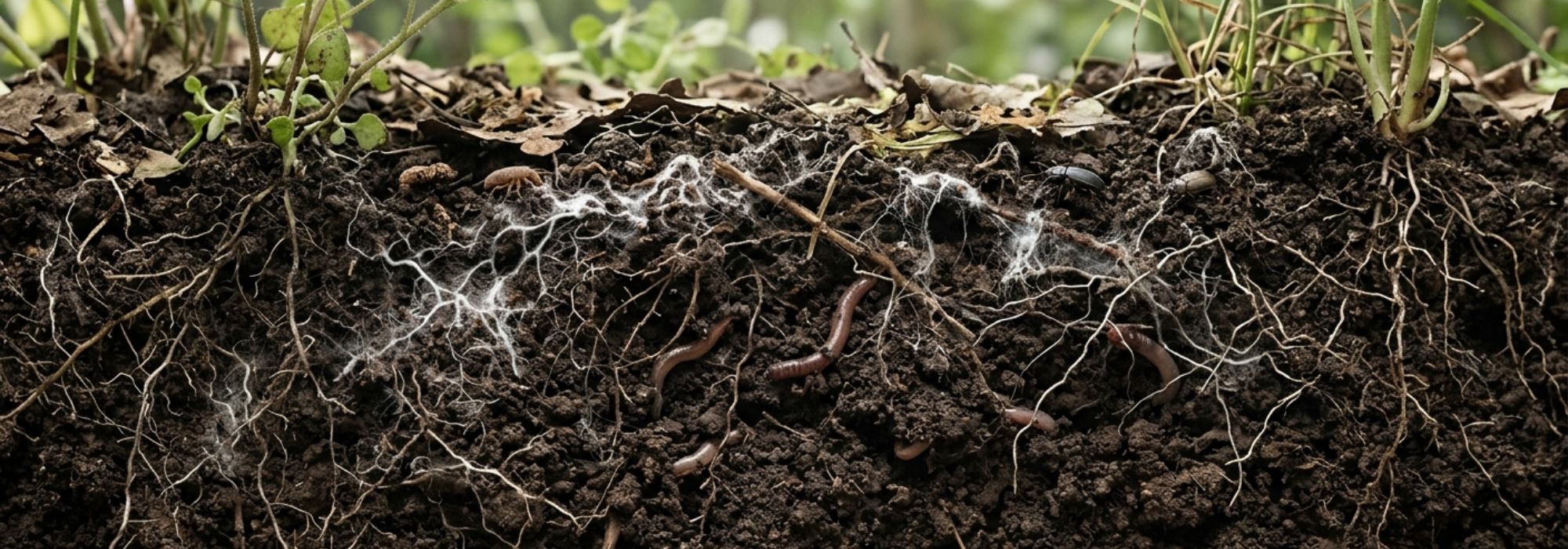
Casts: these are small mounds of churned earth expelled by anecic earthworms (those that move vertically). They are proof of incessant mixing: worm brings up deep earth enriched with digested organic matter.
-
Burrow openings: spot small neat holes at surface (about 5 mm diameter). They serve as “air chimneys” for soil, allowing gas exchanges essential to survival of micro-organisms.
Decomposition dynamics
A living soil can digest what is given to it. Observing litter is best performance test of this stomach.
-
Rate of incorporation: in active soil, leaves fallen in autumn should have almost disappeared or be in advanced state of decomposition (blackened, ragged) by spring.
-
Warning sign: if you lift old mulch or last year’s leaves and they are dry, grey and intact, that means biology is “dormant” or absent. Matter stagnates instead of circulating, often due to lack of moisture or too small population of fungi and worms.
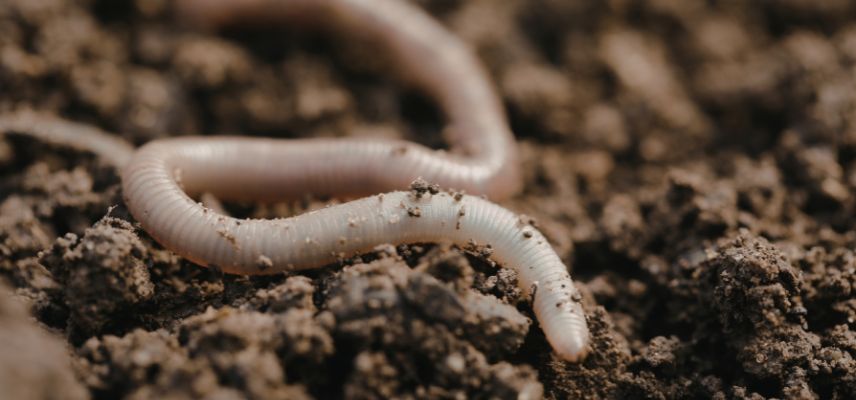
This tireless tunneller, the earthworm, indicates healthy, living soil.
Spade test
For this step, take a soil cube about 20 cm per side without turning it over abruptly. The aim is to analyse the soil’s internal organisation.
Structure
A living soil is crumbly: soil forms aggregates into small clods of various sizes, held together by biological “glues” (glomalin from fungi, worm mucus).
-
Positive sign : if the cube breaks easily into airy crumbs (like a well-risen cake or couscous), air and water circulate freely.
-
Warning sign : a compact, smooth or angular block (“concrete” effect) indicates compacted, oxygen‑deprived soil. Conversely, soil that flows like dry sand lacks life to bind its particles.
Colour: humus indicator
Soil colour is a direct indicator of its organic carbon content.
-
Dark brown to black : sign of a strong presence ofhumus, that stable organic matter which retains water and nutrients.
-
Pale or washed-out : a greyish or beige soil is often poor in life or has undergone intense leaching, a sign that clay‑humic complexes are no longer forming.
Smell: scent of life
Your nose is a powerful chemical analysis tool. Yes, really!
-
Forest‑floor smell : a healthy soil should smell of woodland after rain. This scent comes from geosmin, a substance produced by bacteria (actinomycetes) that decompose organic matter.
-
Suspicious smells : a vinegar, rotten‑egg or ammonia smell reveals fermentation under anaerobic conditions. This means the soil is too wet or too compacted, which kills beneficial aerobic life.
Biodiversity: who lives there?
A living soil shelters a colossal standing crop!
Macro-organisms: the soil engineers
Presence of visible fauna is the first indicator of fertility.
-
Earthworms: they are the most important. A fertile soil contains dozens per square metre.
-
Tip: the mustard test (water 0.25 m² with mustard water) brings worms to the surface so they can be counted without digging.
-
The “underpants test”: bury a pair of organic cotton underpants for 2 months; if only the elastic remains, biological activity is intense!
-
-
Small fauna: observe woodlice, springtails and millipedes that shred organic matter.
Fungal network: the garden’s “internet”
Soil is also a communications network.
-
Mycelium: look for fine white filaments or cottony masses between soil clods or under mulch. It’s the mycelium (the “roots”) of fungi.
-
Role: they decompose wood and create symbioses (mycorrhiza) with plant roots to provide phosphorus and water in exchange for sugars.
Porosity: habitat and circulation
Life creates space. Soil without pores, too compact, is dead.
-
Micro-galleries: examine walls of soil clods. You should see tiny ducts left by passage of roots and insects.
-
Function: these “blood vessels” of the soil allow air (oxygen) to enter and water to infiltrate without running off. A porous soil copes much better with drought and flooding.
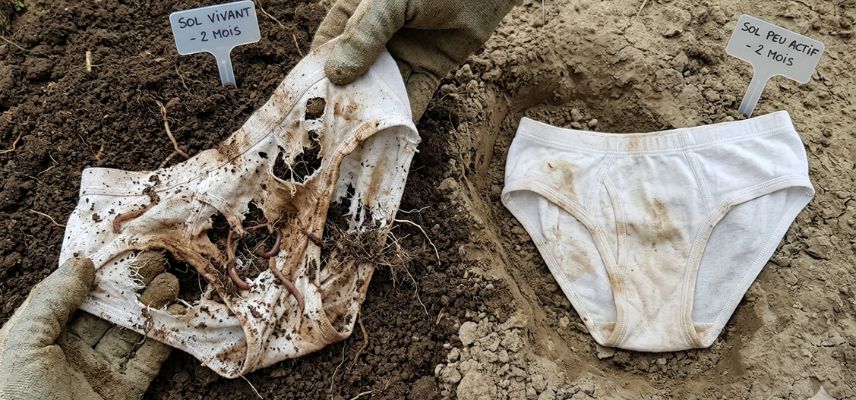
The underpants test always raises a smile, but it speaks volumes (AI-generated image)
Water and root dynamics
Good infiltration
Living soil has an open structure that manages water intelligently.
-
Sponge effect: during watering or rain, water must infiltrate immediately. It is then stored in micropores and bound to humus to remain available during dry periods.
-
Asphyxiation signal: if water stands on the surface (puddles) or runs off carrying soil with it, the soil is sealed. Without air, roots “drown” and aerobic life (bacteria and worms) declines.
Root system
-
In living soil, roots must be white (sign of health), highly branched and covered with tiny absorbent hairs. They descend vertically with no effort.
-
‘Plough pan’: if you observe roots that suddenly fork horizontally or tangle on the surface, they have encountered a physical obstacle (compacted soil). A root that struggles to descend indicates plant likely to be first to suffer from heat.
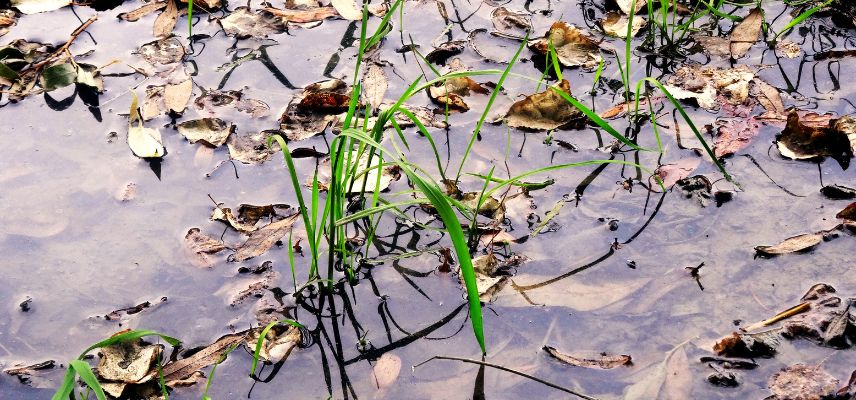
Splish, splash, splosh! If you need a boat to cross your garden, there’s probably a problem…
- Subscribe!
- Contents
This form is protected by reCAPTCHA - the Google Privacy Policy and Terms of Service apply.

































Comments