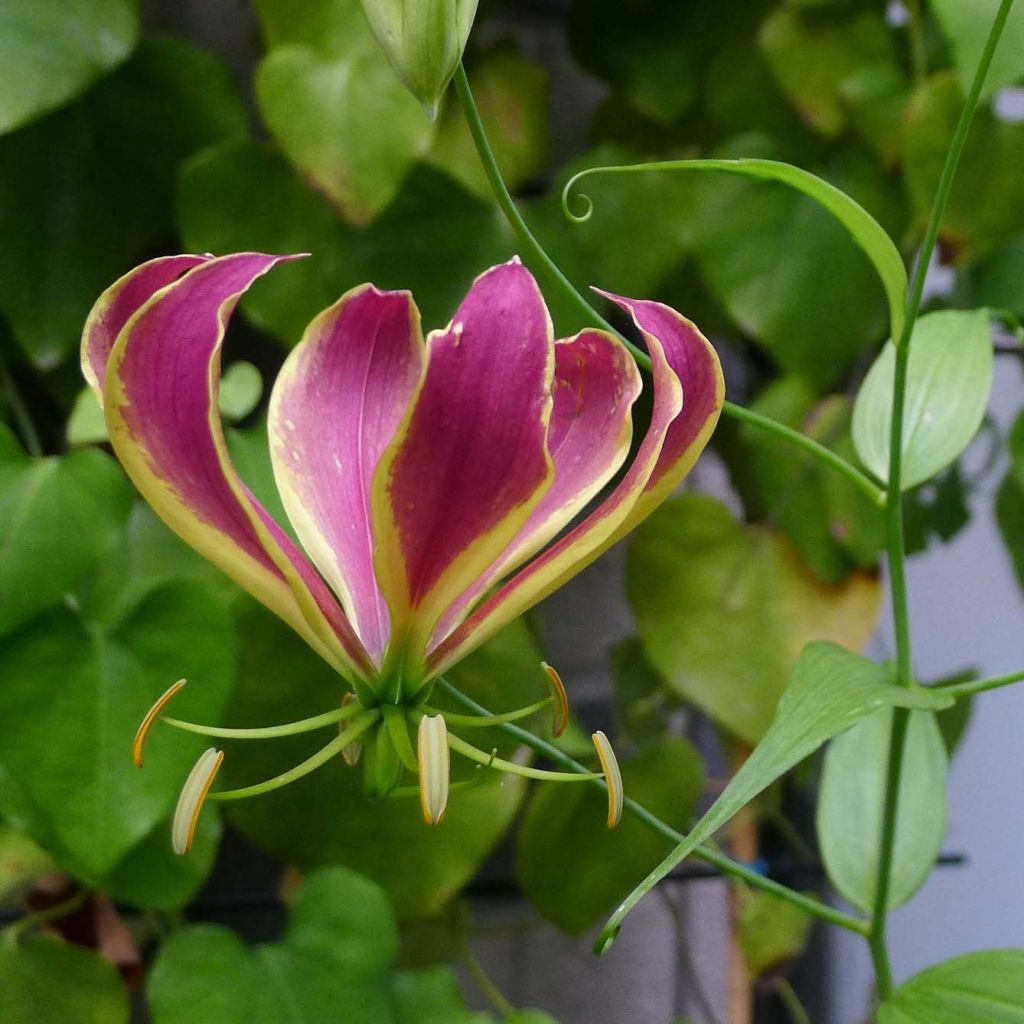
Gloriosa carsonii - Glory lily
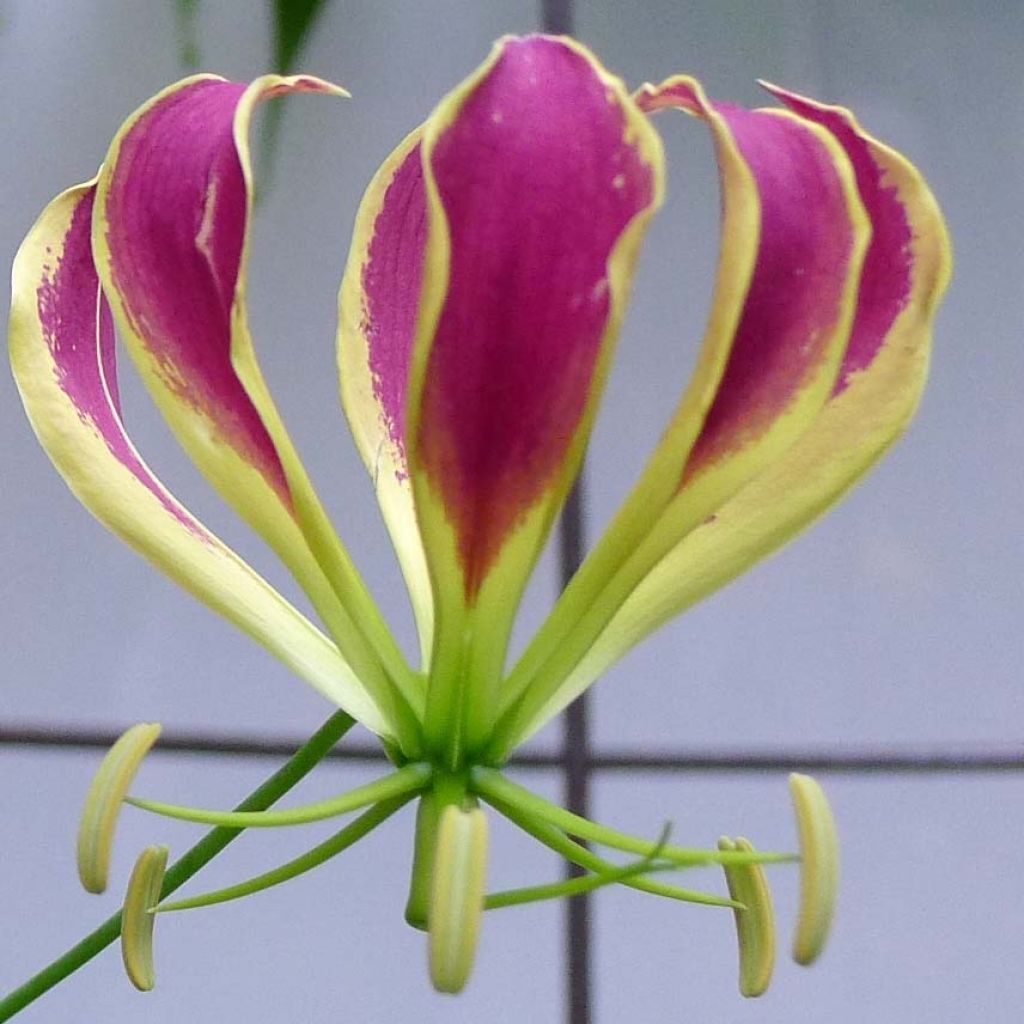
Gloriosa carsonii - Glory lily
Gloriosa carsonii - Glory lily
Gloriosa Carsonii
Glory Lily, Flame Lily
Hello, it's just like the first ones.
marie Joëlle, 08/10/2025
Back-to-school special offer!
Get €10 off for every €50 you spend! And get up to €40 off on a single order.
How does it work?
1. Shop your favourites
Add your favourite plants to your basket. For every €50 you spend (excluding delivery charges, store credit and the plastic-free option), you’ll receive a €10 voucher.
€50 spent = €10 voucher
€100 spent = €20 voucher
€150 spent = €30 voucher
€200 spent = €40 voucher
2. Place your order
Once your basket reaches one of the spending thresholds, place your order. You can even choose your delivery date!
3. Receive your voucher
As soon as your order has been shipped, you’ll receive an email containing your personal voucher code and its value.
4. Use it on your next order
Your voucher is valid for 90 days from the date you receive it. It can be used once only, on a new order worth at least the value of the voucher, excluding delivery charges.
Please note: Vouchers can be combined with other offers, but cannot be split or refunded.
This plant carries a 6 months recovery warranty
More information
We guarantee the quality of our plants for a full growing cycle, and will replace at our expense any plant that fails to recover under normal climatic and planting conditions.

Does this plant fit my garden?
Set up your Plantfit profile →
Description
Gloriosa Carsonii is a variety of Malabar Lily that is quite rare, with a contrasting two-tone flowering, purple bordered with yellow. This climbing tuberous plant lives up to its other name, Superb Malabar, which evokes the tropical splendours of this ancient African province. In summer, it produces strange flowers with a spider-like grace, with wavy petals that stand upright towards the sky. This exotic flowering stands out from its luxuriant foliage of long, thick, dark green and glossy leaves, further emphasizing its uniqueness. It requires a sunny exposure, fertile, moist, and well-drained soil. It is essential to keep Gloriosa dry during winter.
Gloriosa Carsonii belongs to the Lily family. The flower of the Gloriosa, the emblem of Mozambique, highlights its African origins, although it is also found naturally growing in the tropical forests of South India. This herbaceous climber develops from a fleshy and elongated, light-coloured tubercle in a brown skin. At one end, a round and pink bud develops, which will grow a very flexible twisting stem. It can reach 1.50 m (5ft) high if the conditions are met and completes its growth in one season. The flowers appear in early summer on 2-year-old bulbs and older, in the form of large flowers (8 to 10 cm (3 to 4in) long) reminiscent of lilies with tapered petals completely turned towards the sky with very wavy edges. The stamens and the base of the petals are bright green, and the corolla is a deep wine red bordered with bright yellow to cream yellow. The flowers are solitary, carried by long peduncles arising from the axils of the leaves. The foliage consists of large lanceolate dark green shiny leaves, with tapered ends that transform into tendrils allowing the plant to cling. The vegetation dries up in autumn, marking the plant's entry into dry dormancy.
The Glorious Carsonii Lily is primarily a conservatory plant, which is easily cultivated in a pot, in a cold greenhouse, or in a conservatory. It does not tolerate heated interiors well. It is possible to grow it in flower beds, in a sunny exposure, in moist but well-drained soil, as long as the tubers are dug up and overwintered in a dry place, for example, in sand. In this way, it can be grown with other climbing plants. The long-lasting flowers can be used for cut flowers.
Report an error about the product description
Gloriosa carsonii - Glory lily in pictures
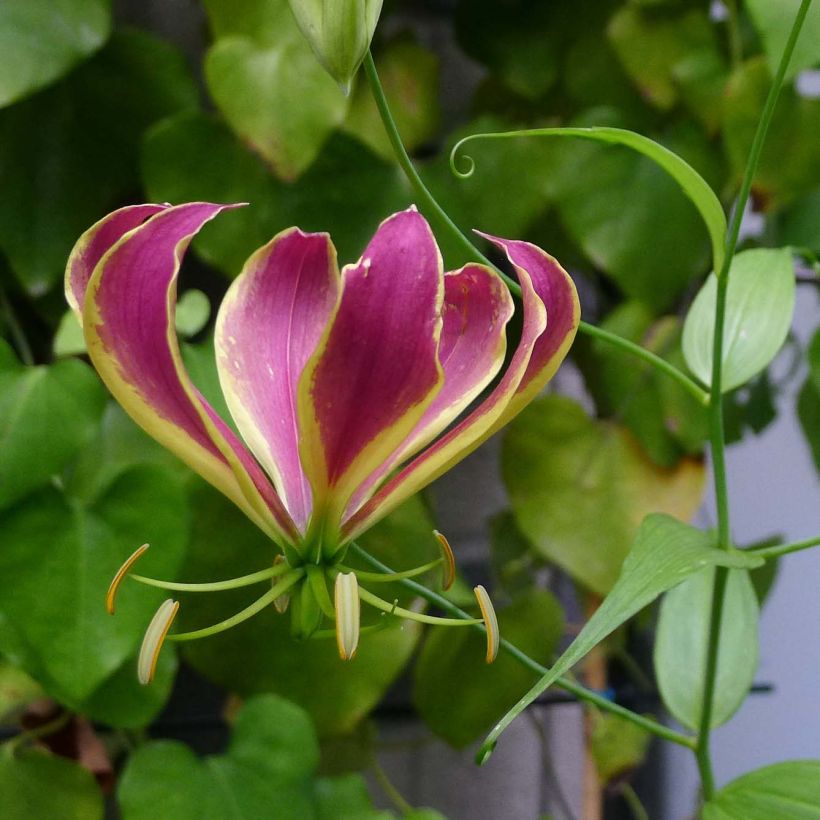
Plant habit
Flowering
Foliage
Safety measures
Botanical data
Gloriosa
Carsonii
Liliaceae
Glory Lily, Flame Lily
East Africa
ingestion
Cette plante est toxique si elle est ingérée volontairement ou involontairement.
Ne la plantez pas là où de jeunes enfants peuvent évoluer, et lavez-vous les mains après l'avoir manipulée.
Pensez à conserver l'étiquette de la plante, à la photographier ou à noter son nom, afin de faciliter le travail des professionnels de santé.
Davantage d'informations sur https://plantes-risque.info
Planting and care
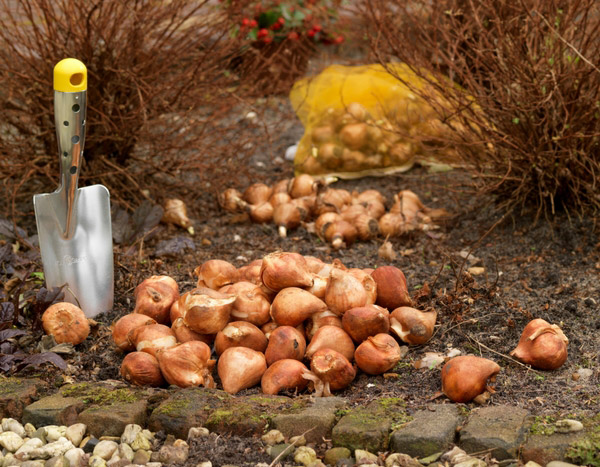
Gloriosa Carsonii is easy to grow in a pot: plant one bulb per 18 cm (7in) diameter pot, planting it horizontally, 5 cm (2in) underground, in a mix of potting soil and ordinary soil from late April or May. Only take the plant outside when spring frosts are no longer a concern. Choose a warm location, sheltered from strong winds, but not necessarily in direct sunlight all day. Water regularly and feed every 2 or 3 weeks. Provide support for the plant to cling to. You can put 2 tubers in one pot, head to toe, for a more abundant display. Removing faded flowers as they appear stimulates the emergence of new flowers. In warmer regions, you can grow this marvel in the garden, but if it freezes, carefully lift the bulb at the end of autumn, store it in a dry place, and replant it in the following spring.
Planting period
Intended location
Care
Planting & care advice
-

-
-
-

-
-

-
-
-
, onOrder confirmed
Reply from on Promesse de fleurs
Recently viewed products
Haven't found what you were looking for?
Hardiness is the lowest winter temperature a plant can endure without suffering serious damage or even dying. However, hardiness is affected by location (a sheltered area, such as a patio), protection (winter cover) and soil type (hardiness is improved by well-drained soil).
In temperate climates, pruning of spring-flowering shrubs (forsythia, spireas, etc.) should be done just after flowering.
Pruning of summer-flowering shrubs (Indian Lilac, Perovskia, etc.) can be done in winter or spring.
In cold regions as well as with frost-sensitive plants, avoid pruning too early when severe frosts may still occur.
The harvesting period indicated on our website applies to countries and regions in USDA zone 8 (France, England, Ireland, the Netherlands).
In colder areas (Scandinavia, Poland, Austria...) fruit and vegetable harvests are likely to be delayed by 3-4 weeks.
In warmer areas (Italy, Spain, Greece, etc.), harvesting will probably take place earlier, depending on weather conditions.
The sowing periods indicated on our website apply to countries and regions within USDA Zone 8 (France, UK, Ireland, Netherlands).
In colder areas (Scandinavia, Poland, Austria...), delay any outdoor sowing by 3-4 weeks, or sow under glass.
In warmer climes (Italy, Spain, Greece, etc.), bring outdoor sowing forward by a few weeks.
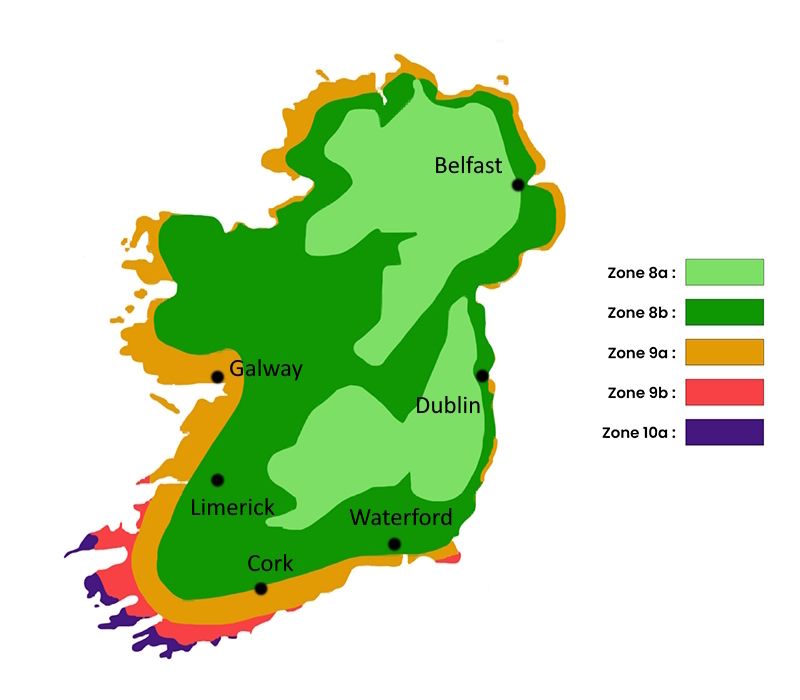
The planting period indicated on our website applies to regions in USDA Zone 9a (East Coast and Midlands: Dublin, Wexford, Waterford, Kilkenny, Portlaoise). It will vary depending on where you live:
- On the west coast and in the north-west (Galway, Limerick, Sligo, Donegal, Westport), delay planting by 1 to 2 weeks in spring and bring it forward by 1 to 2 weeks in autumn compared to the dates given, preferably choosing periods without strong winds.
- In the inland hills and plateaus (Wicklow Mountains, Macgillycuddy’s Reeks, Connemara, Killarney), it is best to plant in spring (April–May) or autumn (September–October), avoiding periods of waterlogged soil in winter and strong winds, which pose the main risk to newly planted trees in these areas.
The flowering period indicated on our website applies to regions in USDA Zone 9a, such as the East Coast and Midlands, including Dublin, Wexford, Waterford, Kilkenny and Portlaoise.
This will vary depending on where you live:
- On the west coast and in the northwest (Galway, Limerick, Sligo, Donegal and Westport), it will be delayed by one to two weeks compared to the given dates, due to stronger Atlantic winds and less spring sunshine.
- In the inland hills and plateaus (the Wicklow Mountains, the Macgillycuddy's Reeks, Connemara and Killarney), flowering will be delayed by two to three weeks. Flowering mainly occurs between May and July, with the limiting factors being less frost and more of the excessive humidity, strong winds and lack of sunshine that are characteristic of these areas.
Shipping country and language
Your country of residence may be:
Your country of residence is:
For a better user experience on our website, you can select:
Your shipping country:
-
 Austria
-
 Belgium
-
 Bosnia & Herzegovina
-
 Bulgaria
-
 Croatia
-
 Cyprus
-
 Czechia
-
 Denmark
-
 Estonia
-
 Finland
-
 France
-
 Germany
-
 Greece
-
 Hungary
-
 Iceland
-
 Ireland
-
 Italy
Italy
-
 Latvia
-
 Liechtenstein
-
 Lithuania
-
 Luxembourg
-
 Malta
Malta
-
 Netherlands
-
 Poland
-
 Portugal
-
 Romania
-
 Serbia
-
 Slovakia
-
 Slovenia
-
 Spain
Spain
-
 Sweden
-
 Switzerland
Language:
-
French
-
 English
-
Spanish
-
Italian
-
German
-
Portuguese
-
Dutch
-
Finnish
My Account
Hello
My wish lists
My cart
Log in / Register
Existing customer?
This form is protected by reCAPTCHA - the Google Privacy Policy and Terms of Service apply.
New customer?
Create an account to track your orders, access our customer service and, if you wish, make the most of our upcoming offers.