Pyrus communis Delbard d'Automne - Pear Tree
Pyrus communis Delbard d'Automne - Pear Tree
Pyrus communis Delbard d'Automne - Pear Tree
Pyrus communis Delbard d'Automne® Delsanne
Common Pear, European Pear
The pear tree I ordered wasn't in the parcel???
Viviane , 03/12/2025
Back-to-school special offer!
Get €10 off for every €50 you spend! And get up to €40 off on a single order.
How does it work?
1. Shop your favourites
Add your favourite plants to your basket. For every €50 you spend (excluding delivery charges, store credit and the plastic-free option), you’ll receive a €10 voucher.
€50 spent = €10 voucher
€100 spent = €20 voucher
€150 spent = €30 voucher
€200 spent = €40 voucher
2. Place your order
Once your basket reaches one of the spending thresholds, place your order. You can even choose your delivery date!
3. Receive your voucher
As soon as your order has been shipped, you’ll receive an email containing your personal voucher code and its value.
4. Use it on your next order
Your voucher is valid for 90 days from the date you receive it. It can be used once only, on a new order worth at least the value of the voucher, excluding delivery charges.
Please note: Vouchers can be combined with other offers, but cannot be split or refunded.
Home or relay delivery (depending on size and destination)
Important: You may be charged customs duties by your country’s customs authorities upon delivery.
Schedule delivery date,
and select date in basket
This plant carries a 12 months recovery warranty
More information
We guarantee the quality of our plants for a full growing cycle, and will replace at our expense any plant that fails to recover under normal climatic and planting conditions.

Description
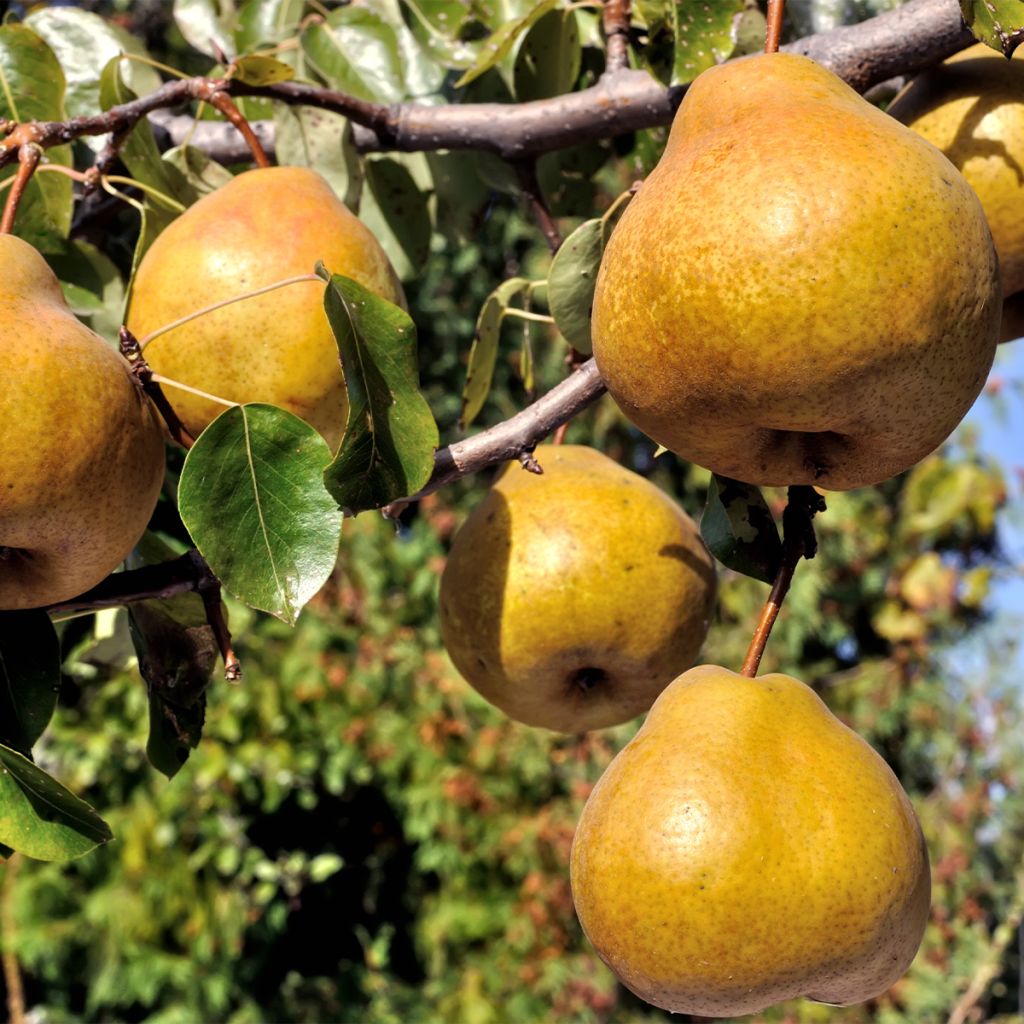
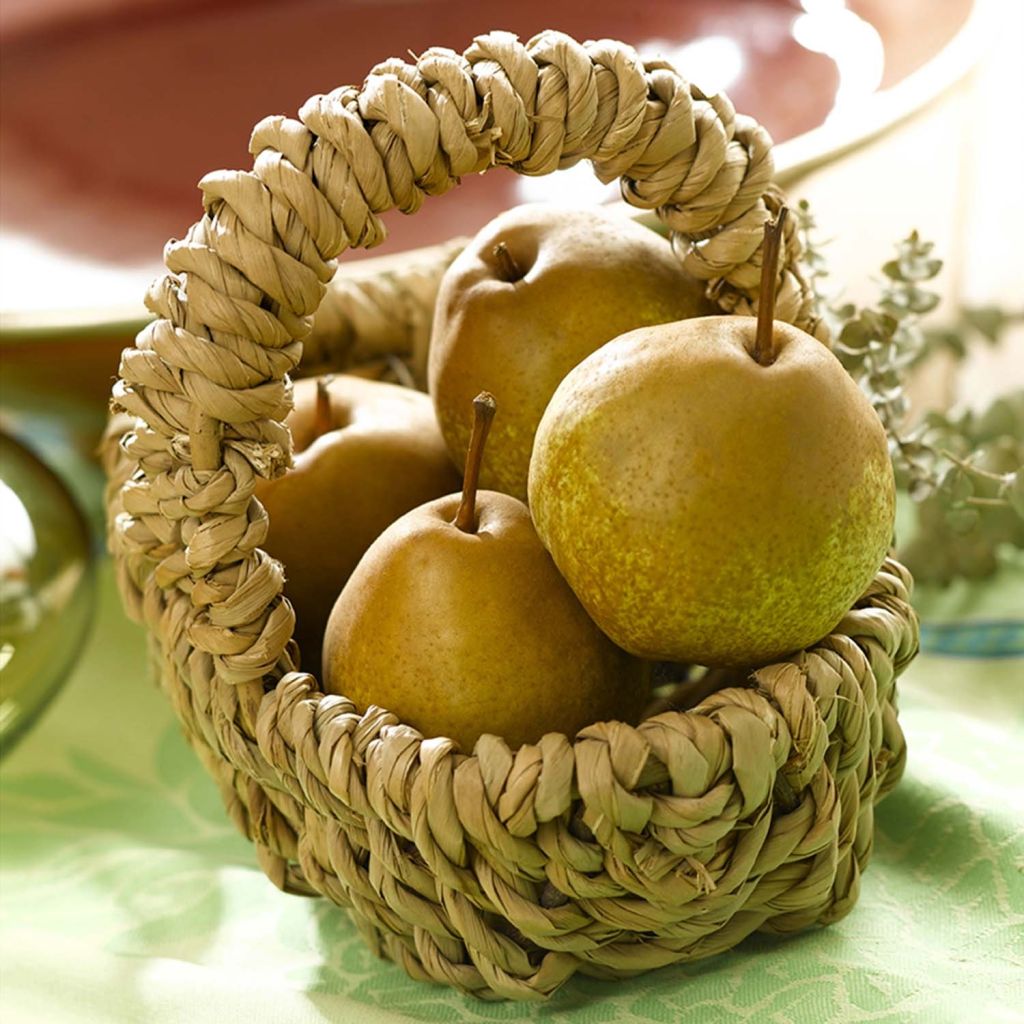
The Delbard Autumn Dwarf Pear Tree is a perfectly suited miniature tree for small gardens. Although its size is reduced, its fruits are not! It produces large brown-green pears weighing up to 250 grams. Ripe in October, they can be stored until November. Their delicate and juicy flesh is sweet, with a slight acidic note. This small tree will thrive in the sun, preferably sheltered from cold winter winds, in soil close to neutral, remaining moist, as it does not tolerate drought. Hardy, it can be grown almost anywhere.
The Common Pear (Pyrus communis) is a member of the large Rosaceae family, which not only includes the majority of our fruit trees (Apple, Apricot, Cherry, Plum...) but also small fruits (strawberry, blackberry, raspberry...) and, of course, many ornamental genera, shrubs (Cinquefoil, Firethorn, Photinia, Serviceberry, Ninebark...) or trees (Flowering Apple and Cherry, Hawthorn...) and of course the queen of flowers, the Rose! The Common Pear is a tree native to temperate regions of Europe and Western Asia. This species, appreciated for its delicious fruits, has given rise to thousands of cultivars, and more recently, classic varieties have even been developed into dwarf varieties, such as Belle Hélène. The Georges Delbard Nurseries, continuing the work of their creator, regularly bring dwarf fruit trees to the market, which are well adapted to the size of gardens in our time.
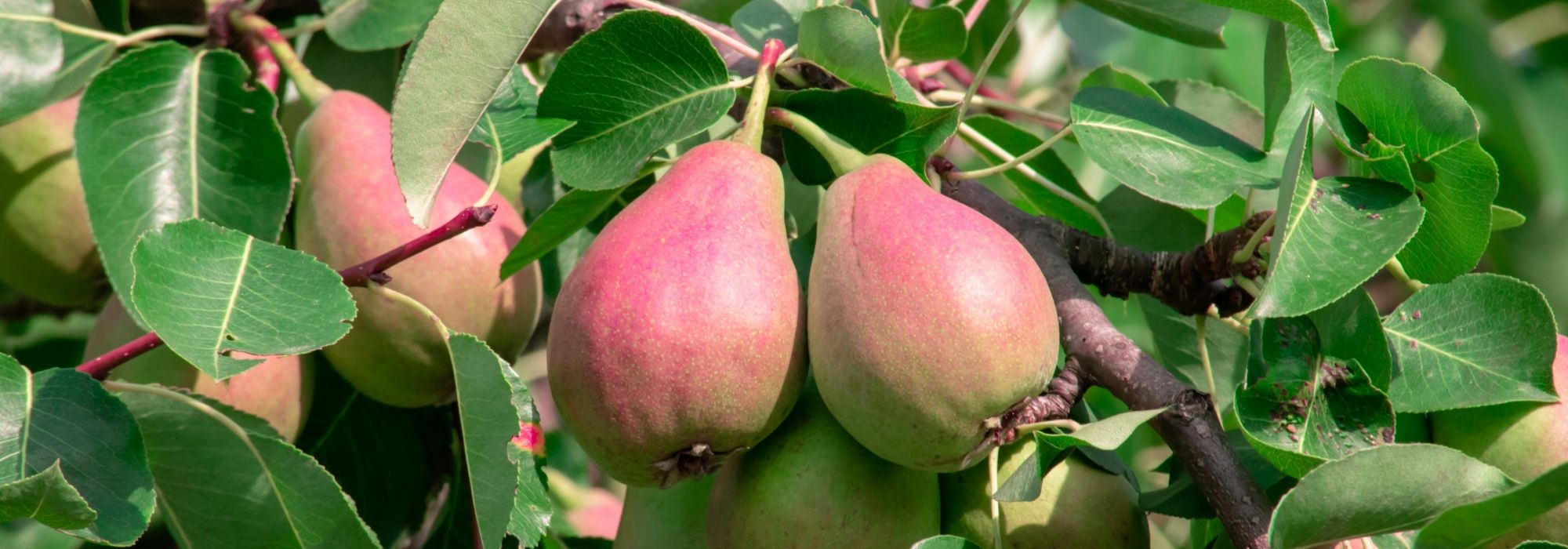
Delbard D'Automne is thus an exciting creation, thanks to its compact size that does not prevent it from producing large, tasty fruits. This hybrid results from cross-breeding between Super Comice Delbard, a variety from the same breeder, and Passe Crassane, an old variety dating back to the mid-19th century. It forms a small tree about 1.50 m (5ft) tall or slightly taller, but annual pruning can easily control its growth. This means that even the smallest garden can accommodate it... In April, it blooms with white corymbs that stand out well against the bright green foliage, which is slightly dark. This flowering requires cross-pollination to produce fruits, as this tree is not self-fertile. Therefore, another variety should be planted nearby, such as Conference, Doyenné du Comice or Williams, to obtain fruits. Under these conditions, Delbard Autumn produces regularly, without alternating from year to year, and its fruiting is quite fast. The pears can be consumed fresh, in syrup, in pastries, in jams and compotes, and can be used to prepare alcoholic beverages.
Dwarf fruit trees are a blessing for small gardens, and it is now possible to create an orchard. You can indulge yourself with many miniature species, such as the Sylvia Columnar Cherry Tree or the Garden Beauty Dwarf Nectarine Tree with its magnificent red flowering, worthy of the most beautiful ornamental trees. Also, with a lovely pink flowering, the Crimson Bonfire Dwarf Peach Tree will give you large, velvety peaches, and if you like plums, go for Goldust, a variety with very fragrant yellow fruits.
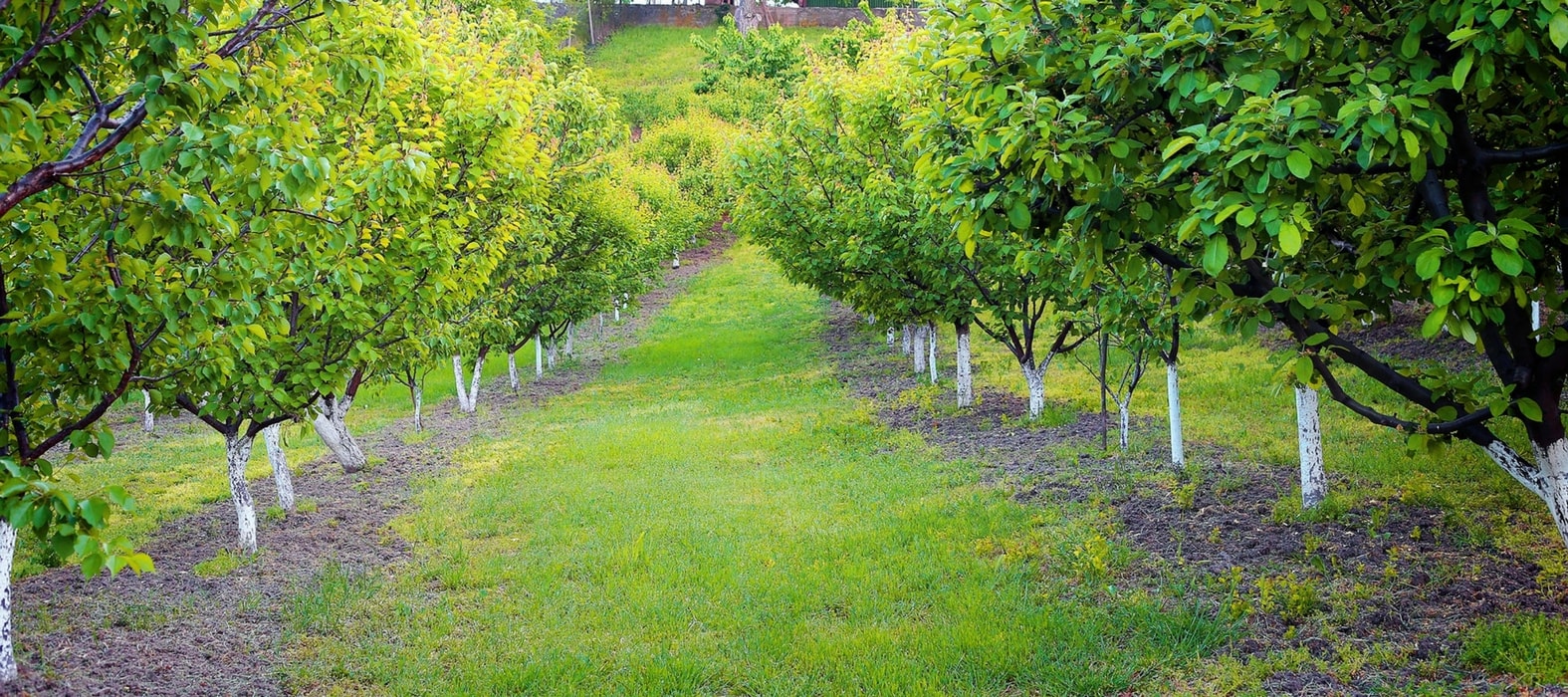
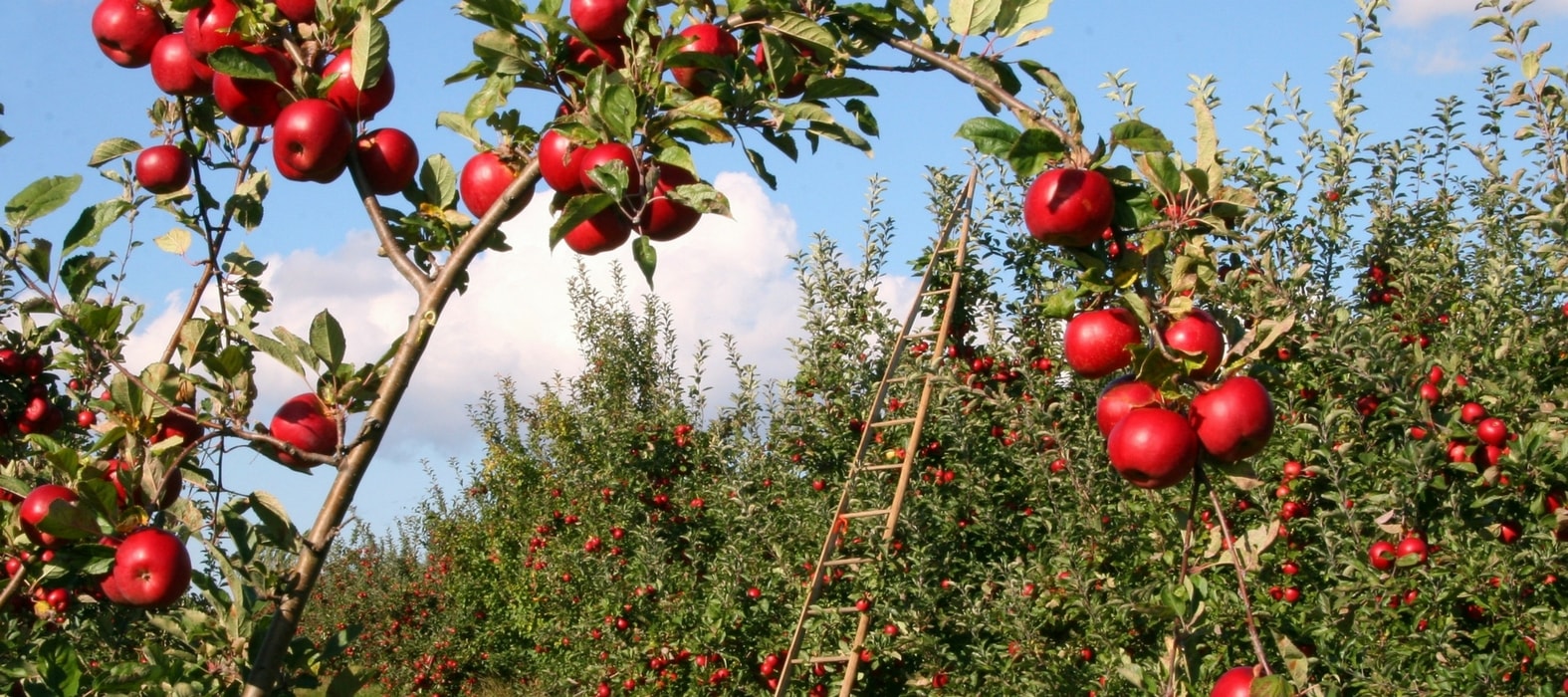
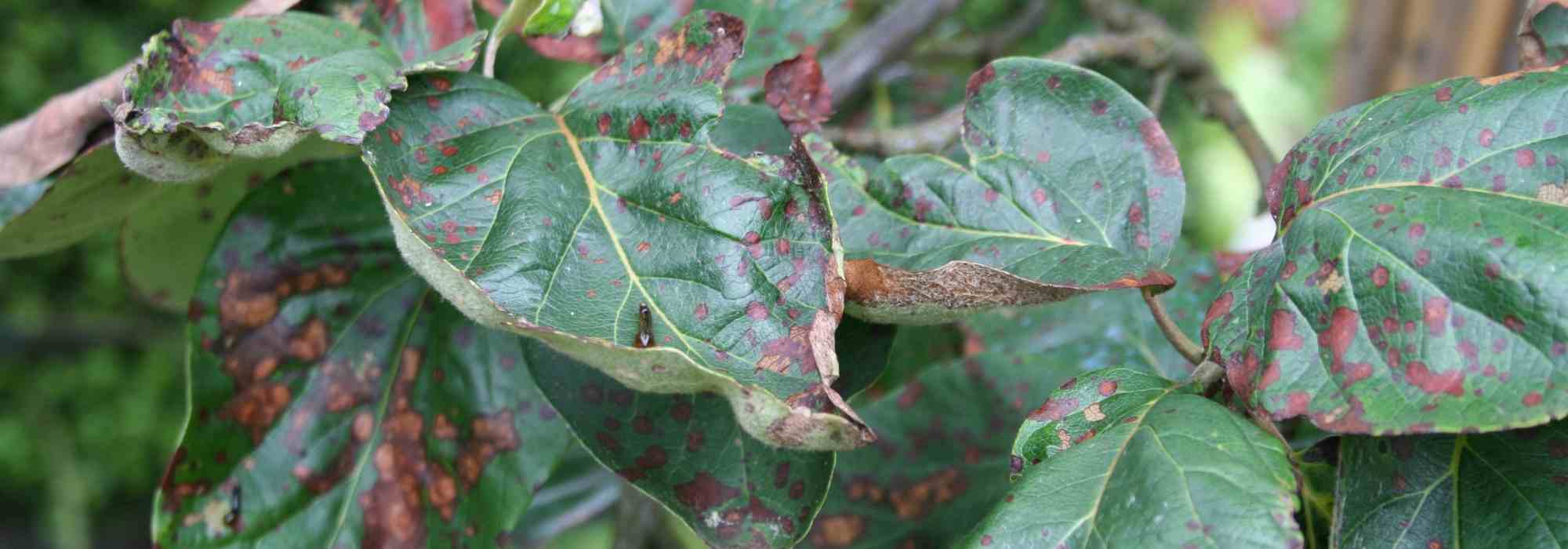
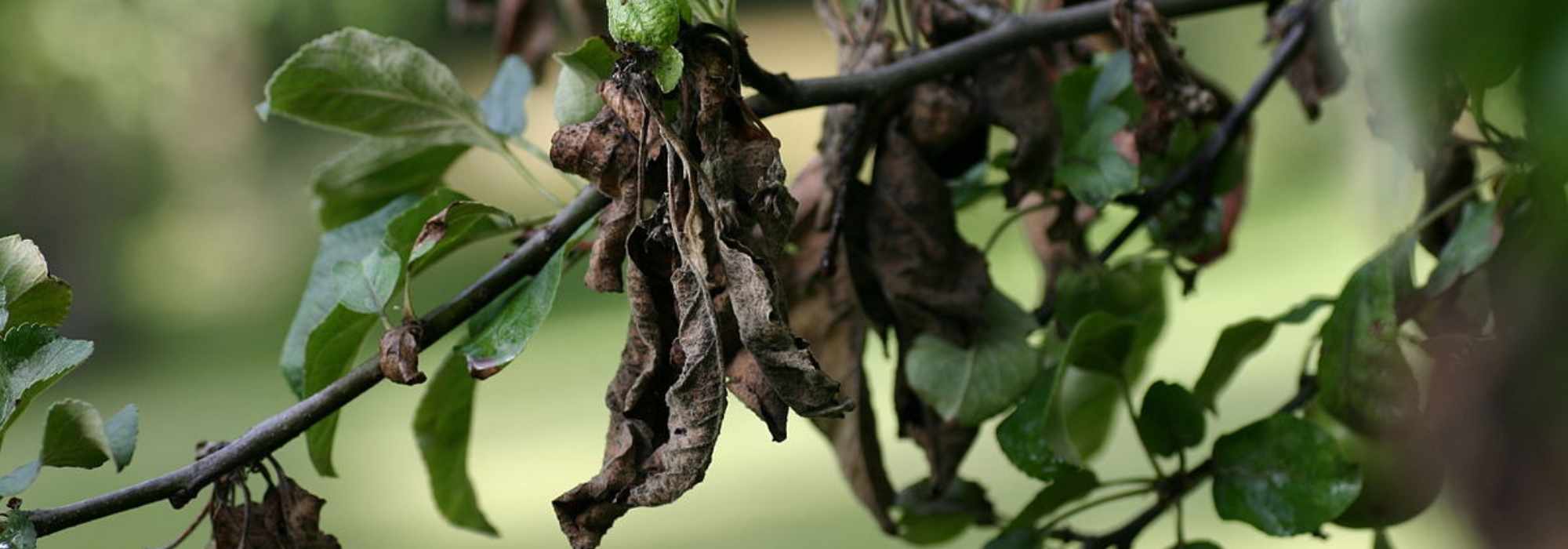
Pyrus communis Delbard d'Automne - Pear Tree in pictures
Plant habit
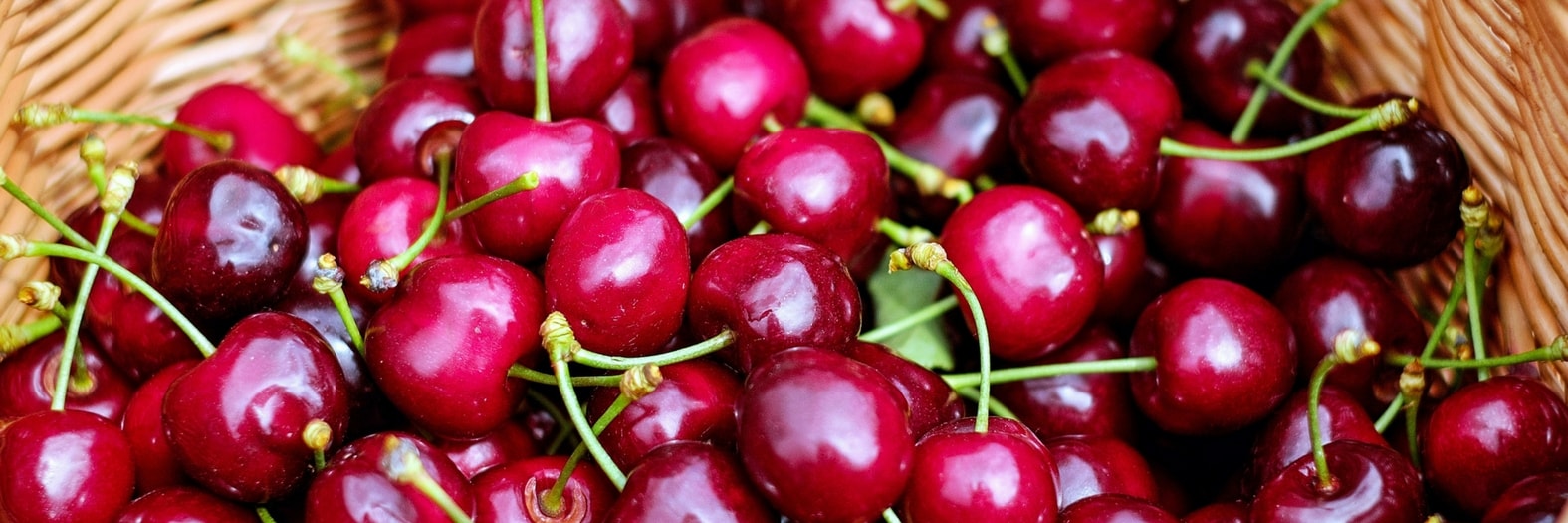
Fruit
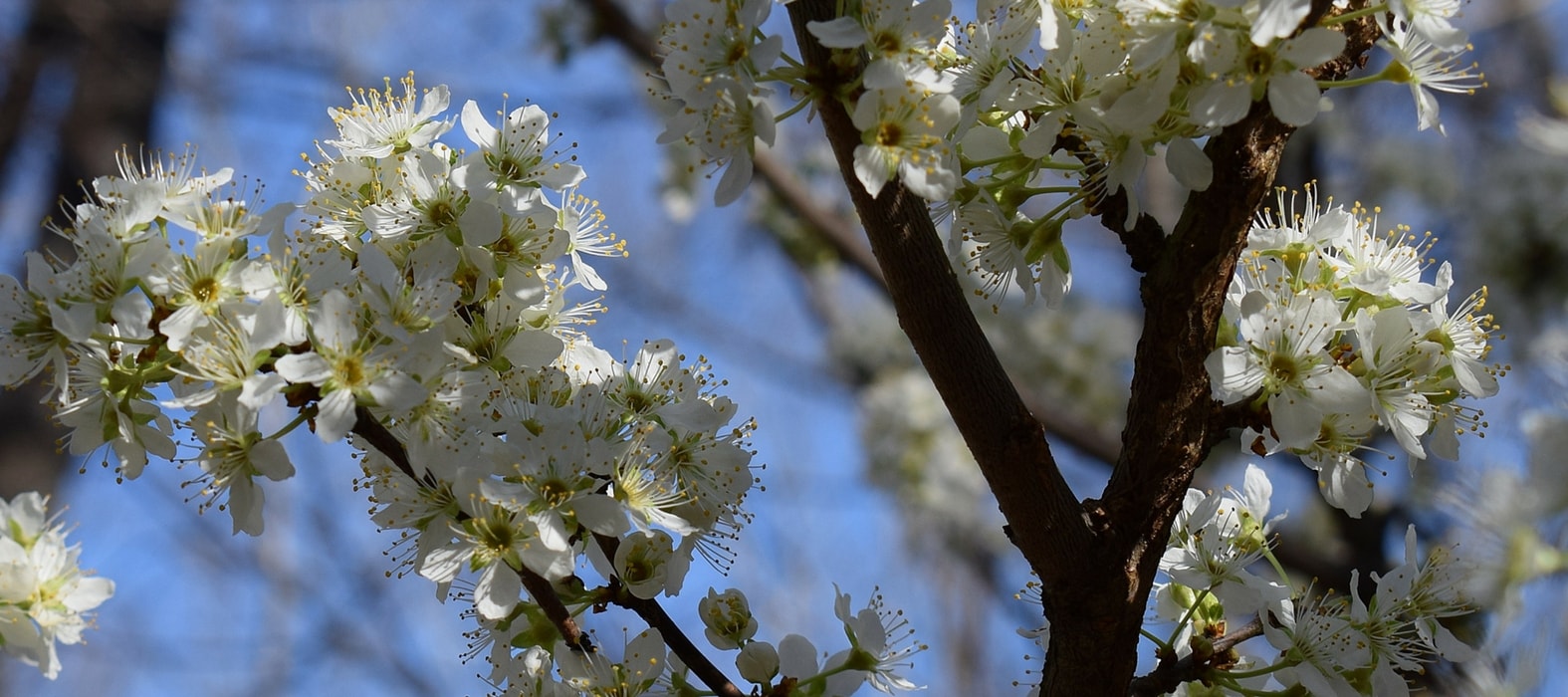
Flowering
Foliage
Planting and care
Plant the dwarf Pear tree Delbard Autumn in a sunny location, in neutral, moist soil, but without excess. This tree is relatively tolerant of soil type, but does not appreciate excessive limestone or overly acidic soil. It is also sensitive to drought. Dig a planting hole twice as wide and deep as the pot. Soak the tree with its pot in a basin of water for fifteen minutes, to moisten the entire root ball through capillary action. If your soil is poor, add compost and place the tree in the hole, filling it with a mixture of soil and compost. The top of the root ball should be level with the natural soil surface (do not plant too deep!). Water thoroughly so that the soil fills the gaps between the roots and eliminates air pockets. The Pear tree has a tap root system and quickly establishes a strong anchor in the soil.
Planting period
Intended location
Care
Planting & care advice
-
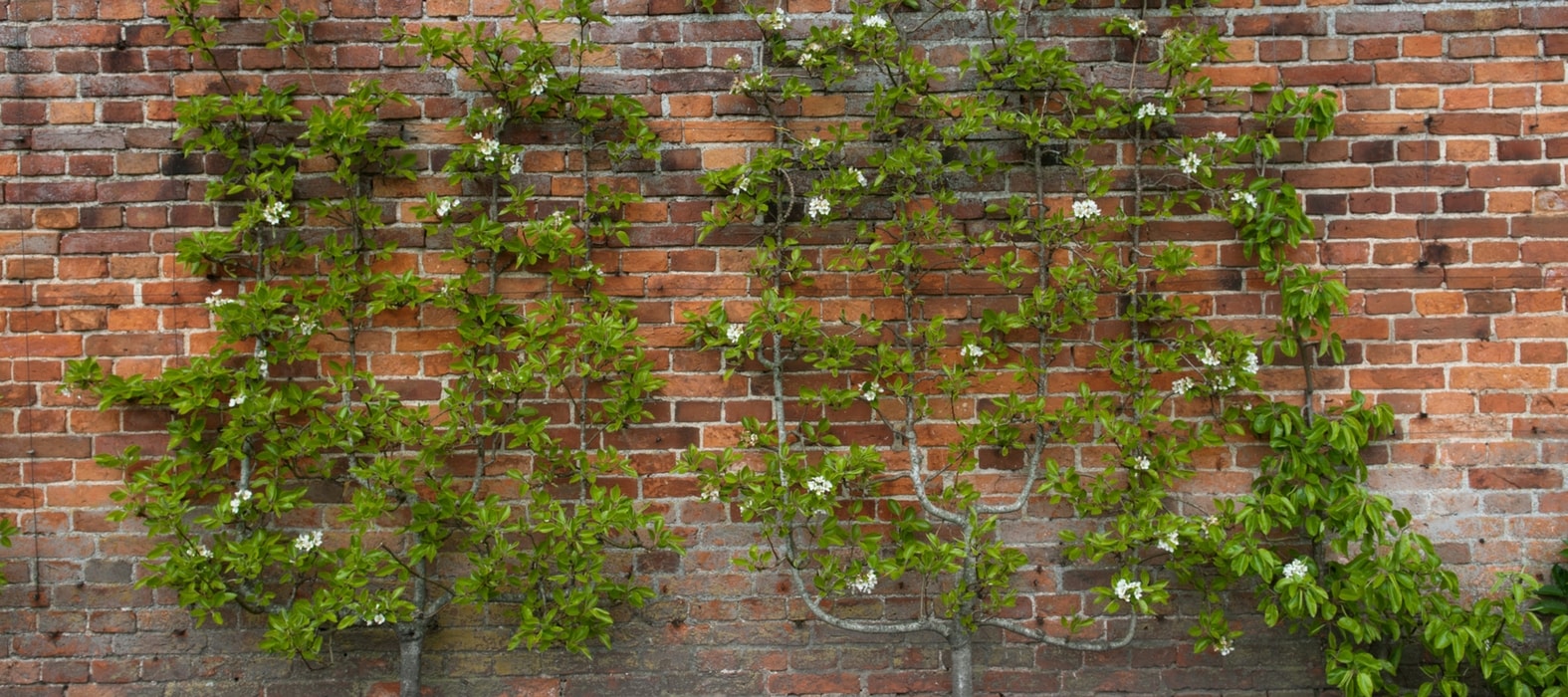
-
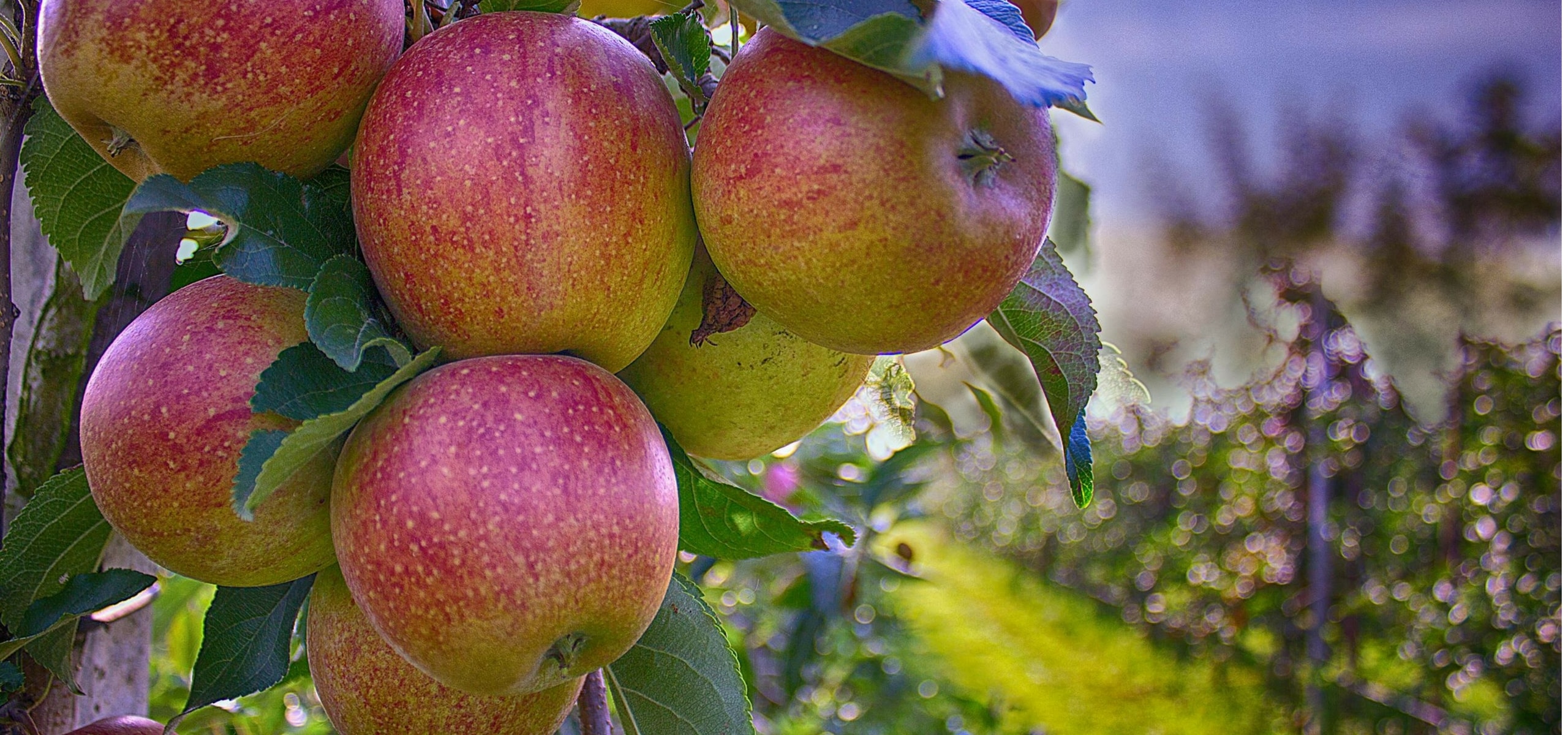
-
-
-
-
-
-
-
, onOrder confirmed
Reply from on Promesse de fleurs
Recently viewed products
Haven't found what you were looking for?
Hardiness is the lowest winter temperature a plant can endure without suffering serious damage or even dying. However, hardiness is affected by location (a sheltered area, such as a patio), protection (winter cover) and soil type (hardiness is improved by well-drained soil).
In temperate climates, pruning of spring-flowering shrubs (forsythia, spireas, etc.) should be done just after flowering.
Pruning of summer-flowering shrubs (Indian Lilac, Perovskia, etc.) can be done in winter or spring.
In cold regions as well as with frost-sensitive plants, avoid pruning too early when severe frosts may still occur.
The harvesting period indicated on our website applies to countries and regions in USDA zone 8 (France, England, Ireland, the Netherlands).
In colder areas (Scandinavia, Poland, Austria...) fruit and vegetable harvests are likely to be delayed by 3-4 weeks.
In warmer areas (Italy, Spain, Greece, etc.), harvesting will probably take place earlier, depending on weather conditions.
The sowing periods indicated on our website apply to countries and regions within USDA Zone 8 (France, UK, Ireland, Netherlands).
In colder areas (Scandinavia, Poland, Austria...), delay any outdoor sowing by 3-4 weeks, or sow under glass.
In warmer climes (Italy, Spain, Greece, etc.), bring outdoor sowing forward by a few weeks.
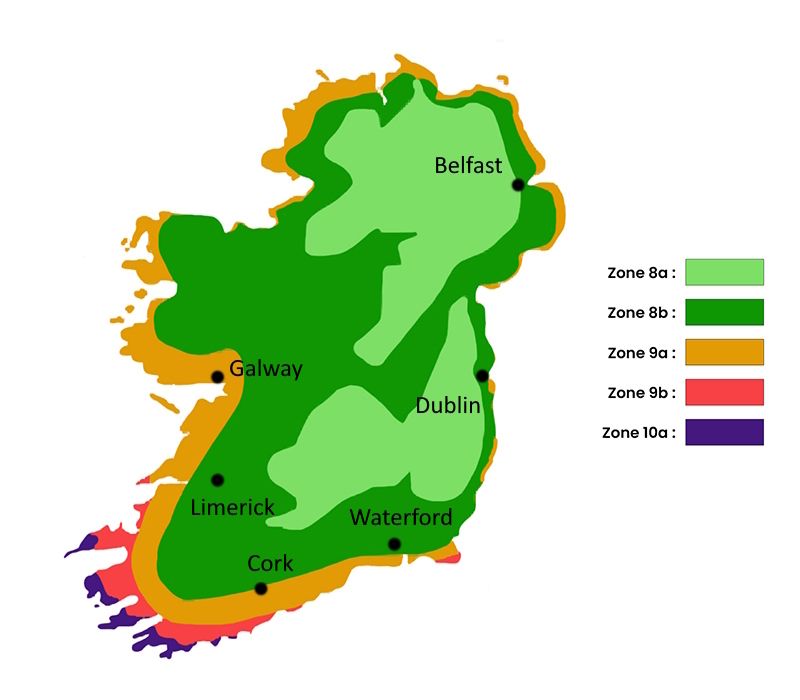
The planting period indicated on our website applies to regions in USDA Zone 9a (East Coast and Midlands: Dublin, Wexford, Waterford, Kilkenny, Portlaoise). It will vary depending on where you live:
- On the west coast and in the north-west (Galway, Limerick, Sligo, Donegal, Westport), delay planting by 1 to 2 weeks in spring and bring it forward by 1 to 2 weeks in autumn compared to the dates given, preferably choosing periods without strong winds.
- In the inland hills and plateaus (Wicklow Mountains, Macgillycuddy’s Reeks, Connemara, Killarney), it is best to plant in spring (April–May) or autumn (September–October), avoiding periods of waterlogged soil in winter and strong winds, which pose the main risk to newly planted trees in these areas.
The flowering period indicated on our website applies to regions in USDA Zone 9a, such as the East Coast and Midlands, including Dublin, Wexford, Waterford, Kilkenny and Portlaoise.
This will vary depending on where you live:
- On the west coast and in the northwest (Galway, Limerick, Sligo, Donegal and Westport), it will be delayed by one to two weeks compared to the given dates, due to stronger Atlantic winds and less spring sunshine.
- In the inland hills and plateaus (the Wicklow Mountains, the Macgillycuddy's Reeks, Connemara and Killarney), flowering will be delayed by two to three weeks. Flowering mainly occurs between May and July, with the limiting factors being less frost and more of the excessive humidity, strong winds and lack of sunshine that are characteristic of these areas.
Shipping country and language
Your country of residence may be:
Your country of residence is:
For a better user experience on our website, you can select:
Your shipping country:
-
 Austria
-
 Belgium
-
 Bosnia & Herzegovina
-
 Bulgaria
-
 Croatia
-
 Cyprus
-
 Czechia
-
 Denmark
-
 Estonia
-
 Finland
-
 France
-
 Germany
-
 Greece
-
 Hungary
-
 Iceland
-
 Ireland
-
 Italy
Italy
-
 Latvia
-
 Liechtenstein
-
 Lithuania
-
 Luxembourg
-
 Malta
Malta
-
 Netherlands
-
 Poland
-
 Portugal
-
 Romania
-
 Serbia
-
 Slovakia
-
 Slovenia
-
 Spain
Spain
-
 Sweden
-
 Switzerland
Language:
-
French
-
 English
-
Spanish
-
Italian
-
German
-
Portuguese
-
Dutch
-
Finnish
My Account
Hello
My wish lists
My cart
Log in / Register
Existing customer?
This form is protected by reCAPTCHA - the Google Privacy Policy and Terms of Service apply.
New customer?
Create an account to track your orders, access our customer service and, if you wish, make the most of our upcoming offers.