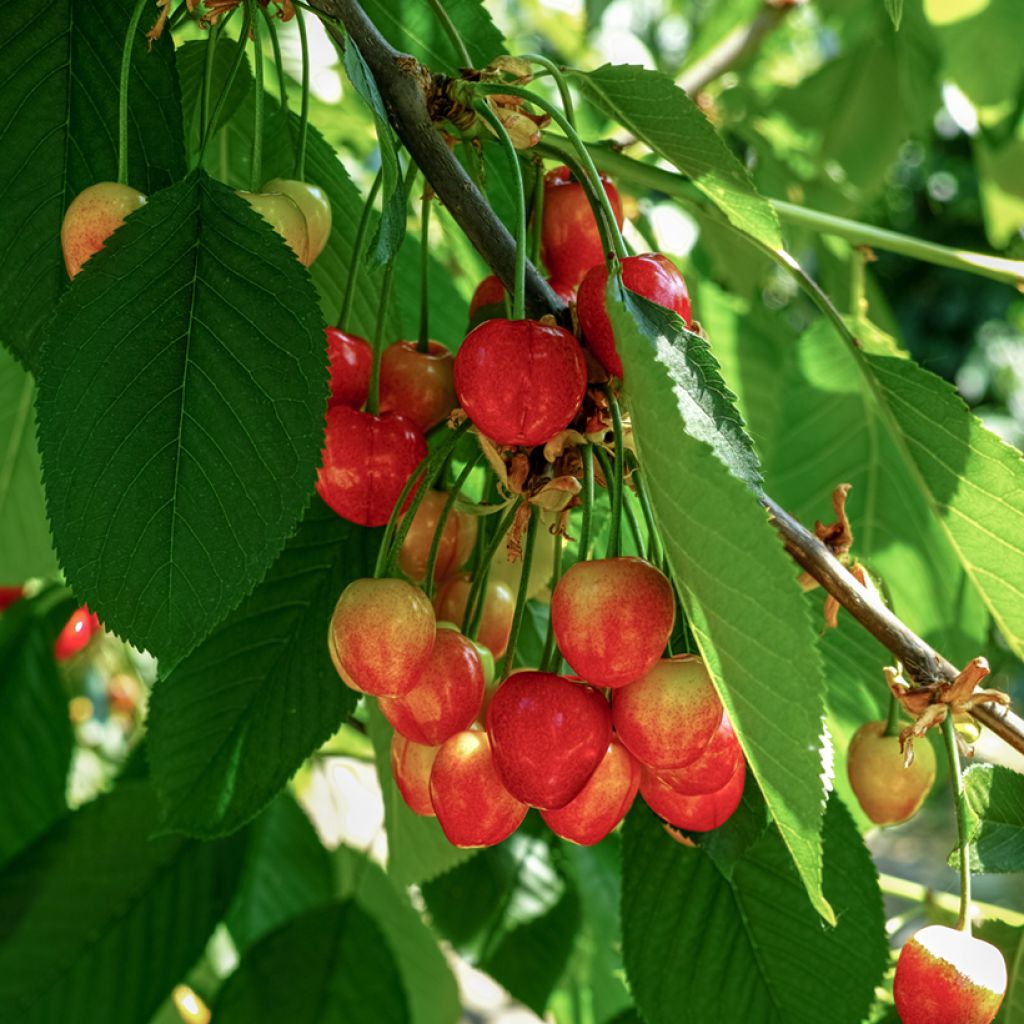
Prunus avium Büttners Rote Knorpelkirsche- Cherry Tree
Prunus avium Büttners Rote Knorpelkirsche- Cherry Tree
Prunus avium 'POZNAŃSKA' Büttners Rote Knorpelkirsche
Wild Cherry, Sweet Cherry
Back-to-school special offer!
Get €10 off for every €50 you spend! And get up to €40 off on a single order.
How does it work?
1. Shop your favourites
Add your favourite plants to your basket. For every €50 you spend (excluding delivery charges, store credit and the plastic-free option), you’ll receive a €10 voucher.
€50 spent = €10 voucher
€100 spent = €20 voucher
€150 spent = €30 voucher
€200 spent = €40 voucher
2. Place your order
Once your basket reaches one of the spending thresholds, place your order. You can even choose your delivery date!
3. Receive your voucher
As soon as your order has been shipped, you’ll receive an email containing your personal voucher code and its value.
4. Use it on your next order
Your voucher is valid for 90 days from the date you receive it. It can be used once only, on a new order worth at least the value of the voucher, excluding delivery charges.
Please note: Vouchers can be combined with other offers, but cannot be split or refunded.
Why not try an alternative variety in stock?
View all →
Available in 0 sizes
Available in 0 sizes
Available in 2 sizes
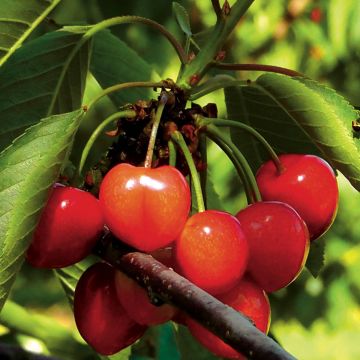
Available in 4 sizes
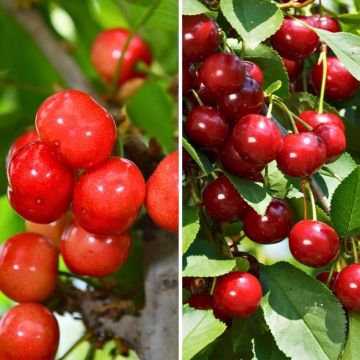
Available in 0 sizes
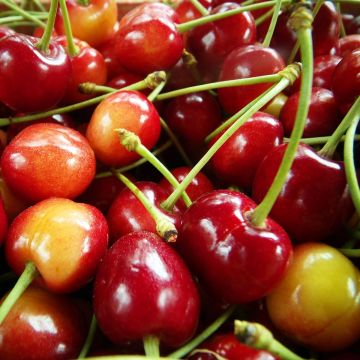
Available in 4 sizes
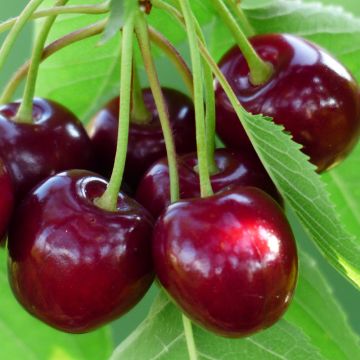
Available in 6 sizes
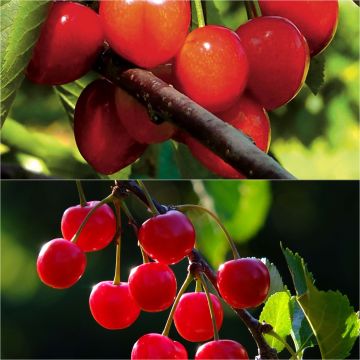
Available in 0 sizes
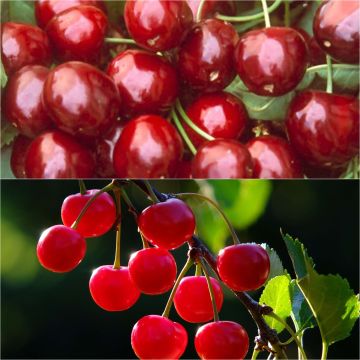
Available in 0 sizes
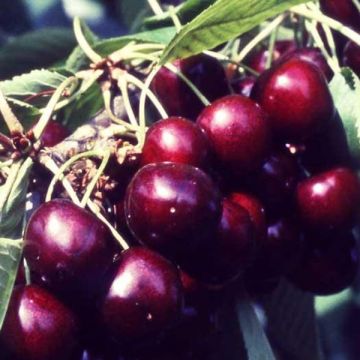
Available in 1 sizes
This plant carries a 12 months recovery warranty
More information
We guarantee the quality of our plants for a full growing cycle, and will replace at our expense any plant that fails to recover under normal climatic and planting conditions.
Description
Prunus avium 'Büttners Rote Knorpelkirsche' is a historical variety of Cherry tree appreciated for over two centuries for its sweet cherries with a surprising watermelon aroma. Forming a medium-sized tree with a pyramidal habit, this Cherry tree is easy to grow, thriving in slightly moist soils in sunny locations. Not self-fertile, it requires the presence of another variety to pollinate it.
The Cherry tree belongs to the extensive Rosaceae family, rich in about 5000 species, including most temperate climate fruit trees (Apple tree, Apricot tree, Plum tree...), numerous ornamental plants, and wild plants from the countryside and forests. Prunus avium, the Latin name for the Wild Cherry tree or Gean, is likely native to Anatolia and the Caucasus, and was early on cultivated and spread by humans. In nature, it forms a large tree easily exceeding 20 m in height, with rapid growth (15 m in 20 years). it is found in the woods of plains, hills, and even mountainous areas, preferring fertile and moist soils.
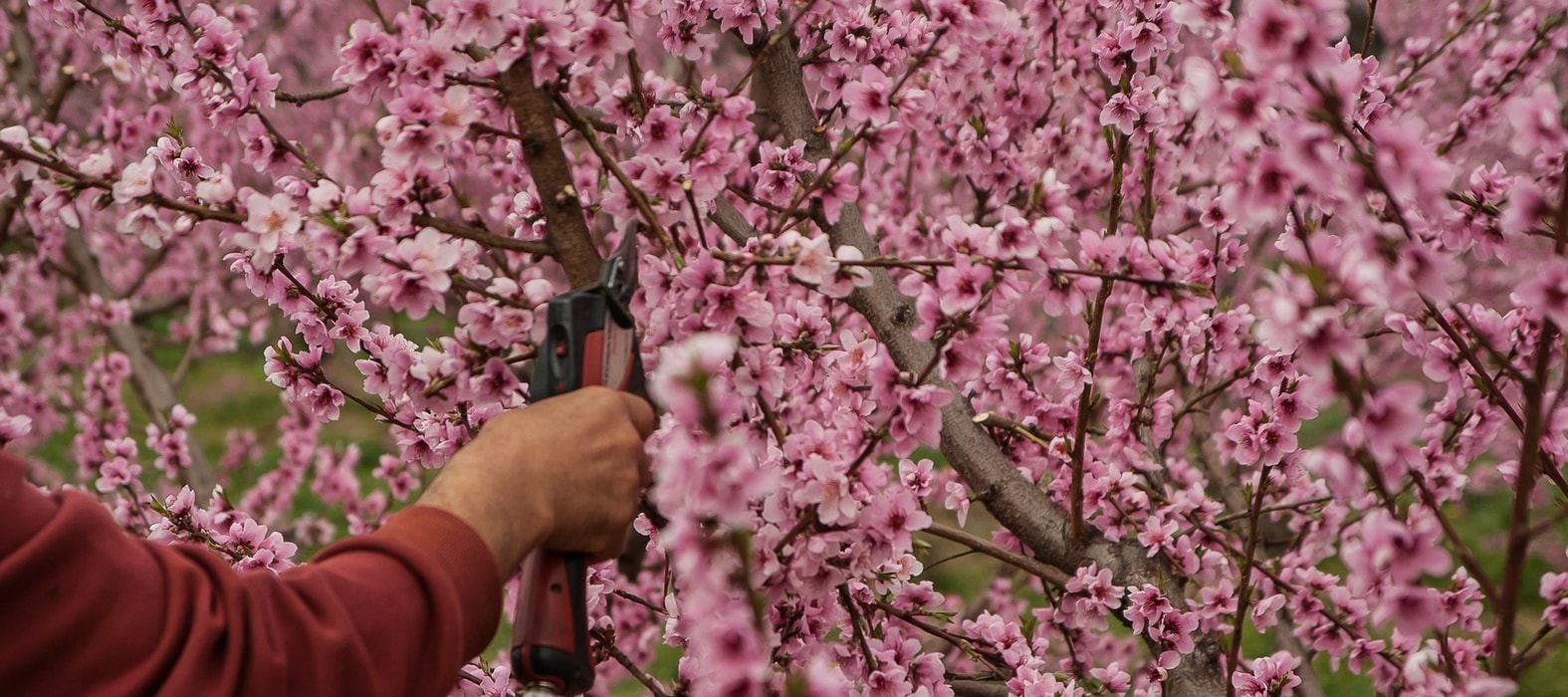
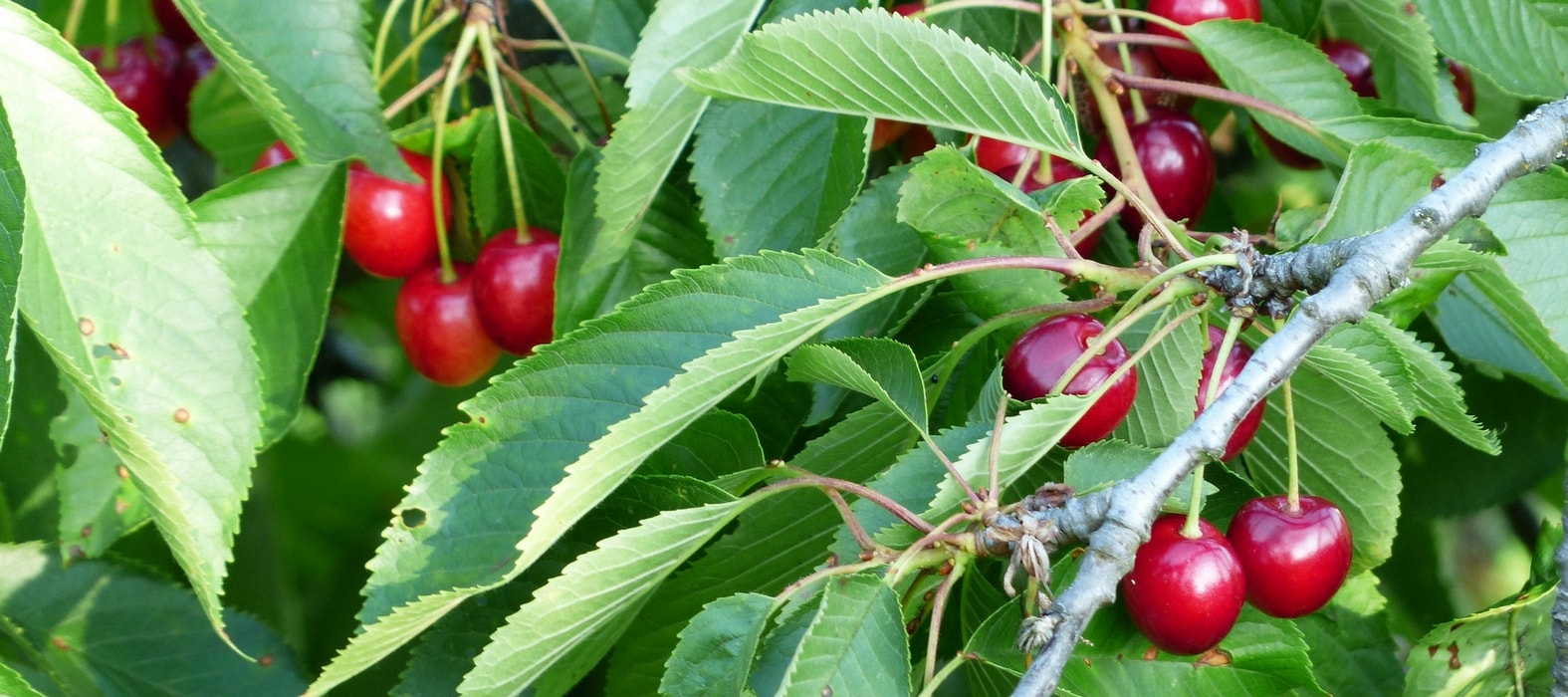
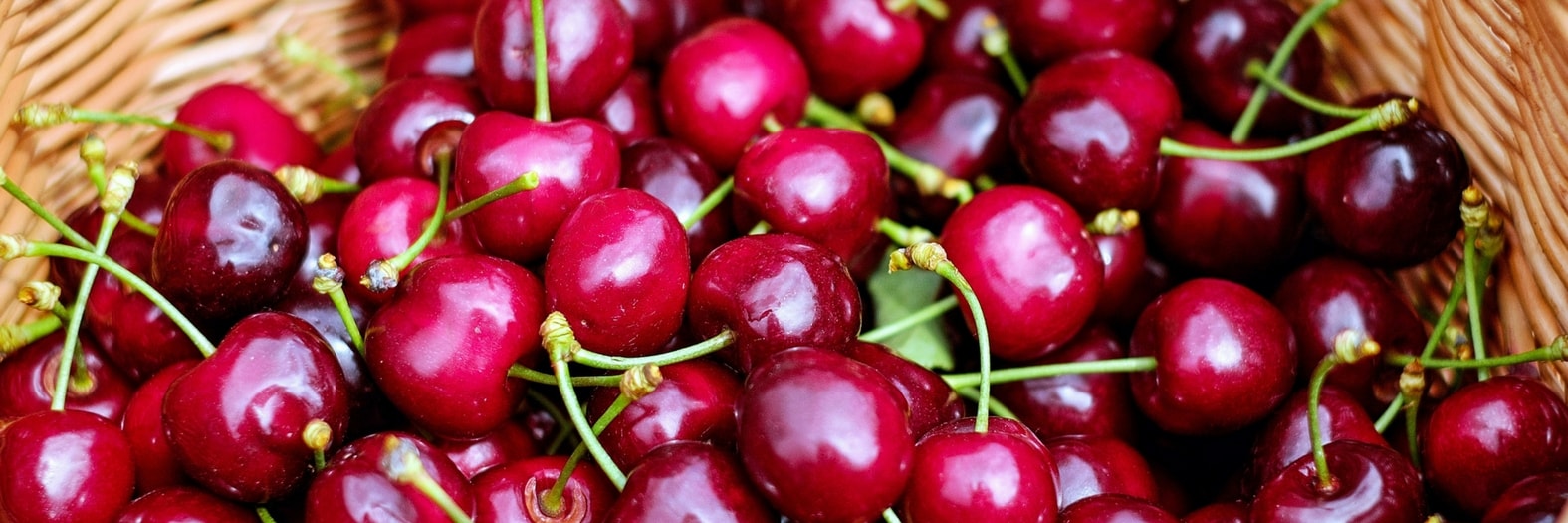
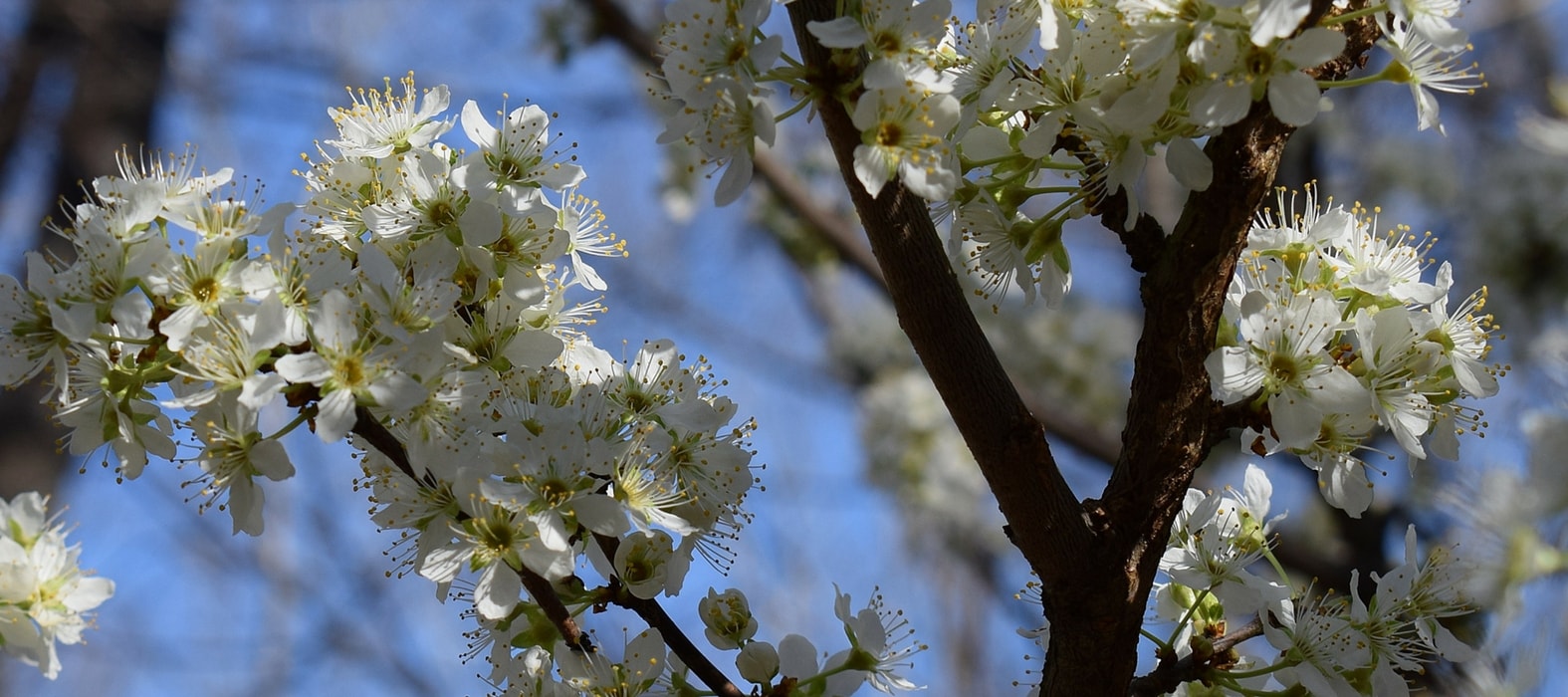
'Büttners Rote Knorpelkirsche' is a very old variety, discovered in 1795 in northern Germany near the town of Halle by Carl Gottlieb Büttner, hence its name that can be translated as Büttner's red cartilage cherry. In the early 2000s, it was renamed 'Altenburger Melonenkirsche', literally "Altenburg melon cherry" (a town in eastern Germany), due to the particularly unique taste of its fruits. This Cherry tree forms a medium-sized tree, reaching 5 to 6 m in height and 4 to 5 m in spread, with relatively fast growth (40 to 60 cm per year). It has a conical to pyramidal habit, with a slightly rounded crown at the top. Its foliage is typical, composed of elongated elliptical, finely toothed, medium green leaves. In April or May, in colder regions, it produces beautiful white, simple flowers with rounded petals incapable of self-pollination (self-sterile). To achieve cross-fertilisation, and thus eventually a harvest, it is necessary to plant a nearby pollinating variety, such as 'Hedelfingen', 'Regina', 'Kordia', 'Stella', 'Van', 'Schneiders späte Knorpelkirsche', 'Große schwarze Knorpelkirsche', 'Kassins Frühe', or 'Burlat'. Once pollinated by the pollen of the other variety, the flowers develop into large yellow fruits that redden on their sun-exposed side. the large, heart-shaped cherries are shiny and carried by 5 cm peduncles. They can be harvested from late June (depending on the climatic zone), their moderately juicy yellow flesh is very sweet, with a slight hint of acidity, and notably with a small watermelon aroma that sets it apart from other varieties. The flesh adheres fairly firmly to the stone, but the almost colourless juice allows it to be enjoyed without risk of staining. Excellent fresh, it can also be preserved. The production is abundant and regular year after year, explaining the success of this variety throughout the ages.
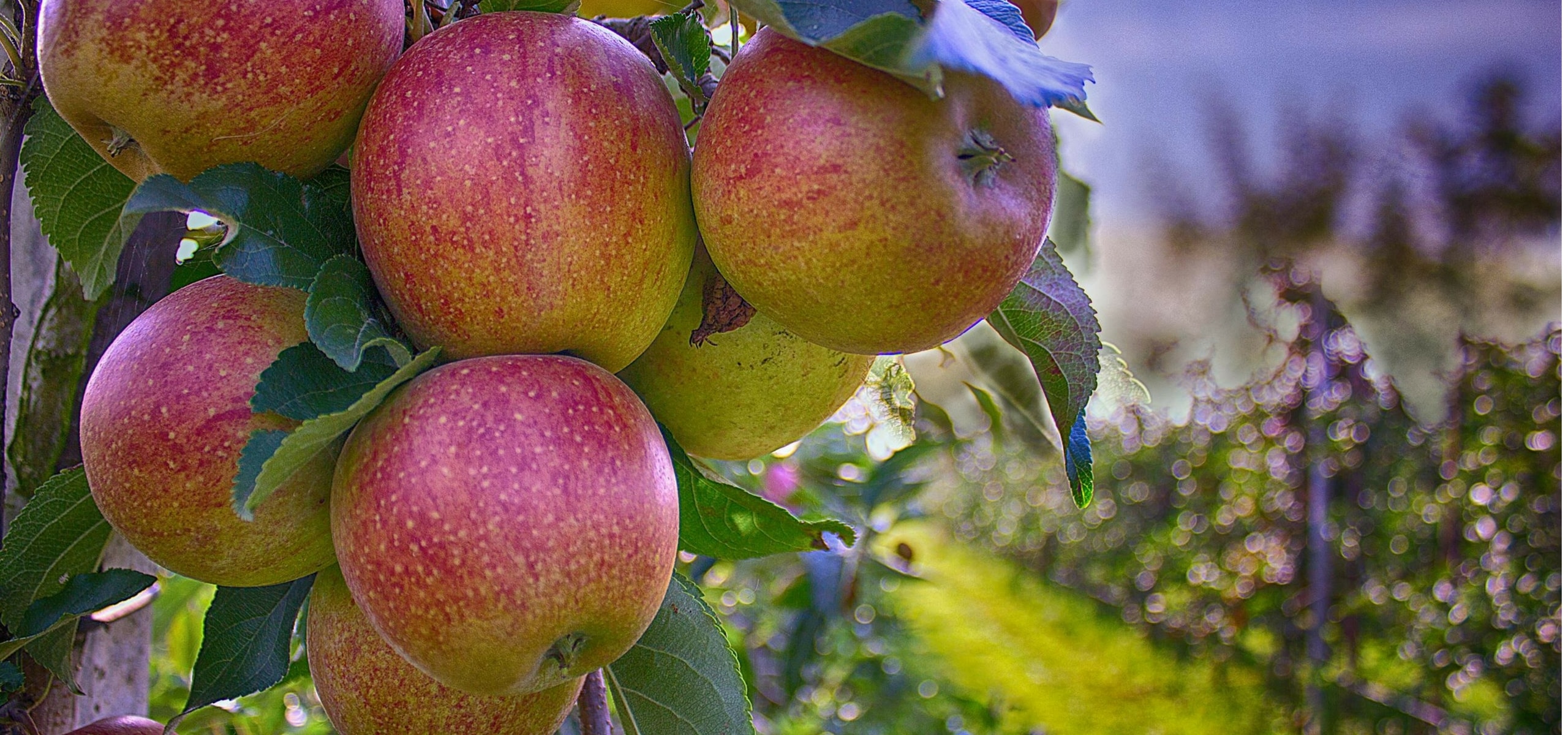
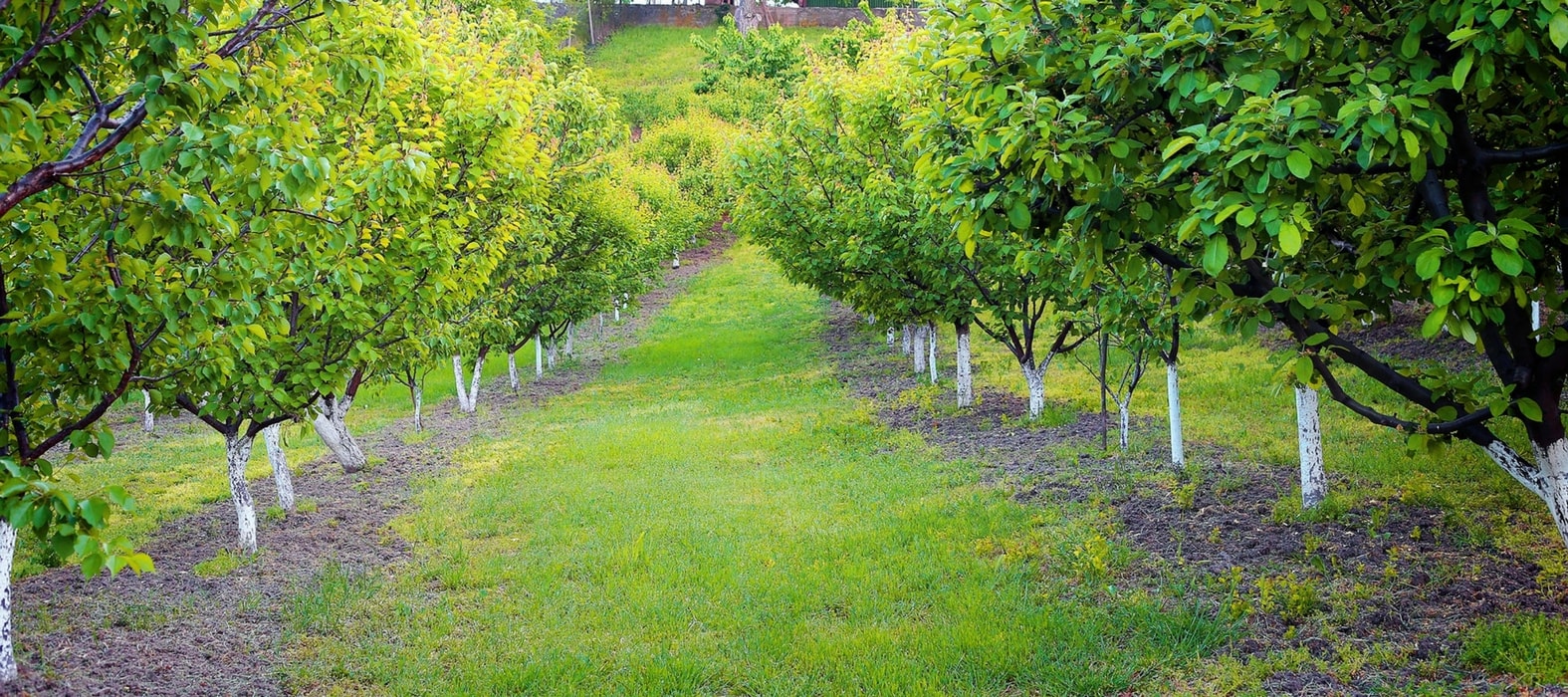
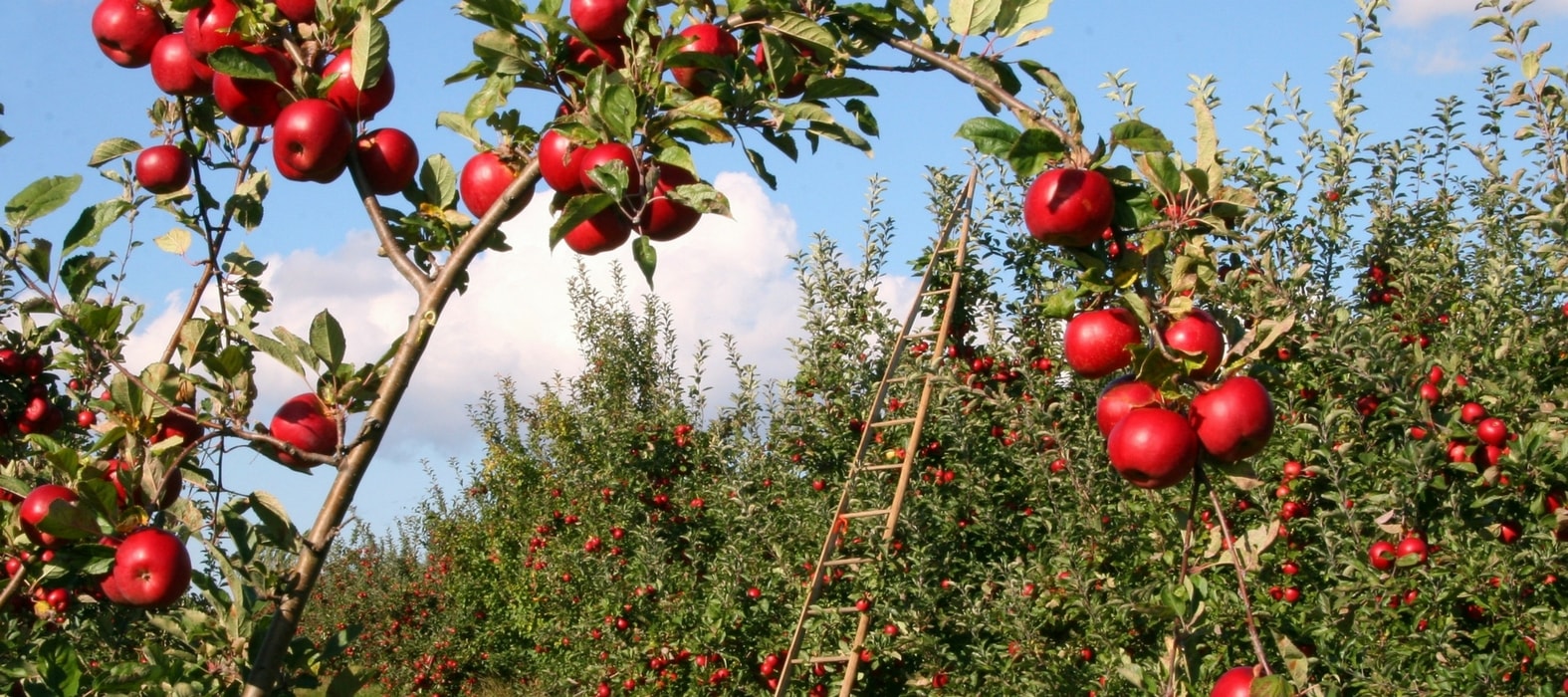
Very hardy and able to thrive even at high altitudes, Cherry tree 'Büttners Rote Knorpelkirsche' deserves its place in the garden, planted alone on a lawn to facilitate picking, and can be the starting point of a small orchard. In a continental climate, plant alongside it a 'Mirabelle de Nancy' which will take over from August to offer you delicious small yellow plums. If space is limited, consider fruit shrubs, such as Raspberry bushes whose delicate and refined fruits only have a few metres to travel to your table. Redcurrant bushes are also real treats, easy to grow and beloved by children. And if you appreciate originality and ancient fruits, why not plant a Medlar tree (Mespilus germanica) whose fruits, which must undergo frost before consumption, will extend the harvesting period of your orchard.
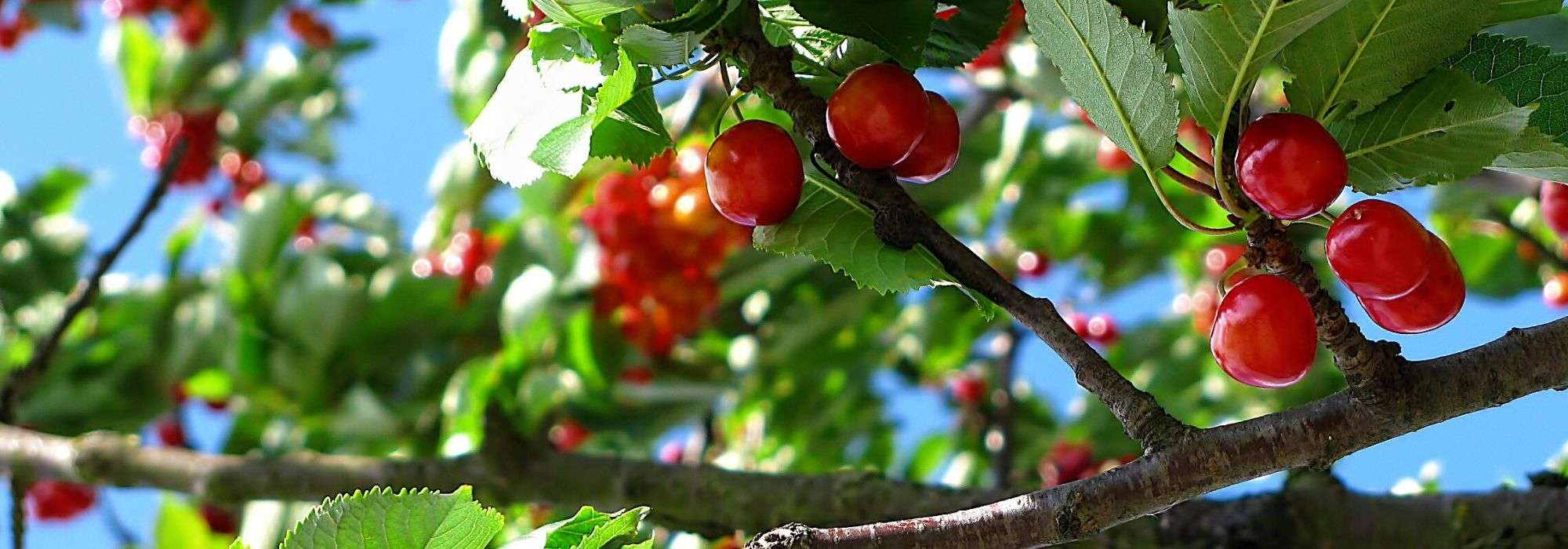
Plant habit
Fruit
Flowering
Foliage
Planting and care
The easy to grow Cherry Tree 'Büttners Rote Knorpelkirsche' thrives in any type of soil, whether acidic or chalky. It prefers moist, light soils and dislikes heavy, clayey soils. Choose a sunny location. To reduce the risk of late frosts on the flowers, plant the Cherry Tree in a sheltered position, facing west and protected from cold winds in regions prone to spring frosts. Planting is best done in autumn. If planting multiple plants, space them 4 to 5 m apart for goblet-trained plants.
Loosen the soil deeply, remove rocks and unwanted weeds and add some sand to improve drainage. Dig a hole 4 to 5 times the size of the root ball. Keep the subsoil on one side and the topsoil on the other. Mix crushed horn, well-rotted compost or potting soil with the subsoil and pour this mixture into the planting hole. Install a stake. Place the root ball, cover with the topsoil, and firm down. Water generously (around 10 L). Tie the stake to the plant, crossing the tie in a figure-eight, without touching the trunk.
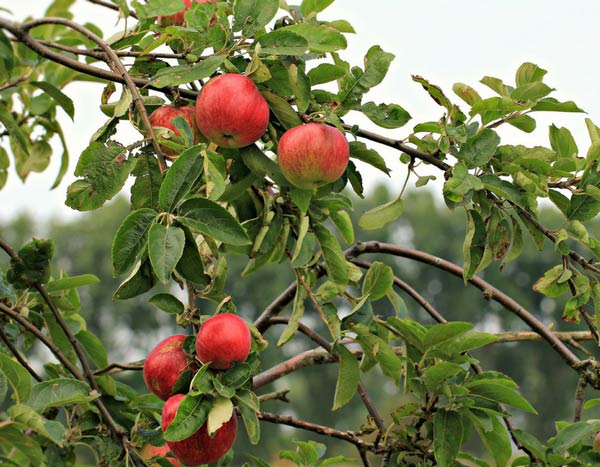
During cultivation, watering is not necessary except in hot weather. Mulch at the base to retain moisture in summer. Protect your harvest by using bird netting, aluminium foil, or old CDs. In the case of aphid infestation, spray water mixed with black soap. To combat cherry fruit fly, set up sticky cardboard traps or pheromone traps as soon as cherries form on the tree (this variety is usually not heavily affected).
Planting period
Intended location
Care
Planting & care advice
-
-
-
-
-
-
-
-
This item has not been reviewed yet - be the first to leave a review about it.
Recently viewed products
Haven't found what you were looking for?
Hardiness is the lowest winter temperature a plant can endure without suffering serious damage or even dying. However, hardiness is affected by location (a sheltered area, such as a patio), protection (winter cover) and soil type (hardiness is improved by well-drained soil).
In temperate climates, pruning of spring-flowering shrubs (forsythia, spireas, etc.) should be done just after flowering.
Pruning of summer-flowering shrubs (Indian Lilac, Perovskia, etc.) can be done in winter or spring.
In cold regions as well as with frost-sensitive plants, avoid pruning too early when severe frosts may still occur.
The harvesting period indicated on our website applies to countries and regions in USDA zone 8 (France, England, Ireland, the Netherlands).
In colder areas (Scandinavia, Poland, Austria...) fruit and vegetable harvests are likely to be delayed by 3-4 weeks.
In warmer areas (Italy, Spain, Greece, etc.), harvesting will probably take place earlier, depending on weather conditions.
The sowing periods indicated on our website apply to countries and regions within USDA Zone 8 (France, UK, Ireland, Netherlands).
In colder areas (Scandinavia, Poland, Austria...), delay any outdoor sowing by 3-4 weeks, or sow under glass.
In warmer climes (Italy, Spain, Greece, etc.), bring outdoor sowing forward by a few weeks.
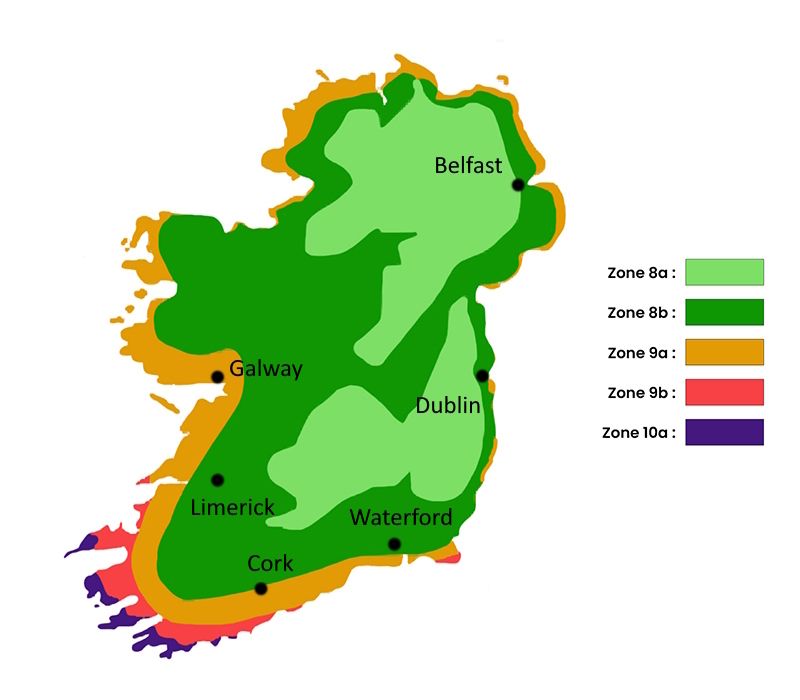
The planting period indicated on our website applies to regions in USDA Zone 9a (East Coast and Midlands: Dublin, Wexford, Waterford, Kilkenny, Portlaoise). It will vary depending on where you live:
- On the west coast and in the north-west (Galway, Limerick, Sligo, Donegal, Westport), delay planting by 1 to 2 weeks in spring and bring it forward by 1 to 2 weeks in autumn compared to the dates given, preferably choosing periods without strong winds.
- In the inland hills and plateaus (Wicklow Mountains, Macgillycuddy’s Reeks, Connemara, Killarney), it is best to plant in spring (April–May) or autumn (September–October), avoiding periods of waterlogged soil in winter and strong winds, which pose the main risk to newly planted trees in these areas.
The flowering period indicated on our website applies to regions in USDA Zone 9a, such as the East Coast and Midlands, including Dublin, Wexford, Waterford, Kilkenny and Portlaoise.
This will vary depending on where you live:
- On the west coast and in the northwest (Galway, Limerick, Sligo, Donegal and Westport), it will be delayed by one to two weeks compared to the given dates, due to stronger Atlantic winds and less spring sunshine.
- In the inland hills and plateaus (the Wicklow Mountains, the Macgillycuddy's Reeks, Connemara and Killarney), flowering will be delayed by two to three weeks. Flowering mainly occurs between May and July, with the limiting factors being less frost and more of the excessive humidity, strong winds and lack of sunshine that are characteristic of these areas.
Shipping country and language
Your country of residence may be:
Your country of residence is:
For a better user experience on our website, you can select:
Your shipping country:
-
 Austria
-
 Belgium
-
 Bosnia & Herzegovina
-
 Bulgaria
-
 Croatia
-
 Cyprus
-
 Czechia
-
 Denmark
-
 Estonia
-
 Finland
-
 France
-
 Germany
-
 Greece
-
 Hungary
-
 Iceland
-
 Ireland
-
 Italy
Italy
-
 Latvia
-
 Liechtenstein
-
 Lithuania
-
 Luxembourg
-
 Malta
Malta
-
 Netherlands
-
 Poland
-
 Portugal
-
 Romania
-
 Serbia
-
 Slovakia
-
 Slovenia
-
 Spain
Spain
-
 Sweden
-
 Switzerland
Language:
-
French
-
 English
-
Spanish
-
Italian
-
German
-
Portuguese
-
Dutch
-
Finnish
My Account
Hello
My wish lists
My cart
Log in / Register
Existing customer?
This form is protected by reCAPTCHA - the Google Privacy Policy and Terms of Service apply.
New customer?
Create an account to track your orders, access our customer service and, if you wish, make the most of our upcoming offers.