Potatoes Stemster
Potatoes Stemster

Potatoes Stemster
Potatoes Stemster
Solanum tuberosum Stemster
Potato
Good condition, planted, awaiting growth.
Sylvie, 27/04/2023
Back-to-school special offer!
Get €10 off for every €50 you spend! And get up to €40 off on a single order.
How does it work?
1. Shop your favourites
Add your favourite plants to your basket. For every €50 you spend (excluding delivery charges, store credit and the plastic-free option), you’ll receive a €10 voucher.
€50 spent = €10 voucher
€100 spent = €20 voucher
€150 spent = €30 voucher
€200 spent = €40 voucher
2. Place your order
Once your basket reaches one of the spending thresholds, place your order. You can even choose your delivery date!
3. Receive your voucher
As soon as your order has been shipped, you’ll receive an email containing your personal voucher code and its value.
4. Use it on your next order
Your voucher is valid for 90 days from the date you receive it. It can be used once only, on a new order worth at least the value of the voucher, excluding delivery charges.
Please note: Vouchers can be combined with other offers, but cannot be split or refunded.
This plant carries a 6 months recovery warranty
More information
We guarantee the quality of our plants for a full growing cycle, and will replace at our expense any plant that fails to recover under normal climatic and planting conditions.

Description
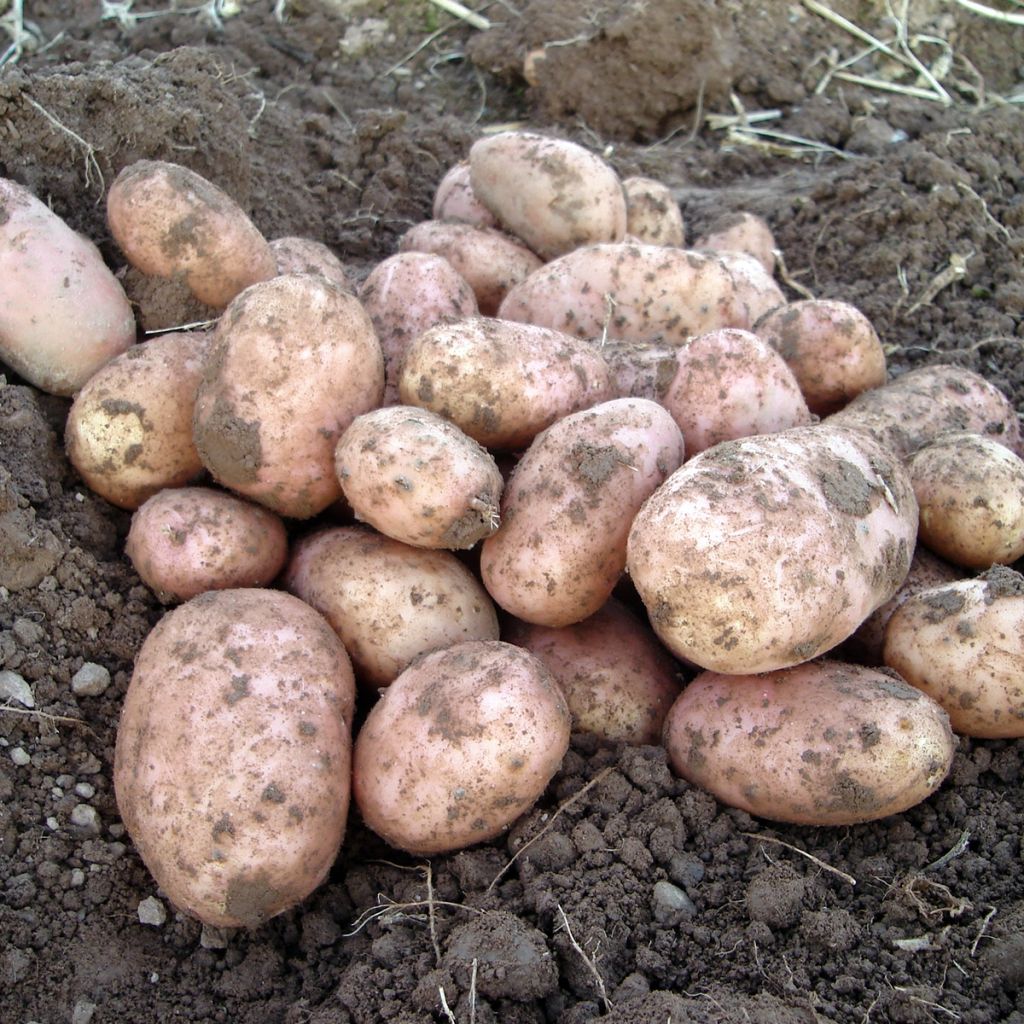
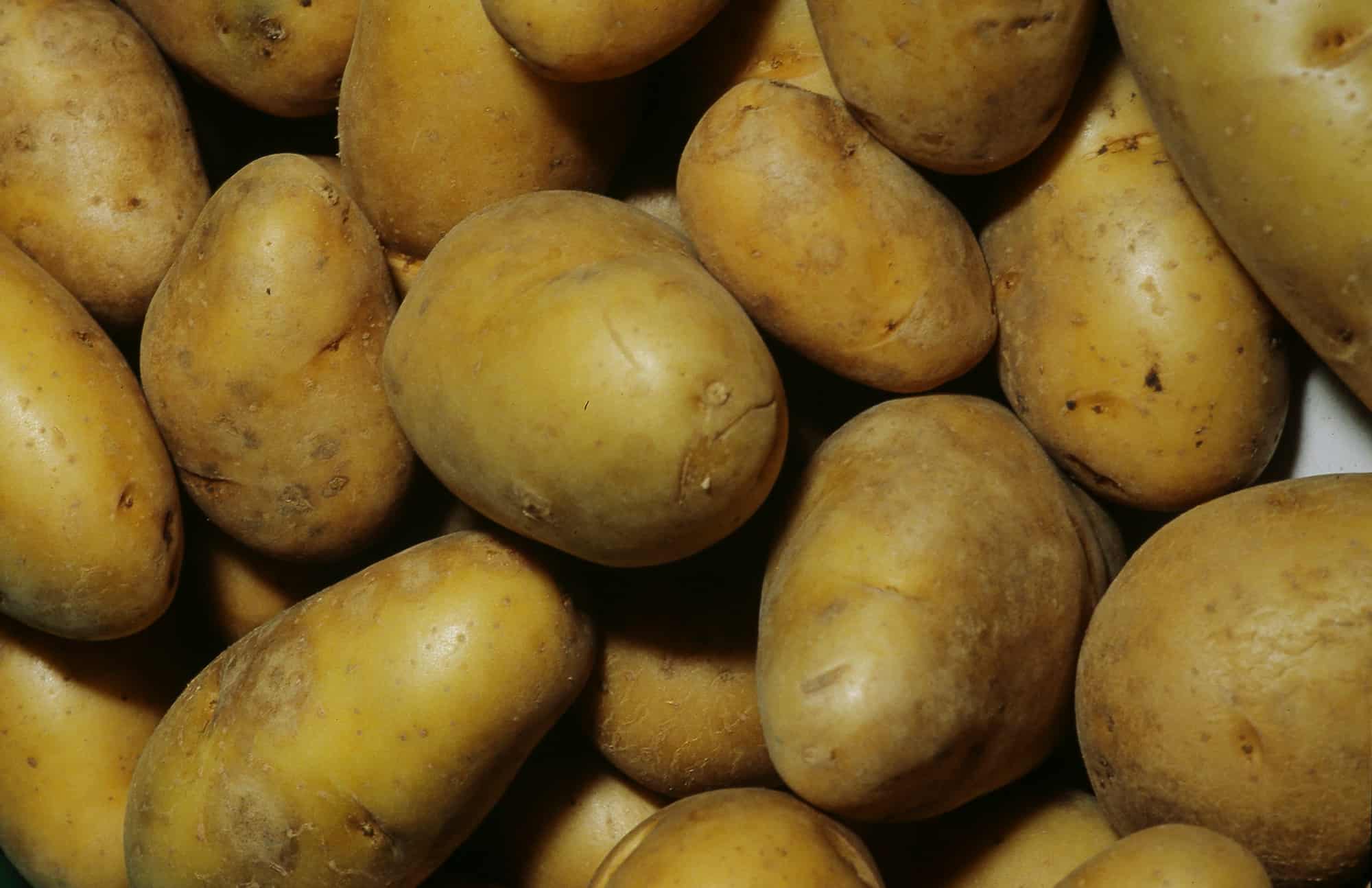
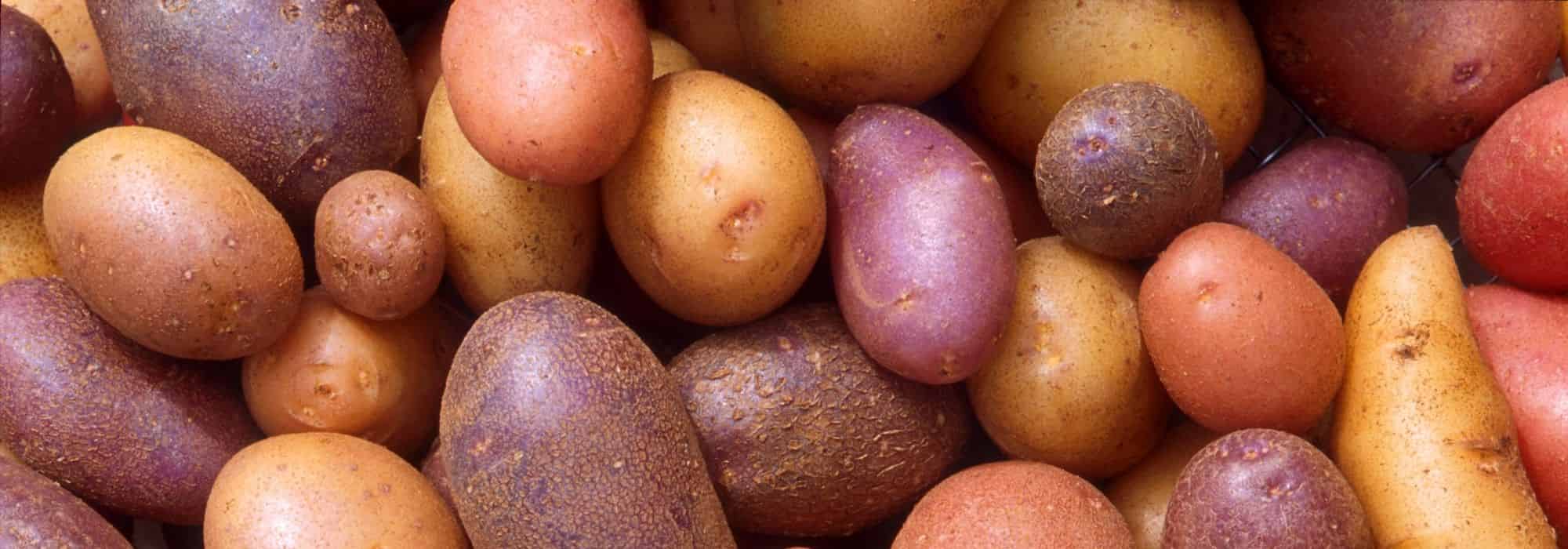
The 'Stemster' potato, formerly known as Prosper, is an old, vigorous variety, mid-late, always appreciated for its ease of cultivation and natural resistance to blight and drought. It is a beautiful improvement of 'Desiree' that produces numerous oblong, regular tubers of large size with red-pink skin and shallow eyes. Easy to peel raw or cooked, these potatoes have a pale yellow flesh of good taste quality, quite tender but remaining firm when cooked. They can be stored in a cool and dark place for a very long time. Plant the young plants from mid-March to late April-early May, depending on the climate, and harvest after 110 days of growth for new potatoes, after 140 days for storage and preservation. Perfect for steaming, boiling or baking as new potatoes.
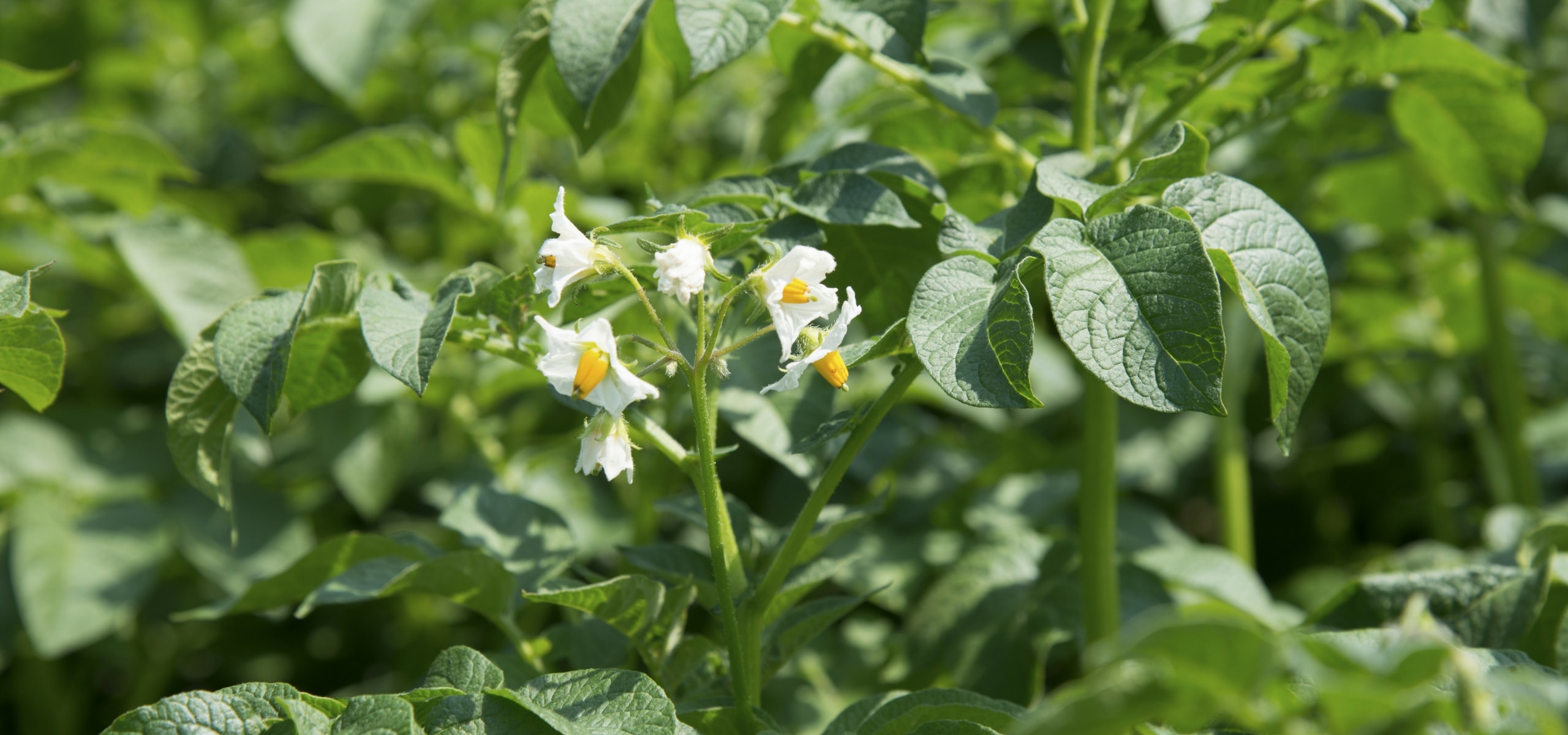
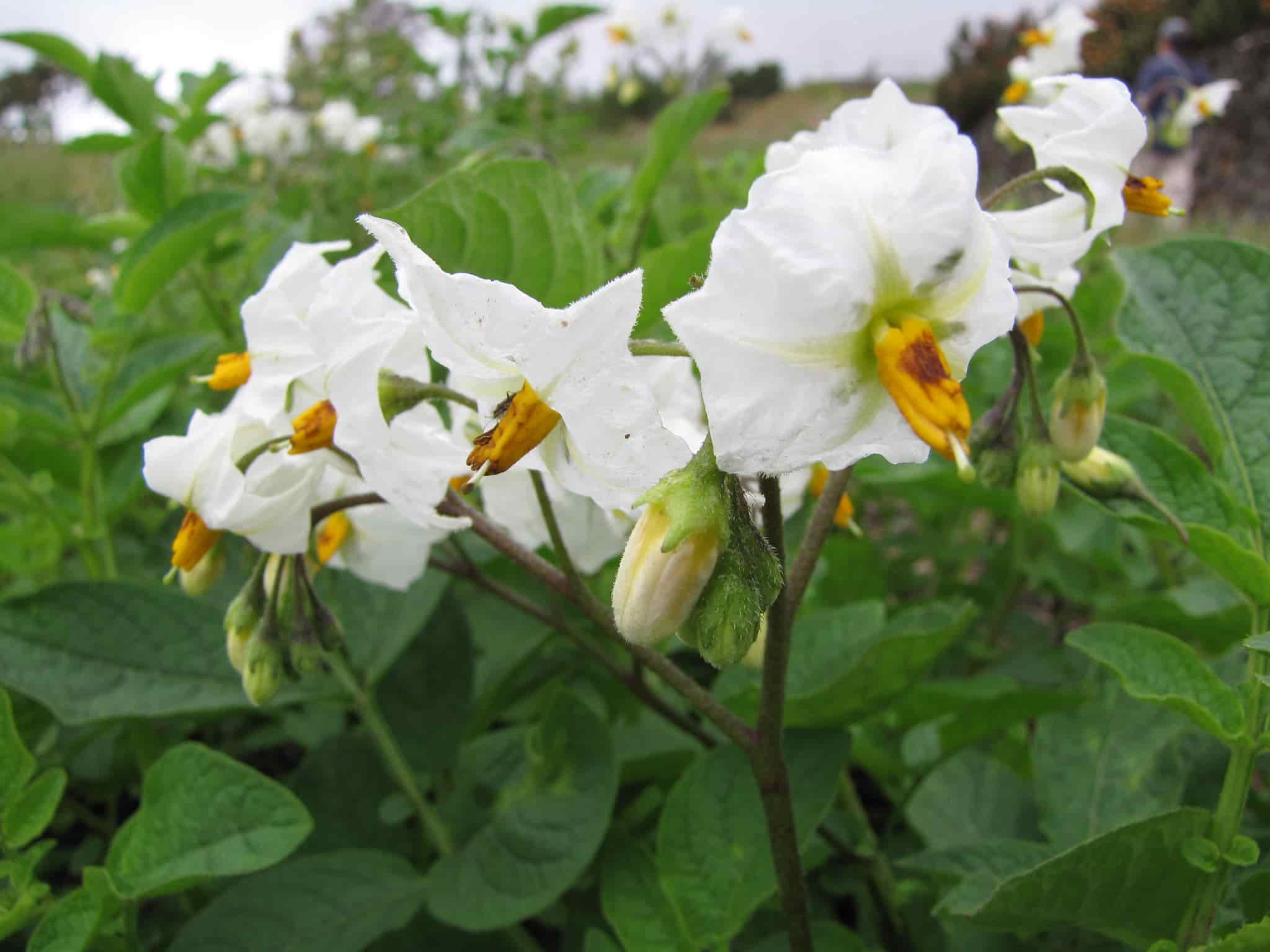
The potato is a root vegetable that has become essential in the vegetable garden and on the plate. It is a perennial plant grown annually, developing tubers as storage organs on its rhizomes. The plants produce small flowers in summer except for a few varieties like Belle de Fontenay. Each plant will produce several potatoes, which can be stored for several months and cooked in multiple ways. The potato belongs to the Solanaceae family, like eggplants and tomatoes. Originally cultivated in the Andes, it was brought to Europe in the 16th century. It was only around 1750 that it became widely grown, thanks to Parmentier.
There are many varieties. The tubers, more or less elongated in shape, have generally yellow flesh, sometimes red, pink or purple. Low in calories, potatoes are rich in carbohydrates, iron, and potassium.
There are three categories of potatoes, according to the flesh content:
- Firm-fleshed varieties have good cooking properties. These potatoes, somewhat elongated in shape, have refined and tasty flesh. They are ideal for boiling or steaming and can be stewed or roasted.
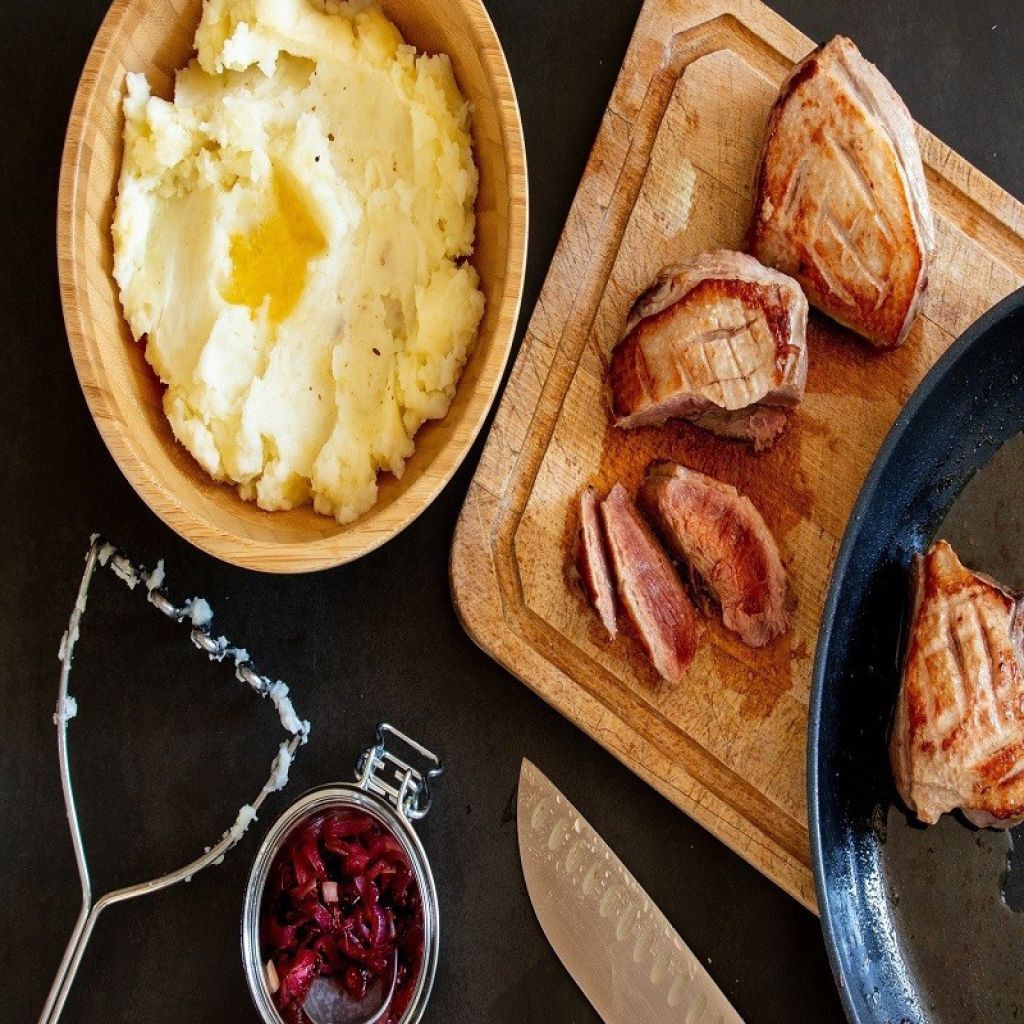
- Floury-fleshed varieties are rich in starch and easily mashable. Reasonably large, these potatoes are perfect for mashed potatoes or soups. They also make very crispy fries, which absorb less oil when cooked.
- Tender-fleshed varieties have a melting flesh while maintaining good cooking properties. They can be used in various ways: roasted, stewed, or baked.
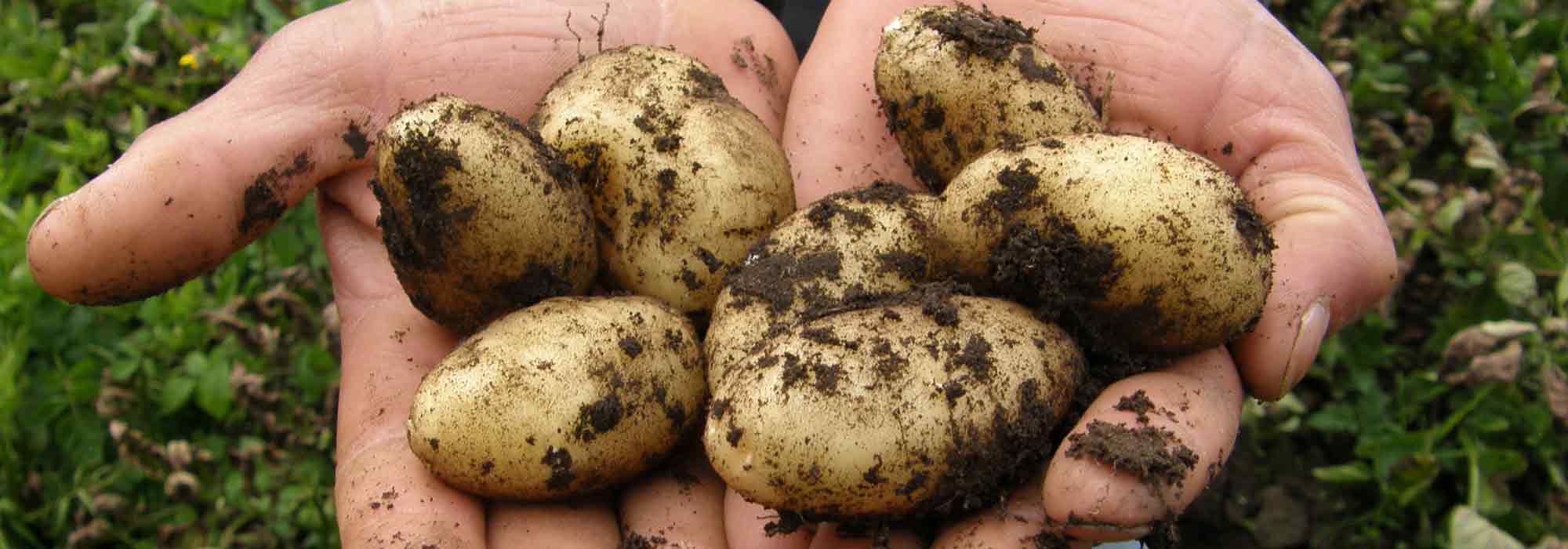
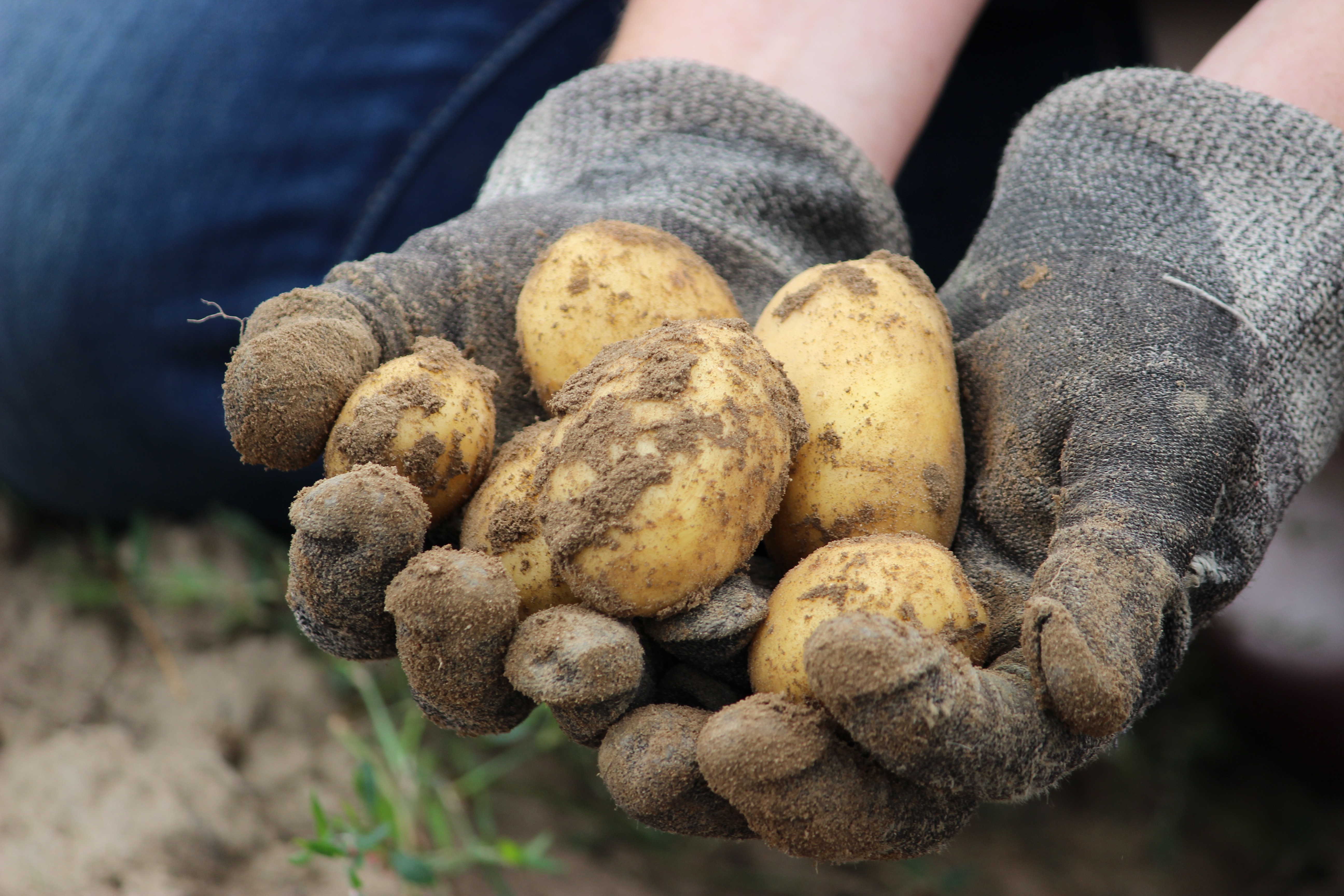
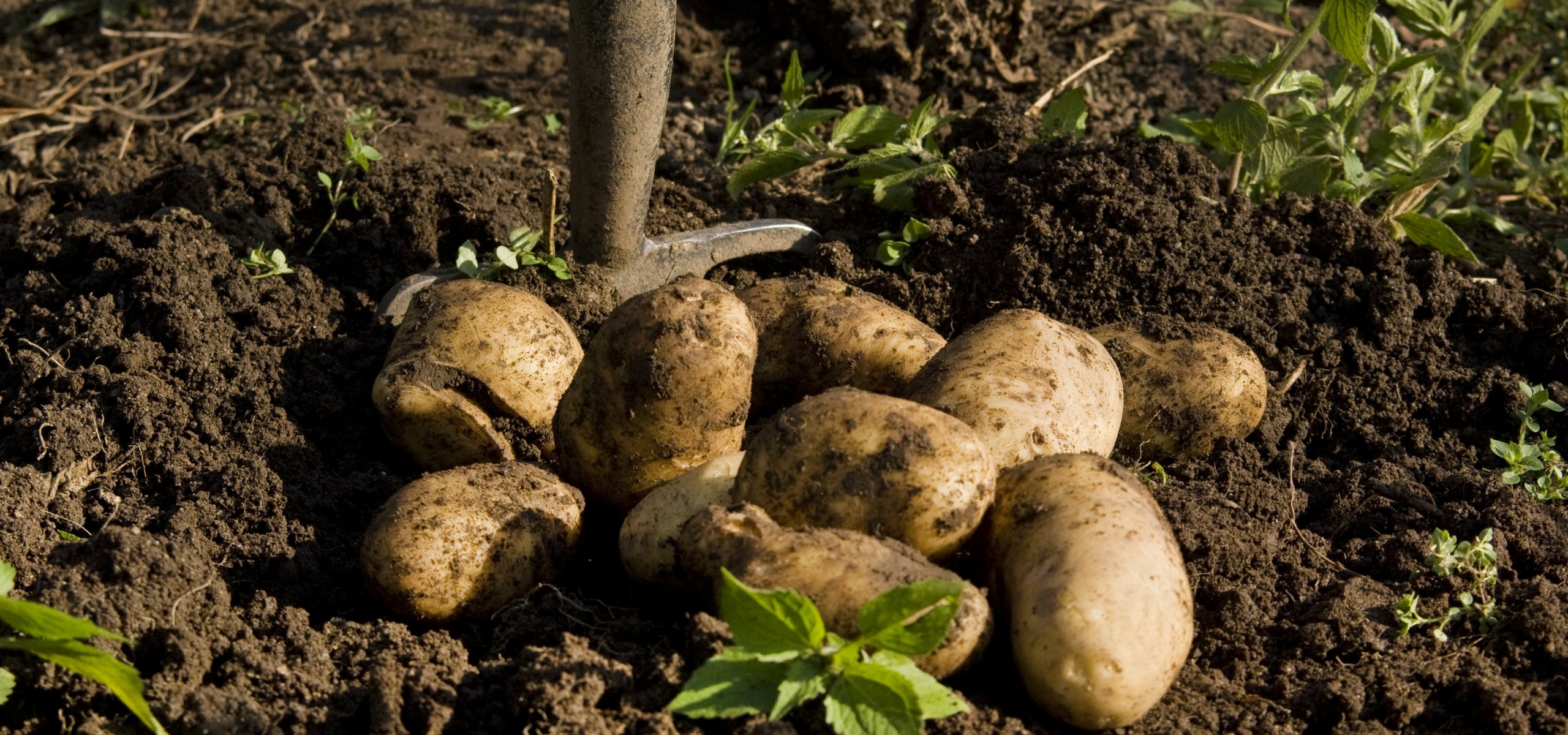
Harvest: Potatoes are harvested from May to October, depending on the varieties and their earliness. Gently dig up the plants with a garden fork to avoid damaging the tubers. Let the potatoes dry in the sun for a day.
Storage potatoes are harvested when the foliage turns yellow and withers. Early varieties are harvested 80 to 90 days after planting, mid-early varieties around 110 days, mid-late varieties around 120 days, and late varieties from 120 to over 150 days.
As for new potatoes, with fragile skin and delicious flesh, they are harvested before maturity, 70 days after planting. Dig them up just after flowering, around May-June.
Storage: After removing damaged tubers, store potatoes in a cool, dry, and dark place. In the presence of light, tubers turn green and synthesise a toxic compound, solanine. Early harvest varieties should be consumed quickly. Storage potatoes can be stored for several months. The storage duration varies depending on their earliness: late varieties are the ones that keep the longest.
A Gardener's Tip: Grow potatoes as a crop rotation leader, as they are often considered a cleansing crop. Indeed, hilling and root development leave the soil clean and loose after harvest. They also appreciate the company of legumes (beans, broad beans, peas).
Note: Potato plants are intended to be planted in the ground and cultivated before consumption. Depending on the varieties, they may have been treated with Thiabendazole (a preservative) and Imazilil (an antifungal product). Therefore, please do not consume them as they are.
Harvest
Plant habit
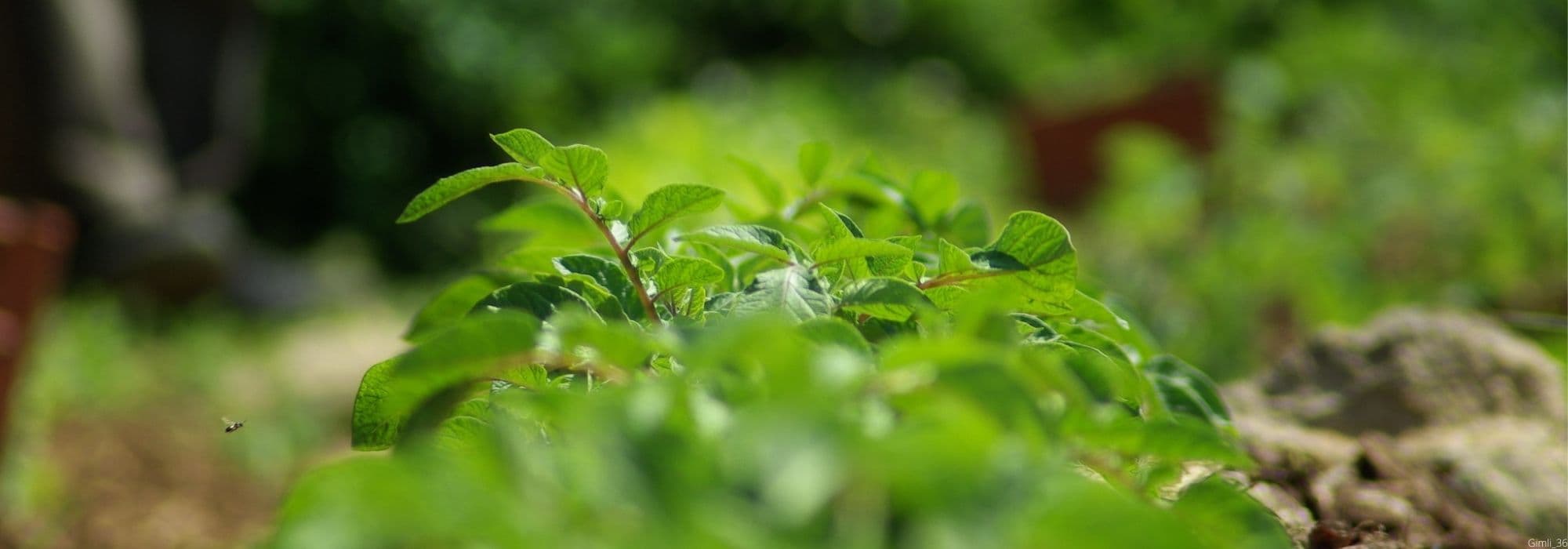
Foliage
Planting and care
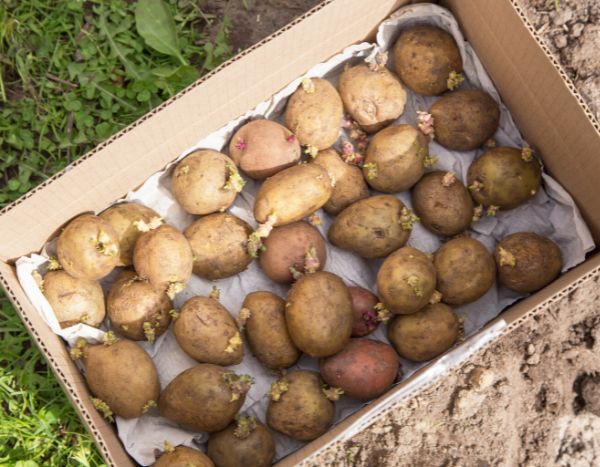
Planting: Potatoes need a light, deep, and rich soil. Choose a sunny location. Add well-rotted compost in the previous autumn by scratching it on 5 cm (2in) after loosening the soil well. Planting takes place under cover in February-March for early varieties. For other varieties, plant them from mid-March to May, depending on the climate. Wait until the soil is at least 10°C. The flowering of the lilac is often a landmark for starting the planting. Plant several varieties in your vegetable garden to vary the crops!
Loosen the soil deeply and form rows 10 cm (4in) deep, spaced 70 cm (28in) apart. Place germinated tubers or young plants every 40 cm (16in) (or 30 cm (12in) for early varieties). Cover with fine soil when the plants reach 15 cm (6in), hill by bringing fine soil to the base of the stems, up to 20 cm (8in) in height. Hilling up will promote the formation of tubers and water drainage. You can hill them up again a month later. Mulch at the base of the plants, with thin successive layers of mixed grass clippings, if possible, with dead leaves. This protection, which keeps the soil moist, also limits weeding.
Potato cultivation does not require watering except in cases of high heat. In this case, water the base without wetting the foliage to prevent the onset of fungal diseases.
Diseases and pests: Potatoes, like tomatoes, are susceptible to late blight. This is a fungal disease caused by the Phytophthora infestans fungus. Late blight develops in hot and humid weather. Small spots appear, white on the undersides of the leaves and brown on top. As a preventive measure, here are some tips to limit the risk of late blight:
-
do not cultivate several plants from the Solanaceae family, such as potatoes, tomatoes, aubergines, peppers, and chilli peppers, in neighbouring rows, as they are susceptible to the same diseases
-
in terms of crop rotation, wait four years before cultivating a Solanaceae plant in the exact location
-
space the plants, both within and between rows, to promote air circulation and prevent rapid spread of diseases
-
if you need to water, do not wet the foliage
-
spray a fungicide or preparations such as horsetail decoction or garlic purée
The Colorado potato beetle, an insect of the order Coleoptera, can also disrupt harvest. You will recognise it by its yellow head and its yellow and black striped body. The best solution, although time-consuming, is to remove them as they appear. As a preventive measure, sow blue flax seeds between your rows of potatoes. Sow from April to June in shallow furrows. In addition to being repellent against Colorado potato beetles, flax will brighten your vegetable garden with its little blue flowers. You can also interplant peas between your rows of potatoes.
Other planting methods: The detailed planting method above is the most common. Different methods exist, such as mulch planting and tower planting.
Mulch planting involves placing the tubers on the ground and covering them with mulch. This protection will be supplemented as the plant grows, with the tubers always kept away from light.
Tower planting or bag planting is convenient for small spaces but requires regular watering. The tower can be built from various materials (wood, wire mesh, bags, tyres, etc.). The tubers are placed on a bed of potting soil or compost. As the plant grows, it is covered with potting soil, exposing only the topmost leaves until the top of the tower, allowing the tubers to form at different heights within the container. Harvest is done when the foliage has withered.
Cultivation
Care
Intended location
Planting & care advice
-
, onOrder confirmed
Reply from on Promesse de fleurs
Recently viewed products
Haven't found what you were looking for?
Hardiness is the lowest winter temperature a plant can endure without suffering serious damage or even dying. However, hardiness is affected by location (a sheltered area, such as a patio), protection (winter cover) and soil type (hardiness is improved by well-drained soil).
In temperate climates, pruning of spring-flowering shrubs (forsythia, spireas, etc.) should be done just after flowering.
Pruning of summer-flowering shrubs (Indian Lilac, Perovskia, etc.) can be done in winter or spring.
In cold regions as well as with frost-sensitive plants, avoid pruning too early when severe frosts may still occur.
The harvesting period indicated on our website applies to countries and regions in USDA zone 8 (France, England, Ireland, the Netherlands).
In colder areas (Scandinavia, Poland, Austria...) fruit and vegetable harvests are likely to be delayed by 3-4 weeks.
In warmer areas (Italy, Spain, Greece, etc.), harvesting will probably take place earlier, depending on weather conditions.
The sowing periods indicated on our website apply to countries and regions within USDA Zone 8 (France, UK, Ireland, Netherlands).
In colder areas (Scandinavia, Poland, Austria...), delay any outdoor sowing by 3-4 weeks, or sow under glass.
In warmer climes (Italy, Spain, Greece, etc.), bring outdoor sowing forward by a few weeks.
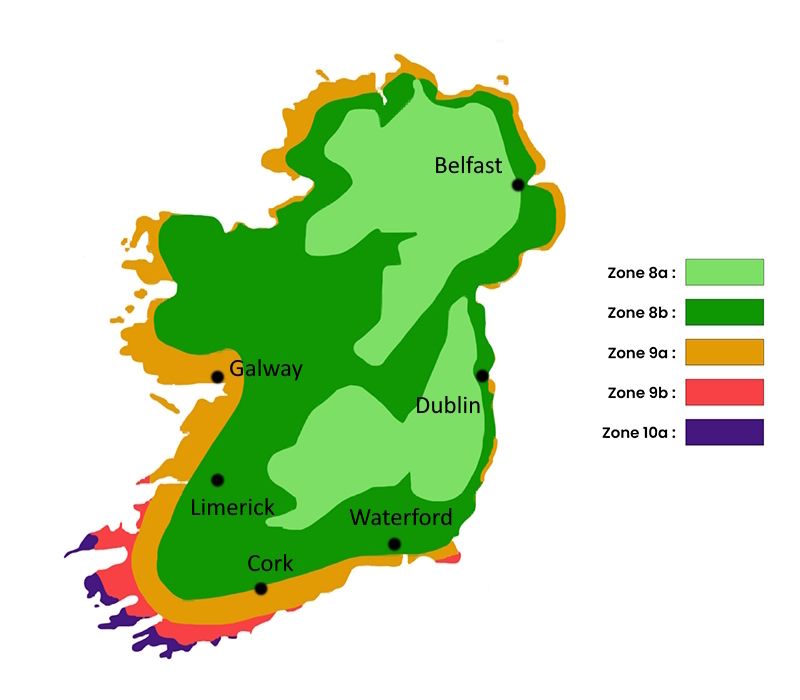
The planting period indicated on our website applies to regions in USDA Zone 9a (East Coast and Midlands: Dublin, Wexford, Waterford, Kilkenny, Portlaoise). It will vary depending on where you live:
- On the west coast and in the north-west (Galway, Limerick, Sligo, Donegal, Westport), delay planting by 1 to 2 weeks in spring and bring it forward by 1 to 2 weeks in autumn compared to the dates given, preferably choosing periods without strong winds.
- In the inland hills and plateaus (Wicklow Mountains, Macgillycuddy’s Reeks, Connemara, Killarney), it is best to plant in spring (April–May) or autumn (September–October), avoiding periods of waterlogged soil in winter and strong winds, which pose the main risk to newly planted trees in these areas.
The flowering period indicated on our website applies to regions in USDA Zone 9a, such as the East Coast and Midlands, including Dublin, Wexford, Waterford, Kilkenny and Portlaoise.
This will vary depending on where you live:
- On the west coast and in the northwest (Galway, Limerick, Sligo, Donegal and Westport), it will be delayed by one to two weeks compared to the given dates, due to stronger Atlantic winds and less spring sunshine.
- In the inland hills and plateaus (the Wicklow Mountains, the Macgillycuddy's Reeks, Connemara and Killarney), flowering will be delayed by two to three weeks. Flowering mainly occurs between May and July, with the limiting factors being less frost and more of the excessive humidity, strong winds and lack of sunshine that are characteristic of these areas.
Shipping country and language
Your country of residence may be:
Your country of residence is:
For a better user experience on our website, you can select:
Your shipping country:
-
 Austria
-
 Belgium
-
 Bosnia & Herzegovina
-
 Bulgaria
-
 Croatia
-
 Cyprus
-
 Czechia
-
 Denmark
-
 Estonia
-
 Finland
-
 France
-
 Germany
-
 Greece
-
 Hungary
-
 Iceland
-
 Ireland
-
 Italy
Italy
-
 Latvia
-
 Liechtenstein
-
 Lithuania
-
 Luxembourg
-
 Malta
Malta
-
 Netherlands
-
 Poland
-
 Portugal
-
 Romania
-
 Serbia
-
 Slovakia
-
 Slovenia
-
 Spain
Spain
-
 Sweden
-
 Switzerland
Language:
-
French
-
 English
-
Spanish
-
Italian
-
German
-
Portuguese
-
Dutch
-
Finnish
My Account
Hello
My wish lists
My cart
Log in / Register
Existing customer?
This form is protected by reCAPTCHA - the Google Privacy Policy and Terms of Service apply.
New customer?
Create an account to track your orders, access our customer service and, if you wish, make the most of our upcoming offers.