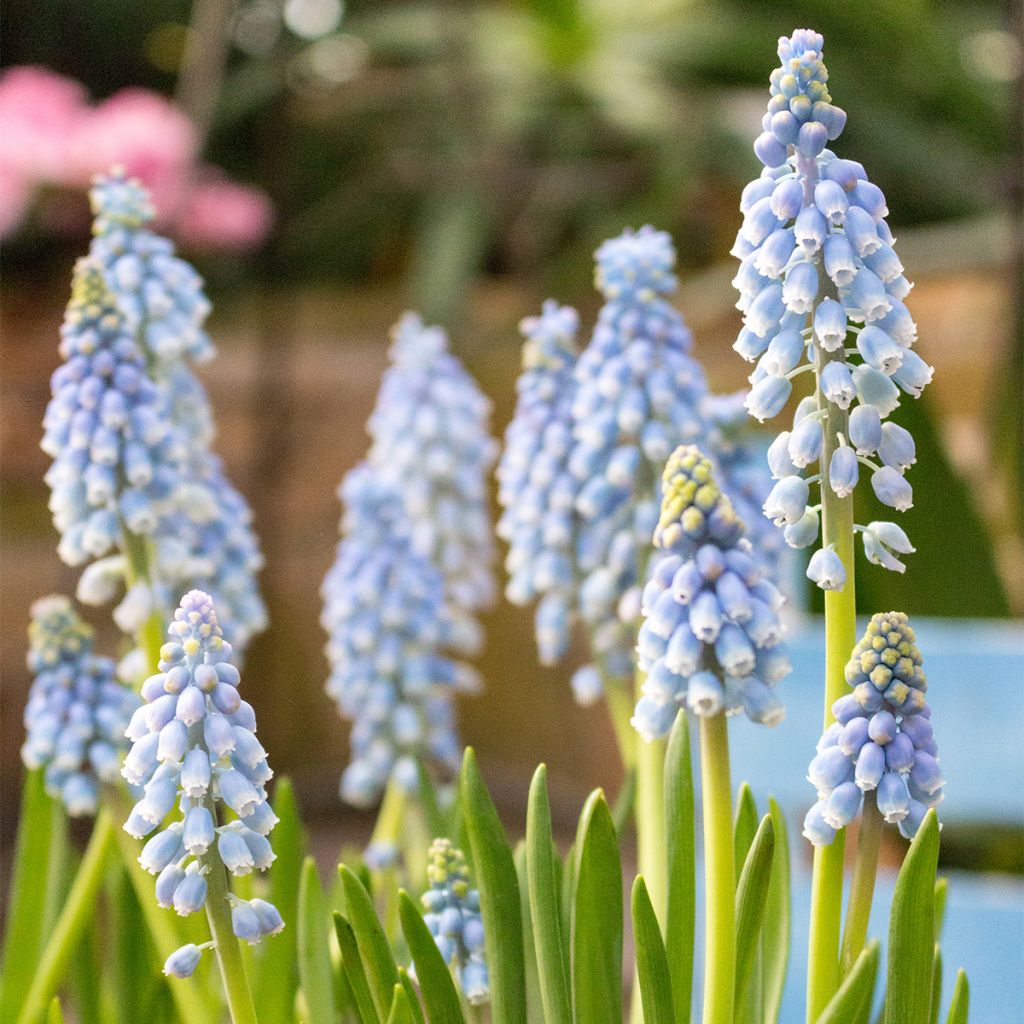
Muscari armeniacum Manon - Grape hyacinth
Muscari armeniacum Manon - Grape hyacinth
Muscari armeniacum Manon
Grape Hyacinth, Baby's Breath
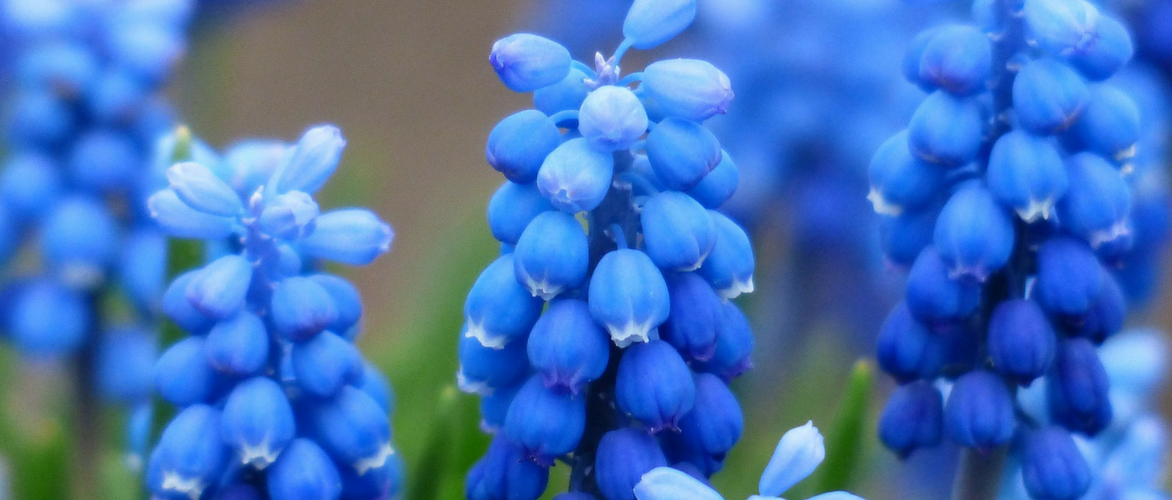
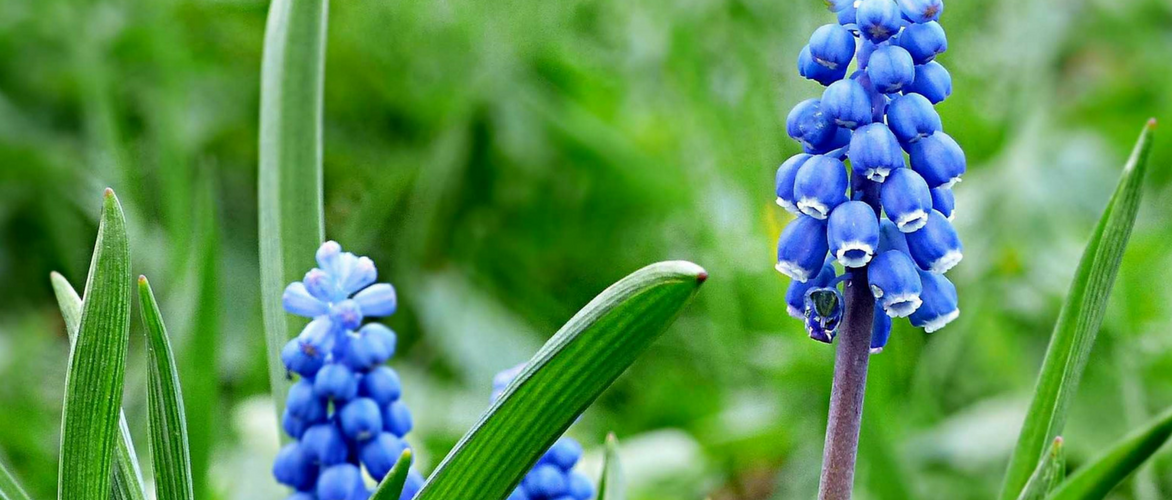
The bulbs have all come up very well. However, there were some dark blue muscari bulbs among them; I counted the bulbs when they arrived and the number was correct, so some of the Muscari 'Manon' bulbs were not actually Muscari 'Manon'.
Priscilla, 03/04/2026
Back-to-school special offer!
Get €10 off for every €50 you spend! And get up to €40 off on a single order.
How does it work?
1. Shop your favourites
Add your favourite plants to your basket. For every €50 you spend (excluding delivery charges, store credit and the plastic-free option), you’ll receive a €10 voucher.
€50 spent = €10 voucher
€100 spent = €20 voucher
€150 spent = €30 voucher
€200 spent = €40 voucher
2. Place your order
Once your basket reaches one of the spending thresholds, place your order. You can even choose your delivery date!
3. Receive your voucher
As soon as your order has been shipped, you’ll receive an email containing your personal voucher code and its value.
4. Use it on your next order
Your voucher is valid for 90 days from the date you receive it. It can be used once only, on a new order worth at least the value of the voucher, excluding delivery charges.
Please note: Vouchers can be combined with other offers, but cannot be split or refunded.
Why not try an alternative variety in stock?
View all →
Available in 0 sizes
Available in 1 sizes
Available in 1 sizes
Available in 1 sizes
Available in 2 sizes

Available in 1 sizes

Available in 1 sizes

Available in 1 sizes
Available in 1 sizes
Available in 1 sizes
This plant carries a 6 months recovery warranty
More information
We guarantee the quality of our plants for a full growing cycle, and will replace at our expense any plant that fails to recover under normal climatic and planting conditions.


Does this plant fit my garden?
Set up your Plantfit profile →
Description
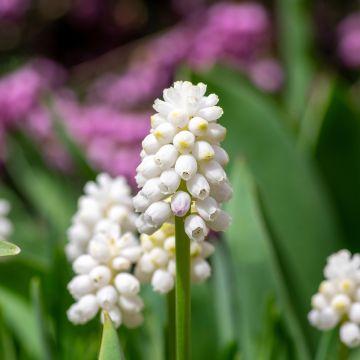
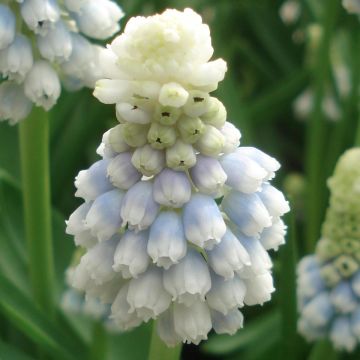
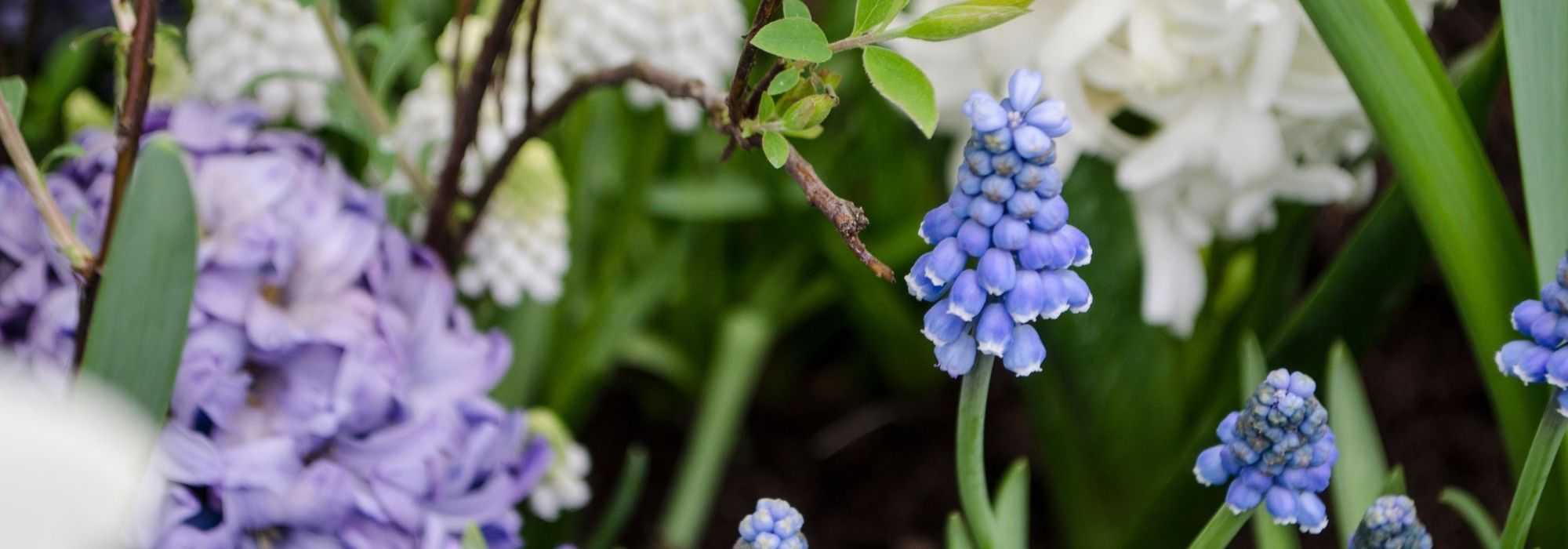
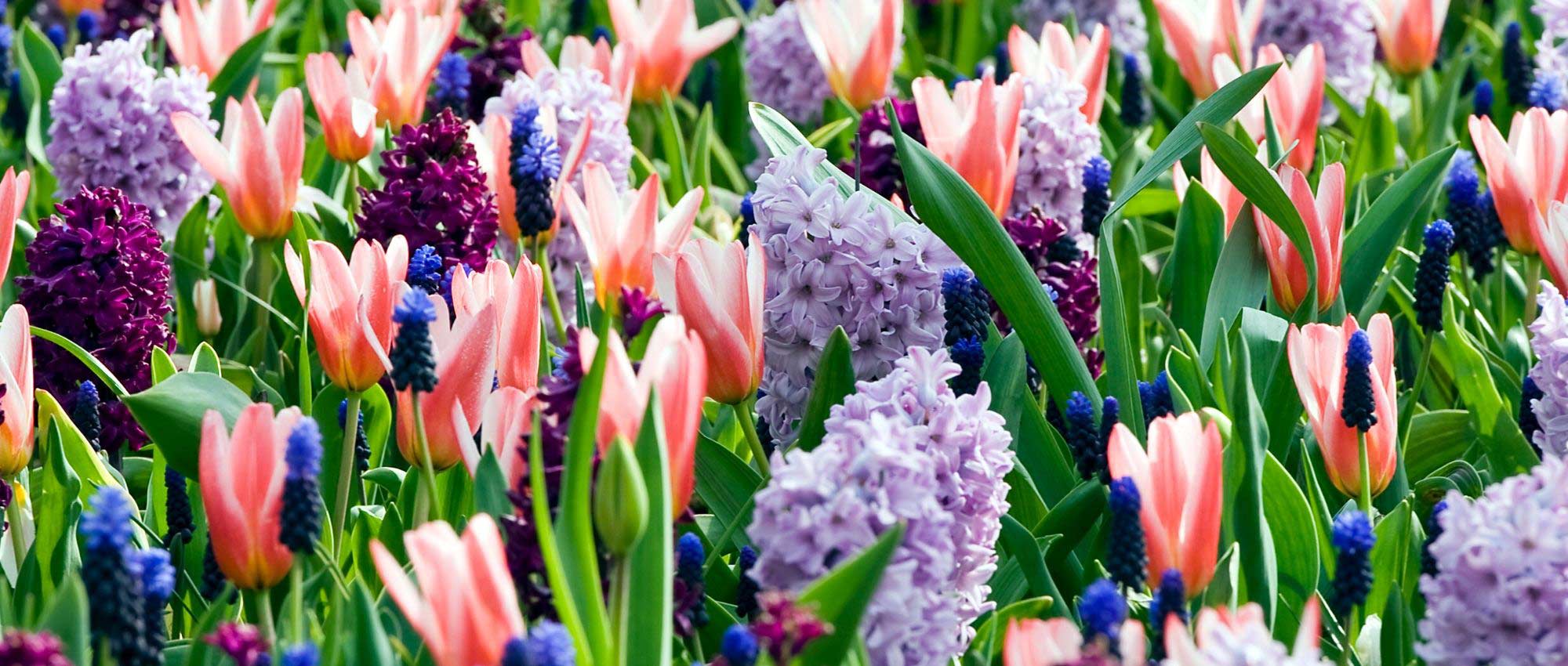
Muscari armeniacum Manon is a variety which is remarkable for its flower spikes of an almost milky pastel blue, topped with light green buds, which emerge in April on short, sturdy stems. This refined, soft and luminous flowering makes it an excellent choice for brightening up borders, rockeries or spring containers. With its compact habit and adaptability, this hardy bulb prefers a light, well-drained soil and a sunny or partially shaded exposure. Thanks to its ability to naturalise and its delicate appearance, it integrates well into spring scenes with a natural or structured style.
Muscari 'Manon' belongs to the Asparagaceae family. It is a cultivar of Muscari armeniacum, a botanical species native to Mediterranean regions and Asia Minor, particularly Turkey, the Caucasus and Armenia. It is a horticultural selection, introduced to the market by Brent & Becky's Bulbs, valued for its very particular colouring: conical flower spikes of an almost milky pastel blue with soft green terminal buds, subtly contrasting with the sky-blue base. This variety has a low, compact and bushy habit, reaching 10–20 cm in height with a spread of 10 cm both in the ground and in pots. The growth rate is moderate to fast: bulbs planted in autumn produce 1 to 3 flower stems in the first year, while the dark green linear foliage appears in autumn, persists in mild climates, then disappears after flowering in spring. The 9 cm bulb produces a superficial fibrous root system, which can naturalise via bulblets over time. The flowers appear in March-April, forming 20 to 40 small tubular tepals of 5–10 mm each, arranged in conical racemes of 5–10 cm. The flowering follows a bottom-up pattern of open flowers and each stem bears on average 1 to 3 inflorescences. The slightly fragrant flowers have a soft grape aroma. The deciduous foliage is linear. It persists until drying out after flowering, essential for replenishing the bulb's reserves. The smooth, cylindrical stems stand firm. The bulb is spherical, enveloped in a typical fibrous network. It should be planted at a depth of 8–10 cm in a well-draining substrate.
In a garden that highlights spring light, Muscari Manon finds its perfect place where pale tones gain prominence, between the grey of a Japanese stepping stone and young chartreuse foliage. Planted en masse at the foot of late perennials, it emerges in April like a powdery cloud, discreet but essential. It can be combined with other early bulbs, from the piercing whiteness of Narcissus 'Thalia', to the fine porcelain blue of Scilla mischtschenkoana 'Tubergeniana' or the misty elegance of Iris reticulata 'Sheila Ann Germaney'. In a pot, it becomes a poetic miniature on a patio table, where its refinement can be fully appreciated.
Plant habit
Flowering
Foliage
Botanical data
Muscari
armeniacum
Manon
Asparagaceae
Grape Hyacinth, Baby's Breath
Cultivar or hybrid
Planting and care
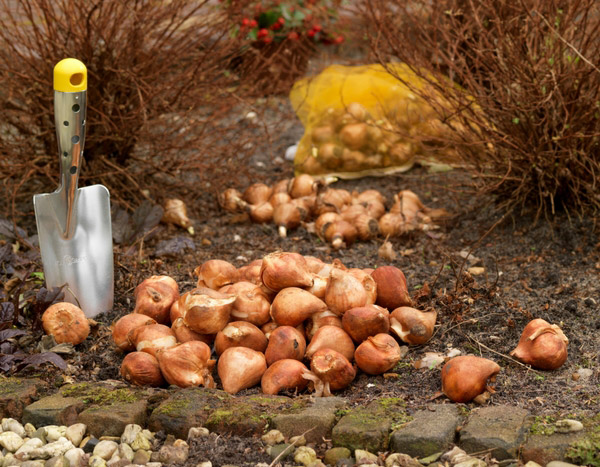
Plant your Muscari Manon as soon as possible in well-drained soil. Loosen the soil deeply. Plant at a depth of 8 cm (bulbs should be covered with twice their height of soil). Space the bulbs 8 cm apart, ensuring they do not touch each other. Choose a sunny position for better flowering. Muscari armeniacum is not demanding regarding soil type and is perfectly hardy in most regions, even those that are dry in summer. Divide the bulbs every 4 years at most. If you grow it in pots, you will need to ensure regular watering and provide fertiliser after flowering so the bulb can replenish its reserves.
Planting period
Intended location
Care
Planting & care advice
-
-
-
-
-
-
-

-
-
, onOrder confirmed
Reply from on Promesse de fleurs
Recently viewed products
Haven't found what you were looking for?
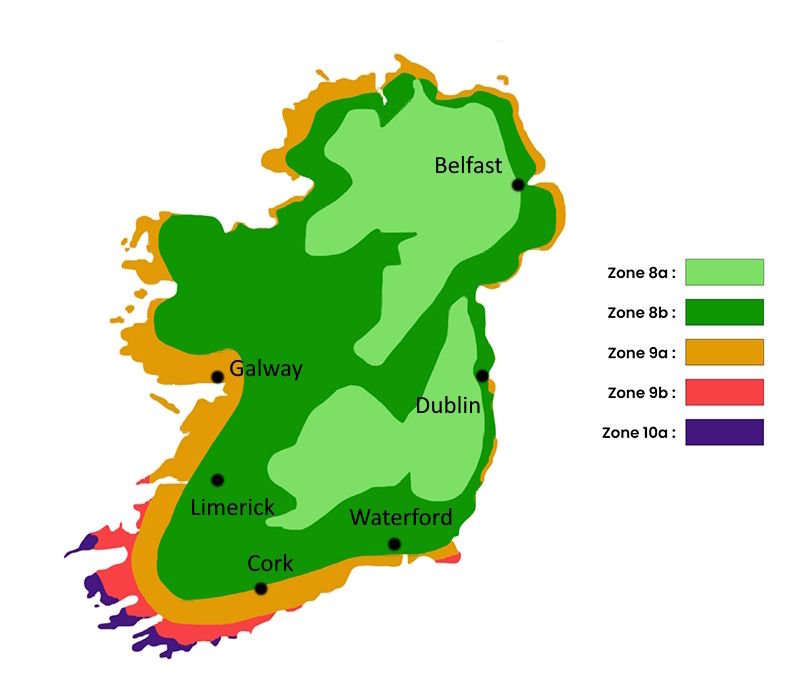
Hardiness is the lowest winter temperature a plant can endure without suffering serious damage or even dying. However, hardiness is affected by location (a sheltered area, such as a patio), protection (winter cover) and soil type (hardiness is improved by well-drained soil).
In temperate climates, pruning of spring-flowering shrubs (forsythia, spireas, etc.) should be done just after flowering.
Pruning of summer-flowering shrubs (Indian Lilac, Perovskia, etc.) can be done in winter or spring.
In cold regions as well as with frost-sensitive plants, avoid pruning too early when severe frosts may still occur.
The harvesting period indicated on our website applies to countries and regions in USDA zone 8 (France, England, Ireland, the Netherlands).
In colder areas (Scandinavia, Poland, Austria...) fruit and vegetable harvests are likely to be delayed by 3-4 weeks.
In warmer areas (Italy, Spain, Greece, etc.), harvesting will probably take place earlier, depending on weather conditions.
The sowing periods indicated on our website apply to countries and regions within USDA Zone 8 (France, UK, Ireland, Netherlands).
In colder areas (Scandinavia, Poland, Austria...), delay any outdoor sowing by 3-4 weeks, or sow under glass.
In warmer climes (Italy, Spain, Greece, etc.), bring outdoor sowing forward by a few weeks.
The planting period indicated on our website applies to regions in USDA Zone 9a (East Coast and Midlands: Dublin, Wexford, Waterford, Kilkenny, Portlaoise). It will vary depending on where you live:
- On the west coast and in the north-west (Galway, Limerick, Sligo, Donegal, Westport), delay planting by 1 to 2 weeks in spring and bring it forward by 1 to 2 weeks in autumn compared to the dates given, preferably choosing periods without strong winds.
- In the inland hills and plateaus (Wicklow Mountains, Macgillycuddy’s Reeks, Connemara, Killarney), it is best to plant in spring (April–May) or autumn (September–October), avoiding periods of waterlogged soil in winter and strong winds, which pose the main risk to newly planted trees in these areas.
The flowering period indicated on our website applies to regions in USDA Zone 9a, such as the East Coast and Midlands, including Dublin, Wexford, Waterford, Kilkenny and Portlaoise.
This will vary depending on where you live:
- On the west coast and in the northwest (Galway, Limerick, Sligo, Donegal and Westport), it will be delayed by one to two weeks compared to the given dates, due to stronger Atlantic winds and less spring sunshine.
- In the inland hills and plateaus (the Wicklow Mountains, the Macgillycuddy's Reeks, Connemara and Killarney), flowering will be delayed by two to three weeks. Flowering mainly occurs between May and July, with the limiting factors being less frost and more of the excessive humidity, strong winds and lack of sunshine that are characteristic of these areas.
Shipping country and language
Your country of residence may be:
Your country of residence is:
For a better user experience on our website, you can select:
Your shipping country:
-
 Austria
-
 Belgium
-
 Bosnia & Herzegovina
-
 Bulgaria
-
 Croatia
-
 Cyprus
-
 Czechia
-
 Denmark
-
 Estonia
-
 Finland
-
 France
-
 Germany
-
 Greece
-
 Hungary
-
 Iceland
-
 Ireland
-
 Italy
Italy
-
 Latvia
-
 Liechtenstein
-
 Lithuania
-
 Luxembourg
-
 Malta
Malta
-
 Netherlands
-
 Poland
-
 Portugal
-
 Romania
-
 Serbia
-
 Slovakia
-
 Slovenia
-
 Spain
Spain
-
 Sweden
-
 Switzerland
Language:
-
French
-
 English
-
Spanish
-
Italian
-
German
-
Portuguese
-
Dutch
-
Finnish
My Account
Hello
My wish lists
My cart
Log in / Register
Existing customer?
This form is protected by reCAPTCHA - the Google Privacy Policy and Terms of Service apply.
New customer?
Create an account to track your orders, access our customer service and, if you wish, make the most of our upcoming offers.