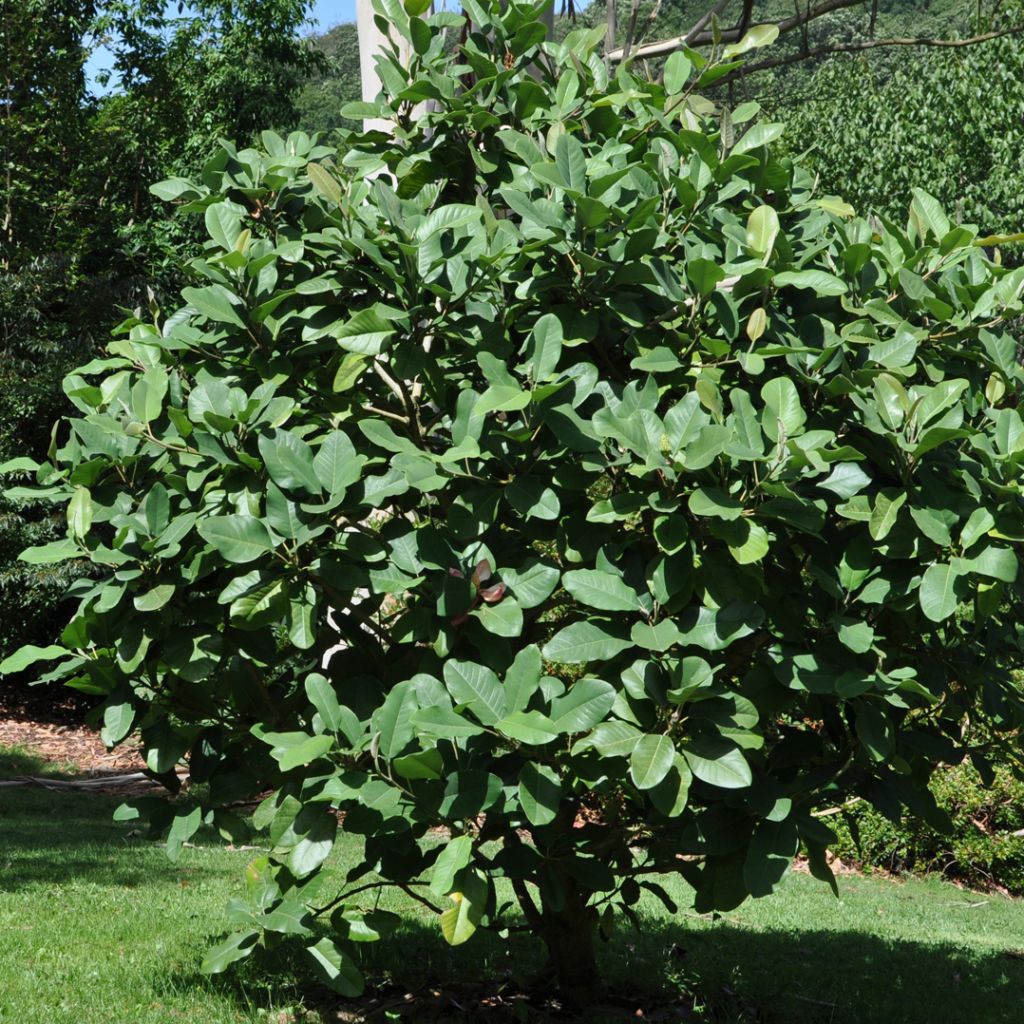
Magnolia delavayi - Chinese Magnolia
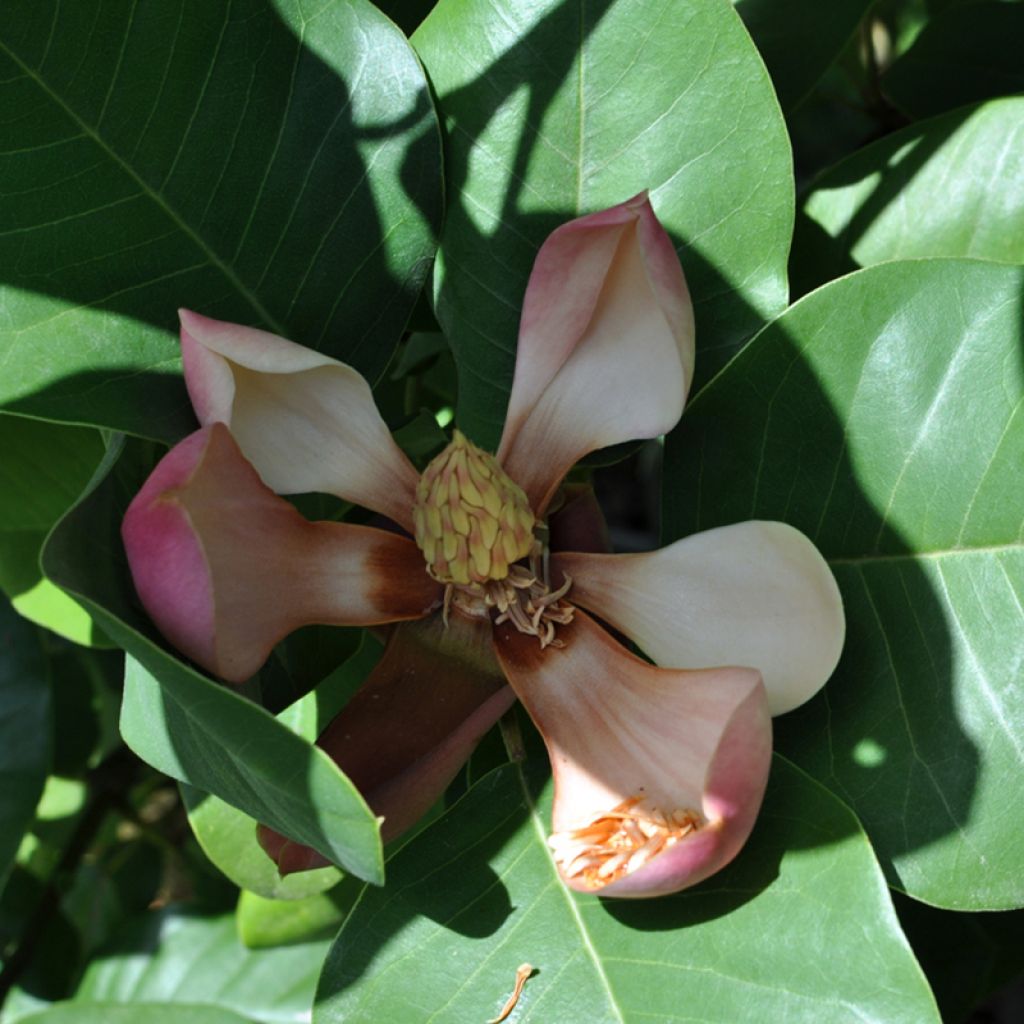
Magnolia delavayi - Chinese Magnolia
Magnolia delavayi - Chinese Magnolia
Magnolia delavayi
Chinese evergreen Magnolia
As expected, it takes a few years to establish itself properly, depending on the soil/mulch, but there it is, it's starting to grow well!
Nadia, 22/02/2022
Back-to-school special offer!
Get €10 off for every €50 you spend! And get up to €40 off on a single order.
How does it work?
1. Shop your favourites
Add your favourite plants to your basket. For every €50 you spend (excluding delivery charges, store credit and the plastic-free option), you’ll receive a €10 voucher.
€50 spent = €10 voucher
€100 spent = €20 voucher
€150 spent = €30 voucher
€200 spent = €40 voucher
2. Place your order
Once your basket reaches one of the spending thresholds, place your order. You can even choose your delivery date!
3. Receive your voucher
As soon as your order has been shipped, you’ll receive an email containing your personal voucher code and its value.
4. Use it on your next order
Your voucher is valid for 90 days from the date you receive it. It can be used once only, on a new order worth at least the value of the voucher, excluding delivery charges.
Please note: Vouchers can be combined with other offers, but cannot be split or refunded.
Why not try an alternative variety in stock?
View all →
Available in 1 sizes
Available in 1 sizes

Available in 2 sizes
Available in 1 sizes
Available in 3 sizes
Available in 2 sizes
Available in 2 sizes
Available in 2 sizes

Available in 1 sizes

Available in 1 sizes
This plant carries a 24 months recovery warranty
More information
We guarantee the quality of our plants for a full growing cycle, and will replace at our expense any plant that fails to recover under normal climatic and planting conditions.

Does this plant fit my garden?
Set up your Plantfit profile →
Description
Magnolia delavayi is a superb ornamental tree of medium size, with large grey-green leaves. From mid-summer to autumn, large, delicately scented cream flowers cover the tree. Moderately hardy, it requires a location sheltered from cold winter winds, and prefers a sunny or semi-shaded exposure. It's suited to neutral to acidic, fertile, moist and well-drained soil. This Magnolia, an extremely rare species that can be described as a collector's tree, is a must-see!
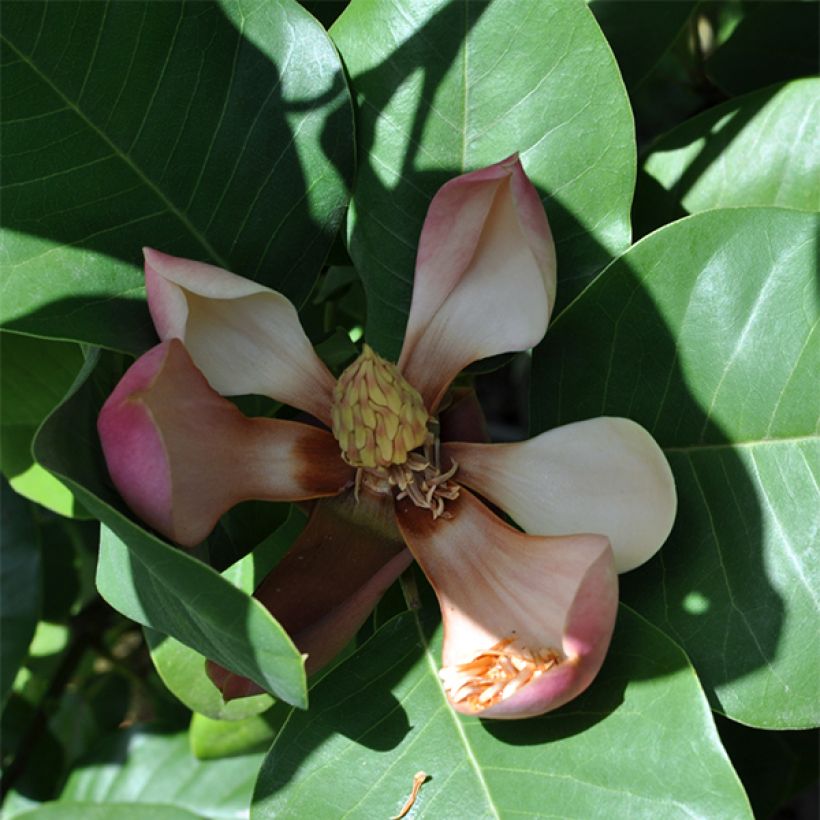
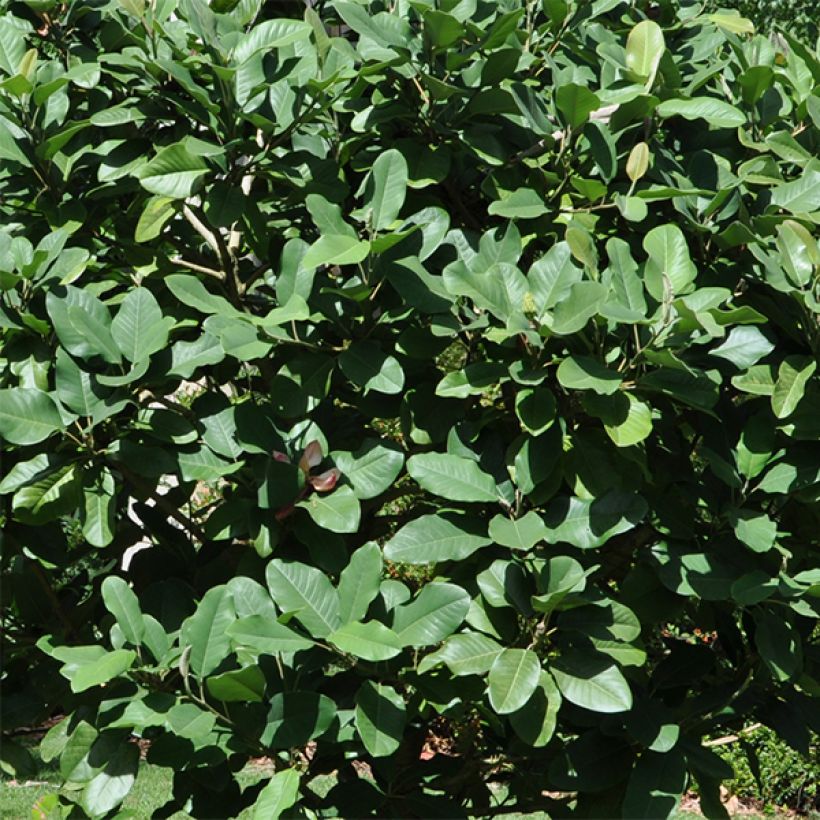
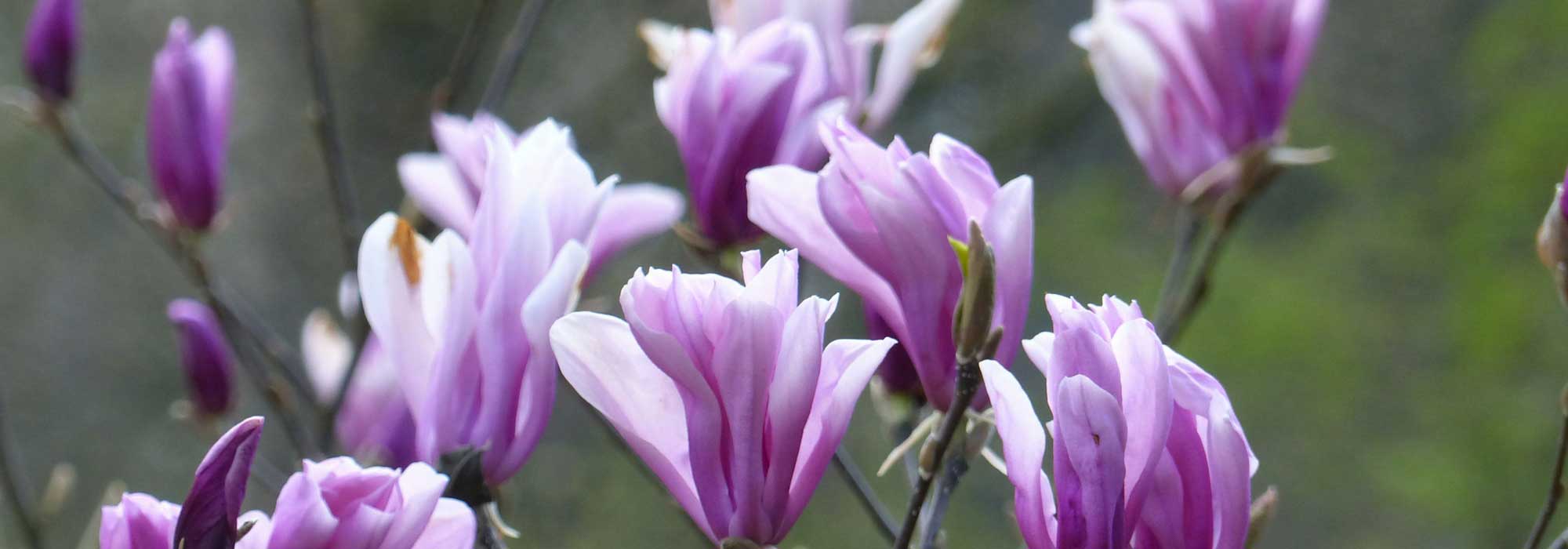
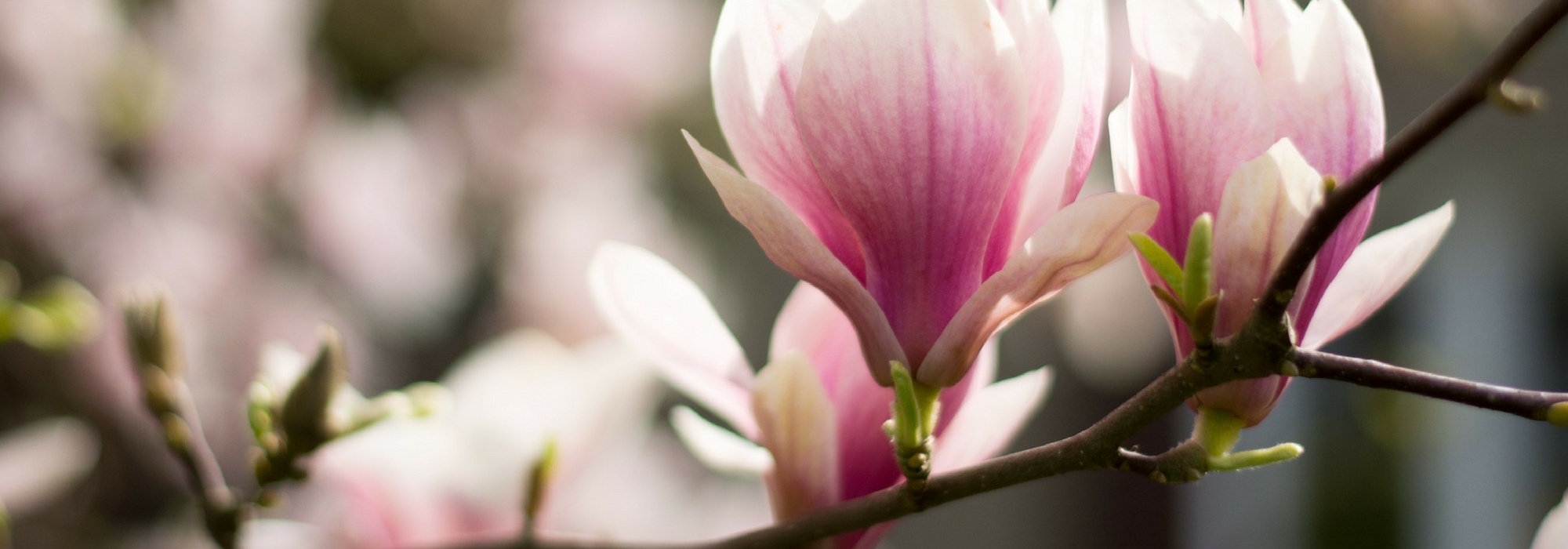
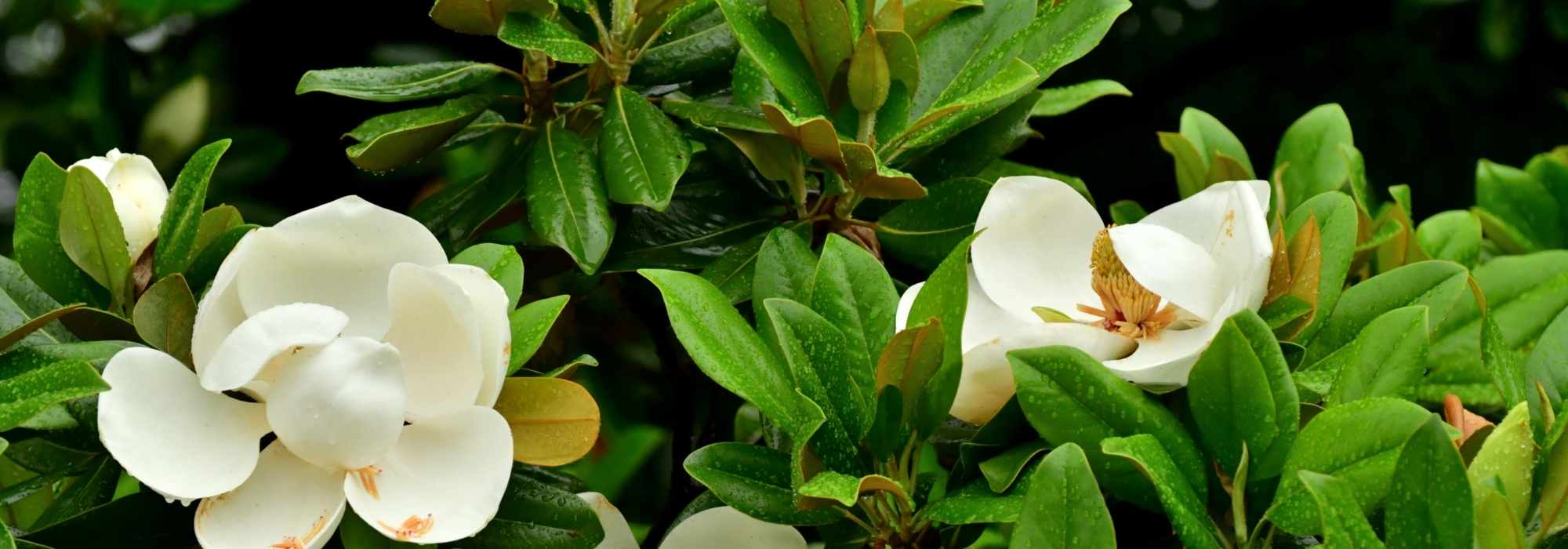
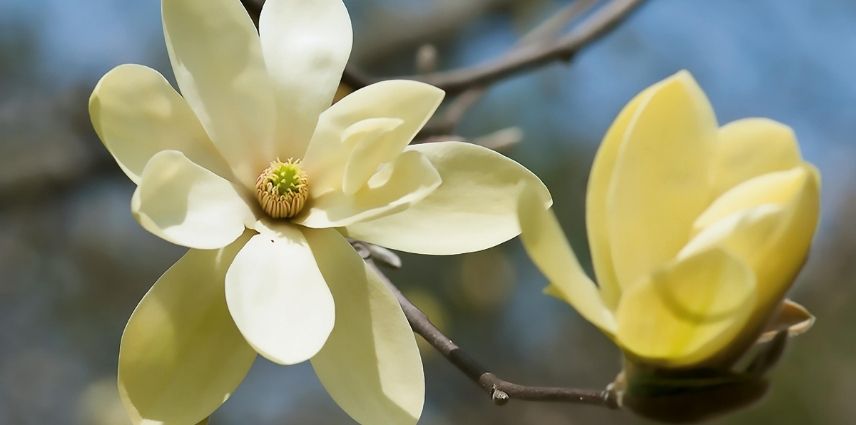
Magnolia delavayi is a compact, moderately hardy tree with a rounded silhouette. Originating from China, it forms a branching structure, 10 m to 12 m (32.8 ft to 39.4 ft) in height and 8 m (26.2 ft) in width. Its evergreen foliage consists of large, tough and glossy grey-green oval leaves, carried by a petiole of 5 cm to 7 cm (2 in to 2.8 in). Its leaves measure 10 cm to 20 cm (3.9 in to 7.9 in) in length and 5 cm to 10 cm (2 in to 3.9 in) in width. From July to September, it adorns itself with large, fragrant, ephemeral, solitary cup-shaped flowers, measuring 10 cm to 20 cm (3.9 in to 7.9 in) in diameter, in cream or pale-yellow colour, taking on lovely peach-pink hues as they fade. They exhibit numerous stamens and a cone in their centre, and their 9 tepals are thick and waxy in appearance. After flowering, the cone remains on the tree until ripening. The bark of its trunk is dark grey and furrowed.
This rare Chinese evergreen Magnolia, with its splendid evergreen foliage and remarkable fragrant flowering, will work wonders in both a small-sized garden and a large park! Moderately hardy, it should be planted in a location sheltered from cold winds, in full sun or partial shade. Choose a rich, moist, even humid, but well-drained and non-calcareous soil. Also, make sure not to plant any other vegetation within 1.50 m (3.3 ft) of the Magnolia trunk, as its roots do not tolerate competition. It is most often used as a solitary subject in the middle of a short grass meadow, where its magnificent flowering is truly stunning. It can also be planted with a mass of acid-loving shrubs (Rhododendrons, Camellias, Hydrangeas, Nandinas, Tree or herbaceous Peonies, etc.) for a Japanese-style garden. Use this tree to create beautiful flowering hedges along pathways, alternating this Magnolia with other cultivars (Magnolia grandiflora, Magnolia denudata, Magnolia soulangeana, etc.).
Magnolias are ancient trees, with fossils dating back over 20 million years. Their magnificent flowering is considered one of the most primitive: their flowers are evolutionarily close to the earliest existing flowers. The bark of magnolias has medicinal properties and is used in cosmetics. Their wood is considered precious.
Its name, Magnolia, was given to it in 1703 by Charles Plumier, botanist to King Louis XIV, thus paying tribute to the physician-botanist Pierre Magnol (1638-1715), who was one of the directors of the Botanical Garden of Montpellier in the late 17th century. Its specific name, delavayi, is derived from Father Jean Marie Delavay (1834-1895), a French Christian missionary in China, who collected a large number of plants from the Yunnan region on behalf of the Museum of Natural History in Paris.
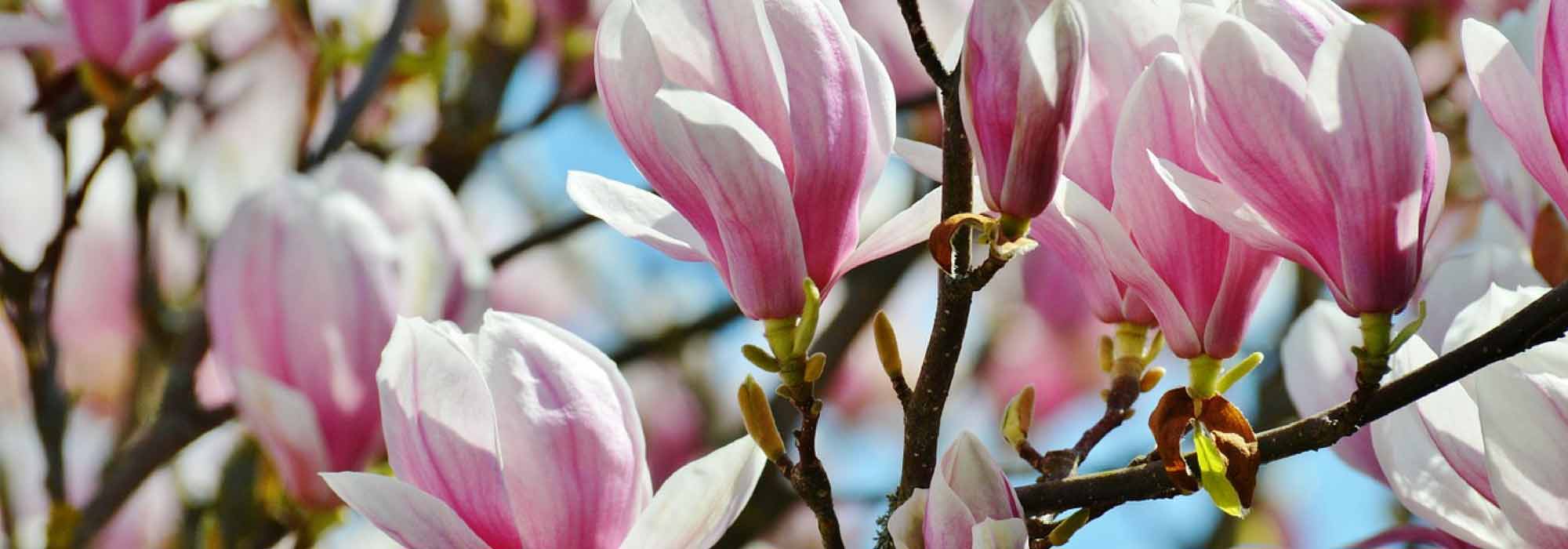
Magnolia delavayi - Chinese Magnolia in pictures
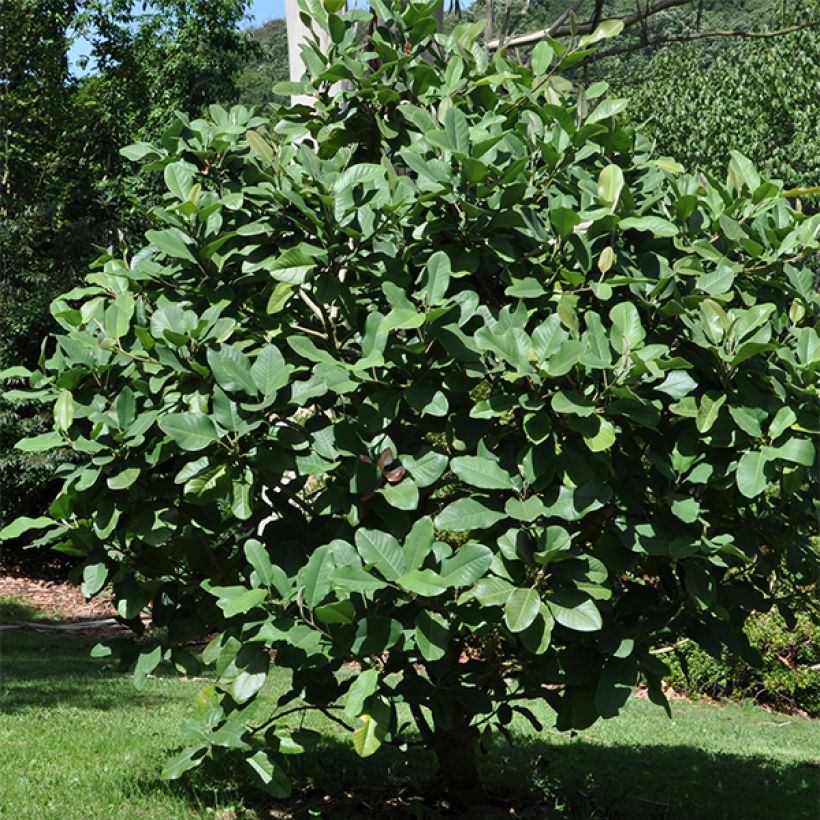
Plant habit
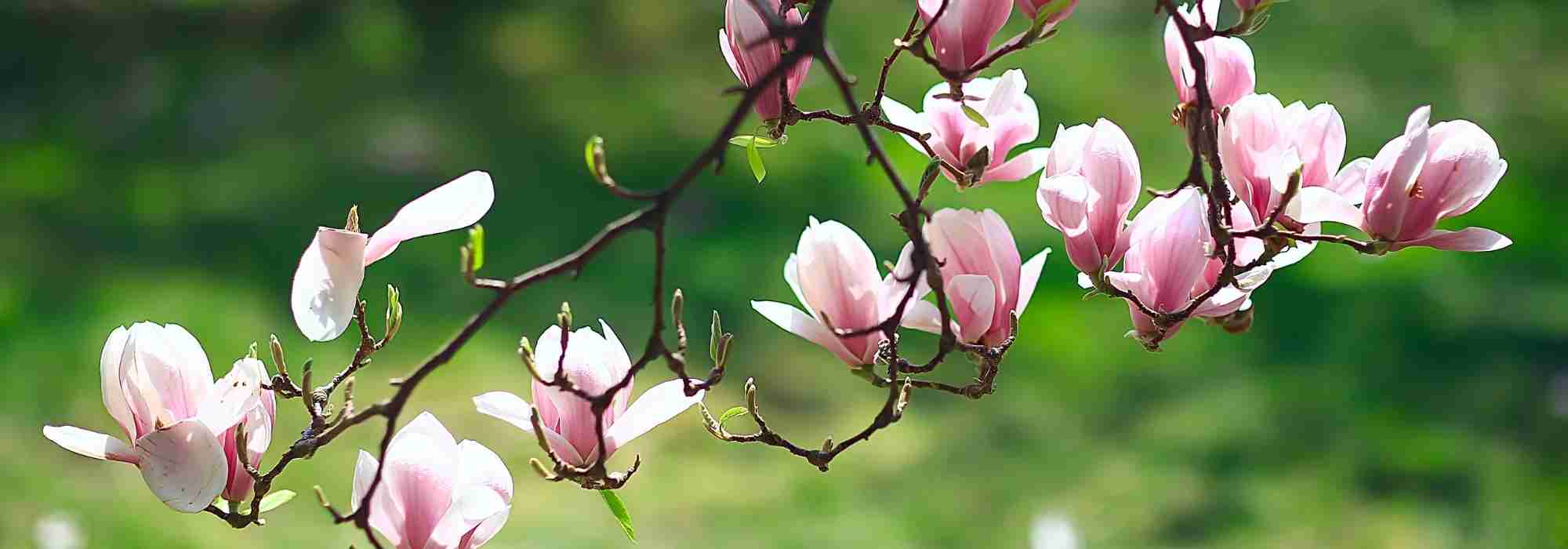
Flowering
Foliage
Botanical data
Magnolia
delavayi
Magnoliaceae
Chinese evergreen Magnolia
China
Planting and care
Magnolia delavayi prefers sheltered situations, sunny to partially shady exposures, and moist to humid, well-drained, rich and humus-rich, deep, neutral to acidic soil. Of medium hardiness, choose a sheltered location for it. Magnolia delavayi is tolerant of temperatures down to -7° C (19.4° F), but late frosts and cold winds can damage its flower buds and young leaves, thus affecting flowering. Plant in spring or autumn, outside the frost period. Provide a pit of 80 cm (31.5 in) on each side and as deep, with a good supply of heath soil and compost. Take care to gently handle it when installing it in the hole, so as not to break the roots which are fleshy but quite fragile. Immediate watering, with non-calcareous water (rainwater), allows the soil to be compacted around the roots. During the first year of planting, water once a week. It will appreciate an application of fertiliser once a year in spring. For planting in limestone soil, replace your soil with turf, pine bark, leaf compost and heath soil. Water abundantly in the first years. The Magnolia does not like prolonged drought, so the soil should remain slightly moist (but not waterlogged) throughout the summer. It is advisable to mulch its base to keep it cool during hot weather, enrich its soil, and protect it from the cold in winter. Since its roots are fragile, transplanting should be avoided. The only enemies of Magnolia are parasites such as scale insects, snails and slugs that attack young plants, and cryptogamic diseases such as root rot (in overly waterlogged soil) and coral disease.
Planting period
Intended location
Care
Planting & care advice
-
-
-
-

-

-
-
-
-
, onOrder confirmed
Reply from on Promesse de fleurs
Recently viewed products
Haven't found what you were looking for?
Hardiness is the lowest winter temperature a plant can endure without suffering serious damage or even dying. However, hardiness is affected by location (a sheltered area, such as a patio), protection (winter cover) and soil type (hardiness is improved by well-drained soil).
In temperate climates, pruning of spring-flowering shrubs (forsythia, spireas, etc.) should be done just after flowering.
Pruning of summer-flowering shrubs (Indian Lilac, Perovskia, etc.) can be done in winter or spring.
In cold regions as well as with frost-sensitive plants, avoid pruning too early when severe frosts may still occur.
The harvesting period indicated on our website applies to countries and regions in USDA zone 8 (France, England, Ireland, the Netherlands).
In colder areas (Scandinavia, Poland, Austria...) fruit and vegetable harvests are likely to be delayed by 3-4 weeks.
In warmer areas (Italy, Spain, Greece, etc.), harvesting will probably take place earlier, depending on weather conditions.
The sowing periods indicated on our website apply to countries and regions within USDA Zone 8 (France, UK, Ireland, Netherlands).
In colder areas (Scandinavia, Poland, Austria...), delay any outdoor sowing by 3-4 weeks, or sow under glass.
In warmer climes (Italy, Spain, Greece, etc.), bring outdoor sowing forward by a few weeks.
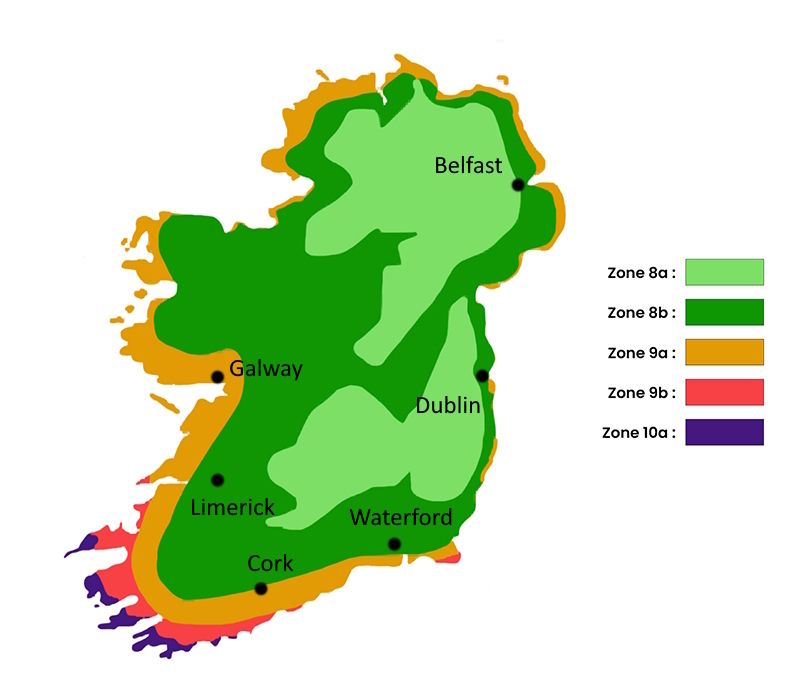
The planting period indicated on our website applies to regions in USDA Zone 9a (East Coast and Midlands: Dublin, Wexford, Waterford, Kilkenny, Portlaoise). It will vary depending on where you live:
- On the west coast and in the north-west (Galway, Limerick, Sligo, Donegal, Westport), delay planting by 1 to 2 weeks in spring and bring it forward by 1 to 2 weeks in autumn compared to the dates given, preferably choosing periods without strong winds.
- In the inland hills and plateaus (Wicklow Mountains, Macgillycuddy’s Reeks, Connemara, Killarney), it is best to plant in spring (April–May) or autumn (September–October), avoiding periods of waterlogged soil in winter and strong winds, which pose the main risk to newly planted trees in these areas.
The flowering period indicated on our website applies to regions in USDA Zone 9a, such as the East Coast and Midlands, including Dublin, Wexford, Waterford, Kilkenny and Portlaoise.
This will vary depending on where you live:
- On the west coast and in the northwest (Galway, Limerick, Sligo, Donegal and Westport), it will be delayed by one to two weeks compared to the given dates, due to stronger Atlantic winds and less spring sunshine.
- In the inland hills and plateaus (the Wicklow Mountains, the Macgillycuddy's Reeks, Connemara and Killarney), flowering will be delayed by two to three weeks. Flowering mainly occurs between May and July, with the limiting factors being less frost and more of the excessive humidity, strong winds and lack of sunshine that are characteristic of these areas.
Shipping country and language
Your country of residence may be:
Your country of residence is:
For a better user experience on our website, you can select:
Your shipping country:
-
 Austria
-
 Belgium
-
 Bosnia & Herzegovina
-
 Bulgaria
-
 Croatia
-
 Cyprus
-
 Czechia
-
 Denmark
-
 Estonia
-
 Finland
-
 France
-
 Germany
-
 Greece
-
 Hungary
-
 Iceland
-
 Ireland
-
 Italy
Italy
-
 Latvia
-
 Liechtenstein
-
 Lithuania
-
 Luxembourg
-
 Malta
Malta
-
 Netherlands
-
 Poland
-
 Portugal
-
 Romania
-
 Serbia
-
 Slovakia
-
 Slovenia
-
 Spain
Spain
-
 Sweden
-
 Switzerland
Language:
-
French
-
 English
-
Spanish
-
Italian
-
German
-
Portuguese
-
Dutch
-
Finnish
My Account
Hello
My wish lists
My cart
Log in / Register
Existing customer?
This form is protected by reCAPTCHA - the Google Privacy Policy and Terms of Service apply.
New customer?
Create an account to track your orders, access our customer service and, if you wish, make the most of our upcoming offers.