Medlar Macrocarpa - Mespilus germanica
Medlar Macrocarpa - Mespilus germanica
Medlar Macrocarpa - Mespilus germanica
Medlar Macrocarpa - Mespilus germanica
Mespilus germanica Macrocarpa
Medlar, Common Medlar
Back-to-school special offer!
Get €10 off for every €50 you spend! And get up to €40 off on a single order.
How does it work?
1. Shop your favourites
Add your favourite plants to your basket. For every €50 you spend (excluding delivery charges, store credit and the plastic-free option), you’ll receive a €10 voucher.
€50 spent = €10 voucher
€100 spent = €20 voucher
€150 spent = €30 voucher
€200 spent = €40 voucher
2. Place your order
Once your basket reaches one of the spending thresholds, place your order. You can even choose your delivery date!
3. Receive your voucher
As soon as your order has been shipped, you’ll receive an email containing your personal voucher code and its value.
4. Use it on your next order
Your voucher is valid for 90 days from the date you receive it. It can be used once only, on a new order worth at least the value of the voucher, excluding delivery charges.
Please note: Vouchers can be combined with other offers, but cannot be split or refunded.
Why not try an alternative variety in stock?
View all →
Available in 1 sizes

Available in 0 sizes
Available in 1 sizes

Available in 1 sizes
Available in 0 sizes
Available in 1 sizes
Available in 1 sizes
Available in 1 sizes
Available in 1 sizes
Available in 1 sizes
This plant carries a 24 months recovery warranty
More information
We guarantee the quality of our plants for a full growing cycle, and will replace at our expense any plant that fails to recover under normal climatic and planting conditions.
Does this plant fit my garden?
Set up your Plantfit profile →
Description
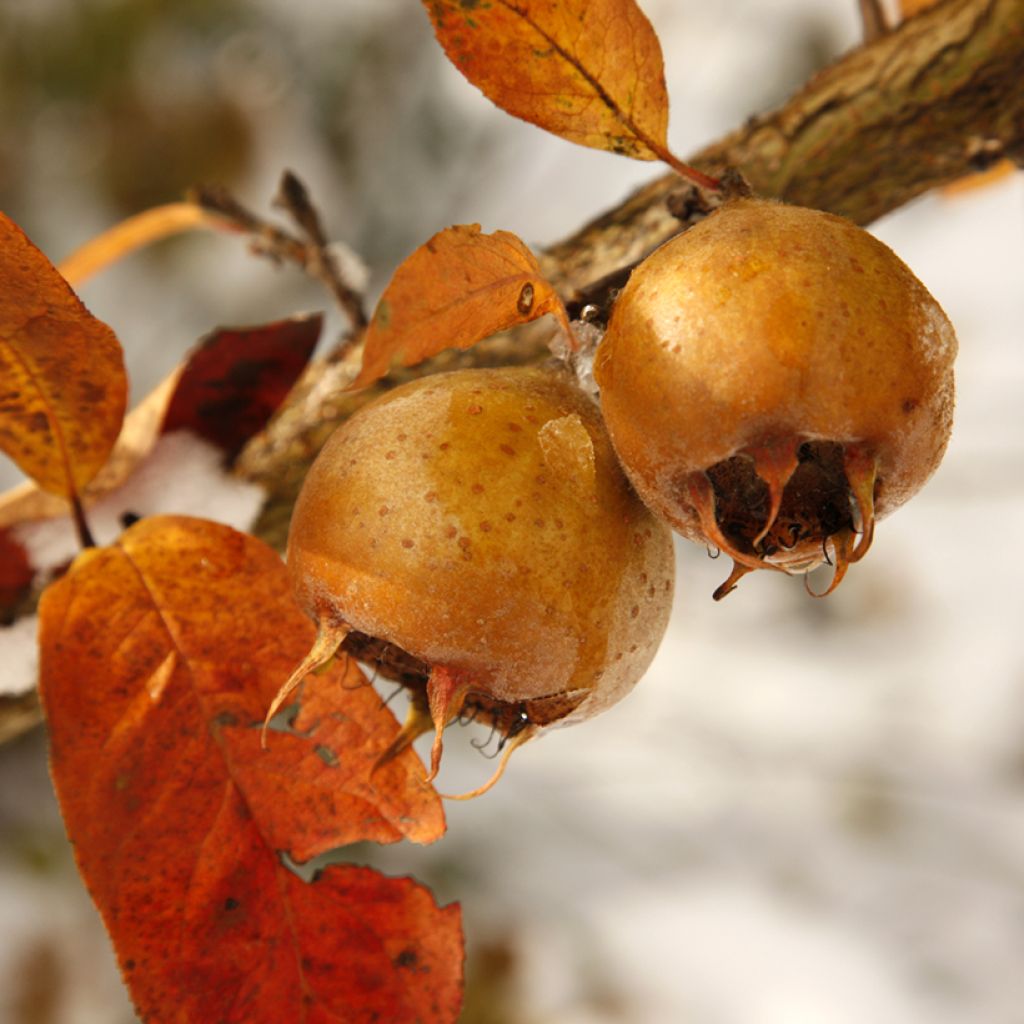
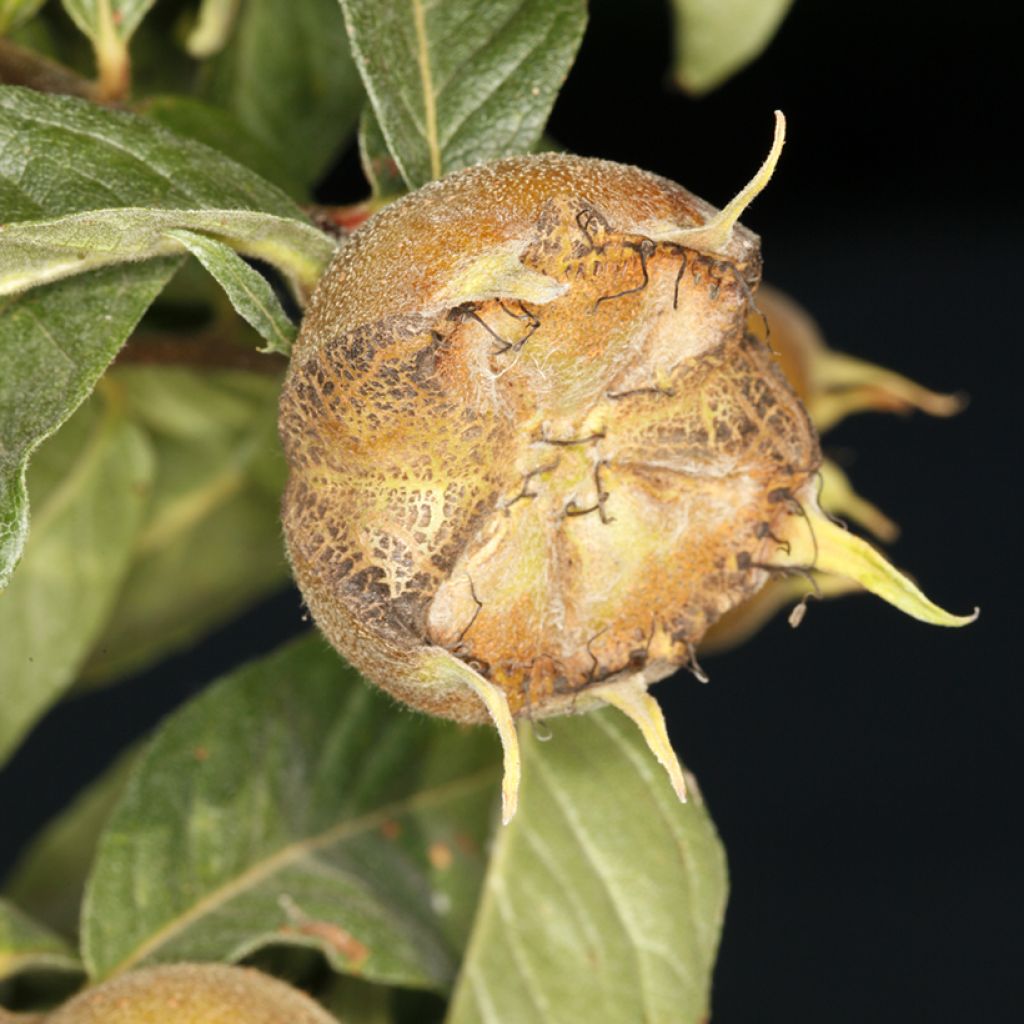
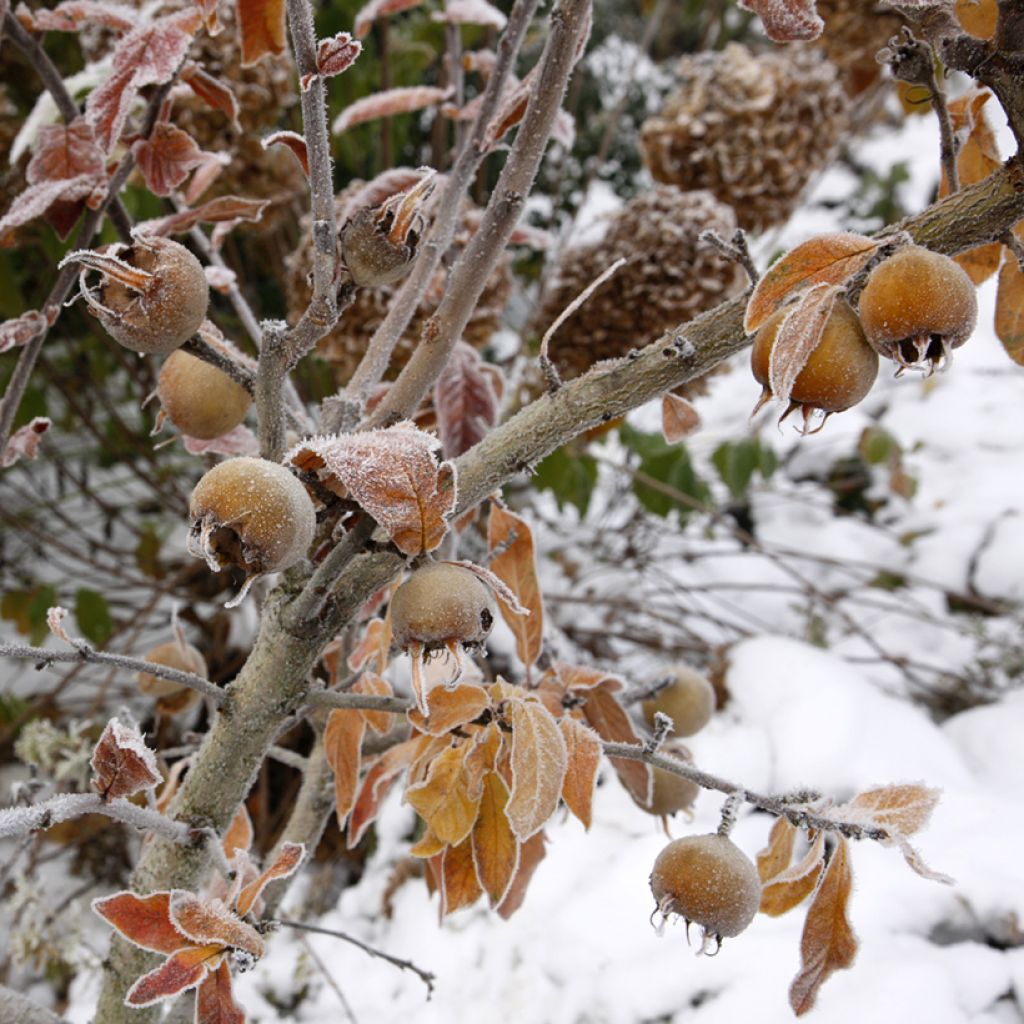
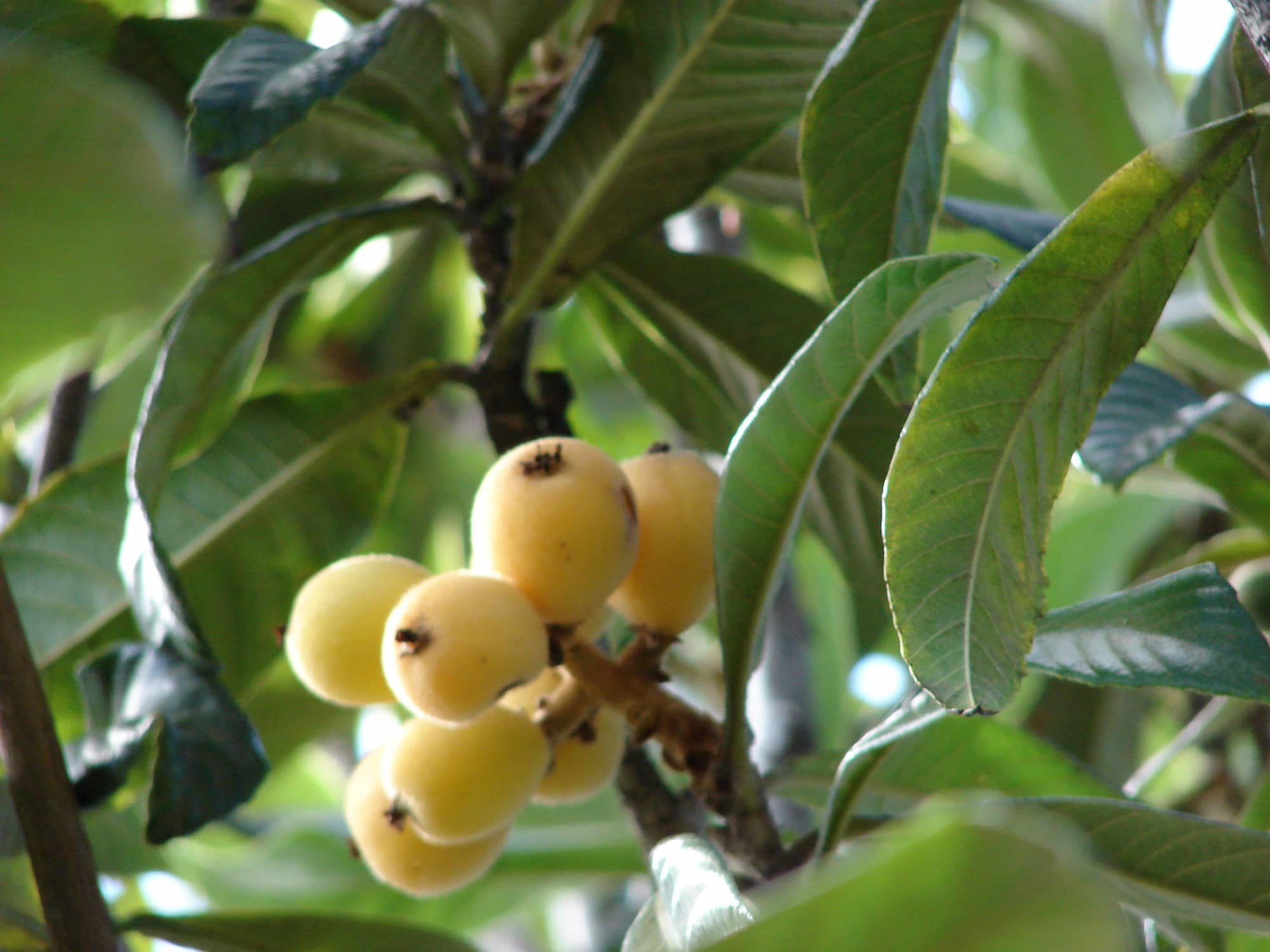
The Mespilus germanica 'Macrocarpa' is a variety of German Medlar with large fruits. This somewhat forgotten fruit bush produces large over-ripe medlars, which are consumed after they have been exposed to frost. Bigger than those of the wild species, the beautiful dark green leaves take on ornamental autumnal colours. This dark foliage also highlights the charming simple white flowering in spring. The brown fruits also have a certain decorative interest. Hardy, this old-fashioned fruit tree deserves to be rediscovered for its originality and ease of cultivation.
The Medlar belongs to the large family of Rosaceae, which includes most of our temperate climate fruit trees, many wild plants from our countryside and forests, and also a profusion of ornamental herbaceous or woody genera, such as Avens (Geum), Cotoneaster, and of course Roses (Rosa) which gave their name to the family. The Medlar, whose scientific name comes straight from ancient Greek mespilos, is a monospecific genus, even though there are hybrids obtained by cross-breeding with Hawthorns (Crataegus) called + Crataegomespilus (the + indicates that it is a chimera, a cross between two genera). Mespilus germanica is a shrub whose original range extends from Greece to the Caucasus region and Iran, and is found in France as well as in Central Europe, as it is quite hardy. It is scattered in hedges and woods, especially in sessile oak (Quercus petraea) stands in central and western France. The original wild species forms a shrub or small tree with twisted trunk and numerous thorny branches, but the cultivated forms since ancient times are generally inermous.
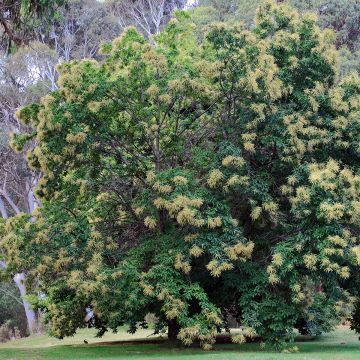
The 'Macrocarpa' variety (large fruit in Latin) is indeed distinguished by the size of its medlars. It forms a small tree, often grafted on a half-standard, with a fairly slow growth, especially in the first years, reaching up to 4 to 5 m in height and 3 to 4 m in width. In its shrubby form, it usually reaches a height and width of 3 m, with a spreading habit and a trunk divided into numerous low branches. The foliage consists of long elliptical leaves with pointed tips. Measuring from 12 to 15 cm long and 5 cm wide, the leaves have well-marked veins and a beautiful dark green colour. When autumn comes, they take on warm shades, ranging from yellow-orange to reddish-brown.
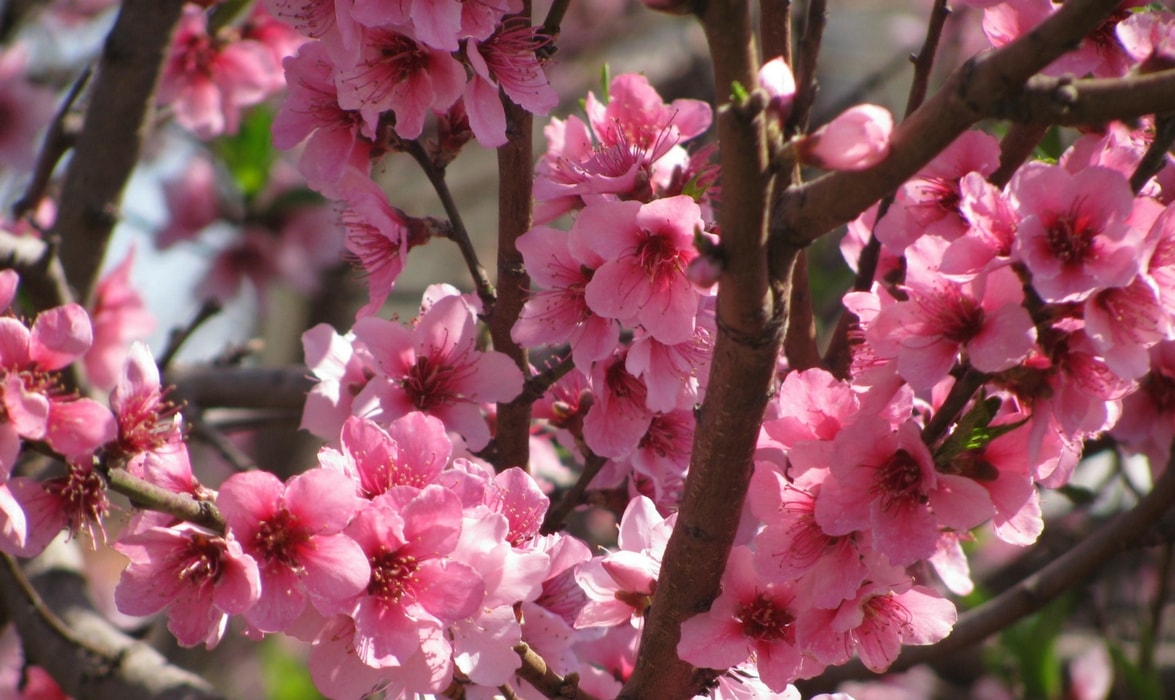
The dark foliage allows for a good appreciation of the beauty of the simple flowers, pure white, which bloom in May, delighting bees as they are melliferous. Composed of 5 rounded petals, the fully open corolla measures about 4 cm in diameter. The flowering is slightly fragrant and the plant being self-fertile, it develops into large fruits reaching 5 cm in diameter or more (compared to 3 to 4 cm for the botanical species). Spherical, they resemble small apples and turn from greenish-gray to reddish-brown when ripe, around October-November. Inedible at first due to their very tart flesh, they need to be exposed to frost for their composition to change and for our palate to accept them. They are left to soften for 3 weeks to 2 months, for example by placing them on a bed of straw in a cool and airy place. Rich in tannins, mucilage, and fat, medlars also contain citric, malic, and caratric acids. Astringent, they were used in the past to treat diarrhoea, and the leaves, after decoction, were used to combat aphthae and sore throat. In cooking, the fruits go perfectly with game.
The Mespilus germanica 'Macrocarpa' deserves to regain its place in our gardens. Very hardy and easy to grow, its unusual fruits bring originality to our diet. Aesthetically, it also has true ornamental value and will find its place in an untrimmed hedge, in a varied flower bed, or in a small orchard inspired by the past. You can accompany it with other extraordinary fruit trees such as the Amelanchier 'Ballerina' with its delicious red fruits in autumn. Its foliage, tinged with copper in spring, takes on a sumptuous red, orange, and purple colour in autumn. The Sorbus 'Grananatnaja', resulting from the cross between a Sorbus and a Hawthorn, produces clusters of small dark red fruits with tart yellow flesh. It also displays beautiful autumn colours. And why not a Quince tree, like the Cydonia oblonga 'Vranja', whose pretty yellow fruits can be cooked to make jam, compotes, or crumbles...
Medlar Macrocarpa - Mespilus germanica in pictures
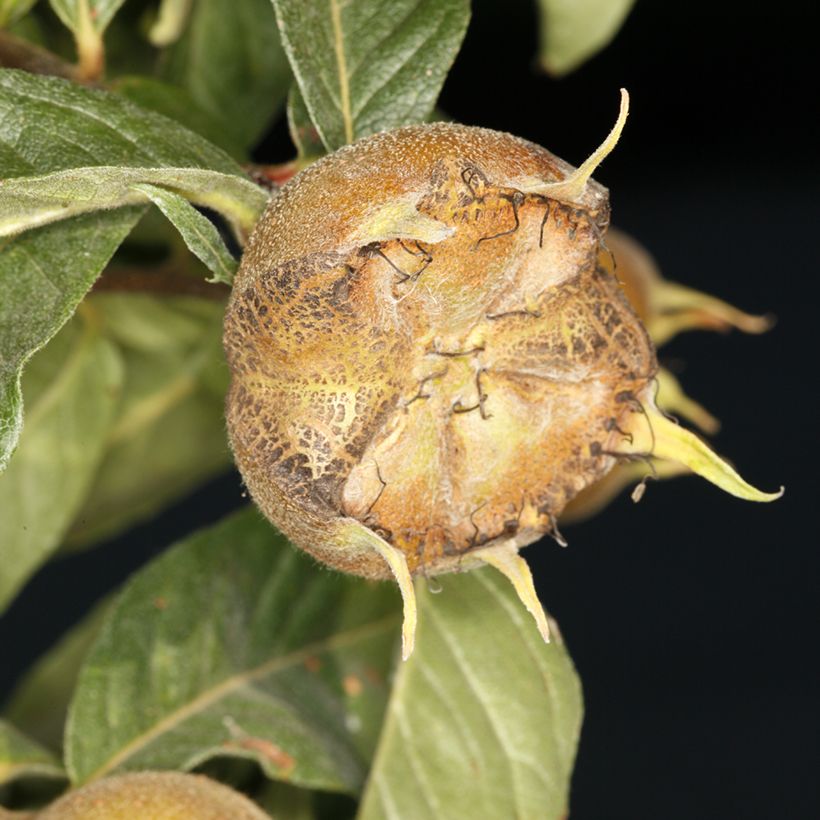
Plant habit
Flowering
Foliage
Botanical data
Mespilus
germanica
Macrocarpa
Rosaceae
Medlar, Common Medlar
Crataegus germanica 'Macrocarpa'
Cultivar or hybrid
Planting and care
Plant your Mespilus germanica 'Macrocarpa' preferably in full sun or under light shade. It accepts a wide variety of soils, from acidic (pH 6) to limestone, only fearing excess clay or limestone. It prefers light and permeable humus-bearing soils, but can adapt to less favourable conditions. Very cold-resistant, up to approximately -25°C, this plant acclimates quite well in the Mediterranean region, provided it is watered in summer. Similarly, after planting, it will be necessary to water regularly for the first two years to help it establish a good root system.
Although quite resistant, the Medlar can be attacked by some diseases such as powdery mildew or brown rot, as well as the dreaded fire blight caused by a bacterium for which there is no treatment. Also watch out for potential attacks from insects, aphids or scale insects, as well as the Mediterranean fruit fly.
Planting period
Intended location
Care
Planting & care advice
-
-
-
-
-
-
-
-
This item has not been reviewed yet - be the first to leave a review about it.
Recently viewed products
Haven't found what you were looking for?
Hardiness is the lowest winter temperature a plant can endure without suffering serious damage or even dying. However, hardiness is affected by location (a sheltered area, such as a patio), protection (winter cover) and soil type (hardiness is improved by well-drained soil).
In temperate climates, pruning of spring-flowering shrubs (forsythia, spireas, etc.) should be done just after flowering.
Pruning of summer-flowering shrubs (Indian Lilac, Perovskia, etc.) can be done in winter or spring.
In cold regions as well as with frost-sensitive plants, avoid pruning too early when severe frosts may still occur.
The harvesting period indicated on our website applies to countries and regions in USDA zone 8 (France, England, Ireland, the Netherlands).
In colder areas (Scandinavia, Poland, Austria...) fruit and vegetable harvests are likely to be delayed by 3-4 weeks.
In warmer areas (Italy, Spain, Greece, etc.), harvesting will probably take place earlier, depending on weather conditions.
The sowing periods indicated on our website apply to countries and regions within USDA Zone 8 (France, UK, Ireland, Netherlands).
In colder areas (Scandinavia, Poland, Austria...), delay any outdoor sowing by 3-4 weeks, or sow under glass.
In warmer climes (Italy, Spain, Greece, etc.), bring outdoor sowing forward by a few weeks.
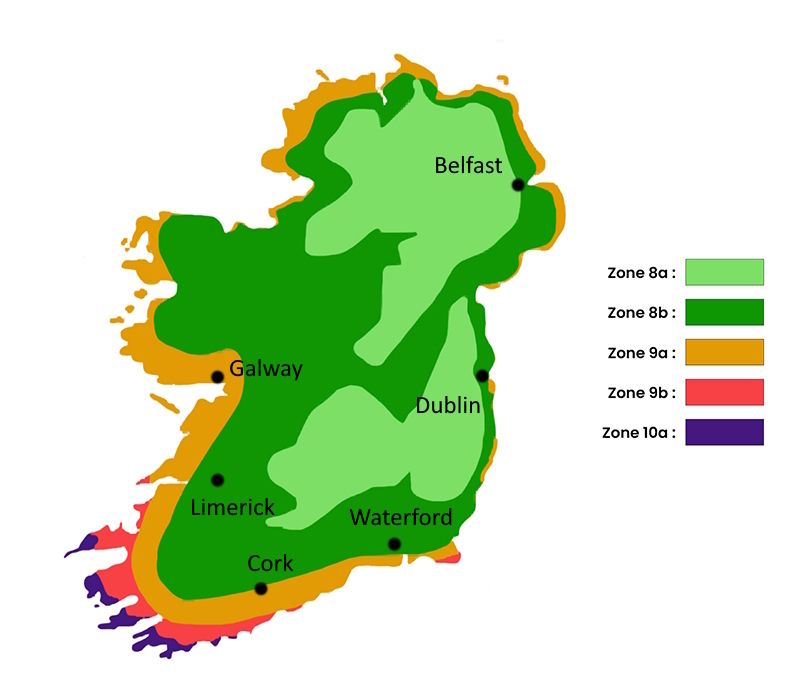
The planting period indicated on our website applies to regions in USDA Zone 9a (East Coast and Midlands: Dublin, Wexford, Waterford, Kilkenny, Portlaoise). It will vary depending on where you live:
- On the west coast and in the north-west (Galway, Limerick, Sligo, Donegal, Westport), delay planting by 1 to 2 weeks in spring and bring it forward by 1 to 2 weeks in autumn compared to the dates given, preferably choosing periods without strong winds.
- In the inland hills and plateaus (Wicklow Mountains, Macgillycuddy’s Reeks, Connemara, Killarney), it is best to plant in spring (April–May) or autumn (September–October), avoiding periods of waterlogged soil in winter and strong winds, which pose the main risk to newly planted trees in these areas.
The flowering period indicated on our website applies to regions in USDA Zone 9a, such as the East Coast and Midlands, including Dublin, Wexford, Waterford, Kilkenny and Portlaoise.
This will vary depending on where you live:
- On the west coast and in the northwest (Galway, Limerick, Sligo, Donegal and Westport), it will be delayed by one to two weeks compared to the given dates, due to stronger Atlantic winds and less spring sunshine.
- In the inland hills and plateaus (the Wicklow Mountains, the Macgillycuddy's Reeks, Connemara and Killarney), flowering will be delayed by two to three weeks. Flowering mainly occurs between May and July, with the limiting factors being less frost and more of the excessive humidity, strong winds and lack of sunshine that are characteristic of these areas.
Shipping country and language
Your country of residence may be:
Your country of residence is:
For a better user experience on our website, you can select:
Your shipping country:
-
 Austria
-
 Belgium
-
 Bosnia & Herzegovina
-
 Bulgaria
-
 Croatia
-
 Cyprus
-
 Czechia
-
 Denmark
-
 Estonia
-
 Finland
-
 France
-
 Germany
-
 Greece
-
 Hungary
-
 Iceland
-
 Ireland
-
 Italy
Italy
-
 Latvia
-
 Liechtenstein
-
 Lithuania
-
 Luxembourg
-
 Malta
Malta
-
 Netherlands
-
 Poland
-
 Portugal
-
 Romania
-
 Serbia
-
 Slovakia
-
 Slovenia
-
 Spain
Spain
-
 Sweden
-
 Switzerland
Language:
-
French
-
 English
-
Spanish
-
Italian
-
German
-
Portuguese
-
Dutch
-
Finnish
My Account
Hello
My wish lists
My cart
Log in / Register
Existing customer?
This form is protected by reCAPTCHA - the Google Privacy Policy and Terms of Service apply.
New customer?
Create an account to track your orders, access our customer service and, if you wish, make the most of our upcoming offers.