Philadelphus Innocence - Mock Orange
Philadelphus Innocence - Mock Orange
Philadelphus Innocence - Mock Orange
Philadelphus x lemoinei Innocence
Mock Orange
The plant arrived with several branches devoid of foliage, small and damaged leaves, but many buds, so a lot of hope.
Dominique, 06/05/2024
Back-to-school special offer!
Get €10 off for every €50 you spend! And get up to €40 off on a single order.
How does it work?
1. Shop your favourites
Add your favourite plants to your basket. For every €50 you spend (excluding delivery charges, store credit and the plastic-free option), you’ll receive a €10 voucher.
€50 spent = €10 voucher
€100 spent = €20 voucher
€150 spent = €30 voucher
€200 spent = €40 voucher
2. Place your order
Once your basket reaches one of the spending thresholds, place your order. You can even choose your delivery date!
3. Receive your voucher
As soon as your order has been shipped, you’ll receive an email containing your personal voucher code and its value.
4. Use it on your next order
Your voucher is valid for 90 days from the date you receive it. It can be used once only, on a new order worth at least the value of the voucher, excluding delivery charges.
Please note: Vouchers can be combined with other offers, but cannot be split or refunded.
Home or relay delivery (depending on size and destination)
Important: You may be charged customs duties by your country’s customs authorities upon delivery.
Schedule delivery date
and select date in basket
This plant carries a 24 months recovery warranty
More information
We guarantee the quality of our plants for a full growing cycle, and will replace at our expense any plant that fails to recover under normal climatic and planting conditions.
Does this plant fit my garden?
Set up your Plantfit profile →
Description
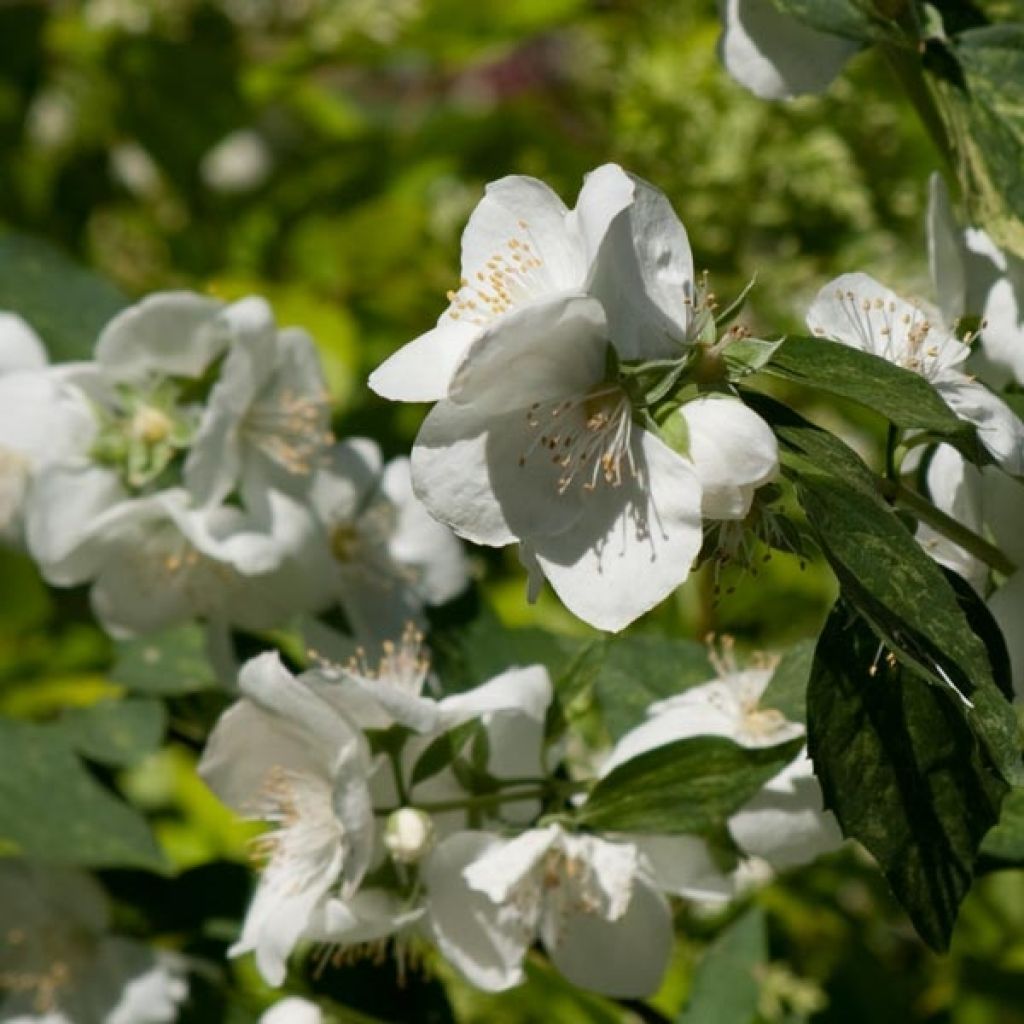
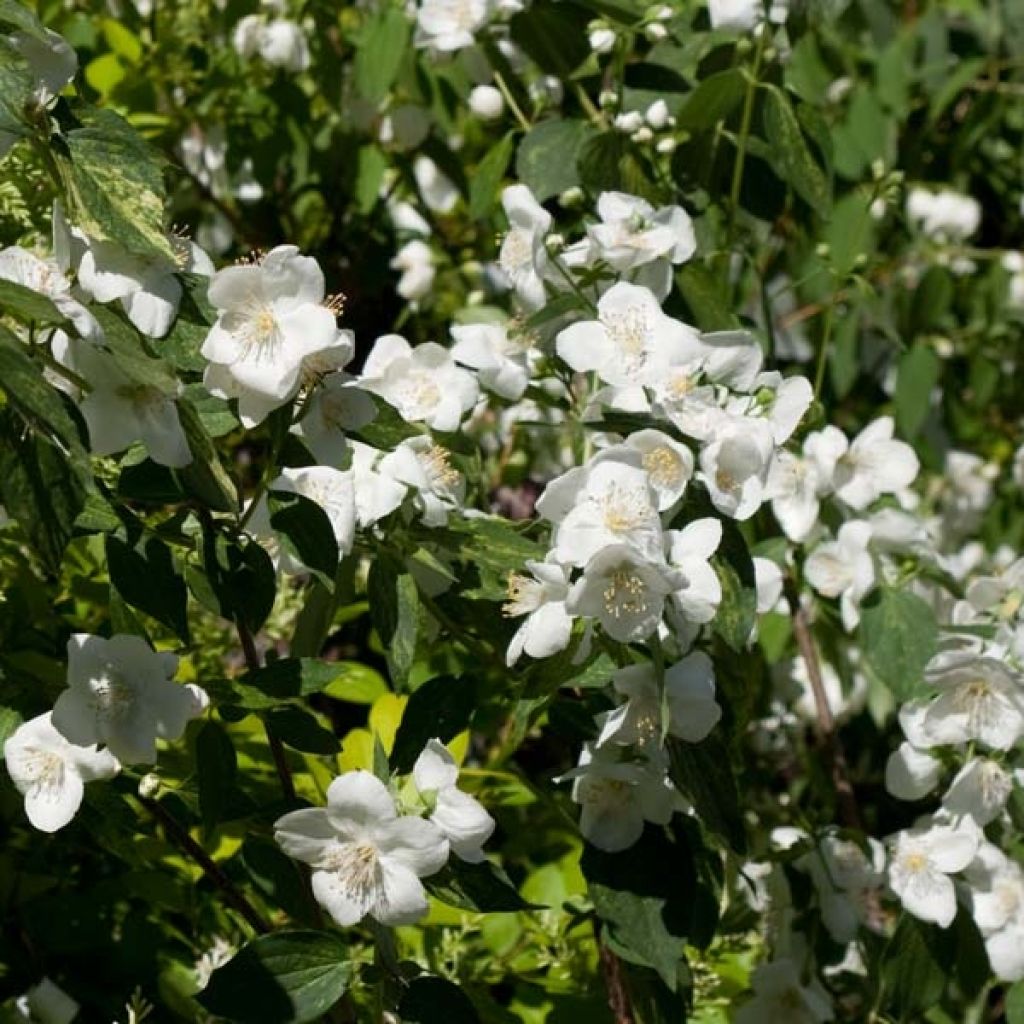
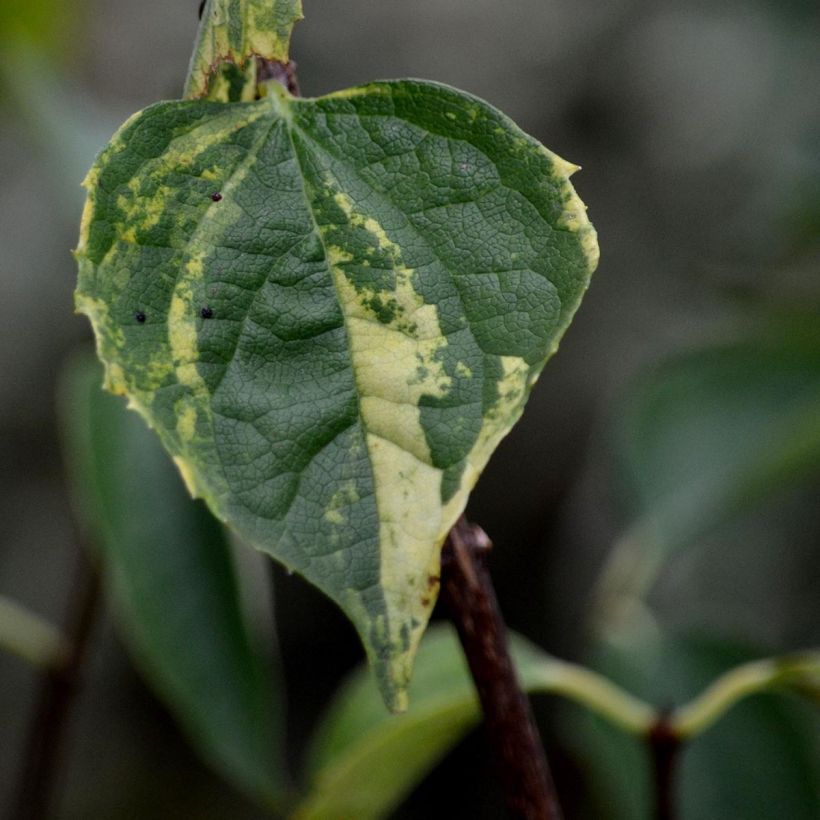
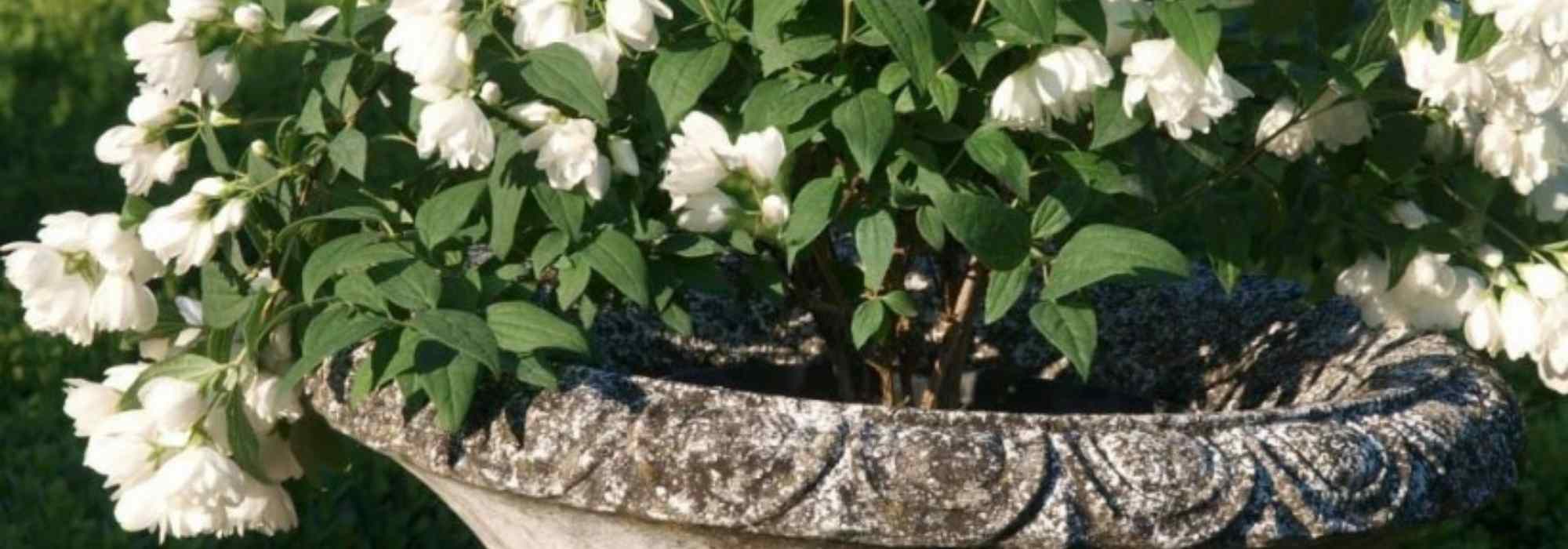
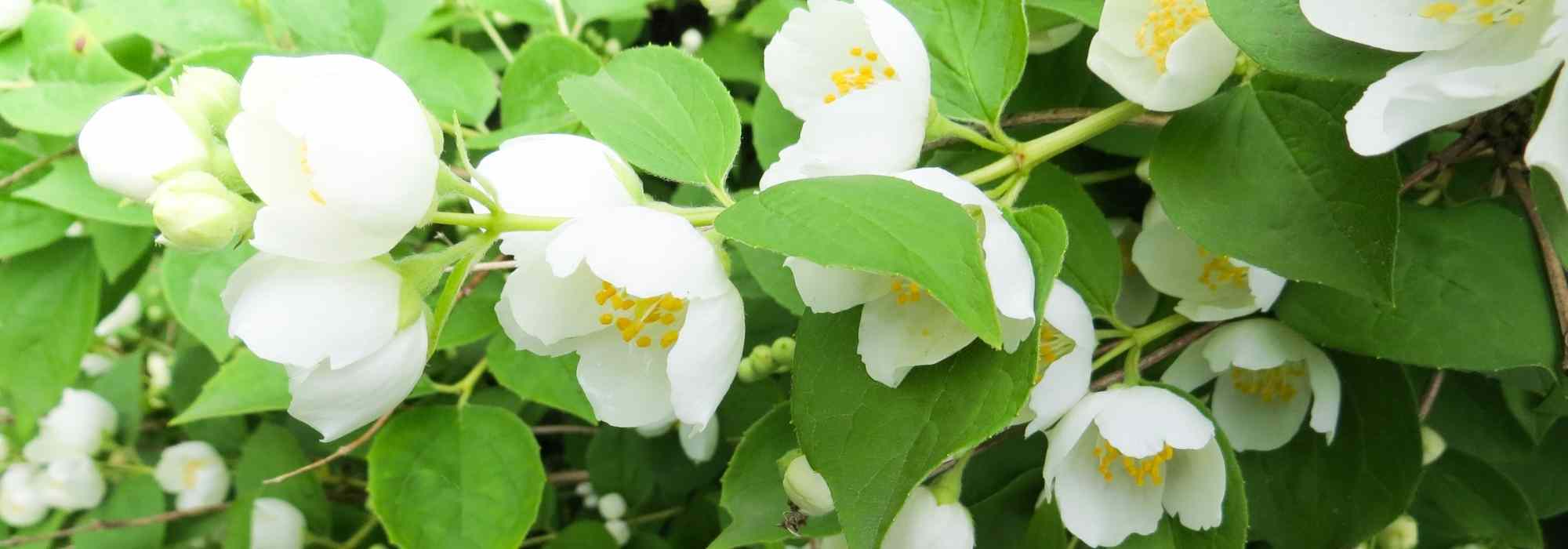
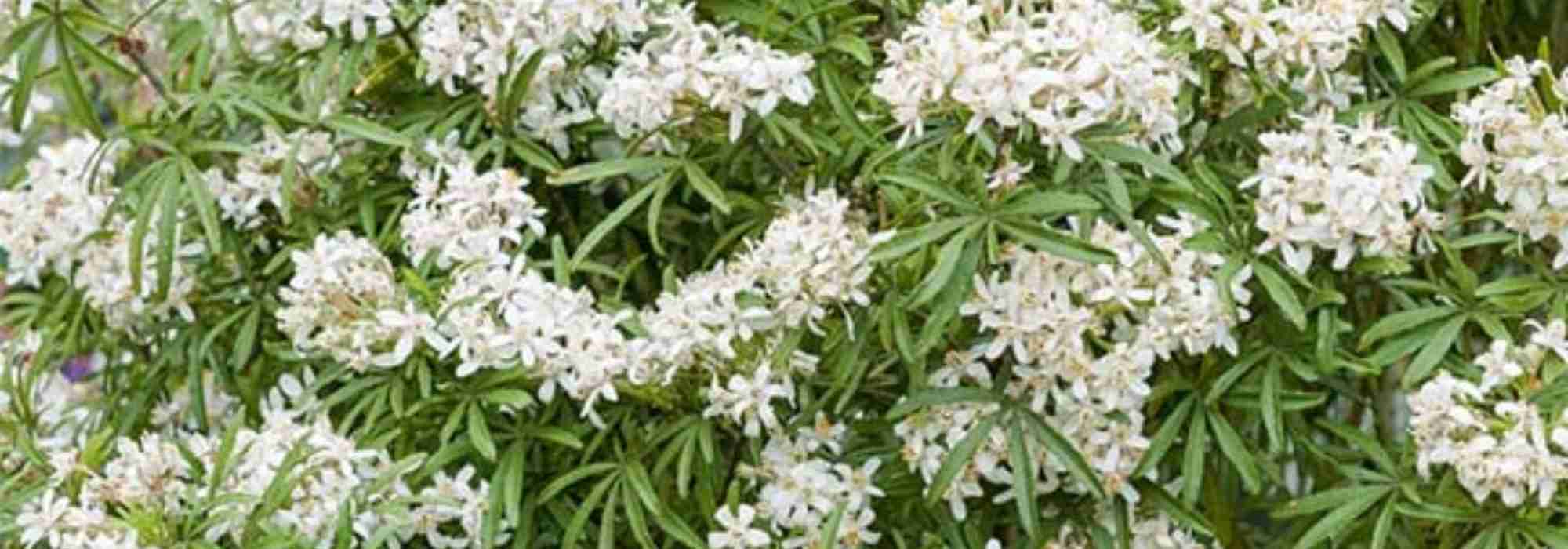
Philadelphus 'Innocence' is a very old variety of garden mock orange, with an unforgettable fragrance. 'Innocence' charms in spring, with an abundance of simple and light white and fragrant flower clusters, but is also attractive outside of flowering, with its foliage randomly splashed with cream, yellow, and gold. A little slow to establish, this mock orange gradually forms a dense and sturdy bush, with a fluid and slightly arched habit. Its variegated foliage, which dislikes strong sun elegantly dresses the shaded or semi-shaded areas of the garden.
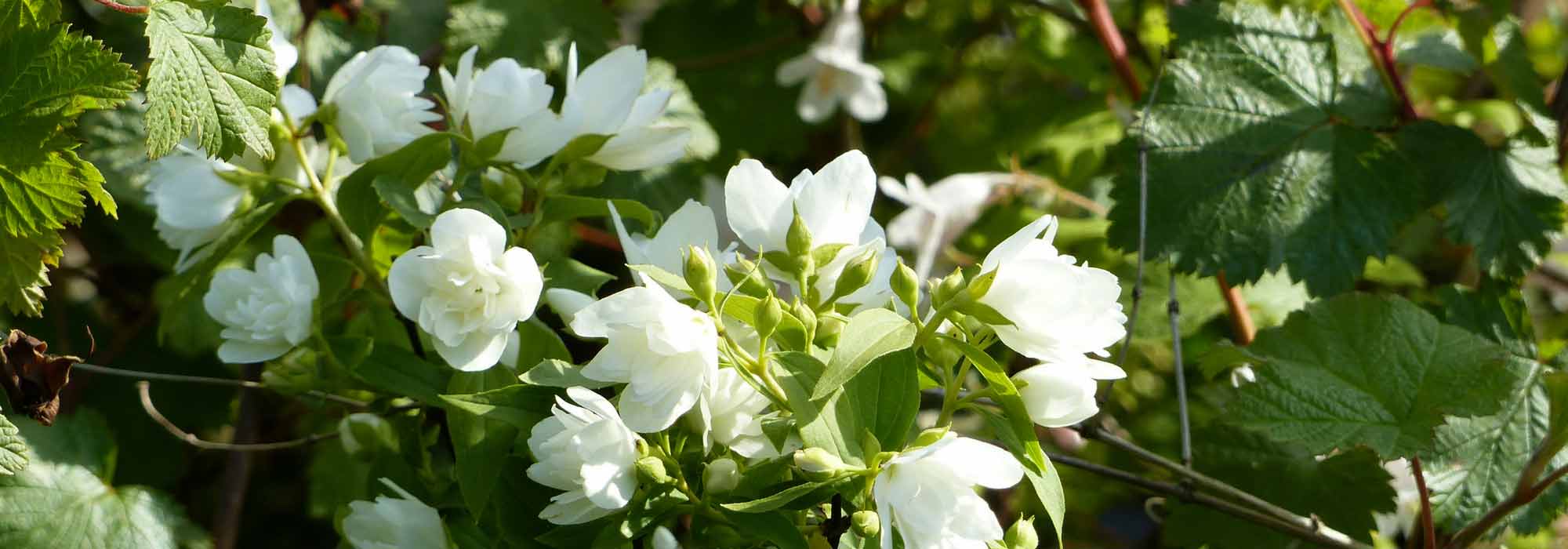
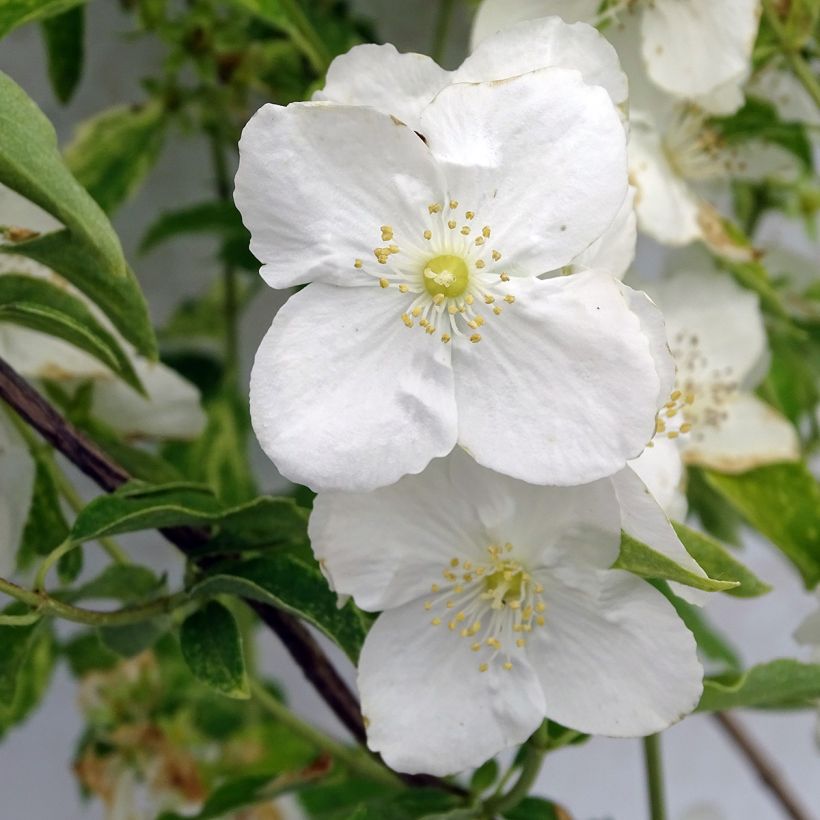
The Philadelphus Innocence is one of the many horticultural hybrids resulting from the cross-breeding of Philadelphus microphyllus (originating from the southeastern U.S.A) and P. coronarius (originating from southern Europe and Asia Minor), obtained in 1900 in France by Victor Lemoine. All these plants belong to the hydrangea family, just like hydrangeas. This shrub is actually a collection of solid, flexible, and curved stems, emerging directly from the ground, giving the plant a dense, compact, and slightly spreading habit. It takes a while to establish: the mock orange takes several years to be at its best. At maturity, this shrub will reach about 2.50m (8ft) in height, and approximately the same in width. The particularly generous flowering occurs in late spring or early summer, earlier or later depending on the climate. The white flowers, composed of 4 petals arranged in flat cups, measure about 3-4cm (1.2 - 1.6in) in diameter. They are gathered in slightly loose terminal clusters. Their intense fragrance is a blend of orange blossom with hints of wild strawberry. Its decorative, deciduous foliage consists of ovate, entire leaves with finely toothed edges, measuring 10cm (3.9in) in length, slightly furry on the underside. Almost cream-coloured in early spring, they later become variegated and punctuated with varying shades of yellow, and turn green in early autumn. The reddish-brown to orange bark flakes off as it ages. Garden mock oranges live for many years.
The mock orange is perfectly hardy and indifferent to the nature of the soil once well established, even if it is chalky and dry in summer. This shrub, sometimes considered ungraceful in winter, is indispensable in the garden. Hybridizers have seized it to create hybrids that all prove to be excellent garden plants, hardy, disease-free, and of great ornamental value. The variegated foliage of 'Innocence' mock orange prohibits it from being exposed to scorching sun, prefer semi-shade, where it will reveal all its splendour. Plant it in a mixed hedge, surrounded by deciduous or evergreen euonymus, lilacs, buddleias, abelias, or large bush roses, as it certainly has its place in the scented garden. Among perennials, one can choose light foliage and flowers, such as those of Geranium phaeum Album, with white lilies, Hosta undulata var albomarginata for example. White-flowered shrubs such as Hydrangea Annabelle, Hydrangea quercifolia Snowflake, and serviceberries will accompany it in a white garden or on the edge of woodland. Finally, one can also let a late-flowering clematis (Clematis flammula) climb in its branches.
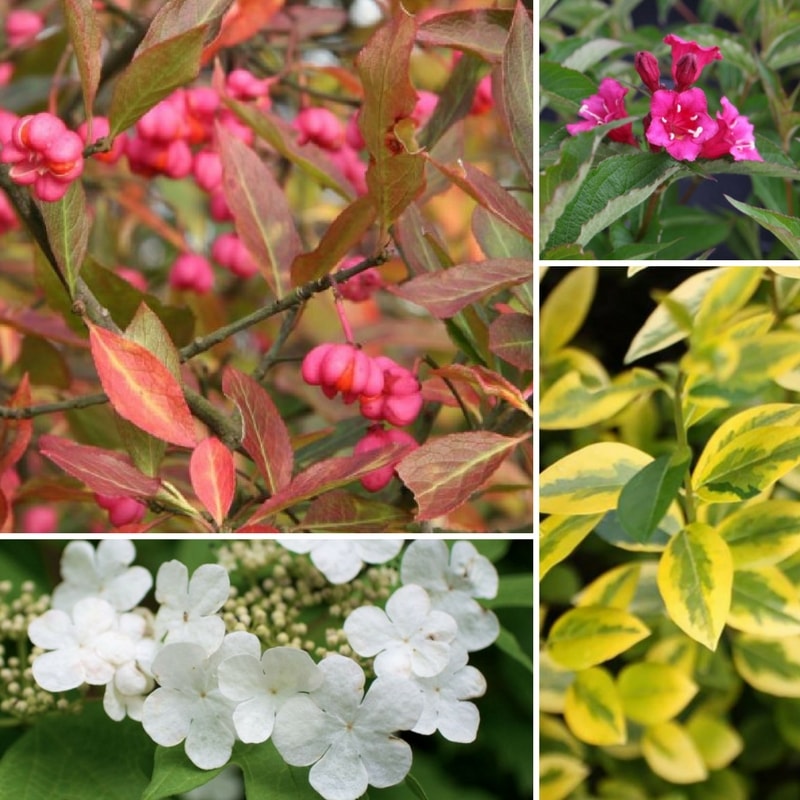
Philadelphus Innocence - Mock Orange in pictures
Plant habit
Flowering
Foliage
Botanical data
Philadelphus
x lemoinei
Innocence
Hydrangeaceae (Philadephaceae)
Mock Orange
Cultivar or hybrid
Planting and care
Planting is best done from October to February. This bush takes a little while to establish itself and deserves some care during the first few years. Afterwards, it can manage on its own and only requires a few generous but spaced waterings during periods of high drought or heatwaves. Its variegated foliage is sensitive to the sun: choose a partially shaded or even shaded location in hot and dry climates during the summer. The type of soil doesn't matter much; the mock orange tolerates limestone and clay perfectly. If your soil is too poor or heavy, improve it by incorporating a portion of topsoil and/or coarse sand into the planting hole, which should be wide and deep (50cm x 50cm (1.6ft)). Pruning should be done after flowering, cutting back the branches that have bloomed and leaving only the young shoots, which will bear next year's flowers. Due to its slow growth and compact habit, this Philadelphus doesn't require annual pruning; trim it if necessary, by shortening the oldest stems every 2-3 years. Philadelphus Innocence is not susceptible to pests, only aphids need to be monitored.
Planting period
Intended location
Care
Planting & care advice
-
-
-

-
-
-

-
-
-
, onOrder confirmed
Reply from on Promesse de fleurs
Recently viewed products
Haven't found what you were looking for?
Hardiness is the lowest winter temperature a plant can endure without suffering serious damage or even dying. However, hardiness is affected by location (a sheltered area, such as a patio), protection (winter cover) and soil type (hardiness is improved by well-drained soil).
In temperate climates, pruning of spring-flowering shrubs (forsythia, spireas, etc.) should be done just after flowering.
Pruning of summer-flowering shrubs (Indian Lilac, Perovskia, etc.) can be done in winter or spring.
In cold regions as well as with frost-sensitive plants, avoid pruning too early when severe frosts may still occur.
The harvesting period indicated on our website applies to countries and regions in USDA zone 8 (France, England, Ireland, the Netherlands).
In colder areas (Scandinavia, Poland, Austria...) fruit and vegetable harvests are likely to be delayed by 3-4 weeks.
In warmer areas (Italy, Spain, Greece, etc.), harvesting will probably take place earlier, depending on weather conditions.
The sowing periods indicated on our website apply to countries and regions within USDA Zone 8 (France, UK, Ireland, Netherlands).
In colder areas (Scandinavia, Poland, Austria...), delay any outdoor sowing by 3-4 weeks, or sow under glass.
In warmer climes (Italy, Spain, Greece, etc.), bring outdoor sowing forward by a few weeks.
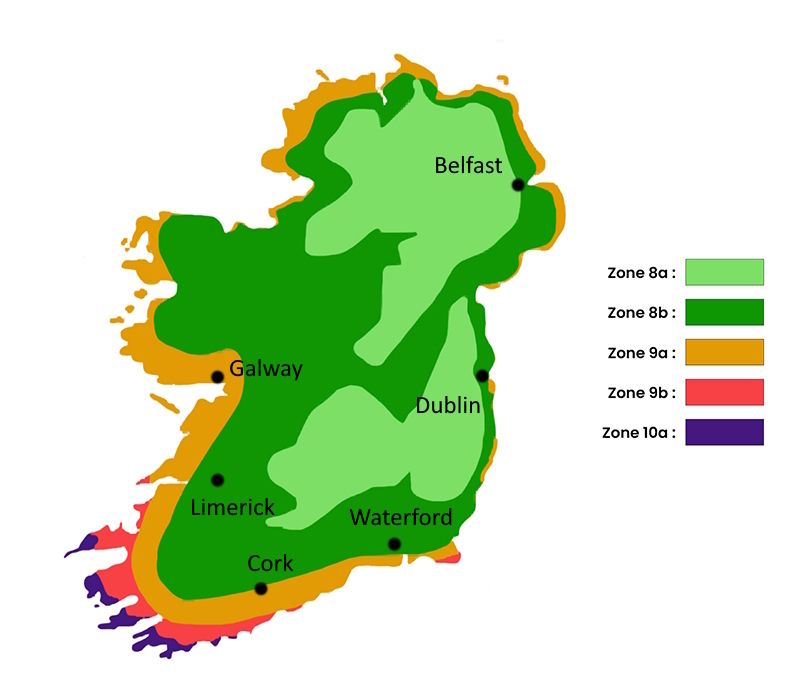
The planting period indicated on our website applies to regions in USDA Zone 9a (East Coast and Midlands: Dublin, Wexford, Waterford, Kilkenny, Portlaoise). It will vary depending on where you live:
- On the west coast and in the north-west (Galway, Limerick, Sligo, Donegal, Westport), delay planting by 1 to 2 weeks in spring and bring it forward by 1 to 2 weeks in autumn compared to the dates given, preferably choosing periods without strong winds.
- In the inland hills and plateaus (Wicklow Mountains, Macgillycuddy’s Reeks, Connemara, Killarney), it is best to plant in spring (April–May) or autumn (September–October), avoiding periods of waterlogged soil in winter and strong winds, which pose the main risk to newly planted trees in these areas.
The flowering period indicated on our website applies to regions in USDA Zone 9a, such as the East Coast and Midlands, including Dublin, Wexford, Waterford, Kilkenny and Portlaoise.
This will vary depending on where you live:
- On the west coast and in the northwest (Galway, Limerick, Sligo, Donegal and Westport), it will be delayed by one to two weeks compared to the given dates, due to stronger Atlantic winds and less spring sunshine.
- In the inland hills and plateaus (the Wicklow Mountains, the Macgillycuddy's Reeks, Connemara and Killarney), flowering will be delayed by two to three weeks. Flowering mainly occurs between May and July, with the limiting factors being less frost and more of the excessive humidity, strong winds and lack of sunshine that are characteristic of these areas.
Shipping country and language
Your country of residence may be:
Your country of residence is:
For a better user experience on our website, you can select:
Your shipping country:
-
 Austria
-
 Belgium
-
 Bosnia & Herzegovina
-
 Bulgaria
-
 Croatia
-
 Cyprus
-
 Czechia
-
 Denmark
-
 Estonia
-
 Finland
-
 France
-
 Germany
-
 Greece
-
 Hungary
-
 Iceland
-
 Ireland
-
 Italy
Italy
-
 Latvia
-
 Liechtenstein
-
 Lithuania
-
 Luxembourg
-
 Malta
Malta
-
 Netherlands
-
 Poland
-
 Portugal
-
 Romania
-
 Serbia
-
 Slovakia
-
 Slovenia
-
 Spain
Spain
-
 Sweden
-
 Switzerland
Language:
-
French
-
 English
-
Spanish
-
Italian
-
German
-
Portuguese
-
Dutch
-
Finnish
My Account
Hello
My wish lists
My cart
Log in / Register
Existing customer?
This form is protected by reCAPTCHA - the Google Privacy Policy and Terms of Service apply.
New customer?
Create an account to track your orders, access our customer service and, if you wish, make the most of our upcoming offers.