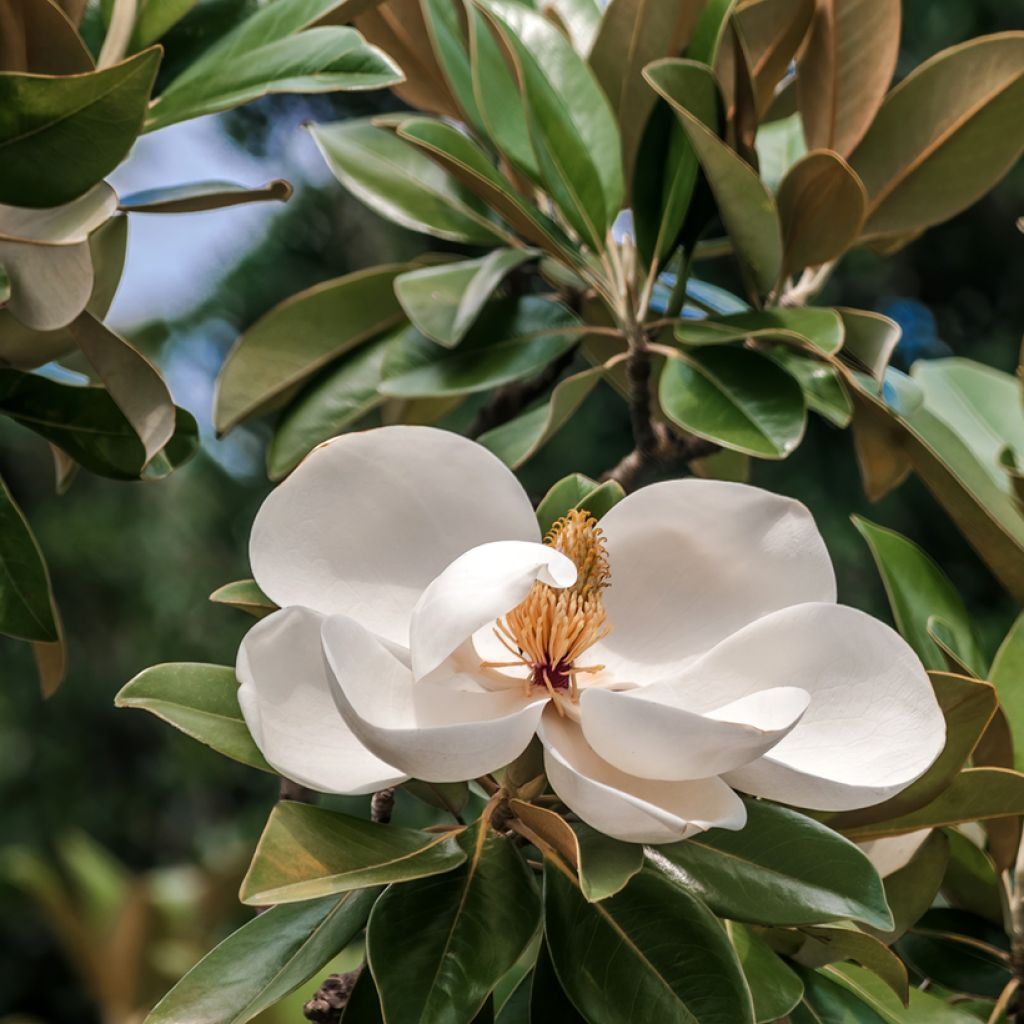
Magnolia grandiflora Mont Blanc
Magnolia grandiflora Mont Blanc
Magnolia grandiflora Mont blanc®
Southern Magnolia, Bull Bay
Back-to-school special offer!
Get €10 off for every €50 you spend! And get up to €40 off on a single order.
How does it work?
1. Shop your favourites
Add your favourite plants to your basket. For every €50 you spend (excluding delivery charges, store credit and the plastic-free option), you’ll receive a €10 voucher.
€50 spent = €10 voucher
€100 spent = €20 voucher
€150 spent = €30 voucher
€200 spent = €40 voucher
2. Place your order
Once your basket reaches one of the spending thresholds, place your order. You can even choose your delivery date!
3. Receive your voucher
As soon as your order has been shipped, you’ll receive an email containing your personal voucher code and its value.
4. Use it on your next order
Your voucher is valid for 90 days from the date you receive it. It can be used once only, on a new order worth at least the value of the voucher, excluding delivery charges.
Please note: Vouchers can be combined with other offers, but cannot be split or refunded.
Why not try an alternative variety in stock?
View all →
Available in 1 sizes
Available in 1 sizes
Available in 1 sizes
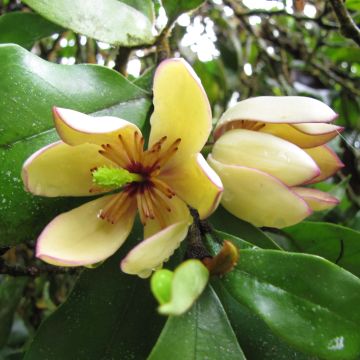
Available in 1 sizes
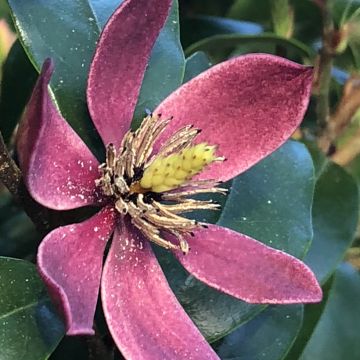
Available in 2 sizes
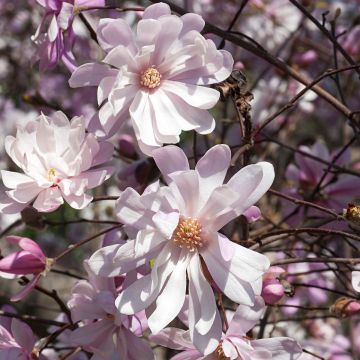
Available in 3 sizes
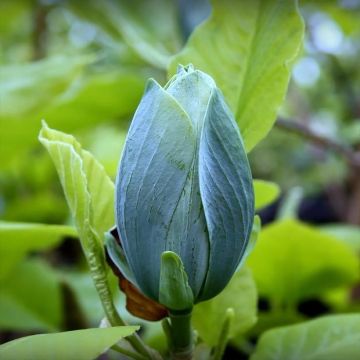
Available in 1 sizes
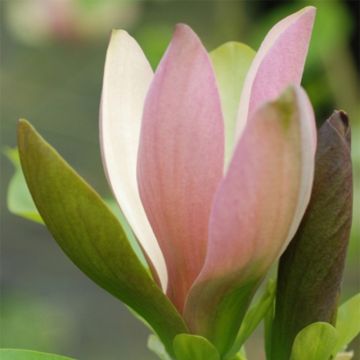
Available in 2 sizes
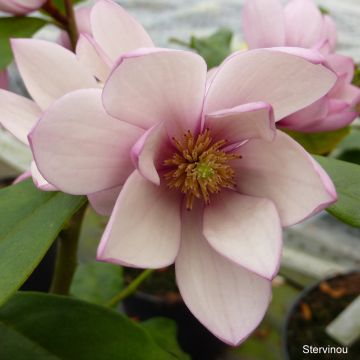
Available in 1 sizes
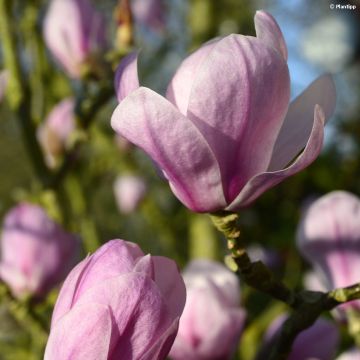
Available in 2 sizes
This plant carries a 24 months recovery warranty
More information
We guarantee the quality of our plants for a full growing cycle, and will replace at our expense any plant that fails to recover under normal climatic and planting conditions.
Does this plant fit my garden?
Set up your Plantfit profile →
Description
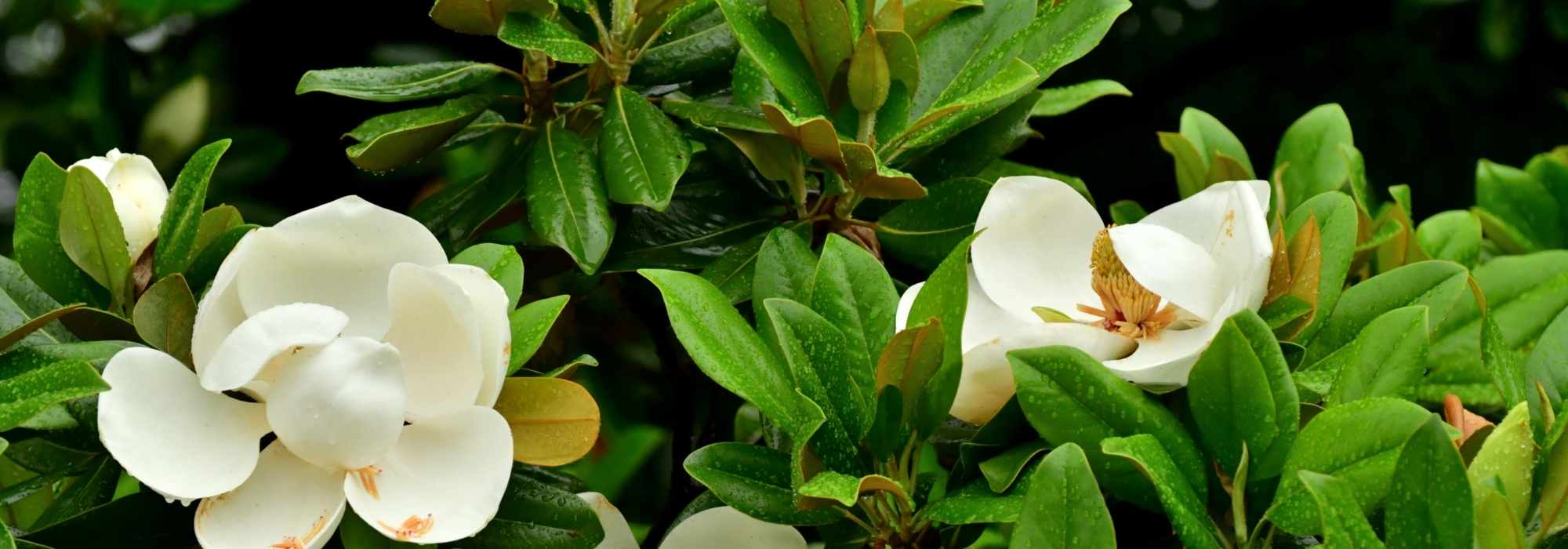
Magnolia grandiflora 'Mont Blanc' will enchant enthusiasts of extraordinary flowering. This variety deserves all the superlatives with its enormous flowers, the largest of which can reach 40 cm in diameter, a record for this species. Perfectly highlighted by the dark foliage, they succeed each other throughout the summer, spreading a very pleasant fragrance in the surroundings. Can be grown as a bush or a small tree, with a conical to spherical silhouette, it is very suitable for small gardens.
Magnolia is a member of the Magnoliaceae family, which owes its name to it, and which also houses the superb Tulip Trees or Liriodendron, so named because of their tulip-shaped flowers. Rich in more than 100 species, the Magnolia genus includes deciduous and evergreen trees and shrubs, native to warm temperate regions of the globe. Magnolia grandiflora is a species naturally found in the United States, from North Carolina to Florida and Texas. It forms a magnificent 15 to 20 m tall tree with a more or less pyramidal habit. Its foliage is evergreen, consisting of elongated, 12 to 25 cm long, dark green leaves, shiny on the upper side, and covered with a reddish 'fur' on the lower side, intended to limit evaporation caused by the wind. The 15 to 22 cm size flowers, are never very numerous at one time and bloom in a staggered manner, followed by large cone-shaped fruits that open to reveal red seeds. Outside its natural geographical range, the tree reaches its full development in regions with a mild and humid climate.
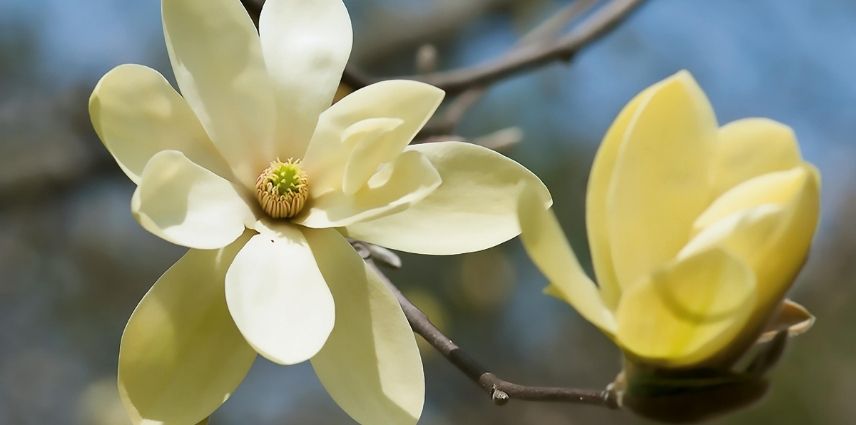
The 'Mont Blanc' variety was presented at the Salon du Végétal in 2011, where it won a gold medal at the Innovert competition, which rewards the best new plant varieties. It combines several advantages, starting with its limited growth, which allows it to be enjoyed in gardens too small to accommodate the typical botanical species. This Magnolia is relatively compact, forming a bush or a small tree, reaching a maximum height of 4 to 8 m, with a spread of 3 to 5 m. It can even be pruned reasonably to limit its footprint if necessary. Its habit is more or less conical to spherical, taller than wide. The leaves are truly decorative with their dark green upper side. They are brownish-red on the underside and ovate, measuring 15 to 18 cm long and 8 to 13 cm wide. Their overall appearance and slightly wavy edge give the plant a touch of exoticism. This is reinforced when the first flowers appear in June, whose large size evokes the exuberance of the tropics. They are semi-double, consisting of petals and sepals that are so similar in morphology that they are encompassed in the term "tepals" and a bright white, further enhanced by the dark background of the foliage. These hermaphroditic flowers, with male and female sexual parts forming a small cone in the corolla, commonly measure 30 cm in diameter. In well-established mature plants, they can even reach up to 40 cm! Not only are they aesthetically pleasing with their cup-shaped form and extraordinary size, but they are also delightfully fragrant, enchanting the long summer evenings in the garden. The flowering usually lasts until September, allowing it to be enjoyed throughout the summer season. This very hardy variety can withstand temperatures down to about -20°C in well-drained soil and is usually not susceptible to diseases or insects.
Magnolia grandiflora 'Mont Blanc' is a true gem in the garden, thanks to its relatively compact size, which makes the flowering more accessible compared to the much taller typical species. To create an amazing composition, plant it in a bed with other plants with XXL blooms. Its cousin, Magnolia 'Megalonia', will enchant you with its early spring flowering of vibrant purple-pink, reaching 30 cm in diameter. Hibiscus moscheutos 'Giant Red' will accompany the flowering of your Magnolia with its single, 25 cm diameter, striking bright red flowers that contrast well with the pure white. Its purple dissected foliage will also create a superb contrast against the dark green of 'Mont Blanc'. To extend the flowering period of your bed into autumn, plant a Hydrangea paniculata with its large panicles (20 to 40 cm depending on the variety) in white, pink, or purple, which can rival the presence of your Magnolia.
The Magnolia genus was named in honour of P. Magnol, director of the Montpellier Botanical Garden in the late 17th century. This plant enthusiast is credited with the concept of botanical families, grouping previously scattered genera. Magnoliaceae constitute a group of archaic plants, whose primitive flowers are still extremely beautiful.
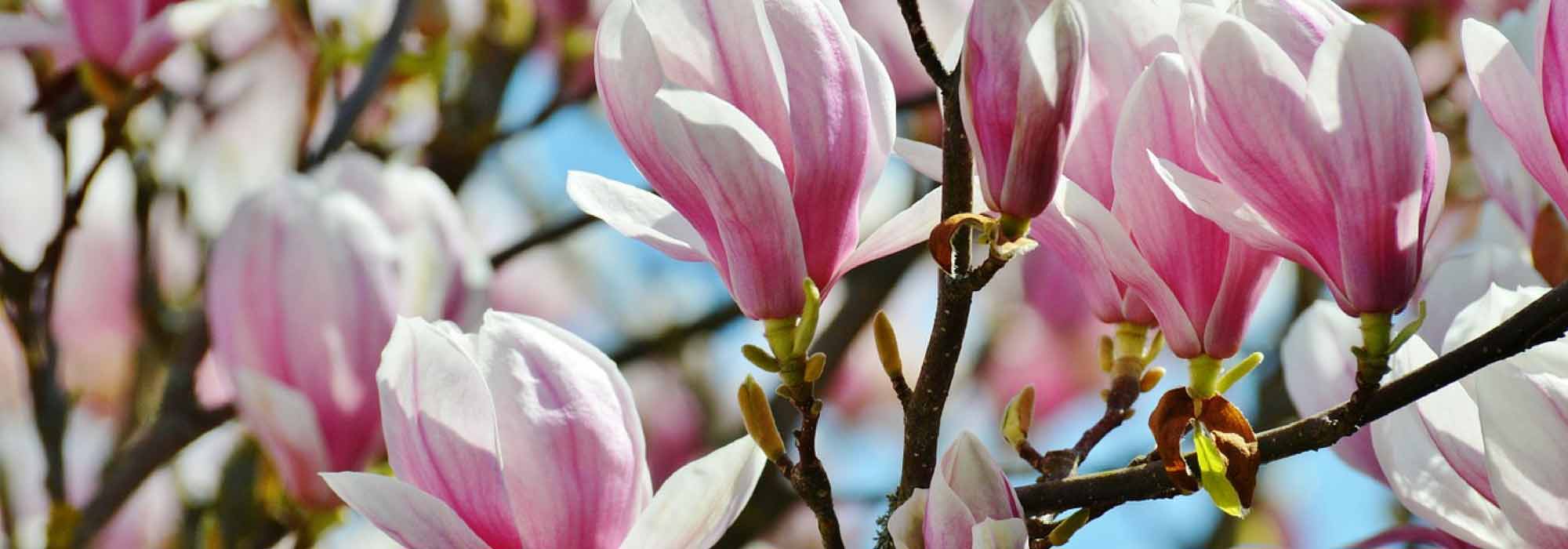
Plant habit
Flowering
Foliage
Planting and care
Magnolia grandiflora 'Mont Blanc' is best planted in spring in deep, rich, consistent soil, ideally in good woodland soil (pH 6), enriched with clayey garden soil. Pure peat is not recommended, as it is too nutrient-poor. Avoid limestone soils that are not suitable for it and in which it will inevitably decline. It appreciates a sunny and open exposure, sheltered from prevailing winds. Once well-rooted, the bush tolerates dry summers quite well.
It is a good idea to protect young plants from severe winter frosts during the first two or three years: cover them in a thick winter fleece in case of announced severe frosts, then remove it as soon as the temperatures soften a bit. The weight of snow weakens the branches, which can break. Be careful not to break the fleshy roots and not to bury the root ball too deeply.
Mulch and water your young plants regularly in the summer. However, be cautious during very hot and dry summers, as this magnolia appreciates the soil remaining slightly moist in summer. Maintain good humidity by showering its foliage with a fine spray in the evening. Pruning is unnecessary. If desired, do so sparingly just after flowering.
Planting period
Intended location
Care
Planting & care advice
-
-
-
-

-

-
-
-
This item has not been reviewed yet - be the first to leave a review about it.
Recently viewed products
Haven't found what you were looking for?
Hardiness is the lowest winter temperature a plant can endure without suffering serious damage or even dying. However, hardiness is affected by location (a sheltered area, such as a patio), protection (winter cover) and soil type (hardiness is improved by well-drained soil).
In temperate climates, pruning of spring-flowering shrubs (forsythia, spireas, etc.) should be done just after flowering.
Pruning of summer-flowering shrubs (Indian Lilac, Perovskia, etc.) can be done in winter or spring.
In cold regions as well as with frost-sensitive plants, avoid pruning too early when severe frosts may still occur.
The harvesting period indicated on our website applies to countries and regions in USDA zone 8 (France, England, Ireland, the Netherlands).
In colder areas (Scandinavia, Poland, Austria...) fruit and vegetable harvests are likely to be delayed by 3-4 weeks.
In warmer areas (Italy, Spain, Greece, etc.), harvesting will probably take place earlier, depending on weather conditions.
The sowing periods indicated on our website apply to countries and regions within USDA Zone 8 (France, UK, Ireland, Netherlands).
In colder areas (Scandinavia, Poland, Austria...), delay any outdoor sowing by 3-4 weeks, or sow under glass.
In warmer climes (Italy, Spain, Greece, etc.), bring outdoor sowing forward by a few weeks.
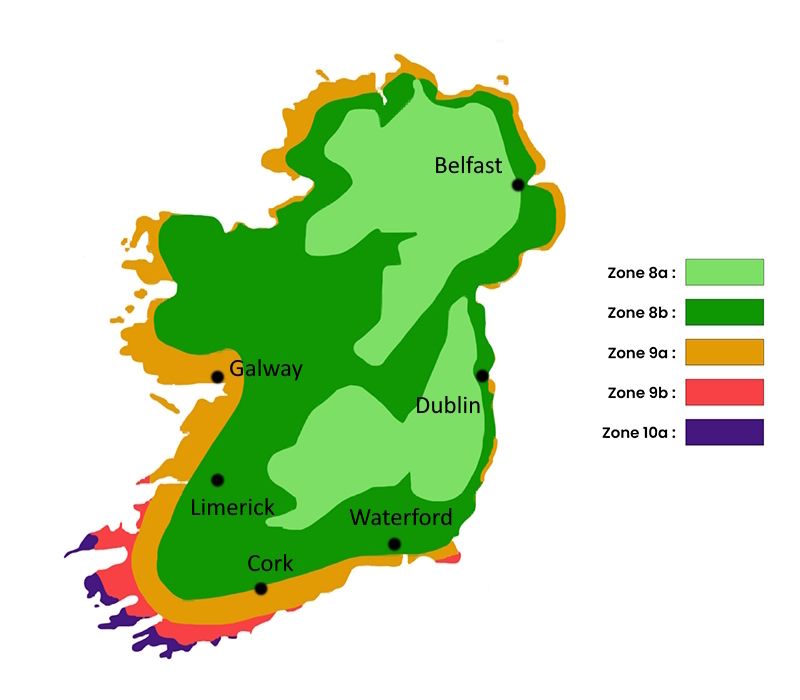
The planting period indicated on our website applies to regions in USDA Zone 9a (East Coast and Midlands: Dublin, Wexford, Waterford, Kilkenny, Portlaoise). It will vary depending on where you live:
- On the west coast and in the north-west (Galway, Limerick, Sligo, Donegal, Westport), delay planting by 1 to 2 weeks in spring and bring it forward by 1 to 2 weeks in autumn compared to the dates given, preferably choosing periods without strong winds.
- In the inland hills and plateaus (Wicklow Mountains, Macgillycuddy’s Reeks, Connemara, Killarney), it is best to plant in spring (April–May) or autumn (September–October), avoiding periods of waterlogged soil in winter and strong winds, which pose the main risk to newly planted trees in these areas.
The flowering period indicated on our website applies to regions in USDA Zone 9a, such as the East Coast and Midlands, including Dublin, Wexford, Waterford, Kilkenny and Portlaoise.
This will vary depending on where you live:
- On the west coast and in the northwest (Galway, Limerick, Sligo, Donegal and Westport), it will be delayed by one to two weeks compared to the given dates, due to stronger Atlantic winds and less spring sunshine.
- In the inland hills and plateaus (the Wicklow Mountains, the Macgillycuddy's Reeks, Connemara and Killarney), flowering will be delayed by two to three weeks. Flowering mainly occurs between May and July, with the limiting factors being less frost and more of the excessive humidity, strong winds and lack of sunshine that are characteristic of these areas.
Shipping country and language
Your country of residence may be:
Your country of residence is:
For a better user experience on our website, you can select:
Your shipping country:
-
 Austria
-
 Belgium
-
 Bosnia & Herzegovina
-
 Bulgaria
-
 Croatia
-
 Cyprus
-
 Czechia
-
 Denmark
-
 Estonia
-
 Finland
-
 France
-
 Germany
-
 Greece
-
 Hungary
-
 Iceland
-
 Ireland
-
 Italy
Italy
-
 Latvia
-
 Liechtenstein
-
 Lithuania
-
 Luxembourg
-
 Malta
Malta
-
 Netherlands
-
 Poland
-
 Portugal
-
 Romania
-
 Serbia
-
 Slovakia
-
 Slovenia
-
 Spain
Spain
-
 Sweden
-
 Switzerland
Language:
-
French
-
 English
-
Spanish
-
Italian
-
German
-
Portuguese
-
Dutch
-
Finnish
My Account
Hello
My wish lists
My cart
Log in / Register
Existing customer?
This form is protected by reCAPTCHA - the Google Privacy Policy and Terms of Service apply.
New customer?
Create an account to track your orders, access our customer service and, if you wish, make the most of our upcoming offers.