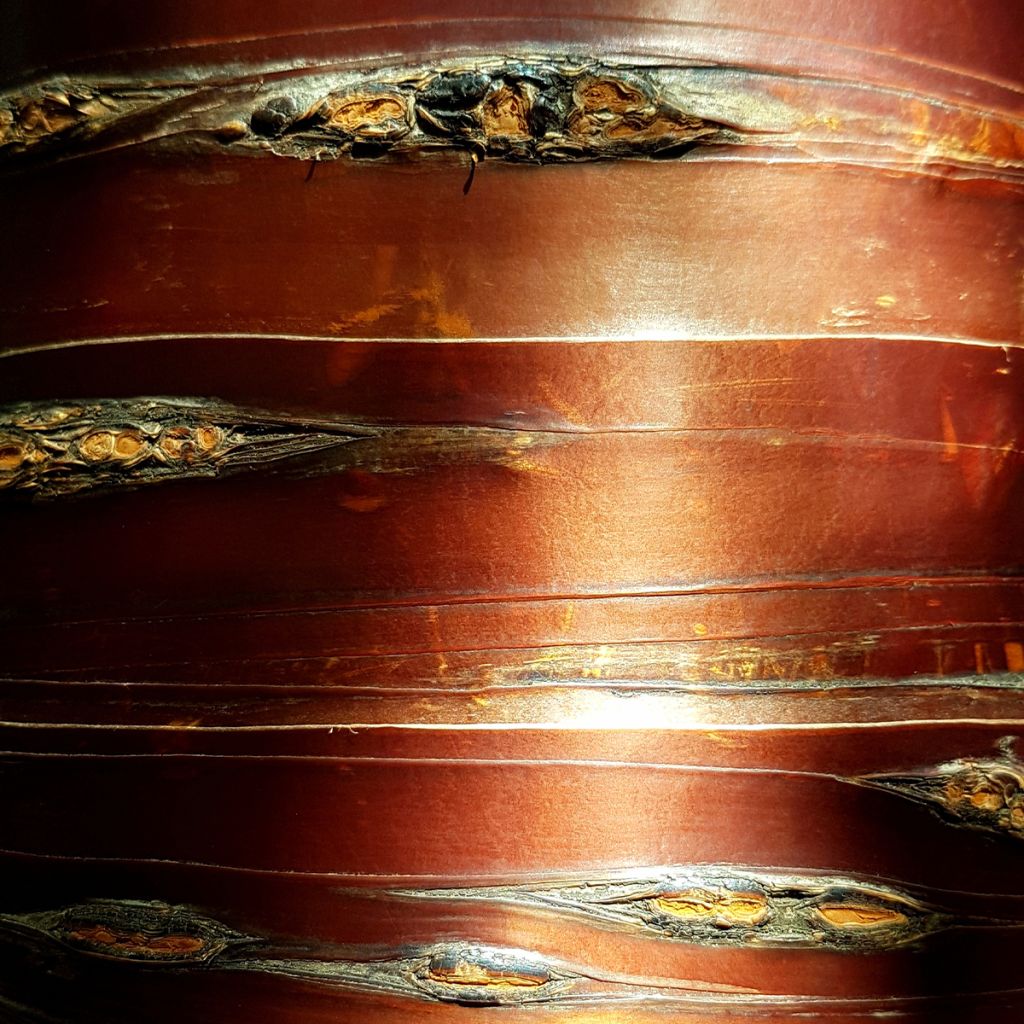
Betula utilis Nepalese Orange - Himalayan Birch
Betula utilis Nepalese Orange - Himalayan Birch
Betula utilis Nepalese Orange
Himalayan Birch
Back-to-school special offer!
Get €10 off for every €50 you spend! And get up to €40 off on a single order.
How does it work?
1. Shop your favourites
Add your favourite plants to your basket. For every €50 you spend (excluding delivery charges, store credit and the plastic-free option), you’ll receive a €10 voucher.
€50 spent = €10 voucher
€100 spent = €20 voucher
€150 spent = €30 voucher
€200 spent = €40 voucher
2. Place your order
Once your basket reaches one of the spending thresholds, place your order. You can even choose your delivery date!
3. Receive your voucher
As soon as your order has been shipped, you’ll receive an email containing your personal voucher code and its value.
4. Use it on your next order
Your voucher is valid for 90 days from the date you receive it. It can be used once only, on a new order worth at least the value of the voucher, excluding delivery charges.
Please note: Vouchers can be combined with other offers, but cannot be split or refunded.
Why not try an alternative variety in stock?
View all →
Available in 2 sizes
Available in 4 sizes
Available in 1 sizes
Available in 2 sizes
Available in 1 sizes
Available in 2 sizes
Available in 1 sizes
Available in 2 sizes
Available in 1 sizes
Available in 2 sizes
This plant carries a 24 months recovery warranty
More information
We guarantee the quality of our plants for a full growing cycle, and will replace at our expense any plant that fails to recover under normal climatic and planting conditions.
Does this plant fit my garden?
Set up your Plantfit profile →
Description
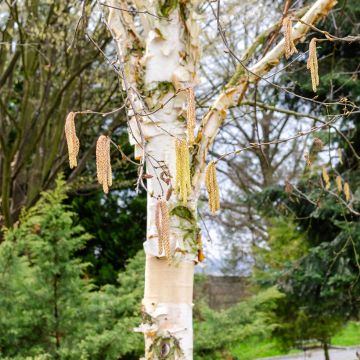
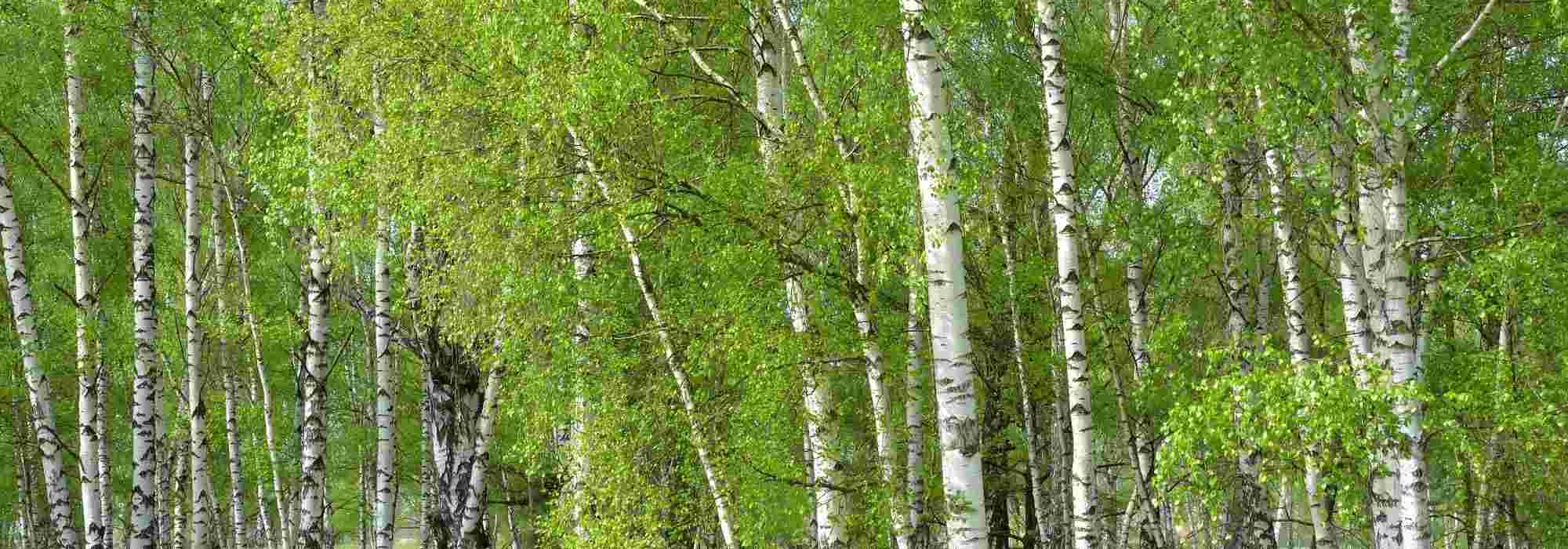
Betula utilis 'Nepalese Orange' is an exceptional variety, prized for its unusual smooth bark: initially cream-coloured, it peels off in strips revealing pale coppery-orange hues which become much deeper, punctuated by prominent horizontal bands of lenticels! It is a slow-growing, medium-sized tree with a fairly slender shape and a slightly spreading canopy. Sometimes grown with multiple trunks, it is particularly ornamental during the winter season. Its dark green, deciduous foliage is quite airy, providing light shade in summer before turning golden yellow in autumn. It is a very hardy tree, much appreciated for its easy cultivation in moderately dry, well-drained soils, in full sun or partial shade. Spectacular when planted as a free-standing specimen near a terrace or in dense groups!
The Himalayan birch, Betula humilis in Latin, belongs to the Betulaceae family. It is native to western Asia, from Afghanistan to western China and northwest India. There are some particularly ornamental cultivars, including 'Nepalese Orange', which is distinctive for its bark peeling off in strips to reveal a deep and pale coppery-orange trunk, decorated with large horizontal lenticels. This variety was selected by Kenneth Ashburner from seed collected in Topke Gola, Nepal, in 1971. In nature, this tree can reach a height of 20 m (65 ft 7 in). Very cold-resistant, this birch is fairly slow growing, reaching a height of about 6 m (19 ft 8 in) and a spread of 4 m (13 ft 1 in) after 10 years. Its shallow root system makes it sensitive to prolonged drought and strong winds, which can uproot it. This light-loving species is perfectly adapted to northern gardens and mountain climates. It prefers well-drained, slightly acid soils but can tolerate the presence of lime and damper soils.
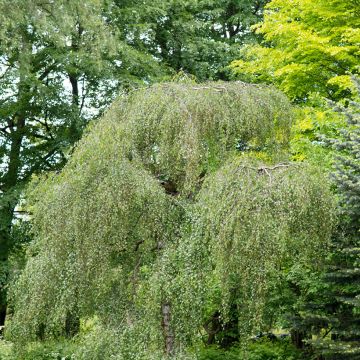
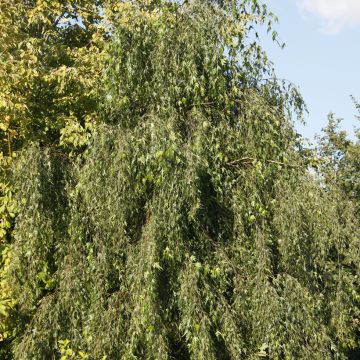
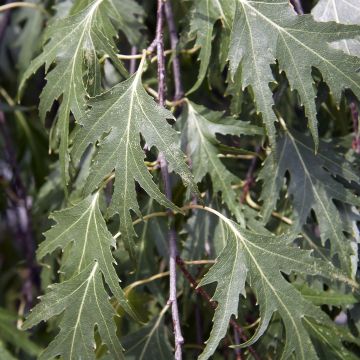
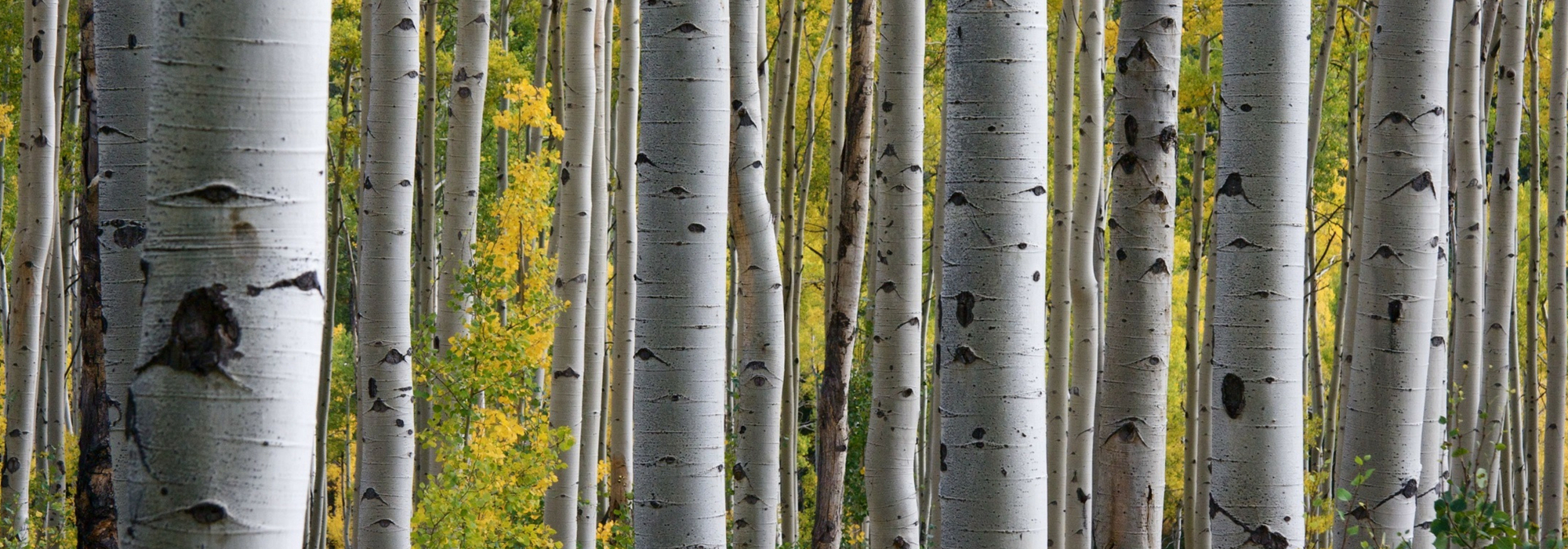
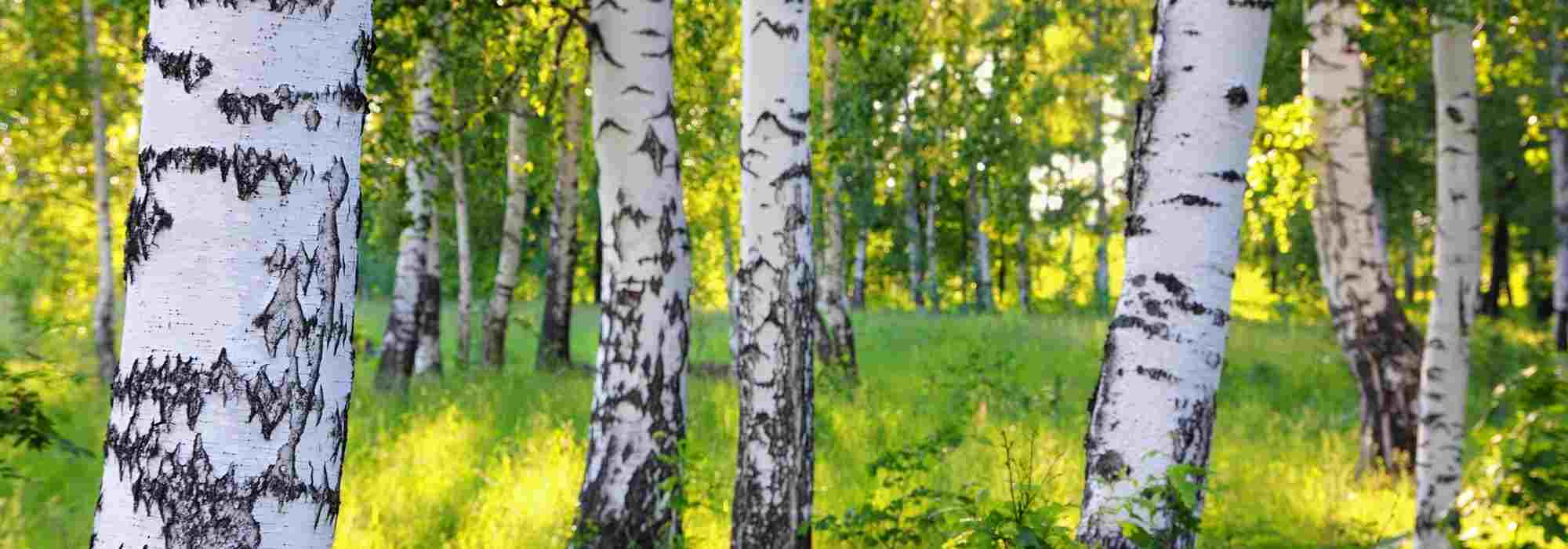
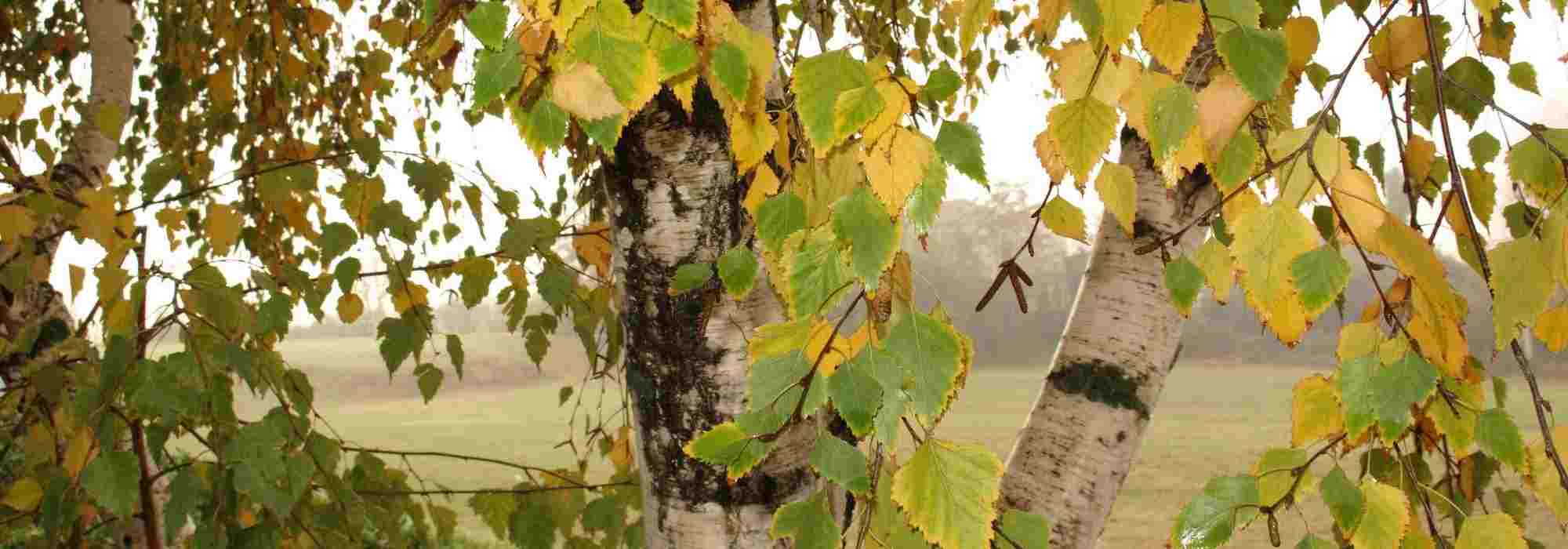
It is a small to medium-sized tree with a slightly conical habit and an open, somewhat loose, slightly spreading canopy, reaching a maximum height of 15 m (49 ft 2 in) with a 6 m (19 ft 8 in) spread. It will form a single trunk with low branches, sometimes developing into a tree with multiple stems or trunks. The main attraction of the Himalayan birch is the smooth bark on the trunk as well as on the branches, which peels off in strips and turns very white after 4 to 6 years. On the trunk, there are narrow, regular, horizontal scars, called lenticels. Its foliage is deciduous, falling in autumn and regrowing each spring. Its young branchlets have oval-shaped leaves, entire and pointed, finely toothed along the edges, 5 to 7 cm (2 to 2.8 in) long and 4 to 5 cm (1.6 to 2 in) wide. The leaf blade is fairly dark green, shiny on the upper side, paler and matte on the underside. The foliage turns golden yellow in autumn before falling. The inconspicuous flowers consisting of pendulous, yellow-brown catkins bloom in March-April.
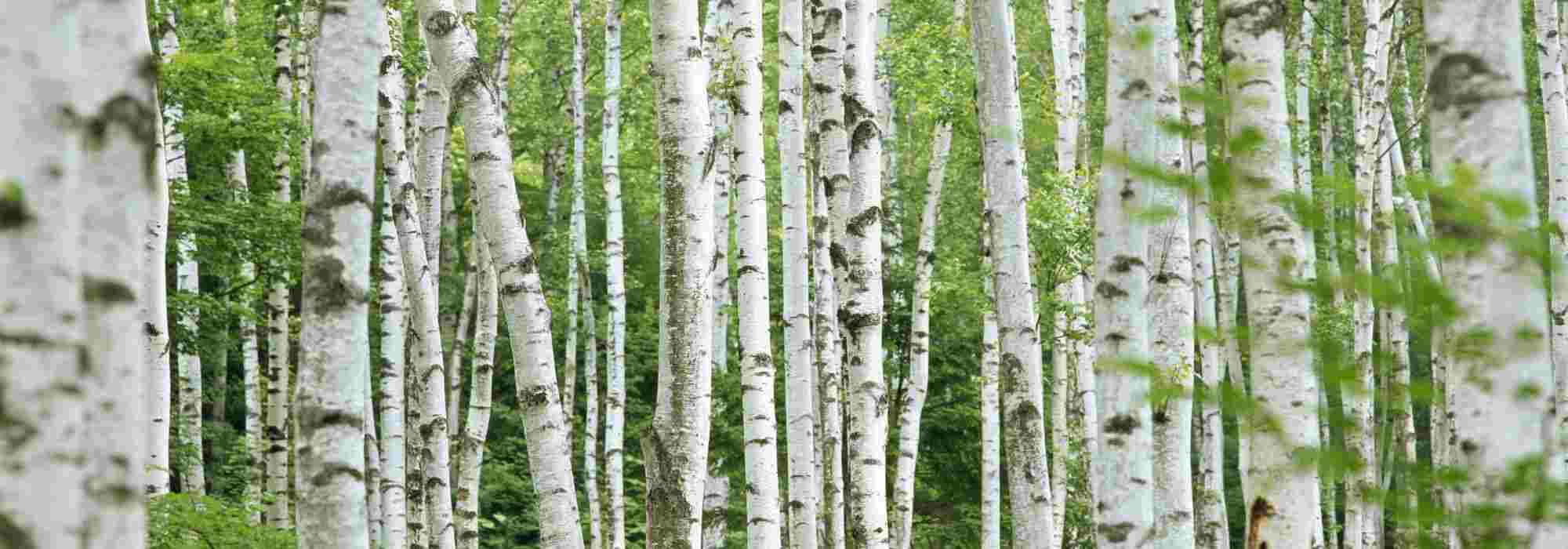
The main attraction of the 'Nepalese Orange' Himalayan birch is its gorgeous bark that peels off in coloured strips throughout the year, particularly spectacular in winter when the tree is devoid of foliage. It is usually planted as a specimen or in small groups, in a strategic spot in the garden so that its distinctive white silhouette can be admired from a window. Combine it with astilbes, hostas, and ferns near its base if the soil is moist there, or plant masses of snowdrops, crocuses, wood hyacinths (Scilla nutans), as well as tulips.
Plant habit
Flowering
Foliage
Bark
Safety measures
atteinterespiratoire
Cette plante peut entraîner des symptômes allergiques.
Evitez de la planter si vous ou vos proches souffrez de rhinite saisonnière ("rhume des foins").
Davantage d'informations sur https://plantes-risque.info
Planting and care
Easy to grow, the white Himalayan birch requires little maintenance. It can be planted in a moist, humus-rich, fertile soil, preferably acid to get the beautiful leaf colour. It can also flourish in neutral to slightly alkaline soil, in full sun or partial shade. Grow it in any well-drained garden soil that retains moisture during the summer. To help it establish, water it during dry periods in the first few years. Choose its location carefully, as it does not like being disturbed. It can be left to grow freely, or its trunk can be pruned to the desired height, in the form of a pollard, as is done with certain willows or mulberries.
Planting period
Intended location
Care
Planting & care advice

This item has not been reviewed yet - be the first to leave a review about it.
Recently viewed products
Haven't found what you were looking for?
Hardiness is the lowest winter temperature a plant can endure without suffering serious damage or even dying. However, hardiness is affected by location (a sheltered area, such as a patio), protection (winter cover) and soil type (hardiness is improved by well-drained soil).
In temperate climates, pruning of spring-flowering shrubs (forsythia, spireas, etc.) should be done just after flowering.
Pruning of summer-flowering shrubs (Indian Lilac, Perovskia, etc.) can be done in winter or spring.
In cold regions as well as with frost-sensitive plants, avoid pruning too early when severe frosts may still occur.
The harvesting period indicated on our website applies to countries and regions in USDA zone 8 (France, England, Ireland, the Netherlands).
In colder areas (Scandinavia, Poland, Austria...) fruit and vegetable harvests are likely to be delayed by 3-4 weeks.
In warmer areas (Italy, Spain, Greece, etc.), harvesting will probably take place earlier, depending on weather conditions.
The sowing periods indicated on our website apply to countries and regions within USDA Zone 8 (France, UK, Ireland, Netherlands).
In colder areas (Scandinavia, Poland, Austria...), delay any outdoor sowing by 3-4 weeks, or sow under glass.
In warmer climes (Italy, Spain, Greece, etc.), bring outdoor sowing forward by a few weeks.
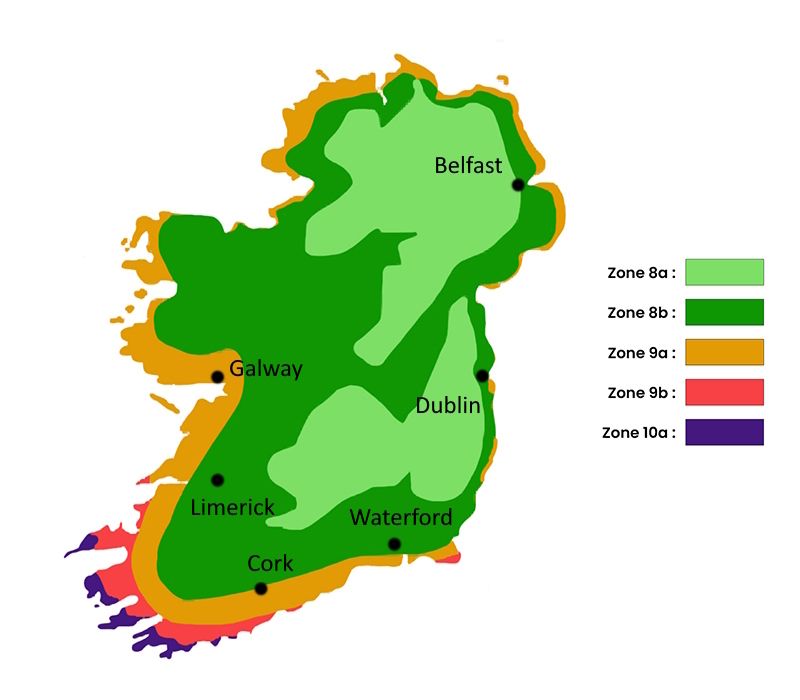
The planting period indicated on our website applies to regions in USDA Zone 9a (East Coast and Midlands: Dublin, Wexford, Waterford, Kilkenny, Portlaoise). It will vary depending on where you live:
- On the west coast and in the north-west (Galway, Limerick, Sligo, Donegal, Westport), delay planting by 1 to 2 weeks in spring and bring it forward by 1 to 2 weeks in autumn compared to the dates given, preferably choosing periods without strong winds.
- In the inland hills and plateaus (Wicklow Mountains, Macgillycuddy’s Reeks, Connemara, Killarney), it is best to plant in spring (April–May) or autumn (September–October), avoiding periods of waterlogged soil in winter and strong winds, which pose the main risk to newly planted trees in these areas.
The flowering period indicated on our website applies to regions in USDA Zone 9a, such as the East Coast and Midlands, including Dublin, Wexford, Waterford, Kilkenny and Portlaoise.
This will vary depending on where you live:
- On the west coast and in the northwest (Galway, Limerick, Sligo, Donegal and Westport), it will be delayed by one to two weeks compared to the given dates, due to stronger Atlantic winds and less spring sunshine.
- In the inland hills and plateaus (the Wicklow Mountains, the Macgillycuddy's Reeks, Connemara and Killarney), flowering will be delayed by two to three weeks. Flowering mainly occurs between May and July, with the limiting factors being less frost and more of the excessive humidity, strong winds and lack of sunshine that are characteristic of these areas.
Shipping country and language
Your country of residence may be:
Your country of residence is:
For a better user experience on our website, you can select:
Your shipping country:
-
 Austria
-
 Belgium
-
 Bosnia & Herzegovina
-
 Bulgaria
-
 Croatia
-
 Cyprus
-
 Czechia
-
 Denmark
-
 Estonia
-
 Finland
-
 France
-
 Germany
-
 Greece
-
 Hungary
-
 Iceland
-
 Ireland
-
 Italy
Italy
-
 Latvia
-
 Liechtenstein
-
 Lithuania
-
 Luxembourg
-
 Malta
Malta
-
 Netherlands
-
 Poland
-
 Portugal
-
 Romania
-
 Serbia
-
 Slovakia
-
 Slovenia
-
 Spain
Spain
-
 Sweden
-
 Switzerland
Language:
-
French
-
 English
-
Spanish
-
Italian
-
German
-
Portuguese
-
Dutch
-
Finnish
My Account
Hello
My wish lists
My cart
Log in / Register
Existing customer?
This form is protected by reCAPTCHA - the Google Privacy Policy and Terms of Service apply.
New customer?
Create an account to track your orders, access our customer service and, if you wish, make the most of our upcoming offers.