
Geranium sanguineum Blushing Turtle

Geranium sanguineum Blushing Turtle

Geranium sanguineum Blushing Turtle

Geranium sanguineum Blushing Turtle
Geranium sanguineum Blushing Turtle
Geranium Blushing Turtle
Bloody Cranesbill, Bloody Geranium
Established well next to the irises. Resists the heat well.
sys, 01/11/2025
Back-to-school special offer!
Get €10 off for every €50 you spend! And get up to €40 off on a single order.
How does it work?
1. Shop your favourites
Add your favourite plants to your basket. For every €50 you spend (excluding delivery charges, store credit and the plastic-free option), you’ll receive a €10 voucher.
€50 spent = €10 voucher
€100 spent = €20 voucher
€150 spent = €30 voucher
€200 spent = €40 voucher
2. Place your order
Once your basket reaches one of the spending thresholds, place your order. You can even choose your delivery date!
3. Receive your voucher
As soon as your order has been shipped, you’ll receive an email containing your personal voucher code and its value.
4. Use it on your next order
Your voucher is valid for 90 days from the date you receive it. It can be used once only, on a new order worth at least the value of the voucher, excluding delivery charges.
Please note: Vouchers can be combined with other offers, but cannot be split or refunded.
Home or relay delivery (depending on size and destination)
Important: You may be charged customs duties by your country’s customs authorities upon delivery.
Schedule delivery date
and select date in basket
This plant carries a 12 months recovery warranty
More information
We guarantee the quality of our plants for a full growing cycle, and will replace at our expense any plant that fails to recover under normal climatic and planting conditions.

Does this plant fit my garden?
Set up your Plantfit profile →
Description
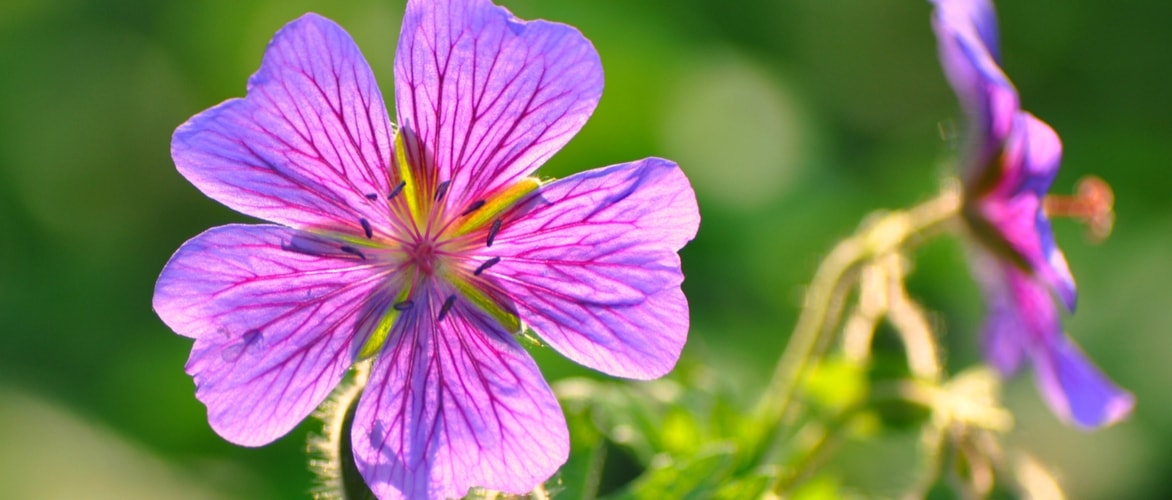
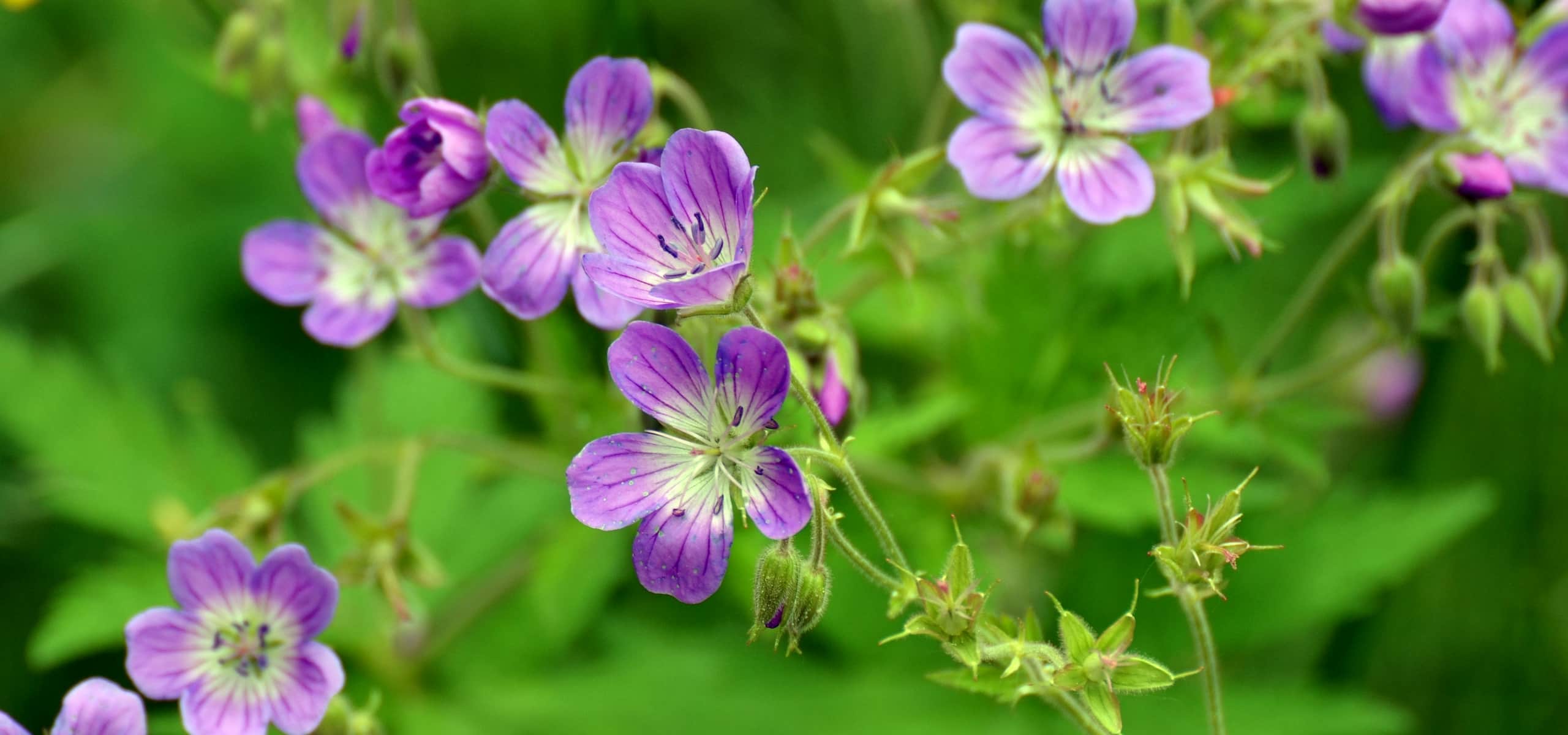
Le Géranium vivace ‘Blushing Turtle’ est reconnaissable à ses fleurs rose mauve finement veinées de pourpre, qui se renouvellent durant plusieurs mois. Cette floraison se détache sur une touffe ample de feuilles vertes profondément découpées qui se colorent de rouge et d’orange en automne. Vigoureuse, la plante s'étend pour former une large touffe arrondie qui couvre efficacement le sol. Cette variété est idéale au premier plan d’un massif ou pour accompagner les rosiers.
'Blushing Turtle' appartient comme tous les géraniums vivaces à la famille des Géraniacées. Il s’agit d’un hybride horticole complexe, et non d’un cultivar appartenant uniquement à l’espèce Geranium sanguineum. L’obtentrice canadienne Karin Kosick a réalisé le croisement à Nanoose Bay, en Colombie-Britannique, durant l’été 1999. Le parent femelle était une sélection non nommée issue de Geranium sanguineum. Le pollen provenait à la fois du Geranium × oxonianum ‘Julie Brennan’ et d’un G. asphodeloides non nommé. La plante a été sélectionnée parmi les semis en mai 2002, puis multipliée par bouturage à partir de 2003. Protégée aux États-Unis par le brevet PP22376 accordé en 2011, elle a été introduite dans le commerce par Blooms of Bressingham. ‘Breathless’ est un synonyme horticole accepté.
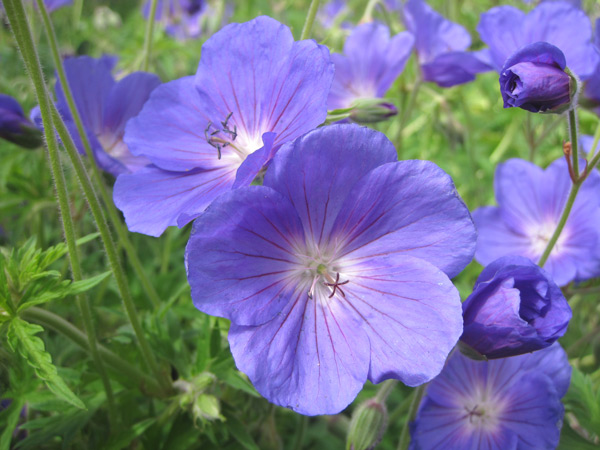
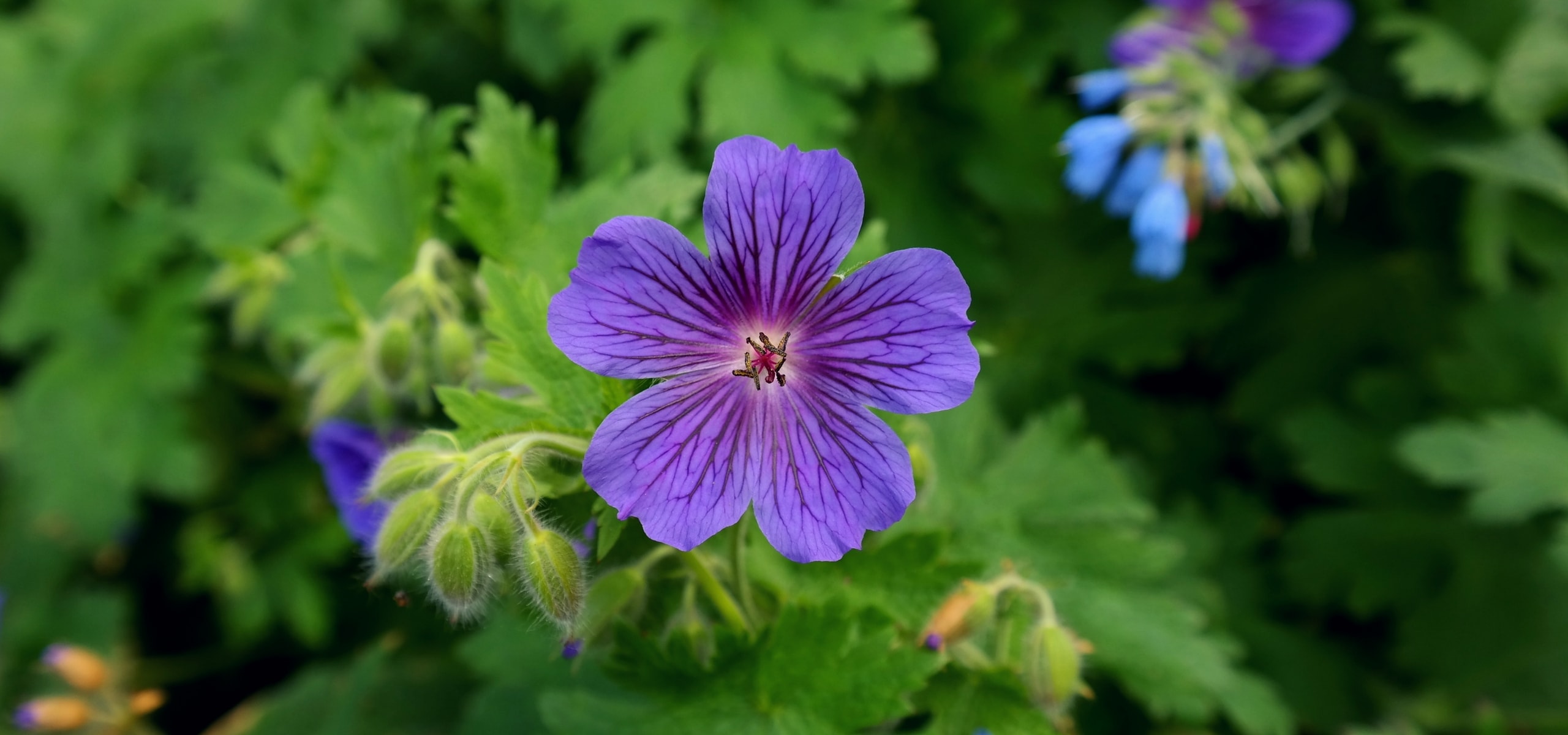
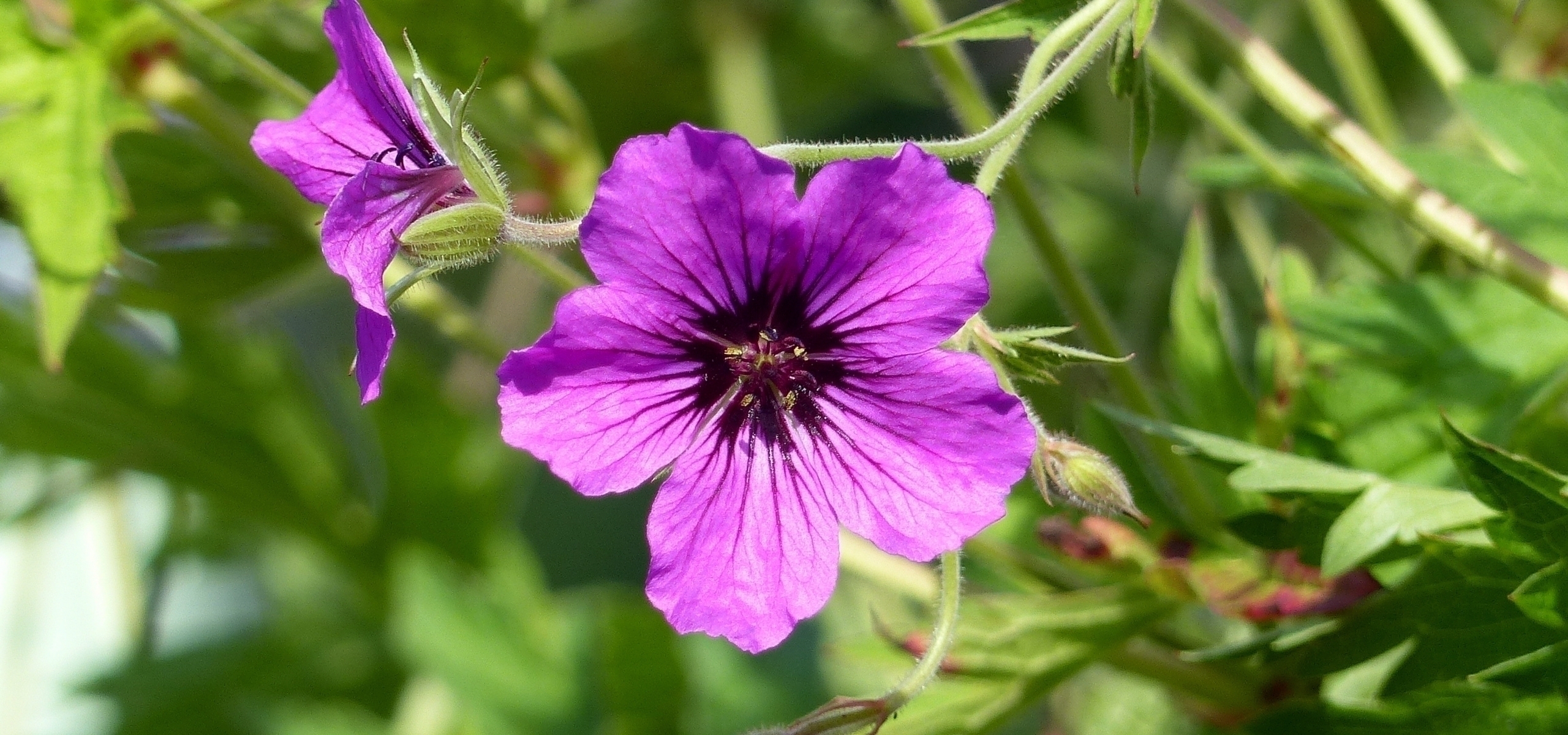
La plante forme une touffe basse, arrondie et largement étalée, haute de 40 à 50 cm pour 60 à 80 cm d’envergure. Ses tiges solides, velues et très ramifiées s’écartent horizontalement de la souche et se glissent entre les plantes voisines. Les feuilles, larges de 5 à 6 cm, sont divisées en cinq lobes eux-mêmes fortement dentés ; leur surface légèrement velue prend des tons rougeâtres et orangés sous l’effet des nuits fraîches de l'automne. Les fleurs, portées au-dessus du feuillage, mesurent 3 à 4 cm de diamètre. Chacune compte cinq pétales larges, légèrement échancrés, d’un rose tirant sur le mauve, parcourus de nervures rouge pourpré qui convergent vers le cœur. La floraison commence en mai ou en juin selon le climat et se poursuit jusqu’en septembre. Ce géranium se montre robuste face à la pluie et au vent. Sa souche a supporté des températures proches de -19 °C lors des essais liés au brevet. Il tolère une brève période sèche une fois enraciné, mais fleurit plus longtemps dans une terre qui conserve un peu d'humidité.
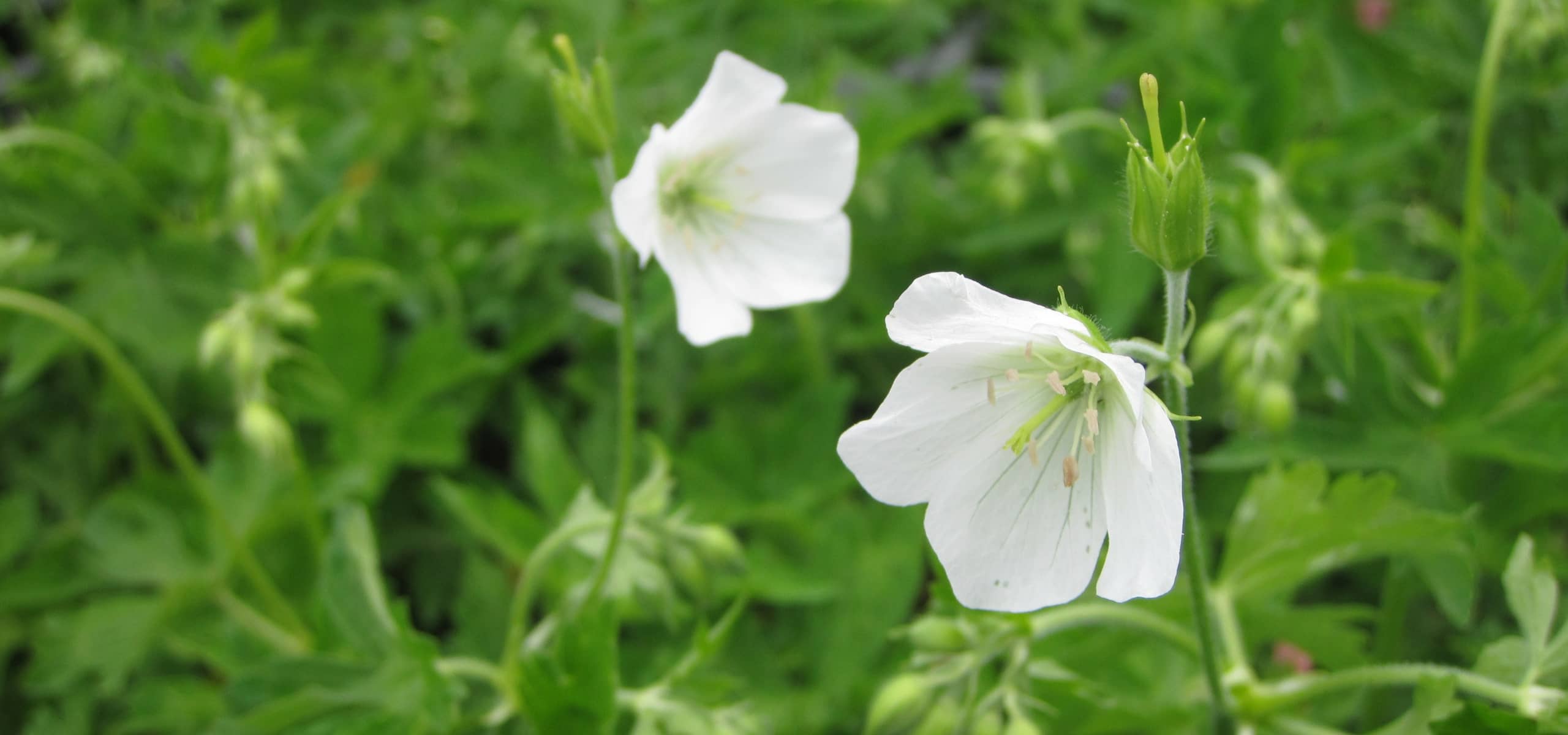
Dans une bordure romantique ou un massif à l’anglaise, ce géranium s’associe avec des floraisons légères, choisies dans une gamme de rose tendre, de blanc et de bleu lavande. Des rosiers arbustifs à petites fleurs, des campanules, des astrances et des népétas seront de bons compagnons. Il peut être planté auprès d'autres géraniums couvre-sol, du rosier ‘Ballerina’, de la campanule à feuilles de pêcher ‘Alba’, de l’astrance ‘Roma’ et du népéta ‘Walker’s Low’.
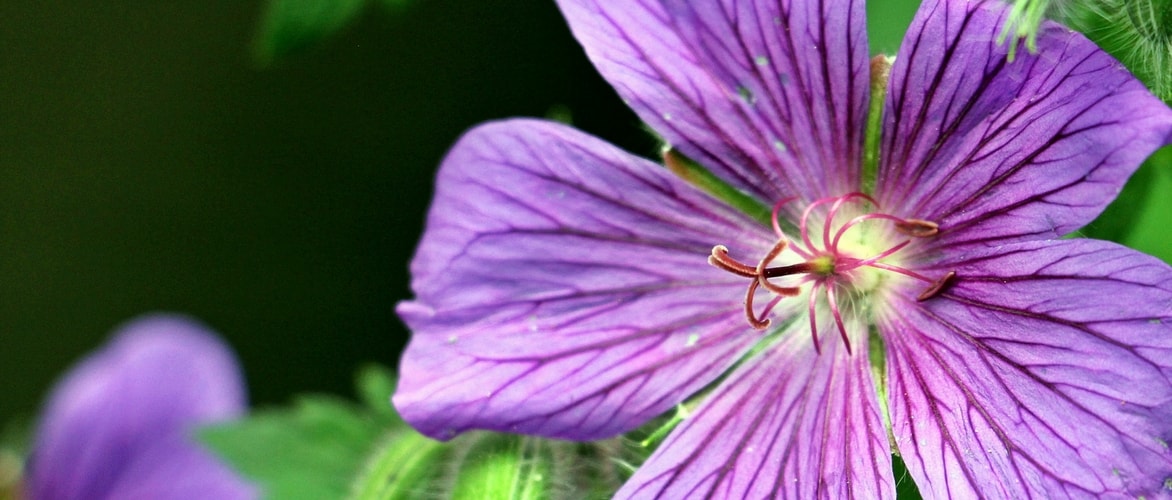
Geranium sanguineum Blushing Turtle in pictures


Flowering
Foliage
Plant habit
Botanical data
Geranium
Blushing Turtle
Geraniaceae
Bloody Cranesbill, Bloody Geranium
Geranium ‘Blushing Turtle’, Geranium ‘Breathless’
Cultivar or hybrid
Planting and care
Planting period
Intended location
Care
Planting & care advice
-
-
-
-
-
-
-
-
-
, onOrder confirmed
Reply from on Promesse de fleurs
Recently viewed products
Haven't found what you were looking for?
Hardiness is the lowest winter temperature a plant can endure without suffering serious damage or even dying. However, hardiness is affected by location (a sheltered area, such as a patio), protection (winter cover) and soil type (hardiness is improved by well-drained soil).
In temperate climates, pruning of spring-flowering shrubs (forsythia, spireas, etc.) should be done just after flowering.
Pruning of summer-flowering shrubs (Indian Lilac, Perovskia, etc.) can be done in winter or spring.
In cold regions as well as with frost-sensitive plants, avoid pruning too early when severe frosts may still occur.
The harvesting period indicated on our website applies to countries and regions in USDA zone 8 (France, England, Ireland, the Netherlands).
In colder areas (Scandinavia, Poland, Austria...) fruit and vegetable harvests are likely to be delayed by 3-4 weeks.
In warmer areas (Italy, Spain, Greece, etc.), harvesting will probably take place earlier, depending on weather conditions.
The sowing periods indicated on our website apply to countries and regions within USDA Zone 8 (France, UK, Ireland, Netherlands).
In colder areas (Scandinavia, Poland, Austria...), delay any outdoor sowing by 3-4 weeks, or sow under glass.
In warmer climes (Italy, Spain, Greece, etc.), bring outdoor sowing forward by a few weeks.
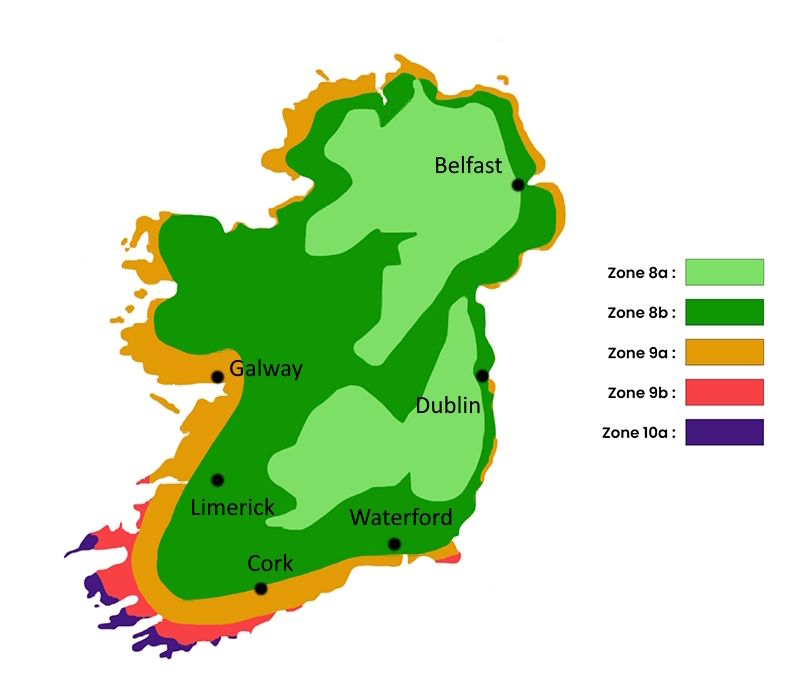
The planting period indicated on our website applies to regions in USDA Zone 9a (East Coast and Midlands: Dublin, Wexford, Waterford, Kilkenny, Portlaoise). It will vary depending on where you live:
- On the west coast and in the north-west (Galway, Limerick, Sligo, Donegal, Westport), delay planting by 1 to 2 weeks in spring and bring it forward by 1 to 2 weeks in autumn compared to the dates given, preferably choosing periods without strong winds.
- In the inland hills and plateaus (Wicklow Mountains, Macgillycuddy’s Reeks, Connemara, Killarney), it is best to plant in spring (April–May) or autumn (September–October), avoiding periods of waterlogged soil in winter and strong winds, which pose the main risk to newly planted trees in these areas.
The flowering period indicated on our website applies to regions in USDA Zone 9a, such as the East Coast and Midlands, including Dublin, Wexford, Waterford, Kilkenny and Portlaoise.
This will vary depending on where you live:
- On the west coast and in the northwest (Galway, Limerick, Sligo, Donegal and Westport), it will be delayed by one to two weeks compared to the given dates, due to stronger Atlantic winds and less spring sunshine.
- In the inland hills and plateaus (the Wicklow Mountains, the Macgillycuddy's Reeks, Connemara and Killarney), flowering will be delayed by two to three weeks. Flowering mainly occurs between May and July, with the limiting factors being less frost and more of the excessive humidity, strong winds and lack of sunshine that are characteristic of these areas.
Shipping country and language
Your country of residence may be:
Your country of residence is:
For a better user experience on our website, you can select:
Your shipping country:
-
 Austria
-
 Belgium
-
 Bosnia & Herzegovina
-
 Bulgaria
-
 Croatia
-
 Cyprus
-
 Czechia
-
 Denmark
-
 Estonia
-
 Finland
-
 France
-
 Germany
-
 Greece
-
 Hungary
-
 Iceland
-
 Ireland
-
 Italy
-
 Latvia
-
 Liechtenstein
-
 Lithuania
-
 Luxembourg
-
 Malta
-
 Netherlands
-
 Poland
-
 Portugal
-
 Romania
-
 Serbia
-
 Slovakia
-
 Slovenia
-
 Spain
-
 Sweden
-
 Switzerland
Language:
-
French
-
 English
-
Spanish
-
Italian
-
German
-
Portuguese
-
Dutch
-
Finnish
My Account
Hello
My wish lists
My cart
Log in / Register
Existing customer?
This form is protected by reCAPTCHA - the Google Privacy Policy and Terms of Service apply.
New customer?
Create an account to track your orders, access our customer service and, if you wish, make the most of our upcoming offers.