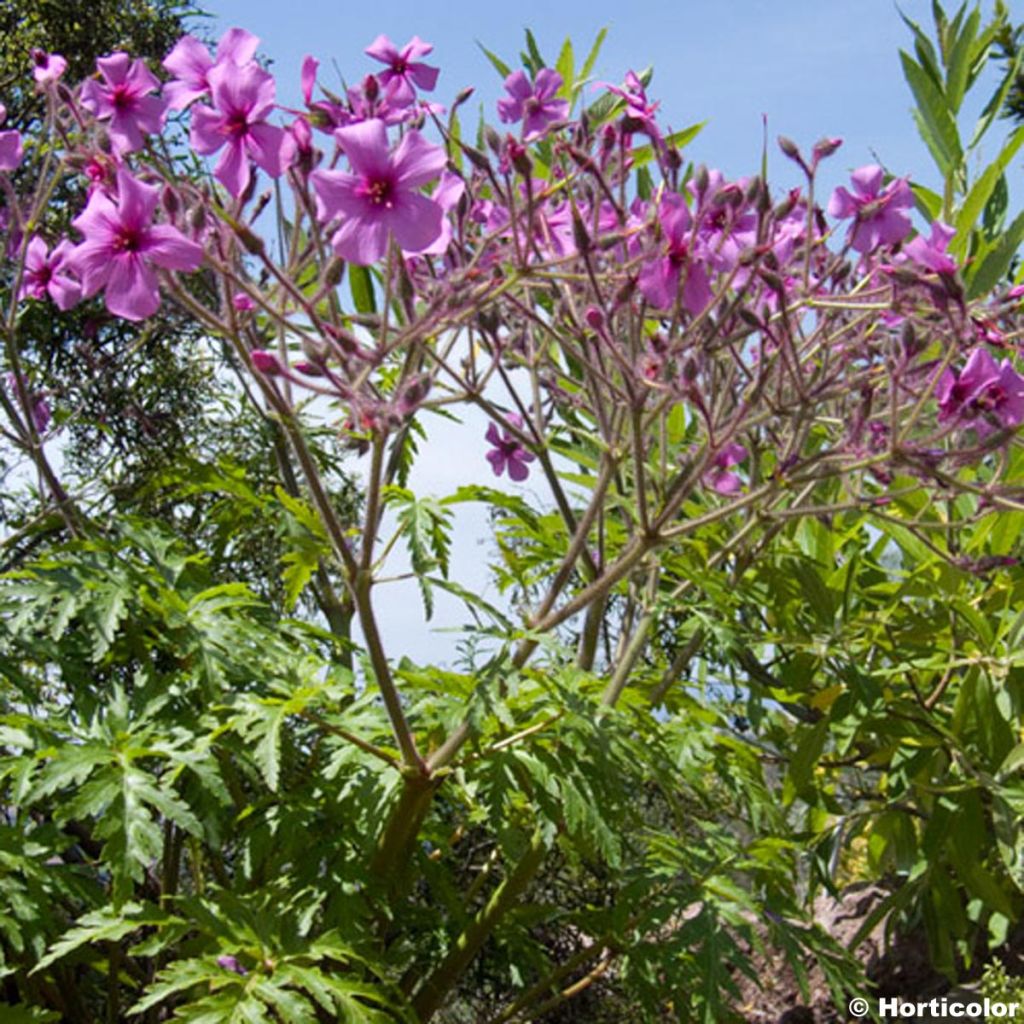
Geranium palmatum
Geranium palmatum
Geranium palmatum
Canary Island geranium, anemone-leav'd geranium, anemone-leaved cranesbill
Back-to-school special offer!
Get €10 off for every €50 you spend! And get up to €40 off on a single order.
How does it work?
1. Shop your favourites
Add your favourite plants to your basket. For every €50 you spend (excluding delivery charges, store credit and the plastic-free option), you’ll receive a €10 voucher.
€50 spent = €10 voucher
€100 spent = €20 voucher
€150 spent = €30 voucher
€200 spent = €40 voucher
2. Place your order
Once your basket reaches one of the spending thresholds, place your order. You can even choose your delivery date!
3. Receive your voucher
As soon as your order has been shipped, you’ll receive an email containing your personal voucher code and its value.
4. Use it on your next order
Your voucher is valid for 90 days from the date you receive it. It can be used once only, on a new order worth at least the value of the voucher, excluding delivery charges.
Please note: Vouchers can be combined with other offers, but cannot be split or refunded.
Why not try an alternative variety in stock?
View all →
Available in 0 sizes

Available in 4 sizes

Available in 1 sizes

Available in 3 sizes
Available in 0 sizes
Available in 3 sizes
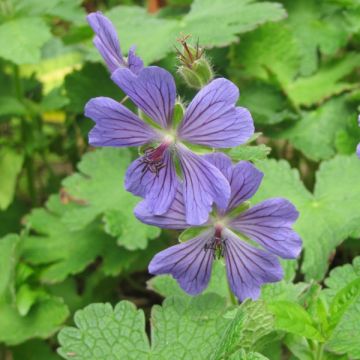
Available in 1 sizes
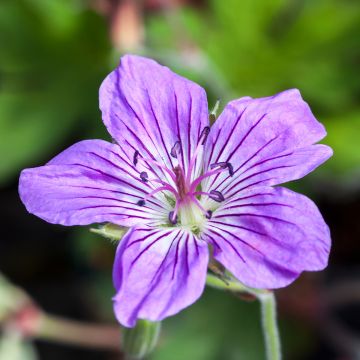
Available in 1 sizes

Available in 1 sizes
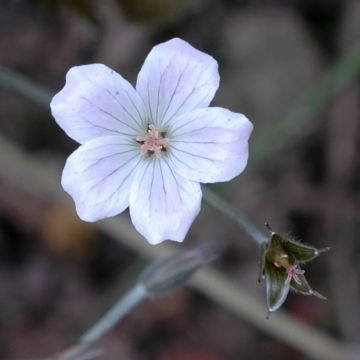
Available in 1 sizes
This plant carries a 12 months recovery warranty
More information
We guarantee the quality of our plants for a full growing cycle, and will replace at our expense any plant that fails to recover under normal climatic and planting conditions.

Does this plant fit my garden?
Set up your Plantfit profile →
Description
Geranium palmatum is the palmate geranium, a large botanical species from Madeira, quite different from the small hardy geraniums used in borders. It first forms a broad rosette, borne on long petioles, then produces a light summer flowering, in a pinkish-mauve shade, above the foliage. With an exotic appearance and temperament, this short-lived perennial suits gardens in mild climates, bright courtyards and large containers. It enjoys moist, well-drained soil and must be protected from hard frost.
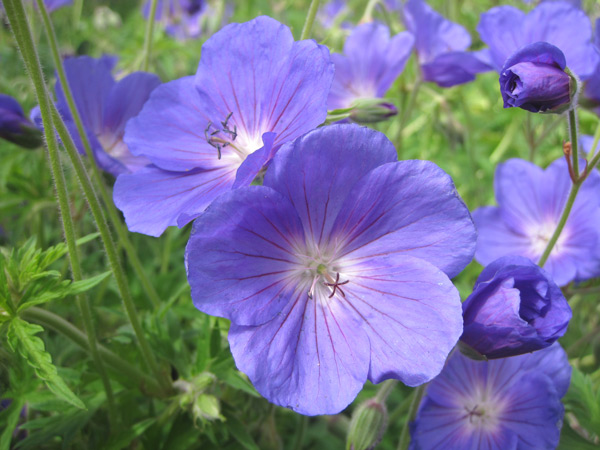
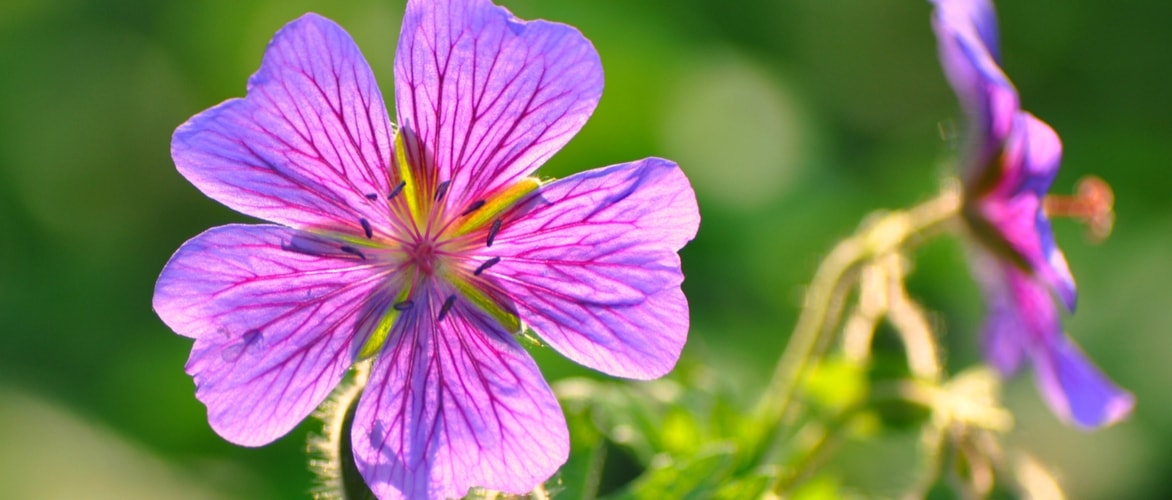
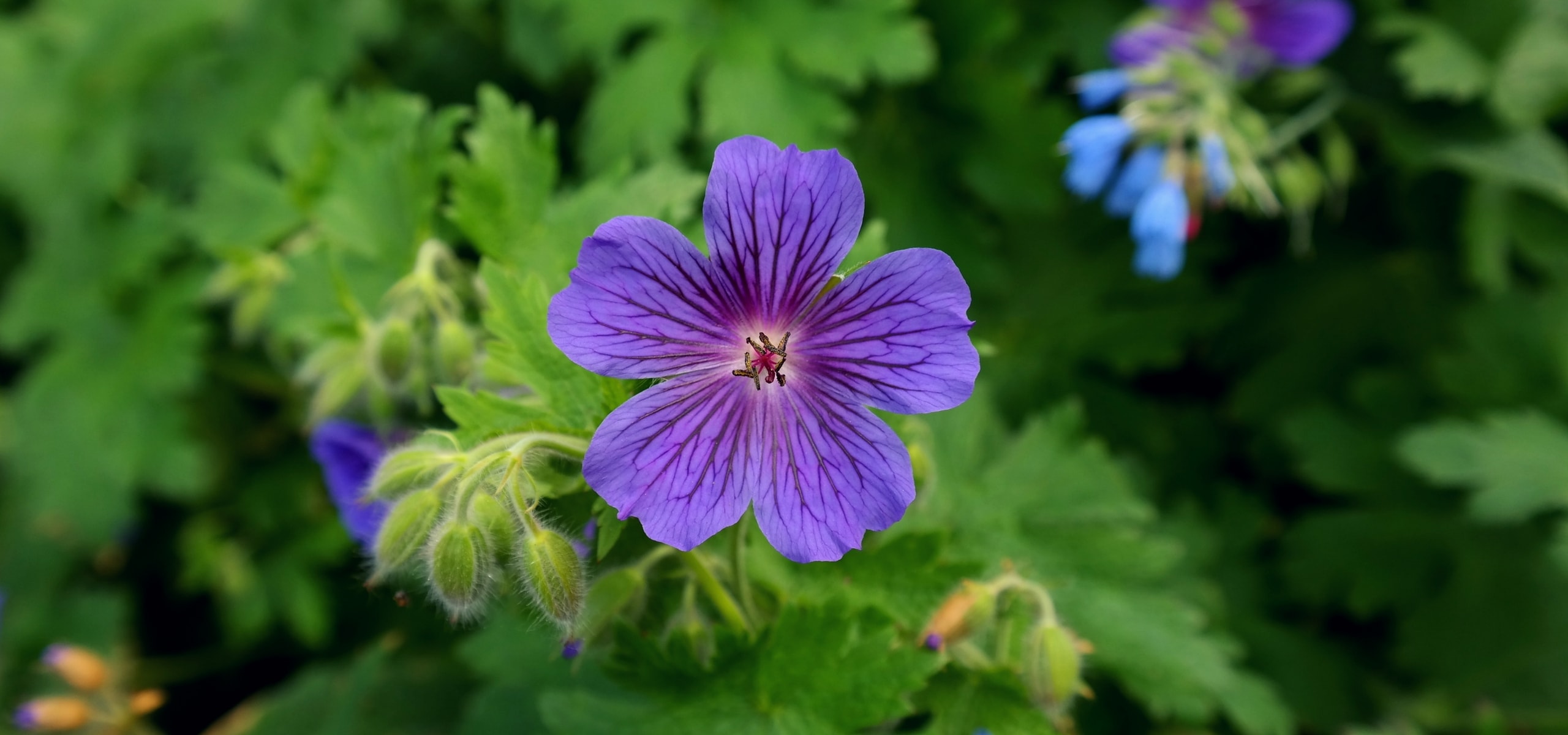
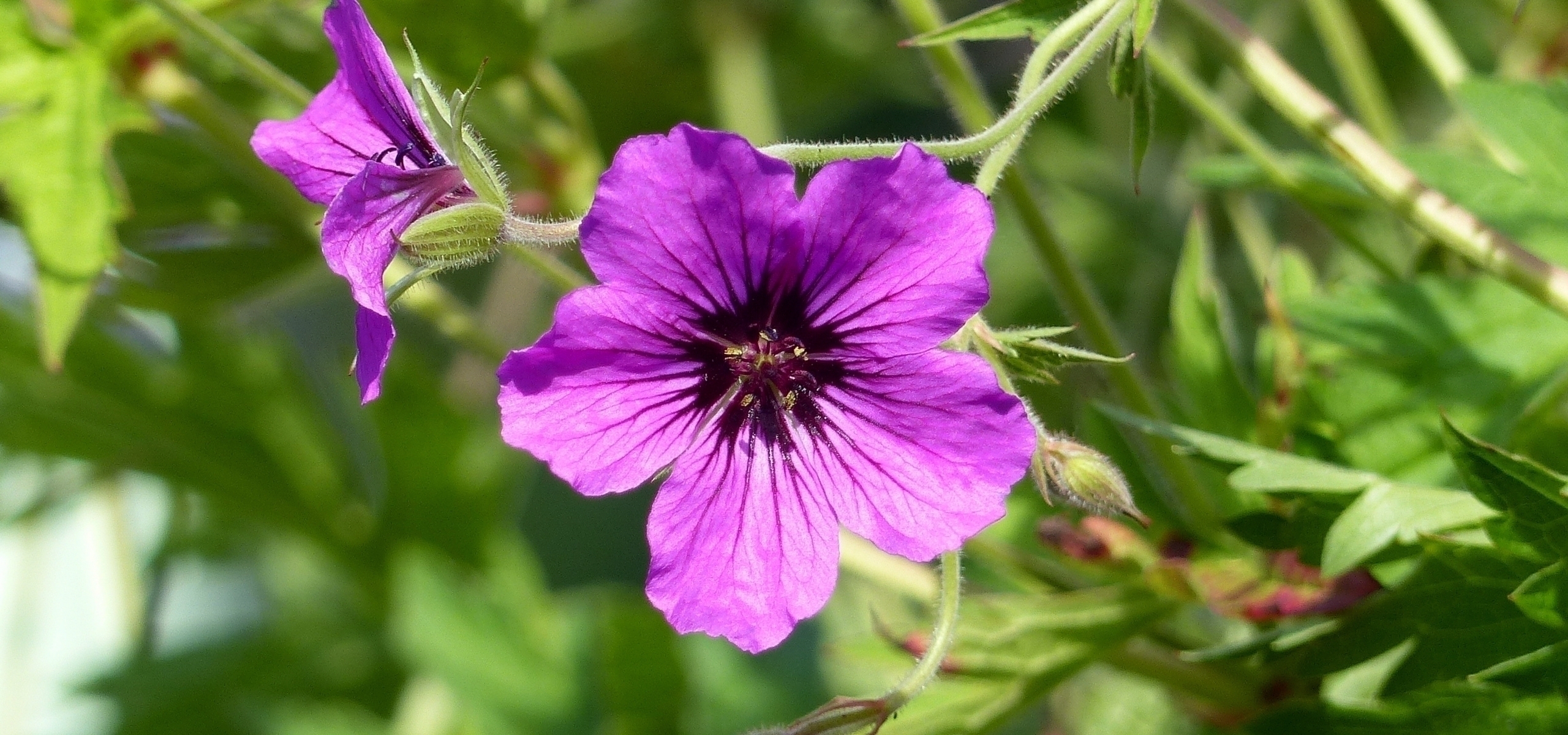
This geranium belongs to the Geraniaceae family. It is called palmate geranium or palmate-leaved geranium. It should not be confused with balcony pelargoniums, nor with Geranium maderense, the true Madeira geranium, which is even more massive and spectacular. The main botanical synonyms for the species are Geranium anemonifolium, Geranium lowii, Geranium rutilans and Robertium anemonifolium. This Geranium palmatum is native to Madeira, where it grows notably near the levadas, the irrigation channels that traverse the island’s slopes. This habitat gives a good indication of its needs: light, mild conditions, and a soil that retains some moisture without remaining waterlogged. It is a short-lived plant, biennial or not very durable perennial. It first forms a large rosette of evergreen leaves, then flowers abundantly before fading more or less quickly. In a favourable climate, it maintains itself through spontaneous sowing, which allows a few young plants to persist. Its rosette reaches 50 cm to 1 m across. The leaves, borne on long petioles, are deeply divided into palmate lobes, medium green, taking on red or bronze tints in cool weather. The stems are thick, ramified, and covered with small reddish, slightly sticky hairs. Flowering takes place in summer, from July to September. The flowers, 4 cm wide, open into cups of mauve-pink to purplish-pink around a darker centre. They are gathered in large, ramified inflorescences, well above the foliage, and attract pollinating insects. After flowering, the elongated, beak-shaped fruits release the seeds at ripeness. This beautiful botanical species has received the Award of Garden Merit from the Royal Horticultural Society, a testament to its ornamental value in gardens with suitable climates. Its great weakness is the cold: the foliage is quickly damaged by repeated light frosts, and the stump does not withstand temperatures below -6/-8°C in dry soil under a mulch.
This geranium can be grown in the open ground in gardens along the Atlantic coast, in south Brittany, the Basque Country, sheltered urban areas, or on the Mediterranean coast. It is placed near a patio, in a sheltered courtyard, or at the foot of a wall for protection. Growing it in a large pot makes it easier to protect. It pairs well with the bell flowers of Fuchsia magellanica 'Riccartonii', the deep violet of the large sage Salvia x guaranitica 'Amistad', and the slender stems of Dierama pulcherrimum 'Blackbird'. At the back of the border or on the side, Melianthus major displays a very dissected blue-grey foliage that is perfectly at home in an exotic garden.
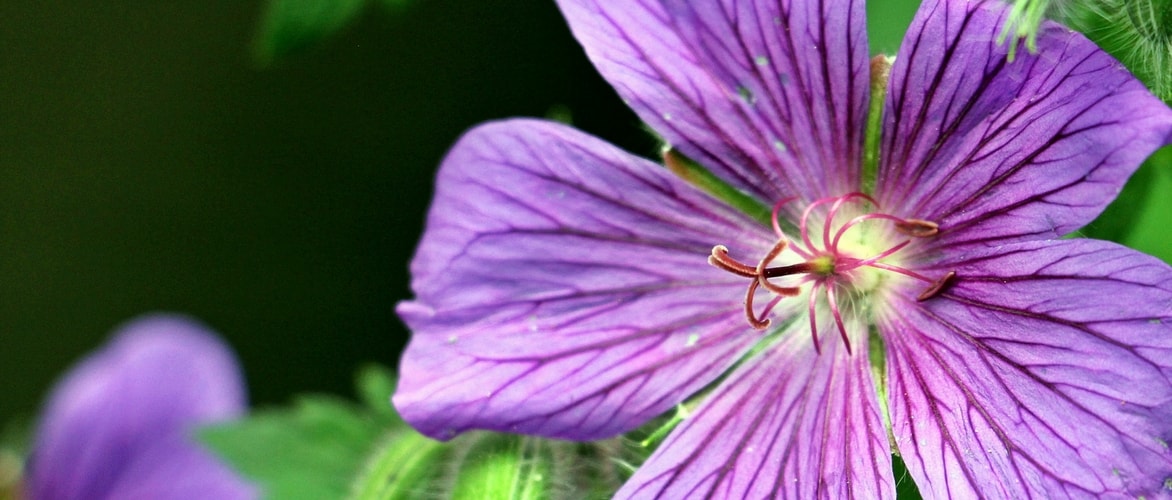
Flowering
Foliage
Plant habit
Botanical data
Geranium
palmatum
Geraniaceae
Canary Island geranium, anemone-leav'd geranium, anemone-leaved cranesbill
Geranium anemonifolium, Geranium lowii, Geranium rutilans, Robertium anemonifolium
Southern Europe
Planting and care
The Geranium palmatum is a superb species reserved for regions where frost rarely exceeds -7 °C. However, it tolerates container cultivation very well, and you can bring it indoors at the first light frosts into a bright, simply frost-free room.
Plant it in spring in regions where winter can be somewhat cold, so that it forms a good rosette before the first frosts. In mild oceanic climates, planting in early autumn is possible. Choose a sunny exposure, in non-scorching sun or bright partial shade. In hot climates, light afternoon shade is appreciated. The soil should be fertile, humus-bearing, slightly acid to neutral, moist during the growing period, but always drained. It tolerates ordinary non-calcareous soil if it is neither heavy nor waterlogged in winter.
In a container, use a wide and deep pot, well-drained at the bottom, with a mix of potting compost, garden soil and draining material. Water regularly in spring and summer, without leaving water in the saucer. In winter, keep the plant drier and protect it from hard frosts in a bright location, a cold greenhouse or against a very sheltered wall. Cut off damaged leaves as they appear. After flowering, a few stems can be left to set seed to renew the plant; remove them if you do not want spontaneous seedlings.
Planting period
Intended location
Care
Planting & care advice
-
-
-
-
-
-
-
-
This item has not been reviewed yet - be the first to leave a review about it.
Recently viewed products
Haven't found what you were looking for?
Hardiness is the lowest winter temperature a plant can endure without suffering serious damage or even dying. However, hardiness is affected by location (a sheltered area, such as a patio), protection (winter cover) and soil type (hardiness is improved by well-drained soil).
In temperate climates, pruning of spring-flowering shrubs (forsythia, spireas, etc.) should be done just after flowering.
Pruning of summer-flowering shrubs (Indian Lilac, Perovskia, etc.) can be done in winter or spring.
In cold regions as well as with frost-sensitive plants, avoid pruning too early when severe frosts may still occur.
The harvesting period indicated on our website applies to countries and regions in USDA zone 8 (France, England, Ireland, the Netherlands).
In colder areas (Scandinavia, Poland, Austria...) fruit and vegetable harvests are likely to be delayed by 3-4 weeks.
In warmer areas (Italy, Spain, Greece, etc.), harvesting will probably take place earlier, depending on weather conditions.
The sowing periods indicated on our website apply to countries and regions within USDA Zone 8 (France, UK, Ireland, Netherlands).
In colder areas (Scandinavia, Poland, Austria...), delay any outdoor sowing by 3-4 weeks, or sow under glass.
In warmer climes (Italy, Spain, Greece, etc.), bring outdoor sowing forward by a few weeks.
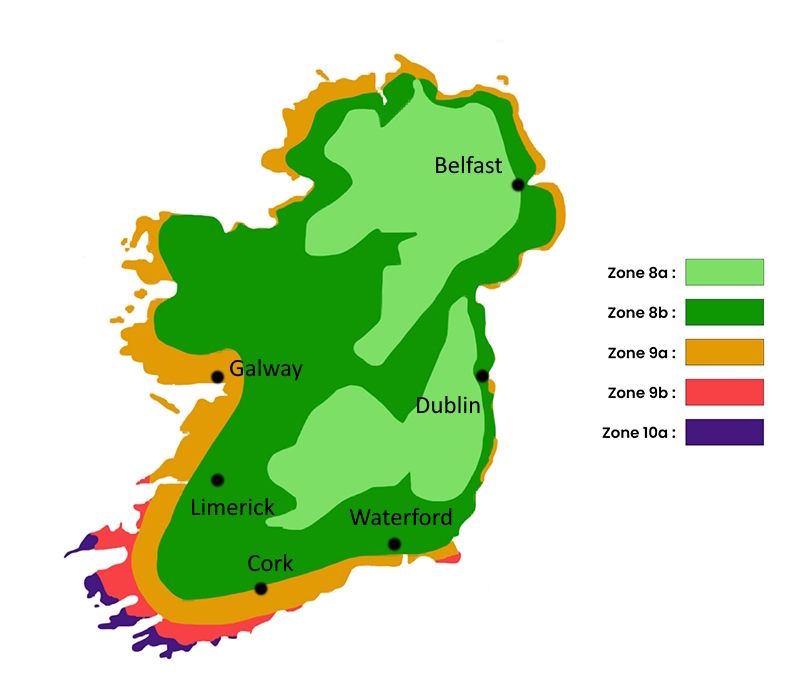
The planting period indicated on our website applies to regions in USDA Zone 9a (East Coast and Midlands: Dublin, Wexford, Waterford, Kilkenny, Portlaoise). It will vary depending on where you live:
- On the west coast and in the north-west (Galway, Limerick, Sligo, Donegal, Westport), delay planting by 1 to 2 weeks in spring and bring it forward by 1 to 2 weeks in autumn compared to the dates given, preferably choosing periods without strong winds.
- In the inland hills and plateaus (Wicklow Mountains, Macgillycuddy’s Reeks, Connemara, Killarney), it is best to plant in spring (April–May) or autumn (September–October), avoiding periods of waterlogged soil in winter and strong winds, which pose the main risk to newly planted trees in these areas.
The flowering period indicated on our website applies to regions in USDA Zone 9a, such as the East Coast and Midlands, including Dublin, Wexford, Waterford, Kilkenny and Portlaoise.
This will vary depending on where you live:
- On the west coast and in the northwest (Galway, Limerick, Sligo, Donegal and Westport), it will be delayed by one to two weeks compared to the given dates, due to stronger Atlantic winds and less spring sunshine.
- In the inland hills and plateaus (the Wicklow Mountains, the Macgillycuddy's Reeks, Connemara and Killarney), flowering will be delayed by two to three weeks. Flowering mainly occurs between May and July, with the limiting factors being less frost and more of the excessive humidity, strong winds and lack of sunshine that are characteristic of these areas.
Shipping country and language
Your country of residence may be:
Your country of residence is:
For a better user experience on our website, you can select:
Your shipping country:
-
 Austria
-
 Belgium
-
 Bosnia & Herzegovina
-
 Bulgaria
-
 Croatia
-
 Cyprus
-
 Czechia
-
 Denmark
-
 Estonia
-
 Finland
-
 France
-
 Germany
-
 Greece
-
 Hungary
-
 Iceland
-
 Ireland
-
 Italy
-
 Latvia
-
 Liechtenstein
-
 Lithuania
-
 Luxembourg
-
 Malta
-
 Netherlands
-
 Poland
-
 Portugal
-
 Romania
-
 Serbia
-
 Slovakia
-
 Slovenia
-
 Spain
-
 Sweden
-
 Switzerland
Language:
-
French
-
 English
-
Spanish
-
Italian
-
German
-
Portuguese
-
Dutch
-
Finnish
My Account
Hello
My wish lists
My cart
Log in / Register
Existing customer?
This form is protected by reCAPTCHA - the Google Privacy Policy and Terms of Service apply.
New customer?
Create an account to track your orders, access our customer service and, if you wish, make the most of our upcoming offers.