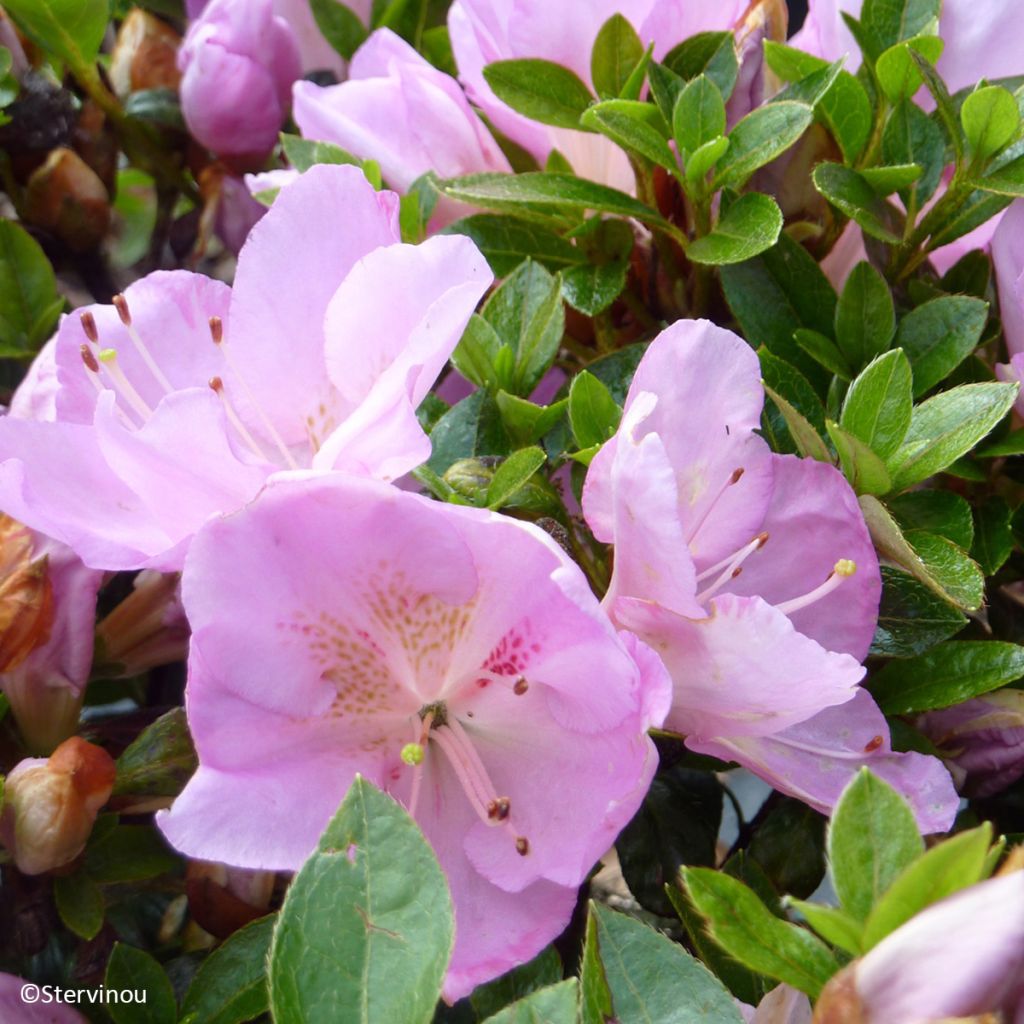
Azalea japonica Blue Moon
Azalea japonica Blue Moon
Rhododendron 'Blue Moon'
Japanese Azalea
Back-to-school special offer!
Get €10 off for every €50 you spend! And get up to €40 off on a single order.
How does it work?
1. Shop your favourites
Add your favourite plants to your basket. For every €50 you spend (excluding delivery charges, store credit and the plastic-free option), you’ll receive a €10 voucher.
€50 spent = €10 voucher
€100 spent = €20 voucher
€150 spent = €30 voucher
€200 spent = €40 voucher
2. Place your order
Once your basket reaches one of the spending thresholds, place your order. You can even choose your delivery date!
3. Receive your voucher
As soon as your order has been shipped, you’ll receive an email containing your personal voucher code and its value.
4. Use it on your next order
Your voucher is valid for 90 days from the date you receive it. It can be used once only, on a new order worth at least the value of the voucher, excluding delivery charges.
Please note: Vouchers can be combined with other offers, but cannot be split or refunded.
Home or relay delivery (depending on size and destination)
Important: You may be charged customs duties by your country’s customs authorities upon delivery.
Schedule delivery date
and select date in basket
This plant carries a 24 months recovery warranty
More information
We guarantee the quality of our plants for a full growing cycle, and will replace at our expense any plant that fails to recover under normal climatic and planting conditions.
Does this plant fit my garden?
Set up your Plantfit profile →
Description
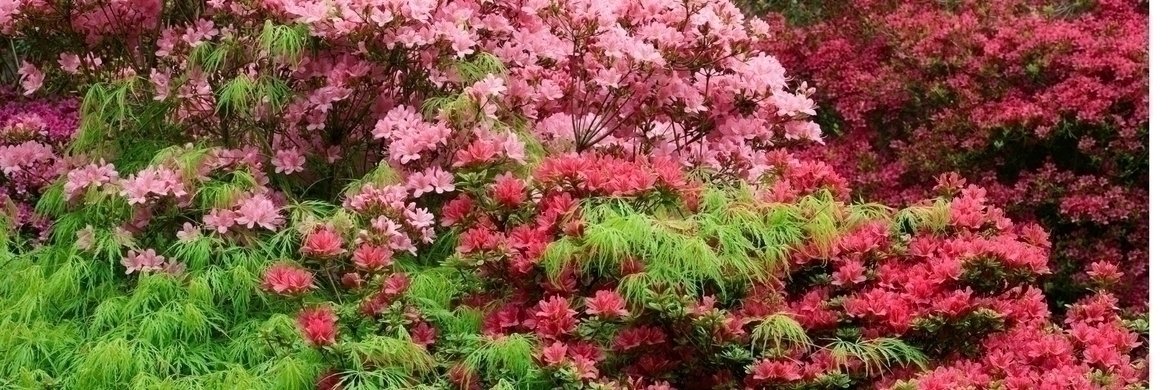
Japanese Azalea 'Blue Moon' is a slow-growing evergreen bush, remaining compact at maturity. It is adorned with beautiful, dark green, evergreen foliage. This variety is distinguished by its late flowering, which does not bloom until June, allowing the flowering season to be extended when planted alongside other Azaleas. It produces numerous single, light pink flowers with a very slight hint of mauve.
Azalea belongs to the vast Ericaceae family, which includes nearly a hundred genera highly prized in ornamental gardens. Among them are all the Heathers (Erica, Calluna, Daboecia…), the less widespread Enkianthus, known as campanulate Andromeda, or the Blueberry Bush and the Strawberry Tree, known for their decorative and edible fruits. The Rhododendron genus, to which the Azalea belongs, alone brings together nearly 850 species: around 300 develop in tropical regions (the Vireyas group), while the others thrive in temperate to cold climates. These plants can take the form of small shrubs, bushes or even trees reaching up to 15 m in height. To this natural diversity is added a multitude of varieties and hybrids created by passionate horticulturists. It is, in fact, they who created the distinction between Rhododendron and Azalea, since in botanical classification, all are Rhododendrons.
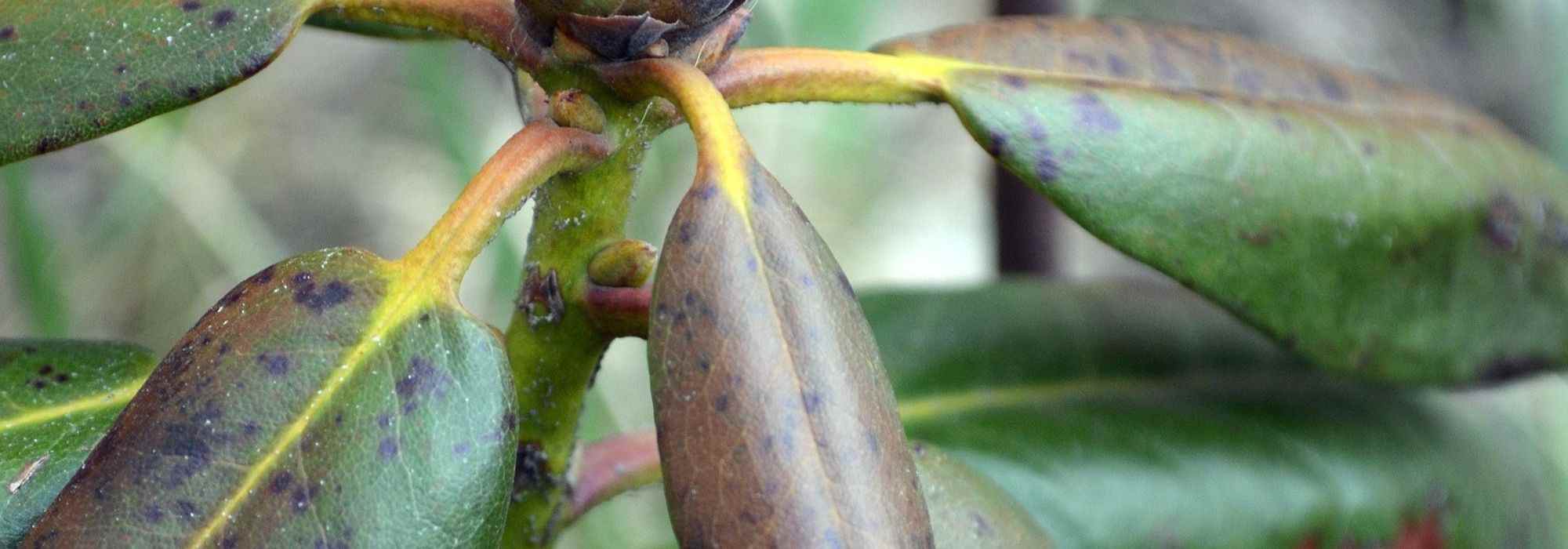
This Japanese Azalea is a hybrid variety whose parents are not precisely known. The slow-growing bush forms a compact clump a little wider than tall after 10 years, measuring only 60 cm in height with a 70 cm spread. At maturity, it will not exceed one metre in any direction, making it an ideal subject for small gardens and container cultivation. The vegetation consists of small, elliptical leaves with a pointed tip, generally measuring 2 to 4 cm in length. The leaf blade is slightly hairy around its edge and has a deep, dark green colour with a glossy surface. The evergreen foliage is attractive all year round, and it showcases the lighter flowering well. This flowering is later than in most varieties, waiting until June before blooming. As with other Azaleas, it is then spectacular in its abundance and brilliance. Single flowers approximately 5 cm in diameter then colonise the ends of the branches, developing in cymes composed of several flowers. As is often the case with intermediate tones, their exact colour is difficult to name, somewhere between light pink, heliotrope pink and mauve pink. The corollas have spots ranging from a darker pink to a coppery beige, while five stamens and a pistil with a yellow tip emerge from the centre. The flowering lasts about three weeks.
The flowering of Azalea Blue Moon is imbued with romantic charm, and its compactness allows it to be placed anywhere. It can also easily be kept in a container; in fact, this is a must if the soil is calcareous, as it needs an acidic substrate. Plant it in partial shade in a bed of ericaceous plants. To maintain a poetic tone, choose complementary plants, such as the small Magnolia stellata 'Rosea', with star-shaped, pale pink flowers that are utterly charming in March-April. To create a link with your Azalea, plant Andromeda polifolia 'Nikko' at the edge of your bed, a dwarf shrub that blooms in small, very pale pink bells from April to June. And to animate the summer, you will be spoilt for choice among the immense range of Hydrangeas, which offer an incredible variety of shapes and colours.
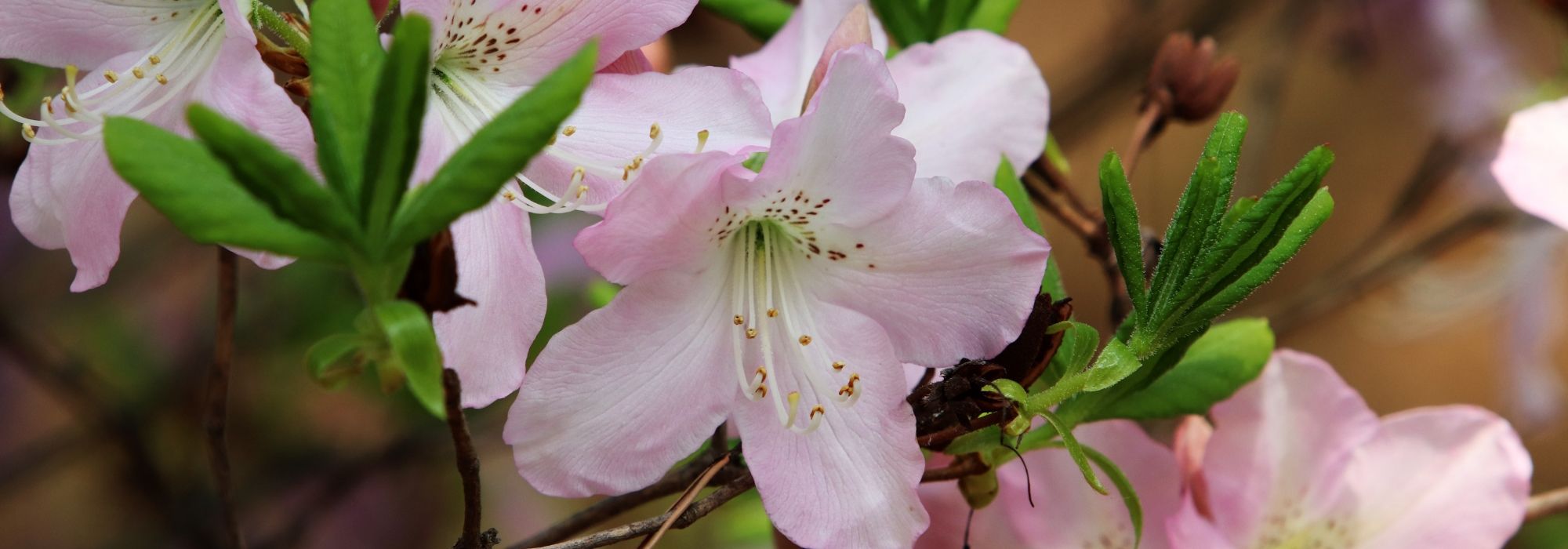
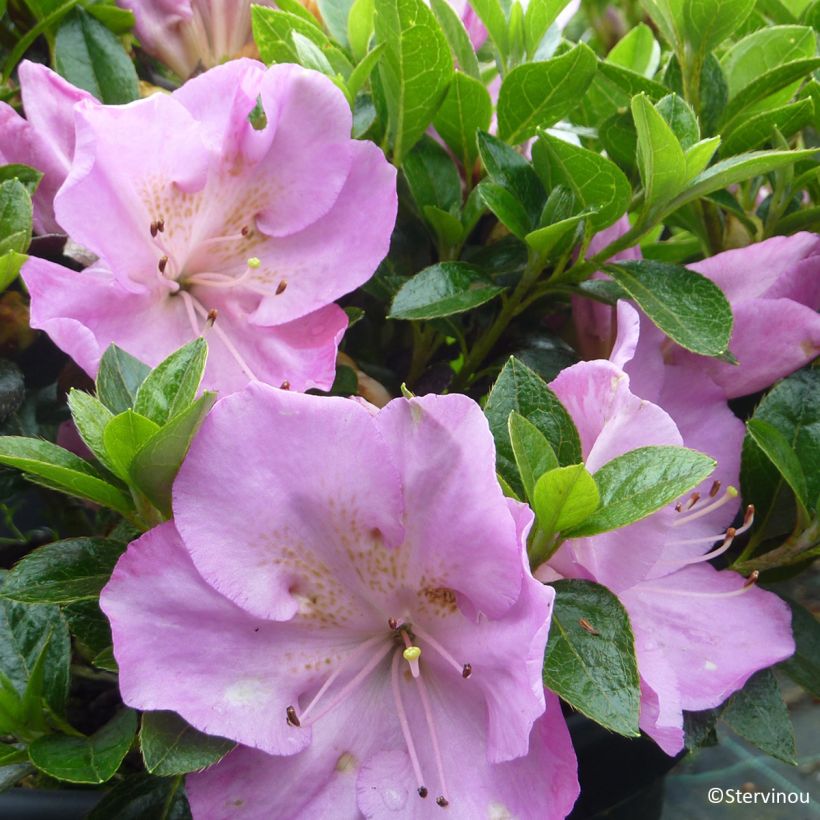
Azalea japonica Blue Moon in pictures
Plant habit
Flowering
Foliage
Botanical data
Rhododendron
'Blue Moon'
Ericaceae
Japanese Azalea
Rhododendron 'Blue Moon', Azalea 'Blue Moon'
Cultivar or hybrid
Planting and care
Plant Japanese Azalea 'Blue Moon' in a partially shaded position, sheltered from cold and drying winds, in moist, humus-bearing, light soil, tending towards acidity. Like all ericaceous plants, it does not tolerate calcareous soils, nor heavy soils, waterlogged in winter. Dig a hole three times the volume of the pot. Soak the root ball in water (non-calcareous) and plant the shrub at collar level, in a mixture composed of 1/4 peat, leaf mould, gravel or pozzolana, and loam. Water generously and keep the soil cool in summer. Azaleas and Rhododendrons have a relatively shallow root system. Consequently, they don't like long periods of drought. This is why a soil enriched with humus and abundant watering during dry periods are recommended. Furthermore, this root system is not very strong, which is why it is essential to lighten heavy soils with draining materials (gravel, pozzolana, clay pebbles) at planting time. Apply a mulch of crushed pine bark at the base of the bush every spring to keep the soil moist while maintaining an acidic pH. Maintenance consists of cutting off the faded flowers in summer and cleaning out its dead branches. Azaleas and Rhododendrons can sometimes be attacked by vine weevils, which eat the edges of the leaves and the rootlets, as well as by the famous 'rhododendron leafhopper', which does not often cause severe damage. Yellowing of the leaves (chlorosis) in Rhododendron indicates poor assimilation of iron in the soil and causes premature death of the plant. Lime is often the cause, but poorly drained soil or a root ball planted too deeply can also explain the phenomenon.
Planting period
Intended location
Care
Planting & care advice
-

-

-

-
-
-

-

-
This item has not been reviewed yet - be the first to leave a review about it.
Recently viewed products
Haven't found what you were looking for?
Hardiness is the lowest winter temperature a plant can endure without suffering serious damage or even dying. However, hardiness is affected by location (a sheltered area, such as a patio), protection (winter cover) and soil type (hardiness is improved by well-drained soil).
In temperate climates, pruning of spring-flowering shrubs (forsythia, spireas, etc.) should be done just after flowering.
Pruning of summer-flowering shrubs (Indian Lilac, Perovskia, etc.) can be done in winter or spring.
In cold regions as well as with frost-sensitive plants, avoid pruning too early when severe frosts may still occur.
The harvesting period indicated on our website applies to countries and regions in USDA zone 8 (France, England, Ireland, the Netherlands).
In colder areas (Scandinavia, Poland, Austria...) fruit and vegetable harvests are likely to be delayed by 3-4 weeks.
In warmer areas (Italy, Spain, Greece, etc.), harvesting will probably take place earlier, depending on weather conditions.
The sowing periods indicated on our website apply to countries and regions within USDA Zone 8 (France, UK, Ireland, Netherlands).
In colder areas (Scandinavia, Poland, Austria...), delay any outdoor sowing by 3-4 weeks, or sow under glass.
In warmer climes (Italy, Spain, Greece, etc.), bring outdoor sowing forward by a few weeks.
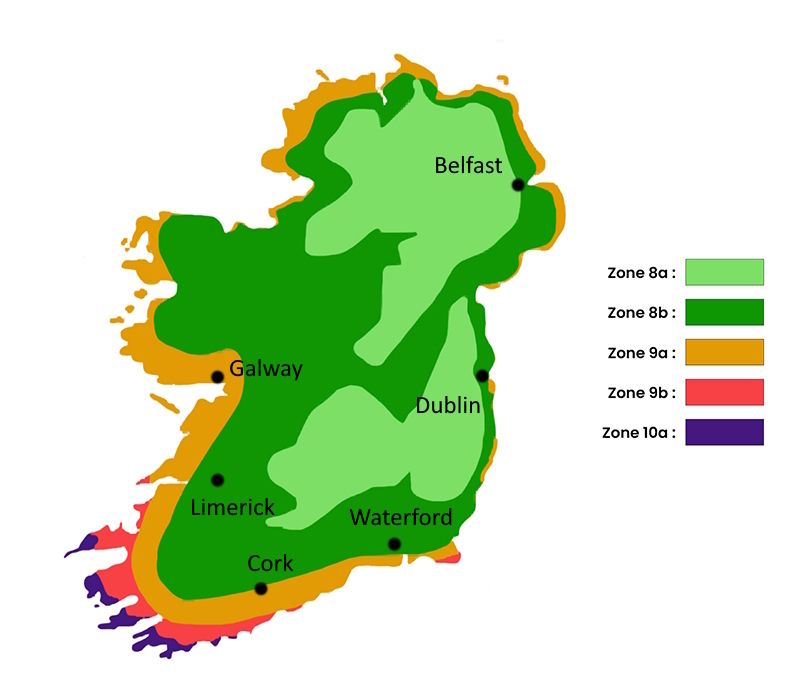
The planting period indicated on our website applies to regions in USDA Zone 9a (East Coast and Midlands: Dublin, Wexford, Waterford, Kilkenny, Portlaoise). It will vary depending on where you live:
- On the west coast and in the north-west (Galway, Limerick, Sligo, Donegal, Westport), delay planting by 1 to 2 weeks in spring and bring it forward by 1 to 2 weeks in autumn compared to the dates given, preferably choosing periods without strong winds.
- In the inland hills and plateaus (Wicklow Mountains, Macgillycuddy’s Reeks, Connemara, Killarney), it is best to plant in spring (April–May) or autumn (September–October), avoiding periods of waterlogged soil in winter and strong winds, which pose the main risk to newly planted trees in these areas.
The flowering period indicated on our website applies to regions in USDA Zone 9a, such as the East Coast and Midlands, including Dublin, Wexford, Waterford, Kilkenny and Portlaoise.
This will vary depending on where you live:
- On the west coast and in the northwest (Galway, Limerick, Sligo, Donegal and Westport), it will be delayed by one to two weeks compared to the given dates, due to stronger Atlantic winds and less spring sunshine.
- In the inland hills and plateaus (the Wicklow Mountains, the Macgillycuddy's Reeks, Connemara and Killarney), flowering will be delayed by two to three weeks. Flowering mainly occurs between May and July, with the limiting factors being less frost and more of the excessive humidity, strong winds and lack of sunshine that are characteristic of these areas.
Shipping country and language
Your country of residence may be:
Your country of residence is:
For a better user experience on our website, you can select:
Your shipping country:
-
 Austria
-
 Belgium
-
 Bosnia & Herzegovina
-
 Bulgaria
-
 Croatia
-
 Cyprus
-
 Czechia
-
 Denmark
-
 Estonia
-
 Finland
-
 France
-
 Germany
-
 Greece
-
 Hungary
-
 Iceland
-
 Ireland
-
 Italy
Italy
-
 Latvia
-
 Liechtenstein
-
 Lithuania
-
 Luxembourg
-
 Malta
Malta
-
 Netherlands
-
 Poland
-
 Portugal
-
 Romania
-
 Serbia
-
 Slovakia
-
 Slovenia
-
 Spain
Spain
-
 Sweden
-
 Switzerland
Language:
-
French
-
 English
-
Spanish
-
Italian
-
German
-
Portuguese
-
Dutch
-
Finnish
My Account
Hello
My wish lists
My cart
Log in / Register
Existing customer?
This form is protected by reCAPTCHA - the Google Privacy Policy and Terms of Service apply.
New customer?
Create an account to track your orders, access our customer service and, if you wish, make the most of our upcoming offers.