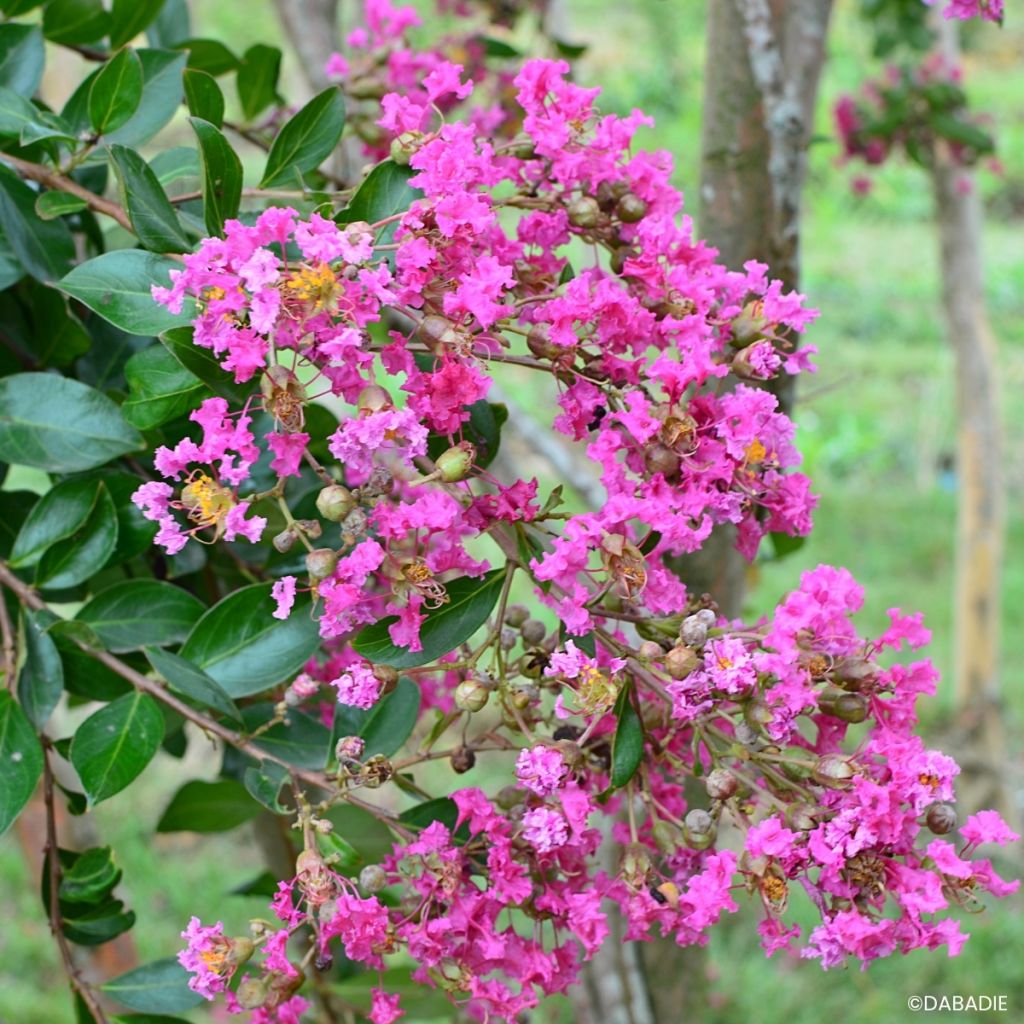
Lagerstroemia indica Mimie Rose - Crape myrtle
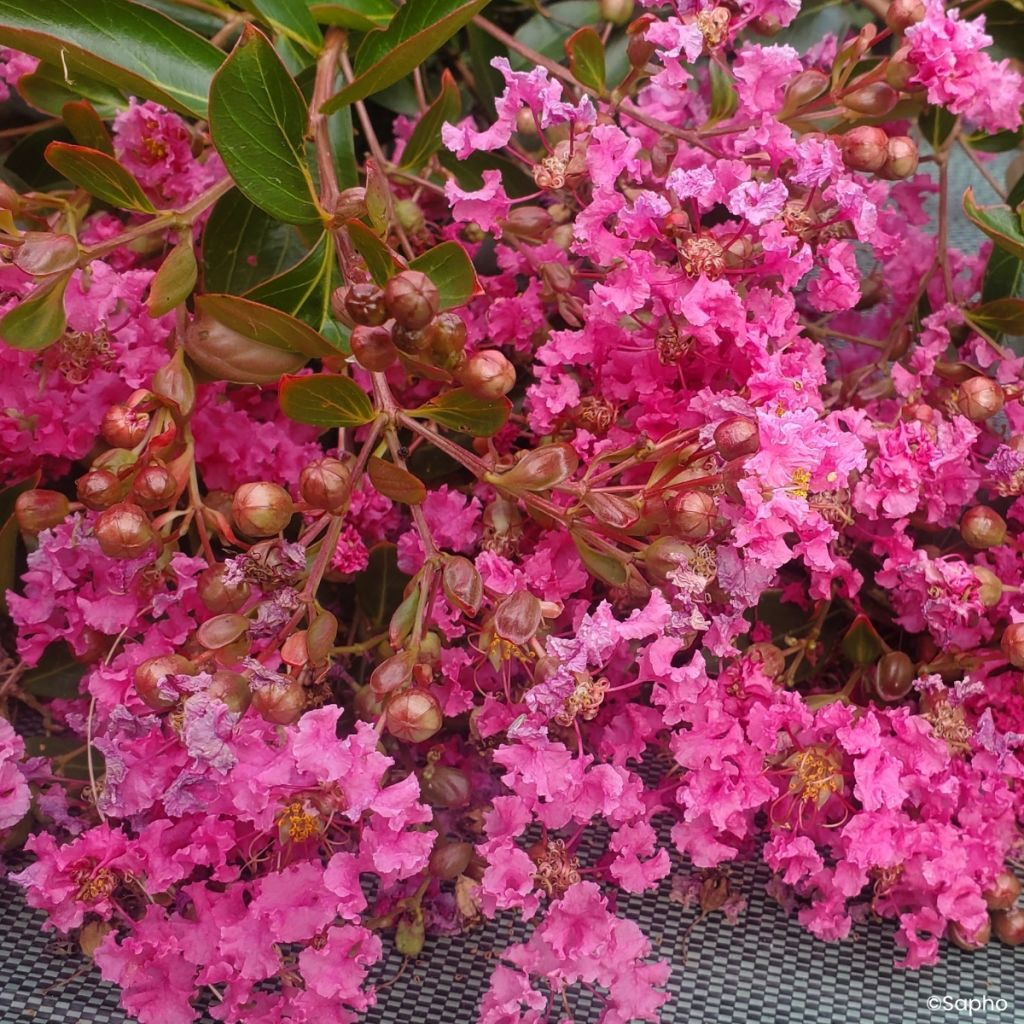
Lagerstroemia indica Mimie Rose - Crape myrtle
Lagerstroemia indica Mimie Rose - Crape myrtle
Lagerstroemia indica 'Dablage02' MIMIE® ROSE
Crape Myrtle, Crepe Myrtle, Indian Lilac
Back-to-school special offer!
Get €10 off for every €50 you spend! And get up to €40 off on a single order.
How does it work?
1. Shop your favourites
Add your favourite plants to your basket. For every €50 you spend (excluding delivery charges, store credit and the plastic-free option), you’ll receive a €10 voucher.
€50 spent = €10 voucher
€100 spent = €20 voucher
€150 spent = €30 voucher
€200 spent = €40 voucher
2. Place your order
Once your basket reaches one of the spending thresholds, place your order. You can even choose your delivery date!
3. Receive your voucher
As soon as your order has been shipped, you’ll receive an email containing your personal voucher code and its value.
4. Use it on your next order
Your voucher is valid for 90 days from the date you receive it. It can be used once only, on a new order worth at least the value of the voucher, excluding delivery charges.
Please note: Vouchers can be combined with other offers, but cannot be split or refunded.
Why not try an alternative variety in stock?
View all →
Available in 3 sizes

Available in 2 sizes
Available in 1 sizes

Available in 2 sizes
Available in 2 sizes

Available in 1 sizes
Available in 2 sizes
Available in 2 sizes

Available in 1 sizes

Available in 2 sizes
This plant carries a 24 months recovery warranty
More information
We guarantee the quality of our plants for a full growing cycle, and will replace at our expense any plant that fails to recover under normal climatic and planting conditions.
Does this plant fit my garden?
Set up your Plantfit profile →
Description
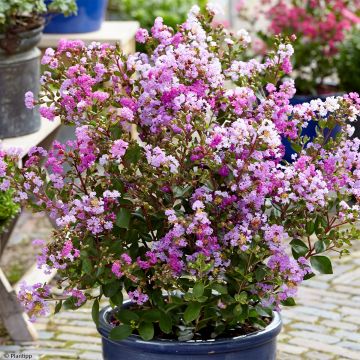
Lagerstroemia indica 'Mimie Rose' (full name 'Dablage02' MIMIE® ROSE) is a very recent variety of crape myrtle that reinvigorates the genus with its highly original silhouette. Its very flexible vegetation naturally adopts a groundcover habit or a weeping habit if trained as a standard. Its bright pink flowering is particularly generous and blooms from late spring to early autumn. Resistant to powdery mildew, the shrub retains its beautiful glossy green foliage, creating a superb harmony with the dazzling inflorescences. Equally ornamental in the garden, in a bed or on a slope, as it is when planted in a container on a terrace, this Lagerstroemia will enchant your summers.
Lagerstroemia belongs to the Lythraceae family, which comprises 31 genera and over 600 species. In our latitudes, there are a few familiar representatives, such as the Pomegranate (Punica) found in Mediterranean regions, or the purple loosestrife, Lythrum salicaria, a wild perennial of wetlands and riverbanks (from which the botanical family takes its name). There are between thirty and forty species of Lagerstroemia, consisting of trees and shrubs, some deciduous, some evergreen, native to southern and eastern Asia as well as Australia. Among them, the most widely cultivated is Lagerstroemia indica, also known as crape myrtle. Naturally occurring in China and Japan, it takes the form of a shrub or small tree that can reach 6 to 8 metres. Its oval, deciduous leaves take on warm, bright hues in autumn before falling. This species has good hardiness, tolerating temperatures of -15 to -20°C once well established, but its flowering remains generous only in regions with long, sunny summers.
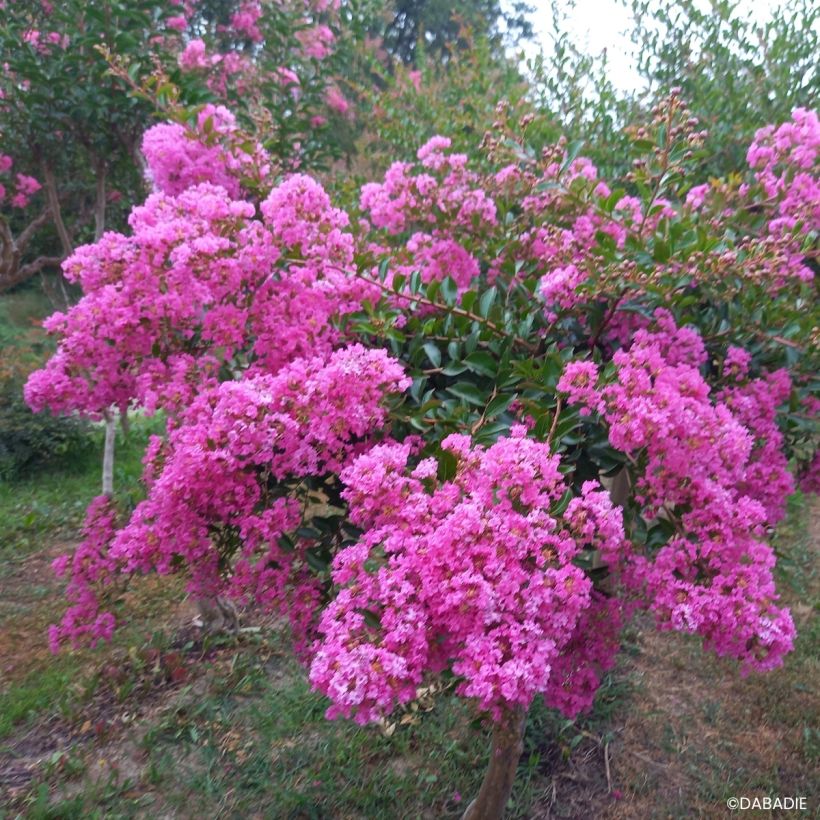
Crape myrtle 'Mimie Rose' is part of the MIMIE® range, which brings together carefully selected varieties based on criteria such as earliness, duration and intensity of flower colour, and also habit. 'Mimie Rose' is a creation by the Frenchman Alain Dabadie and was introduced to the market in 2021. This variety is easily distinguished by the flexible habit of its branches, whereas most traditional Lagerstroemias have a predominantly upright habit. In 'Mimie Rose', the branches first rise before drooping, especially bending under the weight of the flower clusters. Planted on a slope, it forms a spreading dome approximately 1 m tall and 2.50 m in diameter. If pruned to maintain a main stem, it takes on a very original weeping silhouette.
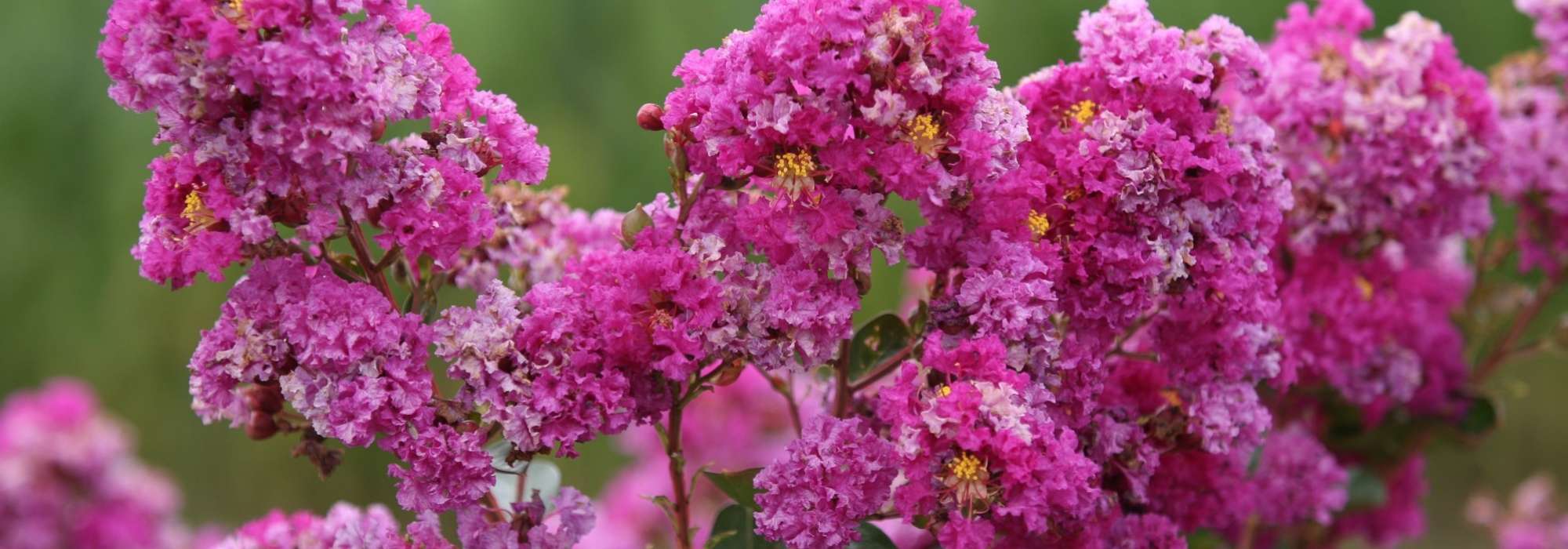
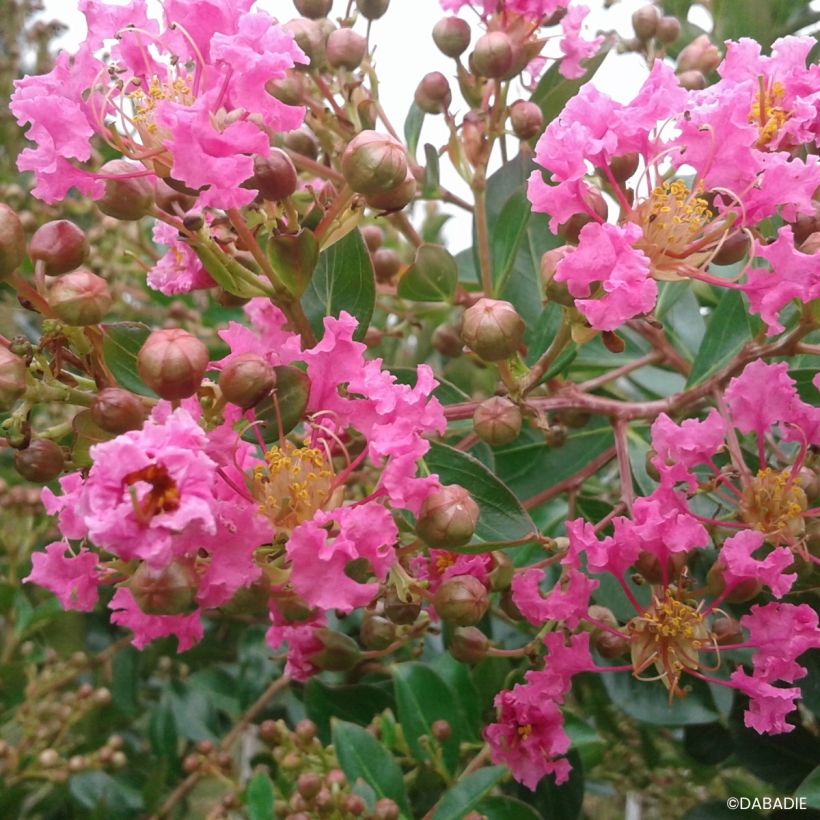
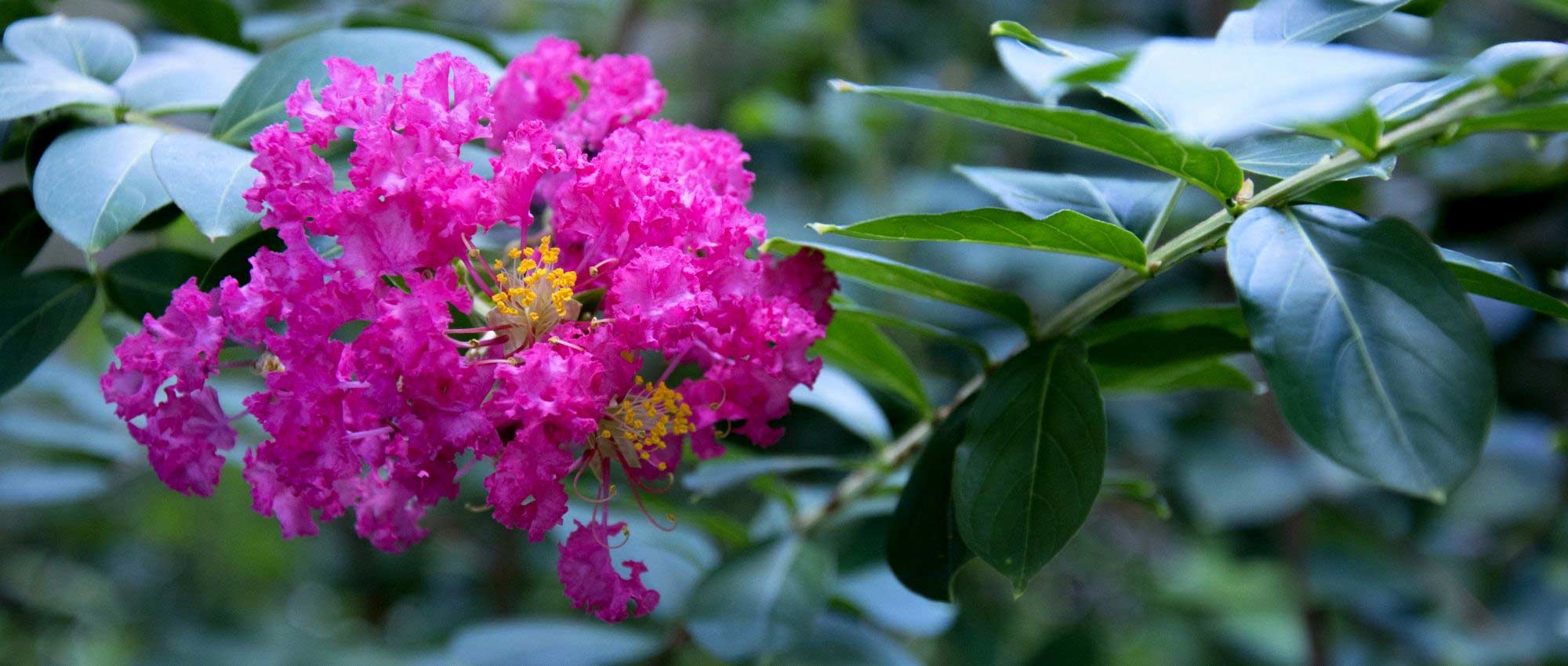
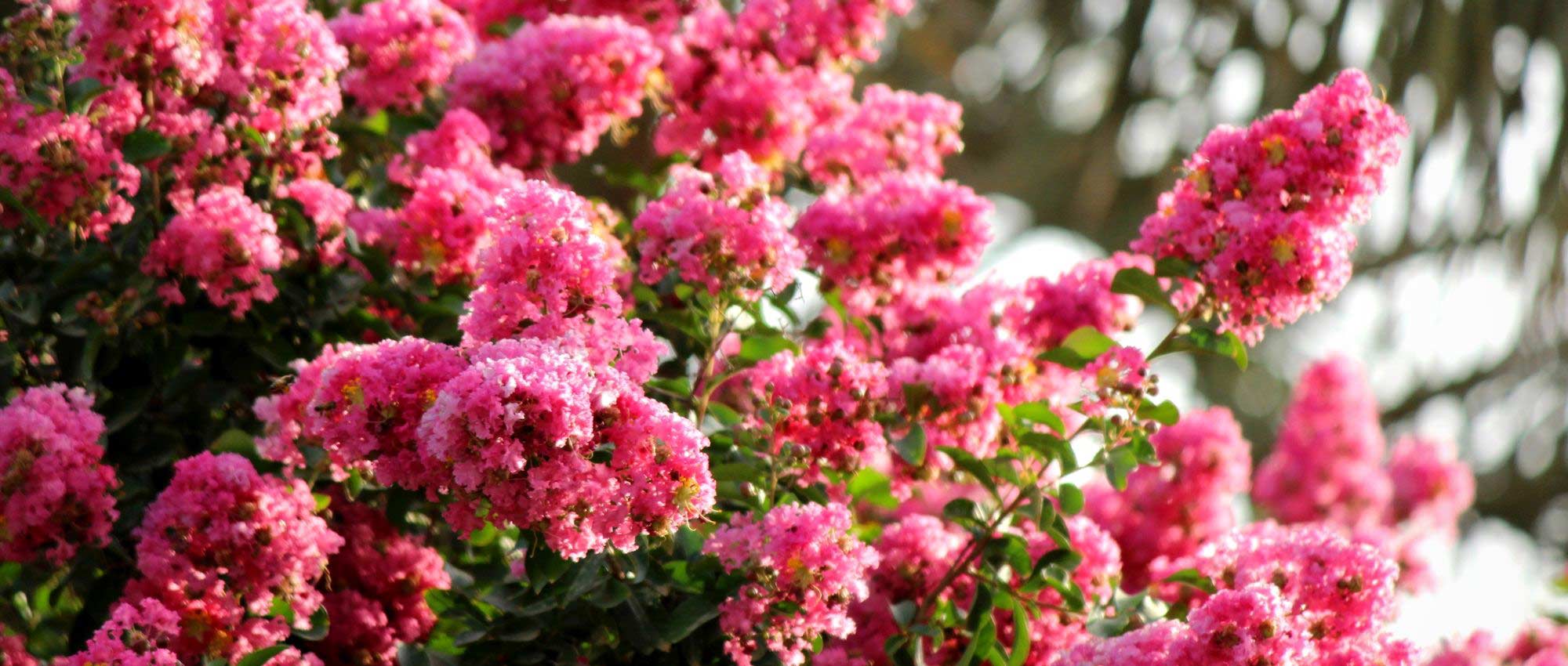
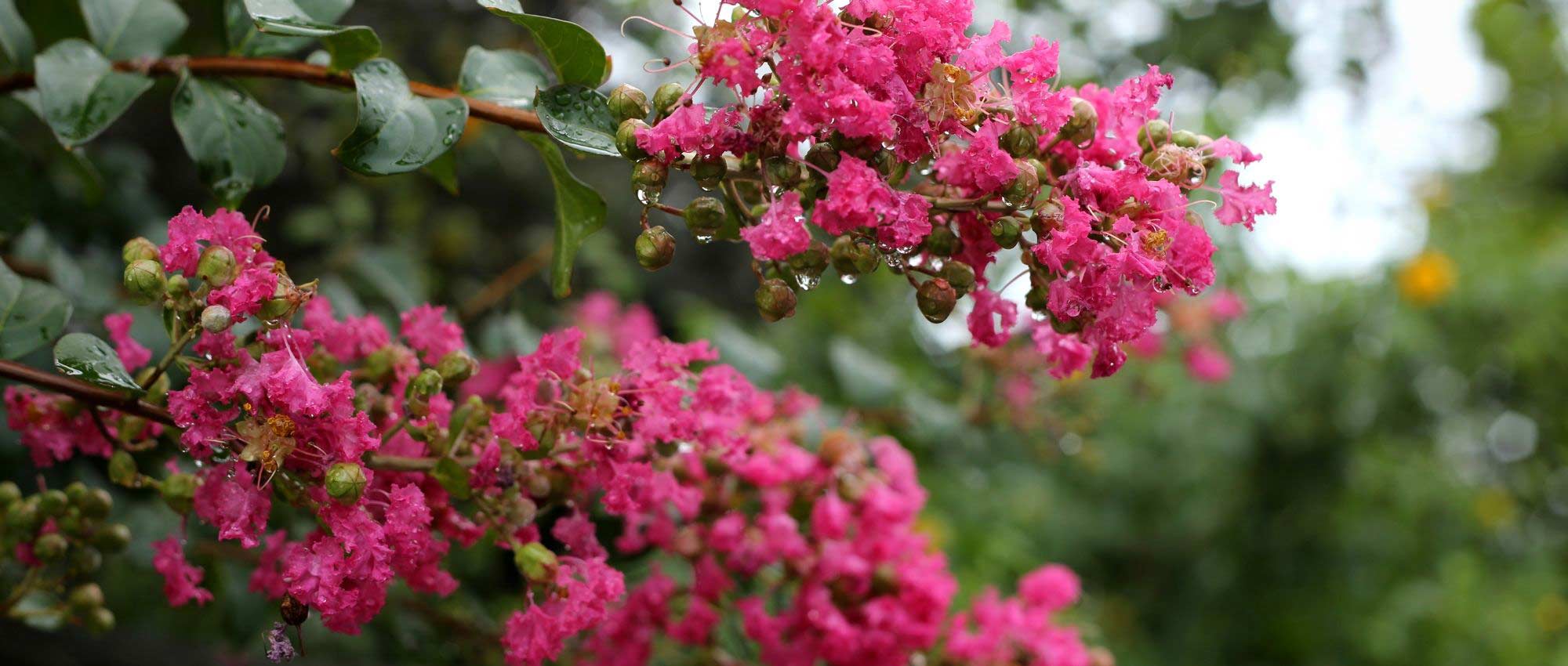
Flowering begins in June and continues intermittently until October, even on young plants. The flowers, borne on delicate pedicels, each have five petals with finely crinkled edges in a very bright, truly dazzling pink. However, their texture, reminiscent of crêpe paper or pleated fabric, gives them a romantic charm. They are grouped into large, dense panicles, reaching roughly 25 cm in length, which develop at the tips of the current year's shoots. Few summer flower displays can rival this crape myrtle, so impressive is the volume of flowers.
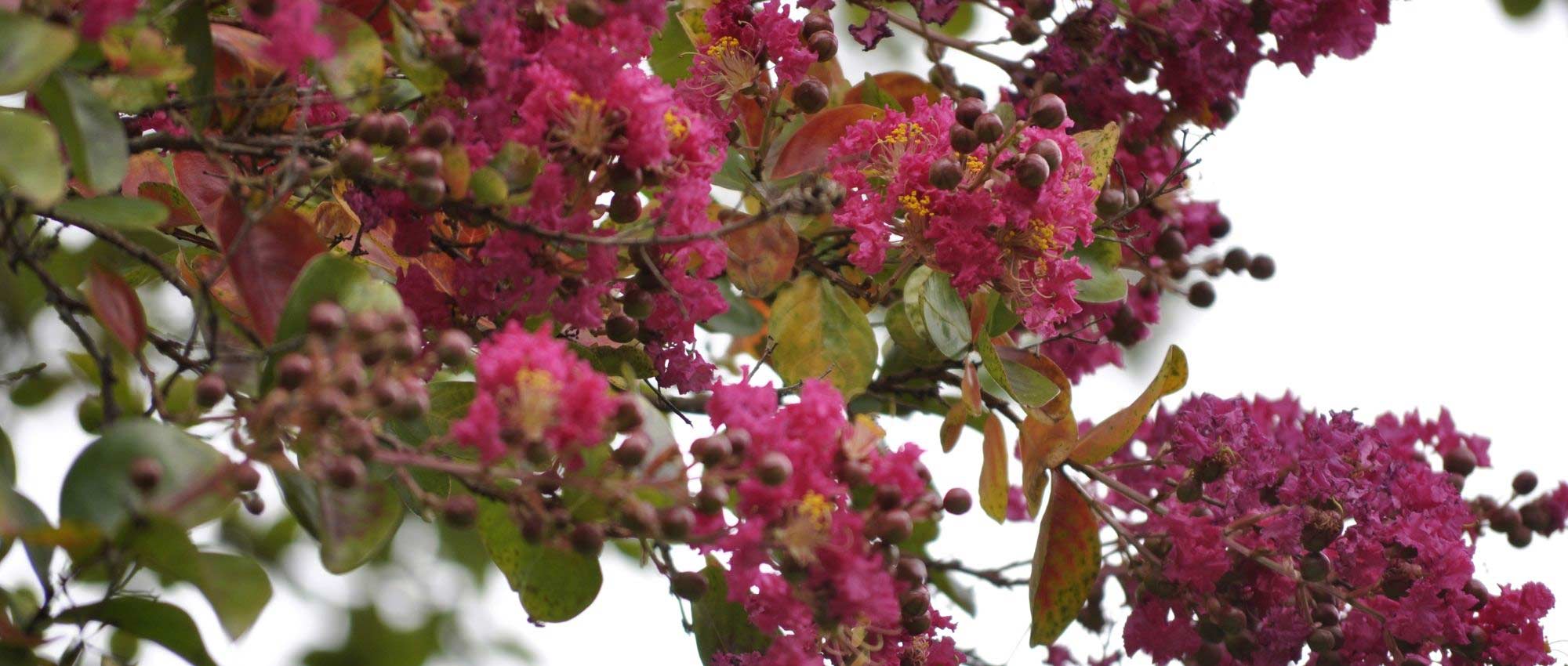
The brown stems, which become ornamental with age, are clothed with oval to lanceolate leaves of a beautiful deep green, with a glossy surface. Resistant to powdery mildew, the fungus that develops an unsightly white film and impairs the leaves' chlorophyll function, the leaves remain healthy and attractive throughout the growing season. They harmonise very well with the lively pink of the flowers, even though a large proportion of them are buried beneath the inflorescences. They are deciduous and they take on lovely autumn colours depending on the climate before falling to the ground, revealing the wood, whose brown bark peels elegantly.
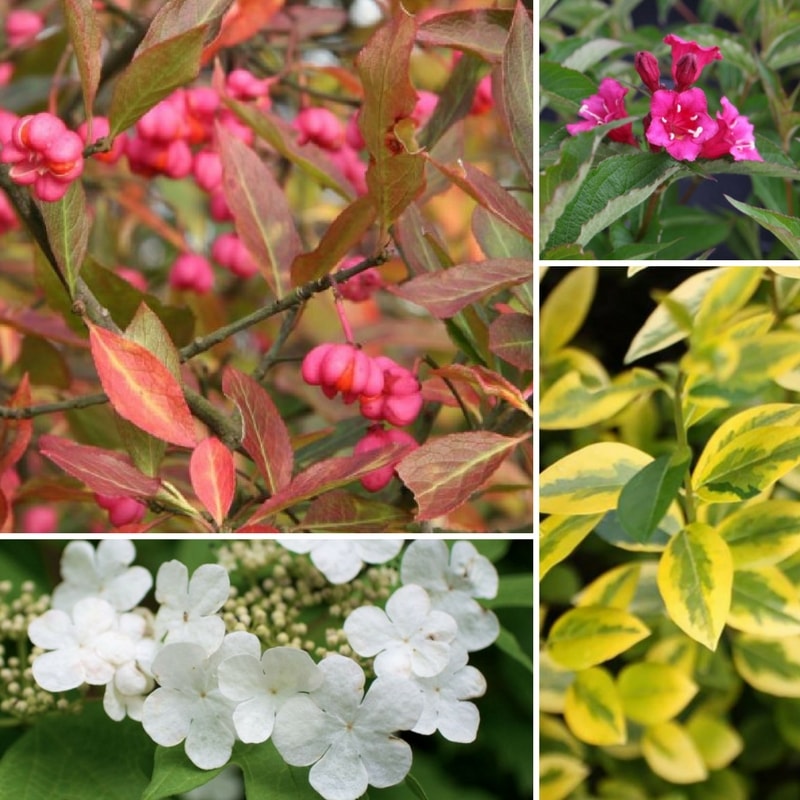
While the South-West offers ideal growing conditions, you can plant your Lagerstroemia 'Mimie Rose' in many other regions. Its good hardiness means it can withstand cold down to -15°C or even a little less once well established. In harsh climates, plant it in a somewhat sheltered spot, allowing it to trail over a south-facing dry stone wall. If the winter is too cold for it, you can easily grow it in a container to overwinter under cover. In the garden, create contrasts of form and colour, both in foliage and flowering. Hibiscus syriacus 'Flower Tower White', which forms a column of dark green vegetation, is adorned in summer with large single pure white flowers that will stand out perfectly in the background. With Hydrangea quercifolia 'Tara', an oak-leaved hydrangea with very dense white panicles, you can play on the size and texture of the leaves, which are the opposite of those of 'Mimie Rose'. They also colour in autumn, adding a further point of interest to your scene.
Lagerstroemia indica Mimie Rose - Crape myrtle in pictures
Plant habit
Flowering
Foliage
Botanical data
Lagerstroemia
indica
'Dablage02' MIMIE® ROSE
Lythraceae
Crape Myrtle, Crepe Myrtle, Indian Lilac
Cultivar or hybrid
Planting and care
We recommend planting the Lagestroemia indica 'Mimie Rose' in spring, when there is no longer any risk of frost, in a very sunny and sheltered position, in rich, moist, well-drained soil and, if possible, non-calcareous or only slightly so. In southern regions, it is better to plant it in autumn, so that it can benefit from the rains to root, which will help it to better withstand the heat of its first summer.
It will appreciate some compost and a thick layer of dead leaves, especially during the first two or three winters in cold regions. During the first summers, it will need to be watered regularly, especially in the south; afterwards, it will tolerate dry conditions well, but will still appreciate some water during dry periods, which will benefit its flowering.
It is advisable to prune the floriferous shoots in February-March, leaving only 4 to 6 buds to balance its branches and stimulate the growth of future flowering branches. If necessary, remove weak twigs and badly positioned shoots. This crape myrtle is not very prone to diseases, being particularly resistant to powdery mildew (the very unsightly 'white' in susceptible varieties) and to pests.
Planting period
Intended location
Care
Planting & care advice
-
-
-
-
-

-
-

-

This item has not been reviewed yet - be the first to leave a review about it.
Recently viewed products
Haven't found what you were looking for?
Hardiness is the lowest winter temperature a plant can endure without suffering serious damage or even dying. However, hardiness is affected by location (a sheltered area, such as a patio), protection (winter cover) and soil type (hardiness is improved by well-drained soil).
In temperate climates, pruning of spring-flowering shrubs (forsythia, spireas, etc.) should be done just after flowering.
Pruning of summer-flowering shrubs (Indian Lilac, Perovskia, etc.) can be done in winter or spring.
In cold regions as well as with frost-sensitive plants, avoid pruning too early when severe frosts may still occur.
The harvesting period indicated on our website applies to countries and regions in USDA zone 8 (France, England, Ireland, the Netherlands).
In colder areas (Scandinavia, Poland, Austria...) fruit and vegetable harvests are likely to be delayed by 3-4 weeks.
In warmer areas (Italy, Spain, Greece, etc.), harvesting will probably take place earlier, depending on weather conditions.
The sowing periods indicated on our website apply to countries and regions within USDA Zone 8 (France, UK, Ireland, Netherlands).
In colder areas (Scandinavia, Poland, Austria...), delay any outdoor sowing by 3-4 weeks, or sow under glass.
In warmer climes (Italy, Spain, Greece, etc.), bring outdoor sowing forward by a few weeks.
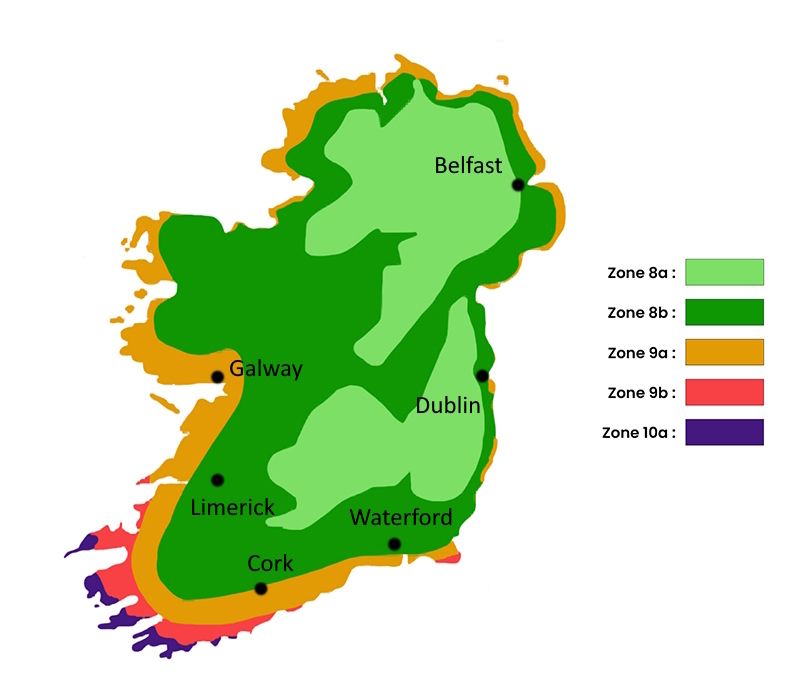
The planting period indicated on our website applies to regions in USDA Zone 9a (East Coast and Midlands: Dublin, Wexford, Waterford, Kilkenny, Portlaoise). It will vary depending on where you live:
- On the west coast and in the north-west (Galway, Limerick, Sligo, Donegal, Westport), delay planting by 1 to 2 weeks in spring and bring it forward by 1 to 2 weeks in autumn compared to the dates given, preferably choosing periods without strong winds.
- In the inland hills and plateaus (Wicklow Mountains, Macgillycuddy’s Reeks, Connemara, Killarney), it is best to plant in spring (April–May) or autumn (September–October), avoiding periods of waterlogged soil in winter and strong winds, which pose the main risk to newly planted trees in these areas.
The flowering period indicated on our website applies to regions in USDA Zone 9a, such as the East Coast and Midlands, including Dublin, Wexford, Waterford, Kilkenny and Portlaoise.
This will vary depending on where you live:
- On the west coast and in the northwest (Galway, Limerick, Sligo, Donegal and Westport), it will be delayed by one to two weeks compared to the given dates, due to stronger Atlantic winds and less spring sunshine.
- In the inland hills and plateaus (the Wicklow Mountains, the Macgillycuddy's Reeks, Connemara and Killarney), flowering will be delayed by two to three weeks. Flowering mainly occurs between May and July, with the limiting factors being less frost and more of the excessive humidity, strong winds and lack of sunshine that are characteristic of these areas.
Shipping country and language
Your country of residence may be:
Your country of residence is:
For a better user experience on our website, you can select:
Your shipping country:
-
 Austria
-
 Belgium
-
 Bosnia & Herzegovina
-
 Bulgaria
-
 Croatia
-
 Cyprus
-
 Czechia
-
 Denmark
-
 Estonia
-
 Finland
-
 France
-
 Germany
-
 Greece
-
 Hungary
-
 Iceland
-
 Ireland
-
 Italy
Italy
-
 Latvia
-
 Liechtenstein
-
 Lithuania
-
 Luxembourg
-
 Malta
Malta
-
 Netherlands
-
 Poland
-
 Portugal
-
 Romania
-
 Serbia
-
 Slovakia
-
 Slovenia
-
 Spain
Spain
-
 Sweden
-
 Switzerland
Language:
-
French
-
 English
-
Spanish
-
Italian
-
German
-
Portuguese
-
Dutch
-
Finnish
My Account
Hello
My wish lists
My cart
Log in / Register
Existing customer?
This form is protected by reCAPTCHA - the Google Privacy Policy and Terms of Service apply.
New customer?
Create an account to track your orders, access our customer service and, if you wish, make the most of our upcoming offers.