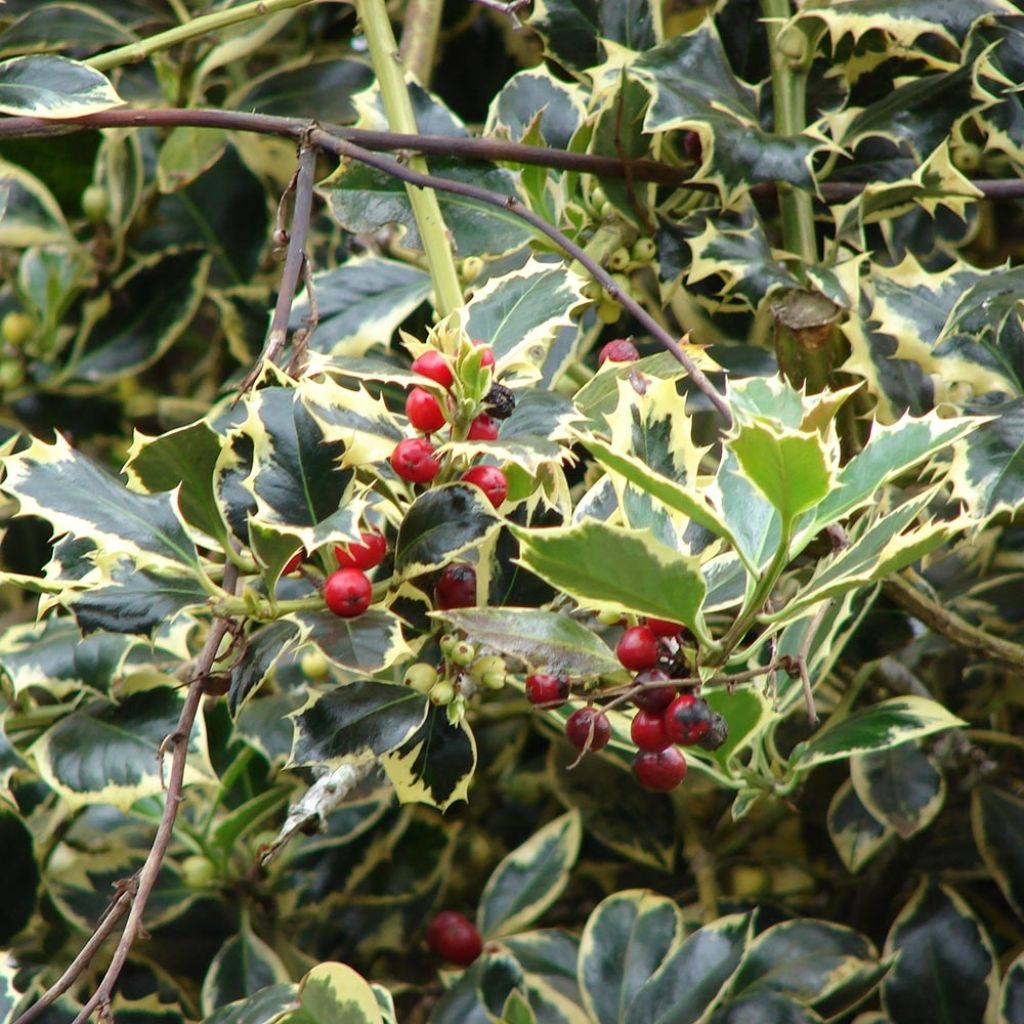
Ilex aquifolium Madame Briot - Common Holly
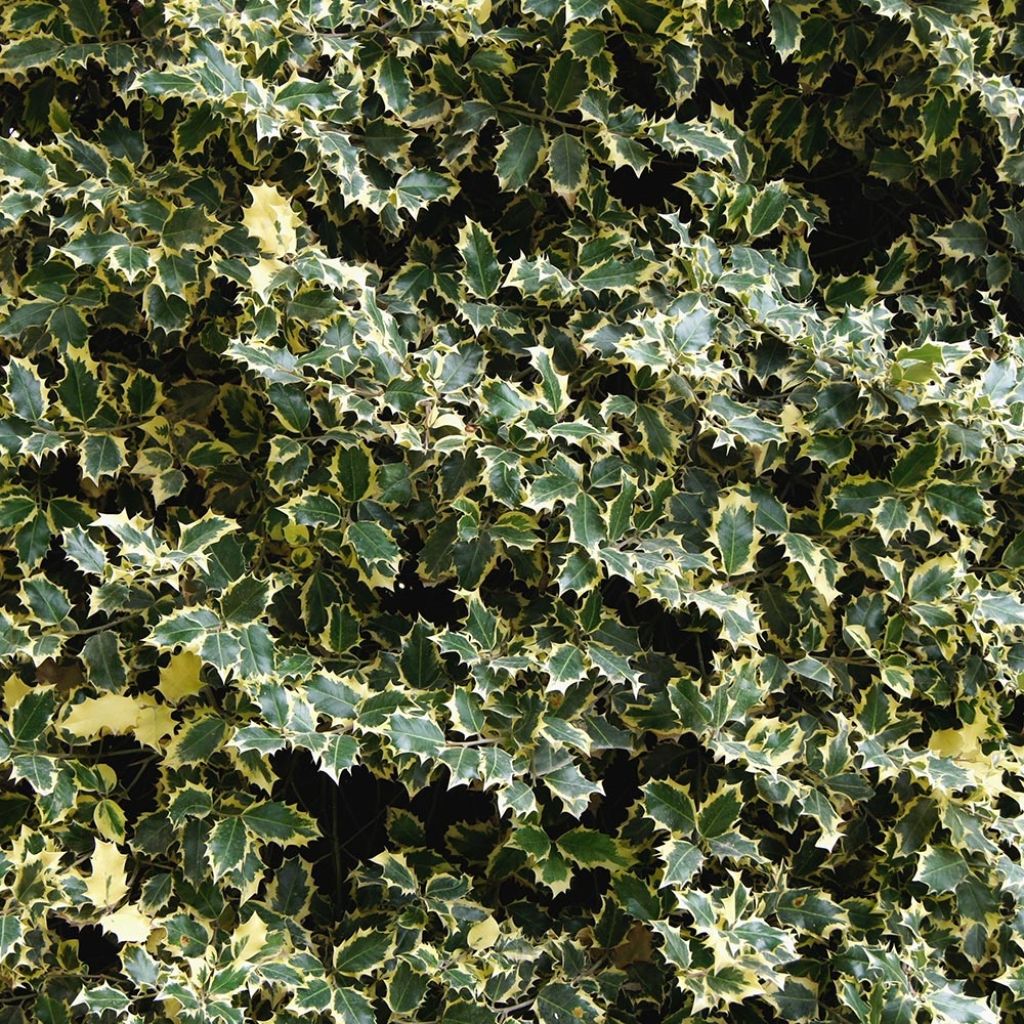
Ilex aquifolium Madame Briot - Common Holly
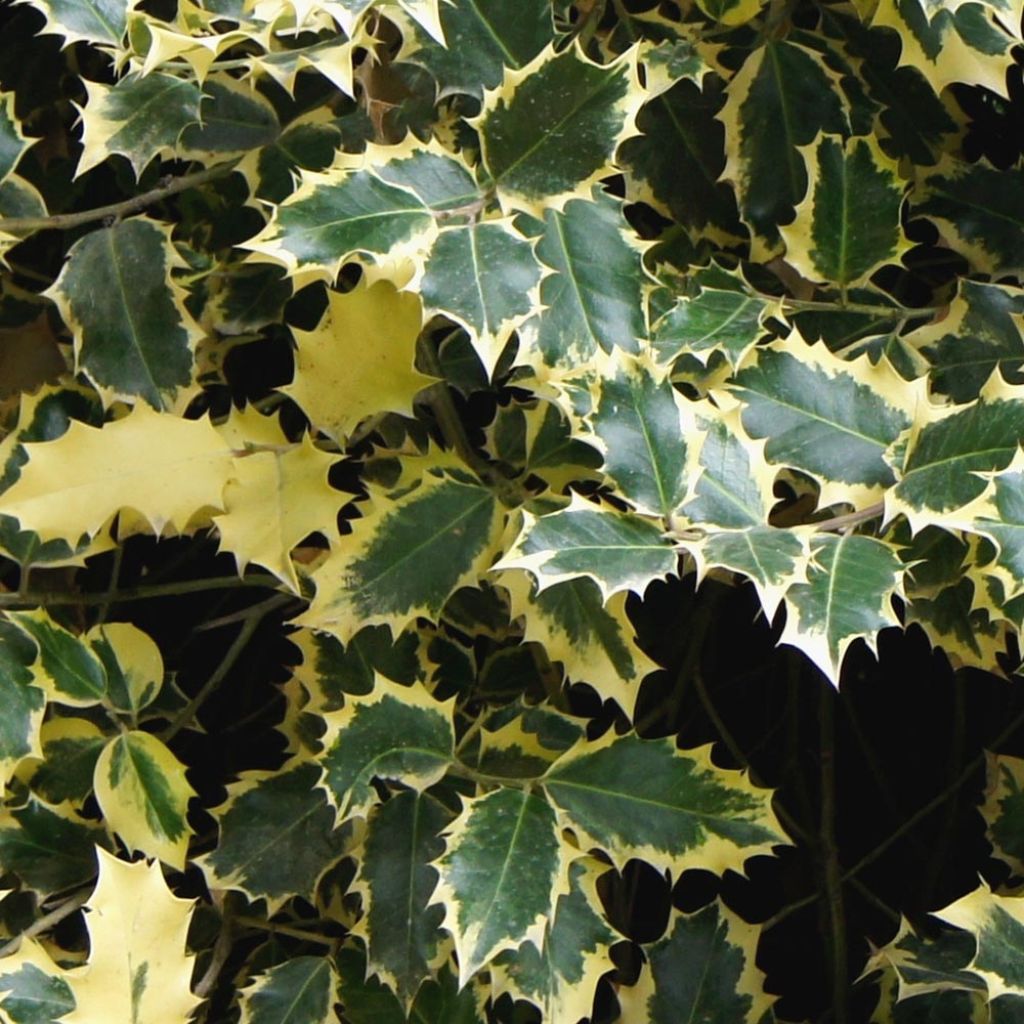
Ilex aquifolium Madame Briot - Common Holly
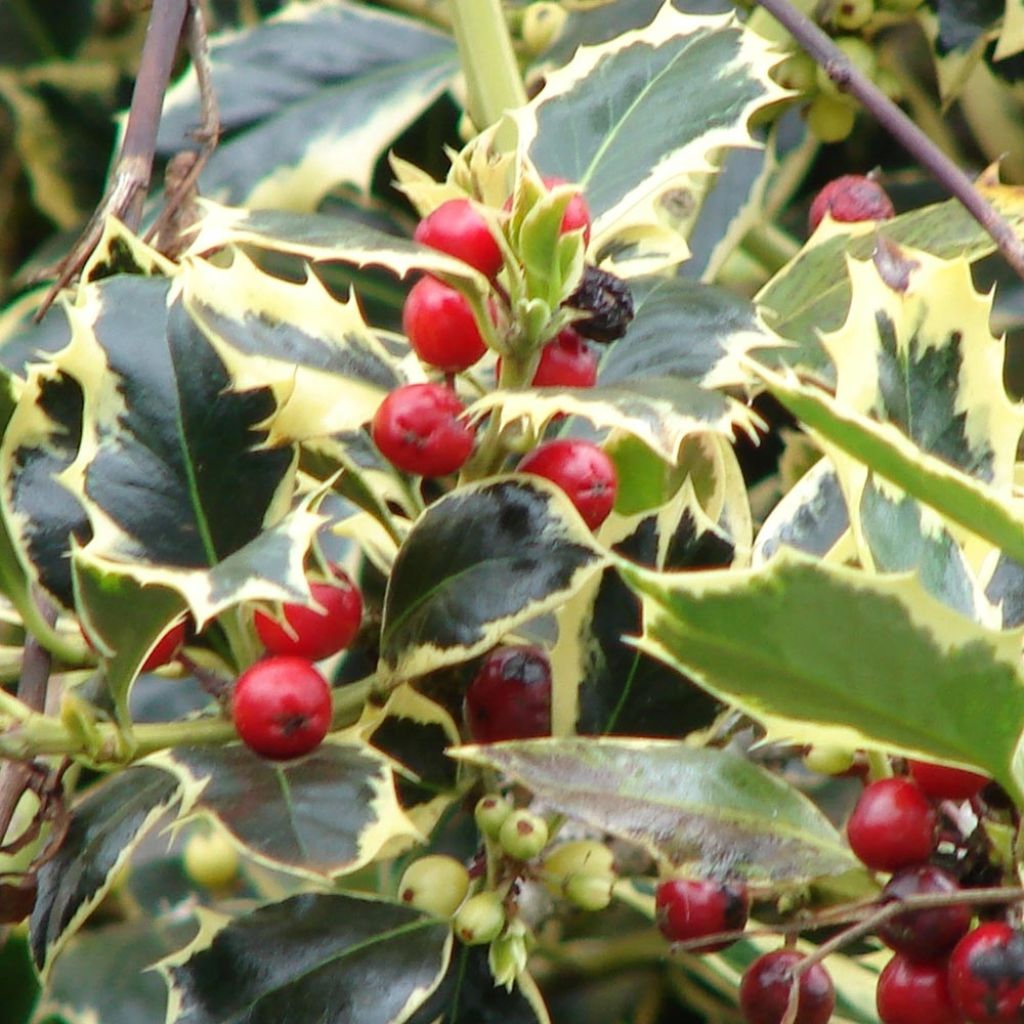
Ilex aquifolium Madame Briot - Common Holly
Ilex aquifolium Madame Briot - Common Holly
Ilex aquifolium Madame Briot
European Holly, Common Holly, English Holly, Evergreen Holly
Delivery height quite modest, 20/30cm. It will take time for it to emerge.
FaDo, 06/02/2024
Back-to-school special offer!
Get €10 off for every €50 you spend! And get up to €40 off on a single order.
How does it work?
1. Shop your favourites
Add your favourite plants to your basket. For every €50 you spend (excluding delivery charges, store credit and the plastic-free option), you’ll receive a €10 voucher.
€50 spent = €10 voucher
€100 spent = €20 voucher
€150 spent = €30 voucher
€200 spent = €40 voucher
2. Place your order
Once your basket reaches one of the spending thresholds, place your order. You can even choose your delivery date!
3. Receive your voucher
As soon as your order has been shipped, you’ll receive an email containing your personal voucher code and its value.
4. Use it on your next order
Your voucher is valid for 90 days from the date you receive it. It can be used once only, on a new order worth at least the value of the voucher, excluding delivery charges.
Please note: Vouchers can be combined with other offers, but cannot be split or refunded.
Why not try an alternative variety in stock?
View all →
Available in 3 sizes
Available in 4 sizes

Available in 1 sizes
Available in 1 sizes
Available in 1 sizes
Available in 2 sizes
Available in 1 sizes
Available in 2 sizes

Available in 2 sizes
Available in 1 sizes
This plant carries a 24 months recovery warranty
More information
We guarantee the quality of our plants for a full growing cycle, and will replace at our expense any plant that fails to recover under normal climatic and planting conditions.

Does this plant fit my garden?
Set up your Plantfit profile →
Description
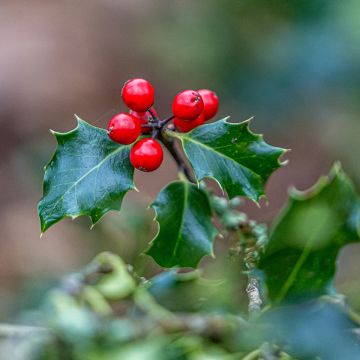
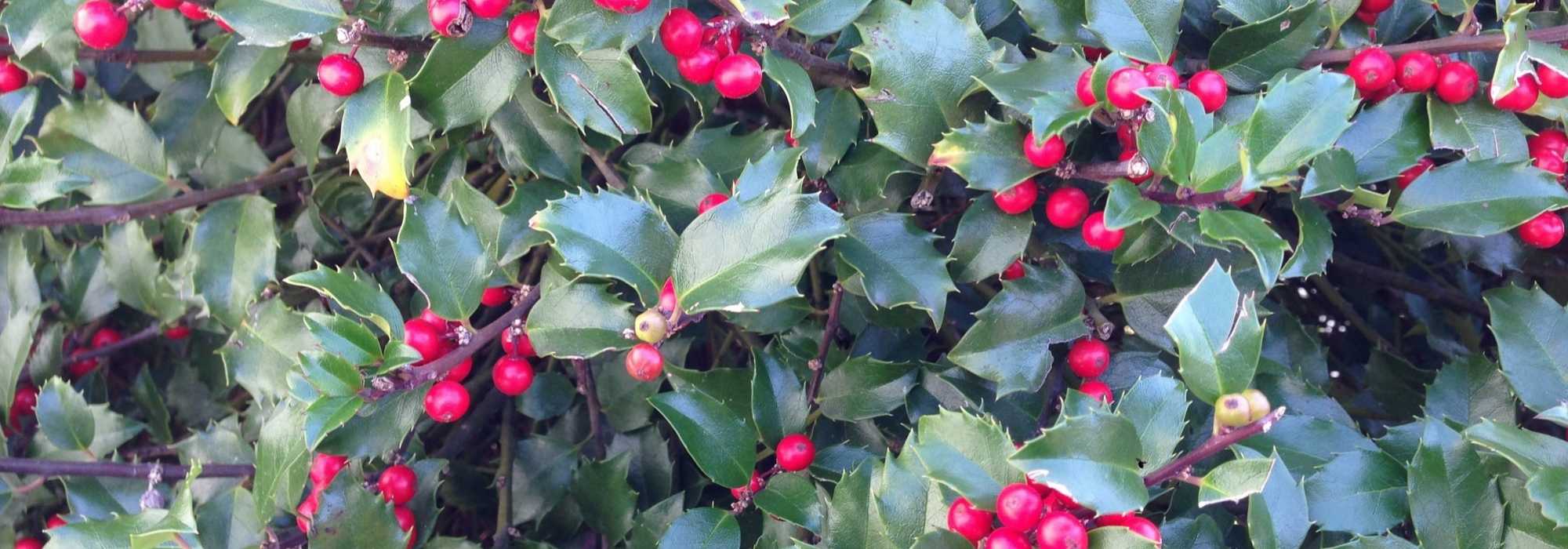
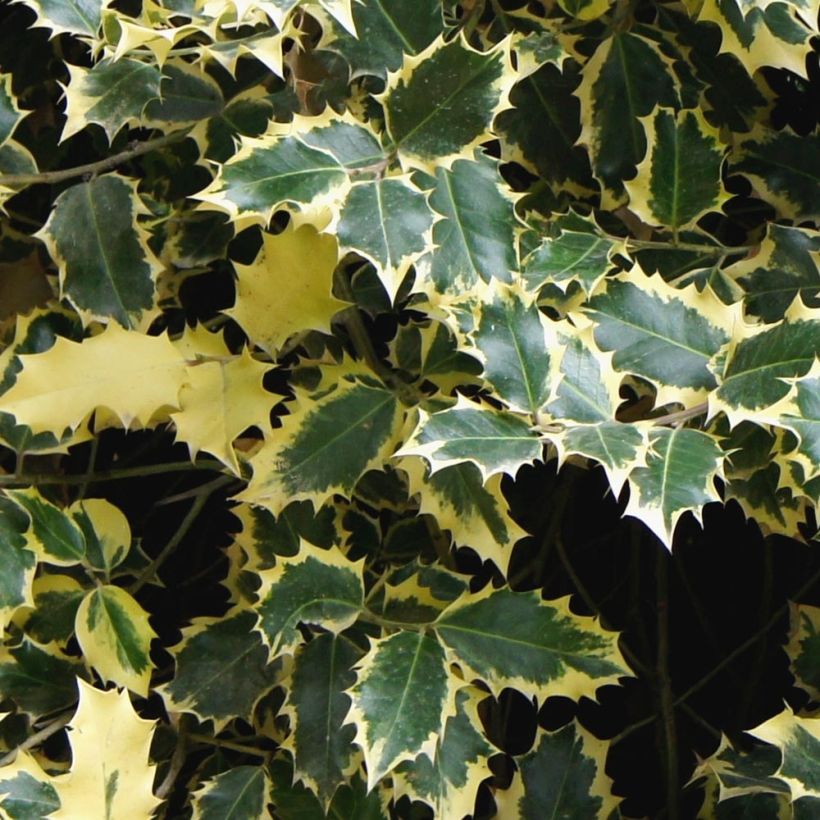
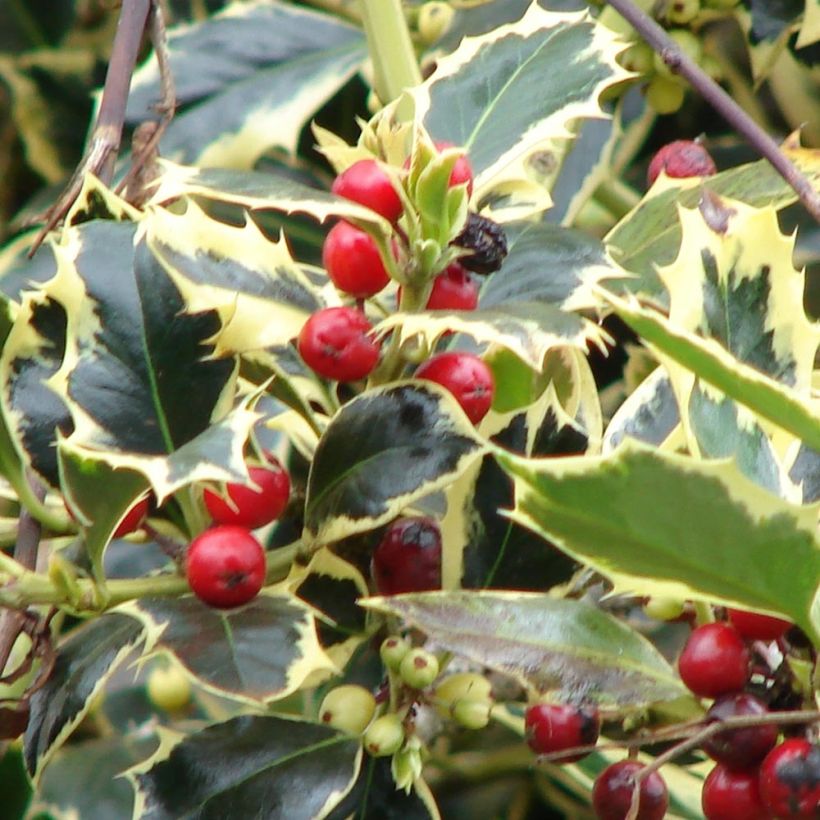
Ilex aquifolium 'Madame Briot' is an old variety of female Common Holly with lovely evergreen foliage. Its prickly leaves are green bordered with gold. In winter, it serves as a backdrop to a bountiful fruiting of a bright red berries. Ornamental all year round, it will find its place in a natural garden, in an informal or defensive hedge, in undergrowth, or even in isolation. This variety is perfect for illuminating a somewhat dark corner of the garden.
Ilex aquifolium needs no introduction. It is widespread throughout Europe, from Scandinavia to the Caucasus, from southern Europe to North Africa, from Iran to northern Asia. This immense distribution area clearly underlines the remarkable adaptability of this bush. It is appreciated since time immemorial for the bright red fruiting that adorns the female in winter, a red perfectly highlighted by prickly dark and shiny green foliage. Hollies belong to the Aquifoliaceae family.
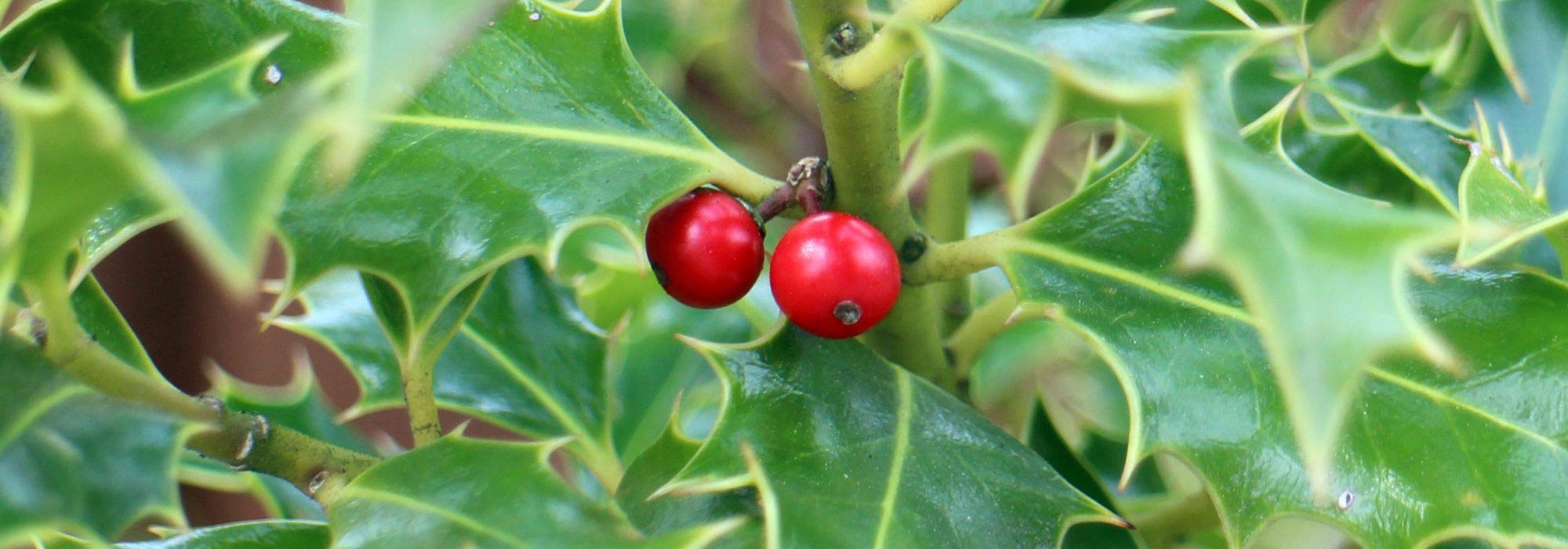
Ilex aquifolium 'Madame Briot' was selected by Charles Briot, head gardener at Trianon in Versailles towards the end of the 19th century. Like the species, it is a ubiquitous evergreen bush, loving deep soils and cool to moist areas, but also adapting to open spaces. It is quite polymorphous, depending on its habitat, adopting the appearance of a large conical bush 5m (16ft) high and 2m (7ft) wide, or the bushier habit of a small tree. This species has a slow growth rate. It takes root deeply in the soil, favouring the development of its root system before producing its branches. It is a large dioecious bush, meaning there are male-flowering and female-flowering individuals. The evergreen foliage is composed of tough leaves, 5 to 8cm (2 to 3in) long, polymorphous according to the age of the plant or its vigour. The edge of the leaves is undulate and dentate and has sharp thorns, especially towards the bottom and on the sterile stems. The lamina is very shiny dark green bordered with gold on top, much lighter and matte on the underside. Flowering takes place in May-June, in the leaf axil, in the form of small white to pink flowers, not exceeding 5mm (0.2in) in diameter. The flowers are honey-bearing and fragrant. The male flowers are gathered in clusters; the female flowers are solitary or grouped by 2 or 3. When pollination takes place, the female flowers turn into small globose, shiny, dark red to scarlet fruits, which are a delight for birds in winter. In the garden, birds scatter the seeds at random, and it is not uncommon to see countless small hollies sprouting here and there in the beds and under the big trees! The bark of this small tree is reddish green when young before taking on a grey colour and a smooth appearance. Common holly can live up to 400 to 500 years.
Ilex aquifolium 'Madame Briot' will satisfy amateur gardeners who love neat, unpretentious bushes, which remain beautiful all year round. It has the advantage of adapting to many growing conditions while bringing a sculptural touch to the garden. It will be attractive all year round, but especially in winter when its bright red fruits appear over its variegated foliage. It is perfect in a grove, accompanied by a few deciduous shrubs with autumn foliage and conifers with golden foliage for contrast. It can also be installed in a mixed hedge, or in a defensive hedge. It mainly fears dry air and shallow soils. Hardy beyond -15°C (5°F), it particularly likes cool places, in a large natural garden. Plant in cold regions alongside hawthorn, snowberries, and other evergreen hollies.
Hollies are both beloved and little-known plants. The genus comprises nearly 800 deciduous or evergreen species, usually native to the temperate northern hemisphere. These very ancient plants have experienced the alternating glacial and dry, hot periods of our climate history, making them extremely adaptable and resilient plants. Their white to cream wood is very low in water, even when green. It is dense and heavy, but soft and easy to work in cabinet-making. It is also an excellent fuel for heating, even when green. Finally, its foliage and berries (not edible) are rich in caffeine. A tea is made with its leaves in the Black Forest.
Ilex aquifolium Madame Briot - Common Holly in pictures
Plant habit
Flowering
Foliage
Botanical data
Ilex
aquifolium
Madame Briot
Aquifoliaceae
European Holly, Common Holly, English Holly, Evergreen Holly
Cultivar or hybrid
Planting and care
Add a generous amount of potting soil to compost and incorporate it into your garden soil, to allow easier and deeper rooting. It is a woodland species, found in plains and mountains, up to 1500m altitude. It tends to seek coolness in the southernmost regions of its distribution area. It prefers acidic soils and cool situations, but adapts to limestone soils if the humidity level of the air is sufficient. This bush fears cold situations and icy winds. Therefore, choose a semi-shaded location in a warm climate, and a sunny position in a cool region. Water for the first 3 years to help the bush to settle in. Once established, it will manage on its own, as it tolerates drought quite well if planted in semi-shade and in deep soil. Pay particular attention to watering in summer and during prolonged drought.
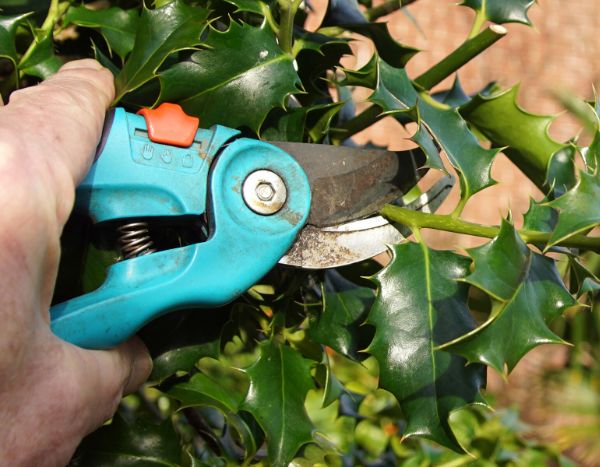
When young, prune in spring to train the holly, selecting the branches you want to keep. Take a step back to view your holly as a whole to determine the shape and arrangement of the short stems.
Holly can become invasive where it is happy, through numerous spontaneous sowings, but also because of its ability to layer itself.
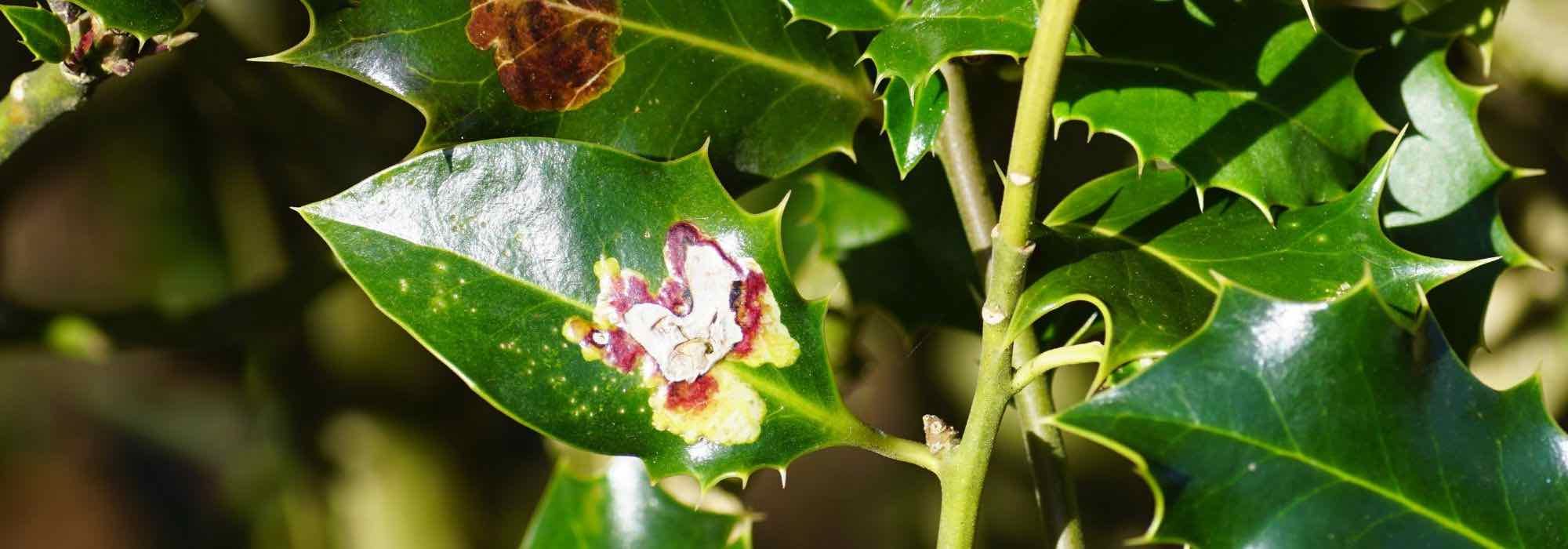
It can be attacked by holly miner, white scales in spring, and mites and aphids in summer. Treat preventatively at the beginning of the season.
Planting period
Intended location
Care
Planting & care advice
-

-

-

-

-
-
-
-
-
, onOrder confirmed
Reply from on Promesse de fleurs
Recently viewed products
Haven't found what you were looking for?
Hardiness is the lowest winter temperature a plant can endure without suffering serious damage or even dying. However, hardiness is affected by location (a sheltered area, such as a patio), protection (winter cover) and soil type (hardiness is improved by well-drained soil).
In temperate climates, pruning of spring-flowering shrubs (forsythia, spireas, etc.) should be done just after flowering.
Pruning of summer-flowering shrubs (Indian Lilac, Perovskia, etc.) can be done in winter or spring.
In cold regions as well as with frost-sensitive plants, avoid pruning too early when severe frosts may still occur.
The harvesting period indicated on our website applies to countries and regions in USDA zone 8 (France, England, Ireland, the Netherlands).
In colder areas (Scandinavia, Poland, Austria...) fruit and vegetable harvests are likely to be delayed by 3-4 weeks.
In warmer areas (Italy, Spain, Greece, etc.), harvesting will probably take place earlier, depending on weather conditions.
The sowing periods indicated on our website apply to countries and regions within USDA Zone 8 (France, UK, Ireland, Netherlands).
In colder areas (Scandinavia, Poland, Austria...), delay any outdoor sowing by 3-4 weeks, or sow under glass.
In warmer climes (Italy, Spain, Greece, etc.), bring outdoor sowing forward by a few weeks.
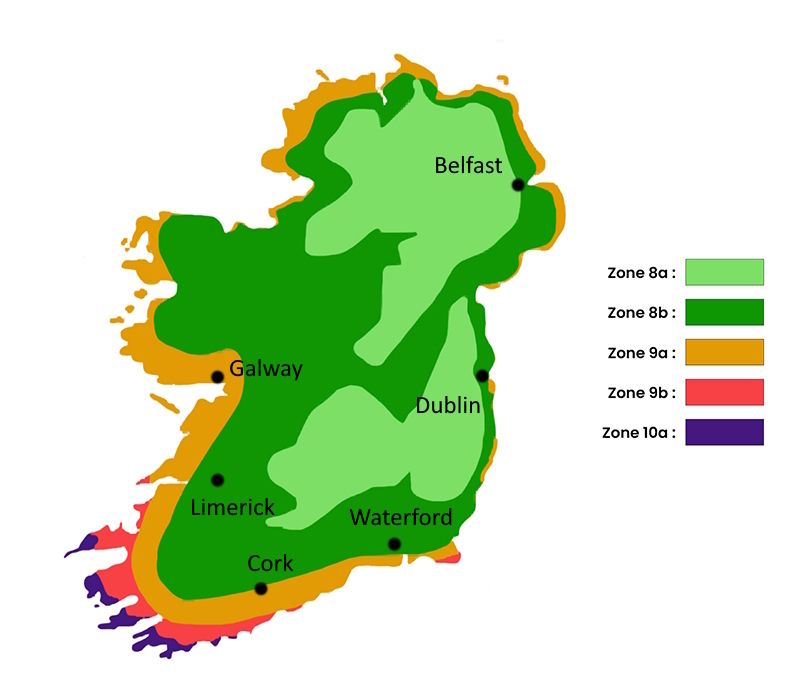
The planting period indicated on our website applies to regions in USDA Zone 9a (East Coast and Midlands: Dublin, Wexford, Waterford, Kilkenny, Portlaoise). It will vary depending on where you live:
- On the west coast and in the north-west (Galway, Limerick, Sligo, Donegal, Westport), delay planting by 1 to 2 weeks in spring and bring it forward by 1 to 2 weeks in autumn compared to the dates given, preferably choosing periods without strong winds.
- In the inland hills and plateaus (Wicklow Mountains, Macgillycuddy’s Reeks, Connemara, Killarney), it is best to plant in spring (April–May) or autumn (September–October), avoiding periods of waterlogged soil in winter and strong winds, which pose the main risk to newly planted trees in these areas.
The flowering period indicated on our website applies to regions in USDA Zone 9a, such as the East Coast and Midlands, including Dublin, Wexford, Waterford, Kilkenny and Portlaoise.
This will vary depending on where you live:
- On the west coast and in the northwest (Galway, Limerick, Sligo, Donegal and Westport), it will be delayed by one to two weeks compared to the given dates, due to stronger Atlantic winds and less spring sunshine.
- In the inland hills and plateaus (the Wicklow Mountains, the Macgillycuddy's Reeks, Connemara and Killarney), flowering will be delayed by two to three weeks. Flowering mainly occurs between May and July, with the limiting factors being less frost and more of the excessive humidity, strong winds and lack of sunshine that are characteristic of these areas.
Shipping country and language
Your country of residence may be:
Your country of residence is:
For a better user experience on our website, you can select:
Your shipping country:
-
 Austria
-
 Belgium
-
 Bosnia & Herzegovina
-
 Bulgaria
-
 Croatia
-
 Cyprus
-
 Czechia
-
 Denmark
-
 Estonia
-
 Finland
-
 France
-
 Germany
-
 Greece
-
 Hungary
-
 Iceland
-
 Ireland
-
 Italy
Italy
-
 Latvia
-
 Liechtenstein
-
 Lithuania
-
 Luxembourg
-
 Malta
Malta
-
 Netherlands
-
 Poland
-
 Portugal
-
 Romania
-
 Serbia
-
 Slovakia
-
 Slovenia
-
 Spain
Spain
-
 Sweden
-
 Switzerland
Language:
-
French
-
 English
-
Spanish
-
Italian
-
German
-
Portuguese
-
Dutch
-
Finnish
My Account
Hello
My wish lists
My cart
Log in / Register
Existing customer?
This form is protected by reCAPTCHA - the Google Privacy Policy and Terms of Service apply.
New customer?
Create an account to track your orders, access our customer service and, if you wish, make the most of our upcoming offers.