Ilex aquifolium Handsworth New Silver - Common Holly
Ilex aquifolium Handsworth New Silver - Common Holly
Ilex aquifolium 'Handsworth New Silver'
European Holly, Common Holly, English Holly, Evergreen Holly
Back-to-school special offer!
Get €10 off for every €50 you spend! And get up to €40 off on a single order.
How does it work?
1. Shop your favourites
Add your favourite plants to your basket. For every €50 you spend (excluding delivery charges, store credit and the plastic-free option), you’ll receive a €10 voucher.
€50 spent = €10 voucher
€100 spent = €20 voucher
€150 spent = €30 voucher
€200 spent = €40 voucher
2. Place your order
Once your basket reaches one of the spending thresholds, place your order. You can even choose your delivery date!
3. Receive your voucher
As soon as your order has been shipped, you’ll receive an email containing your personal voucher code and its value.
4. Use it on your next order
Your voucher is valid for 90 days from the date you receive it. It can be used once only, on a new order worth at least the value of the voucher, excluding delivery charges.
Please note: Vouchers can be combined with other offers, but cannot be split or refunded.
Home or relay delivery (depending on size and destination)
Important: You may be charged customs duties by your country’s customs authorities upon delivery.
Schedule delivery date,
and select date in basket
This plant carries a 24 months recovery warranty
More information
We guarantee the quality of our plants for a full growing cycle, and will replace at our expense any plant that fails to recover under normal climatic and planting conditions.

Does this plant fit my garden?
Set up your Plantfit profile →
Description
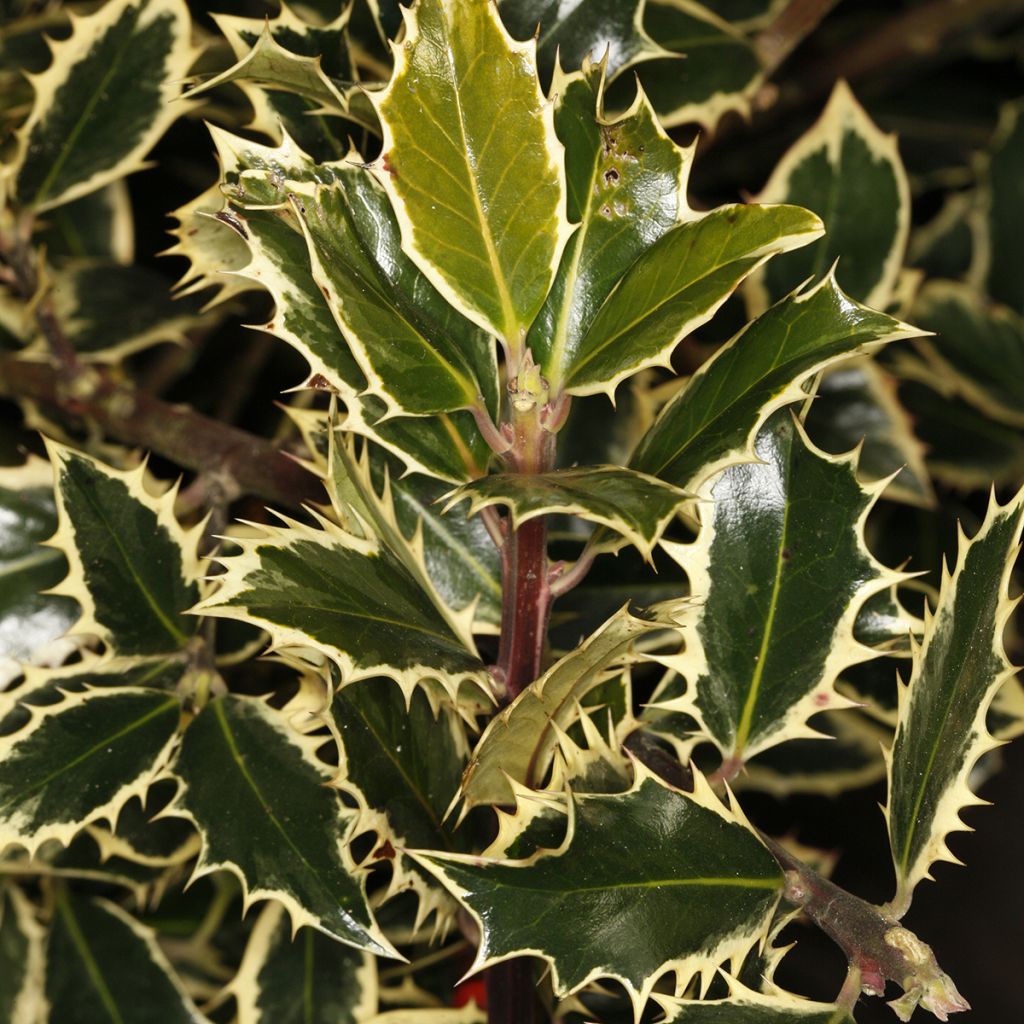
Ilex aquifolium ‘Handsworth New Silver’ is a variety of common holly variegated with creamy white, which structures, brightens, and animates the garden all year round. It is a female variety that fruits abundantly when a male common holly grows nearby; its red berries, set against its magnificent foliage, are decorative in winter. This large shrub for partial shade will find its place in an evergreen hedge or as a standalone specimen.
From the Aquifoliaceae family (which contains only hollies), this cultivar may also be found under the synonym Ilex aquifolium ‘Handsworth Silver’. The species, the common holly, is native to Europe (including France and the British Isles) and into Western Asia. It grows in woodland understories, on edges, and in moist, well-drained ravines. The name Ilex adopts the Latin designation for holly; aquifolium means "acute leaf". ‘Handsworth New Silver’ is a British horticultural selection dating from the 19th century (around 1850), maintained by cuttings/grafting; it has received the Award of Garden Merit (AGM) from the RHS. ‘Handsworth New Silver’ is cited in British horticultural floras as one of the best white-margined hollies.
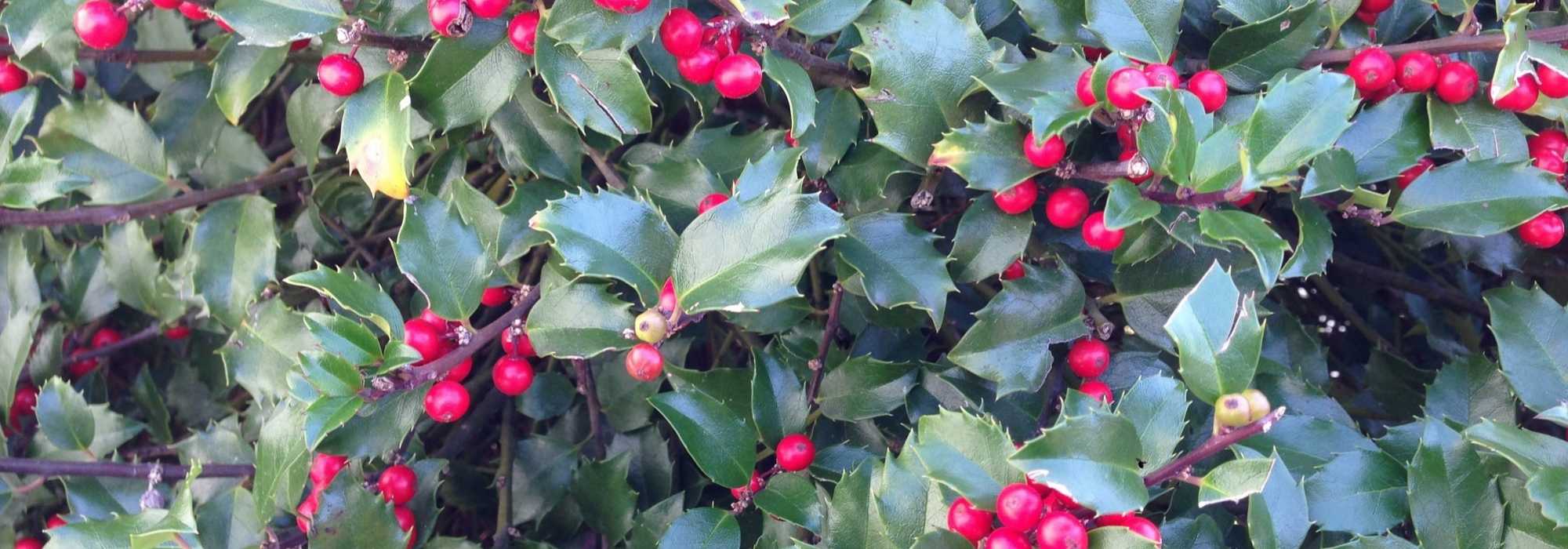
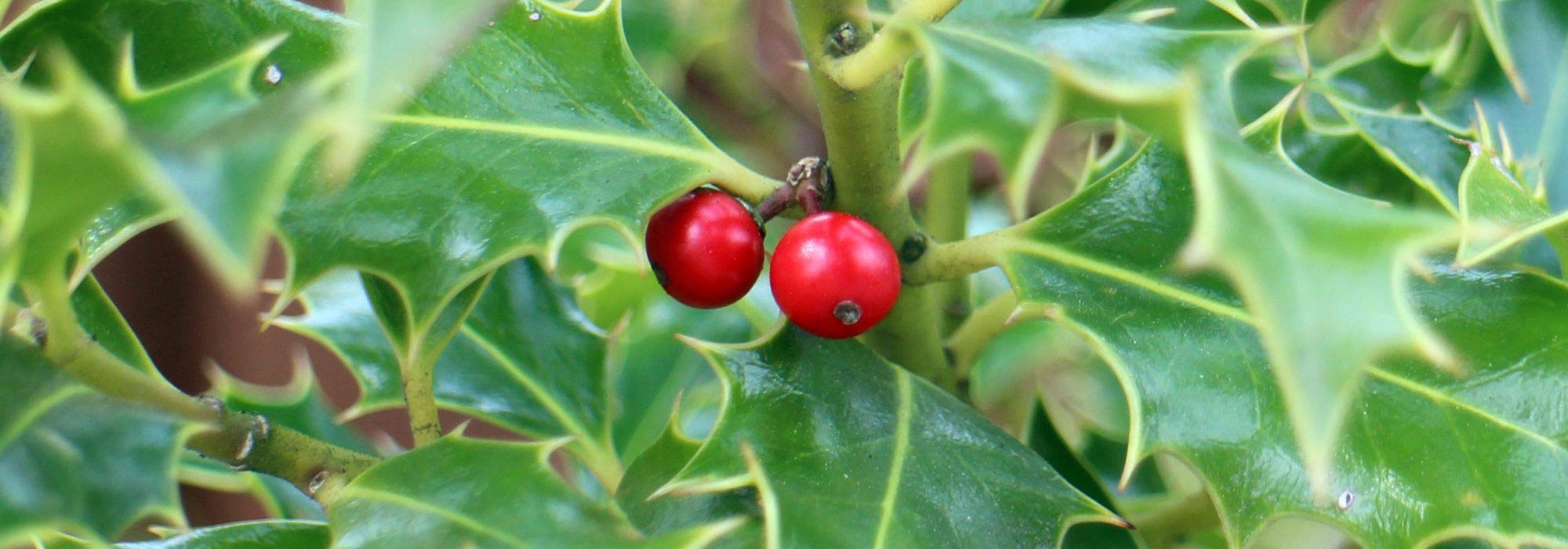
This bush is dense, naturally pyramidal to conical, even bushy. Its growth is slow to moderate; at maturity, it measures 5 to 8 m tall with a spread of 2.50 to 4 m. At 10 years old, expect a height of 2 m and a width of 1.50 m. The evergreen leaves are elliptical to oblong, spiny at the margin, measuring up to 9 cm long; the dark green leaf is broadly margined with cream to white. In May-June, small, white, nectar-rich and lightly scented flowers are produced in the leaf axils. The berries are globular drupes of 5-6 mm, which become bright red in autumn and often persist into winter. The bark of this shrub turns grey with age; the young shoots are beautifully coloured reddish-purple. The root system is initially shallow, then deepens; large specimens are known to be delicate to transplant. ‘Handsworth New Silver’ is female; a plant of Ilex aquifolium ‘Silver Queen’, male, will allow good fruiting.
Use this holly ‘Handsworth New Silver’ in an informal hedge, spacing plants 1.50 to 2 m apart depending on the desired density, or as a standalone specimen. Its beautiful variegation and red fruits catch the eye in winter. It pairs well with winter-flowering shrubs or those with coloured wood. Choose, for example, Cornus alba ‘Sibirica’, Viburnum tinus ‘Eve Price’ and Sarcococca confusa. At their base, plant purple Hellebores or a small evergreen fern like Polypodium vulgare.
Common holly, an emblematic European tree, has been used for centuries for winter decoration. This bush can find a refuge on north-facing slopes, in the shade of the coolest woodland understories.
Plant habit
Flowering
Foliage
Botanical data
Ilex
aquifolium
'Handsworth New Silver'
Aquifoliaceae
European Holly, Common Holly, English Holly, Evergreen Holly
Ilex aquifolium ‘Handsworth Silver’
Cultivar or hybrid
Planting and care
To plant common holly Handsworth New Silver, add some potting soil with compost and incorporate it into your garden soil, to allow for easier and deeper rooting. It is a woodland species, found in lowlands and mountains up to 1500 metres in altitude, and tends to need a cool atmosphere in the southernmost regions of its range. The common holly prefers acidic soils and damp situations, but adapts to calcareous soils if the air humidity level is sufficient. This bush also dislikes overly cold situations and icy winds. Therefore, choose a shaded location in a warm climate, a bit more sunny in a cool region. Water for the first 3 years, especially in summer, in case of prolonged drought, to help the bush establish itself. It will then manage on its own, as it tolerates drought quite well.
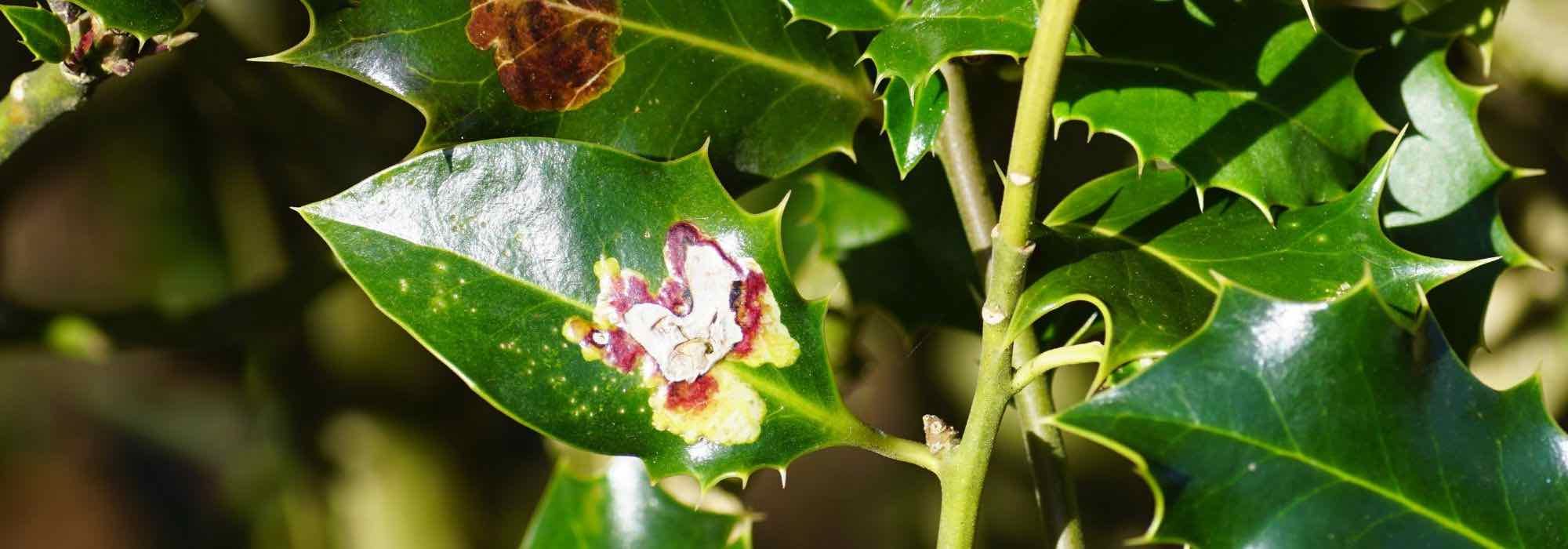
Ilex can be attacked by holly leaf miner, white scale insects in spring, and mites and aphids in summer. Consider a preventive treatment at the start of the season.
Planting period
Intended location
Care
Planting & care advice
-

-

-

-

-
-
-
-
This item has not been reviewed yet - be the first to leave a review about it.
Recently viewed products
Haven't found what you were looking for?
Hardiness is the lowest winter temperature a plant can endure without suffering serious damage or even dying. However, hardiness is affected by location (a sheltered area, such as a patio), protection (winter cover) and soil type (hardiness is improved by well-drained soil).
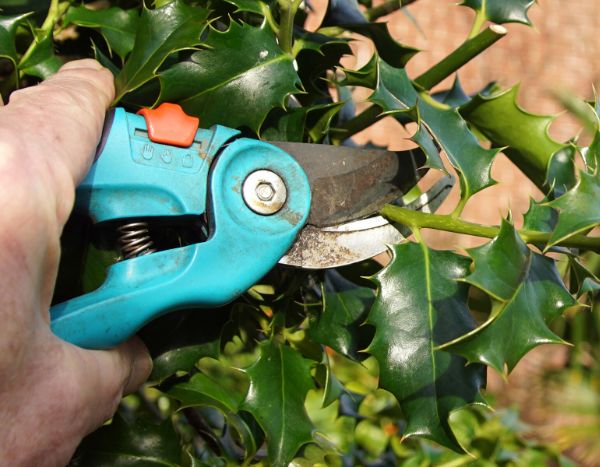
In temperate climates, pruning of spring-flowering shrubs (forsythia, spireas, etc.) should be done just after flowering.
Pruning of summer-flowering shrubs (Indian Lilac, Perovskia, etc.) can be done in winter or spring.
In cold regions as well as with frost-sensitive plants, avoid pruning too early when severe frosts may still occur.
The harvesting period indicated on our website applies to countries and regions in USDA zone 8 (France, England, Ireland, the Netherlands).
In colder areas (Scandinavia, Poland, Austria...) fruit and vegetable harvests are likely to be delayed by 3-4 weeks.
In warmer areas (Italy, Spain, Greece, etc.), harvesting will probably take place earlier, depending on weather conditions.
The sowing periods indicated on our website apply to countries and regions within USDA Zone 8 (France, UK, Ireland, Netherlands).
In colder areas (Scandinavia, Poland, Austria...), delay any outdoor sowing by 3-4 weeks, or sow under glass.
In warmer climes (Italy, Spain, Greece, etc.), bring outdoor sowing forward by a few weeks.
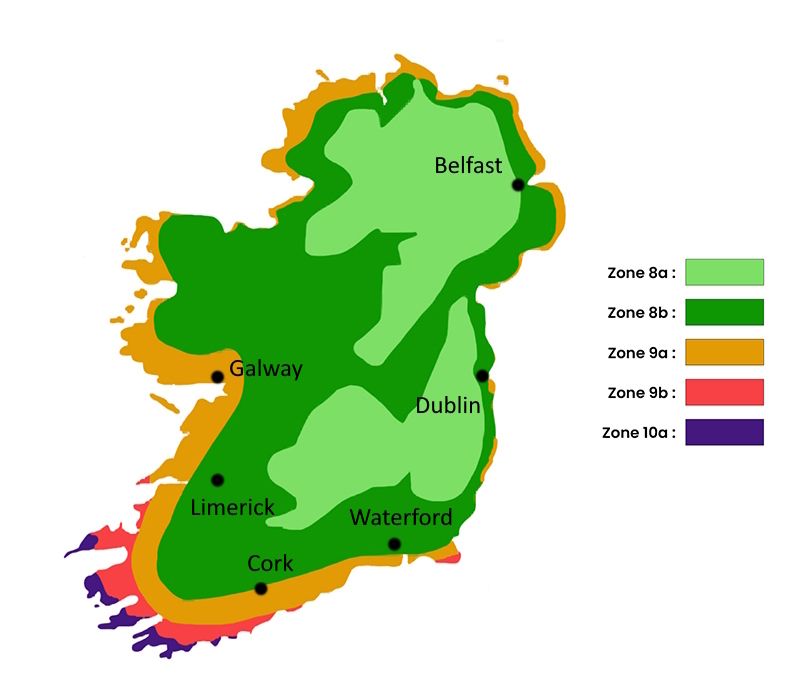
The planting period indicated on our website applies to regions in USDA Zone 9a (East Coast and Midlands: Dublin, Wexford, Waterford, Kilkenny, Portlaoise). It will vary depending on where you live:
- On the west coast and in the north-west (Galway, Limerick, Sligo, Donegal, Westport), delay planting by 1 to 2 weeks in spring and bring it forward by 1 to 2 weeks in autumn compared to the dates given, preferably choosing periods without strong winds.
- In the inland hills and plateaus (Wicklow Mountains, Macgillycuddy’s Reeks, Connemara, Killarney), it is best to plant in spring (April–May) or autumn (September–October), avoiding periods of waterlogged soil in winter and strong winds, which pose the main risk to newly planted trees in these areas.
The flowering period indicated on our website applies to regions in USDA Zone 9a, such as the East Coast and Midlands, including Dublin, Wexford, Waterford, Kilkenny and Portlaoise.
This will vary depending on where you live:
- On the west coast and in the northwest (Galway, Limerick, Sligo, Donegal and Westport), it will be delayed by one to two weeks compared to the given dates, due to stronger Atlantic winds and less spring sunshine.
- In the inland hills and plateaus (the Wicklow Mountains, the Macgillycuddy's Reeks, Connemara and Killarney), flowering will be delayed by two to three weeks. Flowering mainly occurs between May and July, with the limiting factors being less frost and more of the excessive humidity, strong winds and lack of sunshine that are characteristic of these areas.
Shipping country and language
Your country of residence may be:
Your country of residence is:
For a better user experience on our website, you can select:
Your shipping country:
-
 Austria
-
 Belgium
-
 Bosnia & Herzegovina
-
 Bulgaria
-
 Croatia
-
 Cyprus
-
 Czechia
-
 Denmark
-
 Estonia
-
 Finland
-
 France
-
 Germany
-
 Greece
-
 Hungary
-
 Iceland
-
 Ireland
-
 Italy
Italy
-
 Latvia
-
 Liechtenstein
-
 Lithuania
-
 Luxembourg
-
 Malta
Malta
-
 Netherlands
-
 Poland
-
 Portugal
-
 Romania
-
 Serbia
-
 Slovakia
-
 Slovenia
-
 Spain
Spain
-
 Sweden
-
 Switzerland
Language:
-
French
-
 English
-
Spanish
-
Italian
-
German
-
Portuguese
-
Dutch
-
Finnish
My Account
Hello
My wish lists
My cart
Log in / Register
Existing customer?
This form is protected by reCAPTCHA - the Google Privacy Policy and Terms of Service apply.
New customer?
Create an account to track your orders, access our customer service and, if you wish, make the most of our upcoming offers.