Calycanthus raulstonii Aphrodite- Sweetshrub
Calycanthus raulstonii Aphrodite- Sweetshrub
Calycanthus raulstonii Aphrodite- Sweetshrub
Calycanthus raulstonii Aphrodite- Sweetshrub
Calycanthus raulstonii Aphrodite- Sweetshrub
Calycanthus raulstonii Aphrodite- Sweetshrub
Calycanthus raulstonii Aphrodite- Sweetshrub
Calycanthus raulstonii Aphrodite- Sweetshrub
Calycanthus raulstonii Aphrodite- Sweetshrub
Calycanthus raulstonii Aphrodite- Sweetshrub
Calycanthus x raulstonii Aphrodite
Sweetshrub, Strawberry bush
I ordered 4 plants, which were delivered in a box where the plants were far too tangled and several shoots were already broken upon unpacking, as the stems were quite wilted. I hope they will recover properly.
FACYLA, 05/04/2026
Back-to-school special offer!
Get €10 off for every €50 you spend! And get up to €40 off on a single order.
How does it work?
1. Shop your favourites
Add your favourite plants to your basket. For every €50 you spend (excluding delivery charges, store credit and the plastic-free option), you’ll receive a €10 voucher.
€50 spent = €10 voucher
€100 spent = €20 voucher
€150 spent = €30 voucher
€200 spent = €40 voucher
2. Place your order
Once your basket reaches one of the spending thresholds, place your order. You can even choose your delivery date!
3. Receive your voucher
As soon as your order has been shipped, you’ll receive an email containing your personal voucher code and its value.
4. Use it on your next order
Your voucher is valid for 90 days from the date you receive it. It can be used once only, on a new order worth at least the value of the voucher, excluding delivery charges.
Please note: Vouchers can be combined with other offers, but cannot be split or refunded.
Why not try an alternative variety in stock?
View all →
Available in 0 sizes
Available in 2 sizes
Available in 1 sizes

Available in 2 sizes

Available in 2 sizes

Available in 1 sizes

Available in 1 sizes

Available in 1 sizes
This plant carries a 24 months recovery warranty
More information
We guarantee the quality of our plants for a full growing cycle, and will replace at our expense any plant that fails to recover under normal climatic and planting conditions.
Does this plant fit my garden?
Set up your Plantfit profile →
Description
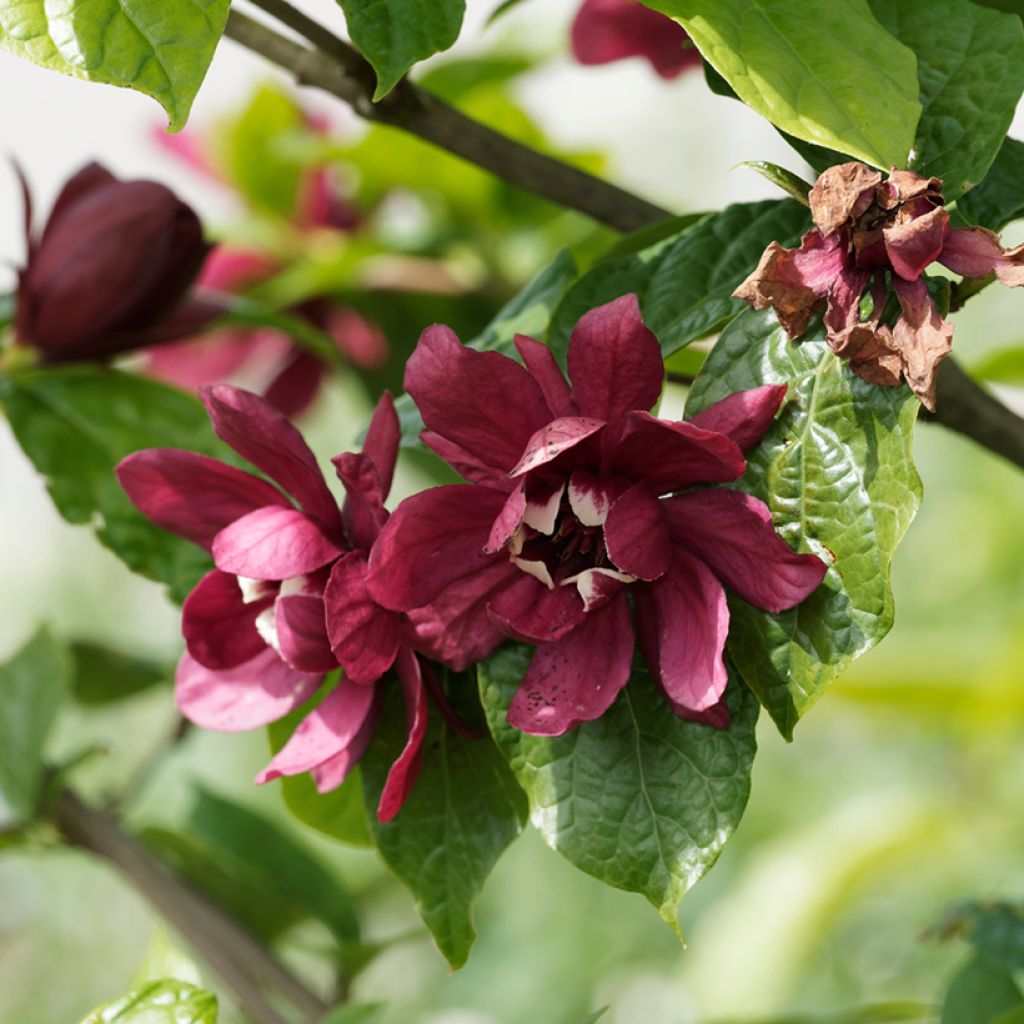
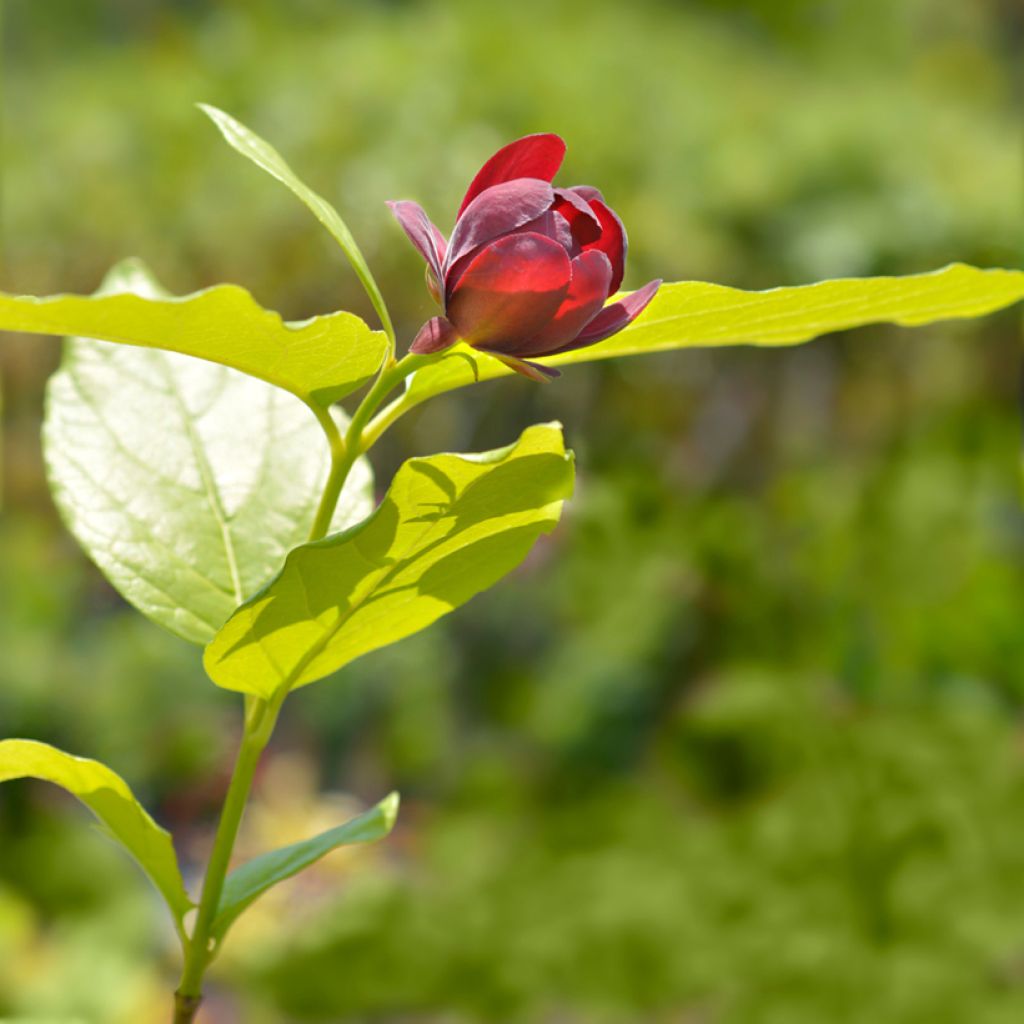
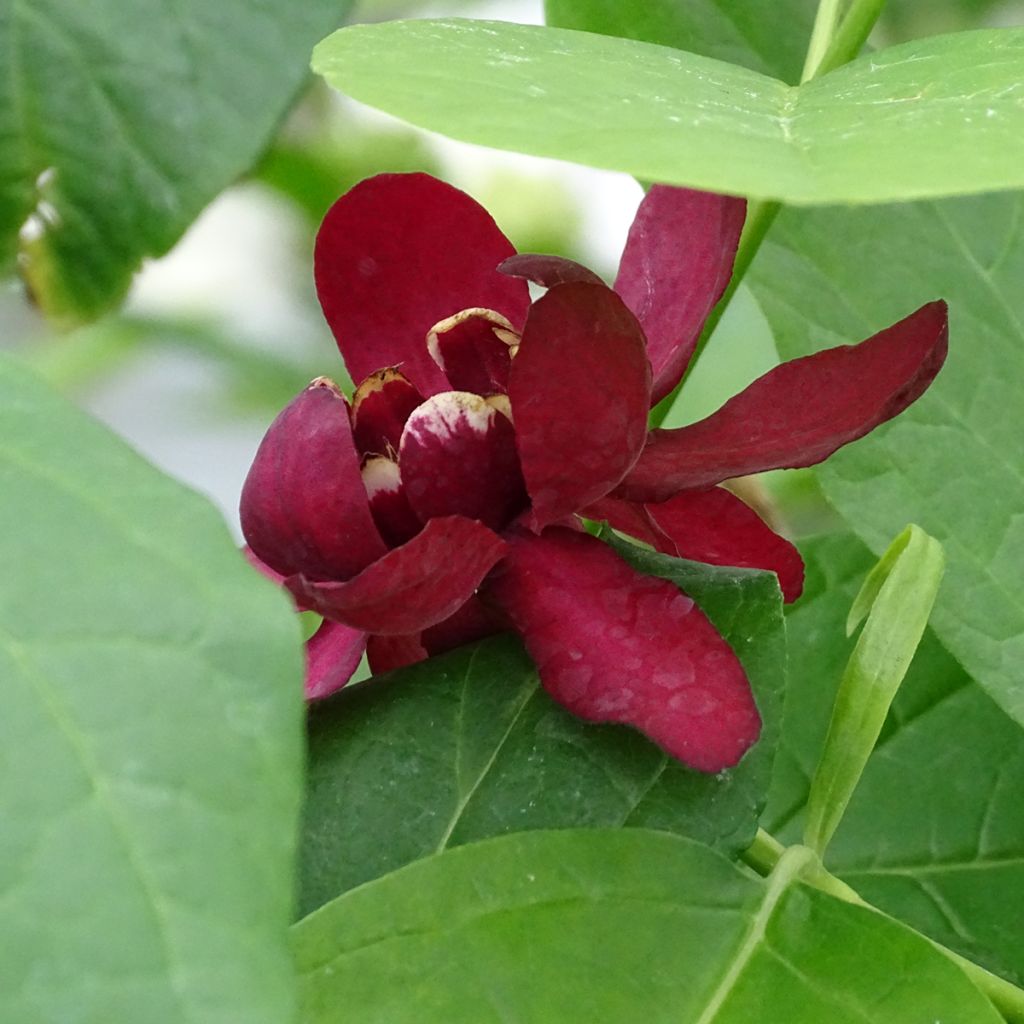
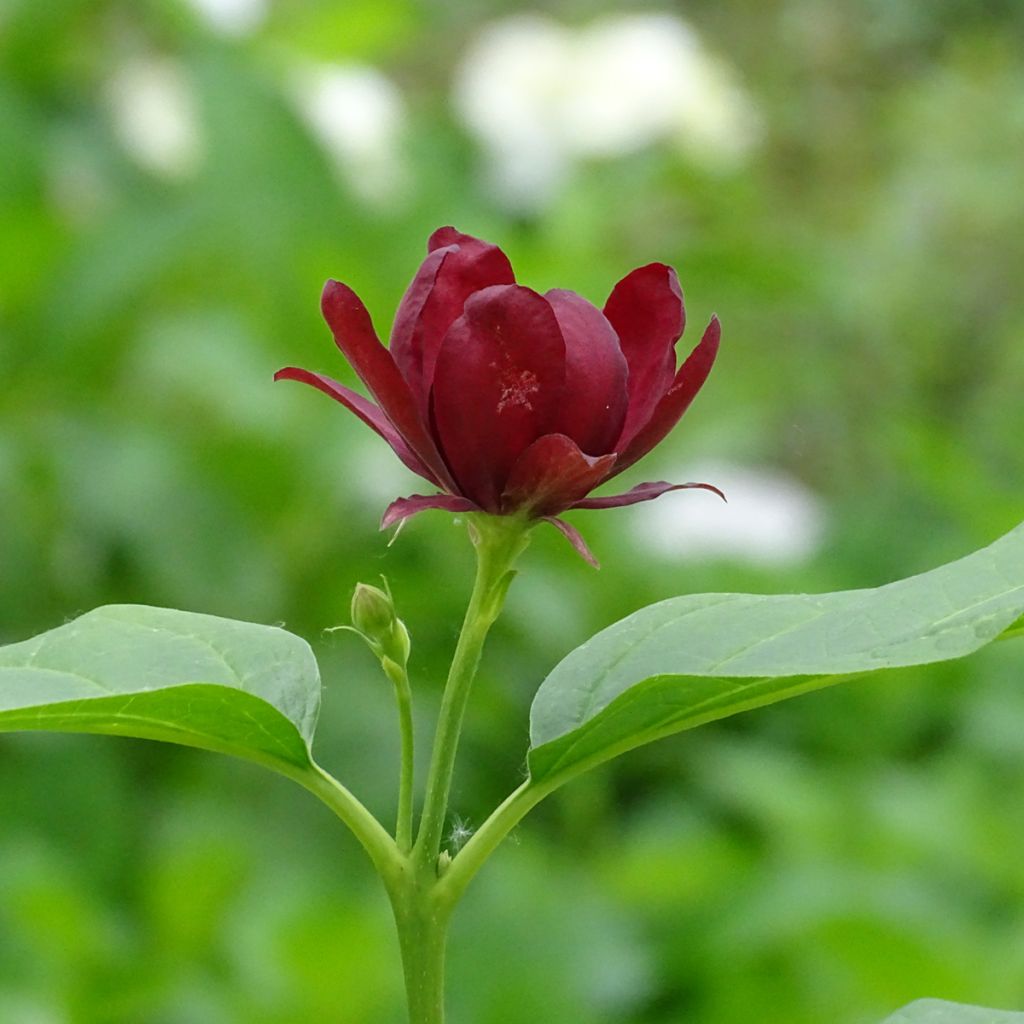
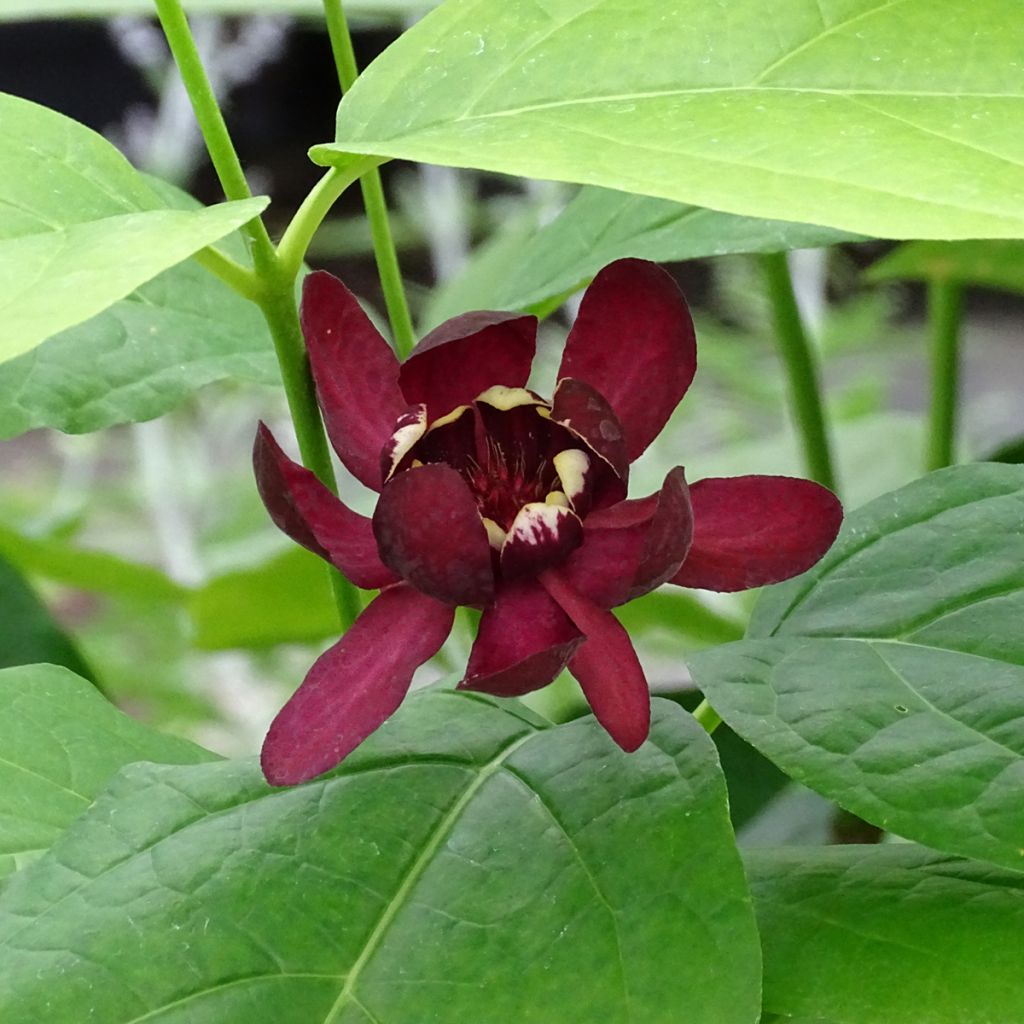
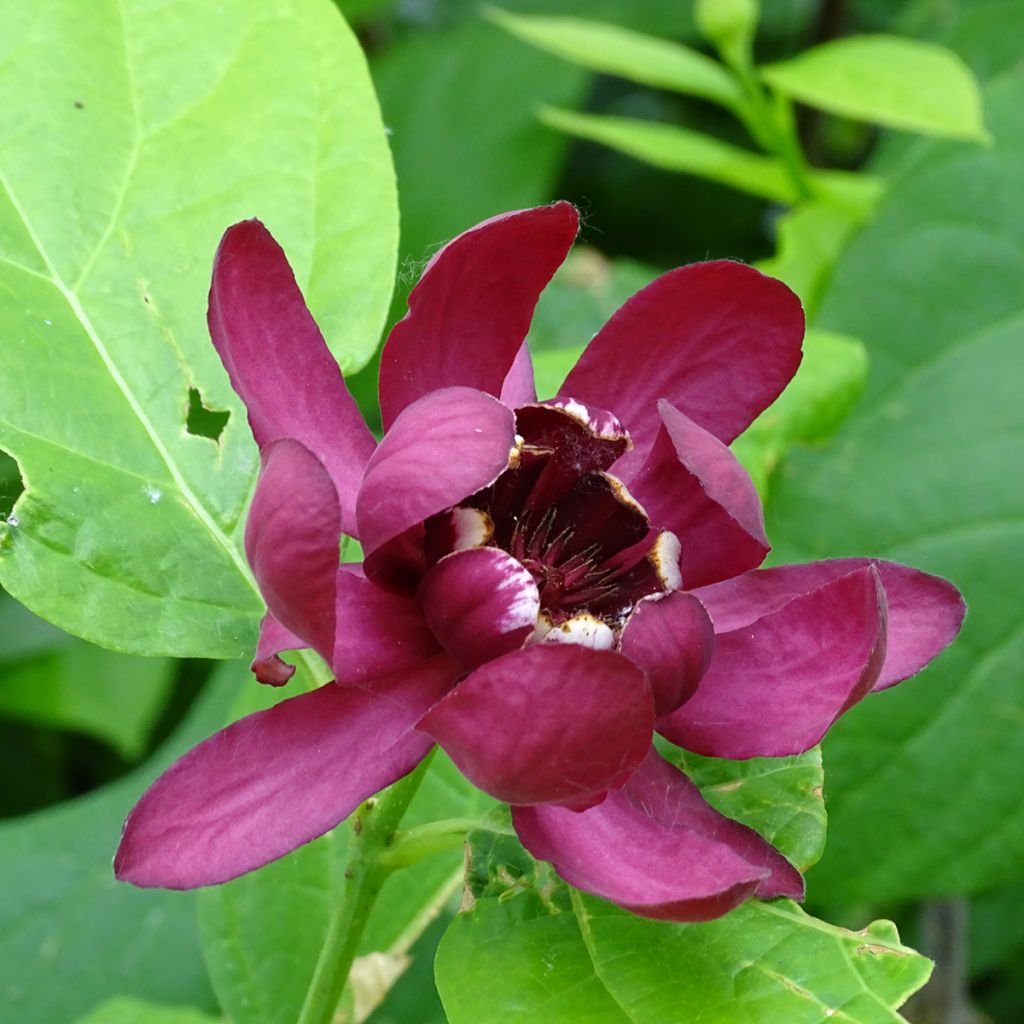
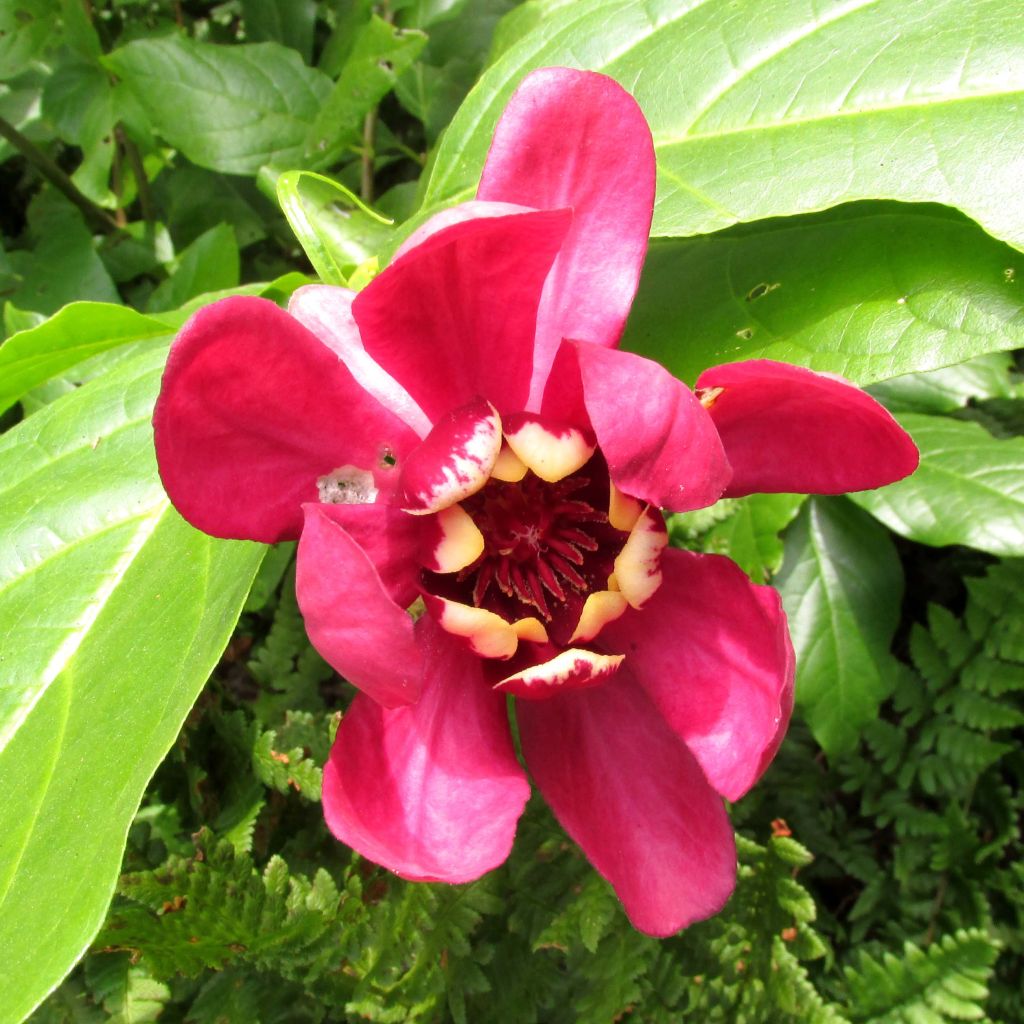
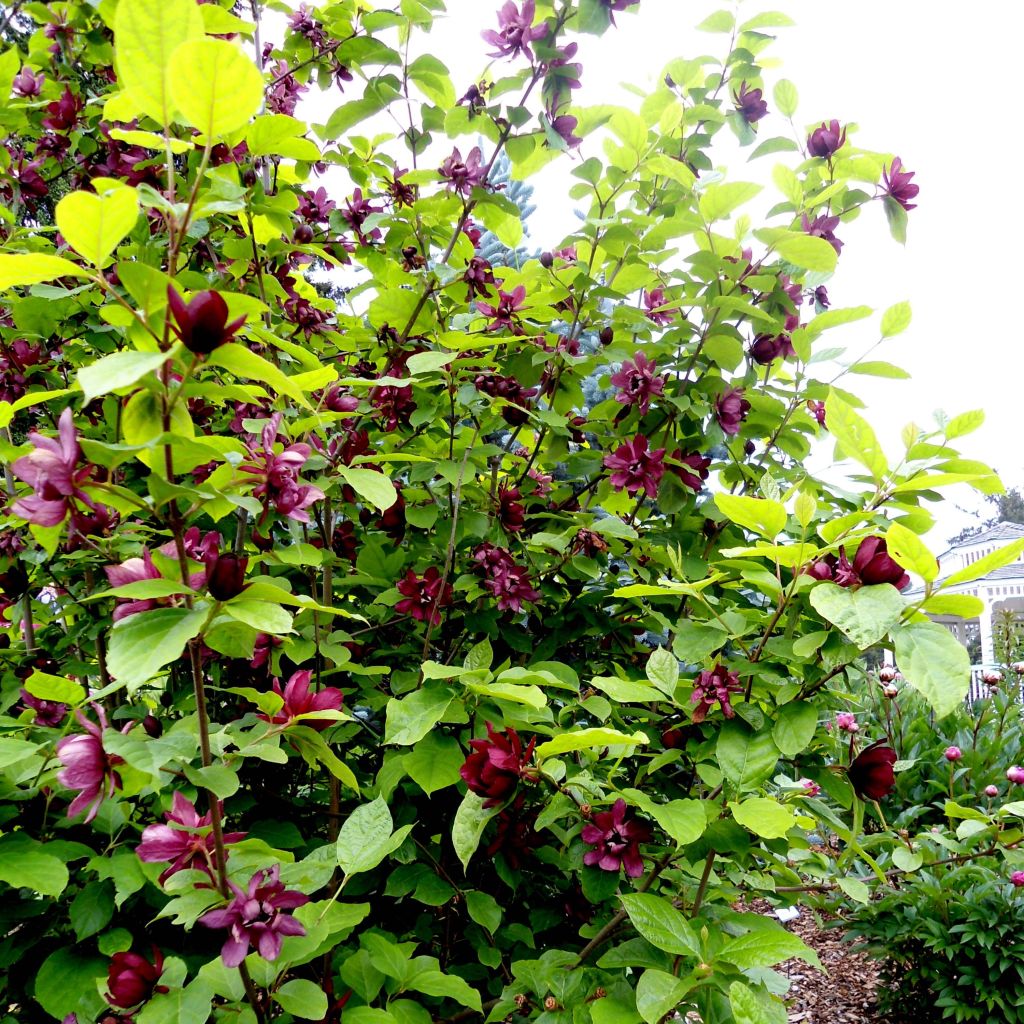
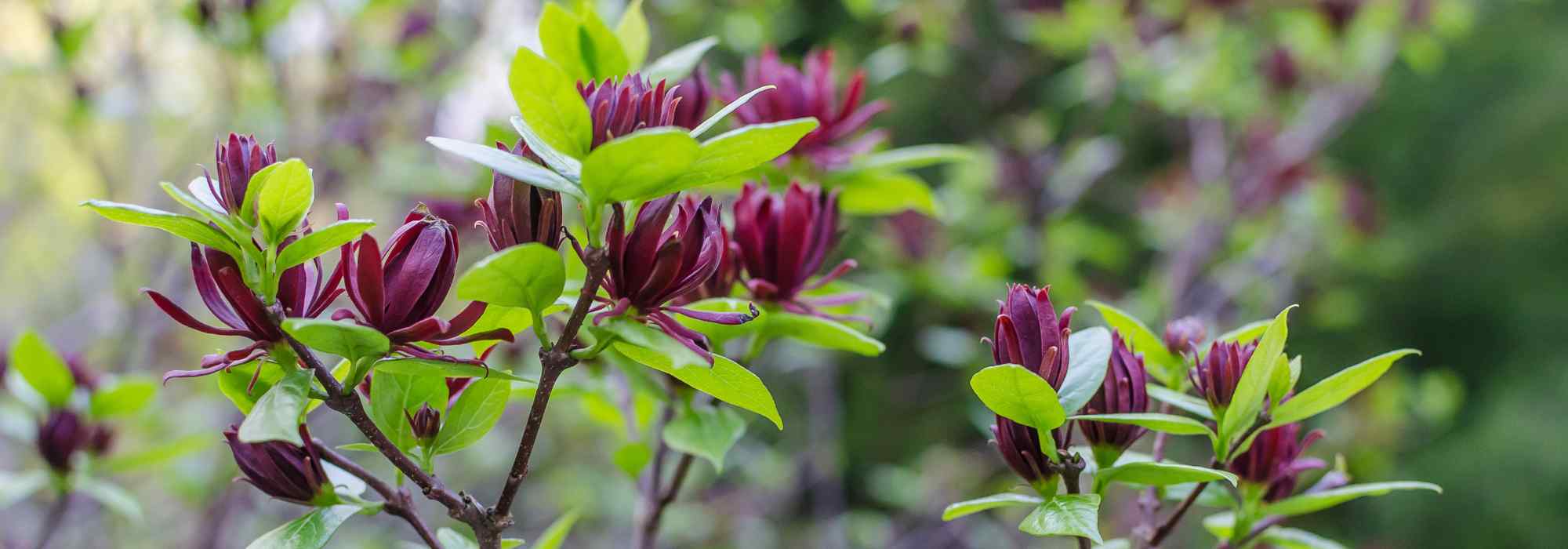
Calycanthus Aphrodite is a recent variety of shrub with anemone-like flowers that will be appreciated for its very long and beautiful flowering period. This deciduous shrub bears large flowers resembling anemones, with a beautiful magenta-purple colour tinged with white at the centre, from late spring to the end of summer. Its fragrance, which can be surprising, evokes a subtle blend of strawberry and green apple aromas. Its large, vibrant green leaves enhance the purple colour of the flowers. Not widely found in our gardens, Calycanthus is nevertheless a low-maintenance shrub, as long as the soil is deep, well prepared, and remains moist. Another aspect is that you will not have to wait long for the flowers as it blooms from a young age!
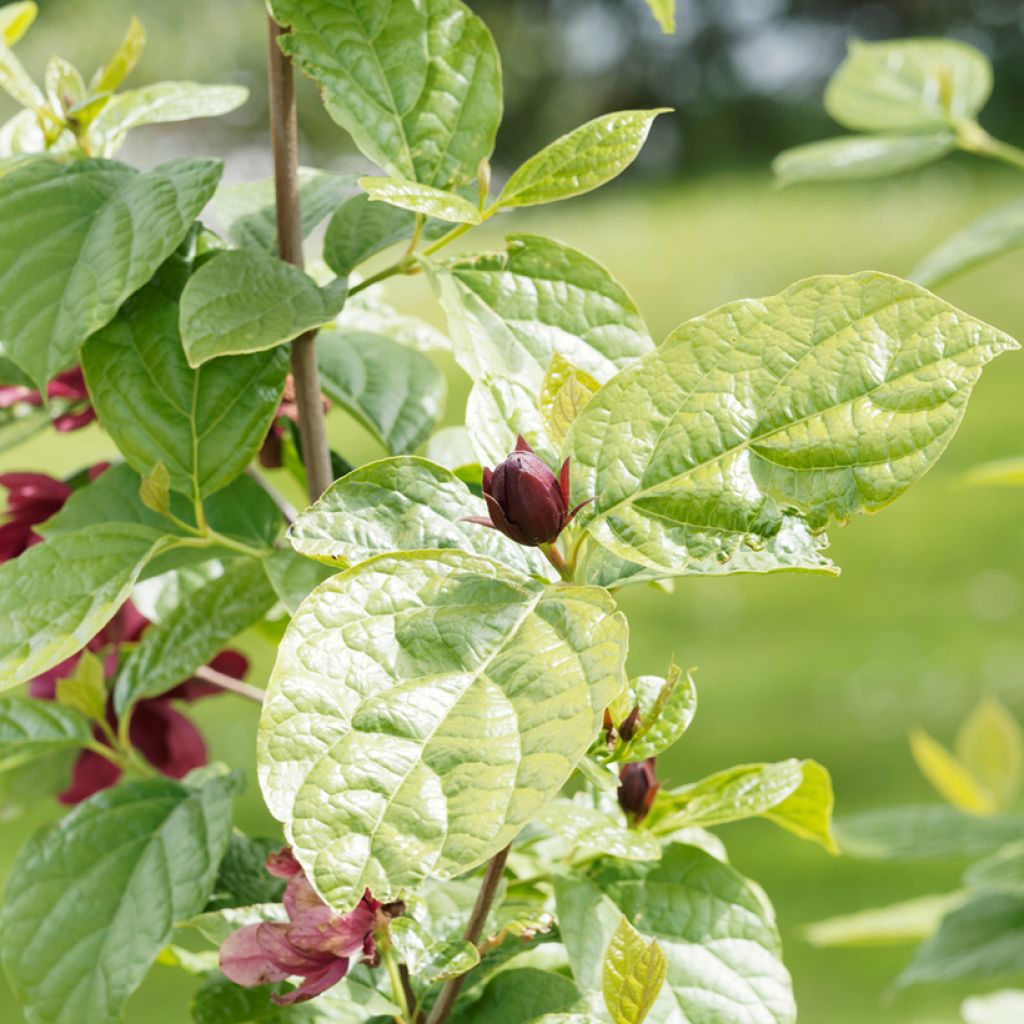
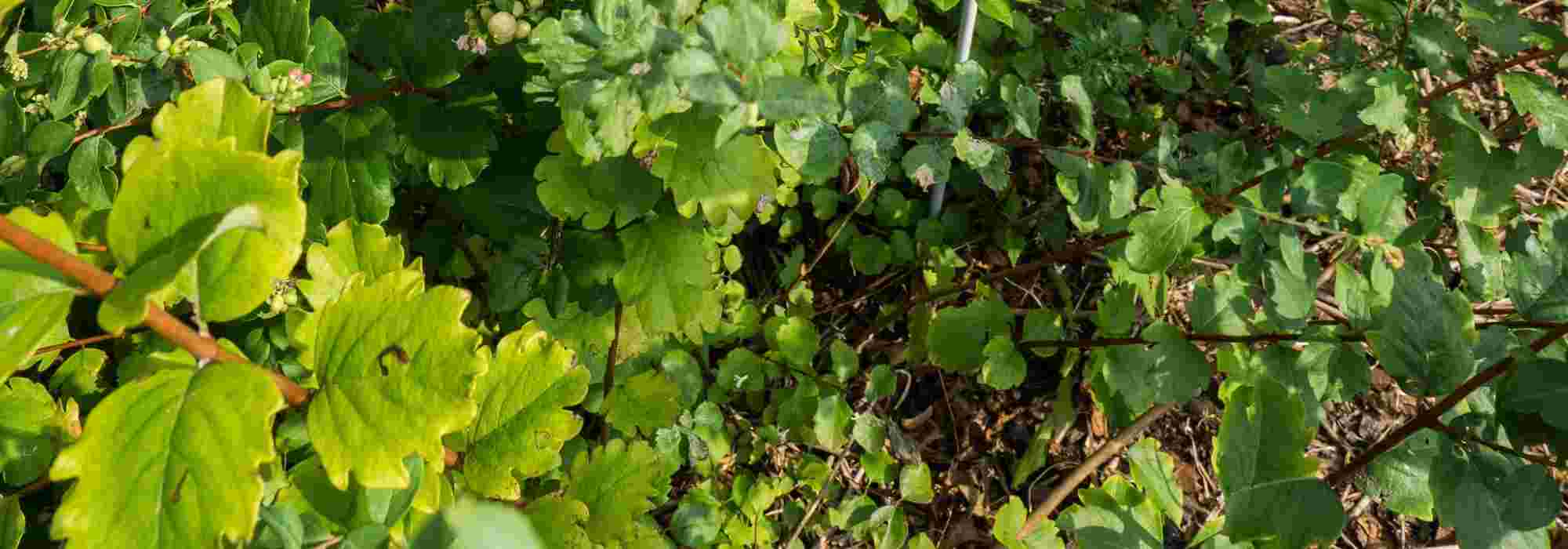
The calycanthus is a deciduous shrub from the Calycanthaceae family. The Aphrodite hybrid cultivar is the result of cross-breeding between Calycanthus floridus, native to the southern United States, and Sinocalycanthus chinensis, a species closely related to the Calycanthus, but native to China. This hybrid was obtained in the USA by J. C. Raulston, who gave it the name Calycanthus (x) raulstonii. With a rather rounded bushy habit, it will reach an average height of 1.7 m (5 ft 7 in) and a spread of 1.5 m (4 ft 11 in) at maturity, which is around five years of age. Its slightly rigid branches bear leaves that are 7 to 13 cm (2.8 to 5.1 in) long, ovate and velvety, shiny on the upper side, lighter and greyer on the underside. They turn yellow in autumn. Its flowering is abundant from June to July, and continues throughout the summer, and even into autumn. Its original flowers, shaped like wide cups with a diameter of 5 to 7 cm (2 to 2.8 in), are composed of a corolla of wide petals, purplish-magenta in colour, surrounding a small central crown of small petals of the same purplish colour, bordered with white. The heart of the flower is occupied by purple stamens.
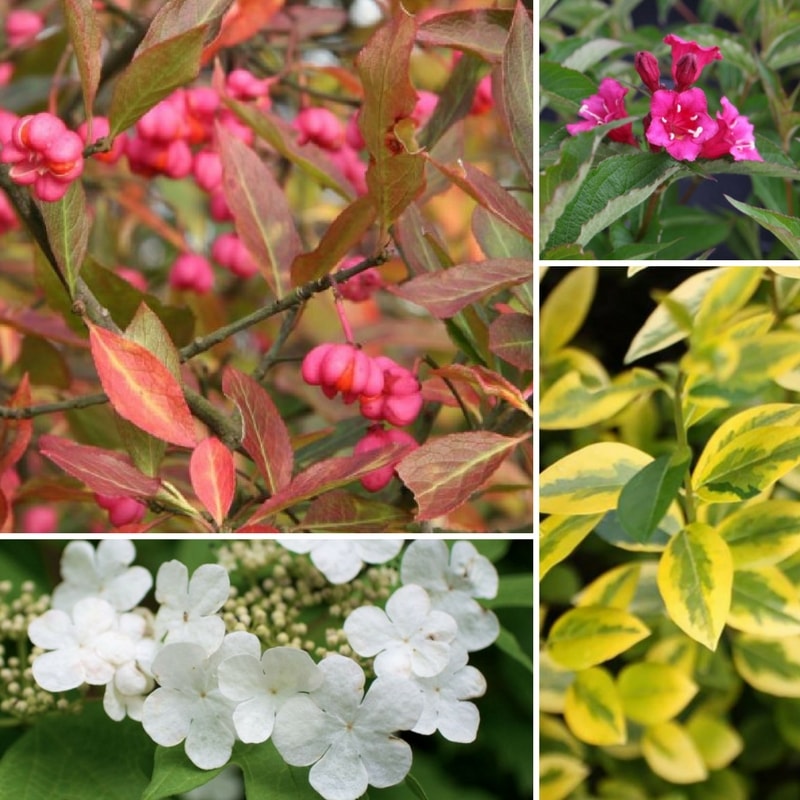
Still considered rare, this calycanthus is perfect for adding originality to your garden. It can be used, according to each gardener's desires and the space available, as a standalone specimen, in a free and countryside hedge, or in a large bed mixing perennials and small shrubs. The fragrance and beauty of the flowers can be better enjoyed near a pathway or not far from the terrace. To accompany it, one can choose, for example, daylilies, botanical peonies, the pheasant's eye tree, a variegated Cornus alba, a ninebark, a Diervilla splendens.
Calycanthus flowers resemble those of anemones in size and shape. But the fragrance is quite different as it is reminiscent of strawberries, which is what gave rise to the English name, "Strawberry bush".
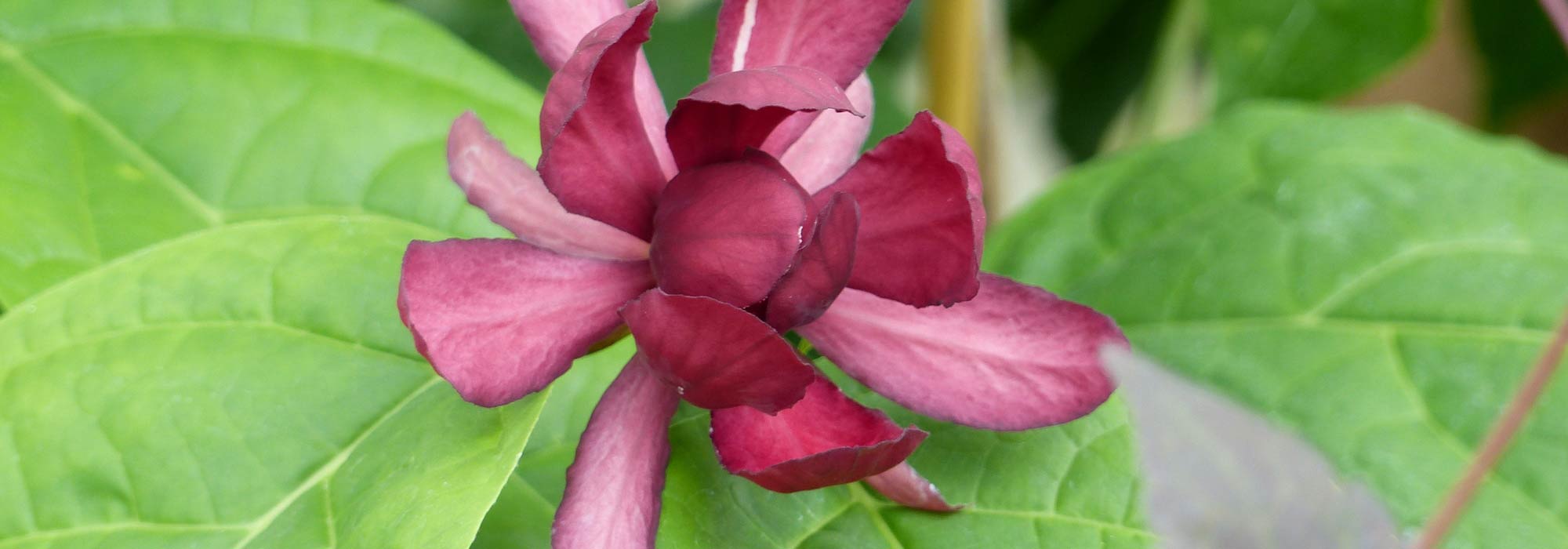
Calycanthus raulstonii Aphrodite- Sweetshrub in pictures
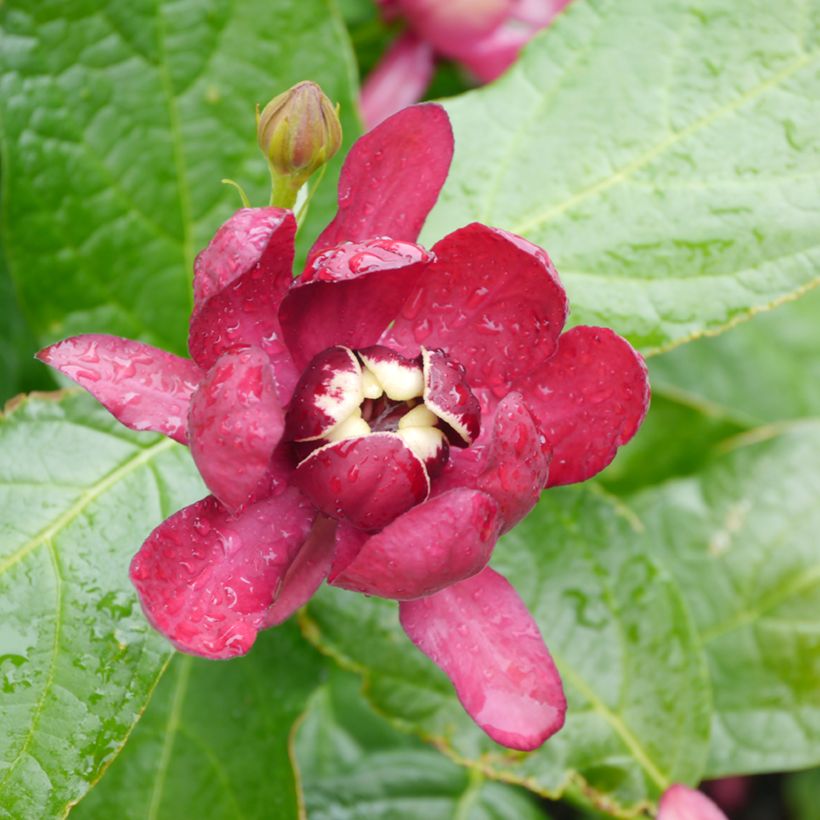
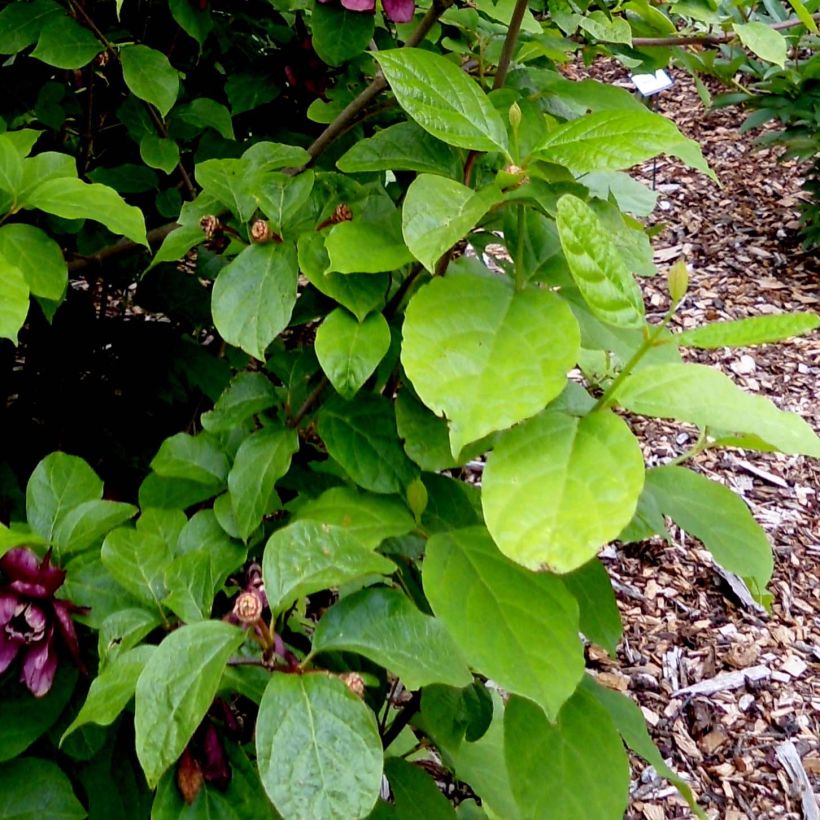
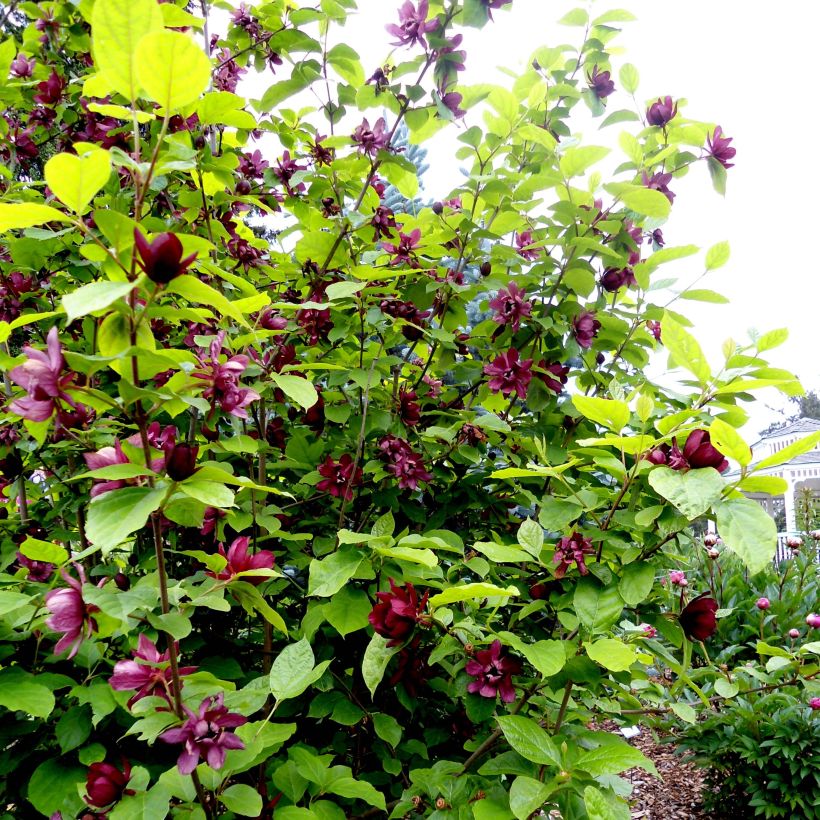
Plant habit
Flowering
Foliage
Botanical data
Calycanthus
x raulstonii
Aphrodite
Calycanthaceae
Sweetshrub, Strawberry bush
Cultivar or hybrid
Planting and care
Calycanthus Aphrodite tolerates semi-shaded situations quite well but performs much better in full sun. Similarly, it grows in any type of sufficiently deep and moist soil, but it will thrive better in a soil that is not too chalky. Feel free to combine it with your heathland beds as acidity does not scare it. However, pure heathland soil may be a bit too poor for it: add compost at the base of this shrub and keep the soil moist with mulch. It can be kept in a pot as well as in open ground; however, in a pot, care must be taken to prevent stagnant moisture. Make sure to remove the suckers if you do not want it to spread too much. Pruning should be done in late winter if necessary.
Planting period
Intended location
Care
Planting & care advice
-
-

-
-

-

-
-

-

-
, onOrder confirmed
Reply from on Promesse de fleurs
Recently viewed products
Haven't found what you were looking for?
Hardiness is the lowest winter temperature a plant can endure without suffering serious damage or even dying. However, hardiness is affected by location (a sheltered area, such as a patio), protection (winter cover) and soil type (hardiness is improved by well-drained soil).
In temperate climates, pruning of spring-flowering shrubs (forsythia, spireas, etc.) should be done just after flowering.
Pruning of summer-flowering shrubs (Indian Lilac, Perovskia, etc.) can be done in winter or spring.
In cold regions as well as with frost-sensitive plants, avoid pruning too early when severe frosts may still occur.
The harvesting period indicated on our website applies to countries and regions in USDA zone 8 (France, England, Ireland, the Netherlands).
In colder areas (Scandinavia, Poland, Austria...) fruit and vegetable harvests are likely to be delayed by 3-4 weeks.
In warmer areas (Italy, Spain, Greece, etc.), harvesting will probably take place earlier, depending on weather conditions.
The sowing periods indicated on our website apply to countries and regions within USDA Zone 8 (France, UK, Ireland, Netherlands).
In colder areas (Scandinavia, Poland, Austria...), delay any outdoor sowing by 3-4 weeks, or sow under glass.
In warmer climes (Italy, Spain, Greece, etc.), bring outdoor sowing forward by a few weeks.
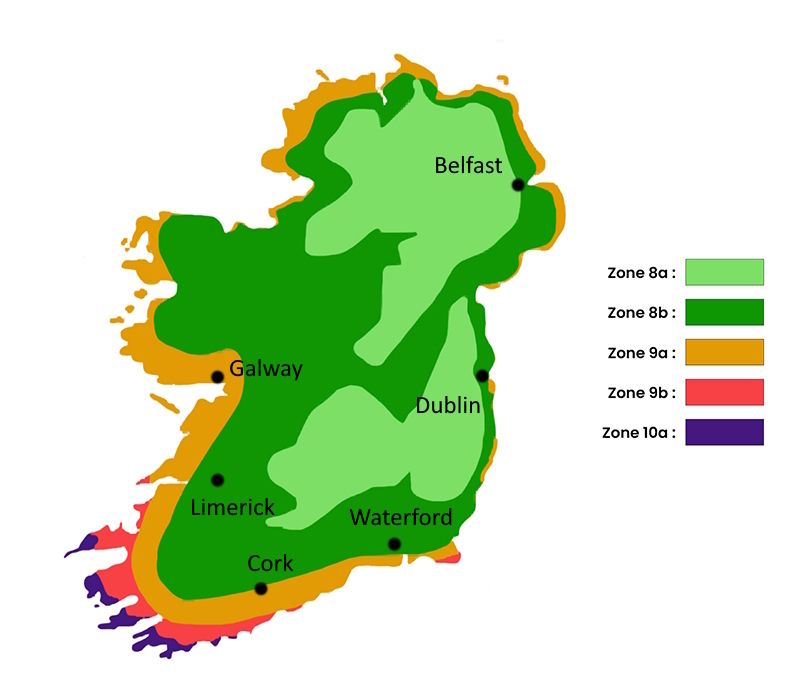
The planting period indicated on our website applies to regions in USDA Zone 9a (East Coast and Midlands: Dublin, Wexford, Waterford, Kilkenny, Portlaoise). It will vary depending on where you live:
- On the west coast and in the north-west (Galway, Limerick, Sligo, Donegal, Westport), delay planting by 1 to 2 weeks in spring and bring it forward by 1 to 2 weeks in autumn compared to the dates given, preferably choosing periods without strong winds.
- In the inland hills and plateaus (Wicklow Mountains, Macgillycuddy’s Reeks, Connemara, Killarney), it is best to plant in spring (April–May) or autumn (September–October), avoiding periods of waterlogged soil in winter and strong winds, which pose the main risk to newly planted trees in these areas.
The flowering period indicated on our website applies to regions in USDA Zone 9a, such as the East Coast and Midlands, including Dublin, Wexford, Waterford, Kilkenny and Portlaoise.
This will vary depending on where you live:
- On the west coast and in the northwest (Galway, Limerick, Sligo, Donegal and Westport), it will be delayed by one to two weeks compared to the given dates, due to stronger Atlantic winds and less spring sunshine.
- In the inland hills and plateaus (the Wicklow Mountains, the Macgillycuddy's Reeks, Connemara and Killarney), flowering will be delayed by two to three weeks. Flowering mainly occurs between May and July, with the limiting factors being less frost and more of the excessive humidity, strong winds and lack of sunshine that are characteristic of these areas.
Shipping country and language
Your country of residence may be:
Your country of residence is:
For a better user experience on our website, you can select:
Your shipping country:
-
 Austria
-
 Belgium
-
 Bosnia & Herzegovina
-
 Bulgaria
-
 Croatia
-
 Cyprus
-
 Czechia
-
 Denmark
-
 Estonia
-
 Finland
-
 France
-
 Germany
-
 Greece
-
 Hungary
-
 Iceland
-
 Ireland
-
 Italy
Italy
-
 Latvia
-
 Liechtenstein
-
 Lithuania
-
 Luxembourg
-
 Malta
Malta
-
 Netherlands
-
 Poland
-
 Portugal
-
 Romania
-
 Serbia
-
 Slovakia
-
 Slovenia
-
 Spain
Spain
-
 Sweden
-
 Switzerland
Language:
-
French
-
 English
-
Spanish
-
Italian
-
German
-
Portuguese
-
Dutch
-
Finnish
My Account
Hello
My wish lists
My cart
Log in / Register
Existing customer?
This form is protected by reCAPTCHA - the Google Privacy Policy and Terms of Service apply.
New customer?
Create an account to track your orders, access our customer service and, if you wish, make the most of our upcoming offers.