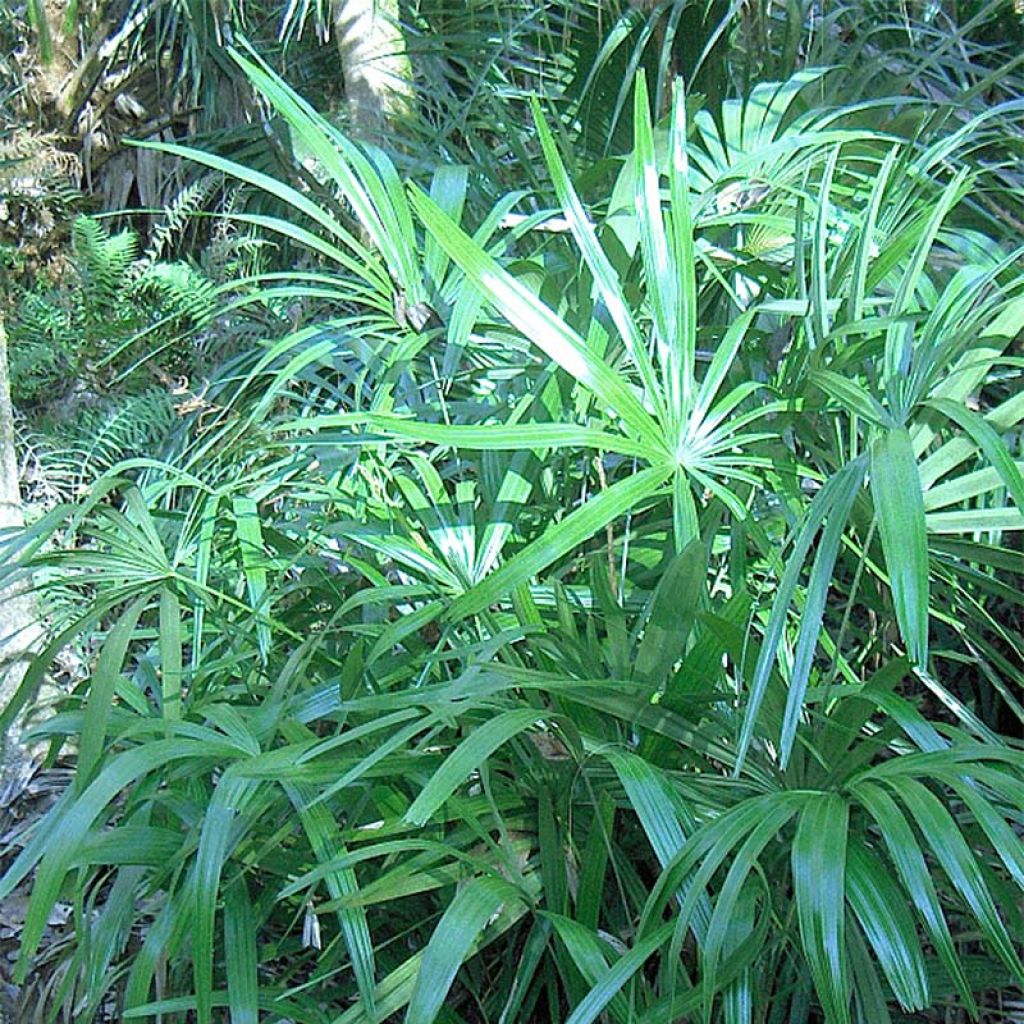
Rhapidophyllum hystrix - Needle Palm
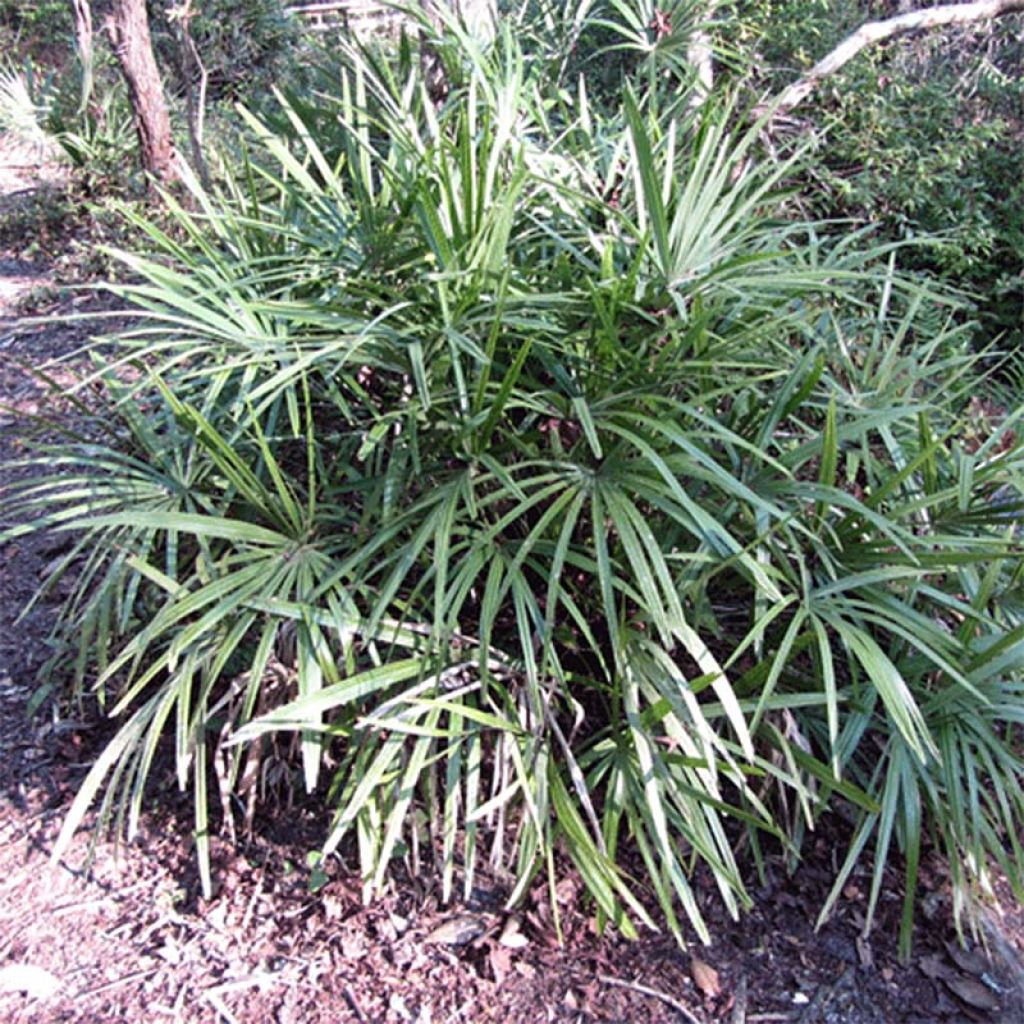
Rhapidophyllum hystrix - Needle Palm
Rhapidophyllum hystrix - Needle Palm
Rhapidophyllum hystrix
Needle Palm
For a tree at this price, I would have liked a little grooming to remove the too many dead or damaged tree fern fronds. Can we trust your planting and care advice? I remind you of the message I sent you yesterday (I am awaiting a response regarding the death of my tree fern). Here is a link to a young plant producer's website that contradicts your advice. youtube: 565AmxNE7MO Kind regards nonetheless and looking forward to your response. E. Julliard Mazeran
Elisabeth J., 18/09/2018
Back-to-school special offer!
Get €10 off for every €50 you spend! And get up to €40 off on a single order.
How does it work?
1. Shop your favourites
Add your favourite plants to your basket. For every €50 you spend (excluding delivery charges, store credit and the plastic-free option), you’ll receive a €10 voucher.
€50 spent = €10 voucher
€100 spent = €20 voucher
€150 spent = €30 voucher
€200 spent = €40 voucher
2. Place your order
Once your basket reaches one of the spending thresholds, place your order. You can even choose your delivery date!
3. Receive your voucher
As soon as your order has been shipped, you’ll receive an email containing your personal voucher code and its value.
4. Use it on your next order
Your voucher is valid for 90 days from the date you receive it. It can be used once only, on a new order worth at least the value of the voucher, excluding delivery charges.
Please note: Vouchers can be combined with other offers, but cannot be split or refunded.
Why not try an alternative variety in stock?
View all →
Available in 5 sizes
Available in 4 sizes
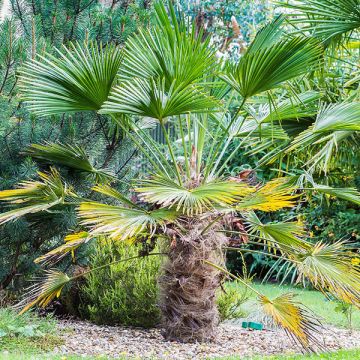
Available in 2 sizes
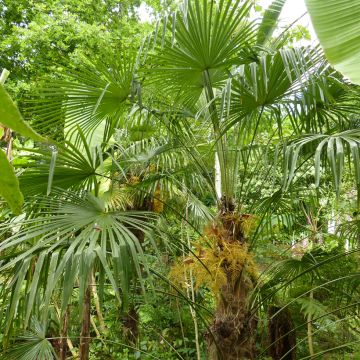
Available in 6 sizes
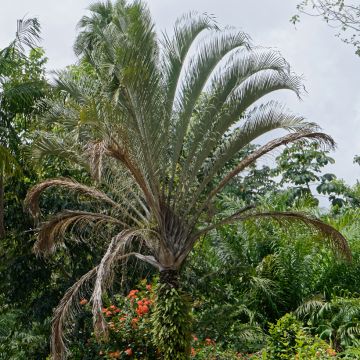
Available in 1 sizes
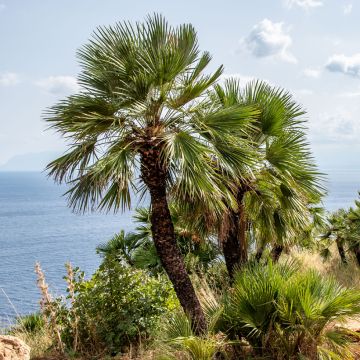
Available in 1 sizes
Available in 1 sizes

Available in 1 sizes
Available in 1 sizes
Available in 2 sizes
This plant carries a 24 months recovery warranty
More information
We guarantee the quality of our plants for a full growing cycle, and will replace at our expense any plant that fails to recover under normal climatic and planting conditions.

Does this plant fit my garden?
Set up your Plantfit profile →
Description
The Needle Palm, in Latin Rhapidophyllum hystrix, is a remarkable North American species, even hardier than its famous cousin, Trachycarpus fortunei, but dependent on moist, even waterlogged soils. This astonishing palm, which tolerates shade well, can be grown in the ground in most areas, as long as it doesn't lack water. Forming a dense, low clump of large fan-shaped leaves carried by a short stipe that remains close to the ground, it brings a real touch of exoticism to any bed, and especially to water features.
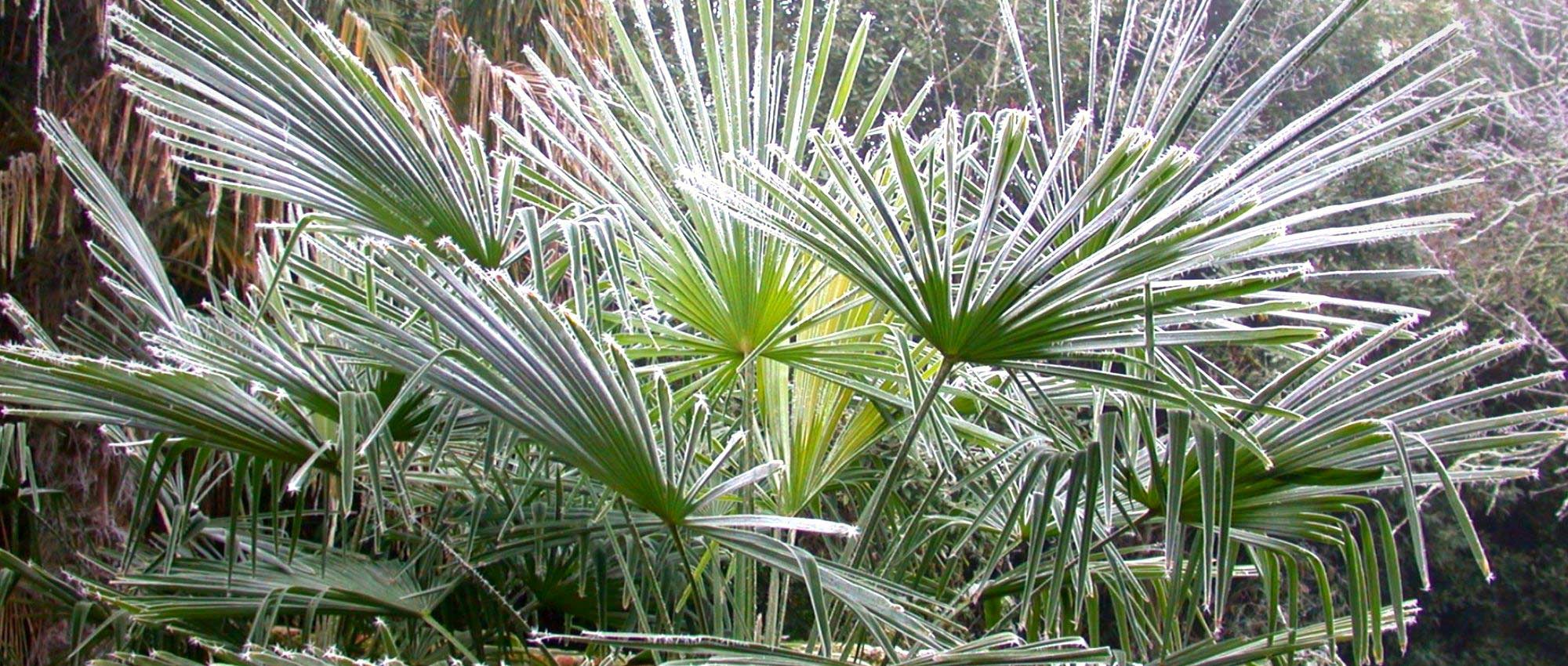
Rhapidophyllum hystrix is sometimes called the Porcupine Palm because of the long black spines that cover its petioles. It belongs to the Arecaceae (Palm) family. It is native to the moist understory of several southeastern states in the United States: it can be found in Florida, Georgia, Mississippi, and North Carolina, sometimes growing in flooded areas. This evergreen palm, particularly resistant, is suitable to all climates, temperate and cold or subtropical and dry, as long as it benefits from fertile and consistently moist soil.
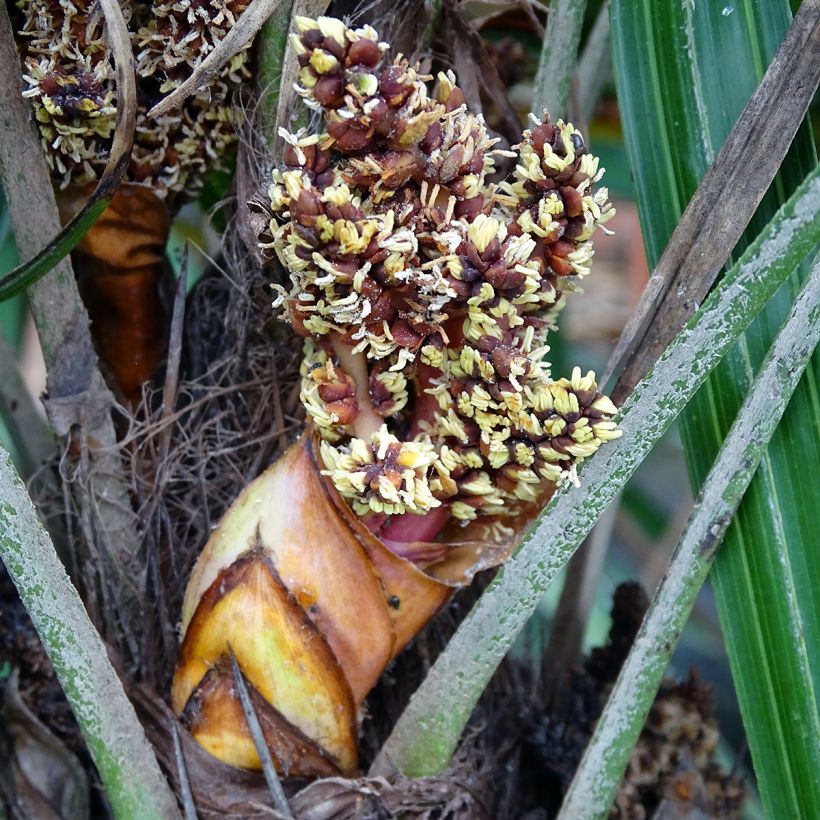
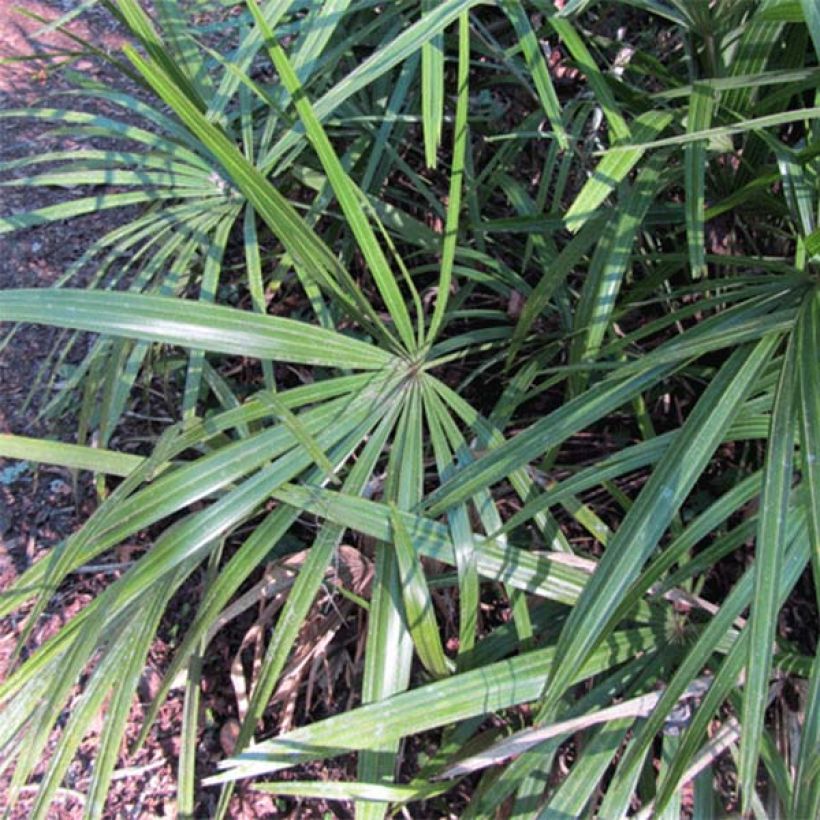
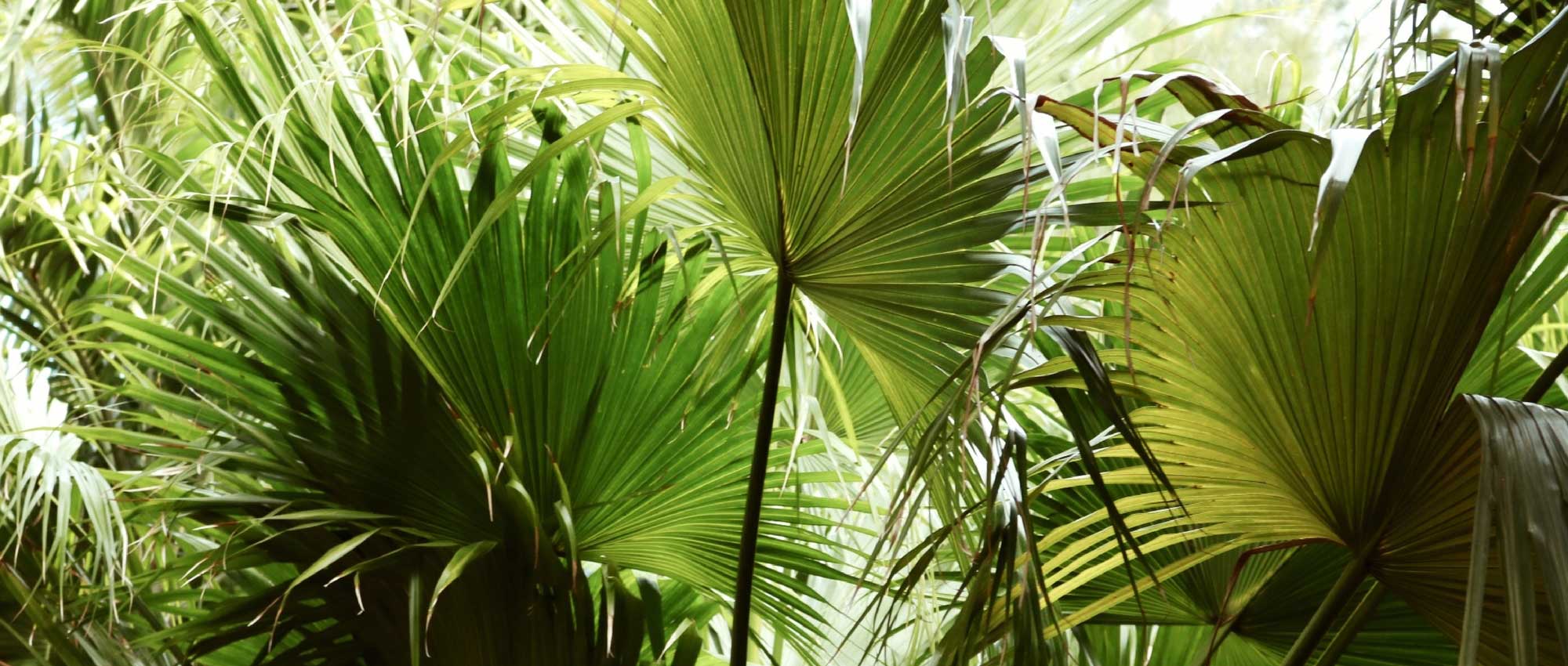
From a young age, this cespitose* palm shows a bushy habit that it will keep throughout its life, and its bluish-green leaves with gray-silver undersides are very elegant. Growing quite rapidly, it will reach about 3 m (10ft) in height and 2.50 m (8ft) in width at the age of 10, when planted in the ground. Its vegetation consists of a very short, often prostrate false trunk (stipe), not exceeding 1 m (3ft) in height and 20 cm (8in) in diameter (*capable of producing suckers as it ages). It is covered in brown fibers among which emerge long dark spines, remnants of the old petioles that persist on the plant long after the leaves have fallen. At the top of this stipe, a crown develops consisting of about 15 palmate leaves, 1 m (3ft) to 1.20 m (4ft) wide, divided into 20 to 25 stiff and leathery segments. This palm has male and female individuals, with very short inflorescences. The small flowers are composed of 3 dark red petals. The dark brown, pruinous fruits, borne on female plants, measure 1 cm (1in) in diameter. They are often entangled in the fibers of the stipe and the spines, at the base of the crown. The very hard, cream-coloured seeds germinate with difficulty, which may explain its relative rarity in cultivation.
The needle palm, along with Chamaerops humilis, is one of the easiest palms to acclimate in many of our regions, especially in cold and humid climates. When planted in the ground, it should be grown as a standalone specimen, near a water feature or not far from a swimming pool for example, along with Tetrapanax Rex, bananas, or cannas, in an exotic-inspired setting. A bit difficult to pair due to its strong personality, it can nevertheless be planted in a semi-shaded position in groups of 3 subjects and surrounded by a carpet of Petasites fragrans or Farfugium japonicum for example. In a contemporary garden, it will look beautiful above a sea of white pebbles. It will make a magnificent specimen on a terrace or balcony, planted in a carefully chosen large container, in consistently moist soil.
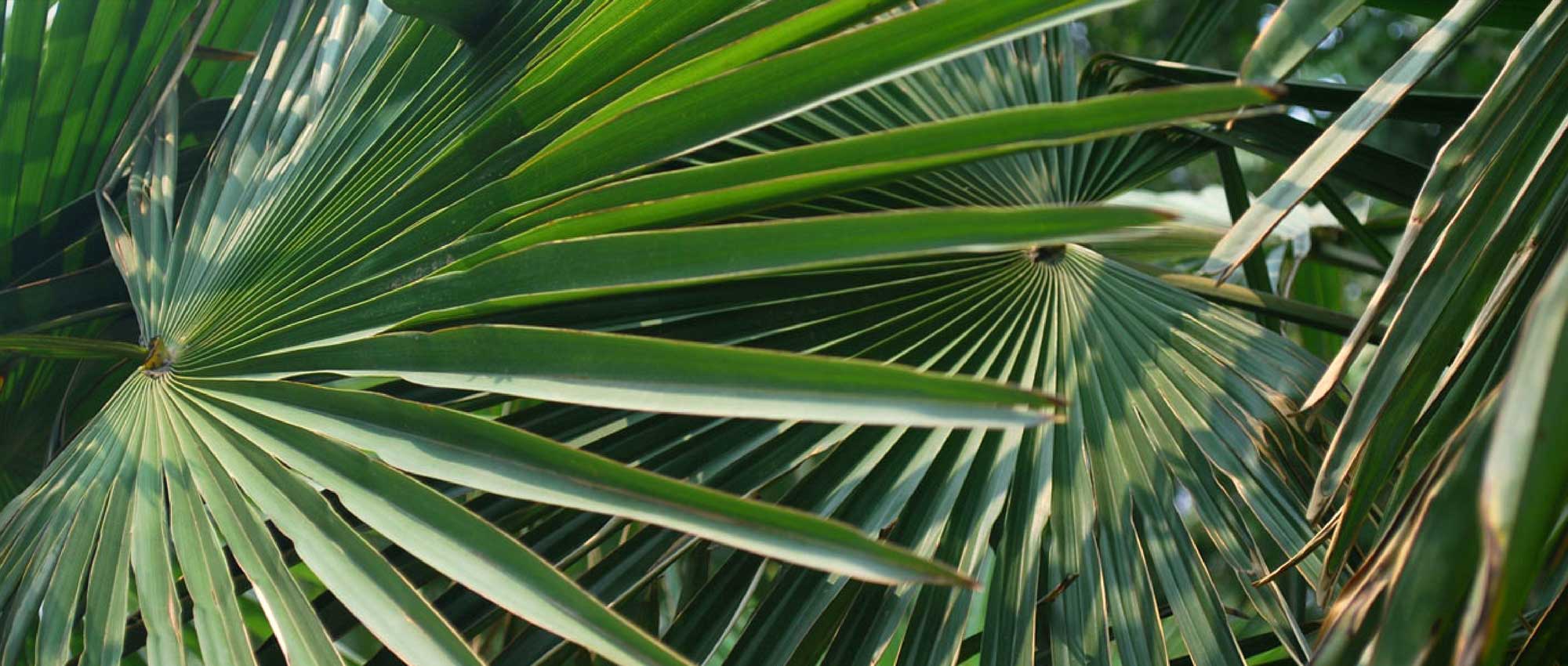
Rhapidophyllum hystrix - Needle Palm in pictures
Plant habit
Flowering
Foliage
Botanical data
Rhapidophyllum
hystrix
Arecaceae
Needle Palm
North America
Planting and care
Plant the needle palm in any relatively fertile soil that remains moist, even marshy or waterlogged soils. The ideal is to plant it in a balanced mixture of potting soil and garden soil. Place it in a sunny but not scorching exposure (morning sun), a semi-shaded or even shaded position. Regularly water during the first 3 years, especially if the weather is dry. Easy to grow, it requires little maintenance except for pruning of the oldest fronds against the stipe.
Planting period
Intended location
Care
Planting & care advice
-
-
-
-
-

-
-

-
-
, onOrder confirmed
Reply from on Promesse de fleurs
Recently viewed products
Haven't found what you were looking for?
Hardiness is the lowest winter temperature a plant can endure without suffering serious damage or even dying. However, hardiness is affected by location (a sheltered area, such as a patio), protection (winter cover) and soil type (hardiness is improved by well-drained soil).
In temperate climates, pruning of spring-flowering shrubs (forsythia, spireas, etc.) should be done just after flowering.
Pruning of summer-flowering shrubs (Indian Lilac, Perovskia, etc.) can be done in winter or spring.
In cold regions as well as with frost-sensitive plants, avoid pruning too early when severe frosts may still occur.
The harvesting period indicated on our website applies to countries and regions in USDA zone 8 (France, England, Ireland, the Netherlands).
In colder areas (Scandinavia, Poland, Austria...) fruit and vegetable harvests are likely to be delayed by 3-4 weeks.
In warmer areas (Italy, Spain, Greece, etc.), harvesting will probably take place earlier, depending on weather conditions.
The sowing periods indicated on our website apply to countries and regions within USDA Zone 8 (France, UK, Ireland, Netherlands).
In colder areas (Scandinavia, Poland, Austria...), delay any outdoor sowing by 3-4 weeks, or sow under glass.
In warmer climes (Italy, Spain, Greece, etc.), bring outdoor sowing forward by a few weeks.
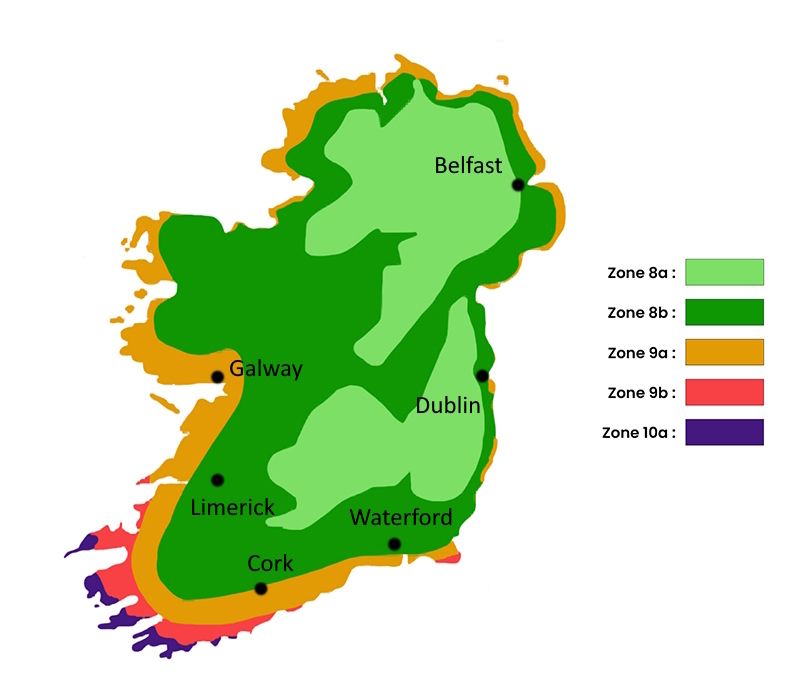
The planting period indicated on our website applies to regions in USDA Zone 9a (East Coast and Midlands: Dublin, Wexford, Waterford, Kilkenny, Portlaoise). It will vary depending on where you live:
- On the west coast and in the north-west (Galway, Limerick, Sligo, Donegal, Westport), delay planting by 1 to 2 weeks in spring and bring it forward by 1 to 2 weeks in autumn compared to the dates given, preferably choosing periods without strong winds.
- In the inland hills and plateaus (Wicklow Mountains, Macgillycuddy’s Reeks, Connemara, Killarney), it is best to plant in spring (April–May) or autumn (September–October), avoiding periods of waterlogged soil in winter and strong winds, which pose the main risk to newly planted trees in these areas.
The flowering period indicated on our website applies to regions in USDA Zone 9a, such as the East Coast and Midlands, including Dublin, Wexford, Waterford, Kilkenny and Portlaoise.
This will vary depending on where you live:
- On the west coast and in the northwest (Galway, Limerick, Sligo, Donegal and Westport), it will be delayed by one to two weeks compared to the given dates, due to stronger Atlantic winds and less spring sunshine.
- In the inland hills and plateaus (the Wicklow Mountains, the Macgillycuddy's Reeks, Connemara and Killarney), flowering will be delayed by two to three weeks. Flowering mainly occurs between May and July, with the limiting factors being less frost and more of the excessive humidity, strong winds and lack of sunshine that are characteristic of these areas.
Shipping country and language
Your country of residence may be:
Your country of residence is:
For a better user experience on our website, you can select:
Your shipping country:
-
 Austria
-
 Belgium
-
 Bosnia & Herzegovina
-
 Bulgaria
-
 Croatia
-
 Cyprus
-
 Czechia
-
 Denmark
-
 Estonia
-
 Finland
-
 France
-
 Germany
-
 Greece
-
 Hungary
-
 Iceland
-
 Ireland
-
 Italy
Italy
-
 Latvia
-
 Liechtenstein
-
 Lithuania
-
 Luxembourg
-
 Malta
Malta
-
 Netherlands
-
 Poland
-
 Portugal
-
 Romania
-
 Serbia
-
 Slovakia
-
 Slovenia
-
 Spain
Spain
-
 Sweden
-
 Switzerland
Language:
-
French
-
 English
-
Spanish
-
Italian
-
German
-
Portuguese
-
Dutch
-
Finnish
My Account
Hello
My wish lists
My cart
Log in / Register
Existing customer?
This form is protected by reCAPTCHA - the Google Privacy Policy and Terms of Service apply.
New customer?
Create an account to track your orders, access our customer service and, if you wish, make the most of our upcoming offers.