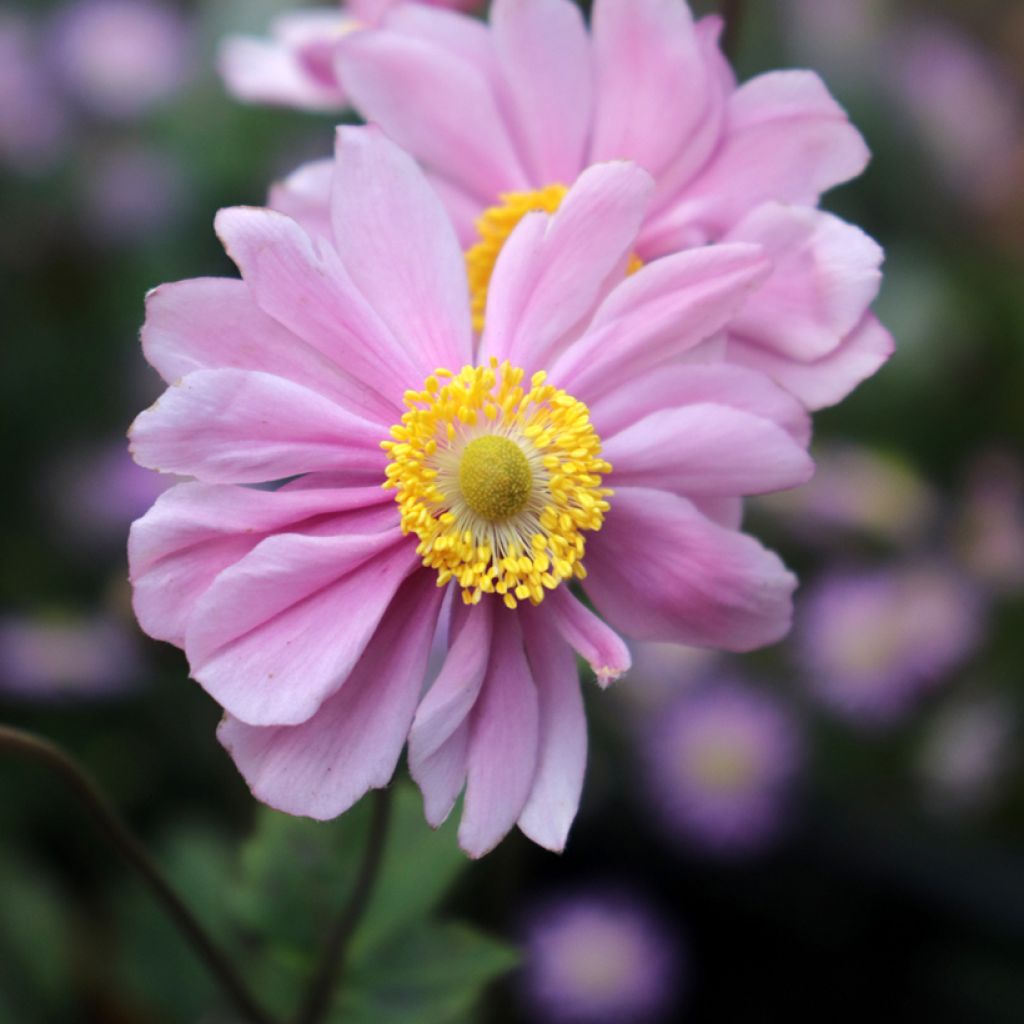
Anemone hybrida Serenade
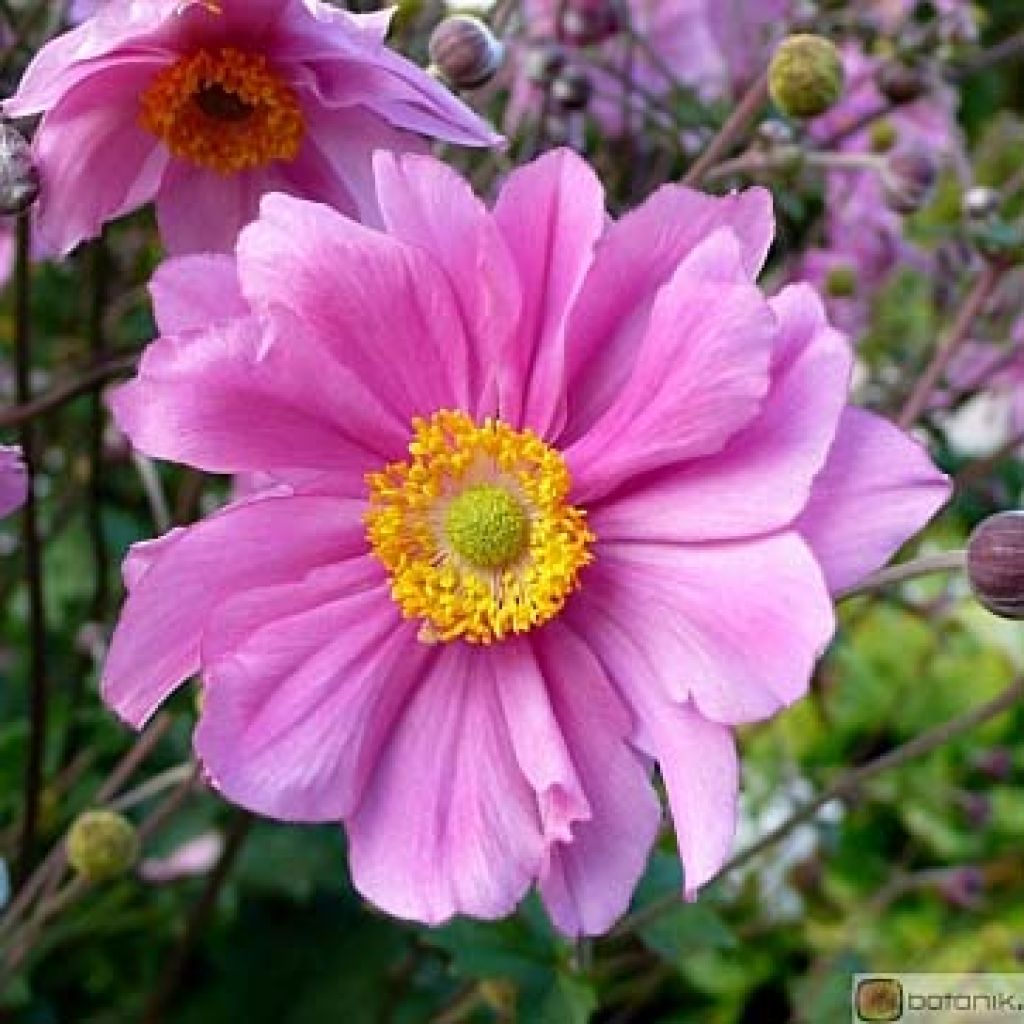
Anemone hybrida Serenade
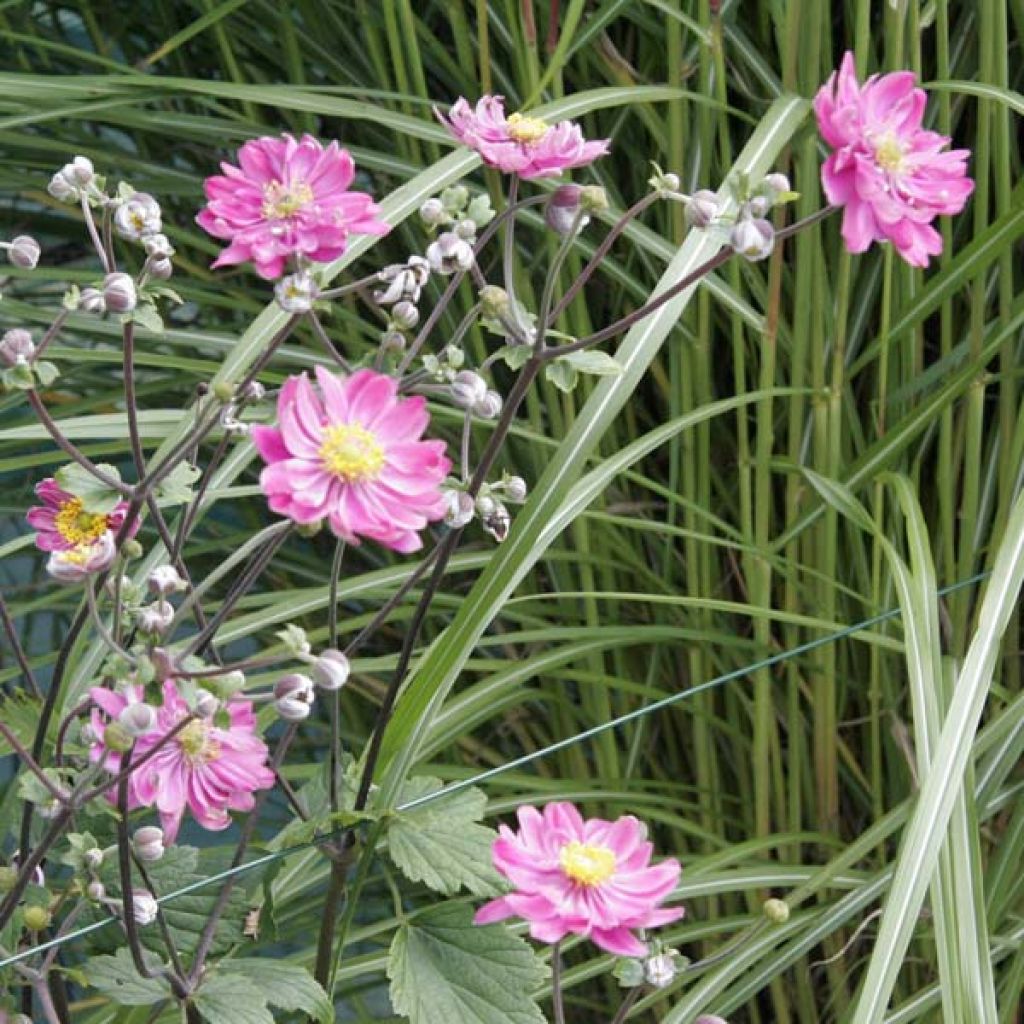
Anemone hybrida Serenade
Anemone hybrida Serenade
Anemone x hybrida Serenade
Japanese Anemone, Windflower, Woolly anemone
Order dispatched quickly. Plants of a good size and robust. We will have to wait until next summer for the flowering.
Nicole, 20/09/2024
Back-to-school special offer!
Get €10 off for every €50 you spend! And get up to €40 off on a single order.
How does it work?
1. Shop your favourites
Add your favourite plants to your basket. For every €50 you spend (excluding delivery charges, store credit and the plastic-free option), you’ll receive a €10 voucher.
€50 spent = €10 voucher
€100 spent = €20 voucher
€150 spent = €30 voucher
€200 spent = €40 voucher
2. Place your order
Once your basket reaches one of the spending thresholds, place your order. You can even choose your delivery date!
3. Receive your voucher
As soon as your order has been shipped, you’ll receive an email containing your personal voucher code and its value.
4. Use it on your next order
Your voucher is valid for 90 days from the date you receive it. It can be used once only, on a new order worth at least the value of the voucher, excluding delivery charges.
Please note: Vouchers can be combined with other offers, but cannot be split or refunded.
Home or relay delivery (depending on size and destination)
Important: You may be charged customs duties by your country’s customs authorities upon delivery.
Schedule delivery date,
and select date in basket
This plant carries a 12 months recovery warranty
More information
We guarantee the quality of our plants for a full growing cycle, and will replace at our expense any plant that fails to recover under normal climatic and planting conditions.
Does this plant fit my garden?
Set up your Plantfit profile →
Description
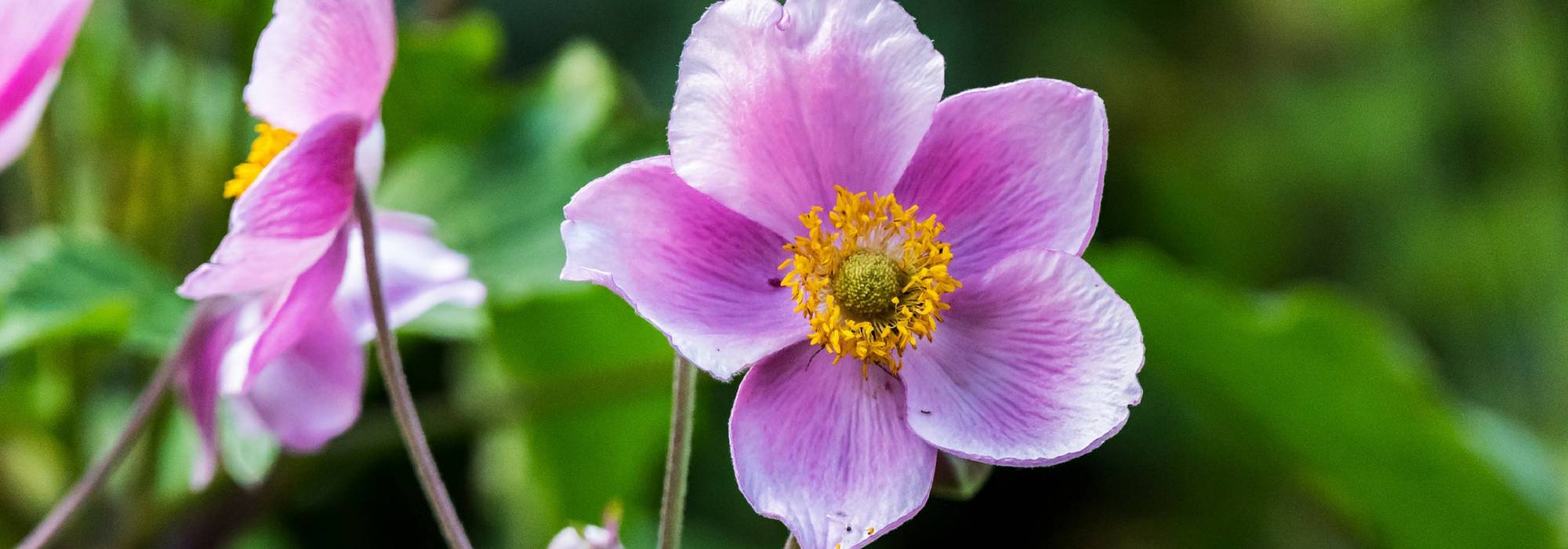
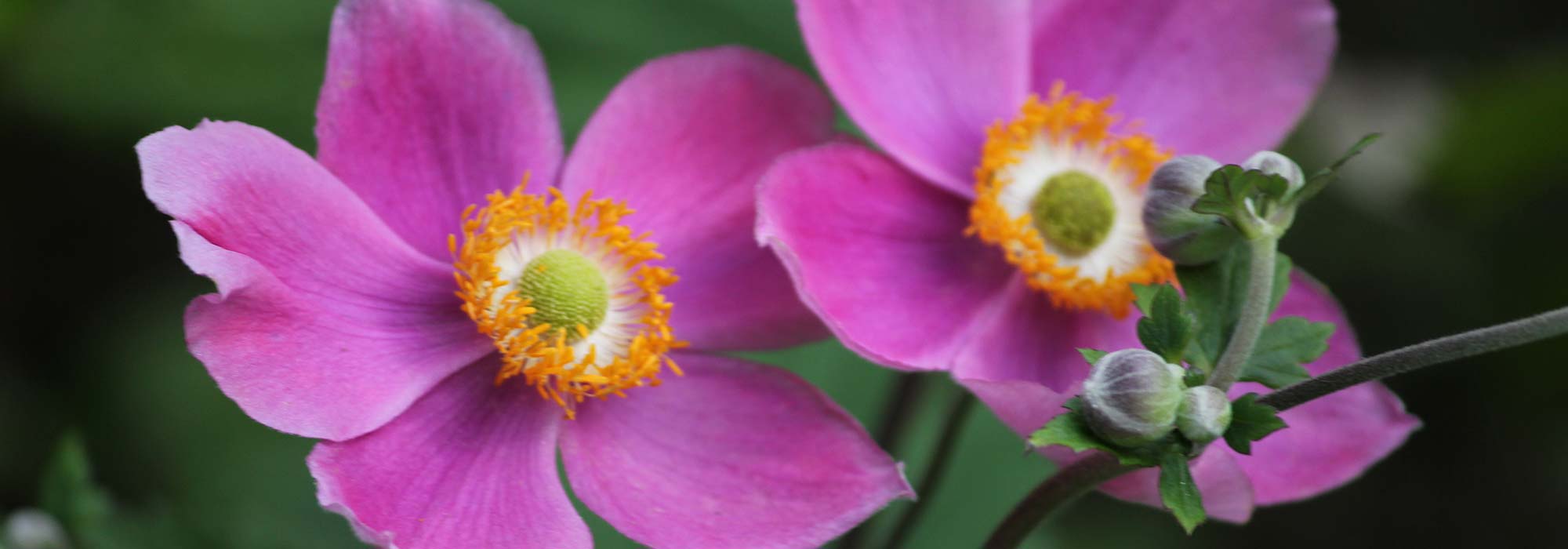
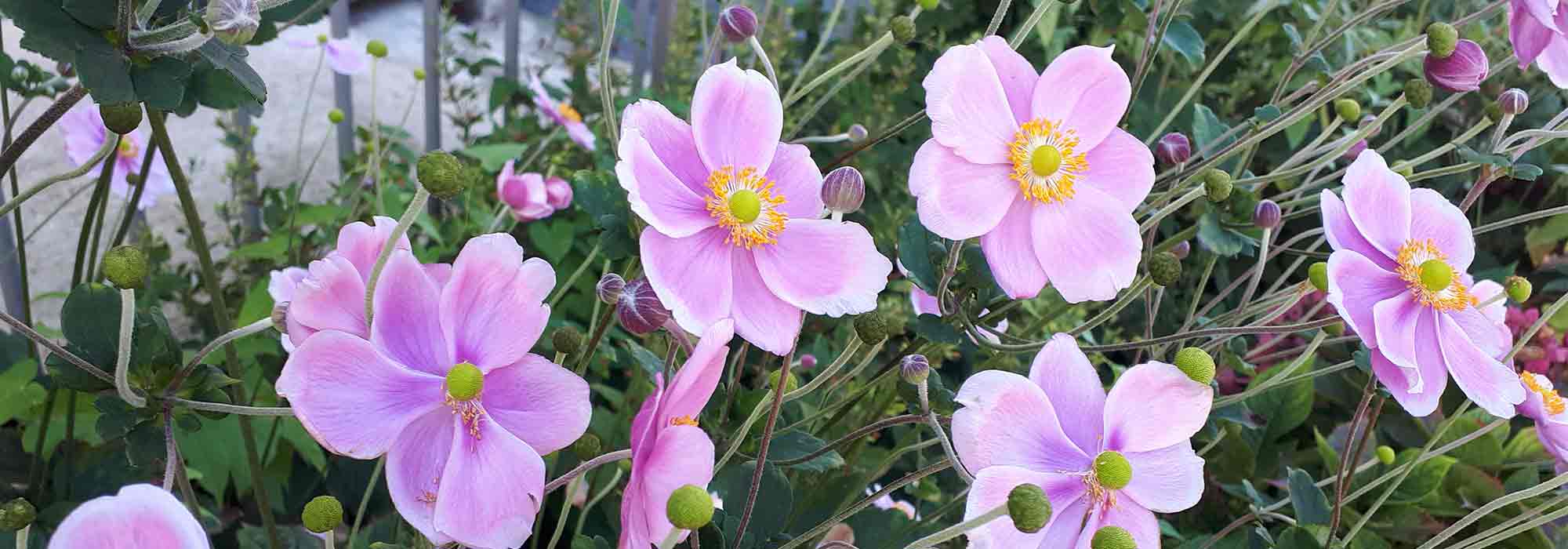
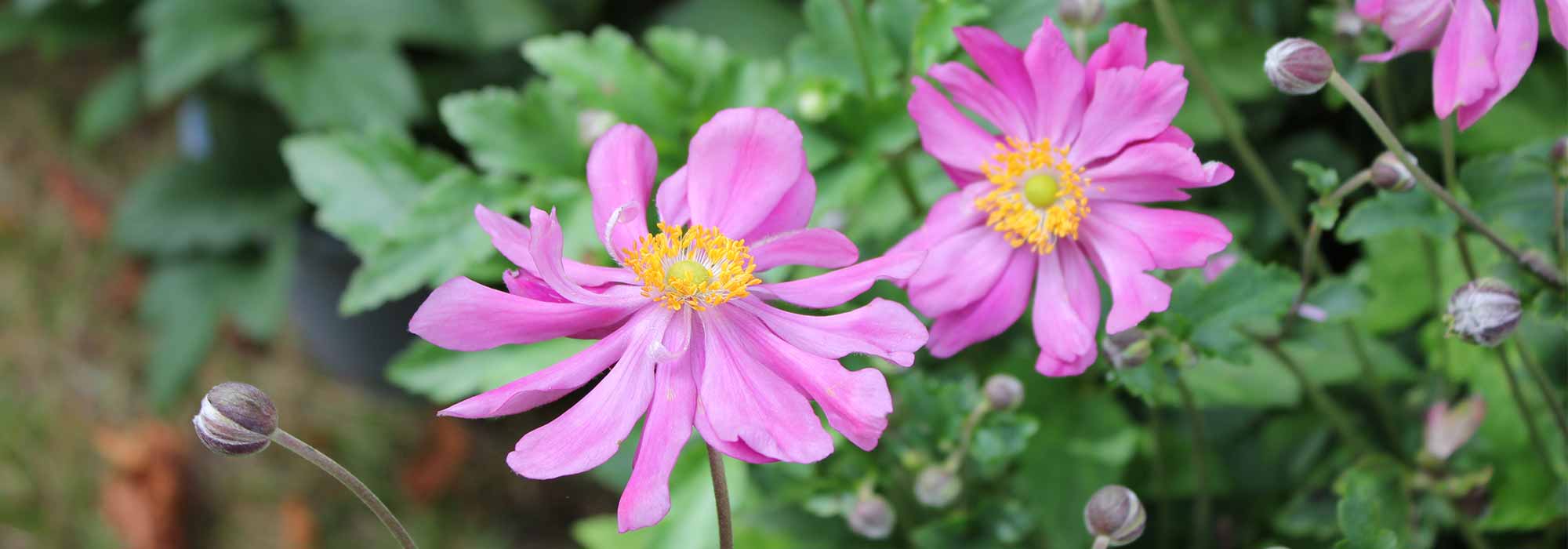
The Anemone × hybrida ‘Serenade’ is a Japanese anemone remarkable for the abundance and duration of its flowering. Its double flowers in a fresh pink with a golden-yellow heart follow one another from late summer to mid-autumn, on sturdy stems that withstand rain and wind well. Shorter than many other Japanese anemones, this vigorous variety finds its place in English-style, romantic, cottage, or Japanese-inspired gardens, always in partial shade. It is a robust perennial and easy to grow. Its flowering stems also make it possible to create charming late-summer cut flower arrangements.
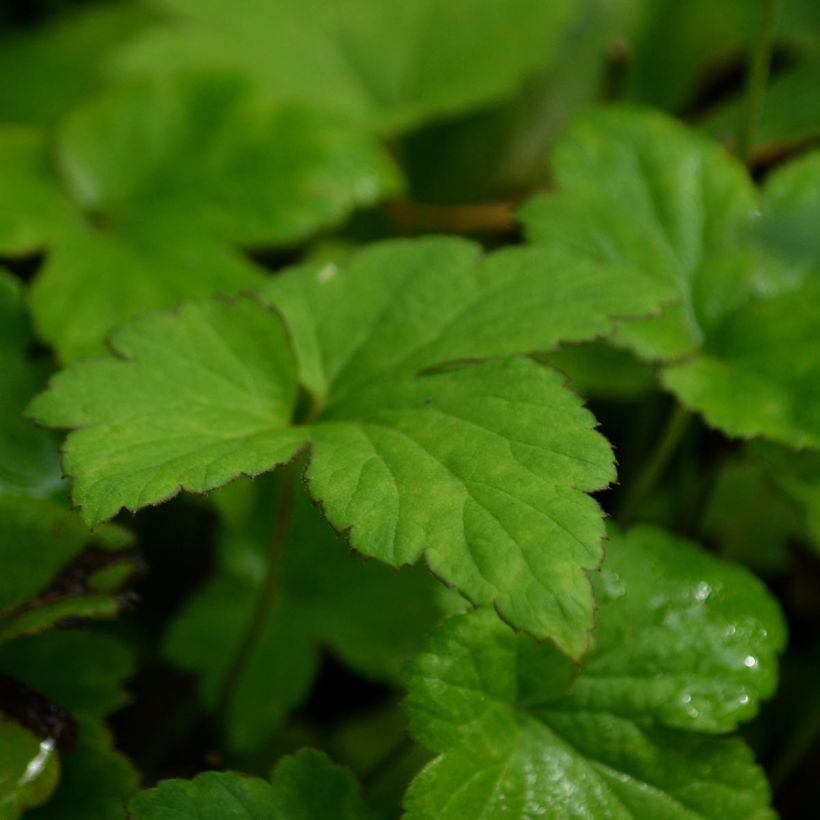
This herbaceous perennial of the Ranunculaceae family dies back in winter, then new shoots emerge from its rootstock in spring. Long sold under the name Anemone tomentosa ‘Serenade’, it is now classified among the hybrids derived from two Asian species, Eriocapitella japonica and E. vitifolia. Its current botanical name is Eriocapitella × hybrida ‘Serenade’. The plant develops from shallow, fibrous rootstocks. It first forms a compact clump, then spreads fairly quickly once well established. Its basal foliage reaches 30 to 40 cm in height. The dark green leaves, slightly villous on the underside, are divided into three lobed, dentate segments and form a dense mass from spring onwards. In late summer, branched stems rise to 60-80 cm; they can reach 1 m in rich, deep, consistently moist soil. The plant spreads over 60 cm to 1 m and can go further if left to propagate. The rounded flower buds open into cups of 6 cm in diameter, gathered in loose clusters. Each flower has 10 to 15 narrow petals that overlap around a small greenish centre holding a fine cluster of yellow stamens. Their colour ranges from fresh pink to lavender pink depending on the light. The particularly long flowering renews itself from August to October and can last nearly nine weeks in good conditions. Very hardy, ‘Serenade’ withstands the winters of continental climates. It tolerates clay or lime-bearing soil, provided water does not stagnate around the rootstock in winter.
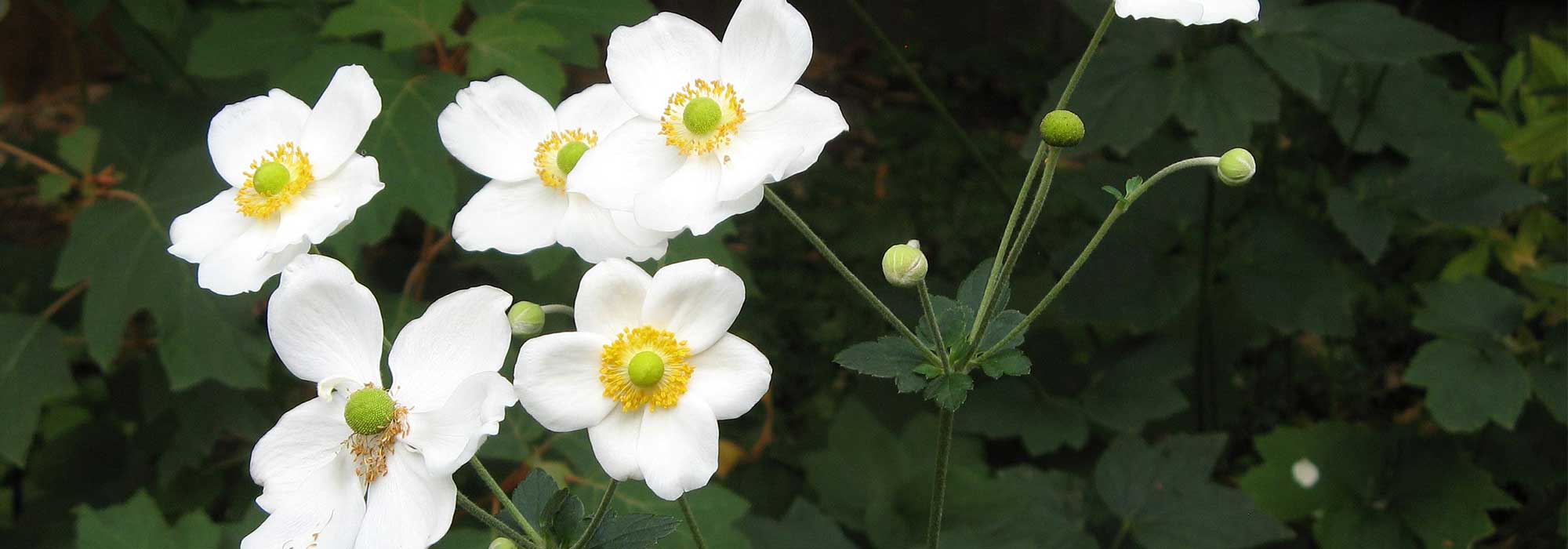
Plant the Japanese anemone 'Serenade' in groups of three to five young plants in a partially shaded border, in front of deciduous shrubs or at the edge of a light woodland. It forms a beautiful duo with the ‘Whirlwind’ anemone, with its semi-double white flowers. It can also be paired with Actaea simplex ‘Brunette’, Tricyrtis hirta ‘Miyazaki’ and Astrantia major ‘Star of Billion’. These perennials all appreciate partial shade and soil that retains moisture in summer. Its flowers are delightful in fresh bouquets mixed with the small white stars of the ‘Monte Cassino’ aster, which flowers at the same time; the stems are cut when the first buds begin to open.
For your winter bouquets, do not hesitate to cut and place in a vase the stems bearing the seed capsules that appear dry: after 2 hours at room temperature, you will see pure white aments appear.

Anemone hybrida Serenade in pictures
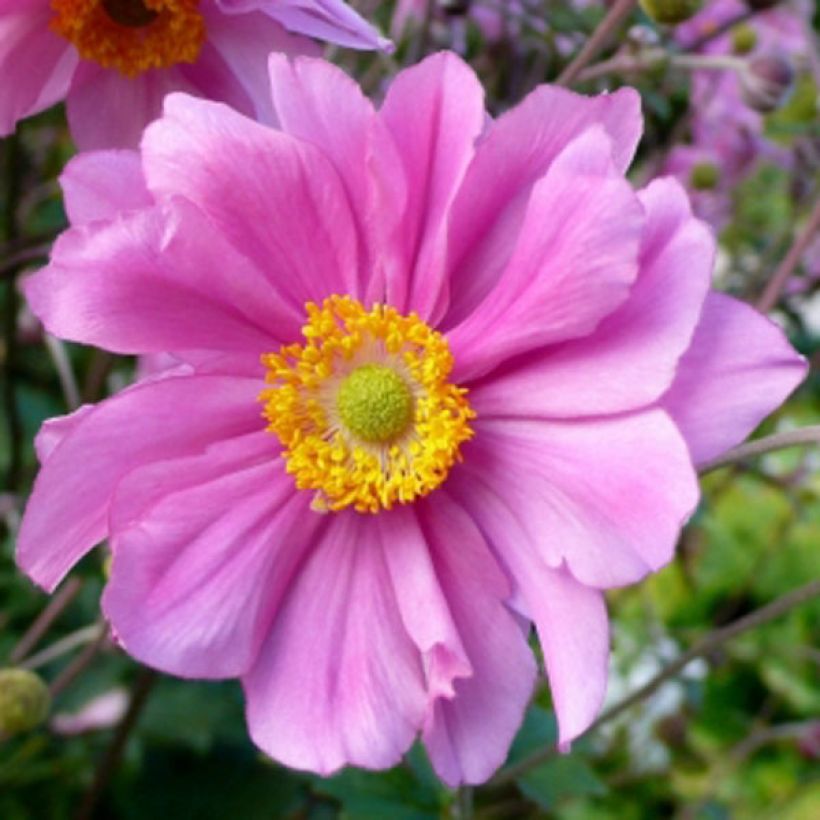
Flowering
Foliage
Plant habit
Botanical data
Anemone
x hybrida
Serenade
Ranunculaceae
Japanese Anemone, Windflower, Woolly anemone
Anemone tomentosa ‘Serenade’, Eriocapitella × hybrida ‘Serenade’, Anemone × hybrida ‘Serenade’
Cultivar or hybrid
Planting and care
Plant this Serenade anemone from February to April or September to November, with a preference for spring in cold regions or when the soil is heavy and very clayey. Choose partial shade in regions with hot summers; sun is tolerated in cool climates if the soil retains some moisture. A well-established clump tolerates occasionally dry soil in summer, including in light woodland, but strong root competition or prolonged drought reduces flowering. Loosen the soil widely and incorporate mature compost. Place the top of the root ball at soil level, water, then mulch with decomposed leaves or shredded bark. Keep the soil moist during the first two summers. Avoid moving the plant. The stems do not require staking in an ordinary situation. Cut them down in late autumn or keep the seed heads until the end of winter. Restrict the spread of the rootstocks with a spade if necessary.
Planting period
Intended location
Care
Planting & care advice
-
-
-
-

-

-
-

-
-
, onOrder confirmed
Reply from on Promesse de fleurs
Recently viewed products
Haven't found what you were looking for?
Hardiness is the lowest winter temperature a plant can endure without suffering serious damage or even dying. However, hardiness is affected by location (a sheltered area, such as a patio), protection (winter cover) and soil type (hardiness is improved by well-drained soil).
In temperate climates, pruning of spring-flowering shrubs (forsythia, spireas, etc.) should be done just after flowering.
Pruning of summer-flowering shrubs (Indian Lilac, Perovskia, etc.) can be done in winter or spring.
In cold regions as well as with frost-sensitive plants, avoid pruning too early when severe frosts may still occur.
The harvesting period indicated on our website applies to countries and regions in USDA zone 8 (France, England, Ireland, the Netherlands).
In colder areas (Scandinavia, Poland, Austria...) fruit and vegetable harvests are likely to be delayed by 3-4 weeks.
In warmer areas (Italy, Spain, Greece, etc.), harvesting will probably take place earlier, depending on weather conditions.
The sowing periods indicated on our website apply to countries and regions within USDA Zone 8 (France, UK, Ireland, Netherlands).
In colder areas (Scandinavia, Poland, Austria...), delay any outdoor sowing by 3-4 weeks, or sow under glass.
In warmer climes (Italy, Spain, Greece, etc.), bring outdoor sowing forward by a few weeks.
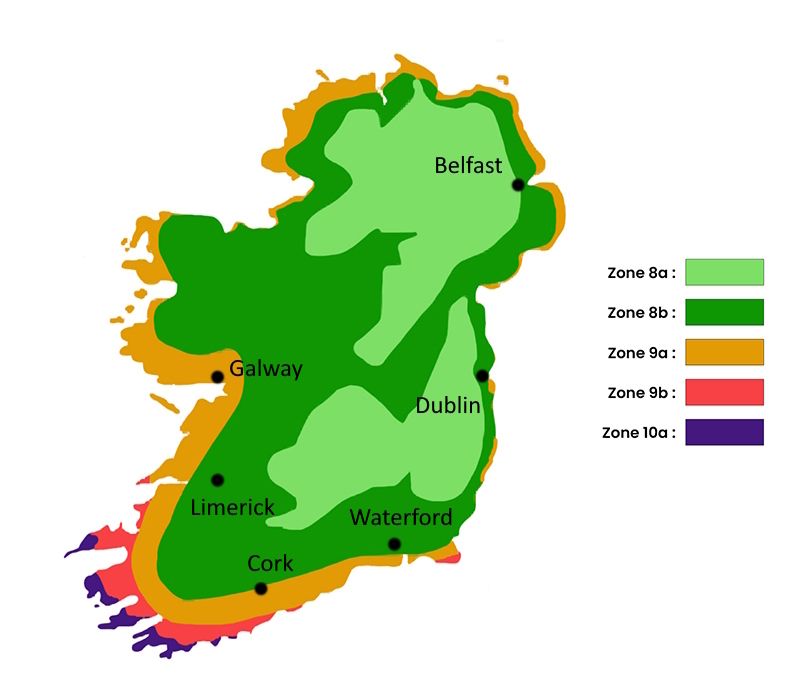
The planting period indicated on our website applies to regions in USDA Zone 9a (East Coast and Midlands: Dublin, Wexford, Waterford, Kilkenny, Portlaoise). It will vary depending on where you live:
- On the west coast and in the north-west (Galway, Limerick, Sligo, Donegal, Westport), delay planting by 1 to 2 weeks in spring and bring it forward by 1 to 2 weeks in autumn compared to the dates given, preferably choosing periods without strong winds.
- In the inland hills and plateaus (Wicklow Mountains, Macgillycuddy’s Reeks, Connemara, Killarney), it is best to plant in spring (April–May) or autumn (September–October), avoiding periods of waterlogged soil in winter and strong winds, which pose the main risk to newly planted trees in these areas.
The flowering period indicated on our website applies to regions in USDA Zone 9a, such as the East Coast and Midlands, including Dublin, Wexford, Waterford, Kilkenny and Portlaoise.
This will vary depending on where you live:
- On the west coast and in the northwest (Galway, Limerick, Sligo, Donegal and Westport), it will be delayed by one to two weeks compared to the given dates, due to stronger Atlantic winds and less spring sunshine.
- In the inland hills and plateaus (the Wicklow Mountains, the Macgillycuddy's Reeks, Connemara and Killarney), flowering will be delayed by two to three weeks. Flowering mainly occurs between May and July, with the limiting factors being less frost and more of the excessive humidity, strong winds and lack of sunshine that are characteristic of these areas.
Shipping country and language
Your country of residence may be:
Your country of residence is:
For a better user experience on our website, you can select:
Your shipping country:
-
 Austria
-
 Belgium
-
 Bosnia & Herzegovina
-
 Bulgaria
-
 Croatia
-
 Cyprus
-
 Czechia
-
 Denmark
-
 Estonia
-
 Finland
-
 France
-
 Germany
-
 Greece
-
 Hungary
-
 Iceland
-
 Ireland
-
 Italy
-
 Latvia
-
 Liechtenstein
-
 Lithuania
-
 Luxembourg
-
 Malta
-
 Netherlands
-
 Poland
-
 Portugal
-
 Romania
-
 Serbia
-
 Slovakia
-
 Slovenia
-
 Spain
-
 Sweden
-
 Switzerland
Language:
-
French
-
 English
-
Spanish
-
Italian
-
German
-
Portuguese
-
Dutch
-
Finnish
My Account
Hello
My wish lists
My cart
Log in / Register
Existing customer?
This form is protected by reCAPTCHA - the Google Privacy Policy and Terms of Service apply.
New customer?
Create an account to track your orders, access our customer service and, if you wish, make the most of our upcoming offers.