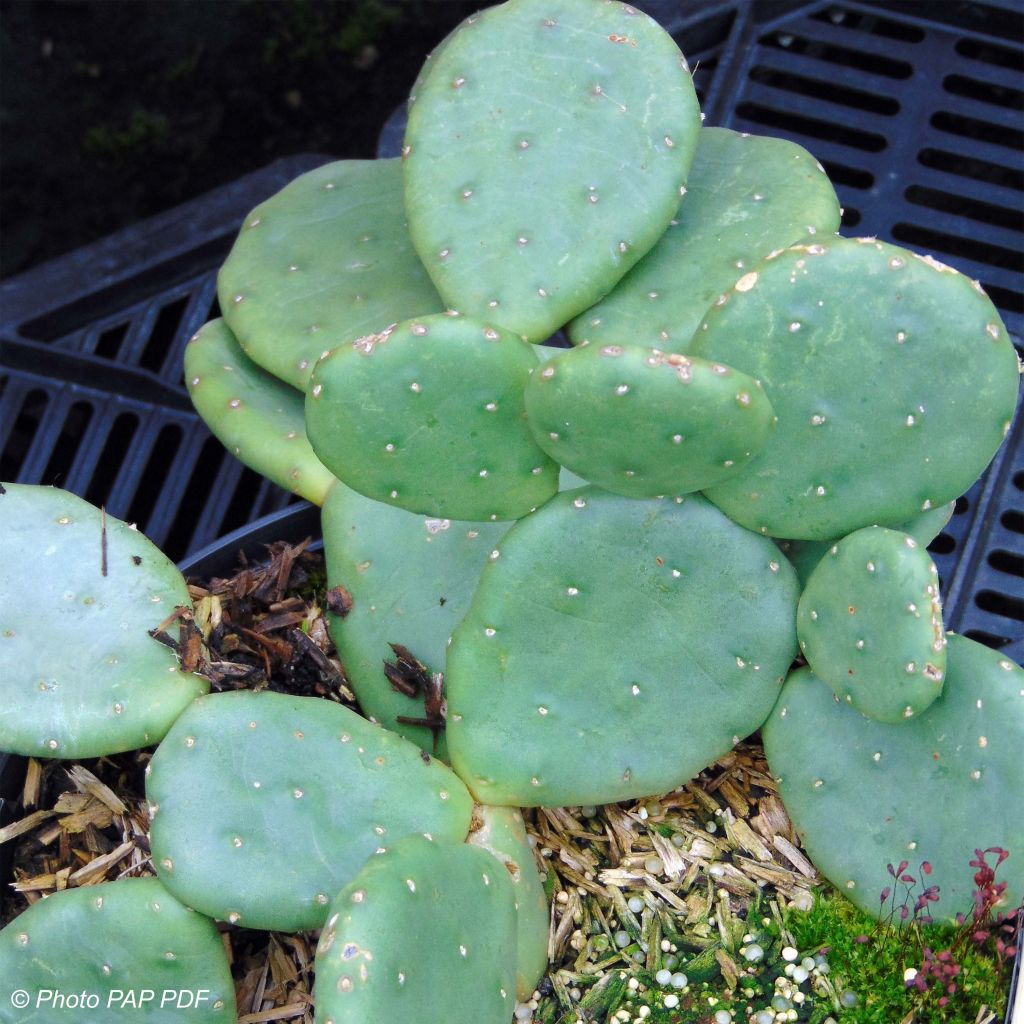
Opuntia compressa Millevaches - Prickly Pear
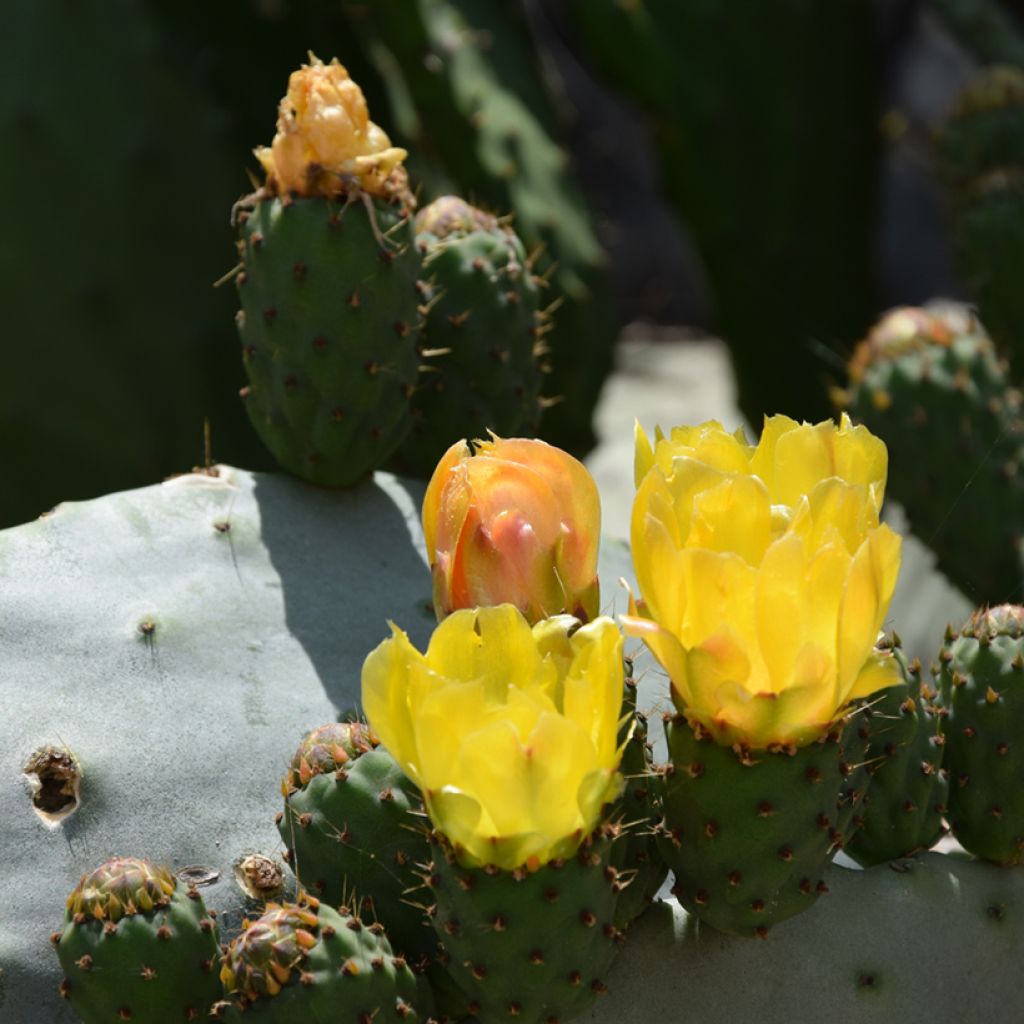
Opuntia compressa Millevaches - Prickly Pear
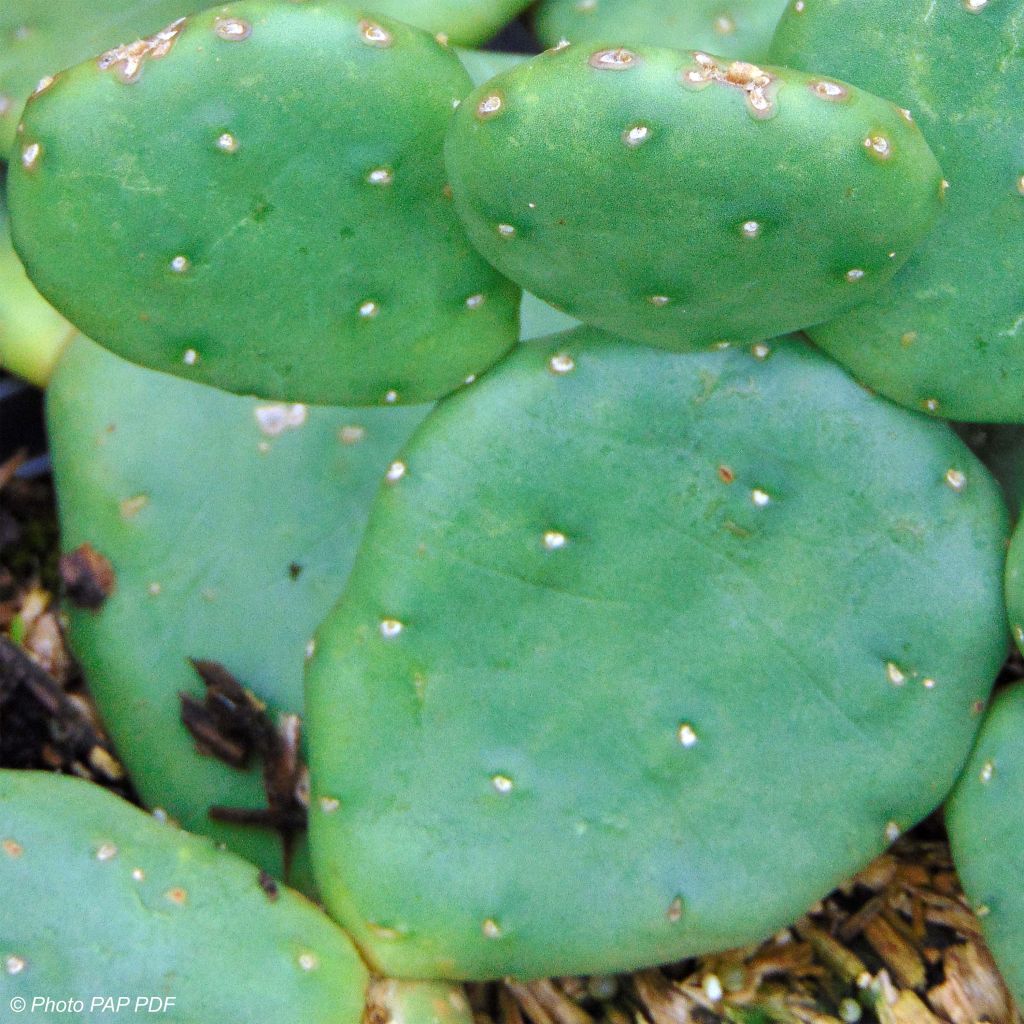
Opuntia compressa Millevaches - Prickly Pear
Opuntia compressa Millevaches - Prickly Pear
Opuntia compressa Millevaches
Eastern Prickly Pear, Devil's Tongue
Thank you for the performance.
Frédéric A., 25/09/2018
Back-to-school special offer!
Get €10 off for every €50 you spend! And get up to €40 off on a single order.
How does it work?
1. Shop your favourites
Add your favourite plants to your basket. For every €50 you spend (excluding delivery charges, store credit and the plastic-free option), you’ll receive a €10 voucher.
€50 spent = €10 voucher
€100 spent = €20 voucher
€150 spent = €30 voucher
€200 spent = €40 voucher
2. Place your order
Once your basket reaches one of the spending thresholds, place your order. You can even choose your delivery date!
3. Receive your voucher
As soon as your order has been shipped, you’ll receive an email containing your personal voucher code and its value.
4. Use it on your next order
Your voucher is valid for 90 days from the date you receive it. It can be used once only, on a new order worth at least the value of the voucher, excluding delivery charges.
Please note: Vouchers can be combined with other offers, but cannot be split or refunded.
Why not try an alternative variety in stock?
View all →
Available in 0 sizes

Available in 0 sizes

Available in 1 sizes
Available in 1 sizes
Available in 1 sizes

Available in 1 sizes
Available in 1 sizes
Available in 1 sizes

Available in 1 sizes

Available in 1 sizes
This plant carries a 12 months recovery warranty
More information
We guarantee the quality of our plants for a full growing cycle, and will replace at our expense any plant that fails to recover under normal climatic and planting conditions.

Does this plant fit my garden?
Set up your Plantfit profile →
Description
The Opuntia compressa 'Millevaches' is a lovely non-spiny variety, with a rather exceptional hardiness. This variety forms a wide cushion composed of numerous rounded articles, shaped like small fleshy prickly pears, with a green-blue color, running on the ground. In spring, it is adorned with small diaphanous lemon-yellow cup-shaped flowers, soon followed by numerous dark red edible fruits at ripeness. This prickly pear is an excellent plant for a very sunny rock garden, to be cultivated exclusively in the garden. It will adapt in all regions, even in the mountains, as it tolerates cold, dryness, and snow.
The Opuntia compressa, also called Opuntia humifusa, is a dwarf and creeping cousin of the Prickly Pear (Opuntia ficus indica). Just like it, it is a succulent plant without true leaves from the cactus family. This species, sometimes called Eastern Prickly Pear or Indian Fig, is widely distributed in the eastern and northeastern United States, from Canada to Florida. This plant has naturalized in Europe where it is quite abundant. The 'Millevaches' cultivar, likely originating from French populations, is characterized by the absence of large prickles on its skin, but not of these tiny transparent and almost invisible prickles that are so difficult to remove from our skin!
The 'Millevaches' Opuntia is a prostrate plant that rarely exceeds 30 cm (12in) in height, but spreads laterally without a theoretical limit, rooting at the level of the nodes in contact with the ground. The vegetation is composed of multiple flat, fleshy, and almost round branches, wrinkled in winter, these are the segments that are sometimes called prickly pears or articles. The skin is punctuated by small tufts of innumerable tiny prickles, called glochids, particularly unpleasant when handling. Flowering takes place from May to early July. On the periphery of the prickly pears, cup-shaped flowers of uniform lemon yellow color are born, measuring 4 to 6 cm (2in). The fruits are shaped like small pears. They are red at maturity and also bear glochids that need to be removed before consumption.
This prickle-free, particularly robust and hardy Opuntia, is easy to grow and will naturally find its place in a large rock garden, a gravel bed, or a dry and very sunny slope. The 'Millevaches' Prickly Pear is an outdoor plant that will not tolerate the too dry atmosphere of an apartment or a heated conservatory. However, its very exotic appearance is suitable for a minimal and austere decor, it does not tolerate shade cast by larger or more prolific perennials: reserve a clear location for it in full sun. Protect your hands with thick disposable gloves (due to the dreaded glochids) for regular weeding. It can be associated with agaves, Aloe, Nolina, Hesperaloe parviflora, small Yuccas, as well as montane cushion plants or dryland plants such as thymes and sedums.
Prickly pear tip: to remove the tiny prickles that cover the fruits, they can be quickly passed over a flame, in the same way as poultry is flamed to remove the feather shafts. Tortoises are, apparently, fond of the leaves and fruits: it is preferable, as a precaution, to present them with this food once it has been rid of the glochids: fruits and leaves will also be cut in half.
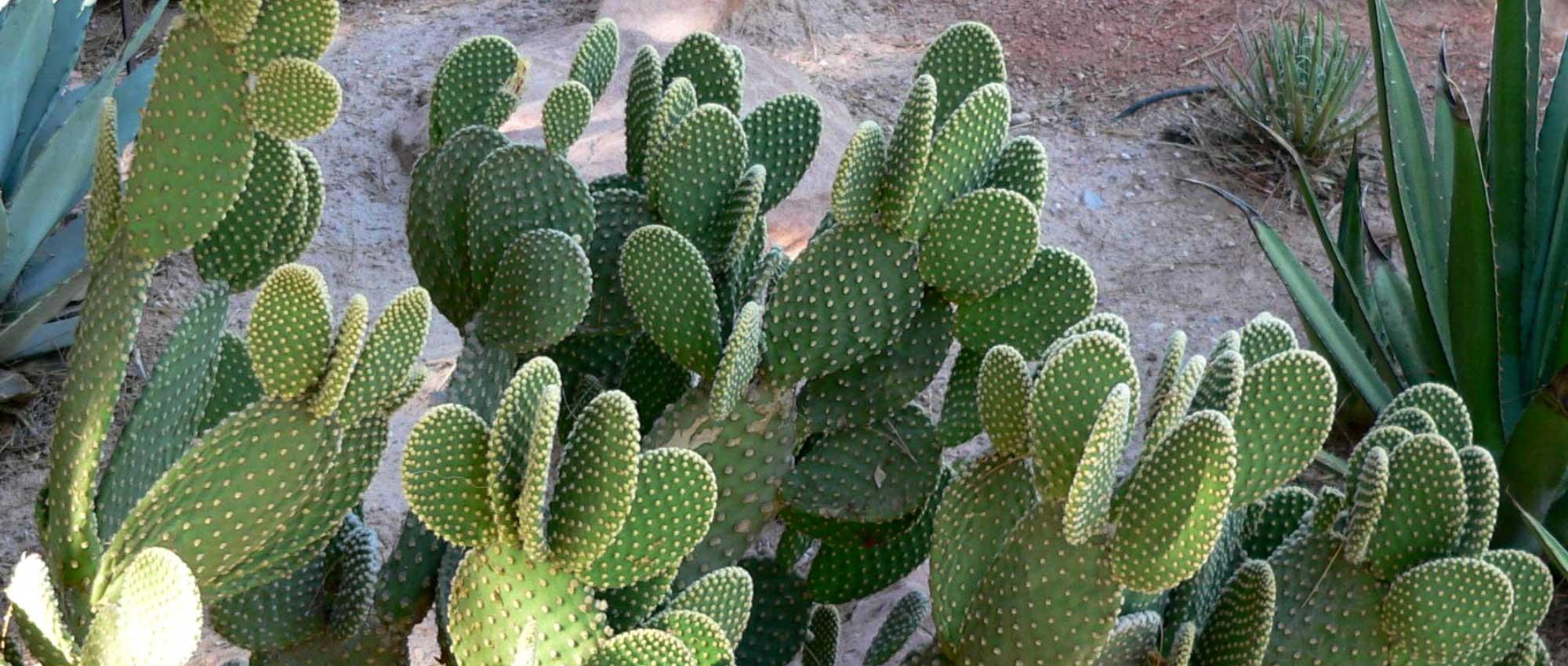
Opuntia compressa Millevaches - Prickly Pear in pictures
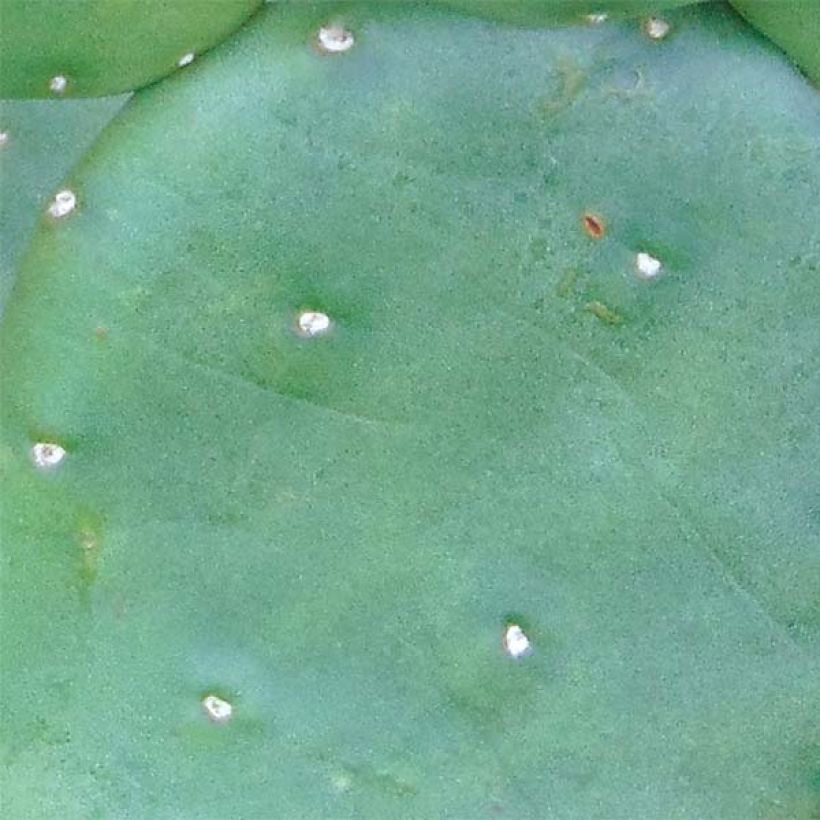
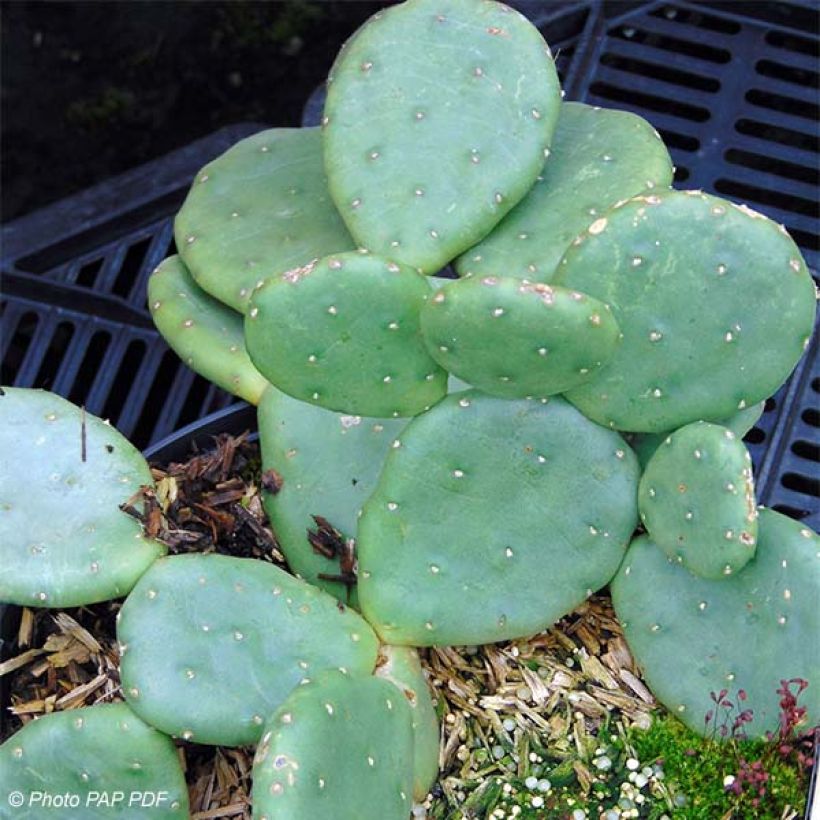
Flowering
Foliage
Plant habit
Botanical data
Opuntia
compressa
Millevaches
Cactaceae
Eastern Prickly Pear, Devil's Tongue
Cultivar or hybrid
Planting and care
Plant the Opuntia compressa 'Millevaches' in spring or early autumn, in full sun, in poor, even stony, limestone, sandy, but well drained soil. It tolerates competition from weeds or large perennials that shade it and promote the presence of gastropods, fond of its young shoots. It withstands cold, snowy and humid winters, as long as it is planted in a porous soil and in an open position. It appreciates dry soils, even arid in summer, and does not fear heatwaves. In good growing conditions, it will withstand frost well below -15°C (5°F). Its articles often appear wrinkled in winter, but quickly plump up in spring. It is not known to be susceptible to any pests, except for the presence of too many slugs.
Propagation of the prickly pear is very easy: take a cutting at a joint, place it on a cactus-type substrate for a few days, until a healing callus forms. Then insert the base of the cutting a little deeper into the soil and water regularly. The plant will not flower or bear fruit until it is 2 years old.
Handle your cacti with gloves and protective goggles.
Planting period
Intended location
Care
Planting & care advice
-
-

-

-

-
-
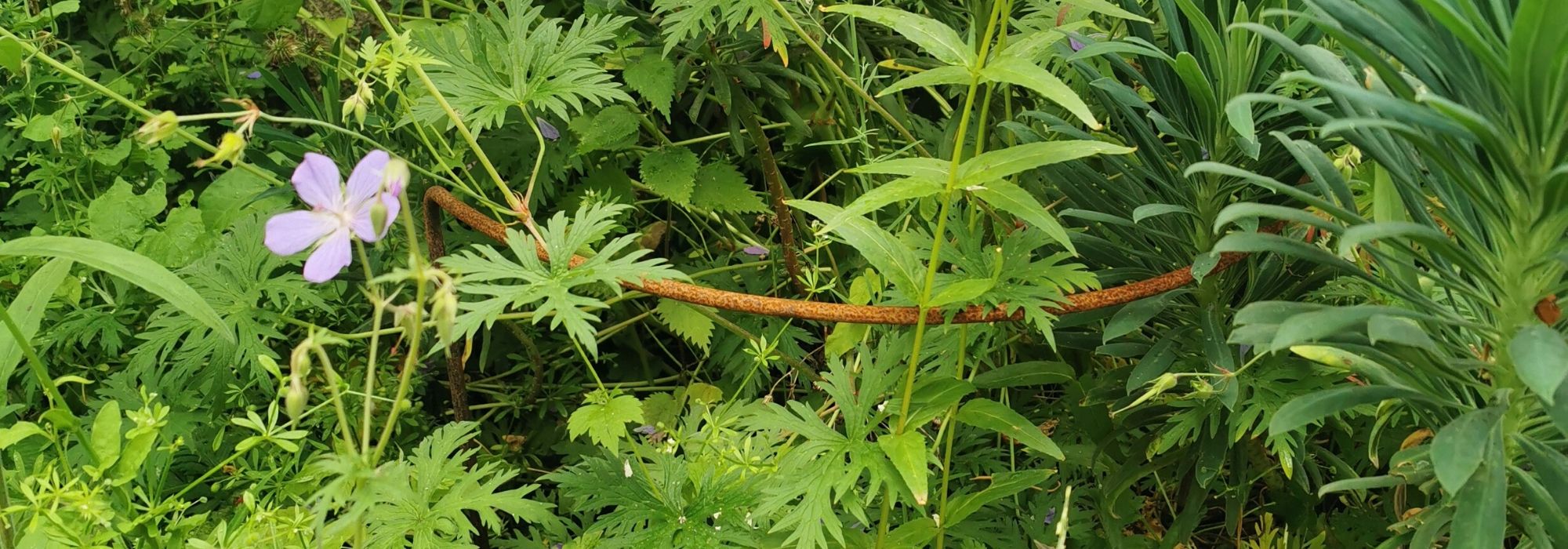
-
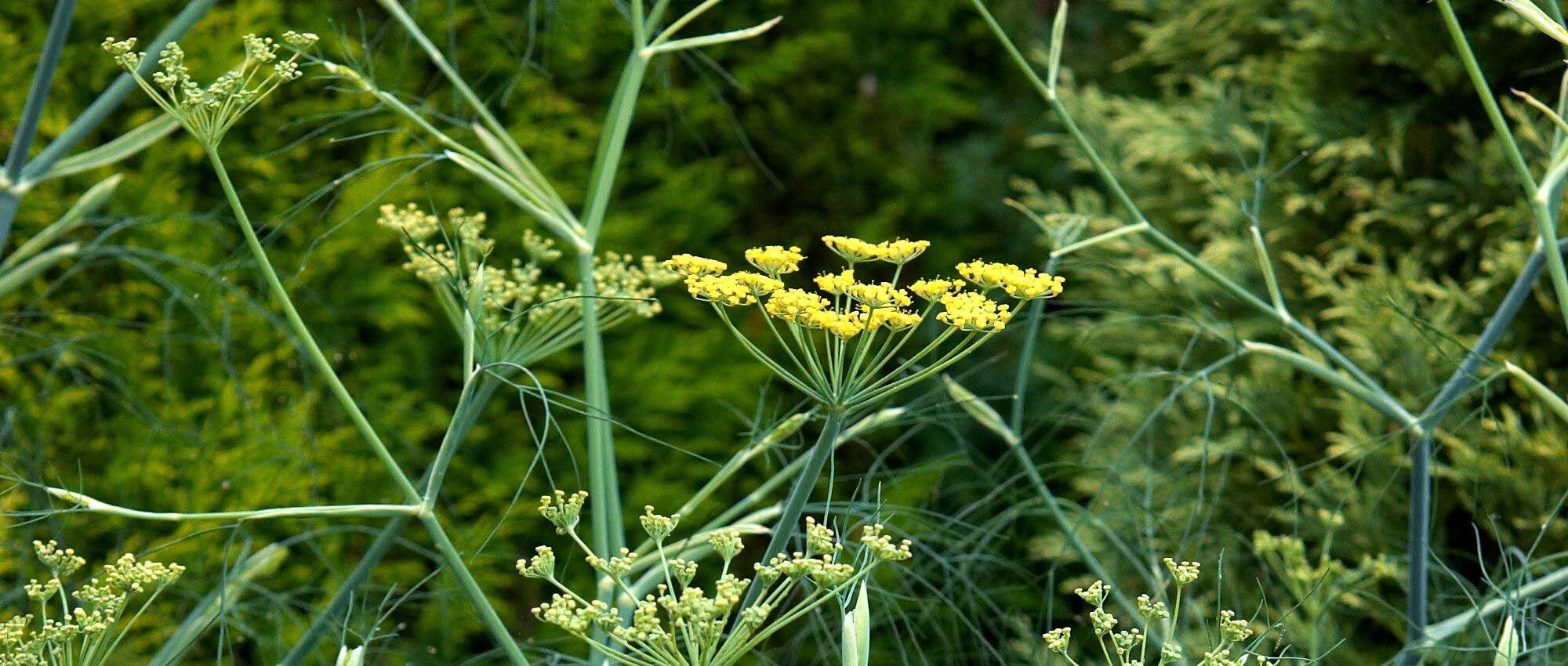
-
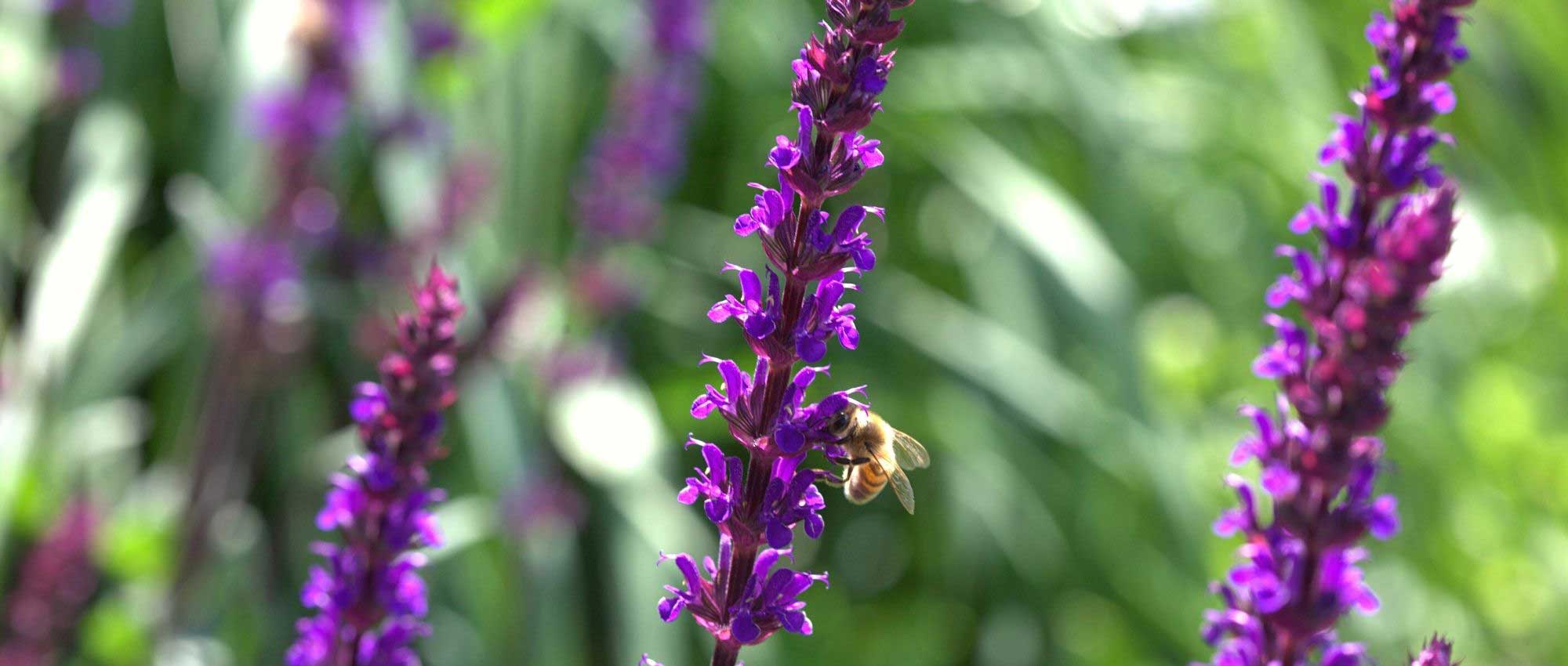
-
, onOrder confirmed
Reply from on Promesse de fleurs
Recently viewed products
Haven't found what you were looking for?
Hardiness is the lowest winter temperature a plant can endure without suffering serious damage or even dying. However, hardiness is affected by location (a sheltered area, such as a patio), protection (winter cover) and soil type (hardiness is improved by well-drained soil).
In temperate climates, pruning of spring-flowering shrubs (forsythia, spireas, etc.) should be done just after flowering.
Pruning of summer-flowering shrubs (Indian Lilac, Perovskia, etc.) can be done in winter or spring.
In cold regions as well as with frost-sensitive plants, avoid pruning too early when severe frosts may still occur.
The harvesting period indicated on our website applies to countries and regions in USDA zone 8 (France, England, Ireland, the Netherlands).
In colder areas (Scandinavia, Poland, Austria...) fruit and vegetable harvests are likely to be delayed by 3-4 weeks.
In warmer areas (Italy, Spain, Greece, etc.), harvesting will probably take place earlier, depending on weather conditions.
The sowing periods indicated on our website apply to countries and regions within USDA Zone 8 (France, UK, Ireland, Netherlands).
In colder areas (Scandinavia, Poland, Austria...), delay any outdoor sowing by 3-4 weeks, or sow under glass.
In warmer climes (Italy, Spain, Greece, etc.), bring outdoor sowing forward by a few weeks.
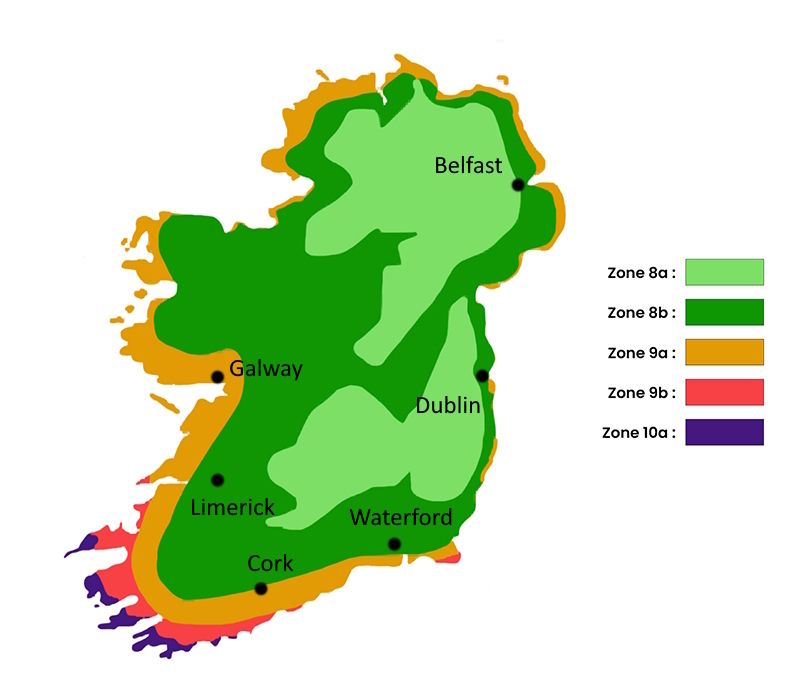
The planting period indicated on our website applies to regions in USDA Zone 9a (East Coast and Midlands: Dublin, Wexford, Waterford, Kilkenny, Portlaoise). It will vary depending on where you live:
- On the west coast and in the north-west (Galway, Limerick, Sligo, Donegal, Westport), delay planting by 1 to 2 weeks in spring and bring it forward by 1 to 2 weeks in autumn compared to the dates given, preferably choosing periods without strong winds.
- In the inland hills and plateaus (Wicklow Mountains, Macgillycuddy’s Reeks, Connemara, Killarney), it is best to plant in spring (April–May) or autumn (September–October), avoiding periods of waterlogged soil in winter and strong winds, which pose the main risk to newly planted trees in these areas.
The flowering period indicated on our website applies to regions in USDA Zone 9a, such as the East Coast and Midlands, including Dublin, Wexford, Waterford, Kilkenny and Portlaoise.
This will vary depending on where you live:
- On the west coast and in the northwest (Galway, Limerick, Sligo, Donegal and Westport), it will be delayed by one to two weeks compared to the given dates, due to stronger Atlantic winds and less spring sunshine.
- In the inland hills and plateaus (the Wicklow Mountains, the Macgillycuddy's Reeks, Connemara and Killarney), flowering will be delayed by two to three weeks. Flowering mainly occurs between May and July, with the limiting factors being less frost and more of the excessive humidity, strong winds and lack of sunshine that are characteristic of these areas.
Shipping country and language
Your country of residence may be:
Your country of residence is:
For a better user experience on our website, you can select:
Your shipping country:
-
 Austria
-
 Belgium
-
 Bosnia & Herzegovina
-
 Bulgaria
-
 Croatia
-
 Cyprus
-
 Czechia
-
 Denmark
-
 Estonia
-
 Finland
-
 France
-
 Germany
-
 Greece
-
 Hungary
-
 Iceland
-
 Ireland
-
 Italy
Italy
-
 Latvia
-
 Liechtenstein
-
 Lithuania
-
 Luxembourg
-
 Malta
Malta
-
 Netherlands
-
 Poland
-
 Portugal
-
 Romania
-
 Serbia
-
 Slovakia
-
 Slovenia
-
 Spain
Spain
-
 Sweden
-
 Switzerland
Language:
-
French
-
 English
-
Spanish
-
Italian
-
German
-
Portuguese
-
Dutch
-
Finnish
My Account
Hello
My wish lists
My cart
Log in / Register
Existing customer?
This form is protected by reCAPTCHA - the Google Privacy Policy and Terms of Service apply.
New customer?
Create an account to track your orders, access our customer service and, if you wish, make the most of our upcoming offers.