
Iris germanica Night Edition

Iris germanica Night Edition
Iris germanica Night Edition
Iris Grand iris barbu (Tall Bearded, TB) Night Edition
German Iris, Bearded Iris
Received at Christmas, flowers in May. Good-quality rootstock, well packaged. And then the flowering… a splendour!! 80cm tall. In Brittany.
Mafalda, 27/05/2024
Back-to-school special offer!
Get €10 off for every €50 you spend! And get up to €40 off on a single order.
How does it work?
1. Shop your favourites
Add your favourite plants to your basket. For every €50 you spend (excluding delivery charges, store credit and the plastic-free option), you’ll receive a €10 voucher.
€50 spent = €10 voucher
€100 spent = €20 voucher
€150 spent = €30 voucher
€200 spent = €40 voucher
2. Place your order
Once your basket reaches one of the spending thresholds, place your order. You can even choose your delivery date!
3. Receive your voucher
As soon as your order has been shipped, you’ll receive an email containing your personal voucher code and its value.
4. Use it on your next order
Your voucher is valid for 90 days from the date you receive it. It can be used once only, on a new order worth at least the value of the voucher, excluding delivery charges.
Please note: Vouchers can be combined with other offers, but cannot be split or refunded.
Home or relay delivery (depending on size and destination)
Important: You may be charged customs duties by your country’s customs authorities upon delivery.
Schedule delivery date
and select date in basket
This plant carries a 12 months recovery warranty
More information
We guarantee the quality of our plants for a full growing cycle, and will replace at our expense any plant that fails to recover under normal climatic and planting conditions.

Does this plant fit my garden?
Set up your Plantfit profile →
Description
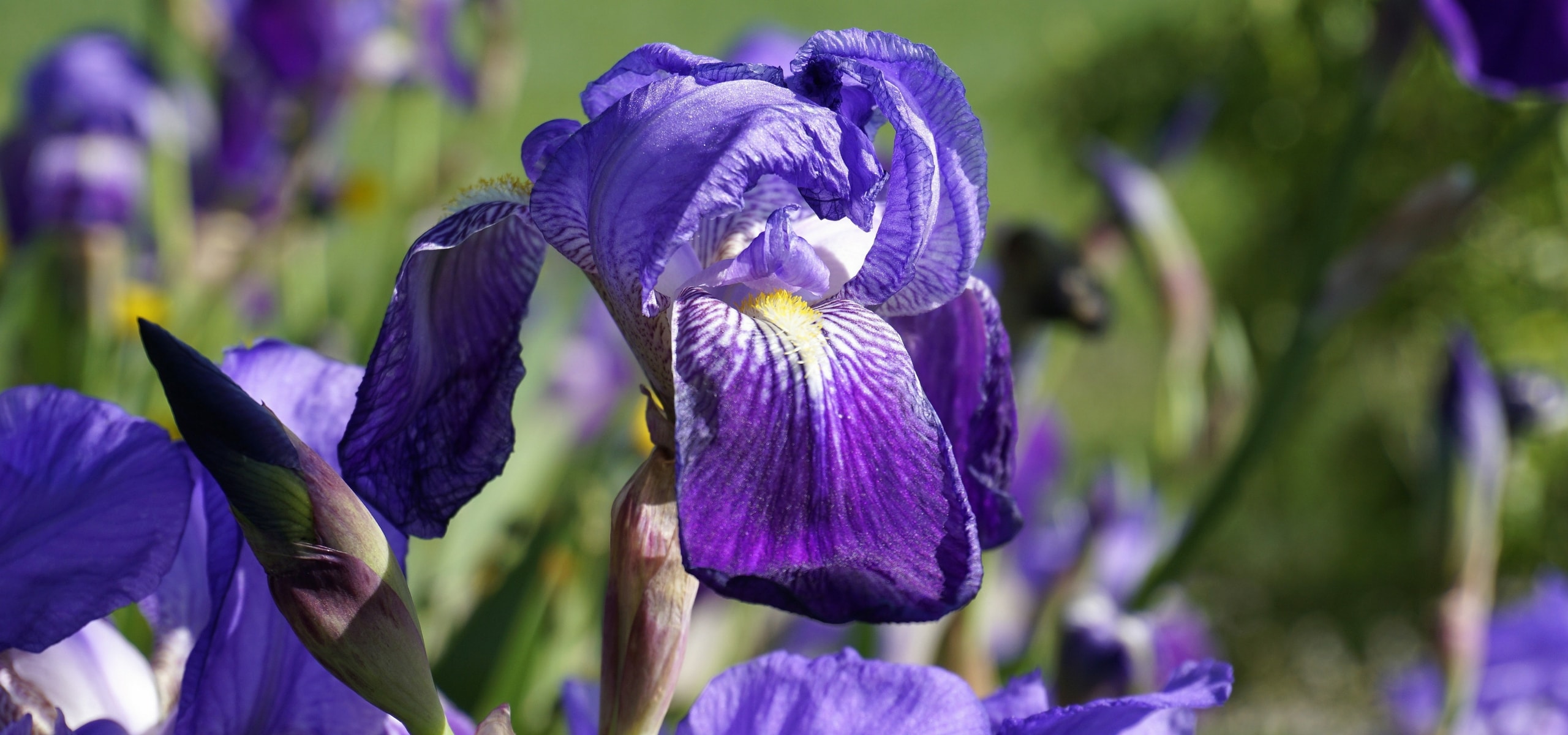
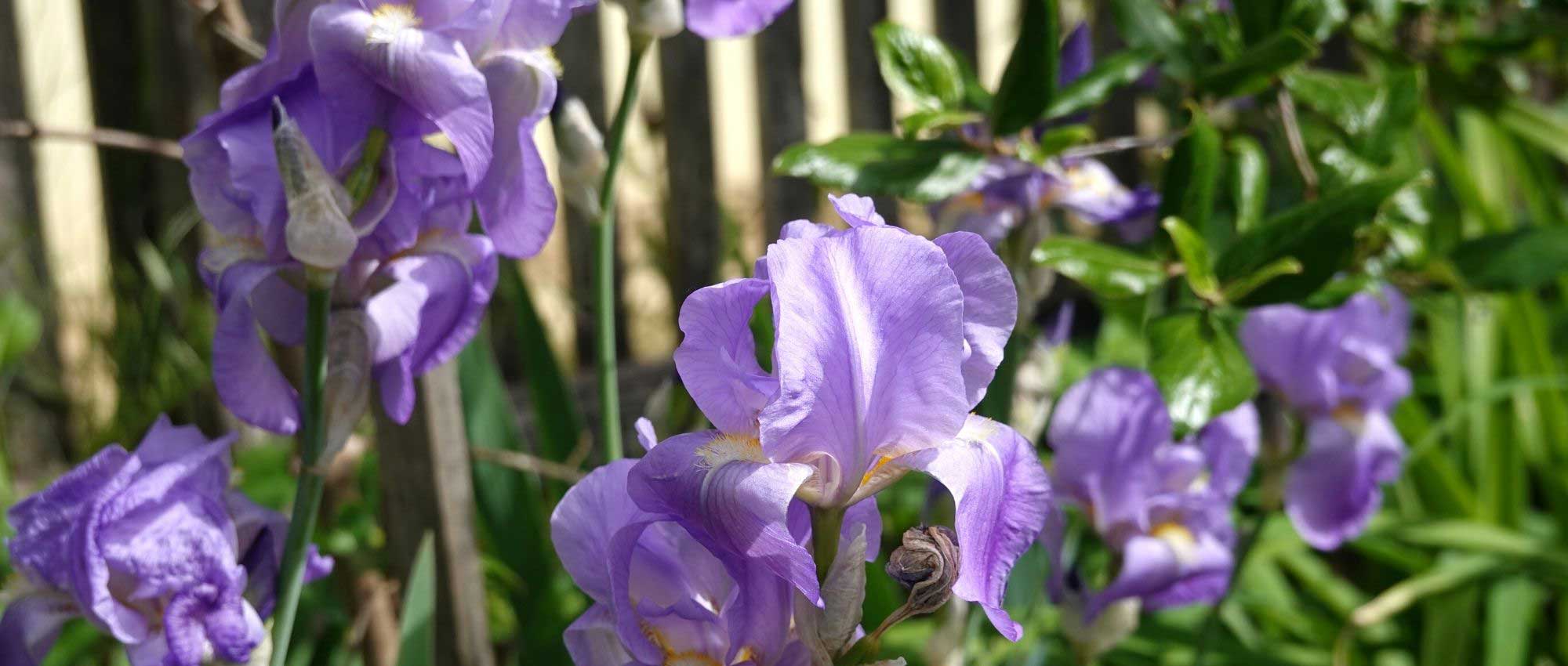
L’Iris ‘Night Edition’ est un grand iris barbu reconnaissable à ses fleurs bicolores nettement contrastées : trois pétales bleu argenté se dressent au-dessus de trois sépales d'un bleu d'encre, éclairés par une barbe jaune citron à or pâle. Une floraison printanière visible de loin dans un massif ensoleillé ! Cette variété assez ancienne intéressera aussi les collectionneurs d'iris, car elle fut l'une des premières à offrir un tel coloris blanc et bleu nuit très net.
Cette plante appartient à la famille des Iridacées et au groupe horticole des grands iris barbus, ou Tall Bearded Iris. Il s’agit d’un hybride de jardin, non d’une forme sauvage d’Iris germanica. R. Schreiner l’a enregistré et introduit aux États-Unis en 1981. Sa parenté réunit un semis issu de ‘Blue Mountains’ et ‘Marvalon’ à un autre semis de sélection. L’American Iris Society lui a décerné une Honorable Mention en 1985. La plante pousse à partir de rhizomes charnus et horizontaux qui restent proches de la surface. Ils forment progressivement une touffe de feuilles en forme de glaive, d'un vert grisâtre, disposées en éventail. La végétation atteint 40 à 50 cm de haut ; les hampes florales montent à 85–90 cm et la touffe s’étale sur 40 à 50 cm après quelques années. Les fleurs de cette variété, larges de 10 à 15 cm, s’ouvrent successivement sur les tiges. Les trois pétales supérieurs, presque gris sous une lumière voilée, conservent une nuance bleu argenté. Les trois sépales retombants affichent un bleu très foncé violacé, avec une petite zone plus claire près de la barbe jaune citron à or pâle. La floraison se place au milieu de la saison des grands iris, le plus souvent en mai, voire au début de juin dans les régions froides. Le feuillage persiste une partie de l’hiver dans les régions douces, mais il sèche davantage là où le gel est marqué. La souche résiste au moins à -20 °C en sol drainé. Une fois bien enracinée, la plante supporte les étés secs. Son principal point faible reste l’humidité stagnante autour des rhizomes.
L'Iris ‘Night Edition’ trouve sa place dans une plate-bande ensoleillée, sur un talus sec ou au pied d’un mur exposé au sud ou à l’ouest. Planté par groupes de trois ou cinq, il forme rapidement une touffe bien fleurie au printemps. Vous pouvez le mélanger à des bulbes d'Allium ‘Mount Everest’, au Verbascum ‘Southern Charm’, au Nepeta ‘Walker’s Low’ et au Stachys byzantina ‘Big Ears’ qui apprécient eux aussi le soleil et les terres drainées. Les hampes coupées lorsque le premier bouton se colore peuvent être utilisées dans un bouquet, par exemple avec des pivoines de Chine.
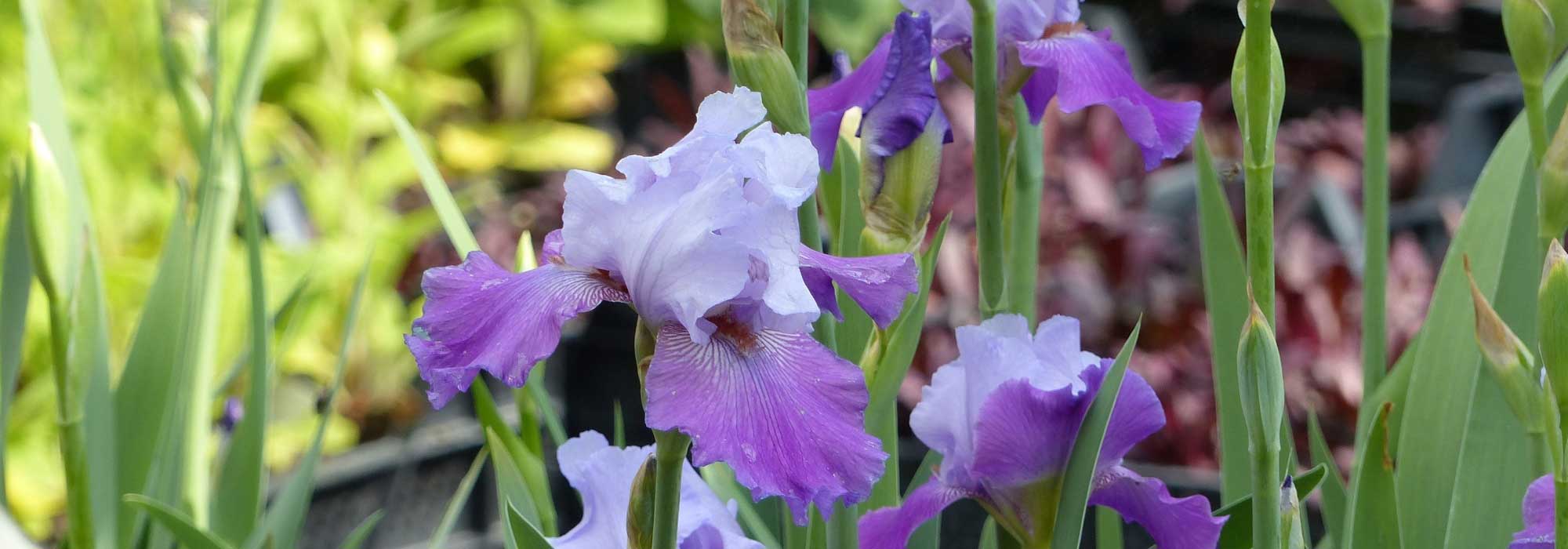
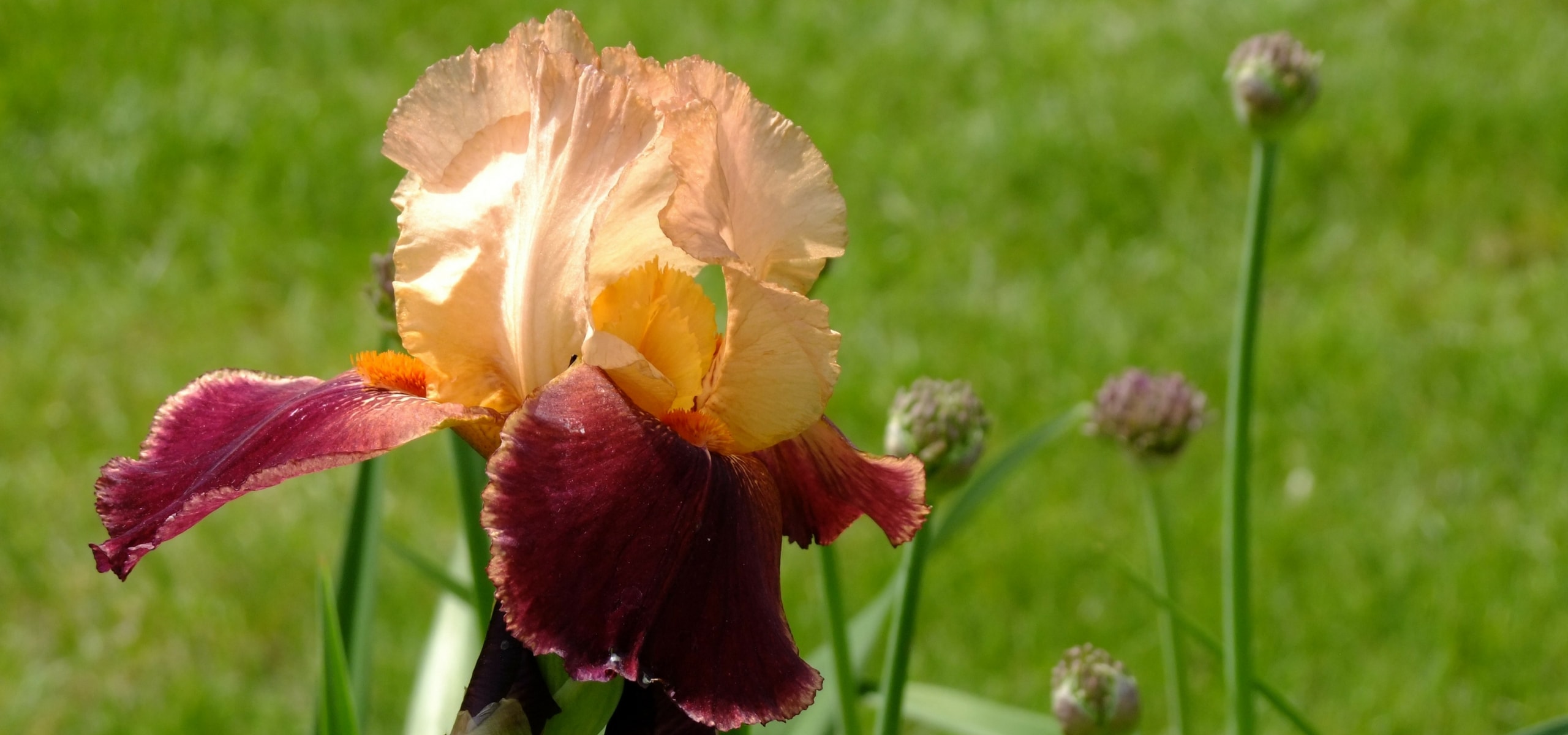
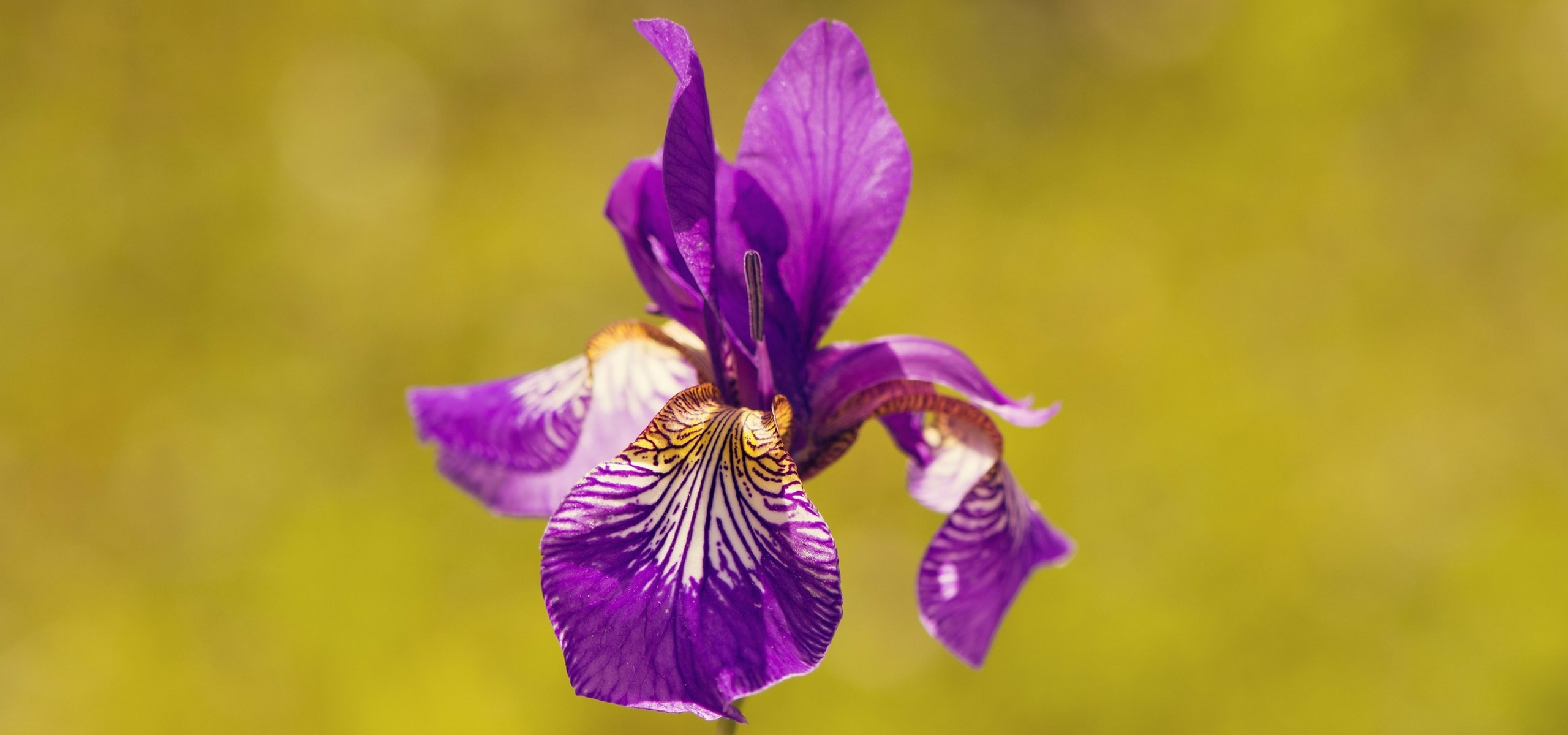
Iris germanica Night Edition in pictures


Flowering
Foliage
Plant habit
Botanical data
Iris
Night Edition
Iridaceae
German Iris, Bearded Iris
Cultivar or hybrid
Planting and care
The Iris Night Edition should be planted shallowly, leaving the rootstock flush with the soil surface. Add sand when the soil is too wet and place the rootstocks on small mounds. Ensure the soil drains well so that the rootstocks do not rot. In summer, this iris can be watered once or twice a month depending on the climate, no more. At the end of flowering, they should be pruned by cutting the flower stems 10 cm above the soil. Damaged leaves should only be removed in autumn. It is not advisable to apply too much nitrogen, as this weakens the plant and increases the number of leaves at the expense of the flowers. Iris may be susceptible to heterosporiosis, a disease recognisable by brown ovate spots. To prevent it, treat the irises with Bordeaux mixture at the start of the growing season. Every four years in summer, divide the clumps by lifting the whole plant. Transplanting should be done in a spot where no iris has grown for a year. Take the finest young plants from the rootstock, usually those around the outer edge.
Planting period
Intended location
Care
Planting & care advice
-
-
-
-
-
-
-
-
-
, onOrder confirmed
Reply from on Promesse de fleurs
Recently viewed products
Haven't found what you were looking for?
Hardiness is the lowest winter temperature a plant can endure without suffering serious damage or even dying. However, hardiness is affected by location (a sheltered area, such as a patio), protection (winter cover) and soil type (hardiness is improved by well-drained soil).
In temperate climates, pruning of spring-flowering shrubs (forsythia, spireas, etc.) should be done just after flowering.
Pruning of summer-flowering shrubs (Indian Lilac, Perovskia, etc.) can be done in winter or spring.
In cold regions as well as with frost-sensitive plants, avoid pruning too early when severe frosts may still occur.
The harvesting period indicated on our website applies to countries and regions in USDA zone 8 (France, England, Ireland, the Netherlands).
In colder areas (Scandinavia, Poland, Austria...) fruit and vegetable harvests are likely to be delayed by 3-4 weeks.
In warmer areas (Italy, Spain, Greece, etc.), harvesting will probably take place earlier, depending on weather conditions.
The sowing periods indicated on our website apply to countries and regions within USDA Zone 8 (France, UK, Ireland, Netherlands).
In colder areas (Scandinavia, Poland, Austria...), delay any outdoor sowing by 3-4 weeks, or sow under glass.
In warmer climes (Italy, Spain, Greece, etc.), bring outdoor sowing forward by a few weeks.
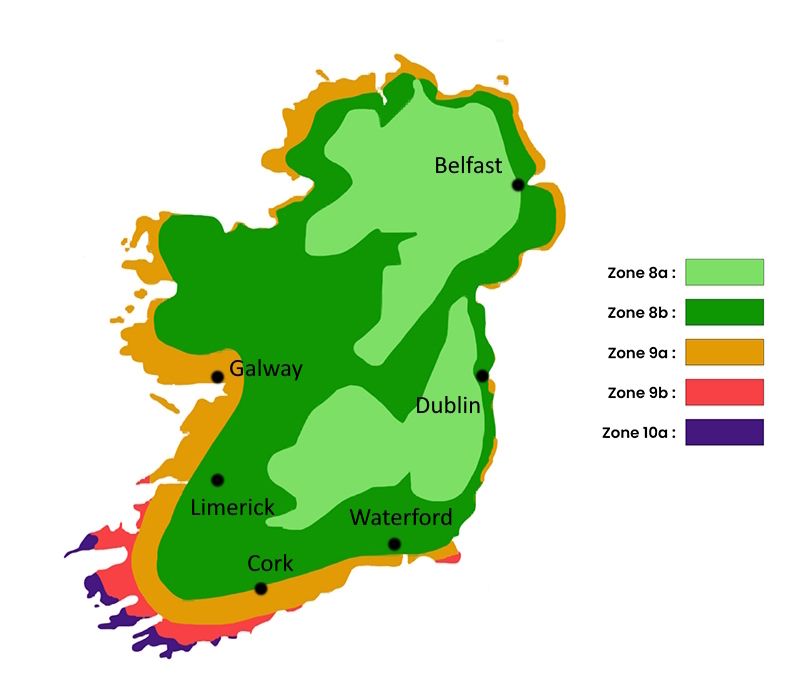
The planting period indicated on our website applies to regions in USDA Zone 9a (East Coast and Midlands: Dublin, Wexford, Waterford, Kilkenny, Portlaoise). It will vary depending on where you live:
- On the west coast and in the north-west (Galway, Limerick, Sligo, Donegal, Westport), delay planting by 1 to 2 weeks in spring and bring it forward by 1 to 2 weeks in autumn compared to the dates given, preferably choosing periods without strong winds.
- In the inland hills and plateaus (Wicklow Mountains, Macgillycuddy’s Reeks, Connemara, Killarney), it is best to plant in spring (April–May) or autumn (September–October), avoiding periods of waterlogged soil in winter and strong winds, which pose the main risk to newly planted trees in these areas.
The flowering period indicated on our website applies to regions in USDA Zone 9a, such as the East Coast and Midlands, including Dublin, Wexford, Waterford, Kilkenny and Portlaoise.
This will vary depending on where you live:
- On the west coast and in the northwest (Galway, Limerick, Sligo, Donegal and Westport), it will be delayed by one to two weeks compared to the given dates, due to stronger Atlantic winds and less spring sunshine.
- In the inland hills and plateaus (the Wicklow Mountains, the Macgillycuddy's Reeks, Connemara and Killarney), flowering will be delayed by two to three weeks. Flowering mainly occurs between May and July, with the limiting factors being less frost and more of the excessive humidity, strong winds and lack of sunshine that are characteristic of these areas.
Shipping country and language
Your country of residence may be:
Your country of residence is:
For a better user experience on our website, you can select:
Your shipping country:
-
 Austria
-
 Belgium
-
 Bosnia & Herzegovina
-
 Bulgaria
-
 Croatia
-
 Cyprus
-
 Czechia
-
 Denmark
-
 Estonia
-
 Finland
-
 France
-
 Germany
-
 Greece
-
 Hungary
-
 Iceland
-
 Ireland
-
 Italy
-
 Latvia
-
 Liechtenstein
-
 Lithuania
-
 Luxembourg
-
 Malta
-
 Netherlands
-
 Poland
-
 Portugal
-
 Romania
-
 Serbia
-
 Slovakia
-
 Slovenia
-
 Spain
-
 Sweden
-
 Switzerland
Language:
-
French
-
 English
-
Spanish
-
Italian
-
German
-
Portuguese
-
Dutch
-
Finnish
My Account
Hello
My wish lists
My cart
Log in / Register
Existing customer?
This form is protected by reCAPTCHA - the Google Privacy Policy and Terms of Service apply.
New customer?
Create an account to track your orders, access our customer service and, if you wish, make the most of our upcoming offers.