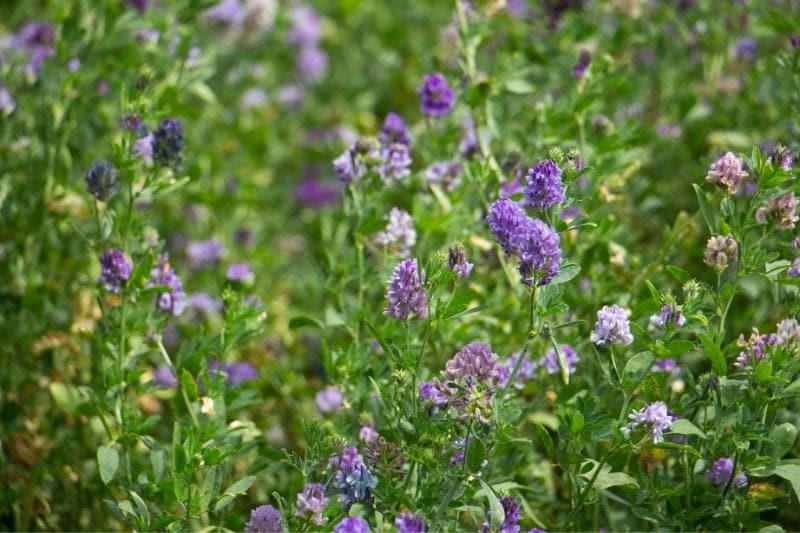
Alfalfa (Medicago sativa) is a perennial plant often used as green manure in vegetable gardens. Thanks to its deep roots, it helps loosen compacted soils and improves soil structure. Like other legumes, it also contributes to natural soil enrichment with nitrogen and produces a large amount of organic matter after mowing.
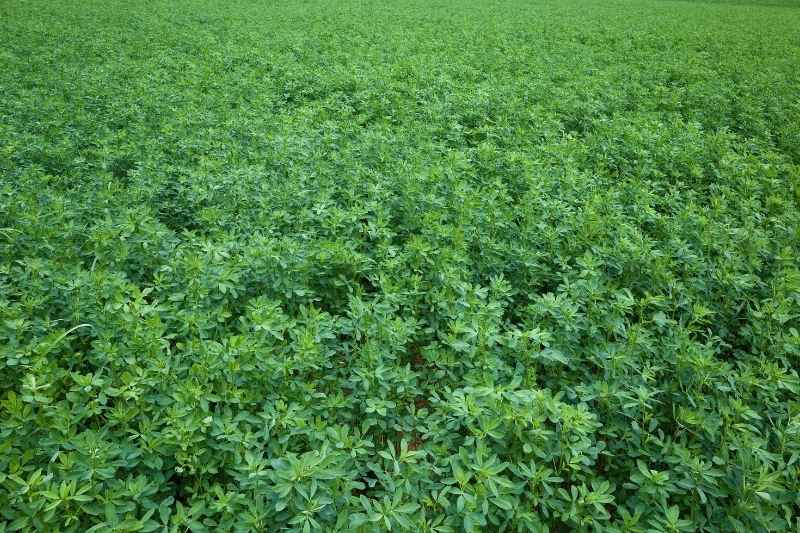
Sowing alfalfa also makes it possible to cover a plot between crops, limit unwanted weeds and protect soil from bad weather. Easy to grow in well-drained soil and in full sun, it requires little maintenance once established.
Discover when, where and how to sow alfalfa to achieve more fertile soil and effectively prepare future plantings.
When to sow alfalfa?
Sowing alfalfa is done mainly:
- from March to May in spring;
- from mid‑August to September after vegetable garden harvests.
Spring favours rapid establishment before high temperatures. In late summer, still-warm soil speeds germination and allows quick cover of a plot freed after harvest.
Where to sow alfalfa?
Alfalfa is almost always sown directly in open ground. Sowing in pots is uncommon, as this plant rapidly develops a long taproot.
Alfalfa prefers:
- full sun exposure;
- well-drained, airy soil;
- soil that is fairly neutral or slightly calcareous.
It grows less well in heavy, wet ground in winter. This plant tolerates heat well and is relatively drought-tolerant once established thanks to its deep roots.
This green manure fits easily in:
- after summer vegetables;
- on a temporarily unused area;
- before creating a new vegetable garden;
- between two crop rotations.
Tools needed to sow alfalfa
A few simple tools are enough to succeed in sowing alfalfa:
- alfalfa seeds suitable for use as green manure;
- A broadfork or digging fork to loosen ground;
- A rake to level soil and lightly cover seeds;
- A watering can with fine rose to moisten surface without displacing seeds;
- Optional: a garden roller or a board to firm soil slightly after sowing.
Steps to sow alfalfa as green manure
Soil preparation
- Clear weeds from plot to avoid competition with young shoots;
- Loosen compacted soil with a broadfork or digging fork to aid rooting.
- Break clods and level soil with your rake;
Alfalfa prefers light, well‑drained ground. No need to work soil too deeply.
Sowing alfalfa seeds
For green manure, allow about 250 grams of seed per 100 m². For a small area, adapt dose accordingly: about 25 g for 10 m².
- Broadcast seeds evenly over whole area. Make two crossed passes, one lengthways then one widthways, to obtain an even cover.
Alternative: if you prefer easier maintenance, mark shallow drills about 20 cm apart. Place seeds evenly in each row, without crowding them. - Gently drag the rake to cover seeds with 1 to 2 cm of fine soil. Do not sow too deep: alfalfa germinates better near surface.
- Firm slightly with back of rake, a board or roller. This improves contact between seeds and soil.
- Use a watering can with fine rose to moisten without moving seeds. Soil should remain slightly moist, never waterlogged.
Maintain regular moisture until germination. First shoots usually appear within 10 to 15 days, depending on soil temperature.
After sowing: care for young plants
- Alfalfa requires little maintenance once established.
- During first weeks, water if weather remains dry to keep soil slightly cool. Afterwards, plant becomes more drought-resistant thanks to deep roots.
- Remove weeds at start of crop if necessary. Once dense, alfalfa sufficiently covers soil to naturally limit weed growth.
Using alfalfa as green manure
Alfalfa can remain in place for several years. To use as green manure, mow before full seed set then:
- incorporate superficially into soil;
- or leave to dry on surface as mulch.
Wait generally two to three weeks before planting a new crop so plant material begins to decompose.
Thanks to its powerful root system and ability to enrich soil naturally, alfalfa is one of the best green manures to sustainably improve garden fertility.


































Comments